Must Know Vocabulary
| Word | العربية | Deutsch | Français | Русский |
|---|---|---|---|---|
| قطعة أرض مؤجرة | Schrebergarten | jardin ouvrier | огородный участок | |
| مجتمع | Gemeinschaft | communauté | сообщество | |
| مغطى بالنباتات البرية | überwuchert | envahi par la végétation | заросший | |
| بيت زجاجي | Gewächshaus | serre | теплица | |
| متطوع | Freiwillige/r | bénévole | доброволец | |
| تراث | Erbe | patrimoine | наследие | |
| مقيم | Bewohner/in | résident | житель | |
| قطعة أرض | Parzelle | parcelle | участок | |
| يحول | verwandeln | transformer | преображать |
The Story
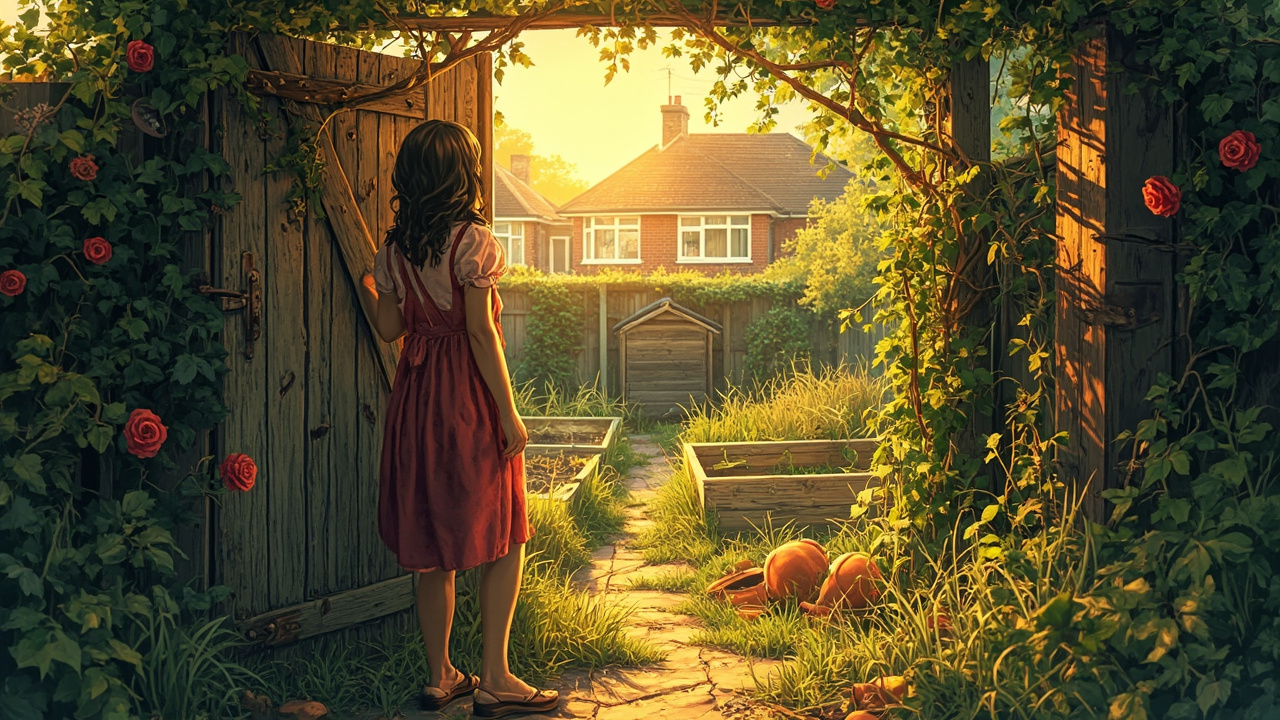
The first time Sarah walked through the rusted gate, she nearly turned back. The allotment behind the Chestnut Grove estate had been abandoned for years, its glory days long forgotten. Twisted weeds covered what once were neat vegetable beds, and a wooden shed in the corner leant dangerously to one side. The whole place smelled of damp earth and neglect.
Sarah had moved into the estate three months earlier, following a difficult divorce. She was still finding her feet in the neighbourhood, still a stranger among people who had known each other for decades. The flat felt too quiet, too empty. She needed something to do with her hands, something to grow.
What she found instead was a mystery.
A Hidden History
"That garden's been there since the 1960s," explained Mr Okonkwo, an elderly man who had lived on the estate since its construction. He sat on a bench near the community centre, his white beard neatly trimmed. "Every family had a plot back then. We grew tomatoes, carrots, potatoes. During the fuel crisis, that little patch fed half the neighbourhood."
Sarah was fascinated. "What happened to it?"
He shrugged his shoulders. "People got busy. Time moved on. The council stopped maintaining it, and gradually everyone forgot." He paused, gazing across at the overgrown fence. "Shame, really. It was the heart of this place once."
The very next week, the notices appeared.
The Offer
Greenfield Developments Ltd wanted to build a block of luxury apartments on the allotment site. They promised jobs during construction, rates for the local council, and housing for young professionals. Their representative, a smooth-talking man named James Thornton, arrived at the community centre with glossy brochures and empty promises.
"This estate deserves better than abandoned land," he told the assembled residents. "We're offering a fresh start. Modern homes. Increased property values. A new beginning."
Some residents nodded in agreement. The estate had seen better days, and change sounded attractive. Others looked uncomfortable, uncertain. Sarah sat at the back, watching faces she was still learning to read.
After the meeting, opinions split sharply. "We could do with the investment," said Karen, who lived in the block nearest the gate. "It's an eyesore as it is." But Mr Okonkwo shook his head. "You can't put a price on community. That land belongs to all of us."
Growing Together
Sarah found herself caught in the middle. She had only just discovered the allotment's potential, and the thought of it disappearing beneath concrete and glass upset her deeply. Yet she was also new here, unsure whether she had the right to speak up.
It was Mrs Chen who gave her courage. The elderly Chinese woman had tended a small herb garden in her back yard for years, and she approached Sarah one morning with an idea.
"If we could show them the allotment's worth," she said carefully, "perhaps they would leave it alone."
Together, they began clearing a small section near the shed. Word spread slowly. Others joined them at weekends - Mr Okonkwo with his wheelbarrow, young Marcus from the ground floor flat, even sceptical Karen, who admitted she had always wanted to learn about growing vegetables. Sarah discovered she had a natural talent for planning small spaces, and soon the work took on a life of its own.
The council, initially resistant, agreed to a trial period. Volunteers signed up for plots. Seeds were planted, paths laid, a small greenhouse donated by a retired gardener on the next road. By midsummer, the allotment had transformed completely.
The Harvest
On the final day before Greenfield Developments made their decision, the community held an open day. Families wandered between the plots, tasting fresh strawberries and new potatoes. Children learned where food actually came from. Elderly residents shared memories of the old days with anyone who would listen. James Thornton arrived unannounced, his polished shoes muddy on the freshly turned earth.
He walked the paths in silence, watching the children water tomatoes and the neighbours laugh together over the communal tea table. For the first time, something other than calculation crossed his face.
The following week, Greenfield Developments withdrew their planning application. No reasons were given officially, but Sarah suspected Mr Okonkwo was right. You cannot put a price on community.
She returned to the allotment often in the months that followed. It was never just about the vegetables, she realised. It was about the connections she had made, the friendships she had formed, the place she had finally found where she belonged. The garden had not been saved for its crops. It had been saved because it reminded everyone what neighbourhood truly meant.