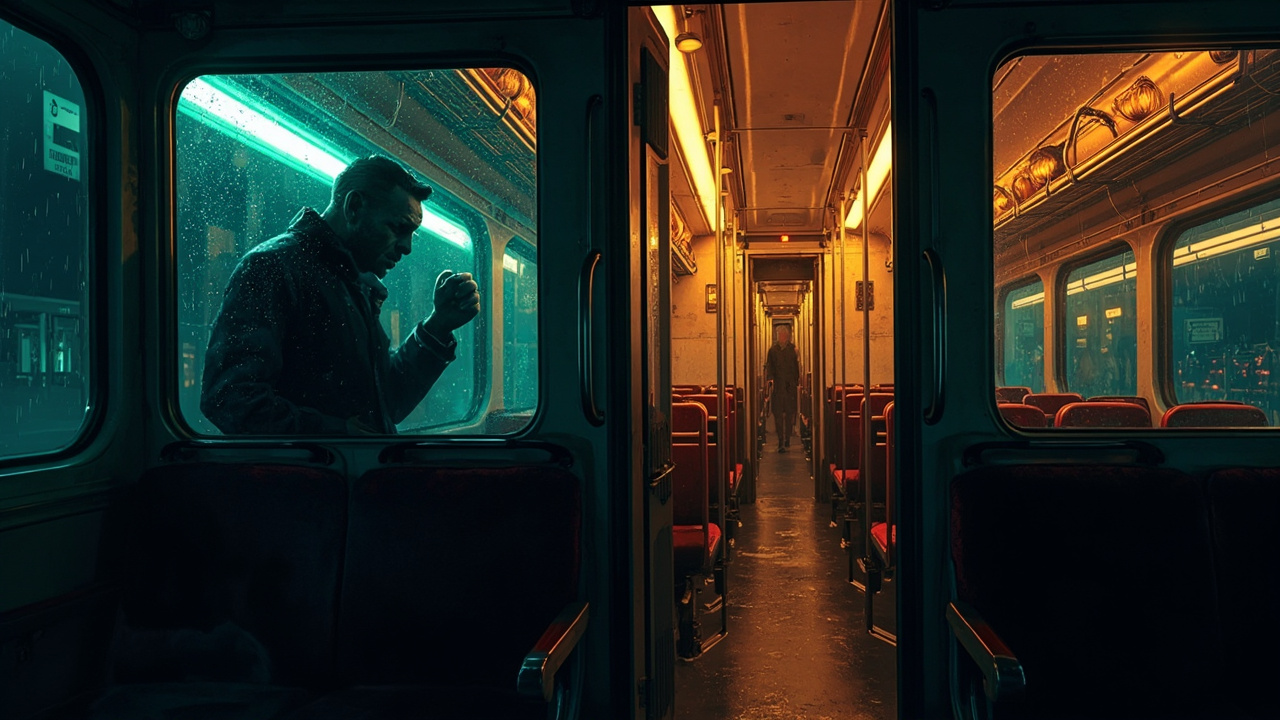
القطار إلى لا مكان
كان قطار الساعة 11:47 المتجه إلى آشفورد دائمًا أقل قطارات توماس تفضيلًا خلال اليوم. ففي تمام الحادية عشرة والنصف، بعد أربع عشرة ساعة من الانحناء فوق جداول البيانات، لم يكن الاقتراب من أربعين دقيقة في صندوق معدني مهتز يحمل أي جاذبية على الإطلاق. ومع ذلك ها هو ذا، حقيبته القانونية مُحكَمة بين يديه كتعويذة، يتقدم بتردد عبر الرصيف خافت الإضاءة مع تلك الأرواح التائهة الأخرى التي فاتتها -أو ربما رغبت فقط في تأجيل- مواساة أسرتها.
صعد إلى العربة الثانية من المقدمة، واختار مقعدًا بجانب النافذة بالقرب من المؤخرة. كانت العربة قليلة السكان: امرأة ترتدي شالًا على رأسها وهي تغفو ضد الزجاج، وطالب جامعي بسماعات تسرّب موسيقى رقيقة، ورجل عجوز يقرأ كتابًا ورقيًا اختفى غلافه منذ زمن طويل ليصبح بلون غير مميز. لم يتكلم أحد. صمت ركاب المواصلات في وقت متأخر من الليل شيء غريب -مضغوط، متوقع، كأنهم جميعًا يحبسون أنفاسهم جماعيًا ضد الأسبوع القادم.
استقر توماس في مقعده وضغط جبينه ضد النافذة الباردة. الريف beyond كان مبتلعًا بالظلام؛ لم يستطع رؤية شيء سوى انعكاسه المنهك المفترض فوق الليل. اهتز القطار واندفع إلى الحركة، وشعر بالثقل المألوف ليومه يبدأ في الارتفاع، محلوله باضطراب غريب يأتي من التحديق في الفراغ لفترة طويلة جدًا.
لا بد أنه أغمض عينيه. عندما فتحهما، كان القطار قد توقف -رغم أنه لم يلاحظ التباطؤ، لم يسمع أي إعلان. عبر النافذة، لم يكن هناك سوى السواد. الركاب الآخرون اختفوا. كانت العربة فارغة.
استشار توماس ساعته: 11:52. وفقًا لهاتفه، المحطة التالية كانت لا تزال بعيدة اثنتي عشرة دقيقة. ومع ذلك هنا يجلس القطار، ثابتًا في الظلام، الشريط الفلوري فوقه يرمش بنبض كسول غير منتظم.
وقف. مفاصله احتجت. الباب في نهاية العربة كان يستدعيه، ووجد نفسه يمشي نحوه، خطواته عالية بشكل غير طبيعي في السكون. ما وراء الممر الرابط كانت عربة أخرى -لكنها لم تكن العربة التي صعد إليها. هذه واحدة أقدم. بشكل مستحيل أقدم.
المقاعد كانت مبطنة بقطيفة عنابية داكنة، باهتة إلى بريق يتحدث عن رحلات لا تُحصى. التركيبات النحاسية تتوهج خافتة تحت إضاءة كهرمانية بدت تنبعث منها الدفء بدلًا من مجرد إنارة. لم تكن هناك أشرطة فلورية علوية هنا؛ بدلاً من ذلك، مصابيح خزفية صغيرة تصب بركًا من الضوء الذهبي على فترات على طول السقف. كان الأمر كما لو أن شخصًا ما التقط صورة لعربة قطار من عشرينيات القرن الماضي وألقى بها، بشكل لا يُفسر، في الحاضر.
على المقعد بجانبه كانت هناك صحيفة. التقطها بأصابع مرتجفة. العنوان الرئيسي أعلن زواج أميرة لم يسمع بها قط. تأريخ الورقة: يونيو 1923.
عقله بحث بشكل محموم عن تفسيرات منطقية. نسخة طبق الأصل؟ موقع تصوير فيلم؟ لكن الورقة شعرت حقيقية -وزنها، ملمسها، الرائحة الكيميائية الخافتة للحبر القديم. لم تكن ديكورًا.
مشى أكثر في العربة. الهواء كان مختلفًا هنا: أدفأ، منقوش بشبح التبغ والعطور. في النهاية البعيدة، جلست امرأة وحدها، وجهها محجوب بإ brim قبعة مريش. كانت تضحك على شيء -أو ربما مع شخص لا يستطيع رؤيته. الصوت كان رقيقًا، حزينًا، غير متوافق تمامًا مع استحالة وجودها.
فتح توماس فمه ليتكلم، لكن لم يخرج أي صوت. حاول مرة أخرى. لا شيء.
ثم لاحظ الآخرين: رجل نبيل في بدلة تويد يقرأ كتابًا مربوطًا بالجلد؛ شابة شابة ترتدي قبعة كلوش، تطريز يستقر في حجرها؛ طفل يمسك أرنبًا محشوًا بكثافة يائسة الخاصة بالمصغرين جدًا.
كانوا جميعًا مثبتين تمامًا، هادئين تمامًا، كأنهم وضعوا لبروتريه تُرك لتطويره لقرن. وكانوا ينظرون إليه. ليس بشر أو ارتباك، بل بفضول صبور نوعًا ما -الطريقة التي يمكن بها ملاحظة حشرة ضلت طريقها إلى الغرفة الخطأ.
واحد منهم، امرأة عجوز بشعر رمادي فولاذي، ابتسمت بلطف ومالت برأسها، كأنها تقول: آه. أنت هنا.
ثم اهتز القطار. الأضواء تغيرت. المقاعد المخملية حلت محلها البلاستيك البالي، التوهج الكهرماني بالفلوري البارد، ووجد توماس نفسه واقفًا في ممر عربته الخاصة، قطار 11:47 الآن يصل إلى محطته.
نزل من القطار على ساقين مرتجفتين ولم ينظر إلى الوراء.
في الأيام التي تلت، بحث توماس عن إجابات. وجد جداول سكة حديدية قديمة، تفحص أرشيفات، طرح أسئلة على سائقين متقاعدين نظروا إليه بارتباك شفقة. لم تكن هناك عربة ثانية قط على 11:47. الخط لم يمتد عبر عشرينيات القرن الماضي. أو إذا كان كذلك، لم يفكر أحد في تسجيل الحقيقة.
ربما، خلص، هناك أماكن تتراكم فيها الزمن بدلاً من أن يتدفق -كالرواسب في قاع نهر، لم تُزعج لسنوات حتى يثيرها تيار غريب ويرسبها، للحظة، على السطح.
لم ير العربة المضاءة بالكهرمانية مرة أخرى. لكن أحيانًا، على القطار المتأخر، عندما يضغط الظلام outside ضد النوافذ وهدير أضواء الفلوري مع تلك التردد المحدد الذي يجعل الأسنان تنخلع، كان يظن أنه يسمع، عند حافة الإدراك، همهمة بعيدة للأصوات ونقرًا ناعمًا لإبر الخياطة -دليل، ربما، على أن الماضي لا يتركنا أبدًا حقًا. إنه ببساطة يتعلم الانتظار.
Der Zug ins Nichts
Der 11:47er nach Ashford war schon immer Thomas' unbeliebtester Zug des Tages gewesen. Um halb zwölf, nach vierzehn Stunden über Tabellen gebeugt, hatte die Aussicht auf vierzig Minuten in einer rüttelnden Metallkiste keinerlei Reiz. Und doch war er hier, seinen Aktenkoffer umklammert wie einen Talisman, und schlurfte über den schwach beleuchteten Bahnsteig zusammen mit den anderen verlorenen Seelen, die - oder vielleicht einfach den Komfort ihres eigenen Bettes hinauszögern wollten.
Er stieg in den zweiten Wagen von vorne, wählte einen Fensterplatz nahe dem Hinterausgang. Der Wagen war spärlich besetzt: eine Frau mit Kopftuch, die gegen die Scheibe döste, ein Student mit Kopfhörern, aus denen blecherne Musik tropfte, ein älterer Herr, der ein Taschenbuch las, dessen Einband längst zu einer nicht mehr identifizierbaren Farbe verblasst war. Niemand sprach. Die Stille spätabendlicher Pendler ist etwas Besonderes -压缩, erwartungsvoll, als hielten sie kollektiv den Atem an gegen die kommende Woche.
Thomas ließ sich in seinen Sitz sinken und presste seine Stirn gegen das kalte Fenster. Die Landschaft dahinter war von Dunkelheit verschlungen; er konnte nichts sehen außer seinem eigenen erschöpften Spiegelbild, das sich über die Nacht legte. Der Zug rüttelte und setzte sich in Bewegung, und er spürte, wie das vertraute Gewicht des Tages begann sich zu heben, ersetzt durch die eigenartige Desorientiertheit, die来自于 zu lange ins Nichts zu starren.
Er muss eingedöst sein. Als er die Augen öffnete, hatte der Zug angehalten - obwohl er das Verlangsamen nicht bemerkt, keine Durchsage gehört hatte. Durch das Fenster gab es nur Schwärze. Die anderen Passagiere waren verschwunden. Der Wagen war leer.
Thomas konsultierte seine Uhr: 23:52. Laut seinem Telefon war der nächste Bahnhof noch zwölf Minuten entfernt. Und doch saß der Zug hier, still in der Dunkelheit, der Leuchtstreifen über ihm blinkte mit einem trägen, arrhythmischen Puls.
Er stand auf. Seine Gelenke protestierten. Die Tür am fernen Ende des Wagens winkte ihn herbei, und er fand sich gehend darauf zu, seine Schritte unnatürlich laut in der Stille. jenseits des Verbindungsgangs lag ein weiterer Wagen - aber es war nicht derselbe Wagen, in den er eingestiegen war. Dieser hier war älter. Unmöglich älter.
Die Sitze waren mit tiefem burgunderrotem Samt gepolstert, abgewetzt bis zu einer Patina, die von zahllosen Reisen erzählte. Messingbeschläge glänzten matt im bernsteinfarbenen Licht, das Wärme zu verströmten schien statt nur zu beleuchten. Keine Deckenleuchtstoffröhren hier; stattdessen warfen kleine Porzellanlampen goldenes Licht in Abständen an die Decke. Es war, als hätte jemand ein Foto eines Zugwagens aus den 1920er Jahren aufgenommen und es unerklärlicherweise in die Gegenwart projiziert.
Auf dem Sitz neben ihm lag eine Zeitung. Er hob sie mit zitternden Fingern auf. Die Schlagzeile kündigte die Hochzeit einer Prinzessin an, von der er noch nie gehört hatte. Die Zeitung war auf Juni 1923 datiert.
Sein Verstand suchte verzweifelt nach rationalen Erklärungen. Ein Nachbau? Ein Filmset? Aber das Papier fühlte sich echt an - sein Gewicht, seine Textur, der schwache chemische Geruch von gealtertem Zeitungspapier. Es war keine Requisite.
Er bewegte sich tiefer in den Wagen. Die Luft war hier anders: wärmer, getränkt vom Geist des Tabaks und Parfüms. Am fernen Ende saß eine Frau allein, ihr Gesicht vom Rand eines Federhuts verdeckt. Sie lachte über etwas - oder vielleicht mit jemandem, den er nicht sehen konnte. Der Klang war zart, melancholisch, völlig deplatziert angesichts der Unmöglichkeit ihrer Anwesenheit.
Thomas öffnete den Mund zum Sprechen, aber kein Laut kam heraus. Er versuchte es erneut. Nichts.
Es war dann, dass er die anderen bemerkte: einen Herrn im Tweedanzug, der ein in Leder gebundenes Buch las; eine junge Frau in einem Cloche-Hut, mit Stickerei auf ihrem Schoß; ein Kind, das ein Stoffkaninchen mit der verzweifelten Intensität sehr junger Menschen umklammerte. Sie waren alle vollkommen still, vollkommen gefasst, als wären sie für ein Porträt posiert, das man ein Jahrhundert lang entwickeln ließ. Und sie schauten ihn an. Nicht mit Bosheit oder Verwirrung, sondern mit einer Art geduldiger Neugier - so wie man ein Insekt beobachten könnte, das ins falsche Zimmer geraten ist.
Einer von ihnen, eine ältere Frau mit stahlgrauem Haar, lächelte sanft und neigte den Kopf, als wollte sie sagen: Ah. Da sind Sie ja.
Dann ruckte der Zug. Die Lichter wechselten. Die Samtsitze wichen abgewetztem Plastik, das Bernsteinleuchten kaltem Neon, und Thomas fand sich im Gang seines eigenen Wagens stehend, während der 11:47er gerade in seinen Bahnhof einfuhr.
Er stieg mit zitternden Beinen aus dem Zug und sah nicht zurück.
In den folgenden Tagen suchte Thomas nach Antworten. Er fand alte Fahrpläne, durchsuchte Archive, stellte Fragen an pensionierte Schaffner, die ihn mit mitleidiger Verwirrung anschauten. Es hatte niemals einen zweiten Wagen am 11:47er gegeben. Die Strecke hatte nicht durch die 1920er geführt. Oder wenn doch, hatte niemand daran gedacht, die Tatsache aufzuzeichnen.
Vielleicht, schloss er, gibt es Orte, wo sich Zeit ansammelt anstatt zu fließen - wie Sedimente am Grund eines Flusses, jahrelang ungestört, bis irgendeine Laune der Strömung sie aufwühlt und kurzzeitig an die Oberfläche bringt.
Er sah den bernsteinbeleuchteten Wagen nie wieder. Aber manchmal, auf dem Spätzug, wenn die Dunkelheit draußen gegen die Fenster drückte und die Leuchtstofflampen mit jener bestimmten Frequenz summten, die einem die Zähne zusammenbeißt, glaubte er, ganz am Rande der Wahrnehmung, das ferne Murmeln von Stimmen und das sanfte Klicken von Stricknadeln zu hören - Beweis vielleicht, dass die Vergangenheit uns nie wirklich verlässt. Sie lernt lediglich zu warten.
Le Train vers Nulle Part
Le train de 11h47 pour Ashford avait toujours été le moins apprécié de Thomas dans la journée. À onze heures et demie, après quatorze heures courbé sur des tableurs, la perspective de quarante minutes dans une boîte métallique cahotante n'avait aucun attrait. Et pourtant, le voici, mallette serrée comme un talisman, avançant à pas feutrés sur le quai mal éclairé avec les autres âmes perdues qui avaient raté - ou peut-être simplement souhaité reporter - le réconfort de leur propre lit.
Il monta dans la deuxième voiture depuis l'avant, choisit un siège côté fenêtre vers l'arrière. La voiture était peu fréquentée : une femme en foulard somnolant contre la vitre, un étudiant universitaire avec des écouteurs d'où fuyait une musique grésillante, un vieil homme lisant un livre de poche dont la couverture avait depuis longtemps pâli jusqu'à une teinte méconnaissable. Personne ne parlait. Le silence des navetteurs en fin de soirée est quelque chose de particulier - compressé, expectatif, comme s'ils retenaient tous collectivement leur souffle contre la semaine à venir.
Thomas s'installa dans son siège et pressa son front contre la vitre froide. La campagne au-delà était engloutie par l'obscurité ; il ne pouvait rien voir sinon son propre reflet épuisé se superposant à la nuit. Le train cahota et se mit en mouvement, et il sentit le poids familier de la journée commencer à se lever, remplacé par la désorientation particulière qui vient de fixer le vide trop longtemps.
Il a dû s'assoupir. Quand il ouvrit les yeux, le train s'était arrêté - bien qu'il n'ait pas remarqué le ralentissement, n'ait pas entendu d'annonce. Par la fenêtre, il n'y avait que les ténèbres. Les autres passagers avaient disparu. La voiture était vide.
Thomas consulta sa montre : 23h52. D'après son téléphone, la prochaine gare était encore à douze minutes. Et pourtant, ici le train était immobile, immobile dans l'obscurité, la bande fluorescente au-dessus clignotant avec un pouls paresseux et arythmique. Il se leva. Ses articulations protestèrent. La porte au bout de la voiture l'appelait, et il se retrouva marchant vers elle, ses pas anormalement forts dans le silence.
Au-delà du vestibule de correspondance se trouvait une autre voiture - mais ce n'était pas la même voiture qu'il avait montée. Celle-ci était plus ancienne. Impossibilitément plus ancienne. Les sièges étaient revêtus de velours bordeaux profond, usés jusqu'à une patine qui parlait d'innombrables voyages. Les garnitures en laiton brillaient faiblement sous un éclairage ambré qui semblait émettre de la chaleur plutôt qu'une simple illumination. Il n'y avait pas de bandes fluorescentes suspendues ici ; à la place, de petites lampes en porcelaine projetaient des flaques de lumière dorée à intervalles le long du plafond. C'était comme si quelqu'un avait pris une photo d'un wagon de chemin de fer des années 1920 et l'avait, inexplicablement, projetée dans le présent.
Sur le siège à côté de lui se trouvait un journal. Il le ramassa d'une main tremblante. Le gros titre annonçait le mariage d'une princesse dont il n'avait jamais entendu parler. Le journal était daté de juin 1923.
Son esprit cherchait désespérément des explications rationnelles. Une réplique ? Un plateau de tournage ? Mais le papier semblait réel - son poids, sa texture, la légère odeur chimique du papier journal vieilli. Ce n'était pas un accessoire.
Il avança plus profondément dans la voiture. L'air était différent ici : plus chaud, teinté du fantôme du tabac et du parfum. Au fond, une femme était assise seule, son visage obscurci par le bord d'un chapeau à plumes. Elle riait de quelque chose - ou peut-être avec quelqu'un qu'il ne pouvait pas voir. Le son était délicat, mélancolique, parfaitement incongru avec l'impossibilité de sa présence.
Thomas ouvrit la bouche pour parler, mais aucun son ne sortit. Il réessaya. Rien.
C'est alors qu'il remarqua les autres : un gentleman en costume de tweed lisant un livre relié de cuir ; une jeune femme en chapeau cloche, une broderie reposant sur ses genoux ; un enfant serrant un lapin en peluche avec l'intensité désespérée des très jeunes. Ils étaient tous parfaitement immobiles, parfaitement composed, comme posés pour un portrait qu'on aurait laissé développer pendant un siècle. Et ils le regardaient. Non pas avec malveillance ou confusion, mais avec une sorte de curiosité patiente - la façon dont on pourrait observer un insecte qui s'est égaré dans la mauvaise pièce.
L'un d'eux, une femme âgée aux cheveux gris acier, sourit doucement et inclina la tête, comme pour dire : Ah. Vous voilà.
Puis le train cahota. Les lumières changèrent. Les sièges en velours cédèrent la place à du plastique usé, la lueur ambre à une fluorescence froide, et Thomas se retrouva debout dans l'allée de sa propre voiture, le 11h47 arrivant maintenant à sa gare.
Il descendit du train sur des jambes tremblantes et ne regarda pas en arrière.
Dans les jours qui suivirent, Thomas chercha des réponses. Il trouva d'anciens horaires de chemin de fer, parcourut des archives, posa des questions à des contrôleurs à la retraite qui le regardèrent avec une pitié perplexe. Il n'y avait jamais eu de deuxième voiture sur le 11h47. La ligne n'avait pas traversé les années 1920. Ou si c'était le cas, personne n'avait pensé à enregistrer le fait.
Peut-être, conclut-il, y a-t-il des endroits où le temps s'accumule plutôt qu'il ne s'écoule - comme des sédiments au fond d'une rivière, intacts pendant des années jusqu'à ce qu'un courant freak le remue et le dépose, brièvement, à la surface.
Il ne revit jamais la voiture baignée de lumière ambre. Mais parfois, dans le train tardif, quand l'obscurité outside pressait contre les fenêtres et que les lumières fluorescentes bourdonnaient avec cette fréquence particulière qui fait grincer les dents, il pensait entendre, juste aux confins de la perception, le murmure lointain des voix et le léger cliquetis des aiguilles à tricoter - preuve, peut-être, que le passé ne nous quitte jamais vraiment. Il apprend simplement à attendre.
Поезд в никуда
Электричка 11:47 до Эшфорда всегда была для Томаса наименее любимой за весь день. В половину двенадцатого, после четырнадцати часов, проведённых согнувшись над таблицами, перспектива сорока минут в грохочущей металлической коробке не сулила ничего приятного. И всё же вот он, сжимая портфель как талисман, семенит по тускло освещённой платформе вместе с другими заблудшими душами, которые опоздали — или, возможно, просто решили отложить — утешение собственной постели.
Он сел во второй вагон с головы поезда, выбрав место у окна ближе к хвосту. В вагоне было малолюдно: женщина в платке дремала, прислонившись к стеклу, студент с наушниками, из которых сочилась дребезжащая музыка, пожилой мужчина читал paperback, обложка которого давно выцвела до неопределимого оттенка. Никто не разговаривал. Тишина поздних пассажиров — вещь особенная: сжатая, напряжённая, словно все они задержали дыхание в ожидании грядущей недели.
Томас устроился на месте и прижался лбом к холодному стеклу. За окном простиралась тьма; он не видел ничего, кроме собственного измотанного отражения, наложившегося на ночь. Поезд содрогнулся и тронулся с места, и он почувствовал, как знакомый груз дня начинает отступать, сменяясь странной дезориентацией, которая приходит от слишком долгого взгляда в никуда.
Должно быть, он задремал. Когда открыл глаза, поезд стоял — хотя он не заметил замедления, не слышал объявления. За окном была только тьма. Другие пассажиры исчезли. Вагон был пуст.
Томас глянул на часы: 23:52. Согласно телефону, до следующей станции оставалось ещё двенадцать минут. И всё же здесь поезд стоял неподвижно во тьме, флуоресцентная полоса над головой мигала ленивым, аритмичным пульсом.
Он встал. Его суставы протестовали. Дверь в дальнем конце вагона манила, и он обнаружил, что идёт к ней, его шаги неестественно громкие в тишине. За соединительным тамбуром лежал ещё один вагон — но это был не тот вагон, в который он садился. Этот был старше. Невозможно старше.
Сиденья были обиты глубоким бордовым бархатом, потёртым до патины, которая говорила о бесчисленных поездках. Латунная фурнитура тускло поблёскивала в янтарном свете, казавшемся источающим тепло, а не просто освещение. Здесь не было потолочных люминесцентных лент; вместо них маленькие фарфоровые лампы отбрасывали золотые лужи света с интервалами вдоль потолка. Было похоже, что кто-то сфотографировал вагон 1920-х годов и каким-то необъяснимым образом спроецировал его в настоящее.
На сиденье рядом с ним лежала газета. Он поднял её дрожащими пальцами. Заголовок сообщал о свадьбе принцессы, о которой он никогда не слышал. Газета была датирована июнем 1923 года.
Его разум судорожно искал рациональные объяснения. Реконструкция? Декорация к фильму? Но бумага казалась настоящей — её вес, текстура, слабый химический запах состаренной газетной бумаги. Это была не бутафория.
Он двинулся глубже в вагон. Воздух здесь был другим: теплее, отдающий призраком табака и духов. В дальнем конце сидела женщина, её лицо скрыто полями шляпы с перьями. Она смеялась над чем-то — или, возможно, с кем-то, кого он не видел. Звук был нежным, меланхоличным, совершенно неуместным в свете невозможности её присутствия.
Томас открыл рот, чтобы заговорить, но не издал ни звука. Попробовал снова. Ничего.
И тут он заметил остальных: джентльмена в твидовом костюме, читающего кожаную книгу; молодую женщину в шляпке-колокольчик с вышивкой на коленях; ребёнка, сжимающего плюшевого кролика с отчаянной интенсивностью очень маленьких. Все они были совершенно неподвижны, совершенно невозмутимы, словно позировали для портрета, который оставили проявляться на целый век. И они смотрели на него. Не со злом или замешательством, а с терпеливым любопытством — как можно наблюдать за насекомым, заблудившимся не в ту комнату.
Одна из них, пожилая женщина со стальными седыми волосами, мягко улыбнулась и склонила голову, словно говоря: А. Вот и ты.
Затем поезд качнулся. Огни изменились. Бархатные сиденья сменились потёртым пластиком, янтарное сияние — холодной люминесценцией, и Томас обнаружил, что стоит в проходе своего вагона, 11:47 теперь прибывает на его станцию.
Он сошёл с поезда на трясущихся ногах и не оглянулся.
В последующие дни Томас искал ответы. Он нашёл старые расписания поездов, просмотрел архивы, задавал вопросы вышедшим на пенсию кондукторам, которые смотрели на него с жалостным недоумением. На 11:47 никогда не было второго вагона. Линия не проходила через 1920-е годы. Или если проходила, никто не подумал это записать.
Возможно, заключил он, есть места, где время накапливается, а не течёт — как осадок на дне реки, нетронутый годами, пока какое-то странное течение не взбудоражит его и не вынесет, ненадолго, на поверхность.
Он никогда больше не видел вагон с янтарным освещением. Но иногда, на позднем поезде, когда темнота снаружи подступала к окнам, а люминесцентные лампы гудели с той самой частотой, от которой зубы сводит, ему казалось, что он слышит — на самом краю восприятия — дальний шёпот голосов и тихий щелчок спиц для вязания — доказательство, возможно, что прошлое никогда по-настоящему нас не покидает. Оно просто учится ждать.