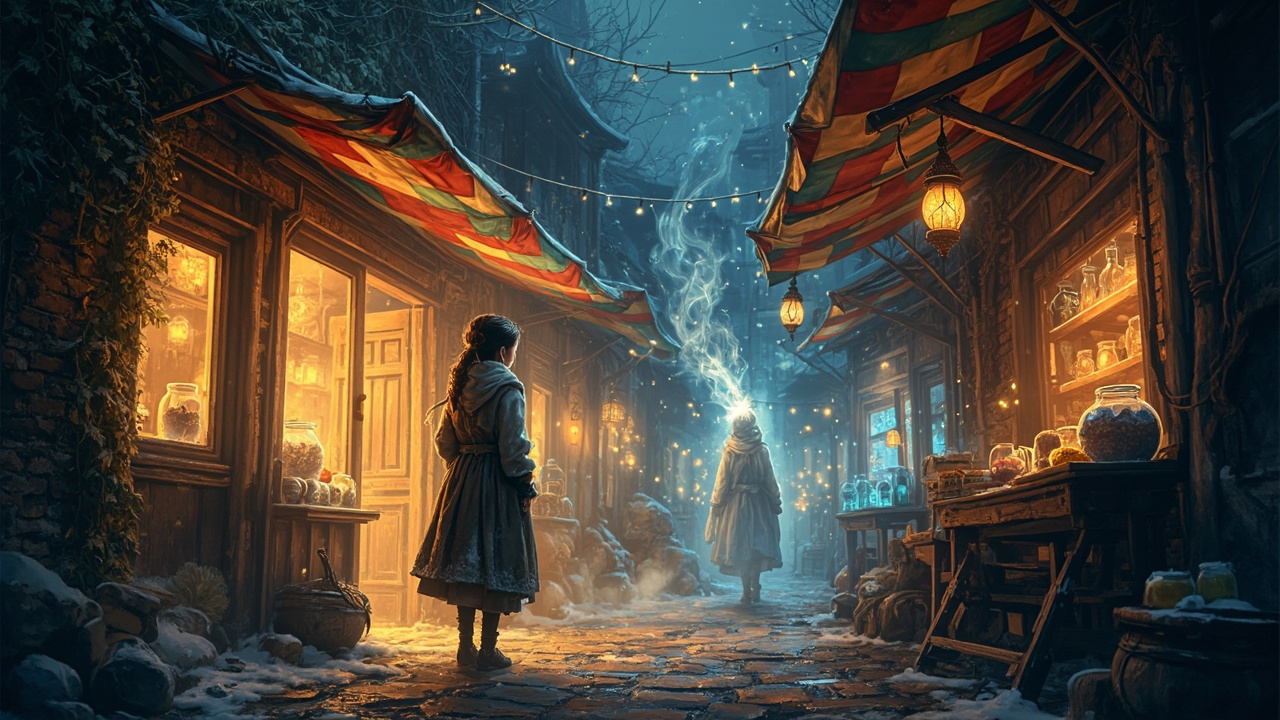
كانت الأفران قد أُشعلت ورُويت قبل ثلاث ساعات، لكن مارين كانت لا تزال تشعر بالدفء الوهمي لأصابع الصباح المتلبسة بالطحين منقوشاً في راحة يديها. وقفت وحدها في مؤخرة المخبز، تطوي طرود الخبز من昨天的 في غطاء من القماش وتضعها في واجهة العرض، بينما باقي البلدة يغرق في نوم هادئ تحت سماء نوفمبر. لم يُصدر حذاؤها صوتاً يذكر على ألواح الصنوبر البالية وهي تعمل، وذهبت أفكارها تائهة نحو الشقة الفارغة فوق المتجر حيث لا شيء ينتظرها سوى الصمت وأنابيب التدفئة الباردة. لم يكن من المنتظر وصول شحنة منتصف الليل إلا بعد ساعة أخرى، فخرجت لتتنفس هواء الليل، شادة معطفها بقوة أكبر ضد الريح القارسة. كانت الشارع مهجورة، والحجارة الصغيرة مبللة بالثلج، وفي مكان ما بعيد كانت أجراس الكنيسة تضرب اثنتي عشرة نغمة جوفاء. ذلك كان حين لاحظت النور. انسكب من الزقاقة الضيقة بجانب المخبز — وهج دافئ عنبري بدا غير مناسب تماماً لهذه الساعة. كانت مارين قد مشت في هذه الحارة ألف مرة وتعرف أنها لا تؤدي إلى أي مكان، تنتهي عند جدار طوبي عالٍ مغطى بعرق الذهب. ومع ذلك، كان النور يناديها، واعداً بشيء لا تستطيع تسميته. ضد كل غريزة رسختها سنوات من الحياة وحدة، تبعته. امتدت الزقاقة بشكل مستحيل أبعد مما تسمح به الفيزياء. ضاقت الجدران، ثم اتسعت من جديد، وتزايد النور قوة حتى خرجت إلى مشهد يتحدى كل ما اعتقدت أنها تعرفه. أقيمت أكشاك في هذا الفضاء الشبيه بالفناء، كانت أقنعتها القماشية مرقعة بعشرات الألوان المختلفة، مضاءة من الداخل بمصابيح لا تومض. كان الهواء يحمل رائحة دخان الأرز وأي شيء أحلى — ربما العسل، أو الحنين المدرك. تنقل الناس بين الأكشاك، رغم أن تسميتهم بالناس بدت غير دقيقة. كانوا يومضون عند الحواف، أشكالهم غير مؤكدة، وجوههم جميلة جداً أو غريبة جداً بحيث لا تستطيع أن تحافظ على نظراتها عليها لفترة طويلة. لم يتكلموا بصوت عالٍ؛ تحدثاتهم جرت في نظرات وإيماءات، في ضغطة راحة يد على صدر آخر. كان أول ما خطر ببال مارين أنها فقدت عقلها. وثاني ما خطر لها أنها لم تكن تهتم بشكل خاص. اقتربت من أقرب كشك، حيث جلست امرأة عجوز تحيط بها مرطبانات زجاجية تتوهج خافتة من الداخل. احتوى كل مرطبان على شيء يتحرك كالضوء السائل — أحياناً فضي، أحياناً ذهبي، وأحياناً أزرق عميق حزين. "ذكريات،" قالت المرأة دون أن ترفع رأسها من فرزها. "وعواطف، لمن لديهم العملة للإنفاق. خذ ما تشاء، يا طفلتي، لكن اعلمي أن كل تبادل يتركك ناقصة. أو ربما —" رفعت حاجبها الواحد — "مثرية. يعتمد الأمر على ما تستطيع تحمل خسارته." "ما هو الثمن؟" سألت مارين، صوتها أكثر ثباتاً مما كانت تشعر. ابتسمت المرأة، وكانت تلك الابتسامة التي شهدت أكثر من اللازم. "الثمن دائماً شخصي. ذكرى عزيزة، تُستبدل بشيء تشتهيه أكثر. عاطفة تستطيع العيش بدونها، تستسلم لواحدة تحتاجها بشدة. شاهدت يوماً رجلاً يتخلى عن عشرين عاماً من وجه زوجته — وجهها بالضبط، محفوظاً تماماً في الكريستال — وفي المقابل получил القدرة على مسامحة نفسه." تجولت مارين أعمق في السوق، مروراً بأكشاك تعرض حفنات من ضوء النجوم وقوارير من صرخات مكبوتة، مروراً بتجار يتعاملون في لغات منسية وعبق أول حب. توقفت عند كشك كان شاب يتبادل قدرته على الغيرة بهدية الثقة غير المشروطة. شاهدت طفلاً يتبادل خوفه من الظلام بذاكرة يدي جدته. ثم وجدت نفسها تقف أمام كشك يختلف عن البقية، حيث لم يُعرض شيء ولا تاجر ينتظر. كان القماش فوقه بنفسجي داكن كلون الكدمة، وكان الفضاء تحته ثقيلاً، متوقعاً. صعد صوت من الظلال — ليس صوت التاجر، بل شيء أقدم، شيء سكن دائماً في نخاع عظامها. "أنت متعبة، أيتها الخبازة. عملت ليالي أحد عشر عاماً. عجنت العجين حتى آلمت كتفيك وقمت قبل الفجر حتى نسيت ما يعنيه النوم حتى وقت متأخر. أطعمت بلدة لم تتعلم قط اسمك." لم تقل مارين شيئاً. لم يكن هناك ما تقوله. "أستطيع أن أعطيك ما تريدين حقاً،" استمر الصوت. "صلة. شخص يلاحظك. شخص يتذكر أنك موجودة حين تشرق الشمس وتغرب. مقابل..." امتدت الوقفة كالحلوى المطوية. "مقابل ذلك، ستنسي ما يعنيه خبز الخبز. كل وصفة، كل تقنية، كل طقس باكر — يختفي. ستستيقظين غداً عاجزة عن صنع رغيف لو كان حياتك تعتمد عليه." أغلقت مارين عينيها. المخبز كان كل ما تملكه. كان صحيحاً أن الوحدة كانت تضغط أحياناً على صدرها كوزن مادي، أنها اعتادت على التحدث إلى أفرانها، أنها تساءلت أحياناً ما إذا كان غيابها سيُلاحظ حتى. لكن الخبز — الخبز كان يعرفها. الطحين كان يعرف يديها. وربما كان ذلك كافياً. ربما كان لا بد أن يكون كافياً. "لا،" قالت بهدوء. لم يصدر الصوت أي صوت خيبة. simplesmente تراجع، كما بدأ السوق يذوب من حولها — الأكشاك تتفكك كضباب الصباح، المصابيح تنطفئ واحدة تلو الأخرى، والأشكال الغريبة تومض بعيداً إلى أينما جاءت. مشت عائدة عبر الزقاقة التي كانت مرة أخرى مجرد زقاقة، الجدار صلب أمامها، وخرجت إلى الشارع المتجمد تحت الصقيع. الفجر كان يبدأ بكدمات الأفق. ستصل شاحنة التوصيل قريباً. صعدت مارين الدرج إلى شقتها، صنع لها كوب شاي، ووقفت عند النافذة تراقب السماء تتلون من الرمادي إلى الذهبي. عندما نزلت إلى المخبز بعد ساعة، عملت بنفس اليدين كالمعتاد، تشكل العجين إلى أرغفة بنفس الحركات التي صارت لغتها الوحيدة. لكن الآن، حين رنت جرس الباب بإعلانه المعتاد، نظرت إلى الأعلى. التقت عيون كل زبون يدخل. تعلمت أسمائهم. وأحياناً، في الساعات الصغيرة حين تطن الأفران والبلدة نائمة، تتساءل أحياناً عن السوق، عمّا قد يحدث لو كانت قد اختارت بشكل مختلف. لكن ليس الحنين — فقط الفضول الدافئ. والأيام تمضي، أرغفة بعد أرغفة، وشيء ما يبدأ في التغيير ببطء في المساحات الفارغة بين زبائن المخبز.
Die Öfen waren vor drei Stunden angeheizt und abgedeckt worden, doch Maren konnte immer noch die Phantomwärme mehliger Morgen in ihren Handflächen spüren. Sie stand allein im hinteren Teil der Bäckerei, wickelte in Tuch eingeschlagene Pakete des gestrigen Brotes in die Auslage, während der Rest der Stadt ungestört unter einem Novemberhimmel schlief. Ihre Stiefel machten wenig Geräusch auf den abgetragenen Kieferndielen, während sie arbeitete, ihre Gedanken schweiften zu der leeren Wohnung über dem Laden, wo nichts auf sie wartete außer Stille und kalten Heizungsrohren. Die Mitternachtslieferung würde erst in einer weiteren Stunde eintreffen, also trat sie hinaus, um einen Atemzug Nachtluft zu holen, zog ihren Mantel enger gegen den beißenden Wind. Die Straße war ausgestorben, das Kopfsteinpflaster glatt vom Reif, und irgendwo in der Ferne schlug eine Kirchenuhr zwölf hohle Töne. Das war, als sie das Licht bemerkte. Es ergoss sich aus der engen Gasse neben der Bäckerei — ein warmes, bernsteinfarbenes Glühen, das für die Stunde völlig fehl am Platz schien. Maren war diese Gasse tausendmal gegangen und wusste, dass sie nirgendwohin führte, endete an einer hohen Backsteinmauer, bedeckt mit Efeu. Und doch rief das Licht sie, versprach etwas, das sie nicht benennen konnte. Gegen jeden Instinkt, geschärft durch Jahre des einsamen Lebens, folgte sie ihm. Die Gasse erstreckte sich unmöglich weiter, als die Physik erlauben sollte. Die Wände verengten sich, weiteten sich dann wieder, und das Licht wurde stärker, bis sie in eine Szene trat, die allem widersprach, was sie zu wissen glaubte. Stände waren in dem hofartigen Raum errichtet worden, ihre Leinenvordächer mit einem Dutzend verschiedener Farben geflickt, von innen durch Laternen beleuchtet, die ohne Flackern brannten. Die Luft roch nach Zedernrauch und etwas Süßerem — Honig vielleicht, oder Nostalgie, greifbar gemacht. Menschen bewegten sich zwischen den Ständen, obwohl sie sie kaum als Menschen bezeichnen konnte. Sie flackerten an den Rändern, ihre Formen unsicher, ihre Gesichter zu schön oder zu fremd, als dass ihr Blick lange darauf verweilen könnte. Sie sprachen nicht laut; ihre Gespräche fanden in Blicken und Gesten statt, im Drücken einer Handfläche gegen die Brust eines anderen. Marens erster Gedanke war, dass sie den Verstand verloren hatte. Ihr zweiter Gedanke war, dass es ihr nicht besonders wichtig war. Sie näherte sich dem nächsten Stand, wo eine ältere Frau zwischen Gläsern saß, die schwach von innen heraus leuchteten. Jedes Glas enthielt etwas, das sich wie flüssiges Licht bewegte — manchmal silbern, manchmal golden, manchmal ein tiefes, trauriges Blau. "Erinnerungen," sagte die Frau, ohne von ihrem Sortieren aufzublicken. "Und Emotionen, für diejenigen, die die Währung haben auszugeben. Nimm, was du willst, Kind, aber wisse, dass jeder Tausch dich verringert. Oder vielleicht —" sie hob eine Augenbraue — "bereichert. Es hängt davon ab, was du zu verlieren ertragen kannst." "Was ist der Preis?" fragte Maren, ihre Stimme fester als ihr zumute war. Die Frau lächelte, und es war ein Lächeln, das zu viel gesehen hatte. "Der Preis ist immer persönlich. Eine geschätzte Erinnerung, eingetauscht gegen etwas, das du mehr begehrst. Eine Emotion, ohne die du leben kannst, aufgegeben für eine, die du verzweifelt brauchst. Ich habe einmal einen Mann beobachtet, der zwanzig Jahre vom Gesicht seiner Frau gab — ihr genaues Gesicht, perfekt in Kristall bewahrt — und dafür die Fähigkeit erhielt, sich selbst zu vergeben." Maren wanderte tiefer in den Markt, vorbei an Ständen, die Handvoll Sternenlicht und Fläschchen unterdrückter Schreie anboten, vorbei an Händlern, die mit vergessenen Sprachen und dem Geist einer ersten Liebe handelten. Sie hielt an einem Stand inne, wo ein junger Mann seine Fähigkeit zur Eifersucht gegen das Geschenk bedingungslosen Vertrauens eintauschte. Sie beobachtete ein Kind, wie es eine Angst vor der Dunkelheit gegen die Erinnerung an die Hände seiner Großmutter eintauschte. Und dann fand sie sich vor einem Stand stehend, der sich von den anderen unterschied, wo nichts ausgestellt war und kein Händler wartete. Das Vordach darüber war von dem tiefen Violett eines Blutergusses, und der Raum darunter fühlte sich schwer an, erwartungsvoll. Eine Stimme kam aus den Schatten — nicht die des Händlers, sondern etwas Älteres, etwas, das immer im Mark ihrer Knochen gelebt hatte. "Du bist müde, Bäckerin. Du hast elf Jahre lang Nächte gearbeitet. Du hast den Teig geknetet, bis deine Schultern schmerzten, und bist vor der Morgendämmerung aufgestanden, bis du vergessen hast, was es bedeutete, auszuschlafen. Du hast eine Stadt gefüttert, die nie deinen Namen gelernt hat." Maren sagte nichts. Es gab nichts zu sagen. "Ich kann dir geben, was du wirklich willst," fuhr die Stimme fort. "Eine Verbindung. Jemand, der dich bemerkt. Jemand, der sich erinnert, dass du existierst, wenn die Sonne aufgeht und untergeht. Im Austausch..." Die Pause dehnte sich wie Karamell. "Im Austausch wirst du vergessen, was es heißt, Brot zu backen. Jedes Rezept, jede Technik, jedes Morgenritual — weg. Du wirst morgen aufwachen und keinen Laib mehr machen können, selbst wenn dein Leben davon abhinge." Maren schloss die Augen. Die Bäckerei war alles, was sie hatte. Es stimmte, dass die Einsamkeit manchmal wie ein physisches Gewicht gegen ihre Brust drückte, dass sie sich daran gewöhnt hatte, mit ihren Öfen zu sprechen, dass sie sich manchmal fragte, ob ihre Abwesenheit überhaupt bemerkt werden würde. Aber das Brot — das Brot kannte sie. Der Mehlt kannte ihre Hände. Und vielleicht war das genug. Vielleicht musste das genug sein. "Nein," sagte sie leise. Die Stimme machte keinen Laut der Enttäuschung. Sie zog sich einfach zurück, als der Markt um sie herum zu verblassen begann — die Stände lösten sich wie Morgennebel auf, die Laternen erloschen eine nach der anderen, die fremden Wesen flackerten davon, wohin auch immer sie gekommen waren. Sie ging zurück durch die Gasse, die wieder nur eine Gasse war, die Mauer fest vor ihr, und trat auf ihre reifbedeckte Straße. Die Morgendämmerung begann den Horizont zu färben. Der Lieferwagen würde bald ankommen. Maren stieg die Treppe zu ihrer Wohnung hinauf, machte sich eine Tasse Tee und stand am Fenster, während sie zusah, wie der Himmel sich von grau zu gold färbte. Als sie eine Stunde später in die Bäckerei hinunterging, arbeitete sie mit denselben Händen wie immer, formte Teig zu Broten mit denselben Bewegungen, die zu ihrer einzigen Sprache geworden waren. Aber jetzt, als die Glocke über der Tür ihr vertrautes Zeichen ertönen ließ, blickte sie auf. Sie traf den Blick jedes Kunden, der eintrat. Sie lernte ihre Namen. Und manchmal, in den frühen Stunden, wenn die Öfen summten und die Stadt schlief, fragte sie sich manchmal, ob der Markt wirklich existierte, oder ob sie ihn in einem Moment so tiefer Einsamkeit erfunden hatte, dass er seine eigene Form angenommen hatte. Aber keine Sehnsucht — nur eine sanfte Neugier. Und die Tage vergingen, Laib um Laib, und etwas begann sich langsam zu verändern in den leeren Räumen zwischen den Kunden der Bäckerei.
Les fours avaient été allumés et recouverts de braises il y a trois heures, pourtant Maren pouvait encore sentir la chaleur fantôme des matins poudrés de farine pressée dans ses paumes. Elle se tenait seule à l'arrière de la boulangerie, pliant des paquets enveloppés de tissu de pain de la veille dans la vitrine, tandis que le reste de la ville dormait undisturbed sous un ciel de novembre. Ses bottes ne faisaient guère de bruit sur les planches de pin usées tandis qu'elle travaillait, son esprit s'évadant vers l'appartement vide au-dessus de la boutique où rien ne l'attendait sinon le silence et les tuyaux de chauffage froids. La livraison de minuit n'arriverait pas avant une autre heure, alors elle sortit pour respirer l'air de la nuit, tirant son manteau plus serré contre le vent mordant. La rue était déserte, les pavés glissants de givre, et quelque part au loin une cloche d'église sonnait douze notes creuses. C'est alors qu'elle remarqua la lumière. Elle se déversait de la ruelle étroite à côté de la boulangerie — une lueur chaude et ambrée qui semblait tout à fait déplacée pour l'heure. Maren avait marché dans cette ruelle mille fois et savait qu'elle ne menait nulle part, se terminant contre un haut mur de brique couvert de lierre. Et pourtant la lumière l'appelait, promettant quelque chose qu'elle ne pouvait nommer. Contre chaque instinct aiguisé par des années de vie solitaire, elle la suivit. La ruelle s'allongeait impossiblement plus loin que la physique ne le permettrait. Les murs se rétrécirent, puis s'élargirent à nouveau, et la lumière devint plus forte jusqu'à ce qu'elle émerge dans une scène qui défiait tout ce qu'elle pensait savoir. Des étals avaient été érigés dans l'espace de type cour, leurs auvents de toile rapiécés d'une douzaine de couleurs différentes, illuminés de l'intérieur par des lanternes qui brûlaient sans vaciller. L'air sentait la fumée de cèdre et quelque chose de plus doux — du miel, peut-être, ou de la nostalgie rendue tangible. Des gens se déplaçaient entre les étals, bien que les appeler des gens semblait imprécis. Ils vacillaient sur les bords, leurs formes incertaines, leurs visages trop beaux ou trop étranges pour soutenir son regard longtemps. Ils ne parlaient pas à voix haute ; leurs conversations avaient lieu en regards et gestes, en la pression d'une paume contre la poitrine d'un autre. La première pensée de Maren fut qu'elle avait perdu l'esprit. Sa deuxième pensée fut qu'elle ne s'en souciait pas particulièrement. Elle s'approcha de l'étal le plus proche, où une vieille femme était assise entourée de bocaux en verre qui brillaient faiblement de l'intérieur. Chaque bocal contenait quelque chose qui se mouvait comme de la lumière liquide — parfois argentée, parfois dorée, occasionnellement d'un bleu profond et douloureux. "Des souvenirs," dit la femme sans lever les yeux de son tri. "Et des émotions, pour ceux qui ont la monnaie pour dépenser. Prenez ce que vous voulez, enfant, mais sachez que chaque échange vous laisse diminuée. Ou peut-être —" elle leva un sourcil — "enrichie. Cela dépend de ce que vous pouvez supporter de perdre." "Quel est le prix ?" demanda Maren, sa voix plus stable qu'elle ne se sentait. La femme sourit, et c'était le genre de sourire qui avait été témoin de trop de choses. "Le prix est toujours personnel. Un souvenir chéri, échangé contre quelque chose que vous désirez davantage. Une émotion dont vous pouvez vivre, abandonnée pour une dont vous avez désespérément besoin. J'ai un jour vu un homme renoncer à vingt ans du visage de sa femme — son visage exact, parfaitement préservé dans le cristal — et en retour il a reçu la capacité de se pardonner." Maren erra plus profondément dans le marché, passant devant des étals offrant des poignées de lumière stellaire et des fioles de cris supprimés, passant devant des marchands qui trafiquaient des langues oubliées et le fantôme d'un premier amour. Elle s'arrêta à un étal où un jeune homme échangeait sa capacité de jalousie contre le don de confiance inconditionnelle. Elle regarda un enfant échanger une peur de l'obscurité pour le souvenir des mains de sa grand-mère. Et puis elle se retrouva debout devant un étal unlike the others, où rien n'était affiché et aucun marchand n'attendait. L'auvent au-dessus était du violet profond d'une ecchymose, et l'espace en dessous se sentait lourd, expectatif. Une voix émergea des ombres — pas celle du marchand, mais quelque chose de plus ancien, quelque chose qui avait toujours vécu dans la moelle de ses os. "Tu es fatiguée, boulangère. Tu as travaillé les nuits pendant onze ans. Tu as pétri la pâte jusqu'à ce que tes épaules te fassent mal et tu t'es levée avant l'aube jusqu'à ce que tu oublies ce que signifiait dormir. Tu as nourri une ville qui n'a jamais appris ton nom." Maren ne dit rien. Il n'y avait rien à dire. "Je peux te donner ce que tu veux vraiment," continua la voix. "Une connexion. Quelqu'un qui te remarque. Quelqu'un qui se souvient que tu existes quand le soleil se lève et se couche. En échange..." La pause s'étira comme du caramel. "En échange, tu oublieras ce que c'est que de faire du pain. Chaque recette, chaque technique, chaque rituel matinal — disparu. Tu te réveilleras demain incapable de faire une miche si ta vie en dépendait." Maren ferma les yeux. La boulangerie était tout ce qu'elle avait. C'était vrai que la solitude appuyait parfois contre sa poitrine comme un poids physique, qu'elle s'était habituée à parler à ses fours, qu'elle se demandait parfois si son absence serait même remarquée. Mais le pain — le pain la connaissait. La farine connaissait ses mains. Et peut-être que c'était suffisant. Peut-être que cela devait être suffisant. "Non," dit-elle doucement. La voix ne fit aucun son de déception. Elle recula simplement, alors que le marché commençait à s'estomper autour d'elle — les étals se dissolvant comme la brume du matin, les lanternes s'éteignant une à une, les êtres étranges vacillant vers où ils étaient venus. Elle remonta la ruelle qui n'était plus qu'une simple ruelle, le mur solide devant elle, et émergea dans sa rue givrée. L'aube commençait à bleuir l'horizon. Le fourgon de livraison arriverait bientôt. Maren monta l'escalier vers son appartement, se fit une tasse de thé, et se tint à la fenêtre observant le ciel passer du gris à l'or. Quand elle descendit à la boulangerie une heure plus tard, elle travailla avec les mêmes mains qu'elle avait toujours eues, façonnant la pâte en miches avec les mêmes gestes qui étaient devenus son seul langage. Mais maintenant, quand la cloche au-dessus de la porte carillonna son annonce familière, elle leva les yeux. Elle croisa le regard de chaque client qui entra. Elle apprit leurs noms. Et parfois, dans les petites heures où les fours ronronnaient et la ville dormait, elle se demandait parfois si le marché existait vraiment, ou si elle l'avait inventé dans un moment de solitude si profond qu'il avait pris sa propre forme. Mais pas de nostalgie — juste une curiosité douce. Et les jours passaient, miche après miche, et quelque chose commençait lentement à changer dans les espaces vides entre les clients de la boulangerie.
Печи были зажжены и затушены три часа назад, но Марен всё ещё чувствовала призрачное тепло мучных рассветов, впечатанное в её ладони. Она стояла одна в задней части пекарни, складывая завёрнутые в ткань свёртки вчерашнего хлеба в витрину, пока остальной город безмятежно спал под ноябрьским небом. Её сапоги не издавали звука на истёртых сосновых досках, пока она работала, её мысли уплывали к пустой квартире над магазином, где её ничего не ждало, кроме тишины и холодных батарей. Полуночная доставка должна была прибыть только через час, поэтому она вышла подышать ночным воздухом, плотнее закутываясь в пальто от пронзительного ветра. Улица была пустынна, булыжники скользкие от инея, а где-то вдалеке церковный колокол отбивал двенадцать гулких ударов. Именно тогда она заметила свет. Он лился из узкого переулка возле пекарни — тёплое, янтарное сияние, совершенно неуместное для этого часа. Марен проходила этой аллеей тысячу раз и знала, что она никуда не ведёт, упираясь в высокую кирпичную стену, покрытую плющом. И всё же свет манил её, обещая что-то, чему она не могла дать имени. Вопреки каждому инстинкту, закалённому годами уединённой жизни, она пошла за ним. Аллея невозможно удлинилась, дальше, чем позволяла физика. Стены сузились, затем снова расширились, и свет становился всё ярче, пока она не вышла в пространство, отрицавшее всё, что она, как ей казалось, знала. В этом двороподобном пространстве были установлены торговые палатки, их брезентовые навесы были заплатаны дюжиной разных цветов, освещены изнутри фонарями, которые горели без мерцания. Воздух пах кедровым дымом и чем-то более сладким — может быть, мёдом, или тоской, ставшей осязаемой. Между палатками сновали люди, хотя назвать их людьми было неточно. Они мерцали по краям, их формы были неопределённы, их лица слишком красивы или слишком странны, чтобы взгляд Марен мог задержаться на них надолго. Они не говорили вслух; их разговоры происходили в взглядах и жестах, в прикосновении ладони к чьей-то груди. Первая мысль Марен была о том, что она сошла с ума. Вторая — что ей, собственно, всё равно. Она подошла к ближайшей палатке, где сидела пожилая женщина, окружённая стеклянными банками, которые слабо светились изнутри. В каждой банке было что-то, двигавшееся как жидкий свет — иногда серебристое, иногда золотое, изредка глубокое и печальное синее. «Воспоминания», — сказала женщина, не поднимая глаз от сортировки. «И эмоции, для тех, у кого есть средства. Бери, что хочешь, дитя, но знай, что каждый обмен оставляет тебя обедневшей. Или, возможно, — она приподняла бровь, — обогащённой. Это зависит от того, что ты можешь вынести потерять». «Какова цена?» — спросила Марен, её голос был твёрже, чем она себя чувствовала. Женщина улыбнулась, и это была улыбка, видевшая слишком много. «Цена всегда личная. Дорогое воспоминание, обменянное на что-то более желанное. Эмоция, без которой ты можешь жить, отданная за ту, которая тебе отчаянно нужна. Я однажды видела, как мужчина отдал двадцать лет лица своей жены — её точного лица, идеально сохранённого в хрустале — и взамен получил способность прощать себя». Марен бродила глубже по рынку, мимо палаток, предлагавших пригоршни звёздного света и флаконы подавленных криков, мимо торговцев, имевших дело с забытыми языками и призраком первой любви. Она остановилась у палатки, где молодой человек менял свою способность ревновать на дар безусловного доверия. Она наблюдала, как ребёнок менял страх темноты на воспоминание о руках своей бабушки. И вот она оказалась стоящей перед палаткой, непохожей на остальные, где ничего не было выставлено и не было торговца. Навес над ней был глубокого фиолетового цвета синяка, а пространство под ним казалось тяжёлым, ждущим. Из тени вышел голос — не голос торговца, а что-то более древнее, что-то, что всегда жило в глубине её костей. «Ты устала, пекарь. Ты работала ночами одиннадцать лет. Ты месила тесто, пока не заболели плечи, и вставала до рассвета, пока не забыла, что значит спать допоздна. Ты кормила город, который так и не узнал твоего имени». Марен ничего не сказала. Нечего было говорить. «Я могу дать тебе то, чего ты действительно хочешь», — продолжил голос. «Связь. Кого-то, кто замечает тебя. Кого-то, кто помнит, что ты существуешь, когда солнце встаёт и заходит. В обмен...» Пауза растянулась, как тянучка. «В обмен ты забудешь, что значит печь хлеб. Каждый рецепт, каждую технику, каждый утренний ритуал — всё исчезнет. Завтра ты проснёшься и не сможешь испечь буханку, даже если от этого будет зависеть твоя жизнь». Марен закрыла глаза. Пекарня — это было всё, что у неё было. Это была правда, что одиночество иногда давило на её грудь как физический вес, что она привыкла разговаривать со своими печами, что иногда она думала, заметили бы вообще её отсутствие. Но хлеб — хлеб знал её. Мука знала её руки. И, возможно, этого было достаточно. Возможно, этого должно было быть достаточно. «Нет», — сказала она тихо. Голос не издал звука разочарования. Он просто отступил, а рынок начал исчезать вокруг неё — палатки растворялись, как утренний туман, фонари гасли один за другим, странные существа мерцали, уходя туда, откуда пришли. Она вернулась через переулок, который снова стал просто переулком, стена была перед ней, как и положено, и вышла на свою улицу, прихваченную инеем. Рассвет начинал окрашивать горизонт. Скоро должен был прибыть развозной фургон. Марен поднялась по лестнице в свою квартиру, заварила себе чашку чая и встала у окна, наблюдая, как небо светлеет от серого к золотому. Когда через час она спустилась в пекарню, она работала теми же руками, что и всегда, формировала тесто в буханки теми же движениями, что стали её единственным языком. Но теперь, когда звоночек над дверью издал свой привычный сигнал, она подняла взгляд. Она встречалась глазами с каждым покупателем, входящим в дверь. Она узнавала их имена. И иногда, в тихие часы, когда печи гудели, а город спал, она иногда думала о рынке, о том, что бы случилось, لو اختارت بشكل مختلف. Но не тоска — только тёплое любопытство. И дни шли, буханка за буханкой, и что-то начинало медленно меняться в пустых пространствах между покупателями пекарни.