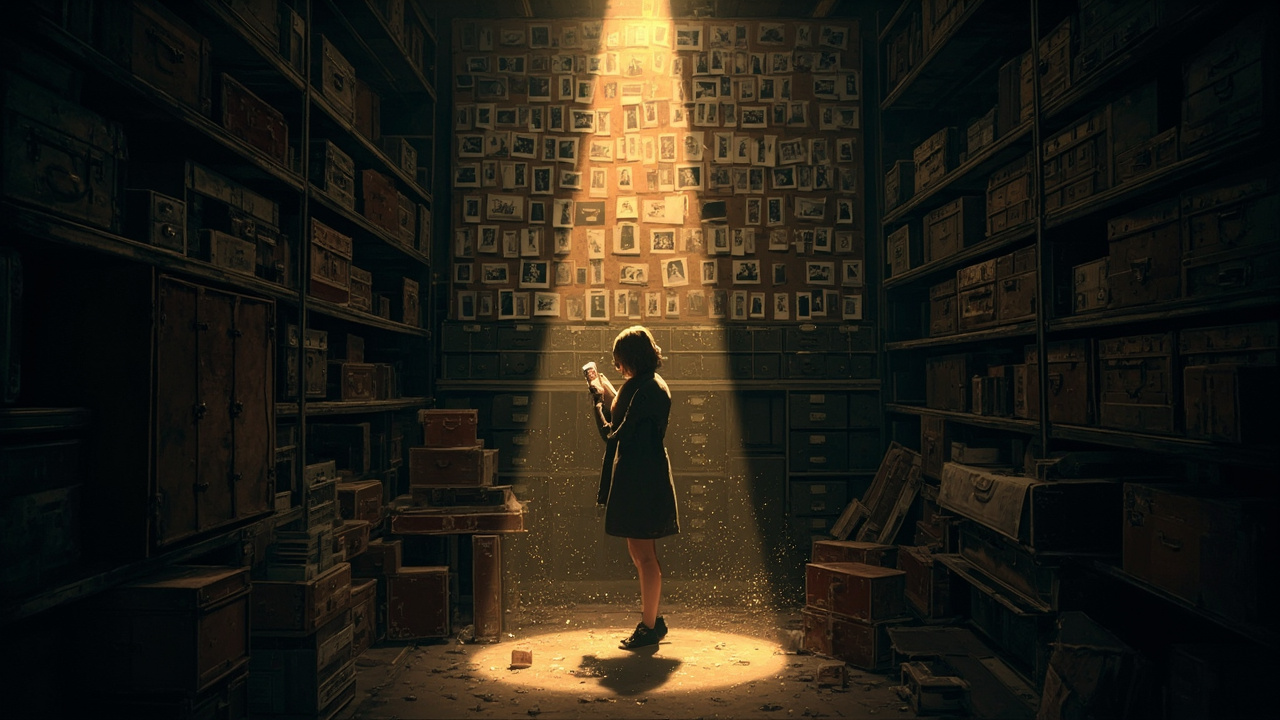
كان الرطوبة في المبنى السابع دائمًا ما ازعجت إلينور—شيء ما في هذا الأسمنت القديم لا يتنفس بشكل صحيح، يحبس البلل كنَفَس محبوس. وقفت أمام الباب الفولاذي المُعلَّم بتاريخ واحد فقط من عام 1987، بينما يقطع ضوء مصباحها اليدوي الهواء العفن، والتفكرت في أنه بعد ستة أشهر من تصنيف الوثائق الحكومية المُوقفة، كان ينبغي لها أن تكون قد اعتادت على الكآبة الغريبة للأماكن المنسية. كان المرفق نفسه يقع في نهاية طريق وعِر في المستنقعات، على بُعد ثلاث ساعات من لندن عبر الطريق غير المباشر الذي يُفضّله مشرفها، وهدفه مُتعمَّد إخفاؤه في طبقات من اللغة البيروقراطية التي لا تشرح تمامًا ما يحدث هنا بالفعل. كانت رسميًا أحدث أرشيفية مُعيَّنة للمشروع—التي تحصل على أسوأ السجلات، صناديق مُبقَّعة بالمياه ومجلدات مُتفتتة التي لا يريد أحد لمسها. كان قد اكتشفت التناقض قبل ثلاثة أيام، أثناء المقارنة بين جرد المرفق والسجلات الرقمية المفترض أن تكون قد رفعتها. سبعة آلاف عنصر مُدرج. ستة آلاف مُحاسبة. عندما أثارته مع مشرفها، نظر إليها فوق نظارته ب expression لا تستطيع قراءته تمامًا، وأخبرها، بنبرة لا تقبل مزيدًا من الاستفسار، أن بعض السجلات ببساطة غير متاحة للرقمنة. بعض السجلات، فهمت الآن، لم يُقصد لها أن تُكتشف أصلاً. كان ينبغي أن يكون الباب مقفلاً. كانت لديها المفاتيح—كان لديها كل المفاتيح، وهو واقع أثار دهشتها عندما بدأت، كأن شخصًا ما أراد التأكد من أنها تستطيع الذهاب لأي مكان، رؤية أي شيء، داخل هذه الجدران. جرّبت المفتاح الرابع من المجموعة، والتفت الآلية بصوت أشبه بتنهيدة. رائحة المواد الحافظة أصابتها أولاً، وشيء آخر، شيء زهري وعتيق، كزهر اللافندر المُترك طويلاً في غرفة مغلقة. انتزع ضوء المصباح اليدوي عبر أرفف تبطّن كل جدار، مكتظة بأشياء لم تستطع فهمها فورًا. حقائب سفر. صناديق. خزائن ملفات ذات ملصقات لا تستطيع قراءتها من هذه المسافة. وفوقها، مُثبَّتة على لوحة الفلين كأفراد في مجموعة عالم طبيعة، مئات الصور الفوتوغرافية. وجوه لم تتعرف عليها، لكن قصصها عرفتْها بطريقة ما—تلميذة واتفورد التي اختفت في طريقها للمنزل من حفلة عيد ميلاد عام 1983، ولم تُحل قضيتها قط. زوجة السياسي التي يُفترض أنها ألقت بنفسها من جسر وستمنستر، دون استرداد جثتها قط. المُبلِّغ من وزارة الدفاع الذي اختفى الليلة التي سبقت شهادته أمام لجنة مختارة، مُمحى اسمه من السجلات الرسمية كأنه لم يكن موجودًا قط. وجدت إلينور الدفتر الذي تحتاجه، ورقه طري وغير مُعلَّم، في الدرج العلوي لمكتب نصف مدفون تحت كومة صناديق الشحن. بدأت جردها تلك الليلة نفسها، تعمل بضوء الشعلة لأنها لم تجد مفاتيح الإضاءة بعد—إذا وُجدت أصلاً. البند الأول: حذاء طفل، المقاس ثلاثة، أحذية قماشية شريط أخضر، مُجرد عام 1978. البند الثاني: ساعة يد رجالية، عقاربها متجمدة عند 11:47. البند الثالث: ميدالية تحتوي على صورة امرأة تعترف بها من قصاصات الصحف القديمة—واحدة من ثلاثة متنزهين اختفوا من نفس القطاع الساحلي عام 1994، دون تفسير اختفائهم قط. لا تستطيع أن تقول لماذا استمرت في العودة، ليلاً بعد ليل، ترمس الشاي في حقيبتها والدفتر يثخن بالملاحظات. ربما كانت نزوة القارّئ، الرغبة في فهم ما صادفته. ربما كانت اليقين المتزايد بأن الأشياء لم تكن مصادرات عشوائية بل أدلة على شيء منظومي، شيء متعمد—نمط شعرته يتشكل في هوامش ملاحظاتها. لأنه هذا ما كشفت عنه المذكرات، كلما قرأت أكثر. الناس في الصور لم يكونوا ضحايا الصدفة أو سوء الحظ. كانوا ضحايا لشيء آخر تماماً—حملة، ربما، أو تطهير، نُفذ بكفاءة باردة كموظفين مدنيين يعلّمون بنودًا من قوائمهم. الأرشيف، بدأت تفهم، لم يكن مرفق تخزين. كان مقبرة. مكان دُفنت فيه الحقائق غير الملائمة مع الأشياء التي قد تثبتها يومًا ما. وجدت اسمها في الليلة الرابعة، مُبرزًا بالحبر الأحمر على هامش مذكّرة مؤرخة بثلاثة أشهر قبل تقديمها للوظيفة. لم تصرخ، أو تركض، أو تفعل أيًا مما قد يتطلبه الغرائز. ببساطة أغلقت الملف، أعادته إلى درجه، وجلست في الظلام لفترة طويلة جدًا. في الصباح التالي، اختفى مشرفها—نُقل، كما قال الرجل الجديد، بابتسامة لم تصل إلى عينيه. كان آسفًا جدًا على الاضطراب، أخبرها، وربما قد ترغب في أخذ إجازة بينما يُعيدون تنظيم القسم. سألها عن حياتها الشخصية، خططها، هواياتها. كان دقيقًا جدًا. أخذت إلينور الإجازة. لم تعد إلى المرفق. وعندما، بعد أسابيع، مرت بالانعطاف نحو المستنقعات في رحلة غير ذات صلة، رأت المباني لا تزال واقفة لكنها مختلفة بطريقة ما—نوافذ مُلبّنة بالطوب حيث كانت هناك أبواب، سياج أمني حيث كانت هناك أراضٍ مفتوحة. الأرشيف، فهمت، قد أعدّ لها مكانًا بطريقته الخاصة. لا يزال لديها الدفتر. الأشياء اختفت، نُقلت إلى أي قبو جديد أو غرفة منسية الآن تخدم كمكان راحتها. لكن يمكن نسخ الدفاتر، ويمكن سرد القصص، وفي آلية الحكومة، هناك من يعرف أن ما يُدفن لا يبقى مدفونًا دائمًا. بعض الأشياء ترفض النسيان.
Die Feuchtigkeit in Gebäude Sieben hatte Eleanor schon immer gestört—etwas an dem alten Beton, der nicht richtig zu atmen schien, die Nässe einfing wie einen angehaltenen Atem. Sie stand vor der stählernen Tür, die nur mit einem Datum von 1987 markiert war, ihr Taschenlampe schnitt durch die modrige Luft, und sie dachte darüber nach, dass sie nach sechs Monaten, in denen sie stillgelegte Regierungsakten katalogisiert hatte, eigentlich an die eigentümliche Melancholie vergessener Orte gewöhnt sein sollte. Die Einrichtung selbst lag am Ende einer ausgefahrenen Piste in den Fens, drei Stunden von London auf der Umleitung, die ihr Vorgesetzter bevorzugte, ihr Zweck absichtlich in Schichten bürokratischer Sprache verborgen, die nie ganz erklärten, was hier eigentlich geschah. Sie war offiziell die neueste Archivarin, die dem Projekt zugewiesen wurde—diejenige, die die schlechtesten Unterlagen bekam, die wasserfleckigen Kartons und zerbröckelnden Akten, die niemand sonst anfassen wollte. Sie hatte die Diskrepanz vor drei Tagen entdeckt, als sie den Bestand der Einrichtung mit den digitalen Aufzeichnungen verglich, die sie eigentlich hätte hochladen sollen. Siebentausend aufgeführte Gegenstände. Sechstausend erfasst. Als sie es ihrem Vorgesetzten mitteilte, hatte er sie über seine Brille hinweg mit einem Ausdruck angesehen, den sie nicht ganz deuten konnte, und ihr in einem Ton, der keinen weiteren Fragen Raum ließ, gesagt, dass einige Unterlagen einfach nicht für die Digitalisierung verfügbar seien. Einige Unterlagen, verstand sie jetzt, waren überhaupt nicht dazu bestimmt, gefunden zu werden. Die Tür hätte versperrt sein sollen. Sie hatte die Schlüssel—sie hatte alle Schlüssel, eine Tatsache, die sie seltsam gefunden hatte, als sie anfing, als hätte jemand sichergehen wollen, dass sie überall hingehen, alles sehen konnte, innerhalb dieser Mauern. Sie probierte den vierten Schlüssel am Bund, und der Mechanismus drehte sich mit einem Geräusch wie ein Seufzer. Der Geruch traf sie zuerst— Konservierungschemikalien und etwas anderes, etwas Blütenartiges und Altes, wie Potpourri, das zu lange in einem versiegelten Raum gelegen hatte. Der Lichtstrahl der Taschenlampe fegte über Regale, die jede Wand auskleideten, vollgestopft mit Gegenständen, die sie nicht sofort begreifen konnte. Koffer. Kartons. Aktenschränke mit Etiketten, die sie aus dieser Entfernung nicht lesen konnte. Und über ihnen, an eine Korktafel gepinnt wie Exemplare in einer Naturforschersammlung, Hunderte von Fotografien. Gesichter, die sie nicht erkannte, deren Geschichten sie aber irgendwie kannte—das Schulmädchen aus Watford, das 1983 auf dem Heimweg von einer Geburtstagsfeier verschwand, dessen Fall nie gelöst wurde. Die Frau des Politikers, die angeblich vom Westminster Bridge gesprungen sein soll, deren Leiche nie gefunden wurde. Der Whistleblower aus dem Verteidigungsministerium, der in der Nacht vor seiner Zeugenaussage vor einem Sonderausschuss verschwand, sein Name aus den Akten gestrichen, als hätte er nie existiert. Eleanor fand das Notizbuch, das sie brauchen würde, paperback und unmarkiert, in der obersten Schublade eines Schreibtischs, der halb unter einem Stapel Transportkisten begraben war. Sie begann an diesem Abend mit ihrem Katalog, arbeitete bei Taschenlampenlicht, weil sie die Lichtschalter noch nicht gefunden hatte—wenn es sie überhaupt gab. Gegenstand eins: ein Kinderschuh, Größe drei, Stoffturnschuhe mit grünem Streifen, katalogisiert 1978. Gegenstand zwei: eine Herrenarmbanduhr, deren Zeiger bei 11:47 eingefroren waren. Gegenstand drei: ein Medaillon mit einem Foto einer Frau, die sie aus alten Zeitungsausschnitten erkannte—eine von drei Wanderern, die 1994 auf derselben Küstenstrecke verschwanden, deren Verschwinden nie erklärt wurde. Sie konnte nicht sagen, warum sie Nacht für Nacht zurückkehrte, Thermoskanne Tee in ihrer Tasche und Notizbuch, das mit Beobachtungen voller wurde. Vielleicht war es der Sammlerzwang, der Drang zu verstehen, worauf man gestoßen ist. Vielleicht war es die wachsende Gewissheit, dass die Gegenstände keine zufälligen Beschlagnahmungen waren, sondern Beweise für etwas Systematisches, etwas Bewusstes—ein Muster, das sie in den Randnotizen spüren konnte. Denn das war es, was die Memoranden offenbarten, je mehr sie las. Die Menschen auf den Fotos waren keine Opfer von Zufall oder Unglück. Sie waren Opfer von etwas ganz anderem—einer Kampagne vielleicht, oder einer Säuberung, durchgeführt mit der kühlen Effizienz von Bürokraten, die Posten von Listen streichen. Das Archiv, begann sie zu verstehen, war keine Lagerstätte. Es war ein Friedhof. Ein Ort, an dem unbequeme Wahrheiten zusammen mit den Gegenständen begraben wurden, die sie eines Tages beweisen könnten. Sie fand ihren eigenen Namen in der vierten Nacht, in Rot hervorgehoben auf einer Randnotiz vom drei Monate vor ihrer Bewerbung um die Stelle. Sie schrie nicht, rannte nicht, tat nichts von dem, was der Instinkt hätte verlangen können. Sie schloss einfach die Akte, legte sie zurück in ihre Schublade, und saß lange in der Dunkelheit. Am nächsten Morgen war ihr Vorgesetzter weg—versetzt, sagte der neue Mann, mit einem Lächeln, das seine Augen nicht erreichte. Er bedauerte die Störung sehr, sagte er ihr, und vielleicht möchte sie ja Urlaub nehmen, während sie die Abteilung umstrukturieren. Er fragte nach ihrem Privatleben, ihren Plänen, ihren Hobbys. Er war sehr gründlich. Eleanor nahm den Urlaub. Sie kehrte nicht in die Einrichtung zurück. Und als sie Wochen später auf einer unzusammenhängenden Reise an der Abzweigung zu den Fens vorbeifuhr, sah sie die Gebäude noch stehen, aber irgendwie verändert—Fenster zugemauert, wo Türen gewesen waren, Sicherheitszäune, wo offenes Gelände gewesen war. Das Archiv, verstand sie, hatte auf seine Weise Platz für sie gemacht. Sie hat das Notizbuch noch. Die Gegenstände sind weg, woandershin gebracht worden, in welchen neuen Keller oder vergessenen Raum auch immer jetzt als Ruhestätte dient. Aber Notizbücher können kopiert werden, und Geschichten können erzählt werden, und irgendwo in der Regierungsmaschinerie gibt es diejenigen, die wissen, dass Begrabenes nicht immer begraben bleibt. Manche Dinge weigern sich, vergessen zu werden.
L'humidité du bâtiment sept dérangeait toujours Éléonore—quelque chose dans ce vieux béton qui ne respirait jamais vraiment, piégeait l'humidité comme une respiration bloquée. Elle se tenait devant la porte d'acier marquée uniquement d'une date de 1987, sa lampe de poche découpant l'air moisi, et songeait qu'après six mois à cataloguer des archives gouvernementales désaffectées, elle aurait dû s'habituer à la mélancolie particulière des lieux oubliés. L'établissement lui-même siégeait au bout d'un chemin défoncé dans les Fens, à trois heures de Londres par l'itinéraire détourné que préférait son superviseur, son purpose délibérément voilée sous des couches de langage bureaucratique qui n'expliquaient jamais vraiment ce qui se passait ici. Elle était officiellement la dernière archiviste affectée au projet—celle qui recibait les pires dossiers, les boîtes tachées d'eau et les chemises croulantes que personne d'autre ne voulait toucher. Elle avait découvert l'écart trois jours plus tôt, en recoupant l'inventaire de l'établissement contre les dossiers numériques qu'elle était censée avoir téléchargés. Sept mille articles catalogués. Six mille accounted for. Quand elle l'avait signalé à son superviseur, il l'avait regardée par-dessus ses lunettes avec une expression qu'elle n'arrivait pas vraiment à déchiffrer, et lui avait dit, d'un ton qui n'admettait aucune question supplémentaire, que certains dossiers étaient tout simplement indisponibles pour la numérisation. Certains dossiers, comprit-elle maintenant, n'étaient pas censés être trouvés du tout. La porte aurait dû être verrouillée. Elle avait les clés—elle avait toutes les clés, ce qui l'avait frappée comme étrange quand elle avait commencé, comme si quelqu'un avait voulu s'assurer qu'elle pouvait aller partout, voir n'importe quoi, entre ces murs. Elle essaya la quatrième clé du trousseau, et le mécanisme tourna avec un son comme un soupir. L'odeur la frappa d'abord—produits chimiques préservatifs et quelque chose d'autre, quelque chose de floral et de vieux, comme du pot-pourri laissé trop longtemps dans une pièce scellée. Le faisceau de la lampe balaya les étagères qui tapissaient chaque mur, bondées d'objets qu'elle ne pouvait pas immédiatement comprendre. Des valises. Des boîtes. Des classeurs avec des étiquettes qu'elle ne pouvait pas lire depuis cette distance. Et au-dessus, épinglées sur un panneau de liège comme des spécimens dans une collection de naturaliste, des centaines de photographies. Des visages qu'elle ne reconnaissait pas, mais dont elle connaissait d'une certaine manière les histoires—l'écolière de Watford qui avait disparu en rentrant d'une fête d'anniversaire en 1983, dont le cas ne fut jamais résolu. La femme du politicien qui se serait jetée du pont de Westminster, son corps jamais retrouvé. Le lanceur d'alerte du ministère de la Défense qui avait disparu la veille de sa comparution devant un comité spécial, son nom effacé des dossiers officiels comme s'il n'avait jamais existé. Éléonore trouva le cahier dont elle aurait besoin, à couverture souple et sans marque, dans le tiroir supérieur d'un bureau à demi enfoui sous une pile de caisses de transit. Elle commença son catalogue ce soir-là même, travaillant à la lumière de sa lampe parce qu'elle n'avait pas encore trouvé les interrupteurs—s'ils existaient vraiment. Article un : une chaussure d'enfant, taille trois, baskets en toile avec une rayure verte, cataloguée en 1978. Article deux : une montre d'homme, ses aiguilles figées à 11h47. Article trois : un médaillon contenant la photo d'une femme qu'elle reconnaissait d'anciens découpages de journaux—l'une des trois randonneuses qui avaient disparu du même tronçon de côte en 1994, leur disparition jamais expliquée. Elle ne pouvait pas dire pourquoi elle continuait à revenir, nuit après nuit, son thermos de thé dans son sac et son cahier s'épaississant d'observations. Peut-être était-ce la compulsion de la collectionneuse, l'envie de comprendre ce sur quoi elle était tombée. Peut-être était-ce la certitude grandissante que les objets n'étaient pas des confiscations aléatoires mais des preuves de quelque chose de systématique, de délibéré—un motif qu'elle sentait prendre forme dans les marges de ses notes. Car c'était ce que révèlaient les mémorandums, plus elle lisait. Les personnes sur les photographies n'étaient pas des victimes de coïncidence ou de malheur. Elles étaient les victimes de quelque chose d'autre entièrement—une campagne, peut-être, ou une purge, menée avec l'efficacité froide de Fonctionnaires barrant des items de listes. L'Archive, commença-t-elle à comprendre, n'était pas une installation de stockage. C'était un cimetière. Un endroit où les vérités gênantes étaient enfouies avec les objets qui pourraient un jour les prouver. Elle trouva son propre nom la quatrième nuit, souligné à l'encre rouge sur une note marginale datée de trois mois avant qu'elle ne postule au poste. Elle ne hurla pas, ne courut pas, ne fit aucune des choses que l'instinct aurait pu exiger. Elle ferma simplement le dossier, le remit dans son tiroir, et resta assise dans l'obscurité pendant très longtemps. Le lendemain matin, son superviseur avait disparu—muté, dit le nouveau venu, avec un sourire qui n'atteignait pas ses yeux. Il était vraiment désolé pour la perturbation, lui dit-il, et peut-être aimerait-elle prendre des congés pendant qu'ils réorganisaient le département. Il lui demanda sa vie personnelle, ses projets, ses loisirs. Il fut très minutieux. Éléonore prit les congés. Elle ne retourna pas à l'établissement. Et quand, des semaines plus tard, elle passa devant le tournant vers les Fens lors d'un voyage sans rapport, elle vit les bâtiments toujours debout mais différents somehow—fenêtres murées là où il y avait eu des portes, clôtures de sécurité là où il y avait eu du terrain ouvert. L'Archive, comprit-elle, lui avait fait une place à sa manière. Elle a toujours le cahier. Les objets ont disparu, relocation vers whichever nouveau sous-sol ou pièce oubliée servait désormais de lieu de repos. Mais les cahiers peuvent être copiés, et les histoires peuvent être racontées, et quelque part dans la machinery du gouvernement, il y a ceux qui savent que ce qui est enterré ne reste pas toujours enterré. Certaines choses refusent d'être oubliées.
Влажность в Седьмом корпусе всегда беспокоила Элеанор — что-то в этой старой бетонной конструкции не дышало как следует, задерживая сырость, словно затаив дыхание. Она стояла перед стальной дверью, отмеченной лишь датой 1987 года, луч её фонарика рассекал затхлый воздух, и размышляла о том, что после шести месяцев каталогизации списанных правительственных документов она уже должна была привыкнуть к своеобразной меланхолии забытых мест. Сам комплекс располагался в конце ухабистой дороги в Фенских болотах, в трёх часах езды от Лондона по тому объездному маршруту, который предпочитал её руководитель, его предназначение намеренно скрыто слоями бюрократического языка, который никогда толком не объяснял, что именно здесь происходит. Она была официально последним архивистом, назначенным на этот проект — той, кому доставались самые плохие записи, протекающие коробки и крошащиеся папки, которых никто другой не хотел трогать. Три дня назад она обнаружила несоответствие, сверяя опись комплекса с цифровыми записями, которые должна была загрузить. Семь тысяч позиций в списке. Шесть тысяч учтено. Когда она подняла этот вопрос перед руководителем, он посмотрел на неё поверх очков с выражением, которое она не смогла разобрать, и сказал тоном, не допускающим дальнейших расспросов, что некоторые записи просто недоступны для оцифровки. Некоторые записи, поняла она теперь, вообще не предназначались для обнаружения. Дверь должна была быть заперта. У неё были ключи — у неё были все ключи, что показалось ей странным, когда она только начинала, словно кто-то хотел убедиться, что она может попасть куда угодно, увидеть что угодно за этими стенами. Она попробовала четвёртый ключ на кольце, и механизм повернулся со звуком, похожим на вздох. Запах ударил первым — консервирующие химикаты и кое-что ещё, что-то цветочное и старое, как саше, слишком долго пролежавшее в запечатанной комнате. Луч фонарика скользнул по полкам, уходившим вдоль каждой стены, забитым предметами, которые она не могла сразу понять. Чемоданы. Коробки. Картотечные шкафы с этикетками, которые она не могла прочитать с этого расстояния. А над ними, приколотые к пробковой доске, как экземпляры в коллекции натуралиста, сотни фотографий. Лица, которые она не узнавала, но чьи истории каким-то образом знала — школьница из Уотфорда, пропавшая по дороге с дня рождения в 1983 году, дело о которой так и не было раскрыто. Жена политика, якобы бросившаяся с Вестминстерского моста, тело которой так и не нашли. Информатор из Министерства обороны, исчезнувший за ночь до его показаний перед специальным комитетом, его имя стёрто из официальных записей, словно его никогда не существовало. Элеанор нашла нужный ей блокнот — в мягкой обложке и без маркировки — в верхнем ящике стола, наполовину заваленного стопкой транспортных ящиков. Она начала свою опись той же ночью, работая при свете фонаря, потому что ещё не нашла выключателей — если они вообще были. Предмет первый: детская обувь, размер три, тканевые кроссовки с зелёной полосой, каталогизировано в 1978 году. Предмет второй: мужские наручные часы, стрелки застыли на 11:47. Предмет третий: медальон с фотографией женщины, которую она узнала из старых газетных вырезок — одной из трёх туристов, пропавших на том же участке побережья в 1994 году, чьё исчезновение так и не было объяснено. Она не могла сказать, почему продолжала возвращаться, ночь за ночью, с термосом чая в сумке и блокнотом, полнеющим наблюдениями. Возможно, это было навязчивое стремление коллекционера — желание понять то, на что натолкнулся. Возможно, это было растущее убеждение, что предметы — не случайные изъятия, а доказательства чего-то систематического, чего-то преднамеренного — узор, который она чувствовала, складывающийся на полях её записей. Потому что именно это иrevealed меморандумы, чем больше она читала. Люди на фотографиях не были жертвами случайности или невезения. Они были жертвами чего-то совершенно иного — кампании, возможно, или чистки, осуществлённой с холодной эффективностью клерков, вычёркивающих пункты из списков. Архив, начала она понимать, не был хранилищем. Это было кладбище. Место, где неудобные истины погребались вместе с предметами, которые когда-нибудь могли бы их доказать. Она нашла своё имя на четвёртую ночь, выделенное красными чернилами на полевой заметке, датированной за три месяца до того, как она подала заявку на эту должность. Она не закричала, не побежала, не сделала ничего из того, чего мог бы потребовать инстинкт. Она просто закрыла папку, вернула её в ящик и долго сидела в темноте. На следующее утро её руководителя не было — переведён, сказал новый человек, с улыбкой, не доходившей до глаз. Он очень сожалел о неудобствах, сказал он ей, и, возможно, она хотела бы взять отпуск, пока они реорганизуют отдел. Он спросил о её личной жизни, планах, увлечениях. Он был очень дотошен. Элеанор взяла отпуск. Она не вернулась в комплекс. И когда, недели спустя, она проезжала мимо поворота на болота по делам, не связанным с работой, она увидела, что здания всё ещё стоят, но как-то иначе — окна заложены кирпичом там, где были двери, ограждение безопасности там, где была открытая местность. Архив, поняла она, каким-то образом освободил для неё место. Блокнот у неё всё ещё есть. Предметы исчезли, перемещены в какой-нибудь новый подвал или забытую комнату, служащую теперь их местом упокоения. Но блокноты можно копировать, а истории можно рассказывать, и где-то в правительственной машине есть те, кто знает, что то, что закопано, не всегда остаётся погребённым. Некоторые вещи отказываются быть забытыми.