Must Know Vocabulary
| Word | العربية | Deutsch | Français | Русский |
|---|---|---|---|---|
| حطام | Wrack | épaves | обломки | |
| هيكل السفينة | Rumpf | coque | корпус судна | |
| انكسار | Riss | rupture | разрыв | |
| شق جراحي | Einschnitt | incision | разрез | |
| إنقاذ | Bergung | sauvetage | спасение | |
| نداء استغاثة | Notruf | appel de détresse | сигнал бедствия | |
| مداولة | Beratung | délibération | обдумывание | |
| أمواج عاتية | Dünung | houle | волнение моря | |
| مخفي | verstohlen | furtif | скрытный |
The Story
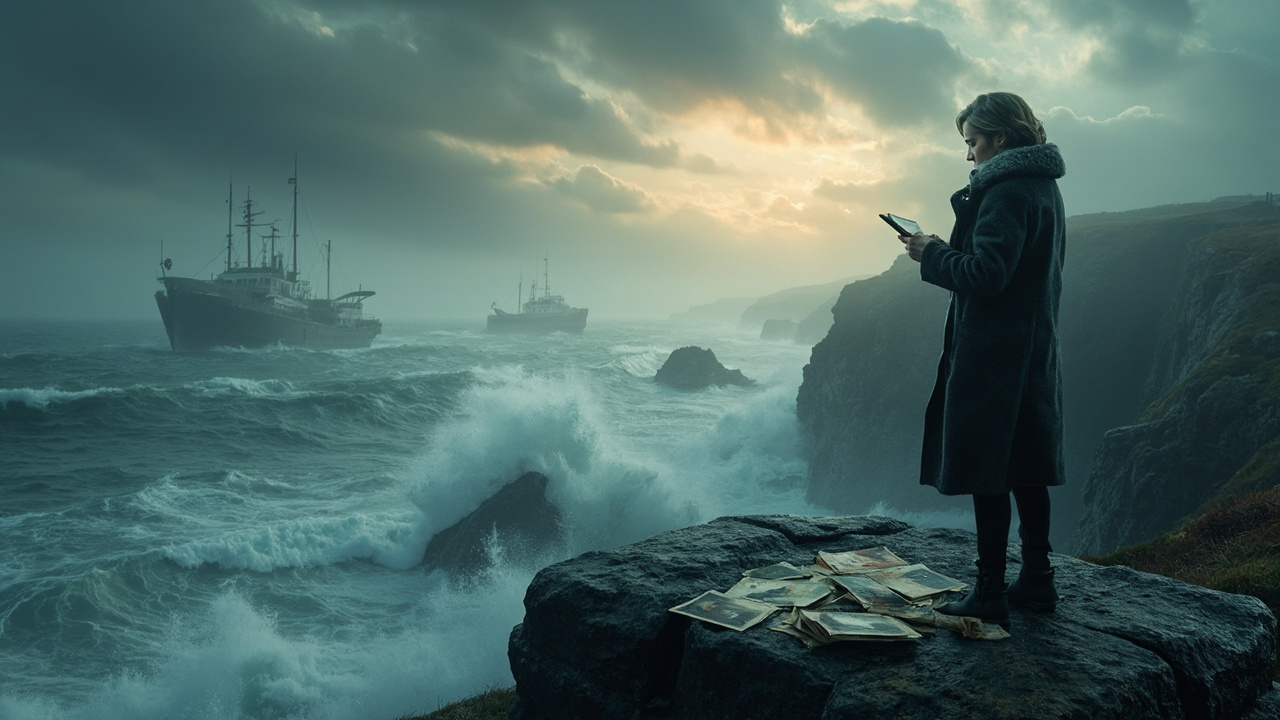
Eleanor Vance had spent fifteen years untangling the wreckage of other people's misfortunes, but the file marked The Meridian sat on her desk like a splinter she couldn't quite locate. The luxury yacht had gone down off the coast of Cornwall three weeks prior, taking with it a collection of eighteenth-century Dutch paintings worth an estimated twelve million pounds. The insurance claim from the Ashworth family had been filed with unseemly haste, and something about the wording nagged at her like a tide against the cliffs.
She spread the surveyor's photographs across her desk, each one a testament to salt water's indiscriminate appetite. The hull had split along the keel, a clean rupture that seemed almost surgical in its precision. Eleanor leant forward, studying the pattern of the damage, her coffee growing cold beside her. In her experience, the sea rarely committed such neat incisions. It smashed, it tore, it devoured. It did not dissect.
The official report attributed the sinking to a combination of adverse weather conditions and structural fatigue. A convenient verdict, she thought, and one that bore all the hallmarks of being purchased rather than earned. The Ashworths had, after all, cultivated connections in precisely the sort of places where inconvenient questions could be quietly defrayed. Eleanor had heard the rumours, as one always heard rumours in their profession—the dinners at Downing Street, the shooting parties at estates where decisions were made over brandy that would never appear in any parliamentary record.
She began her investigation on a grey Tuesday, driving down to the village of Pendrath where the salvaged debris had been catalogued. The coast guard officer who met her was a weathered man named Briggs, with hands like rope and eyes that had seen too much salt water to bother dissembling.
"Peculiar business," he said, after she had explained her interest. "The distress call came through at 2:47 in the morning, but the weather that night was calm as a millpond. I said as much to the investigators. They didn't seem particularly interested in my observations."
Eleanor's pulse quickened. "Calm conditions? You're certain?"
"Been charting these waters for thirty years, Miss Vance. I know a storm from a settled sea. That night was clear, stars out, not so much as a swell worth speaking of."
She spent the following days interviewing the crew members who had survived—three men and a woman who had been rescued by a passing cargo vessel. Their accounts were rehearsed, almost word for word, and this troubled her more than inconsistencies would have. People who told the truth rarely managed such seamless synchronicity. One of them, a young deckhand named Thomas Carey, seemed particularly on edge, his eyes darting whenever she mentioned the name Ashworth.
It was Carey who agreed to meet her at a pub in Truro, slipping into the corner booth with the furtive energy of a man who knew he was being watched. He ordered a double whisky with hands that trembled slightly.
"I shouldn't be talking to you," he said. "They made that quite clear. The Ashworths, I mean. Mr Ashworth senior—he doesn't make threats, you understand. He simply suggests, and somehow the suggestions have a way of becoming... inevitable."
Eleanor held his gaze. "Mr Carey, I suspect the yacht was deliberately destroyed. And I believe you know something about it."
The silence stretched between them like a held breath. Then Carey reached into his jacket and produced a small waterproof pouch, sliding it across the table with the careful deliberation of a man transferring a burden he could no longer bear.
"GPS records," he whispered. "The night before the sinking, the vessel was moved to a different position than the official logs suggest. Someone wanted it to sink somewhere specific. And there were men on board that night—people who weren't crew. Mr Ashworth himself came aboard at Plymouth. He was down in the engine room for nearly an hour before he left."
Eleanor opened the pouch, her mind racing through the implications. If the Ashworths had deliberately sunk their own vessel, the motive was almost certainly fraud—destroying a yacht they had grown tired of while collecting an insurance payout that would fund their next extravagance. The paintings, she suspected, had been removed beforehand and would surface in some private auction, their provenance laundered through the same network of art dealers who existed in the shadows of legitimacy.
"Why are you telling me this?" she asked. "Given what you just described, this is a considerable risk."
Carey finished his whisky in a single long swallow. "Because three men who knew the truth are no longer alive. A fourth is in hospital, and the doctors can't explain what's wrong with him. I'm next, Miss Vance, or I will be unless someone puts a stop to this. I've kept my head down my whole life, done what I was told, believed that the powerful had the right to be protected. But there are limits, aren't there? There has to be a point where someone says no."
Eleanor drove back to London that night with the evidence locked in the boot of her car and a decision crystallising in her mind. The Ashworths had made enemies of the wrong sort, she reflected. They had assumed that everyone had a price, that loyalty could be purchased and silence guaranteed. They had never encountered someone who had grown weary of watching the wealthy play by their own rules while the rest of the world picked up the tab.
She would submit her report to the insurers in the morning. Let them bury it if they dared. Some truths were like water—they found their way through the smallest cracks, and in the end, they wore down even the most stubborn stone.