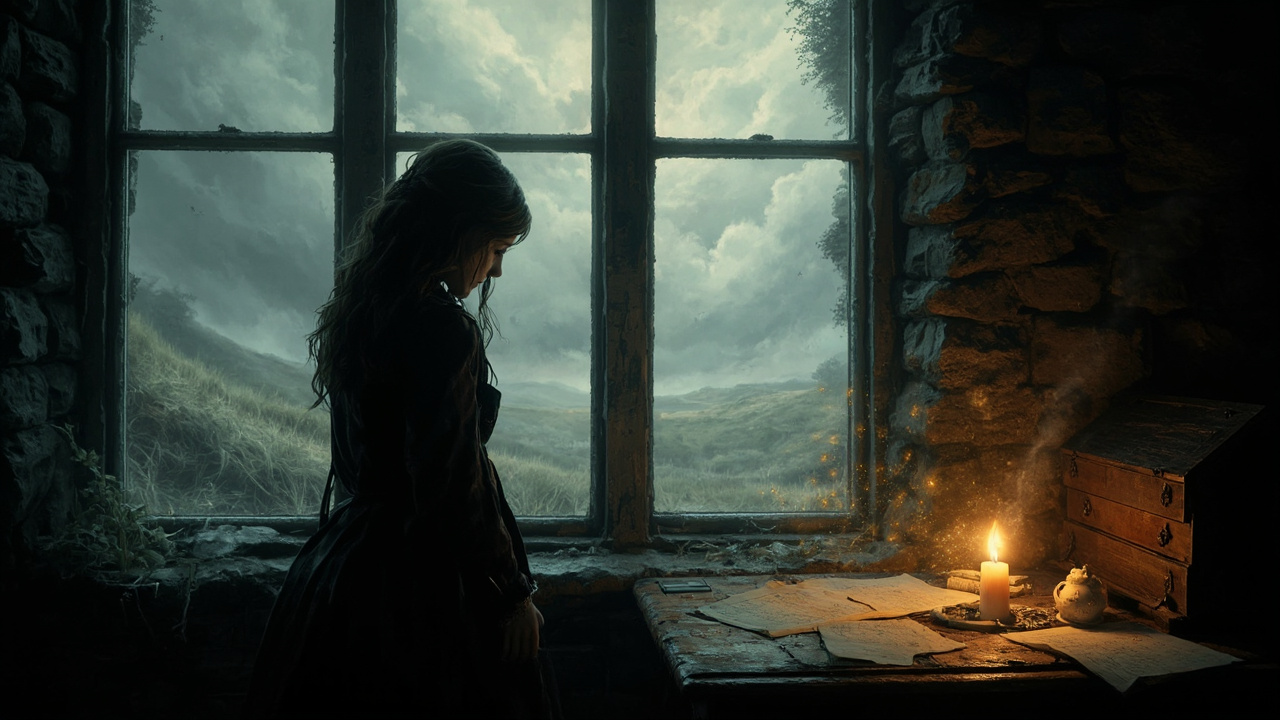
كانت الرياح دائماً تخاطب موراغ كامرون بلغة الموسيقى، لكن لم يكن شيء قد أعدّها لما حدث ذلك الظهيرة حين همسَت بلحن لم تسمعْه قط—ومع ذلك عرفته عن ظهر قلب. وقفت عند نافذة كوخها المشبكية في مرتفعات اسكتلندا، وهي مكانُها الذي تعودت إليه منذ ثلاث سنوات حين بدأ عالم قاعات الحفلات والإشادة النقدية يختنق بها. كانت عاصفة نوفمبر تتصاعد، وكانَت الهبّات المنحدرة من Cairngorms تحمل معها نبرة شاكيةَ شوقٍ جعلت نفسها يتصايع. كان اللحن ناقصاً—مجرد عبارة، ربما ستة عشر مقطعاً، يتعرّج عبر العاصفة الهائجة كخيط من الفضة في صوف داكن. أسرعت موراغ إلى ورق المخطوطة، ويداها ترتجفان وهي تنسخ النوت قبل أن يفلتا من ذاكرتها. المنعطفات اللحنية الصغرى، والذبذبة اللحنية المفاجئة، والطريقة التي توقّفت بها كأنها تنتظر رداً لم يأتِ أبداً. عرفت أسلوب من كتبه، رغم أنها لم ترَ هذه النوت المعينة من قبل. كان هذا أسلوب أليستر دروموند، الفيرتوز الأسكتلندي الأسطوري الذي تُحفظ مخطوطاته في مجموعة خاصة في إدنبرة. كانت سمعته مهيبَة—عبقري من أواخر القرن التاسع عشر قورنت ألحانه ببهرامز، وحياةُه الشخصية كانت موضوع فضيحة وتخمينات، وقد مات وحيداً في هذا الوادي نفسه عام 1892، تاركاً محفظةً من الأعمال غير المكتملة وأسئلة بلا إجابة. أجرت موراغ تحقيقات. راسلت أمناء الوثائق وبائعي الكتب النادرين، وفضولها تشكّل تدريجياً إلى هوس. ما وجدته كان شحيحاً ومغرِياً: أمضى دروموند سنواته الأخيرة في عزلة شبه كاملة، تُعتنى به من خادمة لا تعرف شيئاً عن عمله، يُدعَم من جيران ظنّوه مجنوناً. لكن رسالة واحدة، اكتُشفت في رزمة مُنحت في مزاد، ذكرت امرأة—م Soprano تُدعى إلسبيث موراي، أقامت معه شتاء 1889، وكان مؤلف الرسالة يُخَمّن أنها كانت الملهمة وراء ألحانه اللاحقة الأكثر عذاباً. عادت موراغ إلى كوخها بهذا المعرفة المتفرقة تحرق ذهنها. لم يفارقها اللحن؛ استوطن فيه، يتكرر كلما هبّت الرياح، دائماً تلك العبارة الناقصة ذاتها، دائماً تنتهي في الموضع ذاته الباديء. بدأت تبحث في البيت نفسه، مقتنعة بأن شيئاً لا بد أن يبقى—نوتة، مذكّرة، دليل تركته الخادمة أو ربّما دروموند نفسه. كانت في العلية، خلف عارضة كاذبة تقوّست مع الزمن، حين وجدت موراغ المخطوطة. كانت تالفة من الماء ومحروقة جزئياً، لكن الحبر بقي مقروءاً في أماكن. الصفحة العنوانية تحملت كلمة واحدة: سوناتة. كان التأليف واضح الانتهاء—عدة حركات تنتهي بأسطر موسيقية فارغة، والصفحات الأخيرة مغطاة بتعديلات وتصحيحات وهوامش يائسة. لكن هناك، في الزاوية العلوية اليمنى، كان هناك إهداء أوقف قلب موراغ: لـ E.، التي يجب أن تسمع هذا حين أكون قد رحلت. أدركت حينها ما اكتشفتته. اللحن الذي سمعته في الرياح لم يكن صدى الماضي—بل كان نداءً. كان أليستر دروموند قد ألّف هذه السوناتة لإلسبيث موراي، حبّه السري، المرأة التي اختلفت من حياته تحت ظروف أخفتها السجلات التاريخية. مات قبل أن يُتمّها، لكن عمله غير المكتمل بقي في البيت، ينتظر. ينتظر من يستطيع أن يسمع ما تحتاجه. في الأسابيع التي تلت، ألقت موراغ بنفسها في البحث من جديد. تتبّعت سجلات الأبرشية، أرشيفات الصحف، أنساب العائلات. اكتشفت أخيراً أن إلسبيث موراي كانت ابنة لaird مجاور—امرأة من نسب وصوت كافيين لتصعد أمام العائلة المالكة، لكنهما لم يكونا كافيين، يبدو، أن تُسمح لها بالزواج من ملحّن ذي وسائل محدودة ومزاج غير مستقر. أرسلت إلى غلاسغو، ثم إلى لندن، ومُحيت صلتها بدروموند من ذاكرة العائلة تماماً كما يُغسل الحبر من الرق. وجدت موراغ descendantاً حياً واحداً: ابنة ابنة ابنة ابنة تُدعى فيونا، معلمة متقاعدة في إنفرنس لم تسمع قط بأليستر دروموند وأبدت حيرة مهذبة تجاه مكالمة موراغ الهاتفية. لكن حين أعادت موراغ تشغيل العبارة التي سمعتها في الرياح—مُحوَّلة الآن إلى التدوين الصحيح—صمتت فيونا. ثم، بصوت أجشّ من شيء لم تستطع موراغ تحديده، قالت: «جدتي كانت تغني شيئاً شبيهاً جداً بذلك. كانت تسميه摇篮ها الذي علّمتها إياه أمها، رغم أنها لم تستطع أن تتذكر أبداً من أين جاء.» التقيا في الأسبوع التالي. أنتجت فيونا علبة موسيقية بالية، ورثتها عن جدتها، احتوت على عدة أغانٍ مكتوبة بخط أنثوي ضيق. كانت الألحان بسيطة—أغاني شعبية، افترضت فيونا—لكن حين درستها موراغ، تدفّق الإدراك من خلالها. الإيقاعات تطابقت. الفواصل تراصفت. هذه كانت مساهمات إلسبيث موراي في السوناتة، محفوظة ليس في مخطوطة عظيمة بل في التقليد الشفهي لعائلة لم تكن تعرف ما تحافظ عليه. أدركت موراغ أن السوناتة كانت دائماً ثنائياً. كتب دروموند البنية؛ زوّدت إلسبيث الروح. منفصلتان بالأدب والظروف، أكملنا بعضنا رغم ذلك عبر العقود، وتوسّطت لهما الرياح والماء وإصرار الحب. استغرق الأمر من موراغ ستة أشهر أخرى لإتمام ما بدأه دروموند. سمّتها «السناتة المنجرفة بالثلج»، بعد عبارة في هوامشه أحرقت نفسها في نفسها أكثر من غيرها: أسمعها في الانجراف الثلجي، في الفراغات بين النوت. ستسمعني أيضاً، أو ستحمل الرياح ما لا أستطيع. أهدت إتمامها إلى ambos composores—من حلمها ومن ألهمها، اللذين فُصلا صوتهما بالزمن والمأساة لكنهما сохрани توافقهما رغم كل شيء.
Der Wind hatte immer zu Morag Cameron in der Sprache der Musik gesprochen, aber nichts hatte sie auf den Nachmittag vorbereitet, an dem er eine Melodie summte, die sie nie gehört hatte — und doch irgendwie auswendig kannte. Sie stand am Sprossenfenster ihres Cottage in den Highlands, einem Ort, zu dem sie sich vor drei Jahren zurückgezogen hatte, als die Welt der Konzertsäle und des kritischen Beifalls begonnen hatte, sie zu ersticken. Der Novembersturm wurde stärker, und die Böen, die von den Cairngorms herabfegten, trugen eine klagende, sehnsüchtige Qualität mit sich, die ihr den Atem stocken ließ. Die Melodie war unvollständig — nur eine Phrase, vielleicht sechzehn Takte, die sich durch den heulenden Sturm wand wie ein Faden aus Silber durch dunkle Wolle. Morag griff nach ihrem Manuskriptpapier, ihre Hände zitterten, während sie die Noten niederschrieb, bevor sie ihrem Gedächtnis entkommen konnten. Die melodischen Mollwendungen, die unerwartete harmonische Auflösung, die Art, wie sie mitten im Gedanken innezuhalten schien, als warte sie auf eine Antwort, die niemals kam. Sie erkannte die Handschrift, die sie geschrieben hatte, obwohl sie diese bestimmten Noten nie zuvor gesehen hatte. Dies war der Stil von Alistair Drummond, dem legendären schottischen Virtuosen, dessen Manuskripte in einer Privatsammlung in Edinburgh aufbewahrt wurden. Sein Ruf war gewaltig — ein Genie des späten neunzehnten Jahrhunderts, dessen Kompositionen mit Brahms verglichen wurden, dessen Privatleben Gegenstand von Skandalen und Spekulationen gewesen war und der 1892 einsam in genau diesem Glen gestorben war, hinterlassen hatte er ein Portfolio unvollendeter Werke und unbeantworteter Fragen. Morag stellte Nachforschungen an. Sie korrespondierte mit Archivaren und Antiquariatsbuchhändlern, ihre Neugier verhärtete sich allmählich zur Besessenheit. Was sie entdeckte, war spärlich und verlockend: Drummond hatte seine letzten Jahre in fast völliger Isolation verbracht, betreut von einer Haushälterin, die nichts von seiner Arbeit wusste, unterstützt von Nachbarn, die ihn für verrückt hielten. Aber ein Brief, entdeckt in einem Paket, das auf einer Auktion verkauft wurde, erwähnte eine Frau — eine Sopranistin namens Elspeth Murray, die den Winter 1889 bei ihm verbracht hatte und die, so mutmaßte der Verfasser des Briefes, die Muse hinter seinen späteren, qualvolleren Kompositionen gewesen war. Morag kehrte in ihr Cottage zurück mit diesem fragmentarischen Wissen, das in ihrem Geist brannte. Die Melodie hatte sie nicht verlassen; sie hatte dort Aufnahme gefunden, wiederholte sich jedes Mal, wenn der Wind aufkam, immer dieselbe unvollständige Phrase, endete immer an derselben atemberaubenden Stelle. Sie begann, das Haus selbst zu durchsuchen, überzeugt, dass etwas geblieben sein musste — eine Partitur, ein Tagebuch, ein Hinweis, hinterlassen von der Haushälterin oder vielleicht von Drummond selbst. Es war im Dachboden, hinter einem falschen Balken, der mit dem Alter gewarpt war, dass Morag das Manuskript fand. Es war wasserbeschädigt und teilweise vom Feuer verzehrt, aber die Tinte war stellenweise noch lesbar. Die Titelseite trug ein einziges Wort: Sonate. Die Komposition war offensichtlich unvollendet — mehrere Sätze endeten in leeren Notensystemen, und die letzten Seiten waren mit Änderungen, Korrekturen, verzweifelten Randnotizen bedeckt. Aber dort, in der oberen rechten Ecke, war eine Widmung, die Morags Herz stocken ließ: Für E., die dies hören muss, wenn ich gone bin. Sie verstand dann, worauf sie gestoßen war. Die Melodie, die sie im Wind gehört hatte, war kein Echo der Vergangenheit — es war eine Aufforderung. Alistair Drummond hatte diese Sonate für Elspeth Murray komponiert, seine heimliche Liebe, eine Frau, die unter Umständen aus seinem Leben verschwunden war, die die Geschichtsbücher nicht bewahrt hatten. Er war gestorben, bevor er sie vollenden konnte, aber sein unvollendetes Werk war im Haus geblieben, wartend. Wartend auf jemanden, der hören konnte, was es brauchte. In den Wochen, die folgten, warf sich Morag mit erneuerter Kraft in die Forschung. Sie verfolgte Kirchenbücher, Zeitungsarchive, Stammbäume. Elspeth Murray, entdeckte sie schließlich, war die Tochter eines benachbarten Lairds gewesen — eine Frau von Abstammung und Stimme genug, um vor dem Königshaus aufgetreten zu sein, aber nicht, so schien es, genug, um die Erlaubnis zu erhalten, einen Komponisten von bescheidenen Mitteln und unsicherem Temperament zu heiraten. Sie war nach Glasgow geschickt worden, dann nach London, ihre Verbindung zu Drummond so gründlich aus dem Familienandenken gelöscht wie Tinte von Pergament gewaschen. Morag fand einen lebenden Nachkommen: eine Ururgroßenkelin namens Fiona, eine pensionierte Lehrerin in Inverness, die noch nie von Alistair Drummond gehört hatte und höfliche Verblüffung über Morags Telefonanruf äußerte. Aber als Morag die Phrase abspielte, die sie im Wind gehört hatte — jetzt in die richtige Notation übertragen — wurde Fiona still. Dann sagte sie mit einer Stimme, schwer vor etwas, das Morag nicht identifizieren konnte: "Meine Großmutter sang früher etwas sehr Ähnliches. Sie nannte es das Wiegenlied, das ihre Mutter sie gelehrt hatte, obwohl sie sich nie erinnern konnte, woher es kam." Sie trafen sich in der folgenden Woche. Fiona brachte ein abgetragenes Notenetui hervor, ererbt von ihrer Großmutter, das mehrere Lieder in einer engen, weiblichen Handschrift enthielt. Die Melodien waren einfach — Volkslieder, nahm Fiona an — aber als Morag sie studierte, überflutete sie die Erkenntnis. Die Rhythmen stimmten überein. Die Intervalle stimmten. Dies waren Elspeth Murrays Beiträge zur Sonate, erhalten nicht in einer großen Handschrift, sondern in der mündlichen Überlieferung einer Familie, die keine Ahnung hatte, was sie am Leben hielt. Die Sonate, wurde Morag klar, war immer ein Duett gewesen. Drummond hatte die Architektur geschrieben; Elspeth hatte die Seele geliefert. Getrennt durch Anstand und Umstände hatten sie sich dennoch über die Jahrzehnte hinweg ergänzt, ihre Zusammenarbeit vermittelt durch Wind und Wasser und die sture Beharrlichkeit der Liebe. Es dauerte weitere sechs Monate, bis Morag vollendete, was Drummond begonnen hatte. Sie nannte sie Die Schneewehen-Sonate, nach der Phrase in seiner Randnotiz, die sie am meisten packte: Ich höre sie in der Schneewehe, in den Räumen zwischen den Noten. Sie wird mich auch hören, oder der Wind wird tragen, was ich nicht kann. Sie widmete ihre Vollendung beiden Komponisten — dem, der sie geträumt hatte, und dem, der sie inspiriert hatte, deren Stimmen durch Zeit und Tragödie getrennt worden waren, aber deren Harmonie trotz allem Bestand hatte.
Le vent avait toujours parlé à Morag Cameron dans le langage de la musique, mais rien ne l'avait préparée à cet après-midi où il fredonna une mélodie qu'elle n'avait jamais entendue — et pourtant, d'une certaine manière, connaissait par cœur. Elle se tenait à la fenêtre à meneaux de son cottage Highlands, un endroit où elle s'était retirée trois ans plus tôt lorsque le monde des salles de concert et des éloges critiques avait commencé à l'étouffer. La tempête de novembre se levait, et les rafales qui dévalaient des Cairngorms apportaient avec elles une qualité plaintive et langoureuse qui lui coupait le souffle. La mélodie était incomplète — juste une phrase, peut-être seize mesures, se faufilant à travers le hurlement du vent comme un fil d'argent à travers de la laine sombre. Morag saisit son papier à manuscrit, ses mains tremblantes tandis qu'elle transcrivait les notes avant qu'elles ne s'échappent de sa mémoire. Les tournures mineures mélodiques, la résolution harmonique inattendue, la façon dont elle semblait s'interrompre à mi-pensée comme si elle attendait une réponse qui ne venait jamais. Elle reconnut la main qui l'avait écrite, bien qu'elle n'eût jamais vu ces notes particulières auparavant. C'était le style d'Alistair Drummond, le virtuose écossais légendaire dont les manuscrits étaient conservés dans une collection privée à Édimbourg. Sa réputation était formidable — un génie de la fin du dix-neuvième siècle dont les compositions avaient été comparées à Brahms, dont la vie personnelle avait fait l'objet de scandales et de spéculations, et qui était mort seul dans ce même glen en 1892, laissant derrière lui un portfolio d'œuvres inachevées et de questions sans réponse. Morag fit des recherches. Elle correspondit avec des archivistes et des libraires antiquaires, sa curiosité se transformant progressivement en obsession. Ce qu'elle découvrit était tantalisingment sparse : Drummond avait passé ses dernières années dans un isolement quasi total, soigné par une gouvernante qui ne savait rien de son travail, soutenu par des voisins qui le croyaient fou. Mais une lettre, découverte dans un lot vendu aux enchères, mentionnait une femme — une soprano nommée Elspeth Murray, qui était restée avec lui pendant l'hiver 1889 et qui avait, selon l'auteur de la lettre, été la muse derrière ses compositions ultérieures, plus tourmentées. Morag rentra dans son cottage avec cette connaissance fragmentaire brûlant dans son esprit. La mélodie ne l'avait pas quittée ; elle s'y était installée, réapparaissant chaque fois que le vent se levait, toujours cette même phrase incomplète, se terminant toujours au même endroit à couper le souffle. Elle commença à fouiller la maison elle-même, convaincue que quelque chose devait subsister — une partition, un journal, un indice laissé par la gouvernante ou peut-être par Drummond lui-même. C'est dans les combles, derrière une fausse poutre qui s'était voilée avec l'âge, que Morag trouva le manuscrit. Il était endommagé par l'eau et partiellement consumé par le feu, mais l'encre restaitisible par endroits. La page de titre portait un seul mot : Sonata. La composition était clairement inachevée — plusieurs mouvements se terminaient en portées vides, et les dernières pages étaient couvertes d'amendements, de corrections, de notes marginales désespérées. Mais là, dans le coin supérieur droit, se trouvait une dédicace qui arrêta le cœur de Morag : Pour E., qui doit entendre ceci quand je serai parti. Elle comprit alors ce qu'elle avait découvert. La mélodie qu'elle avait entendue dans le vent n'était pas un écho du passé — c'était une convocation. Alistair Drummond avait composé cette sonate pour Elspeth Murray, son amour secret, une femme qui avait disparu de sa vie dans des circonstances que les archives historiques n'avaient pas réussi à préserver. Il était mort avant de l'avoir terminée, mais son œuvre inachevée était restée dans la maison, attendant. Attendant quelqu'un qui puisse entendre ce dont elle avait besoin. Dans les semaines qui suivirent, Morag se lança dans des recherches avec une vigueur renouvelée. Elle retrouva les registres paroissiaux, les archives de journaux, les généalogies familiales. Elspeth Murray, découvrit-elle finalement, était la fille d'un laird voisin — une femme de bonne lignée et de voix suffisante pour avoir chanté devant la royauté, mais pas, semble-t-il, suffisamment pour qu'on lui permette d'épouser un compositeur de moyens modestes et de temperament incertain. Elle avait été envoyée à Glasgow, puis à Londres, sa relation avec Drummond effacée de la mémoire familiale aussi complètement que l'encre lavée du vélin. Morag trouva un descendant vivant : une arrière-arrière-petite-fille nommée Fiona, une enseignante retraitée à Inverness qui n'avait jamais entendu parler d'Alistair Drummond et exprima un perplexité polie devant l'appel téléphonique de Morag. Mais quand Morag joua la phrase qu'elle avait entendue dans le vent — transcrite maintenant en notation appropriée — Fiona resta silencieuse. Puis, d'une voix rauque de quelque chose que Morag ne pouvait identifier, elle dit : « Ma grand-mère chantait quelque chose de très similaire. Elle l'appelait la berceuse que sa mère lui avait apprise, bien qu'elle ne puisse jamais se souvenir d'où elle venait. » Elles se rencontrèrent la semaine suivante. Fiona produisit un étui à musique usé, hérité de sa grand-mère, qui contenait plusieurs chansons écrites d'une écriture féminine serrée. Les mélodies étaient simples — des chansons folkloriques, supposa Fiona — mais quand Morag les étudia, la reconnaissance la submergea. Les rythmes correspondaient. Les intervalles s'alignaient. C'étaient les contributions d'Elspeth Murray à la sonate, préservées non pas dans un grand manuscrit mais dans la tradition orale d'une famille qui n'avait aucune idée de ce qu'elle gardait vivant. La sonate, réalisa Morag, avait toujours été un duo. Drummond avait écrit l'architecture ; Elspeth avait fourni l'âme. Séparés par les convenances et les circonstances, ils s'étaient pourtant complétés à travers les décennies, leur collaboration médiatisée par le vent et l'eau et la persistance obstinée de l'amour. Il fallut à Morag six mois supplémentaires pour achever ce que Drummond avait commencé. Elle l'appela La Sonate du Congère, d'après la phrase de ses notes marginales qui l'avait le plus frappée : Je l'entends dans le congère, dans les espaces entre les notes. Elle m'entendra aussi, ou le vent portera ce que je ne peux pas. Elle dédia son achèvement aux deux compositeurs — celui qui l'avait rêvée et celui qui l'avait inspirée, dont les voix avaient été séparées par le temps et la tragédie mais dont l'harmonie avait persists en spite of everything.
Ветер всегда говорил с Мораг Кэмерон на языке музыки, но ничто не могло подготовить её к тому дню, когда он зажужжал мелодию, которую она никогда не слышала — и всё же каким-то образом знала наизусть. Она стояла у окна своей хижины в Шотландском нагорье, в которую удалилась три года назад, когда мир концертных залов и похвал критиков начал её душить. Ноябрьская буря набирала силу, и порывы, сметавшие с Камбрийских гор, несли с собой жалобную, тоскливую интонацию, от которой у неё перехватило дыхание. Мелодия была неполной — всего одна фраза, может быть, шестнадцать тактов, вившаяся сквозь завывающий шквал, как серебряная нить сквозь тёмную шерсть. Мораг схватила нотную бумагу, её руки дрожали, пока она переписывала ноты, пока они не ускользнули из памяти. Мелодические обороты в миноре, неожиданное гармоническое разрешение, способ, которым она, казалось, прерывалась на полуслове, словно ожидая ответа, который так и не прозвучал. Она узнала почерк того, кто её написал, хотя никогда не видела этих конкретных нот. Это был стиль Алистера Драммонда, легендарного шотландского виртуоза, чьи рукописи хранились в частной коллекции в Эдинбурге. Его репутация была грозной — гений конца девятнадцатого века, чьи сочинения сравнивали с Брамсом, чья личная жизнь была предметом скандалов и спекуляций, и который умер в одиночестве именно в этой долине в 1892 году, оставив после себя портфель незаконченных произведений и безответных вопросов. Мораг сделала запросы. Она переписывалась с архивистами и торговцами антикварными книгами, её любопытство постепенно переросло в одержимость. То, что она обнаружила, было скупо и соблазнительно: Драммонд провёл свои последние годы в почти полной изоляции, о нём заботилась домработница, ничего не знавшая о его работе, поддерживали соседи, считавшие его безумцем. Но одно письмо, найденное в пачке, проданной на аукционе, упоминало женщину — сопрано по имени Элспит Мюррей, которая оставалась с ним зимой 1889 года и которая, как предположил автор письма, была музой его поздних, более мучительных произведений. Мораг вернулась в свою хижину с этим отрывочным знанием, горящим в её разуме. Мелодия не покидала её; она поселилась там, повторяясь каждый раз, когда поднимался ветер, всегда одна и та же неполная фраза, всегда заканчивающаяся в том же захватывающем месте. Она начала обыскивать сам дом, будучи уверенной, что что-то должно остаться — партитура, дневник, улика, оставленная домработницей или, возможно, самим Драммондом. Именно на чердаке, за ложной балкой, которая покоробилась от времени, Мораг нашла рукопись. Она была повреждена водой и частично уничтожена огнём, но чернила местами оставались разборчивыми. Титульный лист содержал одно слово: Соната. Композиция явно была незаконченной — несколько частей обрывались пустыми нотоносцами, а последние страницы были покрыты исправлениями, корректурами, отчаянными заметками на полях. Но там, в правом верхнем углу, была посвящение, которое заставило сердце Мораг остановиться: Для Э., которая должна это услышать, когда меня не станет. Тогда она поняла, на что наткнулась. Мелодия, которую она услышала в ветре, не была эхом прошлого — это был зов. Алистер Драммонд сочинил эту сонату для Элспит Мюррей, своей тайной любви, женщины, которая исчезла из его жизни при обстоятельствах, которые историческая запись не смогла сохранить. Он умер, не завершив её, но его незаконченное произведение оставалось в доме, ожидая. Ожидая того, кто сможет услышать то, что ему нужно. В недели, последовавшие за этим, Мораг с новой энергией погрузилась в исследования. Она разыскала приходские записи, газетные архивы, семейные родословные. Элспит Мюррей, как она в конце концов обнаружила, была дочерью соседнего помещика — женщиной достаточного происхождения и голоса, чтобы выступать перед королевской семьёй, но, казалось, недостаточного, чтобы ей разрешили выйти замуж за композитора скромных средств и неуравновешенного нрава. Её отослали в Глазго, затем в Лондон, её связь с Драммондом была стёрта из семейной памяти так же тщательно, как чернила смываются с пергамента. Мораг нашла одного ныне живущего потомка: правнучку по имени Фиона, учительницу на пенсии в Инвернессе, которая никогда не слышала об Алистере Драммонде и выразила вежливое недоумение по поводу телефонного звонка Мораг. Но когда Мораг проиграла фразу, которую услышала в ветре — теперь переложенную в правильную нотацию — Фиона замолчала. Затем голосом, охрипшим от чего-то, чего Мораг не могла определить, она сказала: «Моя бабушка пела что-то очень похожее. Она называла это колыбельной, которой её научила мать, хотя никогда не могла вспомнить, откуда оно взялось». Они встретились на следующей неделе. Фиона достала потёртый футляр для нот, доставшийся от бабушки, в котором было несколько песен, написанных тесным женским почерком. Мелодии были простыми — народные песни, как полагала Фиона, — но когда Мораг их изучила, узнавание хлынуло на неё. Ритмы совпадали. Интервалы совпадали. Это были вклады Элспит Мюррей в сонату, сохранённые не в большой рукописи, а в устной традиции семьи, которая не подозревала, что она хранит. Мораг осознала, что соната всегда была дуэтом. Драммонд написал архитектуру; Элспит дала душу. Разлучённые приличиями и обстоятельствами, они всё же дополнили друг друга через десятилетия, их сотрудничество осуществлялось посредством ветра и воды и упрямой настойчивости любви. Мораг потребовалось ещё шесть месяцев, чтобы завершить то, что начал Драммонд. Она назвала её «Соната Сугробов», по фразе в его заметках на полях, которая поразила её больше всего: «Я слышу её в сугробе, в пространствах между нотами. Она тоже услышит меня, или ветер унесёт то, что не могу я». Она посвятила своё завершение обоим композиторам — тому, кто это придумал, и тому, кто это вдохновил, чьи голоса были разлучены временем и трагедией, но чья гармония выстояла вопреки всему.