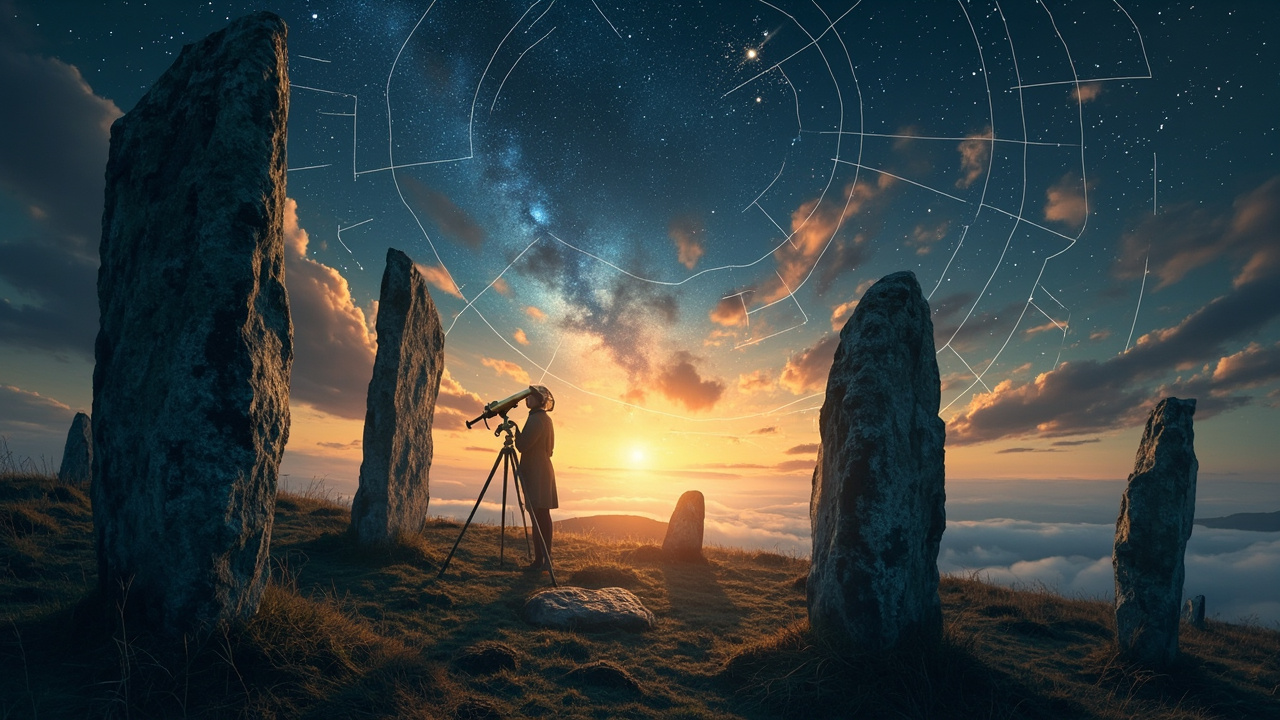
إلينور مارش أمضت سبع عشرة سنة في قياس السماء بأدوات كانت قادرة على كشف تغيرات لا تتجاوز ثانية قوسية واحدة. إلا أن شيئاً في مسيرتها الدقيقة لم يكن قد أعدها لما وجدته في الأرشيفات في ذلك الصباح الرطب من مايو. ظهر الشذوذ أثناء المعايرة الروتينية لدائرة Méridienne في المرصد — أداة صُممت لتتبع اللحظة الدقيقة التي تعبر فيها النجوم الخط الشمالي-الجنوبي في السماء. كانت إلينور تراجع بيانات المسح التاريخية عندما لاحظت شيئاً غريباً: سلسلة من العلامات الحجرية عبر جزر بريطانيا كانت منحرفة بشكل ثابت عن الشمال الحقيقي. ليس عشوائياً، بل بدقة رياضية تتحدى الترسيب الجيولوجي أو خطأ المساح الذي اشتبهت به في البداية. 随着她深入研究 records، اكتشفت إلينور أن هذه الانحرافات لم تكن متناثرة في المناظر الطبيعية على الإطلاق. كانت تشكل نمطاً، شبكة هندسية واسعة تمتد من كورنوال إلى كيثنس، مع فروع تصل إلى ويلز وعبر إلى أيرلندا الشمالية. بدا أن الأحجار — التي طالما أُهملت باعتبارها علامات حدودية من العصور الوسطى أو نصب حقلية قديمة — قد وُضعت وفقاً لمنطق خفي. عندما رسمت مواضعها واتجاهاتها على خريطة، ظهرت الصورة الكاملة: كانت ترسم مسار تقويم شمسي قديم، لم يُحدد الانقلابات والاعتدالات فحسب، بل أيضاً توقفات القمر والمحاذاة النجمية التي تُسيء لآلاف السنين. أدركت إلينور فوراً أن علم الآثار التقليدي سيقاوم هذا التفسير. كان الوسط الأكاديمي قد رفض طويلاً ادعاءات المعرفة الفلكية ما قبل التاريخ المتطورة، متنازلاً عن هذه النظريات باعتبارها تخمينات رومانسية. ستحتاج إلى أدلة صارمة لإقناعهم — قياسات مأخوذة في اللحظات الدقيقة للمحاذاة السماوية، موثقة وقابلة للتحقق. كان انقلاب الشمس الصيفي على بعد أقل من ثلاثة أسابيع. إذا كانت صحيحة بشأن تصميم التقويم، فإن الأحجار عند الطرف الشمالي للشبكة ستتAligned بشكل مثالي مع شروق الشمس في ذلك اليوم، شروق يحدث في اللحظة الدقيقة التي تصل فيها الشمس إلى أقصى انحراف شمالي لها. عملت بجنون، تقود من موقع إلى آخر، تقيس الزوايا بمنقلة الثيودوليت، تصور الأفق، تحسب السمت على حاسوبها المحمول في ممرات جانبية وبوابات أفنية. في كل حجر، ظهرت نفس القصة: هذه لم تكن حوادث تآكل أو وضع مهمل. كان الأقدمون يعرفون بالضبط ما كانوا يفعلونه. جاء التشكك، عندما جاء، بالضبط كما توقعت. البروفيسور هيو فينيويك من كامبريدج — عالم آثار، تجريبي确认، وناقد إلينور الأكثر ثباتاً — كان قد نشر رداً لاذعاً على نتائجها الأولية في ساعات من إصدارها. العلامات الحجرية، كما قال، كانت بقايا أنظمة حقول زراعية، كانت اتجاهاتها محددة بالطبوغرافيا بدلاً من علم الفلك. اقتراح خلاف ذلك كان، بكلماته، "تمرين في التفكير الرغبي متخفياً في ثوب العلم". ردت إلينور بالبيانات. سبعة وأربعون موقعاً. ثلاثمائة واثنتا عشرة قياسات. ارتباطات ذات دلالة إحصائية عند مستوى ثقة 99.7 بالمائة. لم تكن الأنماط مفتوحة للتفسير — كانت موجودة لأي شخص لديه عيون لترى وصبر للقياس. وصل صباح الانقلاب مع سماء نظفتها الأمطار الليلية. كانت إلينور قد وضعت نفسها عند العقدة الرئيسية للشبكة، دائرة حجرية متواضعة على سهل سالزبوري حددتها المسوحات كمركز محتمل للنظام. كانت قد أعدت أدواتها في المساء السابق، متأكدة من أن كل شيء محاذٍ ومستوٍ تماماً. من حولها، في ضوء الفجر الرمادي، وقفت الأحجار القديمة صامتة شاهداً. عندما بدأ الأفق يضيء، فحصت كرونومترها. خمس دقائق للحظة المحاذاة المحسوبة. كان قلبها يدق، رغم أنها أخبرت نفسها أنه لا مجال للشك — ليس مع ثقل الأدلة التي تراكمتها، وليس مع دقة حساباتها. لم يكن هذا إيماناً. كان هذا ملاحظة. ثلاث دقائق. دقيقتان. ظهر الحافة الأولى للشمس فوق سلسلة التلال البعيدة، قطع ضوؤها عبر ضباب الصباح في عمود من الذهب. عدلت إلينور أداتها، تتتبع حافة الشمس وهي تصعد. ثم — بشكل مستحيل، بمجد — رأت ذلك. مر ضوء شروق الشمس عبر شق طبيعي في التلال البعيدة، عبر الفجوة المركزية في الدائرة الحجرية، وأضاء الحجر العلامة الموضوع بعناية في قلبها. كانت المحاذاة دقيقة. مثالية. لا جدال فيها. صورت الظاهرة، وهي تعلم أن هذه الصورة الواحدة ستعادل ألف حجة. كان البناة القدماء قد عايرة نصبهم بهذه اللحظة بالضبط، بهذا الزاوية بالضبط من شروق الشمس، والنصب ظل صادقاً لمدة ثلاثة آلاف وخمسمائة عام. submitت إلينور نتائجها إلى الجمعية الملكية ذلك الخريف، مصحوبة بصور الانقلاب وبياناتها الشاملة. كان الرد محسوباً لكنه لا يمكن إنكاره: أُجبر الوسط الأثري على إعادة النظر في موقفه. كان رد فينيويك، عندما جاء، أكثر هدوءاً بشكل ملحوظ. انتشرت الاكتشاف، مما أثار تحقيقات جديدة عبر أوروبا وخارجها. وجد باحثون آخرون محاذاة مماثلة في مواقع كانت تعتبر بحتة طقسية. تهاوت certainties القديمة، محلولة بفهم أكثر دقة للمعرفة ما قبل التاريخ. لكن لإلينور، الواقفة وحدها في صباح الانقلاب في ضوء الفجر، كان المعنى الحقيقي أبسط. كانت الأحجار قد تكلمت. كان الأمر يتطلب فقط الشخص المناسب — واللحظة المناسبة — ليسمع.
Dr. Eleanor Marsh hatte siebzehn Jahre damit verbracht, den Himmel mit Instrumenten zu vermessen, die Variationen von nur einer Bogensekunde erkennen konnten. Doch nichts in ihrer akribischen Karriere hatte sie auf das vorbereitet, was sie an diesem feuchten Maitagmorgen in den Archiven fand. Die Anomalie war während einer routinemäßigen Kalibrierung des Meridiankreises der Sternwarte aufgetaucht — eines Instruments, das entwickelt worden war, um den genauen Moment zu verfolgen, in dem Sterne die Nord-Süd-Linie am Himmel überquerten. Eleanor hatte gerade historische Vermessungsdaten abgeglichen, als sie etwas Bemerkenswertes bemerkte: Eine Reihe von Steinmarkierungen auf den Britischen Inseln waren systematisch vom wahren Norden abgewichen. Nicht zufällig, sondern mit mathematischer Präzision, die der geologischen Setzung oder dem Vermessungsfehler widersprach, den sie zunächst vermutet hatte. Als sie tiefer in die Aufzeichnungen eintauchte, entdeckte Eleanor, dass diese Fehlausrichtungen gar nicht über die Landschaft verstreut waren. Sie bildeten ein Muster, ein gewaltiges geometrisches Netzwerk, das sich von Cornwall bis Caithness erstreckte, mit Ästen, die nach Wales und nach Nordirland reichten. Die Steine — lange als mittelalterliche Grenzsteine oder alte Felddenkmäler abgetan — schienen nach einer verborgenen Logik platziert worden zu sein. Als sie ihre Positionen und Ausrichtungen auf einer Karte einzeichnete, zeigte sich das vollständige Bild: Sie zeigten den Verlauf eines uralten Sonnenkalenders, der nicht nur Sonnenwenden und Tagundnachtgleichen markierte, sondern auch Mondstillstände und Sternkonstellationen, die seit Jahrtausenden vergessen waren. Eleanor verstand sofort, dass die konventionelle Archäologie diesem Interpretationsversuch widerstehen würde. Die akademische Welt hatte Behauptungen über ausgeklügelte prähistorische astronomische Kenntnisse lange zurückgewiesen und solche Theorien als romantisches Spekulieren abgetan. Sie würde eisenhaltige Beweise brauchen, um sie zu überzeugen — Messungen, die zu den präzisen Momenten der himmlischen Ausrichtung vorgenommen wurden, dokumentiert und überprüfbar. Die Sommersonnenwende war weniger als drei Wochen entfernt. Wenn sie mit ihrer Einschätzung des Kalenderdesigns richtig lag, würden die Steine am nördlichen Endpunkt des Netzwerks am diesem Tag perfekt mit dem Sonnenaufgang ausgerichtet sein — einem Sonnenaufgang, der genau in dem Moment stattfinden würde, wenn die Sonne ihre höchste nördliche Deklination erreichte. Sie arbeitete fieberhaft, fuhr von Ort zu Ort, maß Winkel mit ihrem Theodolit, fotografierte Horizonte, berechnete Azimute auf ihrem Laptop in Parkbuchten und Hoftoren. An jedem Stein erzählte sich dieselbe Geschichte: Dies waren keine Zufälle von Erosion oder sorgloser Platzierung. Die Alten hatten genau gewusst, was sie taten. Der Skeptizismus, als er kam, war genau der, den sie erwartet hatte. Professor Hugh Fenwick von Cambridge — Archäologe, überzeugter Empiriker und Eleanors hartnäckigster Kritiker — hatte innerhalb von Stunden nach der Veröffentlichung ihrer vorläufigen Ergebnisse eine vernichtende Antwort veröffentlicht. Die Steinmarkierungen, so argumentierte er, seien Überreste landwirtschaftlicher Flursysteme, deren Ausrichtungen durch die Topografie und nicht durch die Astronomie bestimmt worden seien. Etwas anderes vorzuschlagen sei, in seinen Worten, "eine Übung im Wunschdenken, die sich als Wissenschaft tarnt." Eleanor antwortete mit Daten. Siebenundvierzig Standorte. Dreihundertzwölf Messungen. Korrelationen, die auf einem Konfidenzniveau von 99,7 Prozent signifikant waren. Die Muster waren nicht interpretationsfähig — sie waren da, für jeden mit Augen zu sehen und der Geduld zu messen. Der Morgen der Sonnenwende kam mit einem Himmel, der über Nacht vom Regen gereinigt worden war. Eleanor hatte sich am Hauptknotenpunkt des Netzwerks positioniert, einem bescheidenen Steinkreis auf der Salisbury Plain, den Umfragen als wahrscheinliches Zentrum des Systems identifiziert hatten. Sie hatte ihre Instrumente am Vorabend aufgestellt und sich vergewissert, dass alles perfekt ausgerichtet und nivelliert war. Um sie herum, im grauen Zwielicht vor der Dämmerung, standen die uralten Steine als stille Zeugen. Als der Horizont zu hellen begann, überprüfte sie ihre Stoppuhr. Fünf Minuten bis zum berechneten Moment der Ausrichtung. Ihr Herz hämmerte, obwohl sie sich einredete, dass kein Raum für Zweifel bestand — nicht bei dem Gewicht der Beweise, die sie gesammelt hatte, nicht bei der Präzision ihrer Berechnungen. Das war kein Glaube. Das war Beobachtung. Drei Minuten. Zwei. Die erste Kante der Sonne glitt über den fernen Kamm, ihr Licht schnitt durch den Morgennebel in einem Strahl aus Gold. Eleanor justierte ihr Instrument und verfolgte die Sonnengrenze, während sie stieg. Und dann — unmöglich, glorreich — sah sie es. Das Licht der aufgehenden Sonne durchquerte eine natürliche Kerbe in den fernen Hügeln, durch die zentrale Lücke im Steinkreis und beleuchtete den eigens platzierten Markierungsstein in dessen Herz. Die Ausrichtung war exakt. Perfekt. Unleugbar. Sie fotografierte das Phänomen und wusste, dass dieses eine Bild tausend Argumente wert sein würde. Die alten Baumeister hatten ihr Denkmal auf diesen präzisen Moment kalibriert, auf diesen präzisen Winkel des Sonnenaufgangs, und das Denkmal war dreieinhalbtausend Jahre lang treu geblieben. Eleanor reichte ihre Erkenntnisse im Herbst bei der Royal Society ein, zusammen mit den Sonnenwendfotos und ihrem umfassenden Datensatz. Die Antwort war gemessen, aber unmissverständlich: Die archäologische Gemeinschaft war gezwungen worden, ihre Position zu überdenken. Fenwicks Widerlegung, als sie kam, war bemerkenswert gedämpfter. Die Entdeckung breitete sich aus und löste neue Untersuchungen in ganz Europa und darüber hinaus aus. Andere Forscher fanden ähnliche Ausrichtungen an Stätten, die bisher als rein zeremoniell galten. Die alten Gewissheiten zerbröckelten und wurden durch ein differenzierteres Verständnis des prähistorischen Wissens ersetzt. Doch für Eleanor, die an jenem Sonnenwendmorgen im Zwielicht allein stand, war die eigentliche Bedeutung einfacher gewesen. Die Steine hatten gesprochen. Es hatte nur der richtigen Person bedurft — und des richtigen Moments — um zuzuhören.
Le Dr Eleanor Marsh avait passé dix-sept ans à mesurer les cieux avec des instruments capables de détecter des variations d'une seule seconde d'arc. Pourtant, rien dans sa carrière méticuleuse ne l'avait préparée à ce qu'elle découvrit dans les archives ce matin humide de mai. L'anomalie était apparue lors d'un étalonnage de routine du cercle méridien de l'observatoire — un instrument conçu pour suivre le moment précis où les étoiles traversaient la ligne nord-sud du ciel. Eleanor recoupait des données d'arpentage historiques lorsqu'elle remarqua quelque chose d'étrange : une série de repères en pierre à travers les îles Britanniques étaient systématiquement désalignés du nord vrai. Pas au hasard, mais avec une précision mathématique qui défiait le tassement géologique ou l'erreur d'arpentage qu'elle avait initialement suspectée. En creusant plus profondément dans les archives, Eleanor découvrit que ces désalignements n'étaient pas du tout dispersés dans le paysage. Ils formaient un motif, un vaste réseau géométrique s'étendant de la Cornouailles au Caithness, avec des branches atteignant le Pays de Galles et passant en Irlande du Nord. Les pierres — longtemps dismissées comme des bornages médiévaux ou des monuments champêtres anciens — semblaient avoir été placées selon une logique cachée. Lorsqu'elle traça leurs positions et orientations sur une carte, l'image complète émergea : elles dessinaient le tracé d'un ancien calendrier solaire, marquant non seulement les solstices et équinoxes, mais aussi les arrêts lunaires et les alignements stellaires oubliés depuis des millénaires. Eleanor comprit immédiatement que l'archéologie conventionnelle résisterait à cette interprétation. L'établissement académique avait longtemps rejeté les affirmations de connaissances astronomiques préhistoriques sophistiquées, dismissant ces théories comme des spéculations romantiques. Elle aurait besoin de preuves irréfutables pour les persuader — des mesures prises aux moments précis de l'alignement céleste, documentées et vérifiables. Le solstice d'été était à moins de trois semaines. Si elle avait raison concernant la conception du calendrier, les pierres à l'extrémité nord du réseau s'aligneraient parfaitement avec le lever du soleil ce jour-là, un lever qui se produirait au moment exact où le soleil atteindrait sa déclinaison nord maximale. Elle travailla frénétiquement, conduisant de site en site, mesurant des angles avec son théodolite, photographiant les horizons, calculant des azimuts sur son ordinateur portable dans des accotements et des portails de fermes. Sur chaque pierre, la même histoire émergeait : ce n'étaient pas des accidents d'érosion ou de placement négligent. Les anciens savaient précisément ce qu'ils faisaient. Le scepticisme, quand il vint, fut exactement celui qu'elle avait anticipé. Le Professeur Hugh Fenwick de Cambridge — archéologue, empiriste confirmé, et critique le plus persistant d'Eleanor — avait publié une réponse cinglante à ses résultats préliminaires quelques heures seulement après leur publication. Les repères en pierre, argua-t-il, étaient des vestiges de systèmes de champs agricoles, leurs orientations déterminées par la topographie plutôt que par l'astronomie. Suggérer autrement était, selon ses termes, "un exercice de wishful thinking déguisé en science." Eleanor répondit avec des données. Quarante-sept sites. Trois cent douze mesures. Des corrélations significatives à un niveau de confiance de 99,7 pour cent. Les motifs n'étaient pas ouverts à l'interprétation — ils étaient là pour quiconque avait des yeux pour voir et la patience pour mesurer. Le matin du solstice arriva avec un ciel lavé par les pluies nocturnes. Eleanor s'était positionnée au nœud principal du réseau, un modeste cercle de pierres sur la Plaine de Salisbury que les enquêtes avaient identifié comme le centre probable du système. Elle avait installé ses instruments la veille au soir, s'assurant que tout était parfaitement aligné et nivelé. Autour d'elle, dans la pénombre grise de l'aube, les anciennes pierres se dressaient en témoins silencieux. Alors que l'horizon commençait à s'éclairer, elle vérifia son chronomètre. Cinq minutes avant le moment calculé de l'alignement. Son cœur battait la chamade, bien qu'elle se soit dit qu'il n'y avait pas de place pour le doute — pas avec le poids des preuves qu'elle avait accumulées, pas avec la précision de ses calculs. Ce n'était pas la foi. C'était l'observation. Trois minutes. Deux. La première arête du soleil dépassa la crête lointaine, sa lumière perçant le brouillard matinal dans un rayon d'or. Eleanor ajusta son instrument, suivant le limbe solaire alors qu'il montait. Et puis — impossibile, glorieusement — elle le vit. La lumière du soleil levant passait à travers une encoche naturelle dans les collines lointaines, à travers l'ouverture centrale du cercle de pierres, et illuminait la pierre marqueur spécialement placée en son cœur. L'alignement était exact. Parfait. Indéniable. Elle photographia le phénomène, sachant que cette seule image vaudrait mille arguments. Les bâtisseurs anciens avaient étalonné leur monument pour ce moment précis, pour cet angle précis du lever du soleil, et le monument était resté fidèle pendant trois mille cinq cents ans. Eleanor soumit ses conclusions à la Royal Society cet automne-là, accompagnées des photographies du solstice et de son ensemble complet de données. La réponse fut mesurée mais unmistakable : l'établissement archéologique avait été forcé de reconsidérer sa position. La réfutation de Fenwick, quand elle vint, fut notablemente plus tiède. La découverte se répandit, provoquant de nouvelles enquêtes à travers l'Europe et au-delà. D'autres chercheurs trouvèrent des alignements similaires dans des sites auparavant considérés comme purement cérémoniels. Les anciennes certitudes s'effritèrent, remplacées par une compréhension plus nuancée des connaissances préhistoriques. Mais pour Eleanor, debout seule ce matin de solstice dans la pénombre, la véritable signification avait été plus simple. Les pierres avaient parlé. Il avait simplement fallu la bonne personne — et le bon moment — pour écouter.
Доктор Элеанор Марш семнадцать лет измеряла небеса инструментами, способными обнаруживать отклонения в одну угловую секунду. Однако ничто в её тщательной карьере не подготовило её к тому, что она обнаружила в архивах этого сырого майского утра. Аномалия всплыла во время плановой калибровки меридианного круга обсерватории — инструмента, предназначенного для отслеживания точного момента, когда звёзды пересекают линию север-юг на небе. Элеанор сверяла исторические данные геодезических съёмок, когда заметила нечто странное: серия каменных меток по всему Британскому архипелагу была последовательно смещена от истинного севера. Не случайно, а с математической точностью, которая исключала геологическую осадку или ошибку геодезиста, которую она первоначально подозревала. углубившись в записи, Элеанор обнаружила, что эти смещения вовсе не были разбросаны по ландшафту. Они формировали узор — огромную геометрическую сеть, простирающуюся от Корнуолла до Кейтнесса, с ответвлениями, достигающими Уэльса и переходящими в Северную Ирландию. Камни — давно отвергнутые как средневековые пограничные столбы или древние полевые памятники — казалось, были размещены согласно скрытой логике. Когда она нанесла их положения и ориентации на карту, открылась полная картина: они очерчивали путь древнего солнечного календаря, отмечающего не только солнцестояния и равноденствия, но и лунные остановки и звёздные выравнивания, забытые тысячелетиями. Элеанор сразу поняла, что традиционная археология будет сопротивляться этому толкованию. Академическое сообщество давно отвергало утверждения о сложных астрономических знаниях доисторических времён, отклоняя такие теории как романтические спекуляции. Ей нужны были железные доказательства, чтобы убедить их — измерения, сделанные в точные моменты небесного выравнивания, задокументированные и проверяемые. Летнее солнцестояние было менее чем через три недели. Если она была права насчёт дизайна календаря, камни на северном конце сети в этот день должны были идеально совместиться с восходом солнца — восходом, который произойдёт в точный момент, когда солнце достигнет максимального северного склонения. Она работала лихорадочно, разъезжая от объекта к объекту, измеряя углы своим теодолитом, фотографируя горизонты, вычисляя азимуты на ноутбуке на обочинах и у ворот ферм. У каждого камня всплывала одна и та же история: это не были случайности эрозии или небрежной установки. Древние точно знали, что делали. Скептицизм, когда он пришёл, был именно таким, какой она предвидела. Профессор Хью Фенвик из Кембриджа — археолог, убеждённый эмпирик и самый настойчивый критик Элеанор — опубликовал уничтожающий отзыв на её предварительные результаты через считанные часы после их публикации. Каменные метки, утверждал он, были остатками сельскохозяйственных полевых систем, их ориентация определялась топографией, а не астрономией. Предполагать иное было, его словами, «упражнением в самообмане, прикрытом наукой». Элеанор ответила данными. Сорок семь объектов. Триста двенадцать измерений. Корреляции, значимые на уровне достоверности 99,7 процента. Узоры не подлежали интерпретации — они были там, для любого, у кого есть глаза видеть и терпение измерять. Утро солнцестояния наступило с небом, очищенным ночным дождём. Элеанор разместила себя у главного узла сети — скромного каменного круга на Солсберийской равнине, который исследования определили как вероятный центр системы. Она установила свои инструменты накануне вечером, убедившись, что всё идеально выровнено и установлено по уровню. Вокруг неё, в серых предрассветных сумерках, древние камни молчаливо свидетельствовали. Когда горизонт начал светлеть, она проверила свой хронометр. До расчётного момента выравнивания — пять минут. Её сердце бешено колотилось, хотя она говорила себе, что сомнениям нет места — не с тем весом накопленных ею доказательств, не с той точностью её расчётов. Это была не вера. Это было наблюдение. Три минуты. Две. Первый край солнца показался над далёким гребнем, его свет пронзил утренний туман в столбе золота. Элеанор настроила свой инструмент, следя за солнечным лимбом, пока тот поднимался. И тогда — невозможно, величественно — она увидела это. Свет восходящего солнца прошёл через естественную выемку в далёких холмах, через центральный проём каменного круга и осветил специально установленный маркерный камень в его центре. Выравнивание было точным. Идеальным. Неопровержимым. Она сфотографировала явление, зная, что этот единственный снимок будет стоить тысячи аргументов. Древние строители откалибровали свой монумент на этот точный момент, на этот точный угол восхода солнца, и монумент оставался верным три с половиной тысячи лет. Элеанор представила свои выводы Королевскому обществу той осенью, сопроводив их фотографиями солнцестояния и своим обширным набором данных. Ответ был взвешенным, но недвусмысленным: археологическое сообщество было вынуждено пересмотреть свою позицию. Опровержение Фенвика, когда оно последовало, было заметно более сдержанным. Открытие распространилось, побуждая новые исследования по всей Европе и за её пределами. Другие исследователи обнаружили подобные выравнивания на объектах, ранее считавшихся чисто церемониальными. Старые уверенности рушились, сменяясь более нюансированным пониманием доисторических знаний. Но для Элеанор, стоявшей в одиночестве в то утро солнцестояния в предрассветном полумраке, истинное значение было проще. Камни заговорили. Просто потребовался нужный человек — и нужный момент — чтобы услышать.