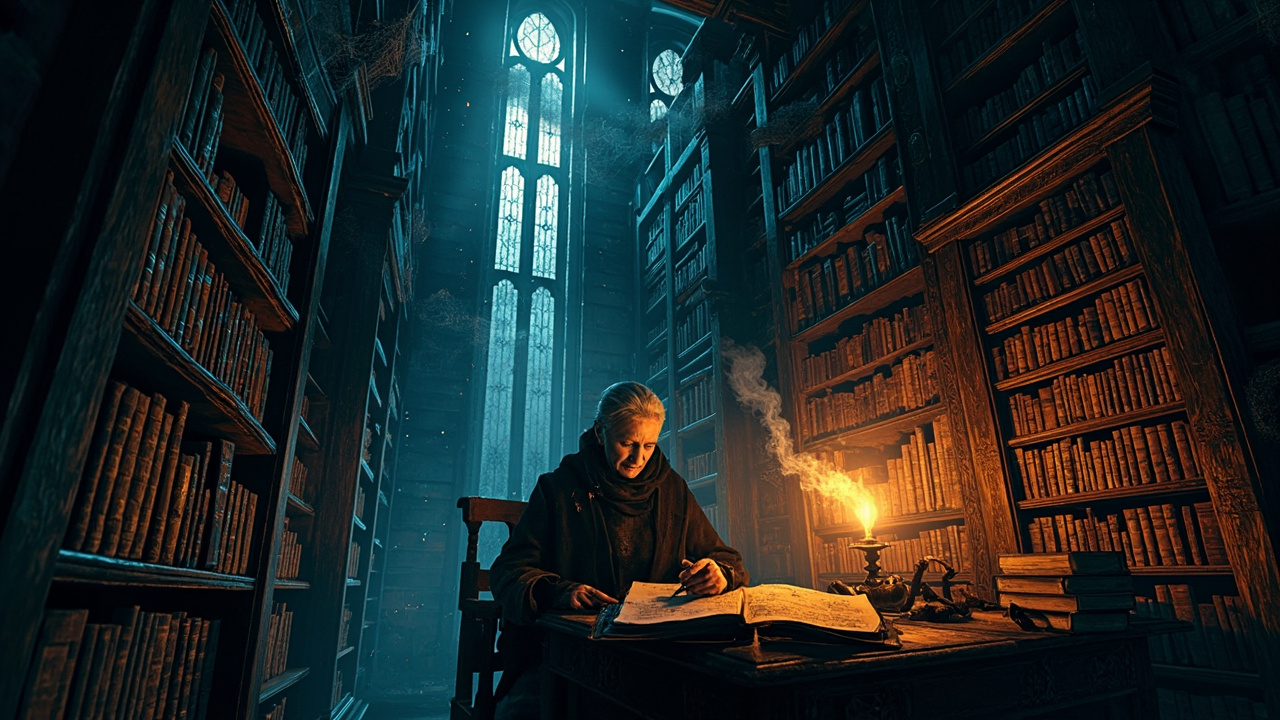
كانت إلينور فانس قد كرست اثنين وثلاثين عامًا لمكتبة كلية سيلبورن، وقتًا كافيًا لتمييزها بين أنين الجذوع القديمة المتوطدة وأصوات التقرع المريبة التي بدت وكأنها تنبعث من الأرشيف المحظور. كان ذلك في نوفمبر عندما بدأت الغرابة تتجلى لأول مرة - مساء يوم الثلاثاء، تلك الليلة القارسة في كامبريدج التي كانت تدفع حتى أكثر العلماء إخلاصًا بعيدًا عن قاعة القراءة المطعّمة بالبلوط. كانت قد بقيت لتنظم مجموعة من المراسلات الفيكتورية الموهوبة، والمبنى، خاويًا من جلبة التفكير المعتادة، بدأ يتنفس.
كانت قاعة القراءة تمتلك بنية صوتية غريبة لم تفكر إلينور فيها كثيرًا حتى تلك الليلة. كانت الألواح، التي أُنقذت من دير في العصور الوسطى أثناء إعادة بناء الكلية في القرن الثامن عشر، تبدو وكأنها تحبس الصوت كما تحبس كرة الورق الزجاجية الثلج. عندما عدلت وضعيتها على المكتب المركزي، سمعته - همسة، كأوراق تُقلب في قاعة فارغة. نهضت، عبرت إلى الجدار الشرقي، وضغطت أذنهاAgainst الخشب البلوطي البارد. تجسدت الأصوات.
تحدثت بتردد ليس من هذا العالم تمامًا، رقيق وخيطي، كما لو كان قد تسلل عبر قرن من الغبار والإهمال. ومع ذلك كانت بشرية بلا شك: صوت امرأة، عالٍ ومشدود بالخوف، وصوت رجل أخفض نغمة، كلماته غير واضحة لكن نبرته لا تُخطئ في تعمّده البارد.
كان على إلينور أن ترفض التجربة كوهم سمعي - عادة العقل في صياغة أنماط من الضوضاء العشوائية. كان عليها أن تغلق الباب وتنسحب إلى شقتها مع ويسكي دافئ. وبدلاً من ذلك، عادت إلى المكتب ليلاً بعد ليل، تتعلم كيف تستمع بصبر أمين الأرشيف الذي يتعامل مع رقٍّ هش.
تحدثت الأصوات عن مراسلات اعترضت، ونظريات خطيرة جدًا لنشرها، وعن امرأة تُدعى الدكتورة كونستانس فيرثر التي اكتشفت في عام 1887 أدلة على احتيال منظم داخل المؤسسة العلمية للكلية. وجدت إلينور اسمها في السجلات الإدارية: زميلة الكلية، عالمة نبات ذات سمعة، استقالت فجأة ودون تفسير. اختفت أوراقها. قبرها في مقبرة الجامعة حمل فقط النقش "خادمة أمينة"، وهي شهادة نعي بدت لإلينور فارغة عمدًا.
مع مرور الأسابيع، صارت الأصوات أكثر وضوحًا. كانت كونستانس قد اكتشفت أن الفيلسوف الطبيعي المحتفى به في الكلية، السير إدموند هوفتون المرموق، كان قد fabricate أجزاء كبيرة من بحثه الرائد عن تجديد الخلايا. كانت تنوي كشف أمره. وكان ينوي غير ذلك.
جاءت الجلسة الأخيرة في أطول ليلة في العام. جلست إلينور بلا حراك بينما أذنت ألواح قاعة القراءة بشهادتها: الساعات الأخيرة لكونستانس، وإدراكها بأنها كانت مسمومة بمحلول اعتقدت أنه علاج للصداع النصفي الذي عانت منه. صوت السير إدموند، هادئ وزاحف في ضماناته بأن أحدًا لن يصدق امرأة عزلت نفسها تمامًا من خلال الكبرياء الفكري. صوتcratch الأرض بينما دفنها تحت حجارة الأساس للجناح الشرقي - وأدلة لا يشير إليها أي مخطط معماري.
جلست إلينور فترة طويلة في الصمت الذي تلا ذلك. صارت قاعة القراءة مجرد غرفة مرة أخرى، ألواحها البلوطية خامدة ولا مبالية. لكنها كانت قد سمعت ما يكفي.
المسار المنطقي كان تنبيه سلطات الكلية، ربما إشراك الشرطة. ومع ذلك أدركت إلينور، بحدس أمين الأرشيف المميز، أن الذاكرة المؤسسية انتقائية وغالبًا ما تخدم نفسها. ظل السير إدموند هوفتون محترمًا؛ صورته معلقة في قاعة الجماعة العليا، واسمه منقوش فوق مدخل مبنى العلوم. كانت للكلية كل الحافز لتشويه سمعة أي اتهام، خاصة واحد بهذا البعد الزمني. يمكن Misfile الأدلة، يمكن فقد السجلات، وإلينور نفسها يمكن تصويرها كسيدة في سنوات متقدمة خلطت بين الخيال والوحي.
اختارت بدلاً من ذلك سلاح المنهجية. وثقت كل جلسة، تنسخ الأصوات الشبحية بنفس الدقة التي ستطبقها على مخطوطة متآكلة. تتبعت تحركات كونستانس في الأسابيع التي سبقت اختفاءها، وربطت سجلات زوار الكلية وسجلات التموين ويوميات حارس الأرض الذي سجل حفرًا غير عادي في ديسمبر 1887. طلبت من المحافظين إذنًا لفحص أساس الجناح الشرقي، وقدمت نتائجها ليس كشهادة خارقة بل كت deduction أرشيفي يبرر التحقيق المادي.
عُثر على العظام في فبراير، تحت حجر أرضي كان قد استقر قليلاً عبر العقود. أكد التشريح بعد الوفاة التسمم بالدجيتاليز - الخناجر، التي وصفها طبيب أظهرت سجلاته أنه كان ابن أخ السير إدموند. واجهت الكلية فضيحة ستهيمن على الأخبار الأكاديمية لأشهر، لكن إلينور لم تشعر بأي ارتياح، فقط اعتراف هادئ بأن بعض الديون، حتى تلك المتأخرة بمئة عام، تُستحق في النهاية للدفع.
في مساء يوم الخدمة التذكارية، عادت إلينور إلى قاعة القراءة للمرة الأخيرة. ضغطت راحة يدها على البلوط واستمعت. كان الصمت مطلقًا، الأصوات finally أُطلقت. كانت كونستانس فيرثر قد تحدثت truth أخيرًا، والمبنى الذي حوى سرها قد fulfill غرضه الغريب والصبور.
Eleanor Vance hatte zweiunddreißig Jahre dem Bibliothek der Selborne College gewidmet, lange genug, um zwischen dem setzenden Ächzen alter Balken und den unheimlicheren Knarrgeräuschen zu unterscheiden, die aus dem gesperrten Archiv zu kommen schienen. Es war November, als sich die Eigentümlichkeit zum ersten Mal bemerkbar machte – ein Dienstagabend, eine jener bitterkalten Cambridge-Nächte, die selbst die engagiertesten Gelehrten aus dem eichengetäfelten Lesesaal vertrieb. Sie war geblieben, um eine Schenkung viktorianischer Korrespondenz zu katalogisieren, und das Gebäude, leer von seinem üblichen intellektuellen Treiben, hatte begonnen zu atmen.
Der Lesesaal besaß eine eigentümliche akustische Architektur, über die Eleanor bis zu jenem Abend nie recht nachgedacht hatte. Die Paneele, aus einem mittelalterlichen Kloster während des Wiederaufbaus des College im achtzehnten Jahrhundert geborgen, schienen den Schall einzufangen wie eine Glaskugel den Schnee. Als sie ihre Position am Zentraltisch veränderte, hörte sie es – ein Flüstern, wie Seiten, die in einer leeren Halle umgeblättert werden. Sie stand auf, ging zur Ostwand und presste ihr Ohr gegen das kalte Eichenholz. Die Stimmen kristallisierten sich heraus.
Sie sprachen in einem Register, das nicht ganz von dieser Welt war, dünn und fadenförmig, als wären sie durch ein Jahrhundert Staub und Vernachlässigung gefiltert worden. Und doch waren sie unverkennbar menschlich: eine Frauenstimme, hoch und vor Angst angespannt, und eine tiefere Männerstimme, deren Worte undeutlich waren, deren Tonfall jedoch in ihrer kalt berechnenden Art unverkennbar.
Eleanor hätte das Erlebnis als akustische Pareidolie abtun sollen – die Gewohnheit des Geistes, aus zufälligem Rauschen Muster zu konstruieren. Sie hätte die Tür abschließen und sich mit einem wärmenden Whisky in ihre Wohnung zurückziehen sollen. Stattdessen kehrte sie Nacht für Nacht an den Schreibtisch zurück und lernte, mit der Geduld einer Archivarin zu lauschen, die zerbrechliches Pergament handhabt.
Die Stimmen sprachen von abgefangener Korrespondenz, von Theorien, die zu gefährlich zum Veröffentlichen waren, von einer Frau namens Dr. Constance Fairweather, die 1887 Beweise für systematischen Betrug innerhalb der wissenschaftlichen Einrichtung des Colleges entdeckt hatte. Eleanor fand ihren Namen in den Verwaltungsunterlagen: eine Fellow des Colleges, eine Botanikerin von einigem Ansehen, die plötzlich und ohne Erklärung zurückgetreten war. Ihre Papiere waren verschwunden. Ihr Grab auf dem Universitätsfriedhof trug nur die Inschrift "Getreue Dienerin", eine Grabschrift, die Eleanor als bewusst hohl erschien.
Im Laufe der Wochen wurden die Stimmen deutlicher. Constance hatte entdeckt, dass der gefeierte Naturphilosoph des Colleges, der verehrte Sir Edmund Houghton, erhebliche Teile seiner bahnbrechenden Forschung zur Zellregeneration gefälscht hatte. Sie hatte vorgehabt, ihn zu entlarven. Er hatte anderes vorgehabt.
Die letzte Sitzung kam zur längsten Nacht des Jahres. Eleanor saß reglos, während die Paneele des Lesesaals ihr Zeugnis ablegten: Constantines letzte Stunden, ihre Erkenntnis, dass sie von einer Zubereitung vergiftet worden war, die sie für ein Tonikum gegen die Migräne gehalten hatte, die sie heimsuchte. Sir Edmunds Stimme, ruhig und reptilienhaft in ihren Versicherungen, dass niemand einer Frau glauben würde, die sich durch intellektuellen Stolz so gründlich isoliert hatte. Das Scharren von Erde, als er sie unter den Grundsteinen des Ostflügels vergrub – wovon kein Architektenplan etwas erwähnte.
Eleanor saß lange in der Stille, die folgte. Der Lesesaal war wieder nur ein Raum geworden, seine Eichenpaneele träge und teilnahmslos. Aber sie hatte genug gehört.
Der logische Weg wäre gewesen, die Collegebehörden zu alarmieren, vielleicht die Polizei einzuschalten. Doch Eleanor verstand, mit der besonderen Intuition einer Archivarin, dass institutionelles Gedächtnis selektiv und oft eigennützig ist. Sir Edmund Houghton wurde noch verehrt; sein Porträt hing in der Senioren-Gemeinschaftsraum, sein Name über dem Eingang zum Naturwissenschaftsgebäude eingraviert. Das College hatte jeden Anreiz, jede Anklage zu diskreditieren, besonders eine so zeitlich entfernte. Beweise konnten verlegt, Aufzeichnungen verloren gehen, und Eleanor selbst konnte als Frau in fortgeschrittenem Alter dargestellt werden, die Einbildung für Offenbarung gehalten hatte.
Sie wählte stattdessen die Waffe der Methodik. Sie dokumentierte jede Sitzung und transkribierte die spektralen Stimmen mit derselben Präzision, die sie auf eine zerbröckelnde Handschrift anwenden würde. Sie verfolgte Constantines Bewegungen in den Wochen vor ihrem Verschwinden, kreuzverweisierte Besucherlogs des Colleges, Verpflegungsunterlagen und das Tagebuch eines Friedhofswärters, der im Dezember 1887 ungewöhnliche Ausgrabungsarbeiten notiert hatte. Sie petitionierte die Konservatoren um Erlaubnis, die Grundmauern des Ostflügels zu untersuchen, und präsentierte ihre Erkenntnisse nicht als übernatürliches Zeugnis, sondern als archivische Schlussfolgerung, die eine körperliche Untersuchung rechtfertigte.
Die Knochen wurden im Februar gefunden, unter einem Plattenstein, der im Laufe der Jahrzehnte leicht abgesunken war. Die Autopsie bestätigte eine Vergiftung durch Digitalis – Eisenhut, verschrieben von einem Arzt, dessen eigene Unterlagen zeigten, dass er Sir Edmunds Neffe war. Das College sah sich einem Skandal gegenüber, der die akademischen Nachrichten monatelang dominieren würde, aber Eleanor empfand keine Genugtuung, nur eine stille Anerkennung, dass einige Schulden, selbst die um ein Jahrhundert überfälligen, letztlich zur Zahlung vorgelegt werden.
Am Abend der Gedenkfeier kehrte Eleanor ein letztes Mal in den Lesesaal zurück. Sie presste ihre Handfläche gegen das Eichenholz und lauschte. Die Stille war absolut, die Stimmen endlich befreit. Constance Fairweather hatte ihre Wahrheit endlich gesprochen, und das Gebäude, das ihr Geheimnis gehütet hatte, hatte seinen seltsamen, geduldigen Zweck erfüllt.
Eleanor Vance avait consacré trente-deux ans à la bibliothèque du Selborne College, suffisamment longtemps pour distinguer les gémissements de sommeil des vieilles poutres des craquements plus sinistres qui semblaient émaner des archives restreintes. C'était en novembre que l'étrangeté s'était manifestée pour la première fois - un mardi soir, ce genre de nuit mordante de Cambridge qui faisait fuir même les érudits les plus dévoués de la salle de lecture lambrissée de chêne. Elle était restée pour cataloguer un legs de correspondance victorienne, et le bâtiment, vidé de son activité intellectuelle habituelle, avait commencé à respirer.
La salle de lecture possédait une acoustique particulière qu'Eleanor n'avait jamais vraiment songée à étudier jusqu'à cette soirée. Les panneaux, récupérés d'un monastère médiéval lors de la reconstruction du collège au dix-huitième siècle, semblaient piéger le son comme un presse-papiers de verre piège la neige. Quand elle ajusta sa position au bureau central, elle l'entendit - un susurrement, comme des pages qu'on tourne dans une salle vide. Elle se leva, traversa jusqu'au mur oriental et pressa son oreille contre le chêne froid. Les voix se cristallisèrent.
Elles s'exprimaient dans un registre qui n'était pas entièrement de ce monde, fin et filamenteux, comme si elles avaient été filtrées à travers un siècle de poussière et de négligence. Pourtant, elles étaient incontestablement humaines : une voix de femme, haute et tendue de peur, et une voix d'homme plus grave, ses paroles indistinctes mais son ton unmistakable dans sa froide délibération.
Eleanor aurait dû rejeter cette expérience comme une hallucination auditive - cette habitude de l'esprit de percevoir des formes dans le bruit aléatoire. Elle aurait dû verrouiller la porte et regagner son appartement avec un whisky réconfortant. Au lieu de cela, elle revint au bureau nuit après nuit, apprenant à écouter avec la patience d'une archiviste manipulant du vélin fragile.
Les voix parlaient de correspondance interceptée, de théories trop dangereuses pour être publiées, d'une femme nommée Dr Constance Fairweather qui avait découvert en 1887 des preuves d'une fraude systématique au sein de l'établissement scientifique du collège. Eleanor trouva son nom dans les archives administratives : une fellows du collège, une botaniste de quelque réputation, qui avait soudainement et inexplicablement démissionné. Ses papiers avaient disparu. Sa tombe au cimetière universitaire ne portait que l'épitaphe « Servante fidèle », une inscription qu'Eleanor jugea délibérément vide.
Au fil des semaines, les voix devinrent plus distinctes. Constance avait découvert que le philosophe naturel célébré du collège, le eminent Sir Edmund Houghton, avait fabriqué des portions substantielles de ses recherches novatrices sur la régénération cellulaire. Elle avait l'intention de l'exposer. Il en avait prévu autrement.
La dernière séance arriva lors de la nuit la plus longue de l'année. Eleanor resta immobile tandis que les panneaux de la salle de lecture livraient leur témoignage : les dernières heures de Constance, sa réalisation qu'elle avait été empoisonnée par une préparation qu'elle croyait être un tonique contre les migraines qui la tourmentaient. La voix de Sir Edmund, calme et reptilienne dans ses assurances que personne ne croirait une femme qui s'était tellement isolée par orgueil intellectuel. Le raclement de terre tandis qu'il l'enterrait sous les fondations de l'aile orientale - dont aucun plan d'architecte ne faisait mention.
Eleanor resta longtemps dans le silence qui suivit. La salle de lecture était redevenue une simple pièce, ses panneaux de chêne inertes et indifférents. Mais elle en avait assez entendu.
La marche logique était d'alerter les autorités du collège, peut-être d'impliquer la police. Pourtant, Eleanor comprit, avec l'intuition particulière de l'archiviste, que la mémoire institutionnelle est sélective et souvent serves ses propres intérêts. Sir Edmund Houghton demeurait venerated ; son portrait pendait dans la salle commune des seniors, son nom gravé au-dessus de l'entrée du bâtiment des sciences. Le collège avait tout intérêt à discréditer toute accusation, particulièrement une si temporalmente distante. Les preuves pouvaient être égarées, les dossiers pouvaient disparaître, et Eleanor elle-même pouvait être dépeinte comme une femme d'un certain âge qui avait confondu imagination et révélation.
Elle choisit plutôt l'arme de la méthode. Elle documenta chaque séance, transcrivant les voix spectrales avec la même précision qu'elle appliquerait à un manuscrit qui s'effrite. Elle retrouva les mouvements de Constance dans les semaines précédant sa disparition, en croisant les registres de visiteurs du collège, les registres de restauration et le journal d'un gardien qui avait noté des excavations inhabituelles en décembre 1887. Elle demanda aux conservateurs la permission d'examiner les fondations de l'aile orientale, présentant ses découvertes non pas comme un témoignage surnaturel mais comme une déduction archivistique qui warranted une enquête physique.
Les os furent découverts en février, sous une dalle qui s'était légèrement affaissée au fil des décennies. L'autopsie confirma un empoisonnement à la digitaline - aconit, prescrit par un médecin dont les propres archives montraient qu'il était le neveu de Sir Edmund. Le collège fit face à un scandale qui allait dominer l'actualité académique pendant des mois, mais Eleanor ne ressentit aucune satisfaction, seulement une tranquille reconnaissance que certaines dettes, même celles overdue depuis un siècle, finissent par se presenter au paiement.
Le soir de la cérémonie commemorative, Eleanor retourna dans la salle de lecture une dernière fois. Elle pressa sa paume contre le chêne et écouta. Le silence était absolute, les voix enfin libérées. Constance Fairweather avait dit sa vérité une fois pour toutes, et le bâtiment qui avait gardé son secret avait accompli son étrange et patient dessein.
Элеанор Вэнс посвятила тридцать два года библиотеке Колледжа Селборн — достаточно долго, чтобы отличать оседающие стоны древних балок от более зловещих скрипов, казалось бы, исходящих из закрытых архивов. Это было в ноябре, когда странность впервые заявила о себе — вторничный вечер, одна из тех жгучих кембриджских ночей, что прогоняла даже самых преданных ученых из дубовых панелей читального зала. Она осталась, чтобы каталогизировать пожертвованное собрание викторианской переписки, и здание, опустевшее от обычной интеллектуальной суеты, начало дышать.
Читальный зал обладал своеобразной акустической архитектурой, о которой Элеанор никогда особенно не задумывалась до того вечера. Панели, спасенные из средневекового монастыря во время перестройки колледжа в восемнадцатом веке, казалось, задерживали звук, как стеклянный пресс-папье задерживает снег. Когда она изменила положение за центральным столом, она услышала это — шорох, будто страницы переворачиваются в пустом зале. Она встала, подошла к восточной стене и прижалась ухом к холодному дубу. Голоса обрели форму.
Они говорили на регистре, не совсем из этого мира, тонком и нитевидном, словно профильтрованном сквозь столетие пыли и небрежения. И всё же они были несомненно человеческими: женский голос, высокий и напряженный от страха, и мужской, более низкий, слова неразборчивы, но тон недвусмыслен в своей холодной расчётливости.
Элеанор должна была бы отвергнуть этот опыт как слуховую парейдолию — привычку разума выдумывать образы из случайного шума. Она должна была запереть дверь и удалиться в свою квартиру с согревающим виски. Вместо этого она возвращалась к столу ночь за ночью, учась слушать с терпением архивариуса, обращающегося с хрупким пергаментом.
Голоса говорили о перехваченной переписке, о теориях слишком опасных для публикации, о женщине по имени Доктор Констанс Фэруэзер, которая в 1887 году обнаружила доказательства систематического мошенничества в научном учреждении колледжа. Элеанор нашла её имя в административных записях: стипендиатка колледжа, ботаник с некоторой репутацией, внезапно и без объяснений ушедшая в отставку. Её бумаги исчезли. Её могила на университетском кладбище содержала лишь надпись «Верная слуга» — эпитафия, которая показалась Элеанор намеренно пустой.
По мере progresses недель голоса становились отчётливее. Констанс обнаружила, что прославленный натуральный философ колледжа, почтенный Сэр Эдмунд Хафтон, подделал значительные portions своего новаторского исследования клеточной регенерации. Она намеревалась его разоблачить. Он намеревался иначе.
Последний сеанс состоялся в самую длинную ночь года. Элеанор сидела неподвижно, пока панели читального зала отдавали свои показания: последние часы Констанс, её осознание, что она была отравлена препаратом, который считала тоником от мигреней, её преследовавших. Голос сэра Эдмунда, спокойный и рептильный в своих заверениях, что никто не поверит женщине, столь основательно изолировавшей себя интеллектуальной гордостью. Скрежет земли, когда он закапывал её под фундаментом восточного крыла — о чём не упоминалось ни в каких архитектурных чертежах.
Элеанор долго сидела в наступившей тишине. Читальный зал снова стал просто комнатой, его дубовые панели инертны и безразличны. Но она услышала достаточно.
Логичным курсом было бы оповестить власти колледжа, возможно, привлечь полицию. Однако Элеанор понимала, с особым чутьём архивариуса, что институциональная память избирательна и часто служит собственным интересам. Сэр Эдмунд Хафтон оставался почитаемым; его портрет висел в старшем общем зале, его имя было высечено над входом в здание естественных наук. У колледжа был every стимул дискредитировать любое обвинение, особенно столь temporally distant. Доказательства могли быть misfiled, записи могли быть утеряны, а сама Элеанор могла быть изображена как женщина в летах, принявшая воображение за откровение.
Вместо этого она выбрала оружие методичности. Она документировала каждый сеанс, transcribing призрачные голоса с той же точностью, с какой она отнеслась бы к крошащейся рукописи. Она отследила передвижения Констанс в недели перед её исчезновением, перекрёстно сверяя журналы посетителей колледжа, записки о питании и дневник Groundsman, который отметил необычные раскопки в декабре 1887 года. Она подала петицию консерваторам с просьбой разрешить исследовать фундамент восточного крыла, представляя свои находки не как сверхъестественное свидетельство, а как архивную deduction, warranting физическое расследование.
Кости были найдены в феврале, под каменной плитой, слегка осевшей за десятилетия. Вскрытие подтвердило отравление дигиталисом — monkshood, прописанное врачом, чьи собственные записи показывали, что он был племянником сэра Эдмунда. Колледж столкнулся со скандалом, который будет доминировать в академических новостях месяцами, но Элеанор не чувствовала удовлетворения, лишь тихое признание, что некоторые долги, даже those overdue на целое столетие, в конце концов предъявляются к оплате.
Вечером в день поминальной службы Элеанор вернулась в читальный зал в последний раз. Она прижала ладонь к дубу и прислушалась. Тишина была абсолютной, голоса наконец освобождены. Констанс Фэруэзер наконец-то произнесла свою правду, и здание, хранившее её секрет, исполнило свою странную, терпеливую цель.