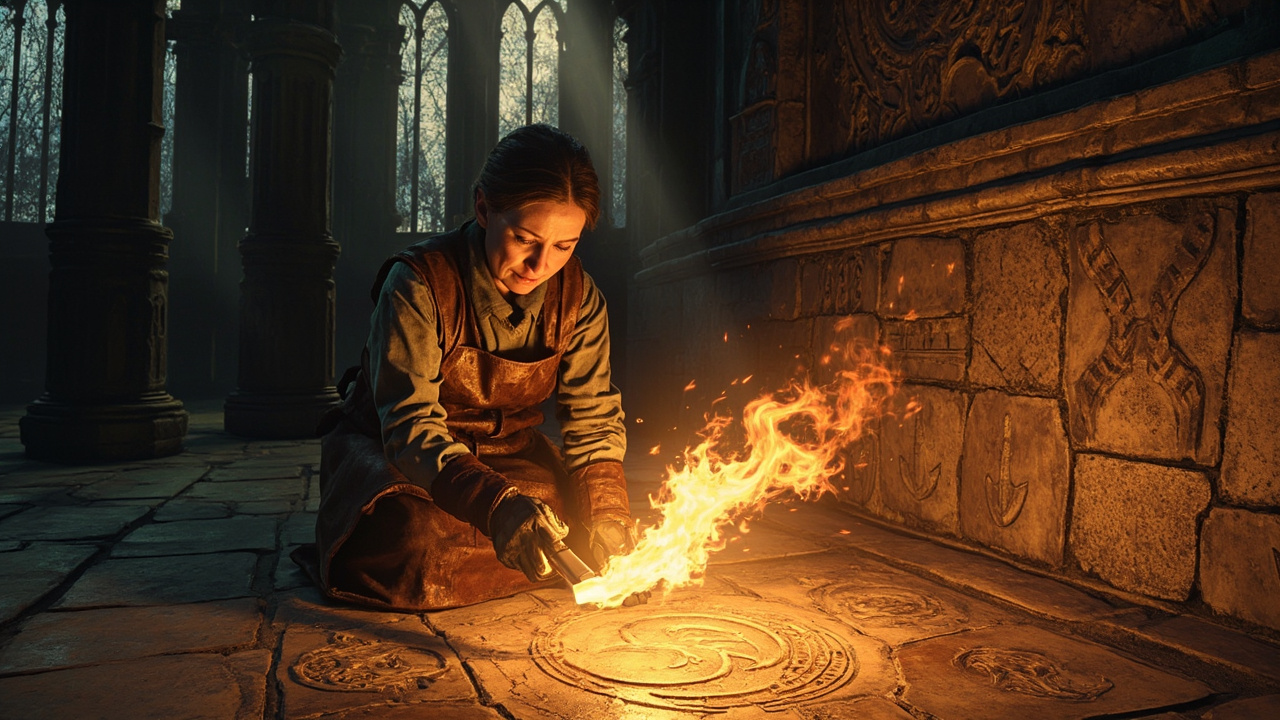
أمضت إلينور بلاكوود خمس عشرة سنة تنفخ الحياة في الهياكل المتداعية، لكن لم يكن شيء قد أعدها لكنيسة سانت ألدلم. ارتفعت الكاتدرائية من قلب المدينة القديمة كسفينة متجمدة في منتصف رحلتها، جدرانها من الحجر الجيري العتيق تحمل أسراراً في كل شق. طُلب منها الإشراف على ترميم الصحن الشمالي، مهمة اقتربت منها ببرود مهني - حتى انكشفت النقوشات. برزت من تحت طبقات الأوساخ المتراكمة كأبراج تأتي في وضوح: لم تكن القديسين والملائكة المعتادين، بل شيء أكثر غموضاً على الإطلاق. رموز لم تصادفها في أي نص كنسي. معينات متداخلة داخل هلالات. أيادٍ متشابكة. نمط لم تستطع فك رموزه فوراً، رغم أنها شعرت، بالحدس الذي يأتي من عقود من العمل بالحجر، أن هذه ليست نزوةً قروسطية. هذه كانت مقصودة. ذات غرض. رسالة تركها شخص توقع، يوماً ما، أن يُفهم. "تأثير الطقس،" علّق النجار الأول حين أشارت إليها. "كان الحرفيون في العصور الوسطى مولعين بمثل هذه النزوات." ابتسمت إلينور ولم تقل شيئاً. كانت تعرف الفرق بين تأثير الطقس والقصد. أمضت سنوات كثيرة تقرأ لغة المباني لتُخدع بمثل هذه الطمأنة. جاء الاكتشاف يوم الخميس، في ضوء autumn المتلاشي بعد الظهر. كانت قد بقيت خلفاً لتوثيق رأسمية près de la porte nord، دفترها مستند على ركبتها، حين لاحظت شيئاً غير عادي. انخفاض صغير في الحجر، لا أكبر من عملة معدنية، دائري تماماً. انحنت أقرب، مشعالها يلقي ضوءاً خافتاً على السطح. داخل الانخفاض، منقوش بدقة استثنائية، سلسلة من العلامات: هلال، هلال فوق معين، وما بدا أنه وردة بوصلة بثلاث نقاط فقط. بدأ قلبها يخفق أسرع. هذه لم تكن زخرفة. هذه كانت شفرة. أصبحت الأسابيع التي تلت جنوناً من البحث. صورت إلينور كل نقش، رسمت كل رمز، صنعت مراجع متقاطعة لنتائجها مع السجلات التاريخية لبناء الكاتدرائية. صُنع الحجر بين 1240 و1280، من قبل نقابة من البنائينшли أسماءهم ضائعة في الزمن. علامتهم - تصميم عقدي غريب - ظهرت في جميع أنحاء المبنى، توقيع لم يفكر أحد في التشكيك منه. بدأت تراه في كل مكان: في المعينات، في الهلالات، في التكوين الغريب للأيادٍ المتشابكة. لم يكن البناؤون قد شيدوا كاتدرائية فحسب. كانوا قد أعدوا رسالة داخل عظامها نفسها. جاء الاختراق في مساء بارد من نوفمبر، حين كانت تفحص الأحجار البالية لقاعة الفصل. سلسلة من المعينات، سبعة في المجموع، تمتد على طول قاعدة عمود. كانت قد صوّرتها مرات لا تحصى. لكنها الآن فقط، نصف حالمية في ضوء المصباح، رأت الحقيقة. لم تكن المعينات زخرفية. كانت نظام عد. والرموز الأخرى - الهلالات، الأيادي، ورود البوصلة - لم تكن عناصر منفصلة بل إحداثيات. اتجاهات. كان البناؤون قد خلقوا خريطة ثلاثية الأبعاد، مشفرة حجراً بحجر، قوساً بقوس، صاعدة عبر المبنى كسلم مصنوع من علامات. تتبعت النمط صعوداً، ترسم مساره عبر clerestory وإلى البرج. وهناك، عند القمة تماماً، وجدت النقش الأخير: سبعة دوائر متحدة المركز تحيط بسهم يشير إلى الأسفل. الرسالة كانت واضحة. الحقيقة لم تكن في الأعلى. كانت في الأسفل. القبو تحت سان ألدلم كان قد أُغلق لأجيال. اكتشفت إلينور موقعه باتباع مسار السهم عبر أساسات المبنى - رحلة قادتها عبر ممرات منسية وإلى غرفة مقبية لم يخططها أي مهندس معماري. كان الهواء بارداً وثابتاً، كثيفاً بغبار القرون. أضاء مشعالها جدراناً مغطاة بنفس التصميم العقدي الذي وجدته في جميع أنحاء الكاتدرائية، لكن هنا كانت النقوشات أقدم، أقدم بكثير - شيء يسبق الفتح النورماني، ربما أقدم حتى. في وسط الغرفة stood حجر، وعلى него rested صندوق برونزي، أخضر من القدم. حين اقتربت، أدركت أنها ليست وحدها. ظلال تتحرك في زوايا رؤيتها. شخصيات emerg from الأروقة التي كان يمكنها أن تقسم إنها كانت فارغة - رجال ونساء في رداء بسيط، وجوههم هادئة لكن يقظة. أحدهم، رجل عجوز بعينيْن تحمّلان ثقل القرون، تقدم. "لقد قرأت الشفرة،" قال. لم يكن سؤالاً. جفّ فم إلينور. "من أنت؟" "نحن الحراس. أخوية العلامة الضائعة. حافظنا على حراسة هذا المكان منذ وضع أساس الكاتدرائية - منذ قبل، حتى. نحن حراس حقيقة لا يجب أن تُنسى أبداً، لكن يجب ألا تُقال أبداً." "أي حقيقة؟" Expressions flickered - شيء بين الحزن والخوف. فتح الصندوق البرونزي. في الداخل، مستريحاً على المخمل الباهت، ورقة رق من الجلد، اصفرت من القدم. الكتابة عليها كانت باللاتينية، لكن حتى من حيث وقفت، استطعت إلينور أن تميز الختم في الأسفل: وثيقة البابا التي تعلمت عنها في المدرسة، بابا whose legacy شكّل العالم القروسطي. "هذه،" قال الحارس بهدوء، "هي الأساس الذي بُنيت عليه العقيدة. الثمن الذي دُفع لصمت الأعمار. وهو ثمن يجب أن يستمر في الدفع، بصمت، حتى نهاية الزمن." فهمت إلينور، إذن، لماذا كان البناؤون قد أعدوا رسالتهم这么小心翼翼، لماذا كانوا قد شيدوا كاتدرائيتهم كمعلم لسرهم. لم يكونوا يرغبوا في إخفاء الحقيقة. كانوا يرغبون في الحفاظ عليها - ضد اليوم الذي سيأتي فيه شخص يبحث. شخص يمكن الوثوق به لحمل weight of what had been left to him. نظرت إلى الورقة، إلى أسماء أولئك الذين ضُحّي بهم ليتمكن الكنيسة من الاستمرار. وفهمت، أخيراً، العبء الرهيب للذاكرة. حين emerged from th
Eleanor Blackwood hatte fünfzehn Jahre damit verbracht, zerfallenden Bauwerken neues Leben einzuhauchen, aber nichts hatte sie auf Saint Aldhelm vorbereitet. Die Kathedrale erhob sich aus dem Herzen der alten Stadt wie ein Schiff, das mitten auf der Reise erstarrt war, ihre wettergegerbten Kalksteinmauern hielten Geheimnisse in jeder Ritze. Sie war beauftragt worden, die Restaurierung des nördlichen Querschiffs zu überwachen, eine Aufgabe, die sie mit professioneller Distanz in Angriff genommen hatte – bis sich die Schnitzereien enthüllten. Sie traten unter Jahrhunderten angesammeltem Schmutz hervor wie Sternbilder, die scharf werden: nicht die üblichen Heiligen und Engel, sondern etwas altogether enigmatic. Symbole, die sie in keinem kirchlichen Text je angetroffen hatte. Sparren, verschachtelt in Halbmonde. Verschränkte Hände. Ein Muster, das sie nicht sofort durchschauen konnte, obwohl sie mit der Intuition, die aus Jahrzehnten der Arbeit mit Stein kommt, spürte, dass dies kein mittelalterlicher Einfall war. Dies war absichtlich. Zweckmäßig. Eine Botschaft, hinterlassen von jemandem, der erwartete, eines Tages verstanden zu werden. "Verwitterung", hatte der leitende Maurer bemerkt, als sie darauf hinwies. "Mittelalterliche Handwerker waren solch einer Schrullen fond." Eleanor hatte gelächelt und nichts gesagt. Sie kannte den Unterschied zwischen Verwitterung und Absicht. Sie hatte zu viele Jahre damit verbracht, die Sprache der Gebäude zu lesen, um sich von solchen Abweisungen täuschen zu lassen. Die Entdeckung kam an einem Donnerstag, im sterbenden Licht eines Herbstnachmittags. Sie war geblieben, um eine Kapitell nahe dem nördlichen Tor zu dokumentieren, ihr Notizbuch auf ihrem Knie balanciert, als sie etwas Ungewöhnliches bemerkte. Eine kleine Vertiefung im Mauerwerk, nicht größer als eine Münze, vollkommen kreisförmig. Sie lehnte sich näher, ihre Fackel warf dünnes Licht auf die Oberfläche. In der Vertiefung, mit außerordentlicher Präzision geschnitzt, waren eine Reihe von Markierungen: ein Halbmond, ein Halbmond über einem Sparren, und was wie eine Windrose mit nur drei Punkten aussah. Ihr Herz begann schneller zu schlagen. Dies war kein dekorativer Schnörkel. Dies war eine Chiffre. Die folgenden Wochen wurden zu einem Fieber der Recherche. Eleanor fotografierte jede Schnitzerei, kartierte jedes Symbol, verglich ihre Ergebnisse mit historischen Aufzeichnungen über den Bau der Kathedrale. Das Mauerwerk war zwischen 1240 und 1280 entstanden, von einer Gilde von Steinmetzen, deren Namen der Geschichte verloren gegangen waren. Ihre Marke – ein eigenartiges Flechtwerkdesign – erschien im gesamten Gebäude, eine Signatur, die niemand in Frage gestellt hatte. Sie begann, es überall zu sehen: in den Sparren, in den Halbmonden, in der seltsamen Konfiguration verschränkter Hände. Die Steinmetzen hatten nicht nur eine Kathedrale gebaut. Sie hatten eine Botschaft in derenvery Knochen kodiert. Der Durchbruch kam an einem kalten Novemberabend, als sie die abgenutzten Steine des Kapitelhauses untersuchte. Eine Reihe von Sparren, sieben insgesamt, verlief entlang der Basis einer Säule. Sie hatte sie ein Dutzend Mal fotografiert. Aber erst jetzt, im Halbschlaf im Lampenlicht, sah sie die Wahrheit. Die Sparren waren nicht dekorativ. Sie waren ein Zählsystem. Und die anderen Symbole – Halbmonde, Hände, Windrosen – waren keine separaten Elemente, sondern Koordinaten. Richtungen. Die Steinmetzen hatten eine dreidimensionale Karte geschaffen, kodiert Stein für Stein, Bogen für Bogen, aufsteigend durch das Gebäude wie eine Treppe aus Zeichen. Sie folgte dem Muster nach oben, verfolgte seinen Weg durch das Obergaden und in den Turm. Und dort, an der Spitze, fand sie die letzte Schnitzerei: sieben konzentrische Kreise, die einen nach unten zeigenden Pfeil umgeben. Die Botschaft war klar. Die Wahrheit lag nicht oben. Sie lag unten. Die Krypta unter Saint Aldhelm war seit Generationen versiegelt worden. Eleanor entdeckte ihren Standort, indem sie der Flugbahn des Pfeils durch die Fundamente des Gebäudes folgte – eine Reise, die sie durch vergessene Passagen und in eine gewölbte Kammer führte, die kein Architektenplan je verzeichnet hatte. Die Luft war kalt und still, dick mit dem Staub der Jahrhunderte. Ihre Fackel beleuchtete Wände, bedeckt mit demselben Flechtwerkdesign, das sie in der gesamten Kathedrale gefunden hatte, aber hier waren die Schnitzereien älter, viel älter – etwas, das die normannische Eroberung zurückdatierte, vielleicht sogar noch älter. In der Mitte der Kammer stand ein Steinsockel, und darauf ruhte eine Bronzebox, grün vor Alter. Als sie sich näherte, wurde ihr bewusst, dass sie nicht allein war. Schatten bewegten sich in den Ecken ihres Gesichtsfelds. Figuren traten aus Alkoven hervor, von denen sie geschworen hätte, dass sie leer waren – Männer und Frauen in einfachen Gewändern, ihre Gesichter ruhig aber wachsam. Einer von ihnen, ein älterer Mann mit Augen, die das Gewicht von Jahrhunderten trugen, trat vor. "Du hast die Chiffre gelesen", sagte er. Es war keine Frage. Eleanors Mund wurde trocken. "Wer seid ihr?" "Wir sind die Hüter. Die Bruderschaft der Verlorenen Marke. Wir haben über diesem Ort gewacht, seit die Fundamente der Kathedrale gelegt wurden – seit vorher, sogar. Wir sind die Hüter einer Wahrheit, die niemals vergessen werden darf, doch niemals ausgesprochen werden darf." "Welche Wahrheit?" Der Ausdruck des alten Mannes flackerte – etwas zwischen Trauer und Furcht. Er öffnete die Bronzebox. Darin, ruhend auf verblasstem Samt, lag ein einzelnes Pergamentblatt, vergilbt vor Alter. Die Schrift darauf war in Latein, aber selbst von wo sie stand, konnte Eleanor das Siegel unten erkennen: die päpstliche Bulle eines Papstes, von dem sie in der Schule gelernt hatte, eines Papstes, dessen Vermächtnis die mittelalterliche Welt geprägt hatte. "Dies", sagte der Hüter leise, "ist die Grundlage, auf der der Glaube erbaut wurde. Der Preis, der für das Schweigen der Zeitalter gezahlt wurde. Und es ist ein Preis, der weiterhin gezahlt werden muss, in Schweigen, bis zum Ende der Zeit." Eleanor verstand dann, warum die Steinmetzen ihre Botschaft so sorgfältig kodiert hatten, warum sie ihre Kathedrale als Monument für ihr Geheimnis erbaut hatten. Sie hatten die Wahrheit nicht verbergen wollen. Sie hatten sie bewahren wollen – für den Tag, an dem jemand kommen würde, der sie sucht. Jemand, dem man vertrauen konnte, das Gewicht dessen zu tragen, was ihm hinterlassen worden war. Sie blickte auf das Pergament, auf die Namen derer, die geopfert worden waren, damit die Kirche bestehen konnte. Und sie verstand endlich, die terrible Bürde der Erinnerung. Als sie aus dem
Eleanor Blackwood avait passé quinze ans à insuffler la vie dans des structures qui s'effondraient, mais rien ne l'avait préparée à Saint Aldhelm. La cathédrale s'élevait du cœur de la vieille ville comme un navire figé en pleine traversée, ses murs de calcaire patiné gardant des secrets dans chaque interstice. On l'avait chargée de superviser la restauration du transept nord, une tâche qu'elle avait abordée avec un détachement professionnel — jusqu'à ce que les sculptures se révèlent. Elles émergent de sous des siècles de saleté accumulée comme des constellations qui se précisent : non pas les saints et anges habituels, mais quelque chose de bien plus énigmatique. Des symboles qu'elle n'avait jamais rencontrés dans aucun texte ecclésiastique. Des chevrons nichés dans des croissants. Des mains entrelacées. Un motif qu'elle ne pouvait comprendre immédiatement, bien qu'elle ressentît, avec l'intuition qui vient de décennies de travail avec la pierre, que ce n'était là aucun caprice médiéval. C'était délibéré. Méthodique. Un message laissé par quelqu'un qui s'attendait, un jour, à être compris. « L'usure », avait remarqué le chef carrier quand elle les lui avait montrés. « Les artisans du Moyen Âge aimaient ces fantaisies. » Eleanor avait souri sans rien dire. Elle connaissait la différence entre usure et intention. Elle avait passé trop d'années à lire le langage des bâtiments pour se laisser tromper par de telles médailles. La découverte vint un jeudi, dans la lumière mourante d'un après-midi d'automne. Elle était restée pour terminer la documentation d'un chapiteau près de la porte nord, son carnet平衡é sur son genou, quand elle remarqua quelque chose d'inhabituel. Une petite depression dans la maçonnerie, pas plus grande qu'une pièce, parfaitement circulaire. Elle se pencha, sa torche projetant une lumière fine sur la surface. Dans la depression, gravées avec une précision extraordinaire, se trouvaient une série de marques : un croissant de lune, un croissant au-dessus d'un chevron, et ce qui ressemblait à une rose des vents à trois points seulement. Son cœur commença à battre plus vite. Ce n'était pas un ornement décoratif. C'était un chiffre. Les semaines qui suivirent devinrent une fièvre de recherche. Eleanor photographia chaque sculpture, cartographia chaque symbole, recoupa ses découvertes avec les archives historiques de la construction de la cathédrale. La maçonnerie avait été posée entre 1240 et 1280, par une guilde de carriers dont les noms s'étaient perdus dans le temps. Leur marque — un dessin de nœud particulier — apparaissait partout dans l'édifice, une signature que personne n'avait songé à questionner. Elle commença à la voir partout : dans les chevrons, dans les croissants, dans l'étrange configuration des mains entrelacées. Les carriers n'avaient pas simplement construit une cathédrale. Ils avaient codé un message dans ses propres os. La percée vint un soir froid de novembre, alors qu'elle examinait les pierres usées du chapitre. Une série de chevrons, sept en tout, courait le long de la base d'un pilier. Elle les avait photographiés une douzaine de fois. Mais ce n'était que maintenant, à demi réveillée dans la lumière de la lampe, qu'elle vit la vérité. Les chevrons n'étaient pas décoratifs. C'était un système de comptage. Et les autres symboles — croissants, mains, roses des vents — n'étaient pas des éléments séparés mais des coordonnées. Des directions. Les carriers avaient créé une carte tridimensionnelle, codée pierre par pierre, arche par arche, s'élevant à travers l'édifice comme un escalier fait de signes. Elle suivit le motif vers le haut, traçant son chemin à travers le triforium et jusqu'à la tour. Et là, au sommet même, elle trouva la sculpture finale : sept cercles concentriques entourant une flèche pointant vers le bas. Le message était clair. La vérité ne se trouvait pas au-dessus. Elle se trouvait en dessous. La crypte sous Saint Aldhelm avait été scellée depuis des générations. Eleanor découvrit son emplacement en suivant la trajectoire de la flèche à travers les fondations de l'édifice — un voyage qui la mena à travers des passages oubliés et dans une chambre voûtée qu'aucun plan d'architecte n'avait jamais enregistrée. L'air était froid et immobile, chargé de la poussière des siècles. Sa torche illumina des murs couverts du même motif de nœud qu'elle avait trouvé dans toute la cathédrale, mais ici les sculptures étaient plus anciennes, bien plus anciennes — quelque chose qui précédait peut-être la conquête normande, voire plus encore. Au centre de la chambre se dressait un socle de pierre, et dessus reposait un coffret de bronze, vert de vieillesse. En s'approchant, elle réalisa qu'elle n'était pas seule. Des ombres se mouvaient aux coins de sa vision. Des silhouettes émergèrent d'alcôves qu'elle aurait juré vides — des hommes et des femmes en robes simples, leurs visages calmes mais vigilants. L'un d'eux, un vieil homme aux yeux portant le poids des siècles, s'avança. « Vous avez lu le chiffre », dit-il. Ce n'était pas une question. La bouche d'Eleanor se dessécha. « Qui êtes-vous ? » « Nous sommes les Gardiens. La fraternité de la Marque Perdue. Nous veillons sur cet endroit depuis que les fondations de la cathédrale ont été posées — depuis avant, même. Nous sommes les gardiens d'une vérité qui ne doit jamais être oubliée, mais ne doit jamais être prononcée. » « Quelle vérité ? » L'expression du vieil homme vacilla — quelque chose entre la tristesse et la peur. Il ouvrit le coffret de bronze. À l'intérieur, reposant sur du velours fané, se trouvait une feuille de parchemin, jaunie par l'âge. L'écriture était en latin, mais même de là où elle se trouvait, Eleanor pouvait distinguer le sceau en bas : la bulle papale d'un pape dont elle avait appris l'existence à l'école, un pape dont l'héritage avait façonné le monde médiéval. « Ceci », dit doucement le Gardien, « est la fondation sur laquelle la foi a été bâtie. Le prix qui a été payé pour le silence des âges. Et c'est un prix qui doit continuer à être payé, en silence, jusqu'à la fin des temps. » Eleanor comprit alors pourquoi les carriers avaient codé leur message si soigneusement, pourquoi ils avaient bâti leur cathédrale comme un monument à leur secret. Ils n'avaient pas voulu cacher la vérité. Ils avaient voulu la préserver — pour le jour où quelqu'un viendrait la chercher. Quelqu'un en qui on pouvait avoir confiance pour porter le poids de ce qui lui avait été laissé. Elle regarda le parchemin, les noms de ceux qui avaient été sacrifiés pour que l'Église puisse survivre. Et elle comprit, enfin, le terrible fardeau de la mémoire. Quand elle émergea du
Элеанор Блэквуд потратила пятнадцать лет на то, чтобы вдохнуть жизнь в рушащиеся конструкции, но ничто не подготовило её к Сент-Олдэлму. Собор возвышался из сердца старого города подобно кораблю, застывшему посреди плавания, его погружённые временем известняковые стены хранили секреты в каждой трещине. Ей было поручено руководить реставрацией северного трансепта, задачей, к которой она подошла с профессиональным хладнокровием — пока не обнаружились резьбы. Они проступали сквозь века накопившейся грязи подобно созвездиям, обретающим чёткость: не обычные святые и ангелы, но нечто гораздо более загадочное. Символы, которых она никогда не встречала ни в одном церковном тексте. Шевроны, вложенные в полумесяцы. Переплетённые руки. Узор, который она не могла сразу разгадать, хотя чувствовала — с той интуицией, что приходит после десятилетий работы с камнем — что это было не средневековое чудачество. Это было намеренным. Целенаправленным. Послание, оставленное тем, кто ожидал, что когда-нибудь его поймут. «Выветривание, — заметил главный каменщик, когда она указала на них. — Средневековые мастера были падки на такие причуды». Элеанор улыбнулась и ничего не сказала. Она знала разницу между выветриванием и намерением. Она слишком много лет читала язык зданий, чтобы быть обманутой такими отговорками. Открытие произошло в четверг, в умирающем свете осеннего дня. Она задержалась, чтобы закончить документирование капители у северных дверей, её блокнот лежал на коленях, когда заметила кое-что необычное. Небольшое углубление в каменной кладке, не больше монеты, идеально круглое. Она наклонилась ближе, её фонарик осветил тонким светом поверхность. Внутри углубления, вырезанные с исключительной точностью, были знаки: полумесяц, полумесяц над шевроном и то, что казалось розой ветров только с тремя точками. Сердце Элеанор забилось чаще. Это была не декоративная завитушка. Это был шифр. Последующие недели превратились в лихорадку исследований. Элеанор сфотографировала каждую резьбу, нанесла на карту каждый символ, перекрёстно сверила свои находки с историческими записями о строительстве собора. Каменная кладка была возведена между 1240 и 1280 годами, гильдией каменщиков, чьи имена были утеряны во времени. Их знак — своеобразный узел — встречался по всему зданию, подпись, которую никто не счёл нужным подвергнуть сомнению. Она начала видеть его повсюду: в шевронах, в полумесяцах, в странном расположении переплетённых рук. Каменщики не просто построили собор. Они закодировали послание в его самой сути. Прорыв произошёл холодным ноябрьским вечером, когда она изучала истёртые камни капитулярной комнаты. Серия шевронов, семь в общей сложности, тянулась вдоль основания колонны. Она фотографировала их десятки раз. Но только сейчас, в полусне при свете лампы, она увидела истину. Шевроны не были декоративными. Это была система счёта. И другие символы — полумесяцы, руки, розы ветров — были не отдельными элементами, а координатами. Направлениями. Каменщики создали трёхмерную карту, зашифрованную камень за камнем, арка за аркой, поднимающуюся через здание подобно лестнице из знаков. Она проследила узор вверх, прослеживая его путь через верхнее освещение и в башню. И там, на самой вершине, она нашла последнюю резьбу: семь концентрических кругов, окружающих стрелку, указывающую вниз. Послание было ясным. Истина лежала не наверху. Она лежала внизу. Крипта под Сент-Олдэлом была запечатана на поколения. Элеанор обнаружила её местоположение, следуя за траекторией стрелки через фундамент здания — путешествие, которое привело её через забытые коридоры в сводчатую комнату, которую никогда не фиксировал ни один архитекторский план. Воздух был холодным и неподвижным, густым от пыли веков. Её фонарик осветил стены, покрытые тем же узором, что она нашла по всему собору, но здесь резьбы были старше, намного старше — нечто, предшествующее нормандскому завоеванию, возможно, ещё более древнее. В центре комнаты стоял каменный пьедестал, а на нём покоилось бронзовый ящик, позеленевший от возраста. По мере приближения она осознала, что она не одна. Тени шевелились в углах её зрения. Из ниш, которые она могла поклясться были пустыми, вышли фигуры — мужчины и женщины в простых одеяниях, их лица спокойные, но бдительные. Один из них, пожилой мужчина с глазами, хранящими вес веков, шагнул вперёд. «Ты прочёл шифр», — сказал он. Это не было вопросом. Рот Элеанор пересох. «Кто вы?» «Мы Хранители. Братство Утраченного Знака. Мы охраняли это место с тех пор, как были заложены фундаменты собора — даже с тех пор, ещё раньше. Мы хранители истины, которая никогда не должна быть забыта, но никогда не должна быть произнесена». «Какая истина?» Выражение старого человека дрогнуло — нечто между печалью и страхом. Он открыл бронзовый ящик. Внутри, покоясь на выцветшем бархате, лежал единственный лист пергамента, пожелтевший от возраста. Надпись на нём была на латыни, но даже оттуда, где она стояла, Эленор могла разглядеть печать внизу: папскую буллу папы, о котором она узнала в школе, папы, чьё наследие сформировало средневековый мир. «Это», — тихо сказал Хранитель, «есть основание, на котором построена вера. Цена, уплаченная за молчание веков. И это цена, которая должна продолжать уплачиваться, в молчании, до конца времён». Элеанор поняла тогда, почему каменщики так тщательно закодировали своё послание, почему они построили свой собор как памятник своему секрету. Они не хотели скрыть истину. Они хотели сохранить её — на тот день, когда кто-то придёт её искать. Кто-то, кому можно доверить нести бремя того, что было ему оставлено. Она посмотрела на пергамент, на имена тех, кто был принесён в жертву ради того, чтобы Церковь могла выстоять. И она поняла, наконец, ужасное бремя памяти. Когда она вышла из