صدى الحديد
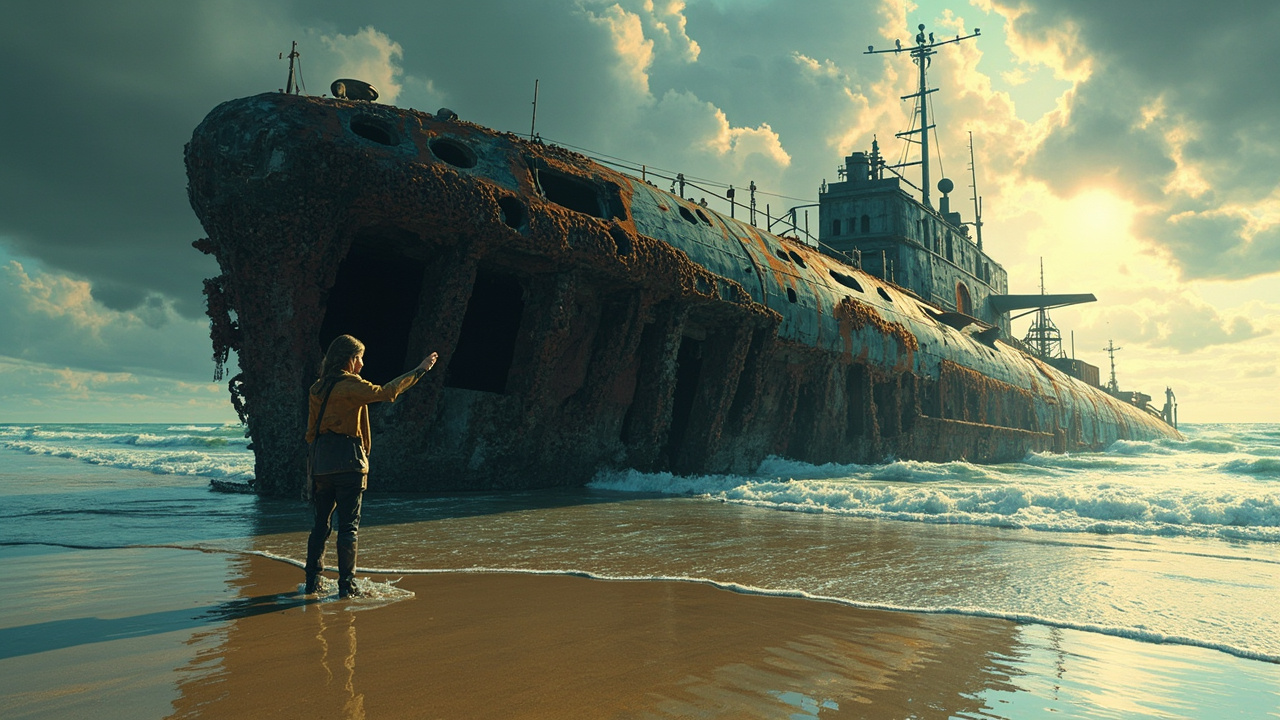
تراجع المد بحلول منتصف الظهيرة، كاشفًا عن هيكل الغواصة كأضلاع وحش بحري قديم نصف مدفون في الرمال. وقفت برييا تشاكرافارتي على حافة الجرف، بينما مناظيرها المُستصلحة مُوجَّهة نحو حطام الغواصة في الأسفل، وشعرت بدوار خاص يجمع بين فرحة الاكتشاف والرهبة. ثلاثة أسابيع وحدها على هذا الشريط اللعين من الساحل منذ أن تحطمت "فارونا" على الشعاب المرجانية، ولم تجد سوى كوخ صيد مُفرَّغ ومخبأ من الأدوات الصدئة. حتى الآن.
كانت برييا، من حيث التدريب والمProfession، مهندسة بحرية — في الرابعة والثلاثين من عمرها،资深ًا بين معظم أقرانها، معتادة على الكمال المتوافق لأنظمة صُممت بواسطة لجان وبُنيت وفق مواصفات دقيقة. السفينة أمامها لم تكن مثالية ولا مصممة بشكل خاص بشكل جيد. كانت غواصة من فئة أوبرث عتيقة الطراز، مائلة بشدة نحو الميمنة، وبرجها القيادي مليء بالثقوب الناتجة عن التآكل. لكنها كانت صلبة. كانت سليمة. وفي مكان ما داخل تلك الكتلة المجوفة تكمن وسيلة خلاصها — أو هكذا تنوي أن تكتشف.
كان الهبوط خطيرًا: صخر هشزل، ريح مستمرة، بحر لا يرحم. بحلول الوقت الذي وصلت فيه إلى الهيكل، كانت يدا برييا مكشوفتان وأنفاسها جاءت على شكل أنين خفيف. ضغطت راحة يدها على المعدن وشعرت بأنه ينقل شيئًا — اهتزازًا ربما، أو مجرد ذكرى لاهتزاز. صُممت الغواصة لحمل الرجال إلى الأعماق، للانتظار في صمت الفريسة، لضرب دون سابق إنذار. كان لهذه السفينة تاريخ. كان بإمكانها قراءته في علامات القشط على الهيكل، في الرقع غير المتطابقة حيث جرت محاولات الإصلاح، في التعيين الباهت المُلوَّن فوق الفتحة الأمامية.
آي إن إس كافيري.
كانت تعرف هذا الاسم. كل مهندس بحري من شبه القارة يعرفه، رغم أن هذا لا يمكن أن يكون الأصلي — سفن الغواصة في بلدها تحمل أسماء الأنهار، وليس أحرفًا من الأبجدية. بُنيت هذه السفينة في حوض سفن عرفته: بارو-إن-فيرنيس، 1943، رغم أن التاريخ وحده يحكي نصف القصة فقط. النصف الآخر كان مكتوبًا في تكوين الفولاذ نفسه، في السبيكة المحددة التي تُميز البناء البحري البريطاني في فترة الحرب. كانت هذه سفينة بُنيت لإمبراطورية لم تعد موجودة، مصنوعة من خام مستخرج من أقاليم كان استخراج الثروة فيها غير منفصل عن استخراج الطاعة.
قضت برييا الأسبوع الأول في إجراء مسح شامل. وثقت كل كسر، كل مفصل متآكل، كل نظام يمكن إنقاذه أو إصلاحه. كانت المحركات الديزل خارج الاستخدام — متوقفة، مغمورة، أسطواناتها متشققة من عقود من الإهمال. لكن المحركات الكهربائية لا تزال سليمة تحت أغلفتها، وبنوك البطاريات، رغم نفادها، لم تُظهر أي علامات على الهروب الحراري الذي يمكن أن يحولها إلى أجهزة حارقة. كان المنظار سليماً. بدا الهيكل الضغطي، رغم تآكله الخارجي، محافظًا على سلامته الهيكلية. والأهم من ذلك، كان عمود المرفق والمروحة نفسها موجودين وغير تالفين، موضوعين في فتحة هيكلية يمكنها، بمواد كافية، أن تُغلقها.
استهلكها سؤال المواد. فككت كوخ الصيد عن أي شيء مفيد: مفصلات، أسلاك، شظايا قماش كان يمكن أن تخدم كمانع تسرب. فككت حطام مركب ترفيهي صغير التقى حتفه على نفس الشعاب قبل سنوات، محصبة ألواحه من الألياف الزجاجية والسباكة السليمة. جمعت رملًا وحجر جيري من وجه الجرف، محولة إياها في حفرة نار لإنتاج أسمنت خام. كانت تدرك، أنها تصبح شيئًا لم تُدرب قط على أن تكونه: صانعة ملاذات أخيرة، ناتحة ضرورة.
كان العمل شاقًا، غالبًا محبطًا بما لا يُطاق. كادت تتخلى عن الجهد مرتين تمامًا — مرة عندما فشل سد مصنوع يدويًا بشكل كارثي، مُغرقًا الحجرة الأمامية؛ ومرة عندما جرحت ساقها بشكل سيئ على شظية معدنية مخفية ووضعت تنزف في الرمال لمدة ساعة قبل أن تتمكن من إيقاف النزيف. لكنها عادت في كل مرة، لأن البديل كان الموت البطيء على هذا الساحل، ولأن شيئًا آخر كان يحركها. شيء لم تستطع التعبير عنه بدقة.
في اليوم السابع عشر، فتحت باب صيانة لم يُفتح منذ عقود. خلفه lay مخزن، وفي داخل ذلك المخزن، مجموعة من الأشياء أوقفت نفسها.
صور في الغالب. رجال بالزي العسكري، صغار وكبار، وجوههم جادة أو مبتسمة حسب عصر التقاطها. علم، مطوي بدقة عسكرية، ألوانه باهتة حتى صارت كلون العظم القديم. حزمة من الرسائل مربوطة بخيط، ورقها هش ومُلوَّن. ودفتر ملاحظات صغير، غلافه الجلدي متصدع لكنه واضح، يحتوي على ما بدا أنه سجل السفينة من فترة عملها النهائي.
قرأت برييا السجل بضوء الشمعة، ويداها ترتجفان قليلاً. امتدت المدخلات لأشهر من الدوريات على الساحل الشرقي لأفريقيا، مؤرخة 1967. كان الخط الحروف دقيقًا، واللغة رسمية: "بدأ الدوري في 0400. لم تُلاحظ أيcontacts. الظروف مقبولة. معنويات الطاقم جيدة." لكن مع تقدم المدخلات، ظهر سرد مختلف. أصبحت اللغة موجزة، ثم مجزأة. المراجع إلى "contacts" صارت مراجع إلى "incidents"، ثم إلى "consequences". كانت آخر مدخل، مؤرخة 3 نوفمبر، تقرأ ببساطة: "تلقت أوامر. متوجهة إلىالإحداثيات المحددة. لله يغفر لنا."
لم تعرف ما تمثله تلك الإحداثيات. لم ترغب في معرفة. لكنها فهمت الآن، أن السفينة أمامها لم تكن مجرد آلة. كانت سفينة بالمعنى الأقدم للكلمة: وعاءً للنية البشرية، للفعل البشري، للذنب البشري. فولاذ هيكلها كان مطروقًا في ظروف لم تستطع السيطرة عليها، والرجال الذين أبحروا فيها نفذوا واجبات لم تستطع تبريرها. ومع ذلك ها هي هنا، معتمدة على نفس الفولاذ من أجل بقائها، عاجزة عن فصل حاجتها عن الحقيقة التي لا تستطيع تجاهلها.
Das Echo des Eisens
Die Ebbe war bis zum frühen Nachmittag weit genug zurückgegangen, um den Rumpf des U-Boots freizulegen wie die Rippen eines uralten Seeungeheuers, halb im Sand vergraben. Priya Chakravarti stand am Rand der Klippe, ihr Fernglas aus Wrackteilen auf das Wrack unter ihr gerichtet, und spürte das besondere Schwindelgefühl der Entdeckung gemischt mit Furcht. Drei Wochen allein auf diesem gottverlassenen Küstenstreifen, seit die Varuna an den Riffen zerbrochen war, und sie hatte nichts gefunden, das vielversprechender gewesen wäre als eine ausgehöhlte Fischerhütte und ein Vorrat an verrosteten Werkzeugen. Bis jetzt.
Sie war, nach Ausbildung und Beruf, eine Marineingenieurin — vierunddreißig Jahre alt, den meisten ihrer Kollegen gegenüber leitend, vertraut mit der summenden Perfektion von Systemen, die von Ausschüssen entworfen und nach strengen Spezifikationen gebaut wurden. Das Schiff vor ihr war weder perfekt noch besonders gut entworfen. Es war ein U-Boot der Oberth-Klasse aus unbestimmter Zeit, das stark nach Steuerbord кренил, sein Kommandoturm von Korrosion zerfressen. Aber es war solide. Es war ganz. Und irgendwo in diesem hohlen Rumpf lag das Mittel zu ihrer Rettung — oder das wollte sie herausfinden.
Der Abstieg war gefährlich: loser Schiefer, der anhaltende Wind, ein Meer, das keine Gnade zeigte. Als sie den Rumpf erreichte, waren Priyas Hände wund und ihr Atem kam in flachen Stößen. Sie presste ihre Handfläche gegen das Metall und spürte, wie es etwas übertrug — eine Vibration vielleicht, oder nur die Erinnerung an eine Vibration. Das U-Boot war gebaut worden, um Männer in die Tiefe zu tragen, um in Stille auf Beute zu warten, um ohne Vorwarnung zuzuschlagen. Es hatte eine Geschichte, dieses Schiff. Sie konnte sie in den Kratzern auf dem Rumpf lesen, in den unpassenden Flicken, wo Reparaturen versucht worden waren, in der verblassten Bezeichnung, die über der vorderen Luke aufgemalt war.
INS Kaveri.
Sie kannte diesen Namen. Jeder Marineingenieur vom Subkontinent kannte ihn, obwohl dies nicht das Original sein konnte — die U-Boote ihres Landes trugen Namen von Flüssen, keine Buchstaben des Alphabets. Dieses Schiff war in einer Werft gebaut worden, die sie wiedererkannte: Barrow-in-Furness, 1943, obwohl das Datum allein nur die halbe Geschichte erzählte. Die andere Hälfte war in der Zusammensetzung des Stahls selbst geschrieben, in der spezifischen Legierung, die den britischen Marinebau der Kriegszeit markierte. Dies war ein Schiff, das für ein Reich gebaut worden war, das nicht mehr existierte, konstruiert aus Erz, das in Territorien abgebaut worden war, wo die Extraktion von Reichtum untrennbar mit der Extraktion von Gehorsam verbunden war.
Priya verbrachte die erste Woche mit einer gründlichen Untersuchung. Sie dokumentierte jeden Bruch, jedes korrodierte Gelenk, jedes System, das geborgen oder repariert werden könnte. Die Dieselmotoren waren nicht mehr zu retten — festgefressen, überflutet, ihre Zylinder von Jahrzehnten der Vernachlässigung gerissen. Aber die Elektromotoren waren unter ihren Gehäusen noch intakt, und die Batteriebänke zeigten, obwohl entladen, keine Anzeichen für das thermische Durchgehen, das sie in Brandvorrichtungen verwandeln könnte. Das Periskop war intakt. Der Druckkörper schien trotz seiner rostenden Außenseite seine strukturelle Integrität bewahrt zu haben. Und am wichtigsten: Die Propellerwelle und der Propeller selbst waren vorhanden und unbeschädigt, in einen Rumpfbruch eingesetzt, den sie mit genügend Material abdichten könnte.
Die Frage der Materialien beschäftigte sie. Sie plünderte die Fischerhütte nach allem Nützlichen: Scharniere, Draht, Stoffreste, die als Dichtungsmittel dienen könnten. Sie demontierte das Wrack eines kleinen Vergnügungsschiffs, das Jahre zuvor am selben Riff sein Ende gefunden hatte, und erntete seine Fiberglasplatten und seine intakte Sanitärinstallation. Sie sammelte Sand und Kalkstein von der Klippenwand und kalzinierte sie in einer Feuergrube, um einen rohen Zement herzustellen. Sie erkannte, dass sie etwas wurde, wofür sie nie ausgebildet worden war: eine Herstellerin letzter Zufluchten, eine Sammlerin der Notwendigkeit.
Die Arbeit war mühsam, oft frustrierend über alle Maßen. Zweimal hätte sie die Anstrengung fast ganz aufgegeben — einmal, als eine behelfsmäßige Abdichtung katastrophal versagte und das vordere Abteil überflutete; einmal, als sie sich schlimm am Bein an einem verborgenen Metallsplitter schnitt und eine Stunde lang blutend im Sand lag, bevor es ihr gelang, die Blutung zu stillen. Aber sie kehrte jedes Mal zurück, weil die Alternative der langsame Tod an dieser Küste war, und weil etwas anderes sie antrieb. Etwas, das sie nicht ganz in Worte fassen konnte.
Am siebzehnten Tag öffnete sie eine Wartungsluke, die seit Jahrzehnten nicht mehr berührt worden war. Dahinter lag ein Stauraum, und in diesem Stauraum eine Ansammlung von Gegenständen, die ihr den Atem raubte.
Meistens Fotografien. Männer in Uniform, jung und alt, ihre Gesichter ernst oder lächelnd, je nach der Zeit ihrer Aufnahme. Eine Flagge, mit militärischer Präzision gefaltet, ihre Farben verblasst bis zum Farbton alten Knochens. Ein Bündel Briefe, mit Schnur gebunden, ihr Papier brüchig und verfärbt. Und ein kleines Notizbuch, sein Lederdeckel rissig aber lesbar, das enthielt, was ein Schiffslogbuch aus der letzten Einsatzzeit des Schiffes zu sein schien.
Priya las das Logbuch im Kerzenlicht, ihre Hände zitterten leicht. Die Einträge erstreckten sich über Monate der Patrouille entlang der Ostküste Afrikas, datiert 1967. Die Handschrift war sorgfältig, die Sprache förmlich: „Patrouille begann um 0400. Keine Kontakte beobachtet. Bedingungen akzeptabel. Crew-Moral gut." Aber als die Einträge fortschritten, tauchte eine andere Erzählung auf. Die Sprache wurde knapp, dann fragmentiert. Verweise auf „Kontakte" wurden zu Verweisen auf „Vorfälle", und dann auf „Konsequenzen". Der letzte Eintrag, datiert vom 3. November, lautete einfach: „Befehle erhalten. Auf dem Weg zu bestimmten Koordinaten. Gott vergebe uns."
Sie wusste nicht, was diese Koordinaten darstellten. Sie wollte es nicht wissen. Aber sie verstand jetzt, dass das Schiff vor ihr nicht nur eine Maschine war. Es war ein Schiff im älteren Sinne des Wortes: ein Behälter für menschliche Absicht, für menschliches Handeln, für menschliche Schuld. Der Stahl seines Rumpfes war unter Umständen geschmiedet worden, die sie nicht kontrollieren konnte, und die Männer, die in ihm gesegelt waren, hatten Pflichten erfüllt, die sie nicht entschuldigen konnte. Und doch war sie hier, auf diesen selben Stahl für ihr Überleben angewiesen, unfähig, ihre Not von der Wahrheit zu trennen, die sie nicht ignorieren konnte.
L'écho du fer
La marée s'était suffisamment retirée à midi, exposant la coque du submersible comme les côtes d'un léonathan antique à demi enseveli dans le sable. Priya Chakravarti se tenait au bord de la falaise, ses jumelles de fortune braquées sur l'épave en contrebas, et ressentait le vertige particulier du découverte mêlé de terreur. Trois semaines seule sur ce bout de côte maudit depuis que le Varuna s'était disloqué sur les récifs, et elle n'avait rien trouvé de plus prometteur qu'une cabane de pêche creuse et une cache d'outils rouillés. Jusqu'à maintenant.
Elle était, par formation et par métier, ingénieur naval — trente-quatre ans, aînée de la plupart de ses pairs, habituée à la perfection bourdonnante de systèmes conçus par des comités et construits selon des spécifications exigeantes. Le navire devant elle n'était ni parfait ni particulièrement bien conçu. C'était un sous-marin de classe Oberth d'époque indéterminée, gîtant fortement à tribord, sa tourelle de commandement criblée de corrosion. Mais il était solide. Il était intact. Et quelque part dans cette masse évidée reposait le moyen de son salut — ou du moins c'était ce qu'elle comptait découvrir.
La descente était périlleuse : schiste meuble, vent persistant, une mer qui ne montrait aucune disposition à la mansuétude. Quand elle atteignit la coque, les mains de Priya étaient à vif et sa respiration venait par de faibles halètements. Elle pressa sa paume contre le métal et sentit qu'il transmettait quelque chose — une vibration, peut-être, ou simplement le souvenir d'une vibration. Le submersible avait été conçu pour emporter des hommes dans les profondeurs, pour attendre en silence sa proie, pour frapper sans avertissement. Ce vaisseau avait une histoire. Elle pouvait la lire dans les rayures sur la coque, dans les plaques discordantes où des réparations avaient été tentées, dans la désignation délavée peinte au-dessus de l'écoutille avant.
INS Kaveri.
Elle connaissait ce nom. Chaque ingénieur naval du sous-continent le connaissait, bien que celui-ci ne puisse pas être l'original — les sous-marins de son pays portaient des noms de rivières, pas des lettres de l'alphabet. Ce navire avait été construit dans un chantier qu'elle reconnaissait : Barrow-in-Furness, 1943, bien que la date seule ne racontât que la moitié de l'histoire. L'autre moitié était écrite dans la composition même de l'acier, dans l'alliage spécifique qui marquait la construction navale britannique de la période de guerre. C'était un vaisseau construit pour un empire qui n'existait plus, construit à partir de minerai extrait dans des territoires où l'extraction de la richesse était inséparable de l'extraction de l'obéissance.
Priya passa la première semaine à effectuer uneurvey complète. Elle documenta chaque fracture, chaque articulation corrodée, chaque système qui pourrait être récupéré ou réparé. Les moteurs diesel étaient irréparables — grippés, noyés, leurs cylindres fissurés par des décennies de négligence. Mais les moteurs électriques restaient intacts sous leurs carters, et les banques de batteries, bien qu'épuisées, ne montraient aucun signe de emballement thermique qui pourrait les transformer en dispositifs incendiaires. Le périscope était intact. La coque de pression, malgré sa rouille extérieure, semblait avoir conservé son intégrité structurale. Et surtout, l'arbre d'hélice et l'hélice elle-même étaient présents et intacts, logés dans une brèche de coque qu'elle pourrait, avec suffisamment de matériaux, sceller.
La question des matériaux la consumait. Elle dépouilla la cabane de pêche de tout ce qui pouvait être utile : charnières, fils, fragments de toile qui pourraient servir de joint. Elle démantela l'épave d'une petite embarcation de plaisir qui avait connu sa fin sur le même récif des années auparavant, récupérant ses panneaux de fibre de verre et sa plomberie intacte. Elle ramassa du sable et du calcaire sur la falaise, les calcifiant dans un foyer pour produire un ciment grossier. Elle se rendait compte qu'elle devenait quelque chose pour quoi elle n'avait jamais été formée : une fabricatrice de derniers recours, une chineuse de nécessité.
Le travail était éreintant, souvent frustrant au-delà de toute mesure. Deux fois elle faillit abandonner complètement l'effort — une fois quand un joint improvisé céda catastrophiquement, inondant le compartiment avant ; une fois quand elle se blessa badly à la jambe sur un éclat de métal caché et resta allongée à saigner dans le sable pendant une heure avant de réussir à arrêter le flux. Mais elle revint chaque fois, parce que l'alternative était une mort lente sur cette côte, et parce qu'il y avait quelque chose d'autre qui la poussait. Quelque chose qu'elle ne pouvait pas vraiment articuler.
Le dix-septième jour, elle ouvrit une trappe de maintenance qui n'avait pas été perturbée depuis des décennies. Derrière se trouvait un compartiment de stockage, et dans ce compartiment, une collection d'objets qui lui coupa le souffle.
Des photographies, surtout. Des hommes en uniforme, jeunes et vieux, leurs visages solennels ou souriants selon l'époque de leur prise. Un drapeau, plié avec précision militaire, ses couleurs délavées jusqu'à la teinte d'un vieil os. Un paquet de lettres attachées avec une ficelle, leur papier fragile et décoloré. Et un petit carnet, sa couverture de cuir craquelée mais lisible, contenant ce qui semblait être un journal de bord de la période opérationnelle finale du navire.
Priya lut le journal à la lumière d'une bougie, ses mains tremblant légèrement. Les entrées s'étendaient sur des mois de patrouille le long de la côte est de l'Afrique, datées de 1967. L'écriture était soignée, le langage formel : « Patrouille commencée à 0400. Aucun contact observé. Conditions acceptables. Moral de l'équipage bon. » Mais à mesure que les entrées progressaient, un récit différent émergeait. Le langage devenait laconique, puis fragmenté. Les références aux « contacts » devenaient des références aux « incidents », puis aux « conséquences ». La dernière entrée, datée du 3 novembre, lisait simplement : « Ordres reçus. En route vers les coordonnées désignées. Que Dieu nous pardonne. »
Elle ne savait pas ce que ces coordonnées représentaient. Elle ne souhaitait pas savoir. Mais elle comprenait, maintenant, que le navire devant elle n'était pas simplement une machine. C'était un vaisseau au sens le plus ancien du terme : un contenant pour l'intention humaine, pour l'action humaine, pour la culpabilité humaine. L'acier de sa coque avait été forgé dans des circonstances qu'elle ne pouvait contrôler, et les hommes qui avaient navigué en son sein avaient accompli des devoirs qu'elle ne pouvait Excuser. Et pourtant, la voici ici, dépendante de ce même acier pour sa survie, incapable de séparer son besoin de la vérité qu'elle ne pouvait ignorer.
Эхо железа
К середине дня прилив достаточно отступил, обнажив корпус подводной лодки — словно рёбра древнего морского чудовища, наполовину засыпанного песком. Прия Чакраварти стояла на краю обрыва, направив свою добытую подзорную трубу на обломки внизу, и испытывала странное головокружение — смесь радости открытия и ужаса. Три недели в одиночестве на этом богом забытом участке побережья с тех пор, как «Варуна» разбилась о рифы, и она не находила ничего, кроме пустующей рыбацкой хижины и заржавевших инструментов. До сих пор.
По профессии и образованию она была военно-морским инженером — тридцати четырёх лет, старше большинства своих коллег, привыкшая к гудящему совершенству систем, разработанных комитетами и построенных по точным спецификациям. Судно перед ней не было ни совершенным, ни особенно хорошо спроектированным. Это была подводная лодка класса Оберth неопределённого года выпуска, сильно кренившаяся на правый борт, её командная рубка испещрена следами коррозии. Но она была прочной. Она была целой. И где-то внутри этой полой массы лежало средство её спасения — или, по крайней мере, она намеревалась это выяснить.
Спуск был опасен: рыхлый сланец, постоянный ветер, море, не проявлявшее ни малейшего милосердия. К тому времени, как она добралась до корпуса, руки Прии были стёрты до мяса, а дыхание сбивалось в короткие хрипы. Она прижала ладонь к металлу и почувствовала, как тот передаёт что-то — вибрацию, возможно, или лишь воспоминание о вибрации. Подводную лодку построили, чтобы нести людей в глубины, чтобы ждать в тишине добычу, чтобы наносить удар без предупреждения. У этого судна была история. Она читала её в царапинах на корпусе, в несовпадающих заплатах, где предпринимались попытки ремонта, в выцветшей надписи над передним люком.
ИНС Кавери.
Она знала это имя. Каждый военно-морской инженер субконтинента знал его, хотя это не мог быть оригинал — подводные лодки её страны носили названия рек, а не буквы алфавита. Это судно было построено на верфи, которую она узнала: Барроу-ин-Фёрнесс, 1943 год, хотя одна дата рассказывала лишь половину истории. Вторая половина была написана в составе самой стали, в специфическом сплаве, отличавшем британское кораблестроение военного периода. Это было судно, построенное для империи, которая больше не существовала, построенное из руды, добытой в территориях, где извлечение богатства было неотделимо от извлечения покорности.
Прия провела первую неделю, проводя тщательную разведку. Она документировала каждую трещину, каждый прокорродированный шов, каждую систему, которую можно было спасти или отремонтировать. Дизельные двигатели не подлежали восстановлению — заклинены, затоплены, их цилиндры растрескались от десятилетий пренебрежения. Но электромоторы оставались целыми под своими кожухами, а аккумуляторные батареи, хотя и разряженные, не показывали признаков теплового разгона, который мог бы превратить их в зажигательные устройства. Перископ был цел. Прочный корпус, несмотря на свой ржавый внешний вид, по-видимому, сохранил свою конструктивную целостность. И что наиболее важно, гребной вал и сам гребной винт были на месте и неповреждены, установлены в пробоине корпуса, которую она могла бы, имея достаточно материалов, заделать.
Вопрос материалов поглощал её. Она разобрала рыбацкую хижину в поисках всего полезного: петель, проволоки, кусков брезента, которые могли бы служить герметиком. Она разобрала обломки небольшого прогулочного судна, нашедшего свой конец на том же рифе годы назад, добыв его стеклопластиковые панели и целую сантехнику. Она собирала песок и известняк на обрыве, обжигая их в кострище для производства грубого цемента. Она понимала, что становится чем-то, к чему её никогда не готовили: мастером крайних мер, добытчиком из необходимости.
Работа была изнурительной, часто мучительно разочаровывающей. Дважды она почти полностью отказывалась от усилий — один раз, когда самодельный уплотнитель катастрофически провалился, затопив передний отсек; один раз, когда она сильно порезала ногу о скрытый осколок металла и лежала, истекая кровью на песке, в течение часа, прежде чем смогла остановить поток. Но она возвращалась каждый раз, потому что альтернативой была медленная смерть на этом побережье, и потому что её движимо что-то другое. Что-то, что она не могла толком выразить словами.
На семнадцатый день она открыла технический люк, к которому не прикасались десятилетиями. За ним оказался багажный отсек, а в этом отсеке — коллекция предметов, от которых у неё перехватило дыхание.
В основном фотографии. Мужчины в форме, молодые и старые, их лица серьёзные или улыбающиеся в зависимости от эпохи съёмки. Флаг, сложенный с военной точностью, его цвета выцветшие до оттенка старой кости. Связка писем, перевязанная бечёвкой, бумага хрупкая и пожелтевшая. И маленькая записная книжка, её кожаный переплёт потрескавшийся, но разборчивый, содержащая то, что казалось судовым журналом из последнего эксплуатационного периода.
Прия читала журнал при свече, её руки слегка дрожали. Записи охватывали месяцы патрулирования вдоль восточного побережья Африки, датированные 1967 годом. Почерк был аккуратный, язык формальный: «Патрулирование начато в 0400. Контактов не обнаружено. Условия удовлетворительные. Боевой дух экипажа хороший.» Но по мере продвижения записей вырисовывалась иная история. Язык становился лаконичным, затем фрагментарным. Ссылки на «контакты» превращались в ссылки на «инциденты», а затем на «последствия». Последняя запись, датированная 3 ноября, гласила просто: «Получены приказы. следую к указанным координатам. Да простит нам Бог.»
Она не знала, что представляли собой эти координаты. Она не хотела знать. Но теперь она понимала, что судно перед ней было не просто машиной. Оно было судном в старом смысле слова: вместилищем человеческого намерения, человеческого действия, человеческой вины. Сталь его корпуса была выкована при обстоятельствах, которые она не могла контролировать, а люди, плававшие на нём, выполняли обязанности, которые она не могла простить. И всё же вот она здесь, зависящая от этой самой стали ради своего выживания, не в силах отделить свою нужду от правды, которую не могла игнорировать.