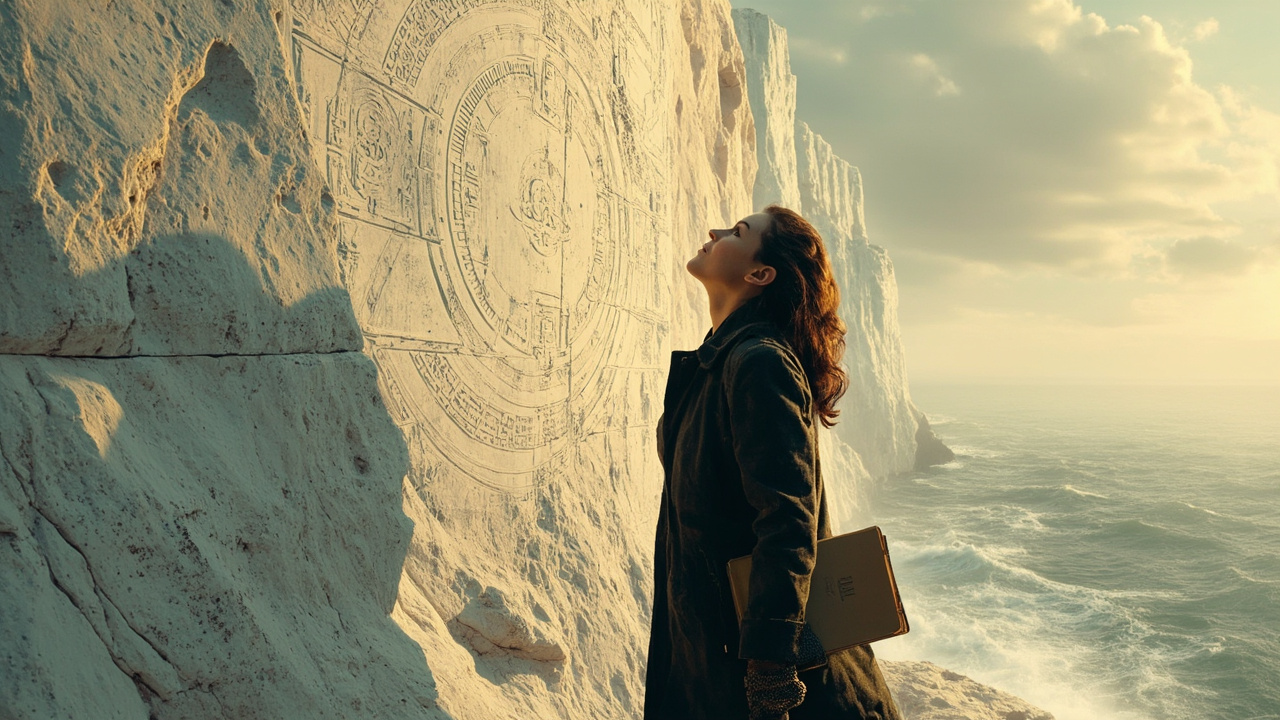
أسفرت عبارة الصباح القادمة من كاليه عن إيصال إلينور أشوورث إلى الأراضي الإنجليزية، قبل أقل من ساعة واحدة من وقوفها أمام المستحيل. جاءت إلى دوفر بحثًا عن العزلة، استراحة من بيئة قسم الرياضيات التعقيمية المفعمة بالضوء الفلوري في كامبريدج، حيث أمضت الجزء الأعظم من ثلاث سنوات في بناء أطروحة دكتوراه لن يقرأها أحد خارج قلة من المتخصصين. لكنها لم تبحث عن شيء آخر، شيئًا لم تكن لتتوقعه قط، وهو الوحي.
تمتد رموز الطباشير عبر وجه الجرف في نمط أوقف انتباهها الطريقة التي يوقف بها النظرية العقل - فورًا، بالكامل، بلا رجعة. درست إلينور الهندسة المقدسة، وأمضت سنوات تتنقل في الممرات المتاهية لتاريخ الرياضيات، ومع ذلك لم يُعدّها أي شيء في خبرتها الواسعة لهذا. لم تكن الرموز عشوائية ولا زخرفية. كانت منظمة بدقة تتحدث عن القصد، عن الوظيفة، عن فهم عميق.
نزلت المسار الضيق من الطريق الساحلي، حيث وجدت أحذية المشي الخاصة بها مرتكزًا غير متيقن على الحجر المغطى بالملح. كان المد منخفضًا، كاشفًا عن امتداد من الشاطئ تشكوا أن قلة من الزوار رأوه يومًا. هنا، في ظل الجدار الأبيض العظيم، تبلورت الرموز في وضوح. لم تكن منقوشة بل مركبة من خليط قائم على الطباشير قاوم somehow قوى التعرية من الرياح والطقس لـ - ارتد ذهن إلينور عند الحساب - آلاف السنين.
رتجفت أصابعها وهي تتتبع الرمز الأول دون لمسه، كما لو أنه قد يذوب عند لمسها. بدا وكأنه دائرة يتقاطعها خطوط متشععة، نمط تعرفت عليه من المخططات الفلكية. لكن هذا كان مختلفًا. كانت الزوايا محددة، مقصودة، كل شعاع موضعًا بدقة رياضية تشير إلى القياس而非 الفن. أخرجت دفتر ملاحظات من حقيبتها وبدأت ترسم، تحرك قلمها الرصاص بتزايد إلحاح مع صعود الشمس الصباحية وتحرك الضوء عبر وجه الجرف، كاشفًا عن تفاصيل مخفية سابقًا.
بحلول الظهر، كانت قد وثقت سبعة عشر رمزًا مميزًا مرتبة في ثلاثة صفوف أفقية. largest والأكثر تعقيدًا occupy الموقع المركزي، هندسته forming سلسلة متشابكة من الأشكال التي حددها 그녀 فورًا كنظام قياس. ليس قياسًا بالمعنى الحديث، بل شيء أقدم، أكثر جوهرية - نظام عد مبني على الدورات القمرية والمحاذاة الشمسية. صوغرت كل رمز من زوايا متعددة، تعلمت instinctively أن ما تحمله كاميرتها في ذاكرتها سيعيد تشكيل فهمها للتاريخ الأوروبي ما قبل التاريخ.
عملت إلينور طوال فترة ما بعد الظهر دون توقف، مدفوعة بالجنون particular الذي ينزل على الباحثين عندما يشعرون أنهم على وشك something غير مسبوق. حددت، من خلال التحليل الكيميائي conducted بجهاز اختبار متنقل، أن خليط الطباشير احتوى على آثار من كربونات الكالسيوم مدمجة with مواد ربط عضوية - ربما بياض البيض، أو الدهن الحيواني. كانت هذه صيغة مصممة للاستمرارية، للمقاومة ضد العناصر. مهما كان من created هذه الرموز أراد أن تدوم. أراد أن يجدها someone، يومًا ما.
مع بدء الشمس في الهبوط نحو الأفق، حققت إلينور ما ستصفه لاحقًا بأهم اختراق رياضي في مسيرتها. الرمز المركزي، عند تحليله من خلال عدسة الحساب الفلكي، تطابق بدقة مع موقع شروق انقلاب الشتاء كما يُ наблюда من هذا الموقع بالضبط. مثلت الرموز المحيطة توقفات قمرية، دورة الثمانية عشر ونصف السنة التي reach during which ينحدر القمر reach أقصى وأدنى حدوده. لم يكن هذا مجرد زخرفة. كان هذا تقويمًا - تقويمًا فلكيًا متطورًا بشكل استثنائي يسبق أي تأثير روماني بألفتي عام على الأقل.
تتابعت الآثار المتتالية من خلالها كما تسقط أحجار الدومينو في تتابع. كان الشعوب الذين سكنوا هذا الساحل قبل الفتح الروماني يمتلكون معرفة رياضية وفلكية تضاهي، إن لم تفوق، تلك حضارات البحر الأبيض المتوسط credit عادةً بمثل هذه الإنجازات. قاسوا الحركات السماوية بدقة، وأ编码وا تلك المعرفة في رموز متنقلة، وتركوها هنا من أجل المستقبل. من أجلها.
جلست إلينور على عقبيها مع تلاشي last light من السماء، دفتر ملاحظاتها against صدرها. فكرت في جدتها، امرأة أمضت حياتها في رعاية حديقة في يوركشاير، التي أخبرتها مرة أن الماضي لا يختفي حقًا، بل ينتظر merely ليُتذكر. فكرت في الحرفيين المجهولين الذين خلطوا طباشيرهم وبيضهم، الذين تسلقوا هذه الأودية بأيدي steady وإيمان مطلق بأن عملهم سيستمر. كانوا على حق. ضد الإمبراطوريات والقرون، ضد التعرية المستمرة للزمن نفسه، كانوا على حق بشكل magnificent، stubborn.
عندما تسلقت إلينور أخيرًا العودة إلى الطريق الساحلي، كان الظلام قد استقر على القناة ك breath محبوس. حملت معها صورًا将使考古学家震惊، حسابات ستrevolutionize فهم المؤرخين لبريطانيا عصر الحديد، وقصة لن يصدقها أحد حتى يتم peer-reviewed و published. لكن beneath الحماس المهني الذي سيرفعها عبر سنوات التحقق الأكاديمي القادمة، حملت شيئًا آخر - شيئًا quieter وأكثر عمقًا.
حملت المعرفة بأن الموتى لا يرقدون في صمت. يتحدثون إلينا constantly، بلغة الرياضيات، في قواعد stone وطباشير ودوران الفصول الصبور. نحتاج فقط أن نتعلم الاستماع. نحتاج فقط أن نطور العيون لرؤية ما كان دائمًا هناك، منتظرًا jemandًا يفك شفرته meaning. نطقت رموز الطباشير على الأودية البيضاء لدوفر بأسرارها لرياضيات.
Die Morgenfähre von Calais hatte Eleanor Ashworth kaum eine Stunde zuvor auf englischen Boden abgesetzt, bevor sie sich vor dem Unmöglichen wiederfand. Sie war nach Dover gekommen, um Einsamkeit zu suchen, eine Auszeit von der fluoreszierenden Sterilität der mathematischen Fakultät in Cambridge, wo sie den Großteil von drei Jahren damit verbracht hatte, eine Doktorarbeit zu verfassen, die außer einer Handvoll von Spezialisten niemand jemals lesen würde. Was sie nicht gesucht hatte, was sie niemals hätte voraussehen können, war eine Offenbarung.
Die Kreide-Glyphen erstreckten sich über die Klippenwand in einem Muster, das ihre Aufmerksamkeit fesselte, wie ein Theorem den Geist fesselt — instantan, vollständig, unwiderruflich. Eleanor hatte sakrale Geometrie studiert, hatte Jahre damit verbracht, sich durch die labyrinthartigen Korridore der Mathematikgeschichte zu navigieren, und doch hatte nichts in ihrer beträchtlichen Erfahrung sie darauf vorbereitet. Die Symbole waren weder zufällig noch dekorativ. Sie waren mit einer Präzision strukturiert, die von Absicht sprach, von Funktion, von tiefem Verständnis.
Sie stieg den schmalen Pfad von der Küstenstraße hinunter, ihre Wanderstiefel fanden unsicheren Halt auf dem salzverkrusteten Stein. Die Ebbe hatte einen Strandabschnitt freigelegt, von dem sie vermutete, dass ihn nur sehr wenige Besucher je zu sehen bekamen. Hier, im Schatten der großen weißen Wand, lösten sich die Glyphen in Klarheit auf. Sie waren nicht gemeißelt, sondern vielmehr aus einer kreidebasierten Mischung zusammengesetzt, die irgendwie den erodierenden Kräften von Wind und Wetter standgehalten hatte — Eleanors Geist schreckte vor der Berechnung zurück — für Jahrtausende.
Ihre Finger zitterten, als sie dem ersten Symbol nachzeichnete, ohne es zu berühren, als könnte es bei ihrer Berührung zerfließen. Es ähnelte einem von Strahlen durchzogenen Kreis, ein Muster, das sie aus astronomischen Diagrammen erkannte. Aber dies war anders. Die Winkel waren spezifisch, absichtlich, jeder Strahl mit mathematischer Exaktheit positioniert, was auf Messung statt auf Kunst hindeutete. Sie zog ein Notizbuch aus ihrem Rucksack und begann zu skizzieren, ihr Bleistift bewegte sich mit wachsender Dringlichkeit, während die Morgensonne höher stieg und das Licht über die Klippenwand wanderte, zuvor verborgene Details enthüllte.
Bis Mittag hatte sie siebzehn distinct Glyphen dokumentiert, angeordnet in drei horizontalen Bändern. Die größte und komplexeste nahm die zentrale Position ein, ihre Geometrie bildete ein ineinandergreifendes System von Formen, das ihr geschultes Auge sofort als Messsystem identifizierte. Nicht Messung im modernen Sinne, sondern etwas Älteres, Fundamentaleres — ein Zählsystem basierend auf Mondzyklen und Sonnen-Ausrichtungen. Sie fotografierte jedes Symbol aus mehreren Winkeln und wusste instinktiv, dass das, was sie im Speicher ihrer Kamera festhielt, ihr Verständnis der europäischen Vorgeschichte revolutionieren würde.
Eleanor arbeitete durch den Nachmittag ohne Pause weiter, getrieben von dem besonderen Wahnsinn, der Forscher befällt, wenn sie spüren, dass sie am Rand von etwas Beispiellosem stehen. Die Kreidemischung, bestimmte sie durch chemische Analyse mit einem mobilen Testkit, enthielt Spuren von Kalziumkarbonat kombiniert mit organischen Bindemitteln — Eiweiß vielleicht, oder tierisches Fett. Dies war eine Formel, die auf Beständigkeit ausgelegt war, auf Widerstand gegen die Elemente. Wer auch immer diese Glyphen geschaffen hatte, wollte, dass sie dauern. Sie wollten, dass jemand, eines Tages, sie findet.
Als die Sonne ihren Abstieg zum Horizont begann, vollbrachte Eleanor, was sie später als den bedeutendsten mathematischen Durchbruch ihrer Karriere beschreiben würde. Die zentrale Glyphe, analysiert durch die Linse der astronomischen Berechnung, entsprach präzise der Position des Wintersonnenwende-Sonnenaufgangs, beobachtet von diesem exakten Ort. Die umgebenden Symbole repräsentierten Mondstillstände, den Achtzehn-einhalb-Jahres-Zyklus, während dessen die Deklination des Mondes ihre maximalen und minimalen Extreme erreicht. Dies war nicht bloße Dekoration. Dies war ein Kalender — ein außerordentlich raffinierten astronomischer Kalender, der jedem römischen Einfluss um mindestens zweitausend Jahre vorausging.
Die Implikationen dominoste sich in ihr Bewusstsein wie umstürzende Steine in Sequenz. Die Völker, die diese Küste vor der römischen Eroberung bewohnt hatten, besaßen mathematisches und astronomisches Wissen, das jenem der Mittelmeerzivilisationen, denen typischerweise solche Leistungen zugeschrieben werden, gleichkam, wenn nicht überlegen war. Sie hatten Himmelsbewegungen präzise gemessen, dieses Wissen in portable Symbole kodiert und es hier für die Zukunft hinterlassen. Für sie.
Eleanor saß auf ihren Fersen zurück, während das letzte Licht vom Himmel verschwand, ihr Notizbuch an ihre Brust gedrückt. Sie dachte an ihre Großmutter, eine Frau, die ihr Leben damit verbracht hatte, einen Garten in Yorkshire zu pflegen, die ihr einst gesagt hatte, dass die Vergangenheit niemals wirklich vergeht, sondern nur darauf wartet, erinnert zu werden. Sie dachte an die anonymen Handwerker, die ihre Kreide und ihr Ei gemischt hatten, die diese Klippen mit festen Händen und absolutem Glauben erklommen hatten, dass ihre Arbeit andauern würde. Sie hatten recht gehabt. Gegen Imperien und Jahrhunderte, gegen die unaufhörliche Erosion der Zeit selbst, waren sie prachtvoll, störrisch richtig gewesen.
Als Eleanor schließlich zurück zur Küstenstraße hinaufstieg, hatte sich die Dunkelheit über den Ärmelkanal gelegt wie ein angehaltener Atem. Sie trug Fotos bei sich, die Archäologen verblüffen würden, Berechnungen, die das Verständnis der Historiker über das eisenzeitliche Britannien revolutionisieren würden, und eine Geschichte, die niemand glauben würde, bis die Beweise von Fachleuten begutachtet und veröffentlicht wären. Aber unter der professionellen Aufregung, die sie durch die kommenden Jahre der akademischen Validierung tragen würde, trug sie etwas anderes — etwas Ruhigeres und Tieferes.
Sie trug das Wissen, dass die Toten nicht in Stille ruhen. Sie sprechen ständig zu uns, in der Sprache der Mathematik, in der Grammatik von Stein und Kreide und der geduldigen Drehung der Jahreszeiten. Wir müssen nur lernen zuzuhören. Wir müssen nur die Augen entwickeln, um zu sehen, was immer dort gewesen ist und darauf wartet, dass jemand seine Bedeutung entschlüsselt. Die Kreide-Glyphen an den weißen Klippen von Dover hatten ihre Geheimnisse zu einer Mathematikerin gesprochen.
Le ferry du matin en provenance de Calais avait déposé Eleanor Ashworth sur le sol anglais à peine une heure avant qu'elle ne se retrouve face à l'impossible. Elle était venue à Douvres chercher la solitude, un répit face à la stérilité fluorescente du département de mathématiques de Cambridge où elle avait passé la meilleure partie de trois années à construire une thèse de doctorat que personne en dehors d'une poignée de spécialistes ne lirait jamais. Ce qu'elle n'avait pas cherché, ce qu'elle n'aurait jamais pu anticiper, c'était une révélation.
Les glyphes à la craie s'étiraient sur la face de la falaise dans un motif qui arrêta son attention de la même façon qu'un théorème arrête l'esprit — instantanément, complètement, irrémédiablement. Eleanor avait étudié la géométrie sacrée, avait passé des années à naviguer dans les corridors labyrinthiques de l'histoire des mathématiques, et pourtant rien dans son considérable expérience ne l'avait préparée à cela. Les symboles n'étaient ni aléatoires ni décoratifs. Ils étaient structurés avec une précision qui parlait d'intention, de fonction, de compréhension profonde.
Elle descendit l'étroit sentier depuis la route côtière, ses bottes de marche trouvant une prise incertaine sur la pierre recouverte de sel. La marée était basse, exposant une étendue de plage qu'elle soupçonnait que très peu de visiteurs voyaient jamais. Ici, dans l'ombre du grand mur blanc, les glyphes se révélèrent avec clarté. Ils n'étaient pas sculptés mais plutôt composés d'un mélange à base de craie qui avait d'une manière ou d'une autre résisté aux forces érosives du vent et des intempéries pendant — l'esprit d'Eleanor recula devant le calcul — des millénaires.
Ses doigts tremblèrent tandis qu'elle traçait le premier symbole sans le toucher, comme s'il pouvait se dissoudre à son contact. Il ressemblait à un cercle traversé par des lignes rayonnantes, un motif qu'elle reconnut des diagrammes astronomiques. Mais c'était différent. Les angles étaient spécifiques, délibérés, chaque rayon positionné avec une exactitude mathématique qui suggérait la mesure plutôt que l'art. Elle sortit un carnet de son sac à dos et commença à dessiner, son crayon se déplaçant avec une urgence croissante tandis que le soleil matinal grimpait et que la lumière se déplaçait sur la face de la falaise, révélant des détails précédemment cachés.
À midi, elle avait documenté dix-sept glyphes distincts disposés en trois bandes horizontales. Le plus grand et le plus complexe occupait la position centrale, sa géométrie formant une série entrelacée de formes que son œil exercé identifia immédiatement comme un système de mesure. Non pas une mesure au sens moderne, mais quelque chose de plus ancien, de plus fondamental — un système de comptage basé sur les cycles lunaires et les alignements solaires. Elle photographia chaque symbole sous plusieurs angles, sachant instinctivement que ce qu'elle gardait dans la mémoire de son appareil reshape根本改变她对欧洲史前史的理解.
Eleanor travailla tout l'après-midi sans pause, poussée par la folie particulière qui s'empare des chercheurs lorsqu'ils sentemt qu'ils sont au bord de quelque chose d'inouï. La mixture de craie, détermina-t-elle par analyse chimique effectuée avec un kit de test portable, contenait des traces de carbonate de calcium combiné avec des agents liants organiques — blanc d'œuf, peut-être, ou graisse animale. C'était une formule conçue pour la permanence, pour résister aux éléments. Quiconque avait créé ces glyphes avait voulu qu'ils durent. Ils avaient voulu que quelqu'un, un jour, les trouve.
Alors que le soleil commençait sa descente vers l'horizon, Eleanor accomplit ce qu'elle décrirait plus tard comme la percée mathématique la plus significative de sa carrière. Le glyphe central, analysé à travers le prisme du calcul astronomique, correspondait précisément à la position du lever du soleil du solstice d'hiver tel qu'observé depuis cet endroit exact. Les symboles environnants représentaient des arrêts lunaires, le cycle de dix-huit ans et demi durant lequel la déclinaison de la lune atteint ses extrêmes maximum et minimum. Ce n'était pas de la simple décoration. C'était un calendrier — un calendrier astronomique extraordinairement sophistiqué précédant toute influence romaine d'au moins deux mille ans.
Les implications se cascading through her consciousness like dominos falling in sequence. Les peuples qui avaient habité ce littoral avant la conquête romaine possédaient des connaissances mathématiques et astronomiques rivalisant, peut-être dépassant, celles des civilisations méditerranéennes auxquelles on attribue généralement de tels accomplissements. Ils avaient mesuré les mouvements célestes avec précision, encodé ce savoir dans des symboles portatifs, et l'avaient laissé ici pour l'avenir. Pour elle.
Eleanor s'assit sur ses talons tandis que la dernière lumière s'effaçait du ciel, son carnet serré contre sa poitrine. Elle pensa à sa grand-mère, une femme qui avait passé sa vie à entretenir un jardin dans le Yorkshire, qui lui avait un jour dit que le passé n'était jamais vraiment parti, qu'il attendait simplement d'être remembers. Elle pensa aux artisans anonymes qui avaient mélangé leur craie et leurs œufs, qui avaient grimpé ces falaises avec des mains steadies et une foi absolue que leur travail endure. Ils avaient eu raison. Contre les empires et les siècles, contre l'érosion implacable du temps lui-même, ils avaient été magnifiquement, obstinément raison.
Quand Eleanor gravit finalement jusqu'à la route côtière, l'obscurité s'était installée sur la Manche comme une respir held. Elle portait avec elle des photographies qui stupéfieraient les archéologues, des calculs qui révolutionneraient la compréhension des historiens sur la Grande-Bretagne de l'âge du fer, et une histoire que personne ne croirait jusqu'à ce que les preuves soient examinées par des pairs et publiées. Mais sous l'excitation professionnelle qui la soutiendrait au cours des années de validation académique à venir, elle portait autre chose — quelque chose de plus silencieux et de plus profond.
Elle portait la connaissance que les morts ne reposent pas en silence. Ils nous parlent constamment, dans le langage des mathématiques, dans la grammaire de la pierre et de la craie et de la patiente rotation des saisons. Nous devons seulement apprendre à écouter. Nous devons seulement développer les yeux pour voir ce qui a toujours été là, attendant que quelqu'un en déchiffre le sens. Les glyphes à la craie sur les falaises blanches de Douvres avaient parlé leurs secrets à une математик.
Утренний паром из Кале высадил Элеанор Эшворт на английскую землю менее чем за час до того, как она оказалась перед невозможным. Она приехала в Дувр в поисках одиночества, передышки от флуоресцентной стерильности математического факультета Кембриджа, где провела лучшую часть трех лет, создавая докторскую диссертацию, которую никто за пределами горстки специалистов никогда не прочитает. Но она не искала того, что не могла предвидеть — откровения.
Меловые знаки тянулись по лицу скалы узором, который приковал ее внимание так, как теорема приковывает разум — мгновенно, полностью, необратимо. Элеанор изучала сакральную геометрию, провела годы, прокладывая путь через лабиринтные коридоры истории математики, и все же ничто в ее обширном опыте не подготовило ее к этому. Символы не были ни случайными, ни декоративными. Они были структурированы с точностью, говорящей о намерении, о функции, о глубоком понимании.
Она спустилась по узкой тропе с прибрежной дороги, ее трекинговые ботинки нашли неуверенную опору на покрытом солью камне. Прилив был низким, обнажая участок пляжа, который, как она подозревала, очень немногие посетители когда-либо видели. Здесь, в тени великой белой стены, знаки проступили с полной ясностью. Они не были вырезаны, а скорее составлены из какой-то меловой смеси, которая каким-то образом сопротивлялась разрушительным силам ветра и непогоды на протяжении — сознание Элеанор отшатнулось от этого подсчета — тысячелетий.
Ее пальцы дрожали, когда она очертила первый символ, не касаясь его, словно он мог раствориться от прикосновения. Он напоминал круг, пересеченный лучами, узор, который она узнала из астрономических диаграмм. Но это было другим. Углы были специфичными, намеренными, каждый луч расположен с математической точностью, указывающей на измерение, а не на искусство. Она вытащила блокнот из рюкзака и начала зарисовывать, ее карандаш двигался со все большей срочностью, пока утреннее солнце поднималось выше, а свет смещался по лицу скалы, открывая ранее скрытые детали.
К полудню она задокументировала семнадцать различных знаков, расположенных в три горизонтальные полосы. Самый большой и сложный занимал центральную позицию, его геометрия образовывала переплетающуюся серию фигур, которую ее опытный глаз сразу определил как систему измерения. Не измерения в современном смысле, а нечто более древнее, более фундаментальное — система счета, основанная на лунных циклах и солнечных выравниваниях. Она сфотографировала каждый символ с нескольких углов, инстинктивно зная, что то, что хранилось в памяти ее камеры, изменит ее понимание европейской доистории.
Элеанор работала весь день без перерыва, движимая особого рода безумием, которое охватывает исследователей, когда они чувствуют, что находятся на пороге чего-то беспрецедентного. Меловая смесь, определила она посредством химического анализа с помощью портативного тестового набора, содержала следы карбоната кальция в сочетании с органическими связующими агентами — яичным белком, возможно, или животным жиром. Это была формула, предназначенная для постоянства, для сопротивления стихиям. Кто бы ни создал эти знаки, хотел, чтобы они длились. Они хотели, чтобы кто-то, когда-нибудь, нашел их.
Когда солнце начало спускаться к горизонту, Элеанор достигла того, что позже опишет как самый значительный математический прорыв в ее карьере. Центральный знак, проанализированный через призму астрономических вычислений, точно соответствовал положению восхода солнца в зимнее солнцестояние, наблюдаемому с этой точной точки. Окружающие символы представляли лунные остановки, восемнадцатилетний цикл, в течение которого склонение луны достигает своих максимальных и минимальных крайних значений. Это было не просто украшение. Это был календарь — невероятно сложный астрономический календарь, предшествующий любому римскому влиянию как минимум на две тысячи лет.
Последствия обрушивались на ее сознание, как домино, падающие друг за другом. Народы, населявшие это побережье до римского завоевания, обладали математическими и астрономическими знаниями, соперничающими, а возможно, и превосходящими знания средиземноморских цивилизаций, которым обычно приписывают такие достижения. Они с точностью измеряли небесные движения, кодировали эти знания в портативные символы и оставляли их здесь для будущего. Для нее.
Элеанор опустилась на корточки, когда последний свет угас с неба, прижав блокнот к груди. Она думала о своей бабушке, женщине, которая всю жизнь ухаживала за садом в Йоркшире, которая однажды сказала ей, что прошлое никогда не уходит по-настоящему, а лишь ждет, чтобы его вспомнили. Она думала о безымянных мастерах, которые смешивали свой мел и яйца, которые взбирались на эти скалы твердыми руками и абсолютной верой в то, что их работа выстоит. Они были правы. Против империй и столетий, против неустанной эрозии самого времени, они были великолепно, упрямо правы.
Когда Элеанор наконец снова поднялась на прибрежную дорогу, темнота опустилась на Ла-Манш, как затаенное дыхание. Она несла с собой фотографии, которые потрясут археологов, вычисления, которые произведут революцию в понимании историками железного века Британии, и историю, которой никто не поверит, пока доказательства не пройдут экспертную оценку и не будут опубликованы. Но под профессиональным волнением, которое будет поддерживать ее в годы академической валидации впереди, она несла кое-что другое — нечто более тихое и более глубокое.
Она несла знание о том, что мертвые не покоятся в молчании. Они говорят нам постоянно, на языке математики, в грамматике камня, мела и терпеливого чередования времен года. Нам нужно лишь научиться слушать. Нам нужно лишь развить глаза, чтобы видеть то, что всегда было там, ожидая, пока кто-то расшифрует его смысл. Меловые знаки на Белых скалах Дувра поведали свои секреты математику.