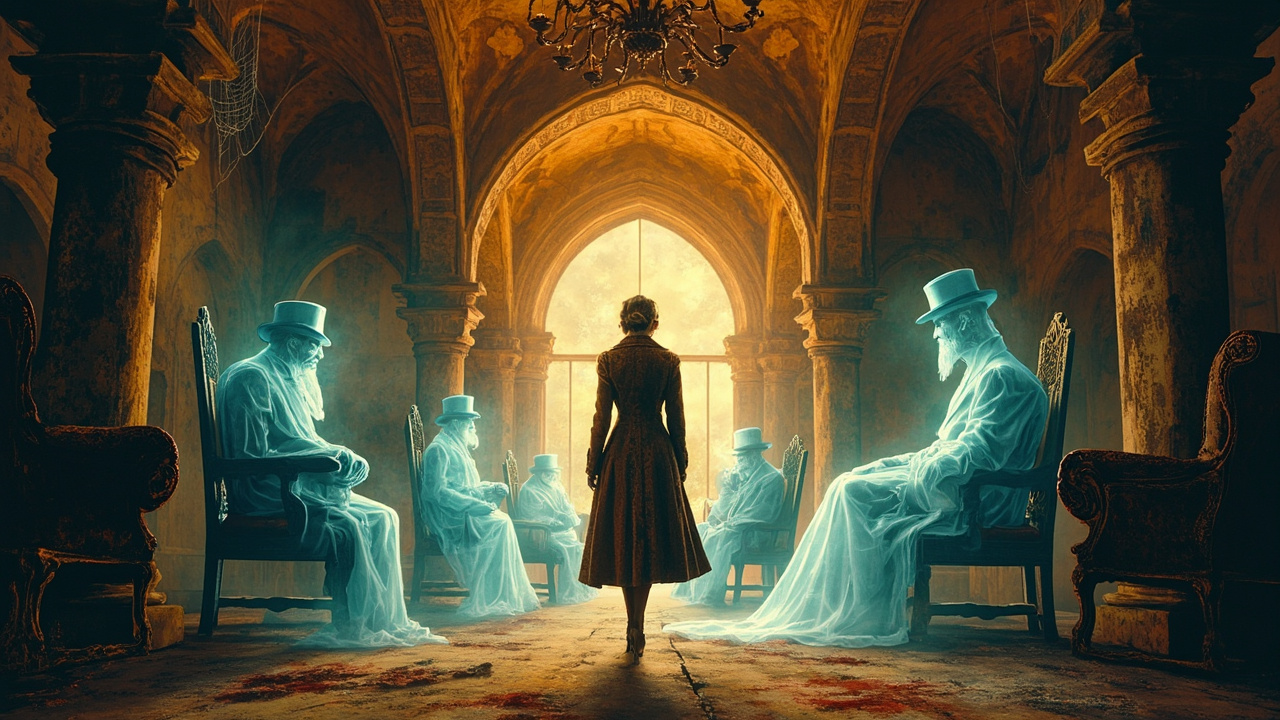
وصل الخطاب في يوم الثلاثاء، حاملاً علامة مائية للتاج وتوقيعًا أفزع الدكتور إليانور مارش حتى أخرست أنفاسها. عشرين عامًا أمضتها في هوامش الاحترام الأكاديمي، تُفهرس الظواهر الشبحية في المنازل الريفية المتهالكة ومصحات نفسية مهجورة، حتى أصبح اسمها مرادفًا للتطرف في ممرات الأكاديمية التقليدية. والآن، أخيرًا، دعوة من قلب الحكم البريطاني. كان مبنى البرلمان في ضوء النهار نصبًا للتج grandeur المتراكم والرطوبة المستوطنة. لكن إليانور لم تُدعَ إلى القاعات العامة. بل رُشدت عبر سلسلة من السلالم الضيقة,越来越窄، مرورًا بأرشيفات لم يفتحها أحد منذ عقود، حتى خرجت إلى مساحة لم يكن ينبغي أن توجد - علية مقببة مباشرة تحت الواجهة الشمالية للقصر، جدرانها مبطنة بتراب القرون المتراكم. "لديهم موقف،" قال مرافقها، موظف مدني نسيت اسمه بالفعل. " certains... occupants من هذه الغرفة اهتموا بالشؤون الحالية." occupants. فهمت إليانور تمامًا. كانت قد واجهت الأشباح من قبل - بقع باردة في غرف المعيشة، همس هجوم cavalry في حقول القمح، شكل شفاف لطفل فكتوري ينادي من نافذة العلية. لكن برلمان الأشباح كان شيئًا أكثر رهبة بكثير. عندما تكيفت عيناها مع ضوء المصباح، رأتهم: نصف دائرة من الأشكال الشبحية جالسين على كراسي عالية الظهر تتأوه من ثقل متخيل، أشكالهم تتراوح بين راهب متوسطي رقيق كضوء الشمس إلى حضور شبه صلب لرجل في معطف طويل وخصلات لحية، والذي بدا شكله يهتز من الاستياء. "د. مارش،" قال الرجل ذو الخصلات اللحية، وصوته يرن ليس عبر الهواء بل عبر شيء أعمق - الحجر نفسه، أو الثقل المتراكم للتاريخ. "نحن لجنة مختارة من departed. أنا السير إدموند هاركورت، مستشار lord трижды، المتوفى 1887. نفهم أنك تستطيعين إدراكنا." "أستطيع،" ردت إليانور، صوتها أكثر ثباتًا مما تشعر. "وأفهم أن لديكم مشكلة مع مشروع قانون إصلاح الإسكان الحالي." Murmur من الموافقة مر عبر assembly. ميلة الأشباح السير إدموند رأسه الشبحي. "الشاب - السيد واتمور، وزير الإسكان الحالي - يقترح هدم صف المنازل الفيكتورية في شارع آرتشر. ستعرفين، د. مارش، أن هذا الصف كان المكان الذي جرت فيه أول تجربة لمشروع مساكن العمال، في 1875، تحت رعاية صديقي العزيز وزميلي اللورد شافتسبرى. إنه أرض مقدسة." "إنه أيضًا غير سليم بنيويًا،" رد صوت آخر - شبح أصغر، بالكاد مرئي، حوافه مهترئة كورق قديم. "أنا توماس ريدينغ، عضو البرلمان عن شمال برمنغهام، 1945-1951. يعيش سكان شارع آرتشر في ظروف ستُخزي أمة العالم الثالث. الهدم هو الحل الإنساني الوحيد." وهناك كان - الصدع القديم الذي شعرت به إليانور في لحظة دخولها. كانت قد قرأت ما يكفي من التاريخ البرلماني لتعرف أن الحجج حول الفقراء نادرًا ما تُحسم بالمنطق. إنها نزاعات لاهوتية ترتدي ثوب السياسة. "الحفاظ على التراث—" "—هو ترف لا يستطيع الأحياء تحمله بينما deceased لا يزالون لديهم سكن أفضل منهم—" الأصوات تداخلت، متراكمة عقودًا من الاستياء المتراكم. رفعت إليانور يدها - gesture بدت سخيفة، إدارة نقاش بين departed - لكنها نجحت. ساد الصمت. "السادة،" قالت بعناية، "أنا باحثة، ليست سياسية. لكنني أمضيت عشرين عامًا أستمع إلى أصوات لا أحد آخر يؤمن بوجودها. إذا سمحتم لي بتقديم ملاحظة: كلاكما على حق." شكل السير إدموند يومض من المفاجأة. شفافية توماس ريدينغ تعمقت، كأن الحزن جعله أكثر شبهيًا للهواء. "الحفاظ على شارع آرتشر مهم،" continueت إليانور. "ليس لأن الطوب والملاط مقدسان، بل لأن ذكرى الإصلاح مهمة. قد يكون الهدم ضروريًا، لكن محو تلك الذكرى سيكون خيانة. ومع ذلك، يمكن الحفاظ على الذكرى دون الحفاظ على الهيكل نفسه. لوحة تذكارية. سجل وثائقي. التزام بأن الإسكان الجديد في ذلك الموقع يعطي الأولوية لنفس مبادئ اللياقة والكرامة التي championها اللورد شافتسبرى." توقفت، تشعر بثقل اعتبارهم. "لكن هناك شيئًا آخر. النزاع نفسه - حقيقة اهتمامكم العميق برفاهية أشخاص لن تقابلوهم أبدًا، الذين لن تعرفوا أسماءهم أبدًا - هذا هو التراث الحقيقي. الحجة هي النصب التذكاري." امتد الصمت بينهما، vast strange. ثم فعل السير إدموند شيئًا لم تتوقعه إليانور: ضحك. كان الصوت كمجرد الريح عبر غرف فارغة، لكن بلا شك دافئ. "هي تقيسنا،" قال لتوماس ريدينغ. "نتناقش حول هذا منذ 1947، يا صديقي. ربما حان الوقت لحل المسألة." "موافق،" قال توماس. "رغم أنني أصر على أن الحفظ دون عمل هو عاطفية." "وأنا أصر على أن العمل دون ذكرى همجية،" رد السير إدموند. "لكننا لسنا بحاجة لحل الفلسفة. فقط السياسة." التفتوا إلى إليانور في تناغم. "ستوصل موقفنا إلى الوزير المعني؟ يمكن المضي في الهدم، لكن بشروط. يجب أن يكون النصب التذكاري ذا مغزى. يجب أن يكرم التطوير الجديد مبادئ رؤية شافتسبرى الأصلية. و—" voice softened صوت السير إدموند، "—ستضمنين أننا لا نُنسى. هذا كل ما نطلبه." إليانور مارش nodded. فهمت، ربما أفضل من أي شخص حي، ثقل أن تُنسى. غادرت غرفة العلية مع بزوغ الفجر فوق التايمز، أسئلة الموظف المدني تتسابق خلفها كالفكرة المؤجلة. получил وزير الإسكان تقريرها ذلك afternoon، slightly bemused but ultimately amenable. المبنى الجديد في شارع آرتشر proceeded مع نصبه التذكاري وأرشيف التاريخ الشفوي
Der Brief kam an einem Dienstag, mit dem Wasserzeichen der Krone und einer Unterschrift, die Dr. Eleanor Marsh den Atem stocken ließ. Zwanzig Jahre hatte sie an den Rändern akademischer Achtbarkeit verbracht, spektrale Phänomene in zerfallenden Landhäusern und verlassenen Irrenanstalten katalogisiert, ihr Name ein Synonym für Quacksalberei in den Korridoren der etablierten Akademie. Nun, endlich, eine Einladung aus dem Herzen britischer Regierungsgewalt. Das Parlamentsgebäude war bei Tageslicht ein Denkmal akkumulierter Pracht und endemischer Feuchtigkeit. Aber Eleanor war nicht in die öffentlichen Kammern gerufen worden. Stattdessen wurde sie durch eine Reihe immer engerer Treppen geführt, vorbei an Archiven, die seit Jahrzehnten niemand geöffnet hatte, bis sie in einem Raum auftauchte, der nicht existieren sollte – ein gewölbtes Dachgeschoss direkt unter dem nördlichen Giebel des Palastes, dessen Wände mit dem Staub von Jahrhunderten bedeckt waren. "Wir haben eine Situation", sagte ihr Begleiter, ein Beamter, dessen Namen sie bereits vergessen hatte. "Bestimmte... Bewohner dieser Kammer haben Interesse an aktuellen Angelegenheiten entwickelt." Bewohner. Eleanor verstand sofort. Sie hatte zuvor Geister angetroffen – kalte Stellen in Wohnzimmern, das Flüstern von Kavallerieangriffen in Weizenfeldern, die durchscheinende Gestalt eines viktorianischen Kindes, das von einem Dachfenster winkte. Aber das Parlament der Geister war etwas grundlegend anderes. Als sich ihre Augen an das Lampenlicht gewöhnten, nahm sie sie wahr: einen Halbkreis geisterhafter Gestalten, die in hochlehnigen Stühlen saßen, die unter imaginärem Gewicht ächzten, ihre Formen reichten von hauchdünnen mittelalterlichen Mönchen bis zur fast festen Präsenz eines Mannes im Gehrock und mit Koteletten, dessen Kontur vor Empörung zu vibrieren schien. "Dr. Marsh", sagte der Mann mit Koteletten, und seine Stimme hallte nicht durch die Luft, sondern durch etwas Tieferes – den Stein selbst, oder das akkumulierte Gewicht der Geschichte. "Wir sind der Sonderausschuss der Verstorbenen. Ich bin Sir Edmund Harcourt, dreimaliger Lordkanzler, verstorben 1887. Wir verstehen, dass Sie uns wahrnehmen können." "Ich kann es", erwiderte Eleanor, ihre Stimme fester, als sie sich fühlte. "Und ich verstehe, dass Sie ein Problem mit dem aktuellen Wohnungsreformgesetz haben." Ein Murmeln der Zustimmung durchlief die Versammlung. Sir Edmund neigte seinen geisterhaften Kopf. "Der junge Mann – Herr Whitmore, der aktuelle Wohnungsminister – schlägt vor, die viktorianische Reihenhauszeile in der Archer Street abzureißen. Sie wissen, Dr. Marsh, dass diese Reihe der Ort war, wo das Arbeiterwohnbausystem zum ersten Mal erprobt wurde, 1875, unter der Amtszeit meines lieben Freundes und Kollegen Lord Shaftesbury. Es ist heiliger Boden." "Es ist auch baulich unsicher", widersprach eine andere Stimme – ein jüngerer Geist, kaum sichtbar, seine Ränder wie altes Papier ausgefranst. "Ich bin Thomas Redding, Abgeordneter für Nord-Birmingham, 1945-1951. Die Bewohner der Archer Street leben unter Bedingungen, die eine Drittweltnation beschämen würden. Abriss ist die einzig humane Lösung." Und da war er – der uralte Graben, den Eleanor in dem Moment gespürt hatte, als sie eingetreten war. Sie hatte genug Parlamentsgeschichte gelesen, um zu wissen, dass Argumente über die Armen selten durch Logik gelöst wurden. Es waren theologische Streitigkeiten, die sich als Politik tarnten. "Die Bewahrung des Erbes –" "– ist ein Luxus, den sich die Lebenden nicht leisten können, während die Toten noch bessere Wohnungen haben als sie –" Die Stimmen überlappten sich, Schichten von Jahrzehnten akkumulierter Beschwerden. Eleanor hob die Hand – eine Geste, die absurd wirkte, eine Debatte unter Verstorbenen zu leiten – aber es funktionierte. Stille trat ein. "Meine Herren", sagte sie sorgfältig, "ich bin eine Forscherin, keine Politikerin. Aber ich habe zwanzig Jahre lang Stimmen zugehört, von denen niemand sonst glaubt, dass sie existieren. Wenn Sie mir erlauben, eine Beobachtung anzubieten: Sie haben beide recht." Sir Edmunds Form flackerte vor Überraschung. Thomas Reddings Transparenz intensivierte sich, als hätte Trauer ihn ätherischer gemacht. "Die Bewahrung der Archer Street ist wichtig", fuhr Eleanor fort. "Nicht weil Ziegel und Mörtel heilig sind, sondern weil die Erinnerung an Reformen wichtig ist. Der Abriss kann notwendig sein, aber die Auslöschung dieser Erinnerung wäre ein Verrat. Die Erinnerung kann jedoch bewahrt werden, ohne die Struktur selbst zu bewahren. Eine Gedenktafel. Eine dokumentarische Aufzeichnung. Ein Bekenntnis, dass der neue Wohnungsbau an diesem Standort dieselben Grundsätze von Anständigkeit und Würde priorisiert, für die sich Lord Shaftesbury eingesetzt hat." Sie hielt inne und spürte das Gewicht ihrer Überlegungen. "Aber es gibt noch etwas anderes. Der Streit selbst – die Tatsache, dass Ihnen das Wohlergehen von Menschen so am Herzen liegt, die Sie nie treffen werden, deren Namen Sie nie erfahren werden – das ist das wahre Erbe. Das Argument ist das Denkmal." Stille erstreckte sich zwischen ihnen, vast strange. Dann tat Sir Edmund etwas, das Eleanor nicht erwartet hatte: er lachte. Es war ein Sound wie Wind durch leere Räume, aber unverkennbar warm. "Sie hat uns durchschaut", sagte er zu Thomas Redding. "Wir streiten darüber seit 1947, mein Freund. Vielleicht ist es Zeit, die Sache zu klären." "Einverstanden", sagte Thomas. "Obwohl ich darauf bestehe, dass Bewahrung ohne Handlung Sentimentalität ist." "Und ich bestehe darauf, dass Handlung ohne Erinnerung Barbarei ist", erwiderte Sir Edmund. "Aber wir müssen die Philosophie nicht klären. Nur die Politik." Sie wandten sich einstimmig an Eleanor. "Werden Sie unsere Position an den zuständigen Minister weiterleiten? Der Abriss kann erfolgen, aber unter Bedingungen. Das Denkmal muss bedeutsam sein. Die neue Entwicklung muss die Grundsätze von Shaftesburys ursprünglicher Vision ehren. Und –" Sir Edmunds Stimme wurde weicher, "– Sie werden sicherstellen, dass wir nicht vergessen werden. Das ist alles, was wir bitten." Eleanor Marsh nickte. Sie verstand, vielleicht besser als jeder Lebende, das Gewicht des Vergessenwerdens. Sie verließ die Dachkammer, als die Dämmerung über der Themse brach, die Fragen des Beamten wie einen Nachtrag hinter sich herschleifend. Der Wohnungsminister erhielt ihren Bericht an diesem Nachmittag, leicht verwirrt aber letztendlich einwilligend. Die Archer-Street-Entwicklung ging mit ihrem Gedenkstein, ihrem Oral-History-Archiv weiter,
La carta llegó un martes, llevando la filigrana de la Corona y una firma que hizo contener el aliento a la doctora Eleanor Marsh. Veinte años había pasado en los márgenes del respeto académico, catalogando fenómenos espectrales en casas de campo en ruinas y manicomios abandonados, su nombre sinónimo de charlatanería en los pasillos de la academia tradicional. Ahora, finalmente, una invitación del mismísimo corazón del gobierno británico. El Palacio de Westminster, a la luz del día, era un monumento a la grandeza acumulada y la humedad endémica. Pero Eleanor no había sido citada a las cámaras públicas. En cambio, fue escoltada a través de una serie de escaleras cada vez más estrechas, pasando por archivos que nadie había abierto en décadas, hasta emerger en un espacio que no debería haber existido — una Buhardilla abovedada directamente debajo del hastial norte del palacio, sus paredes forradas del polvo acumulado de siglos. «Tenemos una situación», dijo su escolta, un funcionario civil cuyo nombre ya había olvidado. «Ciertos... habitantes de esta cámara se han interesado por los asuntos actuales.» Habitantes. Eleanor entendió perfectamente. Había encontrado fantasmas antes — manchas frías en salones, el susurro de cargas de caballería en campos de trigo, la figura translúcida de un niño victoriano haciendo señas desde una ventana de Buhardilla. Pero el Parlamento de los Fantasmas era algo completamente más formidable. A medida que sus ojos se adaptaban a la luz de las lámparas, los percibió: un semicírculo de figuras espectrales sentadas en sillas de alto respaldo que gemían bajo un peso imaginario, sus formas desde la impresión etérea de un monje medieval hasta la presencia casi sólida de un hombre en levita y patillas, cuyo mismo contorno parecía vibrar de indignación. «Doctora Marsh», dijo el hombre de las patillas, y su voz resonaba no a través del aire sino a través de algo más profundo — la piedra misma, quizás, o el peso acumulado de la historia. «Somos el Comité Selecto de los Difuntos. Soy Sir Edmund Harcourt, tres veces Lord Canciller, fallecido en 1887. Entendemos que usted puede percibirnos.» «Puedo», respondió Eleanor, su voz más firme de lo que se sentía. «Y entiendo que tienen un problema con el actual Proyecto de Ley de Reforma de Vivienda.» Un murmullo de aprobación recorrió la asamblea. Sir Edmund inclinó su cabeza espectral. «El joven — el señor Whitmore, el actual Secretario de Vivienda — propone demoler la hilera de casas victorianas en Archer Street. Usted sabrá, doctora Marsh, que esta hilera fue donde el Programa de Viviendas para Trabajadores se pilotó por primera vez, en 1875, bajo el mandato de mi querido amigo y colega Lord Shaftesbury. Es tierra sagrada.» «También es estructuralmente insegura», contraatacó otra voz — un fantasma más joven, apenas visible, sus bordes deshilachados como papel viejo. «Soy Thomas Redding, parlamentario por North Birmingham, 1945-1951. Los residentes de Archer Street viven en condiciones que serían vergüenza para una nación del tercer mundo. La demolición es la única solución humana.» Y ahí estaba — la falla antigua que Eleanor había presentido en el momento en que entró. Había leído suficiente historia parlamentaria para saber que los argumentos sobre los pobres rara vez se resolvían con lógica. Eran disputas teológicas disfrazadas de lenguaje político. «La preservación del patrimonio —» «— es un lujo que los vivos no pueden permitirse mientras los muertos todavía tienen mejores viviendas que ellos —» Las voces se superponían, stratificando décadas de agravios acumulados. Eleanor levantó la mano — un gesto que parecía absurdo, conduciendo un debate entre los difuntos — pero funcionó. Calló el silencio. «Señores», dijo con cuidado, «soy una investigadora, no una política. Pero he pasado veinte años escuchando voces que nadie más cree que existan. Si me permiten ofrecer una observación: ambos están en lo correcto.» La forma de Sir Edmund parpadeó de sorpresa. La transparencia de Thomas Redding se intensificó, como si el dolor lo hubiera vuelto más efímero. «La preservación de Archer Street importa», continuó Eleanor. «No porque los ladrillos y el mortero sean sagrados, sino porque importa la memoria de la reforma. La demolición puede ser necesaria, pero el borrado de esa memoria sería una traición. Sin embargo, la memoria puede preservarse sin preservar la estructura en sí. Una placa. Un registro documental. Un compromiso de que la nueva vivienda en ese sitio priorice los mismos principios de decencia y dignidad que Lord Shaftesbury defendió.» Hizo una pausa, sintiendo el peso de su consideración. «Pero hay algo más. La disputa en sí — el hecho de que les importe tanto el bienestar de personas que nunca conocerán, cuyos nombres nunca sabrán — eso es el verdadero patrimonio. El argumento es el memorial.» El silencio se extendió entre ellos, vasto y extraño. Entonces Sir Edmund hizo algo que Eleanor no había esperado: se rio. Era un sonido como viento a través de habitaciones vacías, pero inconfundiblemente cálido. «Ella nos ha medido», dijo a Thomas Redding. «Hemos estado debatiendo esto desde 1947, amigo mío. Quizás es hora de resolver el asunto.» «De acuerdo», dijo Thomas. «Aunque mantengo que la preservación sin acción es sentimentalismo.» «Y yo mantengo que la acción sin memoria es barbarie», respondió Sir Edmund. «Pero no necesitamos resolver la filosofía. Solo la política.» Se volvieron hacia Eleanor al unísono. «¿Transmitirá usted nuestra posición al ministro correspondiente? La demolición puede proceder, pero con condiciones. El memorial debe ser significativo. El nuevo desarrollo debe honrar los principios de la visión original de Shaftesbury. Y —» la voz de Sir Edmund se suavizó, «— se asegurará de que no seamos olvidados. Eso es todo lo que pedimos.» Eleanor Marsh asintió. Entendía, quizás mejor que nadie vivo, el peso de ser olvidado. Dejó la cámara de la Buhardilla cuando el amanecer rompía sobre el Támesis, las preguntas del funcionario civil arrastrándose detrás de ella como una ocurrencia tardía. El Secretario de Vivienda recibió su informe esa tarde, ligeramente desconcertado pero en última instancia deferente. El desarrollo de Archer Street procedió con su piedra memorial, su archivo de historia oral,
La lettre arriva un mardi, portant le filigrane de la Couronne et une signature qui fit retenir son souffle au Dr Eleanor Marsh. Vingt ans qu'elle avait passés dans les marges du respect académique, à cataloguer les phénomènes spectraux dans des maisons de campagne en ruine et des asiles abandonnés, son nom devenu synonyme de charlatanisme dans les couloirs de l'académie traditionnelle. Et maintenant, enfin, une invitation du cœur même de la gouvernance britannique. Les Communes, en plein jour, étaient un monument à la grandeur accumulée et à l'humidité endémique. Mais Eleanor n'avait pas été convoquée dans les chambres publiques. Elle fut escortée à travers une série d'escaliers de plus en plus étroits, passant devant des archives que personne n'avait ouvertes depuis des décennies, jusqu'à émerger dans un espace qui n'aurait pas dû exister — une chambre voûtée directement sous le pignon nord du Palais, ses murs tapissés de la poussière accumulée de siècles. « Nous avons une situation », dit son escorte, un fonctionnaire dont elle avait déjà oublié le nom. « Certains... occupants de cette chambre se sont intéressés aux affaires actuelles. » Occupants. Eleanor comprit parfaitement. Elle avait déjà rencontré des fantômes — des zones froides dans les salons, le murmure de charges de cavalerie dans les champs de blé, la silhouette translucide d'un enfant victorien faisant signe depuis une fenêtre de grenier. Mais le Parlement des Fantômes était quelque chose de tout à fait plus formidable. Ses yeux s'accommodant à la lueur des lampes, elle les aperçut : un demi-cercle de figures spectrales assises dans des sièges à haut dossier qui gémissaient sous un poids imaginaire, leurs formes allant de l'impression d'un moine médiéval aussi fin que la gaze à la présence presque solide d'un homme en redingote et en favoris, dont le contour même semblait vibrer d'indignation. « Dr Marsh », dit l'homme aux favoris, et sa voix résonnait non pas dans l'air mais dans quelque chose de plus profond — la pierre elle-même, peut-être, ou le poids accumulé de l'histoire. « Nous sommes le Comité restreint des Défunts. Je suis Sir Edmund Harcourt, trois fois Lord Chancelier, décédé en 1887. Nous comprenons que vous pouvez nous percevoir. » « Je le peux », répondit Eleanor, sa voix plus stable qu'elle ne se sentait. « Et je comprends que vous avez un problème avec le projet de loi sur la réforme du logement actuel. » Un murmure d'approbation parcourut l'assemblée. Sir Edmund inclina sa tête spectrale. « Le jeune homme — M. Whitmore, l'actuel Secrétaire au Logement — propose de démolir la rangée de maisons victoriennes dans Archer Street. Vous savez, Dr Marsh, que cette rangée était l'endroit où le programme de logements pour travailleurs a été piloté pour la première fois, en 1875, sous la tenure de mon cher ami et collègue Lord Shaftesbury. C'est un sol sacré. » « C'est aussi structurellement instable », contraposa une autre voix — un fantôme plus jeune, à peine visible, ses bords effilochés comme du vieux papier. « Je suis Thomas Redding, député du Nord de Birmingham, 1945-1951. Les résidents d'Archer Street vivent dans des conditions qui feraient honte à une nation du tiers-monde. La démolition est la seule solution humaine. » Et voilà — la faille ancienne qu'Eleanor avait pressentie dès son entrée. Elle avait assez lu d'histoire parlementaire pour savoir que les arguments sur les pauvres étaient rarement résolus par la logique. C'étaient des disputes théologiques déguisées en langage politique. « La préservation du patrimoine — » « — est un luxe que les vivants ne peuvent se permettre tandis que les morts ont encore de meilleurs logements qu'eux — » Les voix se superposaient, superposant des décennies de griefs accumulés. Eleanor leva la main — un geste qui semblait absurde, menant un débat entre les défunts — mais cela fonctionna. Le silence tomba. « Messieurs », dit-elle soigneusement, « je suis une chercheuse, pas une femme politique. Mais j'ai passé vingt ans à écouter des voix que personne d'autre ne croit existantes. Si vous me permettez d'offrir une observation : vous avez tous les deux raison. » La forme de Sir Edmund vacilla de surprise. La translucidité de Thomas Redding s'intensifia, comme si le chagrin l'avait rendu plus éthéré. « La préservation d'Archer Street compte », continua Eleanor. « Non pas parce que la brique et le mortier sont sacrés, mais parce que le souvenir de la réforme compte. La démolition peut être nécessaire, mais l'effacement de ce souvenir serait une trahison. Cependant, le souvenir peut être préservé sans préserver la structure elle-même. Une plaque. Un enregistrement documentaire. Un engagement que le nouveau logement sur ce site privilégie les mêmes principes de décence et de dignité que Lord Shaftesbury a défendus. » Elle fit une pause, sentant le poids de leur considération. « Mais il y a autre chose. Le conflit lui-même — le fait que vous vous souciez tellement du bien-être de gens que vous ne rencontrerez jamais, dont vous ne connaîtrons jamais les noms — c'est le vrai patrimoine. L'argument est le mémorial. » Le silence s'étira entre eux, vaste et étrange. Puis Sir Edmund fit quelque chose qu'Eleanor n'avait pas prévu : il rit. C'était un son comme le vent à travers des pièces vides, mais indéniablement chaud. « Elle nous a mesurés », dit-il à Thomas Redding. « Nous débattons de cela depuis 1947, mon ami. Peut-être est-il temps de résoudre la question. » « D'accord », dit Thomas. « Bien que je maintienne que la préservation sans action est de la sentimentalité. » « Et je maintiens que l'action sans mémoire est de la barbarie », répondit Sir Edmund. « Mais nous n'avons pas besoin de résoudre la philosophie. Seulement la politique. » Ils se tournèrent vers Eleanor à l'unisson. « Vous transmettrez notre position au ministre concerné ? La démolition peut procéder, mais avec des conditions. Le mémorial doit être significatif. Le nouveau développement doit honorer les principes de la vision originale de Shaftesbury. Et — » la voix de Sir Edmund s'adoucit, « — vous veillerez à ce que nous ne soyons pas oubliés. C'est tout ce que nous demandons. » Eleanor Marsh hocha la tête. Elle comprenait, peut-être mieux que quiconque vivant, le poids d'être oublié. Elle quitta la chambre du grenier à l'aube sur la Tamise, les questions du fonctionnaire civil traînant derrière elle comme une réflexion après coup. Le Secrétaire au Logement reçut son rapport cet après-midi-là, légèrement perplexe mais finalement disposé. Le développement d'Archer Street se poursuit avec sa pierre mémorielle, son archive d'histoire orale,
La lettera arrivò di martedì, recante la filigrana della Corona e una firma che fece trattenere il respiro alla dottoressa Eleanor Marsh. Venti anni li aveva trascorsi ai margini della rispettabilità accademica, catalogando fenomeni spettrali in case di campagna in rovina e manicomi abbandonati, il suo nome sinonimo di ciarlataneria nei corridoi dell'accademia ortodossa. Ora, finalmente, un invito dal cuore stesso del governo britannico. Il Palazzo di Westminster, alla luce del giorno, era un monumento alla grandezza accumulata e all'umidità endemica. Ma Eleanor non era stata convocata nelle aule pubbliche. Fu scortata attraverso una serie di scale sempre più strette, oltre archivi che nessuno apriva da decenni, finché non emerse in uno spazio che non avrebbe dovuto esistere — una soffitta voltata direttamente sotto la guglia nord del palazzo, le cui pareti erano rivestite della polvere accumulata di secoli. «Abbiamo una situazione», disse la sua scorta, un funzionario civico il cui nome aveva già dimenticato. «Alcuni... occupanti di questa camera si sono interessati alle vicende attuali.» Occupanti. Eleanor comprese perfettamente. Aveva incontrato fantasmi prima — zone fredde nei salotti, il sussurro di cariche di cavalleria nei campi di grano, la figura traslucida di un bambino vittoriano che faceva cenno da una finestra della soffitta. Ma il Parlamento dei Fantasmi era qualcosa di completamente più formidabile. Mentre i suoi occhi si adattavano alla luce delle lampade, li percepì: un semicerchio di figure spettrali sedute su sedie ad alto schienale che gemevano sotto un peso immaginario, le loro forme che andavano dall'impressione sottile come un filo di ragnatela di un monaco medievale alla presenza quasi solida di un uomo in redingote e basette, il cui stesso contorno sembrava vibrare d'indignazione. «Dottoressa Marsh», disse l'uomo con le basette, e la sua voce risuonava non attraverso l'aria ma attraverso qualcosa di più profondo — la pietra stessa, forse, o il peso accumulato della storia. «Siamo la Commissione Speciale dei Defunti. Io sono Sir Edmund Harcourt, tre volte Lord Cancelliere, defunto nel 1887. Comprendiamo che lei può percepirci.» «Posso», rispose Eleanor, la voce più ferma di quanto si sentisse. «E comprendo che avete un problema con l'attuale disegno di legge sulla riforma abitativa.» Un mormorio di approvazione increspò l'assemblea. Sir Edmund inclinò la sua testa spettrale. «Il giovane — il signor Whitmore, l'attuale Segretario alla Casa — propone di demolire la fila di case vittoriane in Archer Street. Saprà, dottoressa Marsh, che questa fila era dove il Programma di Abitazioni per Lavoratori fu sperimentato per la prima volta, nel 1875, sotto la tenure del mio caro amico e collega Lord Shaftesbury. È terra sacra.» «È anche strutturalmente inadeguata», ribatté un'altra voce — un fantasma più giovane, appena visibile, i suoi bordi sfilacciati come carta vecchia. «Sono Thomas Redding, deputato per North Birmingham, 1945-1951. I residenti di Archer Street vivono in condizioni che vergognerebbero una nazione del terzo mondo. La demolizione è l'unica soluzione umana.» E lì era — la falla antica che Eleanor aveva percepito nel momento in cui era entrata. Aveva letto abbastanza storia parlamentare per sapere che gli argomenti sui poveri raramente venivano risolti con la logica. Erano dispute teologiche travestite da linguaggio politico. «La preservazione del patrimonio —» «— è un lusso che i vivi non possono permettersi mentre i morti hanno ancora case migliori di loro —» Le voci si sovrapponevano, stratificando decenni di risentimenti accumulati. Eleanor alzò la mano — un gesto che sembrava assurdo, presiedere un dibattito tra i defunti — ma funzionò. Il silenzio cadde. «Signori», disse con cura, «sono una ricercatrice, non una politica. Ma ho trascorso vent'anni ad ascoltare voci che nessun altro crede esistano. Se mi permettete di offrire un'osservazione: entrambi avete ragione.» La forma di Sir Edmund tremolò di sorpresa. La trasparenza di Thomas Redding si intensificò, come se il dolore lo avesse reso più effimero. «La preservazione di Archer Street conta», continuò Eleanor. «Non perché mattoni e malta siano sacri, ma perché la memoria della riforma conta. La demolizione può essere necessaria, ma la cancellazione di quella memoria sarebbe un tradimento. Tuttavia, la memoria può essere preservata senza preservare la struttura stessa. Una targa. Una documentazione. Un impegno che il nuovo sviluppo abitativo in quel sito dia priorità agli stessi principi di decenza e dignità che Lord Shaftesbury difese.» Si fermò, percependo il peso della loro considerazione. «Ma c'è qualcos'altro. La disputa stessa — il fatto che vi importi così tanto del benessere di persone che non incontrerete mai, i cui nomi non conoscerete mai — questa è la vera eredità. L'argomento è il memoriale.» Il silenzio si prolungò tra loro, vasto e strano. Poi Sir Edmund fece qualcosa che Eleanor non si aspettava: rise. Era un suono come vento attraverso stanze vuote, ma inconfondibilmente caldo. «Lei ci ha capiti», disse a Thomas Redding. «Dibattiamo su questo dal 1947, amico mio. Forse è tempo di risolvere la questione.» «Accordo», disse Thomas. «Sebbene mantenga che la preservazione senza azione è sentimentalismo.» «E io mantenga che l'azione senza memoria è barbarie», rispose Sir Edmund. «Ma non dobbiamo risolvere la filosofia. Solo la politica.» Si voltarono verso Eleanor all'unisono. «Trasmetterete la nostra posizione al ministro competente? La demolizione può procedere, ma con condizioni. Il memoriale deve essere significativo. Il nuovo sviluppo deve onorare i principi della visione originale di Shaftesbury. E —» la voce di Sir Edmund si addolcì, «— vi assicurerete che non veniamo dimenticati. Questo è tutto ciò che chiediamo.» Eleanor Marsh annuì. Comprendeva, forse meglio di chiunque altro in vita, il peso di essere dimenticati. Lasciò la camera della soffitta mentre l'alba sorgeva sul Tamigi, le domande del funzionario civile che la seguivano come un ripensamento. Il Segretario alla Casa ricevette il suo rapporto quel pomeriggio, leggermente perplesso ma in definitiva disponibile. Lo sviluppo di Archer Street procedette con la sua pietra commemorativa, il suo archivio di storia orale,