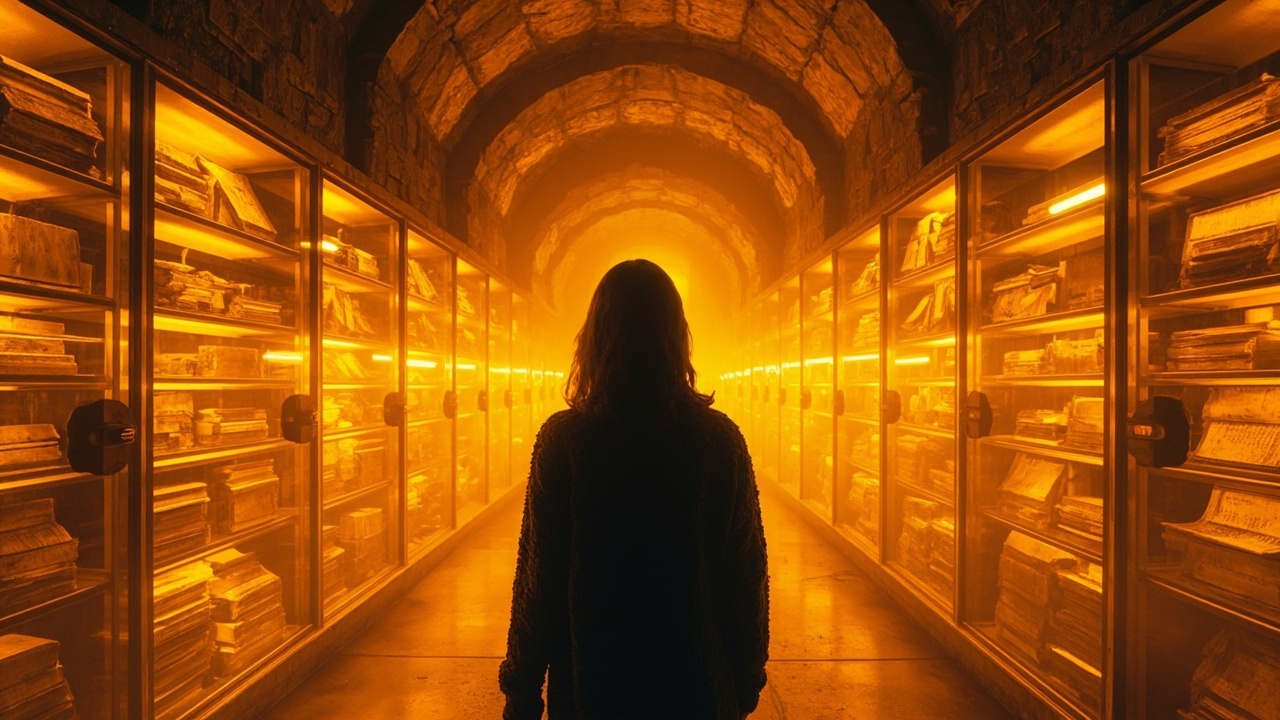
هبط المصعد لمدة مائتين وسبع عشرة ثانية بالضبط قبل أن يُطلق إلينور في سكون القبو الكهرماني. كانت قد أعدتها عدتها في ليلتها الأولى، قبل سبعة أشهر؛ أما الآن فكان الرقم يصل دون استدعاء، منقوشاً في إيقاعاتها العضلية الآلية. احتوت الطوابق العليا من المكتبة البريطانية على وجهها العام—غرف قراءة تعج بالباحثين، وسياح يتأملون في الردهة ذات السقف الزجاجي، وأزيز مستمر للاستفسارات المشروعة. لكن إلينور كانت تعمل في الأسفل، في المتاهة المدفونة التي فضلت المؤسسة ألا تعترف بها في أدبياتها الرسمية.
امتد الأرشيف تحت الأرضي تحت كل من المكتبة وشوارعها المجاورة، وهيكل عسلي من الحجرات ذات المناخ المُتحكم به تحفظ مخطوطات تسبق ذاكرة الأمة الرسمية. لقد أُريت المدخل مرة واحدة، قادت عبر ممر خدمة تجسّد خلف خزانة ملفات غير بارزة، إيماءة من مشرفها توحي بأن ما يليها من الأفضل عدم التشكيك فيه. أومأت إلينور برأسها، كما يفعل المرء حين يُعرض عليه مفتاح باب يشك أنه يؤدي إلى مكان لا ينبغي له أن يذهب إليه.
تعلمت من ملفات الموظفين التي كان محظوراً عليها تقنياً الوصول إليها أن سالفيها كانوا رجالاً عاديين. أدوا نوبات عملهم، أكملوا سجلاتهم، صعدوا إلى مستوى الشارع دون حوادث. لم يبقَ أحد منهم أكثر من ثمانية عشر شهراً. لم يطلب أي منهم نقلاً. السجلات ببساطة أشارت إلى مغادرتهم بلامبالاة إدارية، كما لو أن شواغرهم كانت حتمية كجداول المد والجزر.
بدأ المساء كما بدأ دائماً: بالجرد. تحركت إلينور بين غرف الحفظ في الصمت الخاص الذي تتطلبه مثل هذه الأماكن، خطواتها تمتصها أرضيات مطاطية، ونفسها معلق في هواء مضبوط بدقة بحيث يبدو أنه يوجد خارج الغلاف الجوي الطبيعي. انتظرت المخطوطات في حاوياتها الخالية من الأحماض، رق وأبريسم وورق بردي مرتبة وفق أنظمة فهرسة تسبق الفهرسة الرقمية بقرون. وثقت مواقعها، دوّنت قراءات درجة الحرارة والرطوبة، سجّلت الحقائق المنزلية الصغيرة لاستمرارها في البقاء.
كان الوقت يقترب من الساعة الثالثة من نوبتها عندما لاحظت التباين. احتوت الغرفة السابعة مجموعة من ميثاقات أنجلو ساكسونية، ومنح أراضٍ والمراسيم الكنسية من القرنين السابع والثامن. كانت قد فحصتها ذلك الظهر خلال جولاتها، أكدت وضعها، لم تلاحظ شيئاً ملحوظاً. الآن، واقفة أمام خزائنها الزجاجية الأمامية، وجدت نفسها أمام ترتيب مستحيل.
تحركت المخطوطات.
ليس بشكل درامي—ليس كما لو أنها مشت من رف إلى رف. كان الإزاحة دقيقاً، شبه غير محسوس لأي شخص يفتقر إلى معرفتها الحميمة بمواضع راحتها. ومع ذلك فقد كانت الميثاقات الآن تواجه الاتجاه المعاكس. مخطوطة هوامشها الغنية التي كانت مدسوسة بين وثيقتين إداريتين تحتل الآن مركز المجموعة. شظية صغيرة من الرق كانت تستطيع تحديد هويتها وهي معصوبة العينين هاجرت من الرف الثالث إلى الأول.
وقفت إلينور ساكنة تماماً. همس نظام المناخ الأرشيفي طمأنينته المستمرة. كانت وحدها مع المخطوطات وصمت القرون المتراكم.
بدأت بالتوثيق. إذا كان ينبغي تصديق السجلات، فكان هذا بلا سابقة—لم يُسجل أي من سالفيها أي ظاهرة من هذا القبيل، ولا أي شذوذ يقترب من هذه الطبيعة. ومع ذلك فإنها بينما عملت عبر غرفة بعد غرفة، تراكم الدليل. لم يكن إعادة الترتيب عشوائية. حيث كانت تتوقع فوضى، اكتشفت نمطاً. حيث كانت تتوقع تدميراً، وجدت تحويلاً.
بحلول الساعة الخامسة، أدركت أن المخطوطات تتواصل.
شكّلت التغييرات تسلسلاً، تقدماً挣扎 عقلها لمعالجته لكن غريزتها تعرفت عليه كمقصود. جُذبت نصوص قديمة من مجموعات متناثرة معاً، تكوينها المتجاور معاني جديدة لا تستطيع أي وثيقة مفردة أن تحتويها. الآن رقد مزامير من القرن التاسع بجانب تاريخ من القرن الخامس عشر. هامش في مخطوطة واحدة صدى خط اليد الموجود في أخرى، بينهما ستمائة عام. لم يكن الأرشيف يحفظ التاريخ فحسب؛ كان يُعيد صياغة فهمه الخاص لذلك التاريخ، وكان يفعل ذلك وفق مبادئ يمكن لإلينور أن تشعر بها لكنها لا تستطيع التعبير عنها بعد.
وجدت الشفرة في ليلتها السابعة من الملاحظة. وجدت في المساحات السلبية—فيما لم تقله المخطوطات، في الغيابات التي ظهرت عندما أضاء ترتيبها المعاد ترتيبه الفجوات في السجل الرسمي. وثّقت بعض تعاقبآت الملوك بشكل مختلف عما تعترف به الأرثوذكسية التاريخية. حدثت بعض المعارك في مواقع لا تظهر على الخرائط الحديثة. رُفعت بعض الأسماء بشكل منهجي من السجل الوثائقي، محوها كاملاً بحيث لا يستطيع سوى شهادة المخطوطة اللاواعية أن تكشف حضورها السابق.
انفتحت الآثار أمامها كخريطة لأرض مجهولة. الأمة في الأعلى—تلك التي تخلد انتصاراتها، التي تحتفل بتراثها الأدبي، التي تُعلم أطفالها سرداً منسقاً للتقدم والاستمرارية—استقرت على أسس حفظها الأرشيف بهدوء في التناقض. تذكرت المخطوطات ما اختارت الأمة أن تنساه.
والآن، لأسباب لا تستطيع إلينور البدء في فهمها، اختارت أن تتذكر بصوت عالٍ.
في ليلتها الثانية عشرة، اكتشفت التعليمات. كانت مخبأة في هوامش الإنارة لمخطوطة حيوانات من القرن الثاني عشر، مرئية فقط عندما أمسكت الرق بزاوية دقيقة صنعها الإضاءة الاصطناعية للأرشيف. كان الخط مجهرياً، مكتوباً بخط دقيق جداً بحيث يمكن أن يكون عمل حشرة مخصصة. وجّهها إلى غرفة محددة، رف محدد، مخطوطة محددة كانت قد شغلت موقعها دون تغيير لأربعمائة عام.
فهمت، في تلك اللحظة، أنها كانت
Der Aufzug fuhr genau zweihundertsiebzehn Sekunden lang nach unten, bevor er Eleanor in die bernsteinfarbene Stille des Gewölbes entließ. Sie hatte sie in ihrer ersten Nacht gezählt, vor sieben Monaten; nun kam die Zahl ungebeten, eingeprägt in die automatischen Rhythmen ihrer Muskelgedächtnis. Die Obergeschosse der British Library beherbergten ihr öffentliches Gesicht — Lesesäle, die vor Gelehrten summten, Touristen im glasgedeckten Atrium, das unaufhörliche Rascheln legitimer Anfragen. Aber Eleanor arbeitete darunter, in dem begrabenen Labyrinth, das die Institution in ihrer offiziellen Literatur lieber nicht anerkannte.
Das unterirdische Archiv erstreckte sich unter der Bibliothek und den benachbarten Straßen, ein Wabensystem klimatisierter Kammern, die Manuskripte beherbergten, die älter waren als das formale Gedächtnis der Nation. Man hatte ihr den Eingang einmal gezeigt, sie durch einen Servicegang geführt, der sich hinter einem unscheinbaren Aktenschrank materialisierte, wobei die Geste ihres Vorgesetzten andeutete, dass das, was darunter lag, am besten unangefochten blieb. Eleanor hatte genickt, wie man es tut, wenn man den Schlüssel zu einer Tür angeboten bekommt, von der man vermutet, dass sie nirgendwohin führt, wohin man gehen sollte.
Ihre Vorgänger waren unauffällige Männer gewesen, hatte sie aus Personalakten erfahren, die ihr technisch gesehen verboten waren einzusehen. Sie hatten ihre Schichten abgeleistet, ihre Logbücher ausgefüllt, waren ohne Zwischenfälle auf Straßenniveau aufgestiegen. Keiner war länger als achtzehn Monate geblieben. Keiner hatte um Versetzung gebeten. Die Aufzeichnungen vermerkten ihre Abreise lediglich mit administrativer Gleichgültigkeit, als wären ihre Vakanzen so unabwendbar wie Gezeitentabellen.
Der Abend begann wie immer: mit der Bestandsaufnahme. Eleanor bewegte sich zwischen den Konservierungskammern in der besonderen Stille, die solche Orte erfordern, ihre Schritte vom Gummiboden absorbiert, ihr Atem in einer Luft suspendiert, die so präzise kalibriert war, dass sie außerhalb der natürlichen Atmosphäre zu existieren schien. Die Manuskripte warteten in ihren säurefreien Gehäusen, Pergament und Papyrus nach Katalogisierungssystemen geordnet, die die digitale Indizierung um Jahrhunderte vorausgingen. Sie dokumentierte ihre Positionen, notierte Temperatur- und Feuchtigkeitsablesungen, recorded the small domestic facts of their continued survival.
Es näherte sich der dritten Stunde ihrer Schicht, als sie die Diskrepanz bemerkte. Kammer sieben enthielt eine Sammlung angelsächsischer Urkunden, Landvergaben und kirchliche Dekrete aus dem siebten und achten Jahrhundert. Sie hatte sie nachmittags während ihrer Runde untersucht, ihre Platzierung bestätigt, nichts Bemerkenswertes festgestellt. Nun, vor ihren glasfrontierten Schränken stehend, fand sie sich einer unmöglichen Anordnung gegenüber.
Die Manuskripte hatten sich bewegt.
Nicht dramatisch — nicht so, als hätten sie von Regal zu Regal gelaufen. Die Verschiebung war subtil, fast unmerklich für jeden, der ihre intime Vertrautheit mit ihren Ruheplätzen entbehrte. Doch die Urkunden blickten nun in die entgegengesetzte Richtung. Ein folienreiches Manuskript mit reichen Randnotizen, das zwischen zwei Verwaltungsdokumenten versteckt gewesen war, nahm nun die Mitte der Sammlung ein. Ein kleines Pergamentfragment, das sie blind hätte identifizieren können, war vom dritten Regal zum ersten gewandert.
Eleanor stand sehr still. Die Klimasysteme des Archivs summten ihre unaufhörliche Beruhigung. Sie war allein mit den Manuskripten und der akkumulierten Stille der Jahrhunderte.
Sie begann zu dokumentieren. Wenn man den Aufzeichnungen glauben sollte, war dies beispiellos — keiner ihrer Vorgänger hatte ein solches Phänomen protokolliert, noch irgendeine Anomalie dieser Art. Doch als sie Kammer um Kammer durcharbeitete, häuften sich die Beweise. Die Neuanordnung war nicht zufällig. Wo sie Chaos erwartet hatte, entdeckte sie Muster. Wo sie Zerstörung antizipiert hatte, fand sie Transformation.
Bis zur fünften Stunde verstand sie, dass die Manuskripte kommunizierten.
Die Veränderungen bildeten eine Sequenz, eine Progression, die ihr Verstand zu verarbeiten kämpfte, aber die ihre Instinkte als absichtlich erkannten. Antike Texte aus unterschiedlichen Sammlungen waren zusammengeführt worden, ihre Nebeneinanderstellung schuf neue Bedeutungen, die kein einzelnes Dokument enthalten konnte. Ein Psalter aus dem neunten Jahrhundert ruhte nun neben einer Chronik aus dem fünfzehnten. Eine Randnotiz in einem Manuskript echohte die Handschrift in einem anderen, getrennt durch sechshundert Jahre. Das Archiv bewahrte nicht nur Geschichte; es revidierte sein eigenes Verständnis dieser Geschichte, und es tat dies nach Prinzipien, die Eleanor spüren, aber noch nicht artikulieren konnte.
Sie fand den Code in ihrer siebten Nacht der Beobachtung. Er existierte in den Negativräumen — in dem, was die Manuskripte nicht sagten, in den Abwesenheiten, die hervortraten, wenn ihre neu angeordnete Reihenfolge die Lücken in der offiziellen Überlieferung beleuchtete. Bestimmte königliche Nachfolgen waren anders dokumentiert worden, als die orthodoxe Geschichte anerkannte. Bestimmte Schlachten hatten an Orten stattgefunden, die nicht auf modernen Karten erschienen. Bestimmte Namen waren systematisch aus der dokumentarischen Überlieferung entfernt worden, ihre Tilgung so vollständig, dass nur das unbewusste Zeugnis des Manuskripts ihre ehemalige Präsenz offenbaren konnte.
Die Implikationen entfalteten sich vor ihr wie eine Karte unbekannten Territoriums. Die Nation darüber — die ihre Siege commemorierte, ihr literarisches Erbe feierte, ihren Kindern ein kuratiertes Narrativ von Fortschritt und Kontinuität lehrte — ruhte auf Grundfesten, die das Archiv stillschweigend im Widerspruch bewahrt hatte. Die Manuskripte erinnerten sich an das, was das Land zu vergessen gewählt hatte.
Und nun, aus Gründen, die Eleanor nicht beginnen konnte zu begreifen, hatten sie gewählt, laut zu erinnern.
In ihrer zwölften Nacht entdeckte sie die Anweisung. Sie war in den illuminierten Randleisten eines Bestiariums aus dem zwölften Jahrhundert verborgen, nur sichtbar, als sie das Pergament in dem präzisen Winkel hielt, den die künstliche Beleuchtung des Archivs schuf. Die Schrift war mikroskopisch klein, in einer Hand geschrieben, die so zart war, dass sie das Werk eines gewidmeten Insekts hätte sein können. Sie wies sie auf eine spezifische Kammer, ein spezifisches Regal, ein spezifisches Manuskript, das seine Position vierhundert Jahre lang unverändert eingenommen hatte.
Sie verstand, in diesem Moment, dass sie
El ascensor descendió durante exactamente doscientos diecisiete segundos antes de liberar a Eleanor en la quietud ámbar de la bóveda. Los había contado en su primera noche, hace siete meses; ahora el número llegaba sin ser invitado, grabado en los ritmos automáticos de su memoria muscular. Los pisos superiores de la Biblioteca Británica albergaban su rostro público — salas de lectura zumbando de eruditos, turistas en el atrium de techo de cristal, el incesante crujido de indagaciones legítimas. Pero Eleanor trabajaba abajo, en el laberinto sepultado que la institución prefería no reconocer en su literatura oficial.
El archivo subterráneo se extendía bajo la biblioteca y sus calles vecinas, un panal de cámaras climatizadas que contenían manuscritos que precedían la memoria formal de la nación. Se le había mostrado la entrada una vez, guiada a través de un pasillo de servicio que se materializaba detrás de un archivador nada remarquable, el gesto de su supervisor sugiriendo que lo que yacía debajo era mejor dejarlo sin cuestion. Eleanor había asentido, como se hace cuando se te ofrece la llave de una puerta que sospechas lleva a ningún lugar al que debas ir.
Sus predecesores habían sido hombres sin importancia, había aprendido de los archivos de personal que técnicamente se le prohíbe acceder. Habían cumplido sus turnos, completado sus registros, ascendido al nivel de la calle sin incidentes. Ninguno permaneció más de dieciocho meses. Ninguno solicitó un traslado. Los registros simplemente anotaban su partida con indiferencia administrativa, como si sus vacantes fueran tan inevitables como las tablas de mareas.
La noche comenzó como siempre: con el inventario. Eleanor se movió entre las cámaras de conservación en el silencio particular que tales lugares exigen, sus pasos absorbidos por el suelo de goma, su aliento suspendido en un aire tan precisamente calibrado que parecía existir fuera de la atmósfera natural. Los manuscritos esperaban en sus recintos libres de ácido, vitela y pergamino y papiro arreglados según sistemas de catalogación que precedían la indexación digital por siglos. Documentó sus posiciones, observó las lecturas de temperatura y humedad, registró los pequeños hechos domésticos de su continua supervivencia.
Se acercaba la tercera hora de su turno cuando notó la discrepancia. La cámara siete contenía una colección de cartas anglosajonas, concesiones de tierras y decretos eclesiásticos de los siglos seventh y eighth. Los había examinado esa tarde durante sus rondas, confirmado su colocación, no notado nada remarquable. Ahora, de pie ante sus gabinetes con frente de cristal, se encontró confrontando una disposición imposible.
Los manuscritos se habían movido.
No dramáticamente — no como si hubieran caminado de estante a estante. El desplazamiento era sutil, casi imperceptible para cualquiera que careciera de su familiaridad íntima con sus lugares de descanso. Sin embargo las cartas ahora miraban en la dirección opuesta. Un folio rico en marginalia que había estado metido entre dos documentos administrativos ahora ocupaba el centro de la colección. Un pequeño fragmento de vitela que podría haber identificado con los ojos vendados había migrado del tercer estante al primero.
Eleanor se quedó muy quieta. Los sistemas climáticos del archivo zumbaban su continua reassurance. Estaba sola con los manuscritos y el silencio acumulado de los siglos.
Comenzó a documentar. Si los registros habían de creerse, esto era unprecedented — ninguno de sus predecesores había registrado ningún fenómeno tal, ni ninguna anomalía de esta naturaleza. Sin embargo mientras trabajaba a través de cámara tras cámara, las evidencias se acumularon. El rearrangement no era aleatorio. Donde había esperado caos, descubrió patrón. Donde había anticipado destrucción, encontró transformación.
Para la quinta hora, comprendió que los manuscritos estaban comunicando.
Los cambios formaban una secuencia, una progresión que su mente luchaba por procesar pero que sus instintos reconocían como deliberada. Textos antiguos de colecciones dispares habían sido reunidos, su yuxtaposición creando nuevos significados que ningún documento individual podía contener. Un salterio del siglo noveno ahora descansaba junto a una crónica del siglo quince. Una nota marginal en un manuscrito hacía eco a la caligrafía encontrada en otro, separada por seiscientos años. El archivo no estaba meramente preservando la historia; estaba revisando su propia comprensión de esa historia, y lo estaba haciendo según principios que Eleanor podía sentir pero aún no articular.
Encontró el código en su séptima noche de observación. Existía en los espacios negativos — en lo que los manuscritos no decían, en las ausencias que emergían cuando su orden rearrreglado iluminaba los vacíos en el registro oficial. Ciertas sucesiones reales habían sido documentadas différemment de lo que la historia ortodoxa reconocía. Ciertas batallas habían ocurrido en ubicaciones que no aparecían en mapas modernos. Ciertos nombres habían sido sistemáticamente eliminados del registro documental, su borrado tan completo que solo el testimonio inconsciente del manuscrito podía revelar su presencia anterior.
Las implicaciones se desplegaron ante ella como un mapa de territorio desconocido. La nación encima — la que commemoraba sus victorias, que celebraba su patrimonio literario, que enseñaba a sus hijos una narrativa curada de progreso y continuidad — descansaba sobre fundamentos que el archivo había quietamente preservado en contradicción. Los manuscritos recordaban lo que el país había elegido olvidar.
Y ahora, por razones que Eleanor no podía comenzar a fathom, habían elegido recordar en voz alta.
En su twelfth noche, descubrió la instrucción. Estaba oculta en los márgenes iluminados de un bestiario del siglo doce, visible solo cuando sostenía la vitela en el ángulo preciso creado por la iluminación artificial del archivo. La escritura era microscópica, escrita en una mano tan delicada que podría haber sido obra de un insecto dedicado. La dirigía hacia una cámara específica, un estante específico, un manuscrito específico que había ocupado su posición sin cambios durante cuatrocientos años.
Comprendió, en ese momento, que ella había
L'ascenseur descendit pendant exactement deux cent dix-sept secondes avant de libérer Eleanor dans la stillness ambrée de la chambre forte. Elle les avait comptés lors de sa première nuit, il y a sept mois ; maintenant le nombre arrivait sans être invité, gravé dans les rythmes automatiques de sa mémoire musculaire. Les étages supérieurs de la British Library abritaient son visage public — des salles de lecture bourdonnantes d'érudits, des touristes dans l'atrium au plafond de verre, le bruissement perpétuel des enquêtes légitimes. Mais Eleanor travaillait en dessous, dans le labyrinthe enfoui que l'institution préférait ne pas reconnaître dans sa littérature officielle.
Les archives souterraines s'étendaient sous la bibliothèque et les rues avoisinantes, un nid d'abeilles de chambres à气候 contrôlé contenant des manuscrits qui précédaient la mémoire formelle de la nation. On lui avait montré l'entrée une fois, menée à travers un couloir de service qui se matérialisait derrière une armoire de classement banale, le geste de son superviseur suggérant que ce qui se trouvait en dessous était mieux laissé sans question. Eleanor avait hoché la tête, comme on le fait lorsqu'on se voit offrir la clé d'une porte dont on soupçonne qu'elle mène nulle part où l'on devrait aller.
Ses prédécesseurs avaient été des hommes ordinaires, l'avait-elle appris dans les dossiers du personnel qu'elle n'avait理论上有权访问. Ils avaient assuré leurs quarts, complété leurs registres, remonté au niveau de la rue sans incident. Aucun n'était resté plus de dix-huit mois. Aucun n'avait demandé une mutation. Les archives notaient simplement leur départ avec une indifférence administrative, comme si leurs postes vacants étaient aussi inevitables que les tables de marée.
La soirée commença comme toujours : par l'inventaire. Eleanor se déplaça entre les chambres de préservation dans le silence particulier que de tels lieux exigent, ses pas absorbés par le sol en caoutchouc, son souffle suspendu dans un air si précisément calibré qu'il semblait exister en dehors de l'atmosphère naturelle. Les manuscrits attendaient dans leurs enclosures exemptes d'acide, vélin et parchemin et papyrus arrangés selon des systèmes de catalogage qui précédaient l'indexation numérique de siècles. Elle documenta leurs positions, nota les relevés de température et d'humidité, enregistra les petits faits domestiques de leur survie continue.
C'était proche de la troisième heure de son quart lorsqu'elle remarqua la discrepancy. La chambre sept contenait une collection de chartes anglo-saxonnes, des concessions de terres et des décrets ecclésiastiques des septième et huitième siècles. Elle les avait examinés cet après-midi lors de sa ronde, confirmé leur placement, noté rien de remarquable. Maintenant, debout devant leurs armoires à face vitrée, elle se trouva confrontée à un arrangement impossible.
Les manuscrits s'étaient déplacés.
Pas dramatiquement — pas comme s'ils avaient marché d'étagère en étagère. Le déplacement était subtil, presque imperceptible pour quiconque manquerait de sa familiarité intime avec leurs endroits de repos. Pourtant les chartes faisaient maintenant face à la direction opposée. Un folio à riche marge qui avait été glissé entre deux documents administratifs occupait maintenant le centre de la collection. Un petit fragment de vélin qu'elle aurait pu identifier les yeux bandés avait migré du troisième étage au premier.
Eleanor resta très immobile. Les systèmes climatiques de l'archive bourdonnaient leur reassurance perpétuelle. Elle était seule avec les manuscrits et le silence accumulé des siècles.
Elle commença à documenter. Si l'on devait croire les archives, ceci était sans précédent — aucun de ses prédécesseurs n'avait consigné un tel phénomène, ni aucune anomalie approchant cette nature. Pourtant en travaillant à travers chambre après chambre, les preuves s'accumulèrent. Le réarrangement n'était pas aléatoire. Là où elle avait prévu le chaos, elle découvrit un motif. Là où elle avait anticipé la destruction, elle trouva la transformation.
À la cinquième heure, elle comprit que les manuscrits communiquaient.
Les changements formaient une séquence, une progression que son esprit luttait pour traiter mais que ses instincts reconnaissaient comme délibérée. Des textes anciens de collections disparates avaient été rassemblés, leur juxtaposition créant de nouvelles significations qu'aucun document unique ne pouvait contenir. Un psautier du neuvième siècle reposait désormais à côté d'une chronique du quinzième. Une note marginale dans un manuscrit faisait écho à l'écriture trouvée dans un autre, séparés par six cents ans. L'archive ne se contentait pas de préserver l'histoire ; elle révisait sa propre compréhension de cette histoire, et elle le faisait selon des principes qu'Eleanor pouvait sentir mais pas encore articuler.
Elle trouva le code le septième soir d'observation. Il existait dans les espaces négatifs — dans ce que les manuscrits ne disaient pas, dans les absences qui émergeaient lorsque leur ordre réarrangé éclairait les lacunes dans les archives officielles. Certaines successions royales avaient été documentées différemment de ce que l'histoire orthodoxe reconnaissait. Certaines batailles avaient eu lieu dans des endroits qui n'apparaissaient pas sur les cartes modernes. Certains noms avaient été systématiquement supprimés du registre documentaire, leur effacement si complet que seule la témoignages inconscients du manuscrit pouvait révéler leur présence ancienne.
Les implications se déployèrent devant elle comme une carte d'un territoire inconnu. La nation au-dessus — celle qui commemorait ses victoires, qui célébrait son patrimoine littéraire, qui enseignait à ses enfants un récit contrôlé de progrès et de continuité — reposait sur des fondations que l'archive avait discrètement préservées en contradiction. Les manuscrits se souvenaient de ce que le pays avait choisi d'oublier.
Et maintenant, pour des raisons qu'Eleanor ne pouvait commencer à comprendre, ils avaient choisi de se souvenir à voix haute.
Sa douzième nuit, elle découvrit l'instruction. Elle était cachée dans les marges illuminées d'un bestiaire du douzième siècle, visible seulement lorsqu'elle tenait le vélin à l'angle précis créé par l'éclairage artificiel de l'archive. L'écriture était microscopique, écrite d'une main si délicate qu'elle aurait pu être l'œuvre d'un insecte dédié. Elle la dirigeait vers une chambre spécifique, une étagère spécifique, un manuscrit spécifique qui avait occupé sa position inchangée depuis quatre cents ans.
Elle comprit, à ce moment, qu'elle avait
L'ascensore scese per esattamente duecentodiciassette secondi prima di rilasciare Eleanor nella quiete ambrata della camera blindata. Li aveva contati la sua prima notte, sette mesi fa; ora il numero arrivava non richiesto, inciso nei ritmi automatici della sua memoria muscolare. I piani superiori della British Library ospitavano il suo volto pubblico — sale di lettura ronzanti di studiosi, turisti nell'atrio dal tetto di vetro, il fruscio incessante di interrogativi legittimi. Ma Eleanor lavorava sotto, nel labirinto sepolto che l'istituzione preferiva non riconoscere nella sua letteratura ufficiale.
L'archivio sotterraneo si estendeva sotto la biblioteca e le strade limitrofe, un alveare di camere a clima controllato contenenti manoscritti che precedevano la memoria formale della nazione. Le era stato mostrato l'ingresso una volta, guidata attraverso un corridoio di servizio che si materializzava dietro un banale schedario, il gesto del suo supervisore suggerendo che ciò che giaceva sotto fosse meglio lasciarlo senza domande. Eleanor aveva annuito, come si fa quando viene offerta la chiave di una porta che si sospetta porti da nessuna parte dove si dovrebbe andare.
I suoi predecessori erano stati uomini insignificanti, aveva appreso dai fascicoli del personale che tecnicamente le era proibito consultare. Avevano svolto i loro turni, completato i loro registri, saliti al livello stradale senza incidenti. Nessuno era rimasto più di diciotto mesi. Nessuno aveva richiesto un trasferimento. I registri annotavano semplicemente la loro partenza con indifferenza amministrativa, come se le loro vacanze fossero inevitabili come le tavole delle maree.
La serata iniziò come sempre: con l'inventario. Eleanor si mosse tra le camere di conservazione nel silenzio particolare che tali luoghi richiedono, i suoi passi assorbiti dal pavimento di gomma, il suo respiro sospeso in un'aria così precisamente calibrata che sembrava esistere fuori dall'atmosfera naturale. I manoscritti attendevano nei loro alloggiamenti privi di acidi, pergamena e papiro arrangiati secondo sistemi di catalogazione che precedevano l'indicizzazione digitale di secoli. Documentò le loro posizioni, annotò le letture di temperatura e umidità, registrò i piccoli fatti domestici della loro continua sopravvivenza.
Si stava avvicinando alla terza ora del suo turno quando notò la discrepanza. La camera sette conteneva una collezione di carte anglosassoni, concessioni di terre e decreti ecclesiastici del settimo e ottavo secolo. Li aveva esaminati quel pomeriggio durante i suoi giri, confermato la loro collocazione, non notato nulla di remarkable. Ora, in piedi davanti ai loro armadi con fronte di vetro, si trovò di fronte a un disposizione impossibile.
I manoscritti si erano mossi.
Non drammaticamente — non come se avessero camminato da scaffale a scaffale. Lo spostamento era sottile, quasi impercettibile per chiunque mancasse della sua intima familiarità con i loro luoghi di riposo. Eppure le carte ora guardavano nella direzione opposta. Un folio ricco di margini che era stato infilato tra due documenti amministrativi ora occupava il centro della collezione. Un piccolo frammento di pergamena che avrebbe potuto identificare bendata era migrato dal terzo scaffale al primo.
Eleanor rimase molto ferma. I sistemi climatici dell'archivio ronzavano la loro incessante rassicurazione. Era sola con i manoscritti e il silenzio accumulato dei secoli.
Iniziò a documentare. Se si doveva credere ai registri, questo era senza precedenti — nessuno dei suoi predecessori aveva registrato un tale fenomeno, né alcuna anomalia di questa natura. Eppure mentre lavorava attraverso camera dopo camera, le prove si accumularono. La risistemazione non era casuale. Dove si era aspettata il caos, scoprì un modello. Dove aveva anticipato la distruzione, trovò la trasformazione.
Entro la quinta ora, comprese che i manoscritti stavano comunicando.
I cambiamenti formavano una sequenza, una progressione che la sua mente lottava per elaborare ma che i suoi istinti riconoscevano come intenzionale. Testi antichi da collezioni disparate erano stati riuniti, il loro accostamento creando nuovi significati che nessun singolo documento poteva contenere. Un salterio del nono secolo ora riposava accanto a una cronaca del quindicesimo. Una nota marginale in un manoscritto riecheggiava la calligrafia trovata in un altro, separata da seicento anni. L'archivio non stava semplicemente preservando la storia; stava rivedendo la propria comprensione di quella storia, e lo stava facendo secondo principi che Eleanor poteva percepire ma non ancora articolare.
Trovò il codice la sua settima notte di osservazione. Esisteva negli spazi negativi — in ciò che i manoscritti non dicevano, nelle assenze che emergevano quando il loro ordine risistemato illuminava le lacune nella documentazione ufficiale. Alcune successioni reali erano state documentate diversamente da come la storia ortodossa riconosceva. Alcune battaglie erano avvenute in luoghi che non apparivano sulle mappe moderne. Alcuni nomi erano stati sistematicamente rimossi dal documento, la loro cancellazione così completa che solo la testimonianza inconscia del manoscritto poteva rivelare la loro precedente presenza.
Le implicazioni si dispiegarono davanti a lei come una mappa di territorio sconosciuto. La nazione sopra — quella che commemorava le sue vittorie, che celebrava il suo patrimonio letterario, che insegnava ai suoi figli una narrativa curata di progresso e continuità — riposava su fondamenta che l'archivio aveva silenziosamente preservato in contraddizione. I manoscritti ricordavano ciò che il paese aveva scelto di dimenticare.
E ora, per ragioni che Eleanor non poteva iniziare a comprendere, avevano scelto di ricordare ad alta voce.
La sua dodicesima notte, scoprì l'istruzione. Era nascosta nei margini illuminati di un bestiario del dodicesimo secolo, visibile solo quando teneva la pergamena all'angolo preciso creato dall'illuminazione artificiale dell'archivio. La scrittura era microscopica, scritta in una mano così delicata che avrebbe potuto essere opera di un insetto dedicato. La indirizzava verso una camera specifica, uno scaffale specifico, un manoscritto specifico che aveva occupato la sua posizione invariata per quattrocento anni.
Comprese, in quel momento, che lei aveva