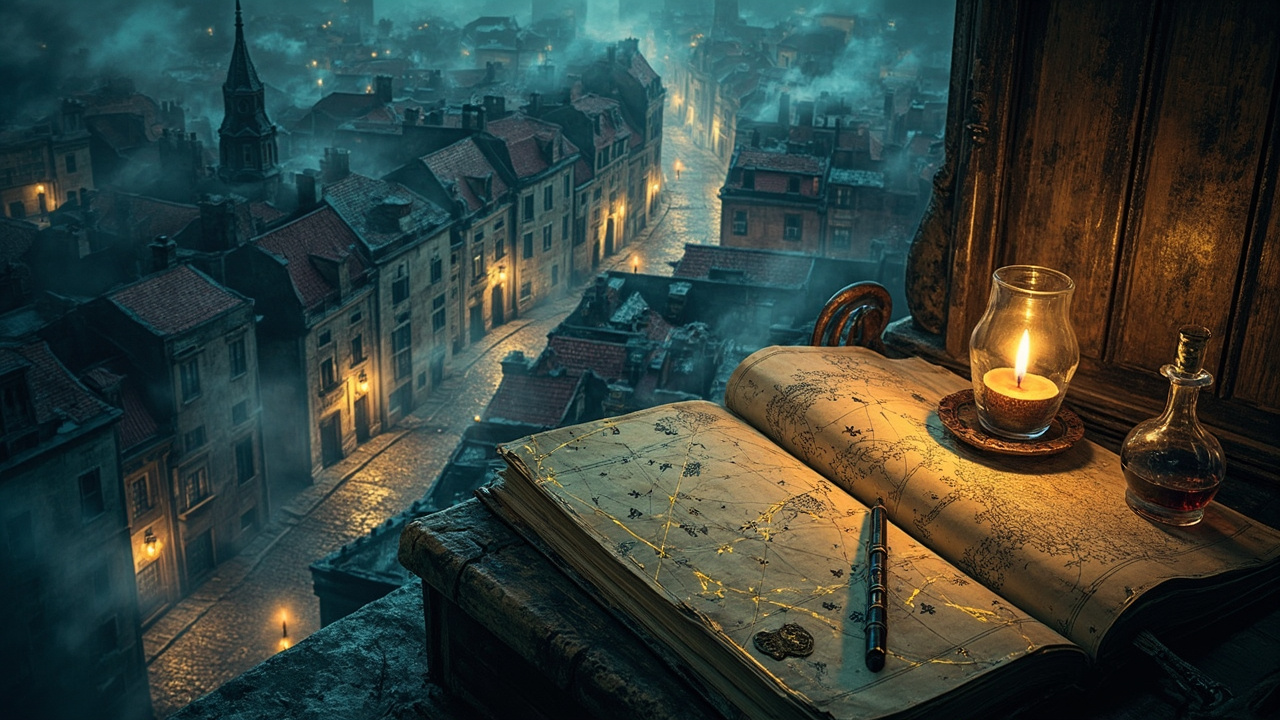
أطلس السائل
لم يكن لدى المساح اسم يستحق التذكر، لذلك لم تمنحه المدينة واحداً. كان يتحرك عبر متاهة المدينة بصبر الماء الساعي إلى مستوى موازٍ، مخطط في يده، قلم رصاص معلق فوق الورق في حركة دائمة. لم يكن يرسم الشوارع الطموحة أو avenues الثروة. كان يرسم ما بين. ما يُهمل. الفضاء السلبي الذي تعجز العمارة، في يأسها المستمر، عن الاستيلاء عليه.
كان هناك فناء خلف منزل القاضي القديم حيث تحركت ثلاث بلاطات لتشكل شكلاً يشبه الأرنب النائم. رصده المساح. زقاق خلف نقابة الأحذية، بالكاد واسع بما يكفي لرجل، حيث حفر المطر درجات في الأرض—طريق سري ما إلى المنزل. رُصد. فناء تتقاسمه أربعة مبانٍ سكنية، عادي إلا من شجرة ليمون واحدة تمكنت، بطريقة ما، من الجذور بين البلاطات ونمت لتصبح فعل مقاومة عنيدة. رُصدت، مع رسم صغير لأوراقها في الهامش.
نما الأطلس. صفحة بعد صفحة من أماكن لا تظهر في أي مسح بلدي. كان المساح يعود إلى غرفته المستأجرة—باردة في الشتاء، لا تُطاق في الصيف—ويقضي أمسياته في نقل ملاحظاته الميدانية إلى المجلد الجلدي الضخم الذي لم يغادر مكتبه أبداً. كان أثراً جميلاً، ذاك الأطلس. كان قد اشتراه منذ سنوات من مُجلف لا مات في الربيع التالي، وهو ما كان ينبغي أن يمنحه وقفة.
بحلول وصول الخريف، كان الأطلس قد اكتظ بالخرائط. كان يضغط على تجليده. أضاف المساح صفحات تكميلية، والصقها بعجينة الدقيق والماء، واستمر في عمله بتجدد الالتزام. بدأ يلاحظ أنماطاً. لم تكن المساحات المنسية موزعة عشوائياً. كانت تشكل كوكبات. سلسلة من الفجوات بين المباني على التلة الشرقية التي رسمت، عند ربطها، صورة امرأة راكعة. سلسلة من الأفنية المنسية في الحي القديم توحي، بشكل لا يُصدق، بملامح مفتاح.
أخبر المساح نفسه أنها باريدوليا—إصرار العقل على إيجاد الوجوه في البناء، والمعنى في الترتيب العشوائي. لكنه رصد الأنماط على أي حال، معلقاً بخطه النحتي الدقيق. "شبح معماري محتمل،" كتب. "مزيد من الملاحظة مطلوب."
كان الصباح الذي تغير فيه كل شيء عادياً في كل جانب آخر. نوفمبر. ضباب. صعد المساح الدرج إلى غرفته بركبتيه المؤلمتين وكيس مليء ببقايا الفحم، مستعداً لنقل ملاحظات يومه إلى الأطلس الضخم. جلس عند المكتب، فتح المجلد إلى صفحته الحالية—وجد مدخلة لم يكتبها.
كانت مكتوبة بخط يده. نفس الحروف المائلة، نفس ضغط الجرافيت على الورق. لكنه لم يكن قد كتبها. كان متأكداً من هذا بيقين أشعره بالدوار. وصفت المدخلة فناءً لم يزره المساح قط. كان صغيراً، مفروشاً ببلاطات غير متطابقة، وفي وسطه بئر اختفى إطارها الخشبي منذ زمن طويل. نما هناك شجرة تين، رغم أنه لا توجد أشجار تين في هذه المدينة. بجانب البئر وقفت امرأة في فستان أزرق، ظهرها نحو المراقب. كانت تنتظر شخصاً ما، قالت المدخلة. كانت تنتظر منذ عام 1847.
قرأ المساح المدخلة ثلاث مرات. ثم قلب الصفحة ووجد أخرى. وأخرى. صفحة بعد صفحة من المدخلات بخط يده، تصف فضاءات لم يرها قط. بعضها كان واضح الخيال—أم كان؟ فناء تحت البحر، يمكن الوصول إليه عبر فجوة في جدار الميناء حيث المياه ضحلة بما يكفي للوقوف. ممر ضيق بين سحابتين. غرفة داخل جبل تحتوي فقط على كرسي واحد ونافذة تطل على صحراء لم تتكون بعد.
في الأسابيع التالية، بدأ المساح يفهم ما أصبح عليه أطلسه. لم يعد يرسم الفضاءات بين المباني. كان يرسم الفضاءات بين اللحظات. الفجوات في الزمن حيث كان يمكن أن تحدث أشياء لكنها لم تحدث. الأماكن المنسية حيث وقف أناس منسيون، ينتظرون، يأملون، يخافون. بدأ الأطلس يرسم ليس الجغرافيا بل الذاكرة—الجماعية، الجيولوجية، المتstretching back عبر قرون من الحيوات العادية التي لم تترك نصب، لم تكتب رسائل، لم تغير حدوداً. فقط هذه الوقفات. هذه الأنفاس بين نبضة قلب وأخرى من المدينة.
تعرف المساح على بعض المدخلات. ظهرت البئر في فناء شجرة التين في سجل تعداد من عام 1846—عقار صدر بحقه أمر بالهدم، ثم هُدم، ودُفن موقعه تحت البلاط في أقل من عقد. كانت المرأة في الفستان الأزرق حقيقية. كان اسمها مارتا فوس. كانت تنتظر سفينة لم تأتِ أبداً. لكن كيف عرف الأطلس هذا؟ كيف يمكنه رسم interior جبل حيث يجلس كرسي يطل على صحراء لن توجد لمدة خمسين مليون سنة؟
توقف عن الخروج. توقف عن الإضافة إلى الأطلس. جلس عند مكتبه وشاهد المدخلات الجديدة تظهر، دائماً بخطه، nunca في لحظة فتح الكتاب. كان الأطلس يكتب نفسه الآن، وكان هو مجرد حارسه. بدأ يفهم أنه لم يختر أن يرسم الفجوات. الفجوات اختارت أن تُرسم من خلاله.
في الليلة الأخيرة—رغم أنه لم يعرف أنها الليلة الأخيرة—فتح المساح الأطلس ليجد المدخلة الأخيرة. وصفتها صغيرة في قمة درج ضيق. الغرفة احتوت على مكتب، كرسي، محبرة، ومجلد جلدي ضخم مفتوح على صفحة بيضاء. جلس شخص ما عند المكتب، قلم رصاص في اليد، يستعد للكتابة. لوحظ أن ذلك الشخص جلس هناك، يستعد للكتابة، لفترة أطول من عمر المدينة نفسها. وأن الأطلس، الأطلس الحقيقي، الذي يهم، هو الذي كان على وشك أن يبدأه.
رفع المساح عينيه عن الصفحة. كانت الغرفة تماماً كما وُصفت. كان الدرج تماماً كما وُصف. وفي مكان ما خلف النافذة، في الضباب وظلام نوفمبر، كان يمكنه أن يسمع المدينة.
Der Atlas des Bettlers
Der Kartograph hatte keinen Namen, der es wert war, erinnert zu werden, also gewährte ihm die Stadt keinen. Er bewegte sich durch das städtische Labyrinth mit der Geduld des Wassers, das seine Ebene findet, Karte in der Hand, Bleistift beständig über dem Papier schwebend. Was er kartographierte, waren nicht die Alleen des Ehrgeizes oder die Boulevards des Handels. Er kartographierte das Interstitielle. Das Übersehene. Den negativen Raum, den die Architektur in ihrer unermüdlichen Eitelkeit nicht für sich beanspruchen konnte.
Es gab einen Innenhof hinter dem alten Haus des Richters, wo sich drei Kopfsteinpflastersteine verschoben hatten, um eine Form zu bilden, die einem schlafenden Hasen ähnelte. Der Kartograph vermerkte ihn. Ein Gässchen hinter der Schuhmacherzunft, kaum breit genug für einen Mann, wo der Regen Stufen in die Erde gewaschen hatte—jemandes geheimer Weg nach Hause. Vermerkt. Ein Innenhof, der von vier Mietshäusern geteilt wurde, unremarkabel außer einem einzelnen Zitronenbaum, der es irgendwie geschafft hatte, zwischen den Platten Wurzeln zu schlagen und zu einem Akt hartnäckiger Auflehnung herangewachsen war. Vermerkt, mit einer kleinen Zeichnung seiner Blätter am Rand.
Der Atlas wuchs. Seite um Seite von Orten, die auf keiner städtischen Vermessung erschienen. Der Kartograph kehrte in sein gemietetes Zimmer zurück—im Winter kalt, im Sommer unerträglich—und verbrachte die Abende damit, seine Feldnotizen in das große, in Leder gebundene Volume zu übertragen, das seinen Schreibtisch nie verließ. Es war eine schöne Sache, dieser Atlas. Er hatte es Jahre zuvor von einem Buchbinder gekauft, der im folgenden Frühling starb, was ihm vielleicht zu denken hätte geben sollen.
Als der Herbst kam, war der Atlas dick von Kartographie geworden. Er drückte gegen seine Bindung. Der Kartograph fügte ergänzende Seiten hinzu, klebte sie mit Mehl-und-Wasser-Paste ein und setzte seine Arbeit mit erneuertem Eifer fort. Er hatte begonnen, Muster zu bemerken. Die vergessenen Räume, so schien es, waren nicht zufällig verteilt. Sie bildeten Konstellationen. Eine Abfolge von Lücken zwischen Gebäuden auf dem östlichen Hügel, die, wenn verbunden, die Silhouette einer knienden Frau nachzeichneten. Eine Kette vergessener Innenhöfe im alten Viertel, die unmöglicherweise die Umrisse eines Schlüssels nahelegten.
Der Kartograph sagte sich, es sei Pareidolie—die Hartnäckigkeit des Geistes, Gesichter im Mauerwerk zu finden, Bedeutung in zufälliger Anordnung. Aber er vermerkte die Muster trotzdem, fügte Anmerkungen in seiner sorgfältigen Schreibschrift hinzu. 'Möglicher architektonischer Geist', schrieb er. 'Weitere Beobachtung erforderlich.'
Der Morgen, an dem sich alles änderte, war in jeder anderen Hinsicht unremarkable. November. Nebel. Der Kartograph stieg die Treppen zu seinem Zimmer hinauf mit schmerzenden Knien und einem Beutel voll KohleStummel, bereit, die Beobachtungen des Tages in den großen Atlas zu übertragen. Er saß am Schreibtisch, öffnete das Volume auf seiner aktuellen Seite—und fand einen Eintrag, den er nicht geschrieben hatte.
Er war in seiner eigenen Handschrift. Dieselben geneigten Buchstaben, derselbe Druck des Graphits auf dem Papier. Aber er hatte ihn nicht geschrieben. Er war dessen sicher mit einer Sicherheit, die sich wie Schwindel anfühlte. Der Eintrag beschrieb einen Innenhof, den der Kartograph nie besucht hatte. Er war klein, mit mismatched Fliesen gepflastert, zentriert auf einem Brunnen, dessen Holzrahmen längst verrottet war. Ein Feigenbaum wuchs dort, obwohl in dieser Stadt keine Feigenbäume wachsen. Neben dem Brunnen stand eine Frau in einem blauen Kleid, den Rücken zum Beobachter gewandt. Sie wartete auf jemanden, sagte der Eintrag. Sie wartete seit 1847.
Der Kartograph las den Eintrag dreimal. Dann schlug er die Seite um und fand einen weiteren. Und einen weiteren. Seite um Seite von Einträgen in seiner eigenen Handschrift, die Räume beschrieben, die er nie gesehen hatte. Einige waren eindeutig imaginär—oder waren sie es? Ein Innenhof unter dem Meer, erreichbar durch eine Lücke in der Hafenmauer, wo das Wasser flach genug zum Stehen war. Ein schmaler Durchgang zwischen zwei Wolken. Ein Raum in einem Berg, der nur einen einzelnen Stuhl und ein Fenster enthielt, das auf eine Wüste blickte, die sich noch nicht gebildet hatte.
In den folgenden Wochen begann der Kartograph zu verstehen, was sein Atlas geworden war. Er kartographierte nicht mehr die Räume zwischen Gebäuden. Er kartographierte die Räume zwischen Momenten. Die Lücken in der Zeit, wo Dinge hätten passieren können, aber nicht passiert sind. Die vergessenen Orte, wo vergessene Menschen gestanden hatten, wartend, hoffend, fürchtend. Der Atlas hatte begonnen, nicht Geographie zu kartieren, sondern Erinnerung—kollektiv, geologisch, sich erstreckend durch Jahrhunderte gewöhnlicher Leben, die keine Denkmäler hinterließen, keine Briefe schrieben, keine Grenzen änderten. Nur diese Pausen. Diese Atemzüge zwischen einem Herzschlag und dem nächsten der Stadt.
Der Kartograph erkannte einige Einträge. Der Brunnen im Feigenbaum-Innenhof erschien in einem Volkszählungsregister von 1846—eine zum Abbruch verurteilte Immobilie, dann abgerissen, ihr Standort innerhalb eines Jahrzehnts überpflastert. Die Frau im blauen Kleid war real gewesen. Ihr Name war Marta Voss. Sie wartete auf ein Schiff, das nie kam. Aber wie konnte der Atlas das wissen? Wie konnte er das Innere eines Berges kartieren, wo ein Stuhl saß und auf eine Wüste blickte, die nicht vor fünfzig Millionen Jahren existieren würde?
Er hörte auf auszugehen. Er hörte auf, zum Atlas beizutragen. Er saß an seinem Schreibtisch und sah zu, wie neue Einträge erschienen, immer in seiner Handschrift, nie in dem Moment, als er das Buch öffnete. Der Atlas schrieb sich jetzt selbst, und er war nur sein Hüter. Er begann zu verstehen, dass er nicht gewählt hatte, die Lücken zu kartieren. Die Lücken hatten gewählt, durch ihn kartiert zu werden.
In der letzten Nacht—obwohl er nicht wusste, dass es die letzte Nacht war—öffnete der Kartograph den Atlas, um den letzten Eintrag zu finden. Er beschrieb einen kleinen Raum oben auf einer schmalen Treppe. Der Raum enthielt einen Schreibtisch, einen Stuhl, ein Tintenfass und ein großes, in Leder gebundenes Buch, offen auf einer leeren Seite. Eine Gestalt saß am Schreibtisch, Bleistift in der Hand, bereit zu schreiben. Der Eintrag bemerkte, dass die Gestalt dort gesessen hatte, bereit zu schreiben, länger als die Stadt selbst. Und dass der Atlas, der wahre Atlas, der, der zählte, der war, den die Gestalt gerade beginnen würde.
Der Kartograph blickte von der Seite auf. Der Raum war genau wie beschrieben. Die Treppe war genau wie beschrieben. Und irgendwo jenseits des Fensters, im Nebel und der Novemberfinsternis, konnte er die Stadt hören.
El Atlas del Mendicante
El cartógrafo no tenía un nombre digno de recuerdo, así que la ciudad no le concedió ninguno. Se movía a través del laberinto urbano con la paciencia del agua encontrando su nivel, mapa en mano, lápiz perpetuamente suspendido sobre el papel. Lo que cartografiaba no eran las avenidas de la ambición ni los bulevares del comercio. Cartografiaba lo intersticial. Lo pasado por alto. El espacio negativo que la arquitectura, en su incesante vanidad, no lograba reclamar.
Había un patio detrás de la vieja casa del magistrado donde tres adoquines se habían desplazado para formar una forma como de liebre dormida. El cartógrafo lo marcó. Un callejón detrás del guild de zapateros, apenas lo bastante ancho para un hombre, donde la lluvia había desgastado escalones en la tierra—el camino secreto a casa de alguien. Marcado. Un patio compartido por cuatro casas de vecindad, nada remarkable excepto por un único árbol de limón que de alguna manera había echado raíces entre los adoquines y había crecido hasta convertirse en un acto de desafío obstinado. Marcado, con un pequeño dibujo de sus hojas en el margen.
El atlas creció. Página tras página de lugares que no aparecían en ningún levantamiento municipal. El cartógrafo regresaba a su habitación alquilada—fría en invierno, insoportable en verano—y pasaba las noches transcribiendo sus notas de campo al gran volumen encuadernado en cuero que nunca abandonaba su escritorio. Era una cosa hermosa, aquel atlas. Lo había comprado años antes a un encuadernador que murió la primavera siguiente, lo cual quizás debería haberle dado qué pensar.
Cuando llegó el otoño, el atlas se había vuelto grueso de cartografía. Abultaba contra su encuadernación. El cartógrafo añadió páginas suplementarias, pegándolas con pasta de harina y agua, y continuó su trabajo con renovado fervor. Había comenzado a notar patrones. Los espacios olvidados, al parecer, no estaban distribuidos aleatoriamente. Formaban constelaciones. Una secuencia de huecos entre edificios en la colina oriental que, al conectarlos, trazaban la silueta de una mujer arrodillada. Una cadena de patios olvidados en el barrio antiguo que sugería, imposiblemente, el contorno de una llave.
El cartógrafo se decía que era pareidolia—la insistencia de la mente en encontrar rostros en la mampostería, significado en un arreglo aleatorio. Pero marcó los patrones de todos modos, añadiendo anotaciones en su cuidada escritura. "Posible fantasma arquitectónico", escribió. "Se requiere mayor observación."
La mañana en que todo cambió era ordinaria en cualquier otro aspecto. Noviembre. Niebla. El cartógrafo subió las escaleras hacia su habitación con las rodillas adoloridas y una bolsa llena de puntas de carbón, preparado para transferir las observaciones del día al gran atlas. Se sentó en el escritorio, abrió el volumen en su página actual—y encontró una entrada que no había escrito.
Estaba hecha en su propia letra. Las mismas letras inclinadas, la misma presión del grafito contra el papel. Pero él no la había escrito. Estaba seguro de ello con una certeza que se sentía como vértigo. La entrada describía un patio que el cartógrafo nunca había visitado. Era pequeño, empedrado con azulejos dispares, centrado en un pozo cuya armazón de madera llevaba mucho tiempo podrida. Un higo crecía allí, aunque en esta ciudad no crecen higueras. Junto al pozo estaba una mujer con un vestido azul, la espalda hacia el observador. Estaba esperando a alguien, decía la entrada. Llevaba esperando desde 1847.
El cartógrafo leyó la entrada tres veces. Luego pasó la página y encontró otra. Y otra. Página tras página de entradas en su propia letra, describiendo espacios que nunca había visto. Algunos eran claramente imaginarios—¿o no lo eran? Un patio bajo el mar, accesible a través de una grieta en el muro del puerto donde el agua era lo bastante poco profunda para estar de pie. Un pasaje estrecho entre dos nubes. Una habitación dentro de una montaña que contenía solo una silla y una ventana que daba a un desierto que aún no se había formado.
En las semanas siguientes, el cartógrafo comenzó a entender lo que su atlas se había vuelto. Ya no cartografiaba los espacios entre los edificios. Cartografiaba los espacios entre los momentos. Los huecos en el tiempo donde las cosas podrían haber sucedido pero no lo hicieron. Los lugares olvidados donde personas olvidadas habían permanecido, esperando, esperando, temiendo. El atlas había comenzado a trazar no geografía sino memoria—colectiva, geológica, extendiéndose a través de siglos de vidas ordinarias que no dejaron monumentos, no escribieron cartas, no cambiaron fronteras. Solo estas pausas. Estas respiraciones entre un latido del corazón y otro de la ciudad.
El cartógrafo reconoció algunas entradas. El pozo en el patio del higo aparecía en un registro de censo de 1846—una propiedad condenada, luego demolida, cuya ubicación fue empedrada en menos de una década. La mujer del vestido azul había sido real. Su nombre era Marta Voss. Esperaba un barco que nunca llegó. ¿Pero cómo podía saberlo el atlas? ¿Cómo podía cartografiar el interior de una montaña donde una silla estaba sentada frente a un desierto que no existiría durante cincuenta millones de años?
Dejó de salir. Dejó de añadir al atlas. Se sentó en su escritorio y observó cómo aparecían las nuevas entradas, siempre en su letra, nunca en el momento en que abría el libro. El atlas se estaba escribiendo ahora, y él era meramente su custodio. Comenzó a entender que no había elegido cartografiar los huecos. Los huecos habían elegido ser cartografiados a través de él.
En la última noche—aunque no sabía que era la última noche—el cartógrafo abrió el atlas para encontrar la entrada final. Describía una pequeña habitación en la cima de una escalera estrecha. La habitación contenía un escritorio, una silla, un tintero y un gran libro encuadernado en cuero abierto en una página en blanco. Una figura estaba sentada en el escritorio, lápiz en mano, preparándose para escribir. La entrada señalaba que la figura había estado sentada allí, preparándose para escribir, por más tiempo que la propia ciudad. Y que el atlas, el atlas real, el que importaba, era el que la figura estaba a punto de comenzar.
El cartógrafo alzó la vista de la página. La habitación era exactamente como se describía. La escalera era exactamente como se describía. Y en algún lugar más allá de la ventana, en la niebla y la oscuridad de noviembre, podía escuchar la ciudad.
L'Atlas du Mendiant
Le cartographe n'avait pas de nom digne d'être retenu, aussi la ville ne lui en accorda-t-elle aucun. Il se mouvait à travers le labyrinthe urbain avec la patience de l'eau trouvant son niveau, carte en main, crayon perpétuellement levé au-dessus du papier. Ce qu'il cartographiait n'étaient pas les avenues de l'ambition ni les boulevards du commerce. Il cartographiait l'interstitiel. L'ignoré. L'espace négatif que l'architecture, dans sa vanité relentless, ne parvenait pas à réclamer.
Il y avait une cour derrière l'ancienne maison du magistrat où trois pavés s'étaient déplacés pour former une forme ressemblant à un lièvre endormi. Le cartographe l'indiqua. Une ruelle derrière la guilde des cordonniers, à peine assez large pour un homme, où la pluie avait usé des marches dans la terre—le chemin secret de quelqu'un vers chez lui. Noté. Une cour partagée par quatre immeubles, sans intérêt sauf pour un seul citronnier qui avait réussi, d'une manière ou d'une autre, à prendre racine entre les dalles et à devenir un acte de défi obstiné. Noté, avec un petit dessin de ses feuilles dans la marge.
L'atlas grandit. Page après page de lieux qui n'apparaissaient sur aucun relevé municipal. Le cartographe rentrait dans sa chambre louée—froide en hiver, insupportable en été—et passait ses soirées à transcrire ses notes de terrain dans le grand volume relié de cuir qui ne quittait jamais son bureau. C'était une belle chose, cet atlas. Il l'avait acheté des années auparavant à un relieur qui était mort le printemps suivant, ce qui aurait peut-être dû lui donner à réfléchir.
Quand l'automne arriva, l'atlas était devenu gros de cartographie. Il bombait contre sa reliure. Le cartographe ajouta des pages supplémentaires, les collant avec de la pâte de farine et d'eau, et continua son travail avec un dévouement renouvelé. Il avait commencé à remarquer des motifs. Les espaces oubliés, semblait-il, n'étaient pas distribués au hasard. Ils formaient des constellations. Une séquence d'espaces entre les bâtiments sur la colline est qui traçait, quand on les connectait, la silhouette d'une femme à genoux. Une chaîne de cours oubliées dans le vieux quartier qui suggérait, impossiblement, le contour d'une clé.
Le cartographe se disait que c'était de la paréidolie—l'obstination de l'esprit à trouver des visages dans la maçonnerie, du sens dans un arrangement aléatoire. Mais il nota néanmoins les motifs, ajoutant des annotations dans son calligraphie élégante. « Fantôme architectural possible », écrivit-il. « Observation supplémentaire requise. »
Le matin où tout changea était ordinaire à tous autres égards. Novembre. Brouillard. Le cartographe gravit les escaliers menant à sa chambre avec des genoux douloureux et une bourse pleine de bouts de charbon de bois, prêt à transférer les observations de sa journée dans le grand atlas. Il s'assit au bureau, ouvrit le volume à sa page actuelle—et trouva une entrée qu'il n'avait pas écrite.
Elle était rendue dans sa propre écriture. Les mêmes lettres penchées, la même pression du graphite sur le papier. Mais il ne l'avait pas écrite. Il en était certain avec une certitude qui ressemblait au vertige. L'entrée décrivait une cour que le cartographe n'avait jamais visitée. Elle était petite, pavée de tuiles dépareillées, centrée sur un puits dont le cadre en bois avait depuis longtemps pourri. Un figuier y poussait, bien qu'aucun figuier ne pousse dans cette ville. Près du puits se tenait une femme en robe bleue, dos tourné à l'observateur. Elle attendait quelqu'un, disait l'entrée. Elle attendait depuis 1847.
Le cartographe lut l'entrée trois fois. Puis il tourna la page et en trouva une autre. Et une autre. Page après page d'entrées de sa propre main, décrivant des espaces qu'il n'avait jamais vus. Certains étaient clairement imaginaires—ou l'étaient-ils ? Une cour sous la mer, accessible à travers un interstice dans le mur du port où l'eau était assez peu profonde pour se tenir debout. Un passage étroit entre deux nuages. Une chambre à l'intérieur d'une montagne qui ne contenait qu'une seule chaise et une fenêtre donnant sur un désert qui ne s'était pas encore formé.
Au cours des semaines suivantes, le cartographe commença à comprendre ce que son atlas était devenu. Il ne cartographiait plus les espaces entre les bâtiments. Il cartographiait les espaces entre les moments. Les lacunes dans le temps où les choses auraient pu arriver mais ne l'ont pas fait. Les lieux oubliés où des gens oubliés s'étaient tenus, attendant, espérant, craignant. L'atlas avait commencé à dresser la carte non pas de la géographie mais de la mémoire—collective, géologique, s'étirant à travers des siècles de vies ordinaires qui n'avaient laissé aucun monument, écrit aucune lettre, changé aucune frontière. Seulement ces pauses. Ces souffles entre un battement de cœur et un autre de la ville.
Le cartographe reconnut certaines entrées. Le puits dans la cour au figuier apparaissait dans un registre de census de 1846—une propriété condamnée, puis démolie, son emplacement pavé en moins d'une décennie. La femme en robe bleue avait été réelle. Son nom était Marta Voss. Elle attendait un navire qui n'est jamais venu. Mais comment l'atlas pouvait-il le savoir ? Comment pouvait-il cartographier l'intérieur d'une montagne où une chaise était assise face à un désert qui ne existirait pas avant cinquante millions d'années ?
Il cessa de sortir. Il cessa d'ajouter à l'atlas. Il s'assit à son bureau et regarda les nouvelles entrées apparaître, toujours de sa main, jamais au moment où il ouvrait le livre. L'atlas s'écrivait maintenant lui-même, et il n'était que son gardien. Il commença à comprendre qu'il n'avait pas choisi de cartographier les lacunes. Les lacunes avaient choisi d'être cartographiées à travers lui.
La dernière nuit—bien qu'il ne sût pas que c'était la dernière nuit—le cartographe ouvrit l'atlas pour trouver l'entrée finale. Elle décrivait une petite chambre au sommet d'un escalier étroit. La chambre contenait un bureau, une chaise, un encrier et un grand livre relié de cuir ouvert sur une page vierge. Une silhouette était assise au bureau, crayon en main, se préparant à écrire. L'entrée notait que la silhouette était assise là, se préparant à écrire, depuis plus longtemps que la ville elle-même. Et que l'atlas, le vrai atlas, celui qui comptait, était celui que la silhouette était sur le point de commencer.
Le cartographe leva les yeux de la page. La chambre était exactement comme décrite. L'escalier était exactement comme décrit. Et quelque part au-delà de la fenêtre, dans le brouillard et l'obscurité de novembre, il pouvait entendre la ville.
L'Atlante del Mendicante
Il cartografo non aveva un nome degno di essere ricordato, così la città non gliene concesse alcuno. Si muoveva attraverso il labirinto urbano con la pazienza dell'acqua che trova il suo livello, mappa in mano, matita perpetuamente sospesa sopra la carta. Ciò che tracciava non erano le vie dell'ambizione o i boulevard del commercio. Tracciava l'interstiziale. L'ignorato. Lo spazio negativo che l'architettura, nella sua implacabile vanità, non riusciva a reclamare.
C'era un cortile dietro la vecchia casa del magistrato dove tre selci si erano spostate per formare una forma simile a una lepre addormentata. Il cartografo lo segnò. Un vicolo dietro la corporazione dei calzolai, appena abbastanza largo per un uomo, dove la pioggia aveva consumato gradini nella terra—il sentiero segreto di qualcuno verso casa. Segnato. Un cortile condiviso da quattro caseggiati, insignificante salvo per un singolo albero di limone che in qualche modo aveva messo radici tra le pietre e cresciuto fino a diventare un atto di ostinata ribellione. Segnato, con un piccolo disegno delle sue foglie a margine.
L'atlante crebbe. Pagina dopo pagina di luoghi che non apparivano in nessuna rilevazione comunale. Il cartografo tornava nella sua stanza in affitto—fredda d'inverno, insopportabile d'estate—e trascorreva le serate a trascrivere le sue note sul campo nel grande volume rilegato in pelle che non lasciava mai la scrivania. Era una cosa magnifica, quell'atlante. Lo aveva acquistato anni prima da un rilegatore che era morto la primavera seguente, cosa che forse avrebbe dovuto dargli da pensare.
Quando arrivò l'autunno, l'atlante si era ingrossato di cartografia. Premeva contro la sua rilegatura. Il cartografo aggiunse pagine supplementari, incollandole con pasta di farina e acqua, e continuò il suo lavoro con rinnovata dedizione. Aveva iniziato a notare degli schemi. Gli spazi dimenticati, a quanto pareva, non erano distribuiti casualmente. Formavano costellazioni. Una sequenza di vuoti tra gli edifici sulla collina orientale che, collegati, tracciavano la sagoma di una donna inginocchiata. Una catena di cortili dimenticati nel quartiere vecchio che suggeriva, impossibilmente, il profilo di una chiave.
Il cartografo si diceva che era pareidolia—l'insistenza della mente nel trovare volti nella muratura, significato in un arrangiamento casuale. Ma segnò comunque gli schemi, aggiungendo annotazioni nella sua accurata calligrafia. "Possibile fantasma architettonico", scrisse. "Ulteriore osservazione richiesta."
La mattina in cui tutto cambiò era ordinaria sotto ogni altro aspetto. Novembre. Nebbia. Il cartografo salì le scale verso la sua stanza con le ginocchia doloranti e una borsa piena di ritagli di carbone, pronto a trasferire le osservazioni della giornata nel grande atlante. Si sedette alla scrivania, aprì il volume alla sua pagina corrente—e trovò una voce che non aveva scritto.
Era resa nella sua stessa calligrafia. Le stesse lettere inclinate, la stessa pressione della grafite sulla carta. Ma lui non l'aveva scritta. Ne era certo con una certezza che sembrava vertigine. La voce descriveva un cortile che il cartografo non aveva mai visitato. Era piccolo, lastricato con piastrelle non corrispondenti, centrato su un pozzo la cui struttura lignea era ormai marcita. Vi cresceva un fico, sebbene in questa città non crescano fichi. Accanto al pozzo stava una donna in un abito blu, la schiena rivolta all'osservatore. Stava aspettando qualcuno, diceva la voce. Aspettava dal 1847.
Il cartografo lesse la voce tre volte. Poi girò pagina e ne trovò un'altra. E un'altra. Pagina dopo pagina di voci nella sua calligrafia, che descrivevano spazi che non aveva mai visto. Alcuni erano chiaramente immaginari—o lo erano? Un cortile sotto il mare, accessibile attraverso una fessura nel muro del porto dove l'acqua era abbastanza bassa da stare in piedi. Un passaggio stretto tra due nuvole. Una stanza dentro una montagna che conteneva solo una sedia e una finestra che si affacciava su un deserto che non si era ancora formato.
Nelle settimane successive, il cartografo iniziò a capire cosa fosse diventato il suo atlante. Non stava più tracciando gli spazi tra gli edifici. Stava tracciando gli spazi tra i momenti. I vuoti nel tempo dove le cose avrebbero potuto accadere ma non sono accadute. I luoghi dimenticati dove persone dimenticate avevano stood, aspettando, sperando, temendo. L'atlante aveva iniziato a mappare non la geografia ma la memoria—collettiva, geologica, che si estendeva attraverso secoli di vite ordinarie che non avevano lasciato monumenti, non avevano scritto lettere, non avevano cambiato confini. Solo queste pause. Questi respiri tra un battito di cuore e l'altro della città.
Il cartografo riconobbe alcune voci. Il pozzo nel cortile del fico appariva in un registro di censimento del 1846—una proprietà condannata, poi demolita, la sua posizione lastricata entro un decennio. La donna nell'abito blu era stata reale. Il suo nome era Marta Voss. Aspettava una nave che non è mai arrivata. Ma come poteva saperlo l'atlante? Come poteva mappare l'interno di una montagna dove una sedia sedeva di fronte a un deserto che non esisterà per cinquanta milioni di anni?
Smise di uscire. Smise di aggiungere all'atlante. Sedette alla sua scrivania e guardò le nuove voci apparire, sempre nella sua calligrafia, mai nel momento in cui apriva il libro. L'atlante si stava scrivendo ora, e lui era solo il suo custode. Iniziò a capire che non aveva scelto di mappare i vuoti. I vuoti avevano scelto di essere mappati attraverso di lui.
L'ultima notte—sebbene non sapesse che era l'ultima notte—il cartografo aprì l'atlante per trovare la voce finale. Descriveva una piccola stanza in cima a una scala stretta. La stanza conteneva una scrivania, una sedia, un calamaio e un grande libro rilegato in pelle aperto su una pagina vuota. Una figura sedeva alla scrivania, matita in mano, pronta a scrivere. La voce notava che la figura era seduta lì, pronta a scrivere, da più tempo della città stessa. E che l'atlante, il vero atlante, quello che contava, era quello che la figura stava per iniziare.
Il cartografo alzò lo sguardo dalla pagina. La stanza era esattamente come descritta. La scala era esattamente come descritta. E da qualche parte oltre la finestra, nella nebbia e nell'oscurità di novembre, poteva sentire la città.