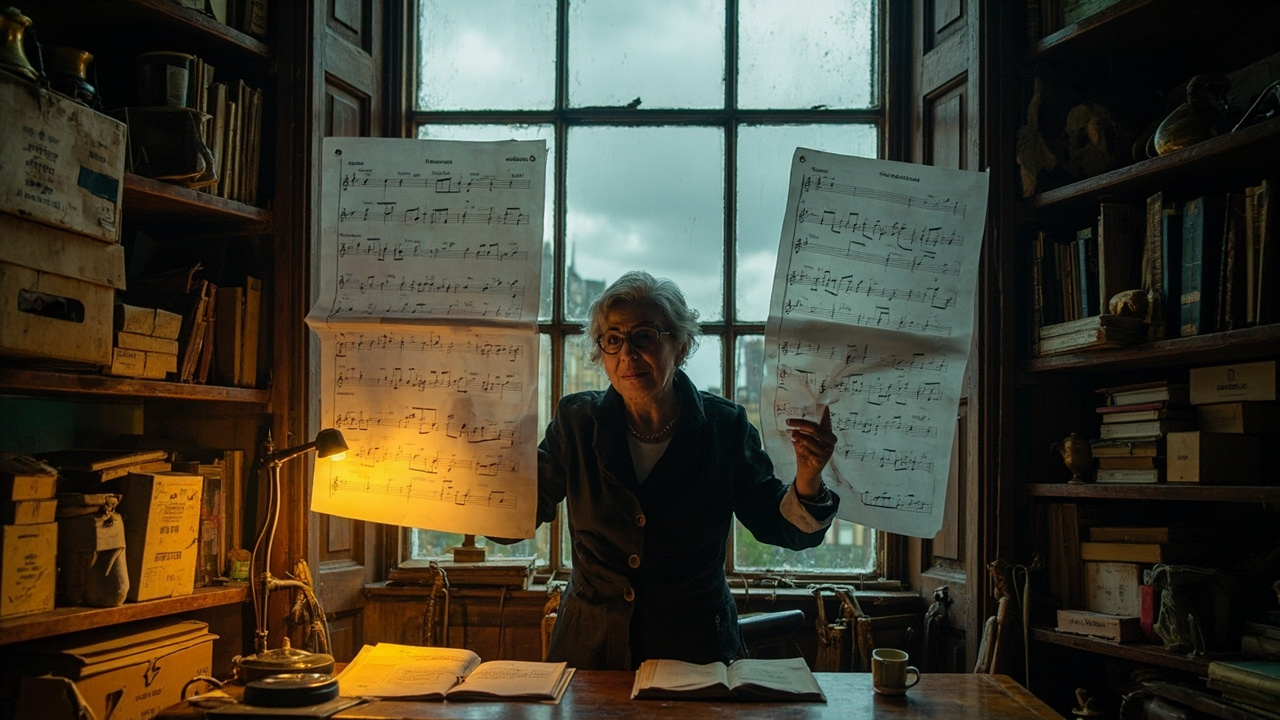
كانت الدكتورة إلينور أشوورث قد أمضت تسع عشرة سنة في السفر إلى أماكن لا تظهر على أي خريطة سياحية. كانت قد تسلقت إلى أديرة في جبال الكاربات حيث كان الرهبان يغنون للحجارة، ونزلت إلى وديان في سيتشوان حيث كانت الجدات يعلمن أحفادهن أغاني سبقت سلالة هان الحاكمة. كانت تجمع الأغاني الهادئة بالطريقة التي كان علماء النبات يجمعون السراخس من قبل—ب التبجيل، بالعناية المنهجية، وبالاقتناع الهادئ بأن هذه الأشياء تختفي أسرع مما يمكن لأي شخص توثيقه.
كان ذلك في مساء ممطر من يوم الثلاثاء في مكتبها في إدنبرة، محاطة بصناديق كرتونية ورائحةPersistent من الورق العتيق، عندما لاحظت إلينور النمط لأول مرة.
كانت قد عملت متأخرة، كما كان عادتها، تنسخ لحنًا سمعته قبل ستة أشهر في قرية صيد في جزر لوفوتن. اللحن كان بسيطا—أربع نغمات تنزل، ثم تصعد، ثم تسقط مرة أخرى للراحة. كانت قد سمعته ألف مرة في مسيرتها المهنية. بل إن كل عالم موسيقى شعبية يستحق ملحه كان قد سمعه ألف مرة: أحد الوالدين يهدهد طفلًا للنوم، الإيماءة العالمية للتعزية مصورة في الصوت.
لكن تلك الليلة، لأسباب لن تستطيع أن تفسرها لاحقًا، طبعت إلينور اللحن على ورق graphing ورفعته إلى النور. كانت قد فعلت هذا من قبل، بالطبع—تصور العلاقات الرياضية بين النغمات كان ممارسة قياسية. ما جعلها تتوقف كان ما رأته عندما وضعت هذه النسخة النرويجية فوق لحن غواتيمالي كانت قد جمعته قبل ست سنوات. الأشكال كانت متطابقة.
ليس متشابهة. ليس قابلة للمقارنة. متطابقة.
كانت يداها ترتجفان وهي تمد يدها نحو الصندوق الموسوم ب-borneo 2019. ثم سولاويسي. ثم المرتفعات الاسكتلندية. ثم تسجيل كانت قد صنعته كطالبة في مالي،NAPs غير كامل لكنه واضح بلا لبس. واحدًا تلو الآخر، وضعتها مقابل النافذة، مقابل بعضها، مقابل ضوء إدنبرة الرمادي.
كانت تتطابق. كل واحدة منها.
لم تنم إلينور تلك الليلة. صنعت الشاي، ثم صنعت المزيد من الشاي، وجلست في الظلام تستمع إلى أغانٍ هادئة من بابوا غينيا الجديدة ومايواCounty Clare وسهوب كازاخستان، وكلها كانت تغني نفس الشكل في الصمت. فكرت في داروين، في يأسه الشهير من تعقيد الطائر الطنان. فكرت في يونغ، مع نظريته عن الأنماط الأصلية واللاوعي الجمعي. وفكرت في أمها نفسها، التي كانت تغني لها بصوت يتصدع في النغمات العالية، وجدتها التي بالكاد تتذكرها، التي كانت قد جاءت من مكان ما في البلقان وتحمل أغانيها كنحو.
من أين جاءت هذه الألحان؟ كيف انتشرت بهذه السعة، هذا الاتساع، لتنجو من آلاف السنين منالهجرة، والحرب، والانقراض، والتجدد دون أن تفقد هندستها الجوهرية؟
أو—وهذا كان الفكر الذي جعلها تضع فنجان الشاي بعناية متعمدة—هل نجت على الإطلاق؟ ماذا لو لم تنتشر قط؟ ماذا لو نمت، بشكل مستقل، في كل قلب بشري تألم لأجل طفل نائم؟
في الأشهر التالية، جمعت إلينور ما أسمته后来的 Codex—مجموعة ضخمة من النسخ من كل قارة، كل قرن استطاعت الوصول إليه، كل مجتمع معزول مستعد لمشاركة ما يغنونه في الظلام. رسمتها رياضيًا. عملت مع فيزيائية من الجامعة متخصصة في التعرف على الأنماط، امرأة تُدعى الدكتورة يوسف التي تتحدث ثلاث لغات وتفهم أربع. معًا أكدوا ما عرفته إلينور بالفعل: الأغاني الهادئة لم تكن متشابهة. لم تكن مشتقة. كانت، بطريقة عميقة ولا объяснима، نفس الأغنية.
الدكتورة يوسف أرادت النشر فورًا. ترددت إلينور. كانت هناك أسئلة لا تستطيع الإجابة عليها، وقد تعلمت منذ زمن بعيد أن الإجابات المبكرة كانت غالبًا عدوة للأسئلة الجيدة.
لماذا الأغاني الهادئة؟ سألت ذات مساء، والمطر يخط وجه نوافذ مكتبها. لماذا ليس الأغاني الحماسية؟ أغاني العمل؟ قصائد الحب؟
فكرت الدكتورة يوسف في هذا. ربما لأن الأغنية الهادئة هي أول موسيقى، قالت. أول صوت يسمعه الإنسان. ربما مهما كان ما هو مشفر فينا، مهما كان ما يجعلنا نصنع الموسيقى على الإطلاق، يتحدث أولاً من خلال صوت أحد الوالدين الذي لا يستطيع النوم لأنه يقلق على طفله.
أومأت إلينور ببطء. فكرت في البنية الرياضية تحت الألحان—الفترات الدقيقة، نسب التردد إلى الوقت. فكرت في طريقة استجابة الرضع لهذه الأنماط قبل أن يفهموا اللغة، قبل أن يفهموا أي شيء على الإطلاق باستثناء دفء جسد وإيقاع النفس.
ماذا لو لم تكن أغنية؟ قالت بهدوء. ماذا لو كانت أقدم من الموسيقى؟ ماذا لو كانت شيئًا مكتوبًا فينا—بالطريقة التي تدور بها العناكب شبكاتها، والطريقة التي تهاجر بها الطيور، والطريقة التي تعرف بها الخلايا لتصبح خلايا قلب بدلاً من خلايا كلى؟
نظرت إليها الدكتورة يوسف بشيء مثل الخوف، وشيء مثل الدهشة. أنت تقترح أن القدرة على الموسيقى موروثة. أن الأغاني الهادئة ليست مكونات ثقافية بل ضرورات بيولوجية.
أنا أقترح أننا كنا نطرح السؤال الخاطئ، ردت إلينور. كنا نسأل من أين جاءت هذه الأغاني. ربما يجب أن نسأل من أين جئنا—وماذا كانت الموسيقى جزءًا من السؤال منذ البداية.
في النهاية، نشروا. استقبل العالم الأكاديمي ورقتهم بمزيج من الحماس والتشكك الذي يحيط بأي اكتشاف كبير جدًا ليُستوعب بسهولة. لكن إلينور وجدت أن النشر mattered أقل مما كانت تتوقع. ما كان mattered هو السؤال نفسه، وآلاف الأغاني الهادئة التي كانت تسمعها الآن في كل مكان—ليس كمجموعات من النغمات، بل كدليل على شيء vast وعريق ولا يزال غير مفهوم.
استمرت في عملها. كانت لا تزال تسافر، لا تزال تتسلق، لا تزال تجلس في مطابخ نائية بينما الجدات يغنين لأطفال سيكبرون يومًا ما ويغنون نفس الأغاني لأطفالهن. وأحيانًا، متأخرًا في الليل، كانت تخرج Codex وتمسك النسخ إلى النور، تتعجب من الشكل الذي كانا
Dr. Eleanor Ashworth hatte neunzehn Jahre damit verbracht, an Orte zu reisen, die auf keiner Touristtkarte verzeichnet waren. Sie hatte Klöster in den Karpaten erklommen, wo Mönche zu Steinen sangen, und war in Täler in Sichuan hinabgestiegen, wo Großmütter ihren Enkeln Lieder beibrachten, die noch vor der Han-Dynastie entstanden waren. Sie sammelte Wiegenlieder so, wie Botaniker einst Farne sammelten—mit Ehrfurcht, mit systematischer Sorgfalt und mit der stillen Überzeugung, dass solche Dinge schneller verschwanden, als jemand sie dokumentieren konnte.
Es war an einem regnerischen Dienstag in ihrem Büro in Edinburgh, umgeben von Kartons und dem hartnäckigen Geruch von altem Papier, als Eleanor zum ersten Mal das Muster bemerkte.
Sie hatte wie gewöhnlich lange gearbeitet, eine Melodie transkribiert, die sie sechs Monate zuvor in einem Fischerdorf auf den Lofoten-Inseln aufgenommen hatte. Die Melodie war einfach—vier Töne abwärts, dann aufwärts, dann wieder abwärts zur Ruhe. Sie hatte sie hundertmal in ihrer Karriere gehört. Tatsächlich hatte jeder respektable Folklorist sie hundertmal gehört: ein Elternteil, das ein Kind in den Schlaf wiegt, die universelle Geste des Trostes, in Klang übersetzt.
Aber in dieser Nacht, aus Gründen, die sie später nie erklären konnte, druckte Eleanor die Melodie auf Millimeterpapier und hielt sie gegen das Licht. Sie hatte das zuvor natürlich schon getan—die mathematischen Beziehungen zwischen Tönen zu visualisieren war Standardpraxis. Was sie innehalten ließ, war das, was sie sah, als sie diese norwegische Transkription über ein guatemaltekisches Lied legte, das sie sechs Jahre zuvor gesammelt hatte. Die Formen waren identisch.
Nicht ähnlich. Nicht vergleichbar. Identisch.
Ihre Hände zitterten, als sie nach der mit Borneo 2019 beschrifteten Box griff. Dann Sulawesi. Dann das schottische Hochland. Dann eine Aufnahme, die sie als Studentin in Mali gemacht hatte, rauschend und unvollkommen, aber unverkennbar deutlich. Einen nach dem anderen legte sie sie gegen das Fenster, gegeneinander, gegen das graue Edinburgh-Licht.
Sie passten zusammen. Jede einzelne.
Eleanor schlief in dieser Nacht nicht. Sie machte Tee, und dann machte sie noch mehr Tee, und sie saß im Dunkeln und hörte Wiegenlieder aus Papua-Neuguinea, dem County Clare und den kasachischen Steppen, und sie alle sangen dieselbe Form in die Stille hinein. Sie dachte an Darwin, an sein berühmtes Entsetzen über die Komplexität des Kolibris. Sie dachte an Jung, mit seinen Archetypen und dem kollektiven Unbewussten. Und an ihre eigene Mutter, die sie in einer Stimme gesungen hatte, die bei den hohen Tönen brach, und an die Großmutter, die sie kaum noch erinnerte, die aus irgendeinem Teil des Balkans gekommen war und ihre Lieder wie Mitgift trug.
Woher kamen diese Melodien? Wie hatten sie sich so weit, so breit verbreitet, über Jahrtausende von Wanderung, Krieg, Auslöschung und Erneuerung überlebt, ohne ihre wesentliche Geometrie zu verlieren?
Oder—und das war der Gedanke, der sie veranlasste, ihre Teetasse mit bewusster Vorsicht abzustellen—hatten sie überhaupt überlebt? Was wäre, wenn sie sich nie verbreitet hätten? Was wäre, wenn sie unabhängig gewachsen wären, in jedem menschlichen Herzen, das sich je nach einem schlafenden Kind gesehnt hat?
In den folgenden Monaten stellte Eleanor zusammen, was sie das Codex nannte—eine gewaltige Sammlung von Transkriptionen von jedem Kontinent, jedem Jahrhundert, zu dem sie Zugang hatte, jeder isolierten Gemeinschaft, die bereit war zu teilen, was sie im Dunkeln sang. Sie plotete sie mathematisch. Sie arbeitete mit einer Physikerin von der Universität zusammen, die sich auf Mustererkennung spezialisiert hatte, eine Frau namens Dr. Yusuf, die drei Sprachen sprach und vier verstand. Zusammen bestätigten sie, was Eleanor bereits wusste: Die Wiegenlieder waren nicht ähnlich. Sie waren nicht voneinander abgeleitet. Sie waren, auf tiefe und unerklärliche Weise, dasselbe Lied.
Dr. Yusuf wollte sofort veröffentlichen. Eleanor zögerte. Es gab Fragen, die sie nicht beantworten konnte, und sie hatte vor langer Zeit gelernt, dass voreilige Antworten oft der Feind guter Fragen waren.
Warum Wiegenlieder?, fragte sie eines Abends, während Regen die Fenster ihres Büros streifte. Warum nicht Kampflieder? Arbeitslieder? Liebesgedichte?
Dr. Yusuf dachte darüber nach. Vielleicht, weil das Wiegenlied die erste Musik ist, sagte sie. Der erste Klang, den ein menschliches Wesen hört. Vielleicht spricht das, was auch immer in uns kodiert ist, was auch immer uns dazu bringt, überhaupt Musik zu machen, zuerst durch die Stimme eines Elternteils, das nicht schlafen kann, weil es sich um sein Kind sorgt.
Eleanor nickte langsam. Sie dachte an die mathematische Struktur unter den Melodien—die präzisen Intervalle, die exakten Verhältnisse von Frequenz zu Zeit. Sie dachte daran, wie Säuglinge auf solche Muster reagieren, bevor sie Sprache verstehen, bevor sie irgendetwas anderes verstehen außer der Wärme eines Körpers und dem Rhythmus des Atems.
Was wäre, wenn es kein Lied wäre?, sagte sie leise. Was wäre, wenn es älter als Musik wäre? Was wäre, wenn es etwas wäre, das in uns geschrieben ist—so wie Spinnen Netze spinnen, wie Vögel wandern, wie Zellen wissen, Herz- statt Nierenzellen zu werden?
Dr. Yusuf sah sie an, mit etwas wie Furcht, und etwas wie Staunen. Sie schlagen vor, dass die Fähigkeit zur Musik vererbt ist. Dass Wiegenlieder keine kulturellen Artefakte, sondern biologische Imperative sind.
Ich schlage vor, dass wir die falsche Frage gestellt haben, antwortete Eleanor. Wir haben gefragt, woher diese Lieder kamen. Vielleicht sollten wir fragen, woher wir kamen—und ob Musik Teil der Frage von Anfang an war.
Schließlich veröffentlichten sie. Die akademische Welt nahm ihre Arbeit mit der Mischung aus Aufregung und Skepsis auf, die jede allzu große Erkenntnis begrüßt. Aber Eleanor fand, dass die Veröffentlichung weniger bedeutete, als sie erwartet hatte. Was bedeutete, war die Frage selbst, und die Tausenden von Wiegenliedern, die sie jetzt überall hörte—nicht als Ansammlungen von Noten, sondern als Beweis für etwas Gewaltiges, Uraltes und immer noch Unverstandenes.
Sie setzte ihre Arbeit fort. Sie reiste noch immer, erklomm noch immer Berge, saß noch immer in abgelegenen Küchen, während Großmütter für Kinder sangen, die eines Tages alt werden und dieselben Lieder für ihre eigenen Kinder singen würden. Und manchmal, spät in der Nacht, würde sie das Codex hervorholen und die Transkriptionen gegen das Licht halten, über die Form staunend, die sie alle
La Dre Eleanor Ashworth avait passé dix-neuf années à voyager vers des endroits qui n'apparaissaient sur aucune carte touristique. Elle avait grimpé jusqu'à des monastères des Carpates où les moines chantaient aux pierres, et descendu dans des vallées du Sichuan où des grand-mères apprenaient à leurs petits-enfants des chants qui précédaient la dynastie Han. Elle collectionnait les berceuses comme les botanistes d'autrefois collectionnaient les fougères—avec révérence, avec soin systématique, et avec la conviction silencieuse que de telles choses disparaissaient plus vite que quiconque ne pouvait le documenter.
C'était un mardi pluvieux, dans son bureau à Édimbourg, entourée de boîtes en carton et de l'odeur persistante du vieux papier, qu'Eleanor remarqua le motif pour la première fois.
Elle travaillait tard, comme c'était son habitude, à transcrire une mélodie qu'elle avait enregistrée six mois plus tôt dans un village de pêcheurs des îles Lofoten. La mélodie était simple—quatre notes descendantes, puis ascendantes, puis retombantes pour se reposer. Elle l'avait entendue cent fois au cours de sa carrière. En fait, chaque ethnomusicologue digne de ce nom l'avait entendue cent fois : un parent berçant un enfant pour l'endormir, ce geste universel de consolation rendu en son.
Mais cette nuit-là, pour des raisons qu'elle ne pourrait jamais expliquer par la suite, Eleanor imprima la mélodie sur du papier quadrillé et la tint face à la lumière. Elle avait déjà fait cela auparavant, bien sûr—visualiser les relations mathématiques entre les notes était une pratique standard. Ce qui la fit hésiter, c'était ce qu'elle vit lorsqu'elle superposa cette transcription norvégienne à une mélodie guatémaltèque qu'elle avait收集ée six ans plus tôt. Les formes étaient identiques.
Pas similaires. Pas comparables. Identiques.
Ses mains tremblaient en reachant pour la boîte marquée Bornéo 2019. Puis Sulawesi. Puis les Highlands écossaises. Puis un enregistrement qu'elle avait fait étant étudiante au Mali, sifflant et imparfait mais indéniablement clair. Un par un, elle les plaça contre la fenêtre, les uns contre les autres, contre la lumière grise d'Édimbourg.
Ils correspondaient. Chaque singuli.
Eleanor ne dormit pas cette nuit-là. Elle fit du thé, puis encore du thé, et elle s'assit dans l'obscurité à écouter des berceuses de Papouasie-Nouvelle-Guinée, du comté de Clare et des steppes kazakhes, et elles fredonnaient toutes la même forme dans le silence. Elle pensa à Darwin, à son désespoir célèbre devant la complexité du colibri. Elle pensa à Jung, avec ses archétypes et son inconscient collectif. Elle pensa à sa propre mère, qui lui avait chanté d'une voix qui se brisait sur les notes hautes, et à sa grand-mère qu'elle à peine se souvenait, qui était venue de quelque part dans les Balkans et portait ses chansons comme dot.
D'où venaient ces mélodies ? Comment s'étaient-elles répandues si loin, si largement, survivant à des millénaires de migration, de guerre, d'extinction et de renouvellement sans perdre leur géométrie essentielle ?
Ou—et c'était la pensée qui la fit déposer sa tasse de thé avec un soin délibéré—avaient-elles survécu du tout ? Et si elles ne s'étaient jamais répandues ? Et si elles avaient poussé, indépendamment, dans chaque cœur humain qui s'est jamais langui pour un enfant endormi ?
Au cours des mois suivants, Eleanor assembla ce qu'elle appela le Codex—une vaste collection de transcriptions de chaque continent, de chaque siècle auquel elle pouvait accéder, de chaque communauté isolée disposée à partager ce qu'elle chantait dans l'obscurité. Elle les traça mathématiquement. Elle travailla avec une physicienne de l'université spécialisée dans la reconnaissance de formes, une femme nommée Dre Yusuf qui parlait trois langues et en comprenait quatre. Ensemble, ils confirmèrent ce qu'Eleanor savait déjà : les berceuses n'étaient pas similaires. Elles n'étaient pas dérivées. Elles étaient, d'une manière profonde et inexplicable, la même chanson.
Dre Yusuf voulait publier immédiatement. Eleanor hésita. Il y avait des questions auxquelles elle ne pouvait pas répondre, et elle avait appris il y a longtemps que les réponses prématurées étaient souvent l'ennemi des bonnes questions.
Pourquoi les berceuses ? demanda-t-elle un soir, alors que la pluie striait les fenêtres de son bureau. Pourquoi pas les hymnes de bataille ? Les chants de travail ? Les poèmes d'amour ?
Dre Yusuf y réfléchit. Peut-être parce que la berceuse est la première musique, dit-elle. Le premier son qu'un être humain entende. Peut-être que ce qui est codé en nous, ce qui nous fait faire de la musique en général, s'exprime d'abord par la voix d'un parent qui ne peut pas dormir parce qu'il s'inquiète pour son enfant.
Eleanor hocha lentement la tête. Elle pensait à la structure mathématique sous-jacente aux mélodies—les intervalles précis, les rapports exacts de fréquence au temps. Elle pensait à la façon dont les nourrissons répondent à de tels motifs avant de comprendre le langage, avant de comprendre quoi que ce soit d'autre sauf la chaleur d'un corps et le rythme du souffle.
Et si ce n'était pas une chanson ? dit-elle doucement. Et si c'était plus ancien que la musique ? Et si c'était quelque chose d'écrit en nous—de la même manière que les araignées tissent des toiles, que les oiseaux migrent, que les cellules savent devenir des cellules cardiaques plutôt que des cellules rénales ?
Dre Yusuf la regarda avec quelque chose comme de la peur, et quelque chose comme de l'émerveillement. Vous suggérez que la capacité pour la musique est héritée. Que les berceuses ne sont pas des artefacts culturels mais des impératifs biologiques.
Je suggère que nous avons posé la mauvaise question, répondit Eleanor. Nous avons demandé d'où venaient ces chansons. Peut-être devrions-nous demander d'où nous venons—et si la musique faisait partie de la question depuis le tout début.
À la fin, ils publièrent. Le monde académique reçut leur article avec le mélange d'enthousiasme et de scepticisme qui salue toute découverte trop importante pour être facilement absorbée. Mais Eleanor découvrit que la publication importait moins qu'elle ne l'avait prévu. Ce qui importait, c'était la question elle-même, et les milliers de berceuses qu'elle entendait maintenant partout—non pas comme des ensembles de notes, mais comme la preuve de quelque chose de vaste, d'ancien et toujours pas compris.
Elle continua son travail. Elle voyageait toujours, grimpait toujours, s'asseyait toujours dans des cuisines isolées pendant que des grand-mères chantaient pour des enfants qui grandiraient un jour et chanteraient les mêmes chansons à leurs propres enfants. Et parfois, tard dans la nuit, elle sortait le Codex et tenait les transcriptions à la lumière, s'émerveillant devant la forme qu'elles formaient toutes
Доктор Элеанор Эшворт девятнадцать лет путешествовала по местам, которых не было ни на одной туристической карте. Она поднималась в монастыри Карпат, где монахи пели камням, и спускалась в долины Сычуани, где бабушки учили своих внуков песням, которые существовали ещё до династии Хан. Она собирала колыбельные так, как ботаники когда-то собирали папоротники—с благоговением, с систематической тщательностью и с тихой убеждённостью, что такие вещи исчезают быстрее, чем кто-либо может это задокументировать.
Именно в дождливый вторник в своём кабинете в Эдинбурге, окружённая картонными коробками и устойчивым запахом старой бумаги, Элеанор впервые заметила закономерность.
Она работала допоздна, как обычно, расшифровывая мелодию, которую записала шесть месяцев назад в рыбацкой деревушке на Лофотенских островах. Мелодия была простой—четыре ноты вниз, затем вверх, затем снова вниз к покою. Она слышала её сотни раз за свою карьеру. Да и каждый уважающий себя фольклорист слышал её сотни раз: родитель укачивает ребёнка, универсальный жест утешения, воплощённый в звуке.
Но той ночью, по причинам, которые она так и не смогла потом объяснить, Элеанор распечатала мелодию на миллиметровке и поднесла к свету. Она делала это и раньше, конечно—визуализация математических соотношений между нотами была стандартной практикой. То, что заставило её остановиться, было то, что она увидела, когда наложила эту норвежскую транскрипцию на гватемальскую мелодию, собранную шестью годами ранее. Формы были идентичны.
Не похожи. Не сопоставимы. Идентичны.
Её руки дрожали, когда она потянулась к коробке с надписью «Борнео 2019». Затем Сулавеси. Затем Шотландское нагорье. Затем запись, которую она сделала студенткой в Мали, шипящая и несовершенная, но несомненно чёткая. Одну за другой она приложила их к окну, друг к другу, к серому эдинбургскому свету.
Они совпадали. Каждая.
Элеанор не спала той ночью. Она заварила чай, потом ещё чай, и сидела в темноте, слушая колыбельные из Папуа-Новой Гвинеи, из графства Клэр и казахских степей, и все они пели одну и ту же форму в тишине. Она думала о Дарвине, о его знаменитом отчаянии перед сложностью колибри. Думала о Юнге, с его архетипами и коллективным бессознательным. Думала о своей собственной матери, которая пела ей голосом, ломавшимся на высоких нотах, и о бабушке, которую едва помнила, которая пришла откуда-то с Балкан и несла свои песни как приданое.
Откуда пришли эти мелодии? Как они распространились так далеко, так широко, пережив тысячелетия миграций, войн, вымираний и обновлений, не утратив своей фундаментальной геометрии?
Или—и эта мысль заставила её с особой осторожностью поставить чашку—они вообще выжили? А что, если они никогда не распространялись? Что, если они росли независимо, в каждом человеческом сердце, которое когда-либо тосковало по спящему ребёнку?
В последующие месяцы Элеанор собрала то, что назвала Кодексом—огромную коллекцию транскрипций с каждого континента, каждого века, к которому она могла получить доступ, каждого изолированного сообщества, готового поделиться тем, что они пели в темноте. Она нанесла их на графики математически. Она работала с физиком из университета, специализирующимся на распознавании образов, женщиной по имени доктор Юсуф, которая говорила на трёх языках и понимала четыре. Вместе они подтвердили то, что Элеанор уже знала: колыбельные не были похожи. Они не были производными. Они были, в каком-то глубоком и необъяснимом смысле, одной и той же песней.
Доктор Юсуф хотела немедленной публикации. Элеанор медлила. Были вопросы, на которые она не могла ответить, и она давно усвоила, что преждевременные ответы часто являются врагами хороших вопросов.
Почему колыбельные?—спросила она однажды вечером, пока дождь чертил полосы на окнах её кабинета. Почему не боевые гимны? Трудовые песни? Любовные стихи?
Доктор Юсуф задумалась. Возможно, потому что колыбельная—это первая музыка, сказала она. Первый звук, который слышит человеческое существо. Возможно, то, что закодировано в нас, то, что заставляет нас вообще создавать музыку, говорит прежде всего голосом родителя, который не может уснуть из-за беспокойства за своего ребёнка.
Элеанор медленно кивнула. Она думала о математической структуре под мелодиями—точные интервалы, точные отношения частоты ко времени. Думала о том, как младенцы реагируют на такие паттерны ещё до того, как понимают язык, до того, как понимают что-либо вообще, кроме тепла тела и ритма дыхания.
А что, если это не песня?—тихо сказала она. Что, если это старше музыки? Что, если это что-то вписанное в нас—так же, как пауки плетут сети, как птицы мигрируют, как клетки знают, что нужно становиться клетками сердца, а не почек?
Доктор Юсуф смотрела на неё с чем-то похожим на страх и чем-то похожим на благоговение. Вы предлагаете, что способность к музыке наследуется. Что колыбельные—не культурные артефакты, а биологические императивы.
Я предлагаю, что мы задавали неправильный вопрос, ответила Элеанор. Мы спрашивали, откуда пришли эти песни. Возможно, нам следует спросить, откуда пришли мы сами—и была ли музыка частью этого вопроса с самого начала.
В конце концов они опубликовали. Академический мир принял их статью с той смесью восторга и скептицизма, которая приветствует любое открытие слишком масштабное, чтобы его легко осмыслить. Но Элеанор обнаружила, что публикация значила меньше, чем она ожидала. Что значило—это сам вопрос, и тысячи колыбельных, которые она теперь слышала повсюду—не как наборы нот, а как свидетельство чего-то огромного, древнего и всё ещё непонятого.
Она продолжила свою работу. Она всё ещё путешествовала, всё ещё поднималась в горы, всё ещё сидела в remote кухнях, пока бабушки пели детям, которые однажды постареют и будут петь те же песни своим собственным детям. И иногда, поздно ночью, она доставала Кодекс и подносила транскрипции к свету, поражаясь форме, которую они все