British vs. American English: Spelling, Speaking, and Slang
Discover how spelling, pronunciation, and everyday expressions differ between British and American English, and learn to navigate both varieties confidently.
Spelling Differences: The -OUR vs. -OR Dilemma
One of the most noticeable differences between British and American English is the spelling of words ending in -our versus -or. British English retains the Latin spelling colour, favour, and honour, while American English simplifies these to color, favor, and honor. This pattern extends to words like neighbour (British) and neighbor (American). Writers should also watch for the -ise/-ize verb endings, where British speakers typically prefer organise and realise, whereas Americans spell these as organize and realize. Consistency is key—choose one spelling system and stick with it throughout your writing.
Everyday Vocabulary: From Biscuits to Cookies
British and American English have developed distinct words for everyday objects, which can cause confusion for learners. A British biscuit is what Americans call a cookie, while British chips are American fries. The boot of a car in Britain is the trunk in America, and people in London ride the lift while New Yorkers use the elevator. When you finish your meal, you might ask for the cheque (British) rather than the check (American). These differences extend to the car itself: British drivers fill up with petrol, while Americans buy gas. Learning these pairs helps you understand both varieties of English.
Pronunciation Patterns: Stress and Vowel Sounds
Beyond vocabulary, pronunciation varies significantly between the two varieties. British English often places stress on the second syllable of words like garage (ga-RAGE) and advertisement (ad-VER-tise-ment), while American speakers typically stress the first syllable. The vowel sound in words like dance and bath differs notably, with British speakers using a longer, more open /ɑː/ sound compared to the shorter American /æ/. Words ending in -ile such as mobile or hostile also show different vowel pronunciations. These pronunciation differences can affect comprehension when listening to native speakers from different regions.
Slang and Informal Expressions
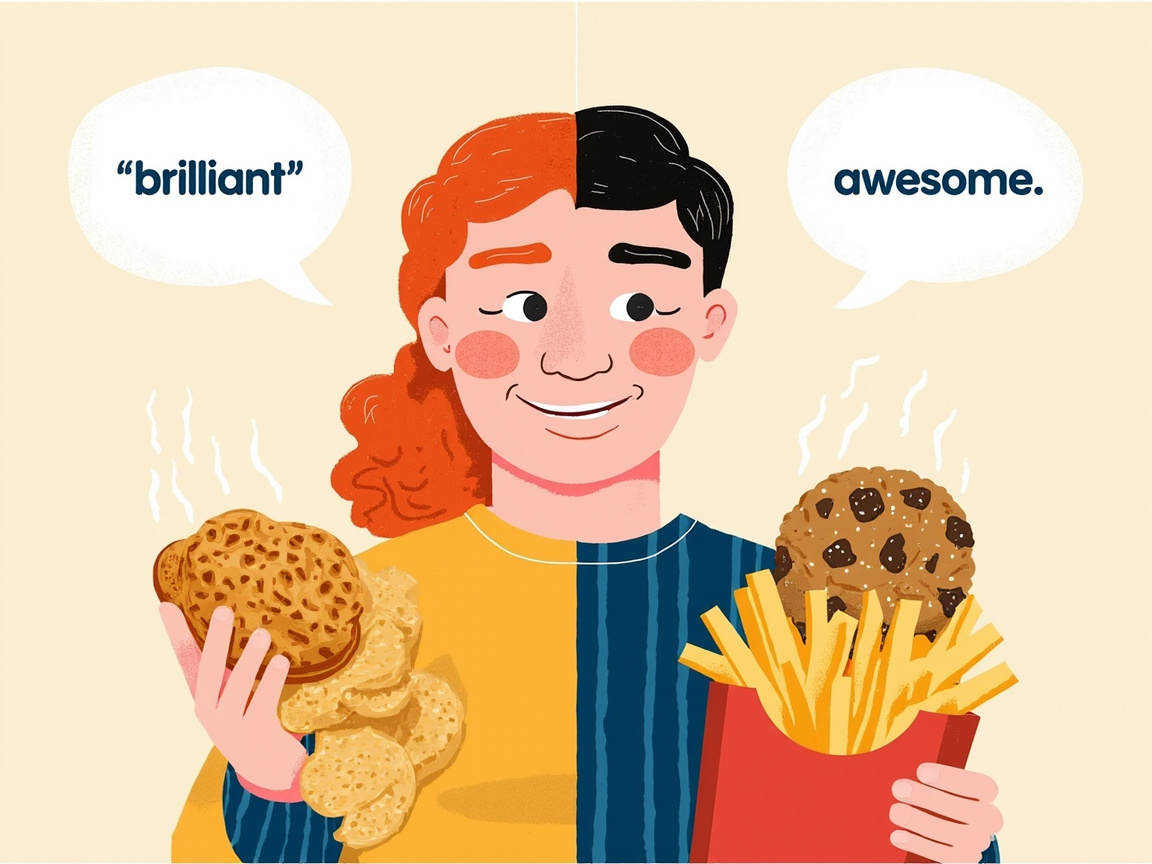
British and American slang expressions can be particularly challenging because they evolve quickly and vary by generation. In Britain, someone might say they're sorted when everything is arranged, or call a friend mate as a casual term of address. Americans might describe the same situation as being cool or good to go. The word brilliant expresses strong approval in British English, while Americans often use awesome or amazing. When something is broken or not working, Brits might say it's kaput or done for. Understanding these informal expressions helps you follow conversations and appear more natural in both varieties.
اختبر نفسك
-
1Which spelling is correct in British English: 'organise' or 'organize'?
British English uses the -ise ending, so 'organise' is the British spelling.
-
2What do Americans call the storage area at the back of a car?
Americans call the car's storage area the 'trunk', while Britons call it the 'boot'.
-
3Which word means 'excellent' in British informal English?
While Americans might say 'awesome' or 'amazing', Britons often use 'brilliant' informally.
-
4In British English, what is the word for the device that moves people between floors in a building?
British English uses 'lift' where American English uses 'elevator'.
-
5How do you spell the word for a hue or shade in American English?
American English spells this word 'color' without the 'u' that appears in the British 'colour'.