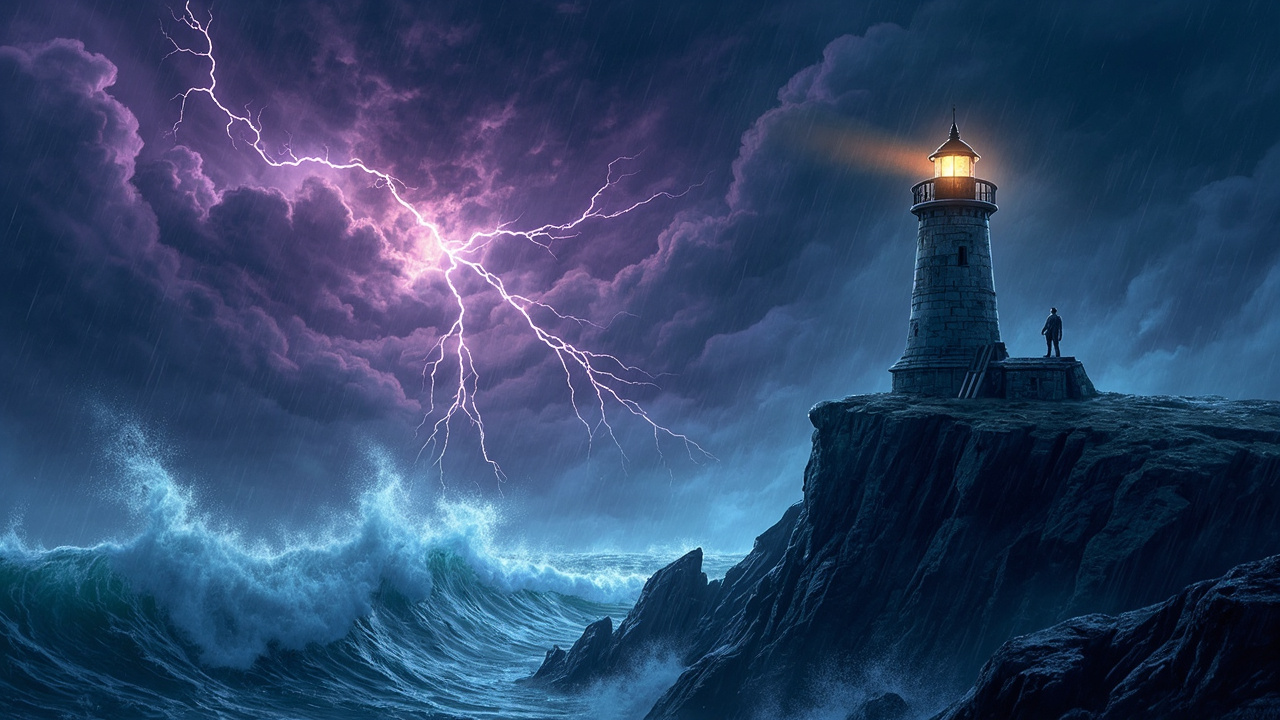
عاصفتُه التي استمرت ثلاثة أيام كانت تتصاعد حين وصل مالكوم ريد إلى منارة كايرنمور، ذلك المكان الذي لم يتحدث عنه أهل البر الرئيسي إلا همسًا. كان قد خلف عمه في المنصب، الذي كان يرعى اللهب لأربعين عامًا قبل أن يختفي في البحر خلال فيبراس الاعتدال الشتوي الماضي. كان أهل الجزيرة يسمون ذلك "العبور"، هذا الاستعداد لأحدهم للانضمام إلى المياه العميقة، وحاول مالكوم ألا يتفكر في ما قد يعنيه ذلك.
كان الوقت قد تجاوز منتصف الليل حين انكسرت العاصفة أخيرًا. وقف مالكوم على سطح الشرفة، يراقب البرق يشطر الظلام فوق قناة مينش. كان الريح يعوي كأوركسترا من اللعنين، والأمواج تتكسر على الصخور أدناه بعنف بحيث بدا أن المنارة نفسها ترتجف. كان ذلك حين، في الهدنة القصيرة بين زخّات المطر، رآها – نورًا حيث لا ينبغي أن يكون هناك نور.
بعيدًا خلف الشعاب المرجانية، كان شيء شاحب ونابض يطفو على المياه المتلاطمة. لم يكن إيقاع مصباح سفينة، ولا ومضة آلية لمنارة عائمة. كان هذا النور عضويًا somehow، يلقي توهجًا فوسفوريًا مرعبًا عبر قمم الأمواج، يظهر ويختفي مع كل مد موجة متتابع. كان مالكوم قد صمد أمام countless العواصف في عشرين عامًا من الخدمة، لكنه لم يشهد قط شيئًا مزعجًا إلى هذه الدرجة.
استشار يوميات عمه في تلك الليلة نفسها، فمد الصفحات المبللة بالماء على مكتبه. كانت المداخلات غامضة في أحسن الأحوال، غالبًا ما تنحدر إلى جمل مجزأة تفقد معناها. لكن مداخلة واحدة، مؤرخة في نوفمبر 1892، أوقفت نفسه: "إنها تأتي حين تهب عواصف الخريف. ماغنهيلد تعود، كما وعدت أنها ستفعل. ليرحم الله من لا يفهم."
ماغنهيلد. عرف مالكوم الاسم من سجلات الملاحة في الجزيرة – سفينة شراعية ذات ثلاثة صواري اختفت ومعها جميع الطاقم خلال عاصفة تشبه بشكل ملحوظ هذه. ثلاثة وأربعون روحًا على متنها، بما فيهم عائلة من هامبورغ كانت تسافر لبدء حياة جديدة في غلاسكو. لم يُعثر على حطام السفينة أبدًا، ودفعت شركة التأمين ثروة صغيرة لأسر الضحايا المحزينة.
ما حيّر مالكوم أكثر هو ملاحظة عمه الأخيرة، المرسومة بخط غير ثابت قبل اختفائه بأيام قليلة: "أفهم الآن لماذا تعود. يجب إشعال المنارة – ليست منارتي، بل منارتها. إنها تبحث عن طريق البيت."
خلال الأسابيع التالية، انبثقت الصورة بدقة مرعبة. كلما اشتد الطقس وعصف الريح من الشمال الشرقي، ظهر المصباح الشبحي في تمام الساعة الثانية عشرة والنصف ليلًا. لبث اثنتي عشرة دقيقة بالضبط، ينجرف أقرب إلى الصخور مع كل ظهور، كما لو كان يجذبه خيط غير مرئي. بدأ مالكوم يخشى غروب الشمس المتقدم.
قادته استفساراته إلى مارغريت فينلايسون العجوز، الشاهدة الوحيدة الباقية على كارثة ماغنهيلد. كانت في الثالثة والتسعين الآن، طريحة الفراش ونادرًا ما تكون صاحية، لكن اللحظة التي ذكر فيها مالكوم اسم السفينة، تحدقت عيناها المائيتان بصفاء مفاجئ.
"القبطان،" همست، تمسك معصم他的手بقوة مفاجئة. "ضابط الملاحة مكبين. جدتي عرفته. قالت إنه كان رجلاً عنيدًا، رفض تغيير المسار حين جاءت العاصفة. قال إنه أبحر في أسوأ من ذلك. ثلاثة وأربعون روحًا لأن رجلاً واحدًا لم يبتلع كبرياءه."
"لكن لماذا يعود؟" حث مالكوم. "لماذا بعد كل هذه السنوات؟"
شدّت مارغريت قبضتها. "إنه ضائع، يا فتى. لا يستطيع إيجاد طريقه إلى ما بعد لأنهم ماتوا في خطيئة. القس اللوثري على متنها – رفض آخر الصلوات. قال البعض إن الكابتن مكبين ضربه. الأرواح محاصرة، ترى، عالقة بين هذا العالم وما بعده. إنهم يحتاجون من يريهم الطريق."
كشفت الحقيقة مالكوم عبر الساعات المظلمة. في الليلة التاسعة من العاصفة التالية، نزل مالكوم درج المنارة واتجه إلى البروز الصخري حيث يظهر الضوء الشبحي دائمًا. كاد الريح يطير به من قدميه، ورذاذ الماء لسع وجهه كشظايا الجليد، لكنه كان قد اتخذ قراره.
لم يحمل منارة خاصة به. بدلًا من ذلك، أحضر مقياس السدس القديم لعمه وخرائط الملاحة، أدوات مهنة تعلمها منذ الطفولة. حين تجسد التوهج الطيفي على الماء، رفع مالكوم مقياس السدس إلى عينه وبدأ ينادي الإحداثيات بصوت واضح وثابت – إحداثيات مدخل مضيق فورث، حيث كانت ماغنهيلد متجهة طوال تلك السنوات. نطق bearing، والمسافة، ومنارات القناة الآمنة. عرض عليها طريق البيت.
تردد النور. للحظة مرعبة واحدة، خشي مالكوم أنه تجاوز حدًا ما كان من الأفضل عدم المساس به. ثم، ببطء، بدأ التوهج الفوسفوري يتحرك، ينجرف جنوبًا مع التيار، يزداد سطوعًا مع رحيله. وقبل أن يختفي خلف الأفق مباشرة، يمكنه أن يقسم أنه سمع شيئًا – أصواتًا ارتفعت في ترنيمة، حملها الريح من سفينة وجدت طريقها أخيرًا.
عاد مالكوم إلى المنارة مع بزوغ الفجر فوق قناة مينش. كانت العاصفة قد استنزفت نفسها، والبحر كان مسطحًا ورماديًا تحت سماء صفحتها المطراة من الغيوم. سيعتني باللهب طالما طلبوا منه ذلك، قرر – ربما أكثر. بعض الواجبات، فهم الآن، لم تكن تتعلق بإبعاد السفن عن الصخور. بعض الواجبات كانت تتعلق بتوجيه الأرواح الضائعة إلى الميناء.
وفي سجل المنارة، تحت مداخلة تلك الليلة العاصفة، كتب مالكوم ريد هذا فقط: "مرور آمن ممنوح. عادت ماغنهيلد إلى البيت."
Der Sturm hatte sich drei Tage lang aufgebaut, als Malcolm Reid am Leuchtturm von Cairnmore eintraf, einem Ort, über den die Festländer nur mit gedämpfter Stimme sprachen. Er hatte die Nachfolge seines Onkels angetreten, der das Licht vierzig Jahre lang gehütet hatte, bevor er während der letzten Wintertagundnachtgleiche im Meer verschwand. Die Inselbewohner nannten es "die Überfahrt", diese Bereitschaft der Ihren, sich den tiefen Gewässern anzuschließen, und Malcolm versuchte, nicht darüber nachzudenken, was das bedeuten mochte.
Es war weit nach Mitternacht, als das Unwetter endlich losbrach. Malcolm stand auf der Galerie und beobachtete, wie der Blitz die Dunkelheit über dem Minch zerriss. Der Wind heulte wie ein Chor der Verdammten, und die Wellen schlugen mit solcher Gewalt gegen die Felsen unter ihm, dass der Leuchtturm selbst zu beben schien. Und dann, in der kurzen Pause zwischen den Sturmböen, sah er es – ein Licht, wo kein Licht sein sollte.
Weit draußen jenseits des Riffs, etwas Blasses und Pulsierendes, das auf den aufgewühlten Wassern schaukelte. Es war nicht der Rhythmus einer Schiffslaterne, noch das mechanische Blitzen einer Boje. Dieses Leuchten war irgendwie organisch, warf ein unheimliches Phosphoreszieren über die Wellenkämme, erschien und verschwand mit jeder aufeinanderfolgenden Dünung. Malcolm hatte in seinen zwanzig Dienstjahren unzählige Stürme überstanden, doch noch nie hatte er etwas so Beunruhigendes erlebt.
Er studierte in derselben Nacht die Tagebücher seines Onkels und breitete die wasserfleckigen Seiten auf seinem Schreibtisch aus. Die Einträge waren bestenfalls kryptisch, mündeten oft in fragmentierte Sätze, die wenig Sinn ergaben. Doch eine Passage, datiert auf November 1892, ließ seinen Atem stocken: "Sie kommt, wenn die Herbststürme aufkommen. Die Magnhild kehrt zurück, wie sie versprochen hat. Gott helfe denen, die nicht verstehen."
Die Magnhild. Malcolm kannte den Namen aus den maritimen Aufzeichnungen der Insel – ein Dreimastbark, der während eines Sturms, der diesem bemerkenswert ähnlich war, mit der gesamten Besatzung verschwunden war. Dreiundvierzig Seelen an Bord, einschließlich einer Familie aus Hamburg, die ein neues Leben in Glasgow beginnen wollte. Das Wrack wurde nie gefunden, und die Versicherungsgesellschaft zahlte ein kleines Vermögen an die trauernden Familien aus.
Was Malcolm am meisten verwirrte, war die letzte Notiz seines Onkels, mit zitternder Hand nur Tage vor seinem Verschwinden gekritzelt: "Ich verstehe jetzt, warum sie zurückkommt. Das Licht muss entzündet werden – nicht meines, sondern ihres. Sie sucht den Weg nach Hause."
In den folgenden Wochen kristallisierte sich das Muster mit schrecklicher Klarheit heraus. Wann immer das Wetter umschlug und der Wind aus Nordosten blies, erschien das phantomhafte Licht genau um halb eins nachts. Es blieb genau zwölf Minuten, trieb bei jedem Erscheinen näher an die Felsen heran, als würde es von einem unsichtbaren Faden angezogen. Malcolm begann, die hereinbrechende Dämmerung zu fürchten.
Seine Nachforschungen führten ihn zur alten Margaret Finlayson, der letzten verbliebenen Zeugin der Magnhild-Katastrophe. Sie war nun dreiundneunzig, bettlägerig und selten bei klarem Verstand, doch in dem Moment, als Malcolm den Namen des Schiffes erwähnte, schärften sich ihre trüben Augen mit plötzlicher Klarheit.
"Der Kapitän," flüsterte sie und umklammerte sein Handgelenk mit überraschender Kraft. "Navigationsoffizier McBain. Meine Großmutter kannte ihn. Sie sagte, er war ein sturer Mann, weigerte sich, den Kurs zu ändern, als der Sturm kam. Sagte, er hätte Schlimmeres navigiert. Dreiundvierzig Seelen, weil ein Mann seinen Stolz nicht hinunterschlucken wollte."
"Aber warum kommt er zurück?" drängte Malcolm. "Warum nach all den Jahren?"
Margarets Griff wurde fester. "Er ist verloren, Junge. Er findet seinen Weg nicht ins Jenseits, weil er in Sünde starb. Der lutherische Pastor an Bord – er wies die Letzte Ölung zurück. Manche sagten, Kapitän McBain hätte ihn geschlagen. Die Seelen sind gefangen, verstehst du, zwischen dieser Welt und der nächsten festgehalten. Sie brauchen jemanden, der ihnen den Weg zeigt."
Die Offenbarung verfolgte Malcolm durch die dunklen Stunden. In der neunten Nacht des folgenden Sturms stieg Malcolm die Treppe des Leuchtturms hinunter und machte sich auf den Weg zu der felsigen Landspitze, wo das phantomhafte Licht immer erschien. Der Wind hätte ihn beinahe von den Füßen gerissen, und der Gischt brannte in seinem Gesicht wie Eisensplitter, doch er hatte seine Entscheidung getroffen.
Er trug keine eigene Laterne. Stattdessen brachte er den alten Sextanten seines Onkels und Navigationskarten mit, die Werkzeuge eines Handwerks, das er seit seiner Kindheit gelernt hatte. Als das spektrale Leuchten auf dem Wasser Gestalt annahm, hob Malcolm den Sextanten ans Auge und begann, Koordinaten in einer klaren, festen Stimme auszurufen – Koordinaten für die Einfahrt in den Firth of Forth, wohin die Magnhild all die Jahre zuvor unterwegs gewesen war. Er sprach den Kurs, die Entfernung, die sicheren Fahrwassermarkierungen. Er bot ihr den Weg nach Hause an.
Das Licht zögerte. Für einen schrecklichen Moment fürchtete Malcolm, eine Grenze überschritten zu haben, die man besser in Ruhe lassen sollte. Dann begann das phosphoreszierende Leuchten langsam, sich zu bewegen, trieb südwärts mit der Strömung, wurde heller, während es wanderte. Und gerade bevor es hinter dem Horizont verschwand, hätte er schwören können, etwas zu hören – Stimmen, die in einem Choral erhoben wurden, getragen vom Wind von einem Schiff, das endlich seinen Weg gefunden hatte.
Malcolm kehrte zum Leuchtturm zurück, als die Morgendämmerung über dem Minch aufging. Der Sturm hatte sich erschöpft, und das Meer lag flach und grau unter einem von Wolken gereinigten Himmel. Er würde das Licht hüten, solange sie ihn bäten, entschied er – vielleicht länger. Manche Pflichten, verstand er jetzt, hatten nichts damit zu tun, Schiffe von den Felsen fernzuhalten. Manche Pflichten waren dazu da, verlorene Seelen in den Hafen zu führen.
Und im Leuchtturm-Logbuch, unter dem Eintrag für diese stürmische Nacht, schrieb Malcolm Reid nur dies: "Sichere Überfahrt gewährt. Die Magnhild hat Heimathafen erreicht."
La tempête s'était construite pendant trois jours lorsque Malcolm Reid arriva au phare de Cairnmore, un lieu dont les continentaux ne parlaient qu'en murmurant. Il avait pris la suite de son oncle, qui avait veillé sur la flamme pendant quarante ans avant de disparaître dans la mer lors de l'équinoxe d'hiver dernier. Les insulaires l'appelaient "la Traversée", cette volonté des leurs de rejoindre les eaux profondes, et Malcolm essayait de ne pas s'attarder sur ce que cela pouvait signifier.
Il était bien après minuit quand la tempête éclata enfin. Malcolm se tenait sur la galerie, regardant la foudre déchirer l'obscurité au-dessus du Minch. Le vent hurlait comme un chœur de damnés, et les vagues s'écrasaient contre les rochers en contrebas avec une telle férocité que le phare lui-même semblait frémir. C'est alors, dans le bref répit entre les bourrasques, qu'il le vit – une lumière là où aucune lumière ne devrait être.
Loin au-delà du récif, quelque chose de pâle et de pulsant se balançait sur les eaux tumultueuses. Ce n'était pas le rythme d'une lanterne de navire, ni le clignotement mécanique d'une bouée. Cette illumination était organique d'une certaine manière, projetant une phosphorescence sinistre sur les crêtes des vagues, apparaissant et disparaissant à chaque houle successive. Malcolm avait résisté à d'innombrables tempêtes au cours de ses vingt années de service, mais jamais il n'avait été témoin de quoi que ce soit d'aussi troublant.
Il consulta les journaux de son oncle cette même nuit, étalant les pages tachées d'eau sur son bureau. Les entrées étaient pour le moins cryptiques, descendant souvent dans des phrases fragmentées qui avaient peu de sens. Mais un passage, daté de novembre 1892, lui coupa le souffle : "Elle vient quand les tempêtes d'automne se lèvent. Le Magnhild revient, comme elle l'avait promis. Dieu ait pitié de ceux qui ne comprennent pas."
Le Magnhild. Malcolm connaissait ce nom d'après les archives maritimes de l'île – un trois-mâts qui avait disparu avec tout l'équipage pendant une tempête remarquablement similaire à celle-ci. Quarante-trois âmes à bord, dont une famille de Hambourg voyageant vers une nouvelle vie à Glasgow. L'épave n'avait jamais été retrouvée, et la compagnie d'assurance avait versé une petite fortune aux familles endeuillées.
Ce qui troublait le plus Malcolm, c'était la dernière notation de son oncle, griffonnée d'une main tremblante juste avant sa disparition : "Je comprends maintenant pourquoi elle revient. Le phare doit être allumé – pas le mien, mais le sien. Elle cherche le chemin du retour."
Au cours des semaines suivantes, le schéma émergea avec une terrible clarté. Chaque fois que le temps se gâtait et que le vent soufflait du nord-est, la lanterne spectrale apparaissait précisément à minuit et demi. Elle demeurait exactement douze minutes, derivant plus près des rochers à chaque apparition, comme attirée par un fil invisible. Malcolm commença à redouter le crépuscule envahissant.
Ses recherches le menèrent à la vieille Margaret Finlayson, l'unique témoin restant de la catastrophe du Magnhild. Elle avait quatre-vingt-treize ans maintenant, alitée et rarement cohérente, mais au moment où Malcolm prononça le nom du navire, ses yeux voilés se firent soudainement plus alertes.
"Le capitaine," murmura-t-elle, agrippant son poignet avec une force surprenante. "Le lieutenant de navigation McBain. Ma grand-mère le connaissait. Elle disait que c'était un homme obstiné, qui refusait de modifier sa route quand la tempête arrivait. Il disait qu'il avait navigué pire. Quarante-trois âmes parce qu'un seul homme n'a pas voulu ravaler son orgueil."
"Mais pourquoi revient-il ?" pressa Malcolm. "Pourquoi après toutes ces années ?"
La prise de Margaret se resserra. "Il est perdu, mon garçon. Il ne trouve pas son chemin vers l'au-delà parce qu'il est mort dans le péché. Le pasteur luthérien à bord – il a refusé les derniers sacrements. Certains disaient que le capitaine McBain l'avait frappé. Les âmes sont prisonnières, tu comprends, coincées entre ce monde et l'autre. Elles ont besoin de quelqu'un pour leur montrer le chemin."
Cette révélation hanta Malcolm à travers les heures sombres. La neuvième nuit de la tempête suivante, il descendit l'escalier du phare et se rendit jusqu'au promontoire rocheux où la lumière spectrale apparaissait toujours. Le vent menaçait presque de l'arracher de ses pieds, et les embruns piquaient son visage comme des éclats de glace, mais il avait pris sa décision.
Il ne portait aucune lanterne de son propre chef. À la place, il apporta l'ancien sextant de son oncle et des cartes de navigation, les outils d'un métier qu'il avait appris depuis l'enfance. Quand la lueur spectrale se matérialisa sur l'eau, Malcolm leva le sextant à son œil et commença à énoncer des coordonnées d'une voix claire et régulière – des coordonnées pour l'entrée du Firth of Forth, où le Magnhild était destiné toutes ces années auparavant. Il prononça le relèvement, la distance, les balises de chenal sûr. Il lui offrit le chemin du retour.
La lumière hésita. Un terrible instant, Malcolm craignit d'avoir dépassé une certaine limite qu'il valait mieux laisser tranquille. Puis, lentement, la lueur phosphorescente commença à se déplacer, derivant vers le sud avec le courant, devenant plus brillante à mesure qu'elle voyageait. Et juste avant qu'elle ne disparaisse au-delà de l'horizon, il aurait juré entendre quelque chose – des voix s'élevant dans un cantique, portées par le vent d'un navire qui avait enfin trouvé son chemin.
Malcolm revint au phare à l'aube sur le Minch. La tempête s'était épuisée, et la mer gisait plate et grise sous un ciel lavé de ses nuages. Il veillerait sur la flamme aussi longtemps qu'on le lui demanderait, décida-t-il – peut-être plus longtemps. Certains devoirs, comprit-il maintenant, n'étaient pas une question de maintenir les navires à l'écart des rochers. Certains devoirs étaient une question de guider les âmes perdues vers le port.
Et dans le journal du phare, sous l'entrée de cette nuit orageuse, Malcolm Reid n'écrivit que ceci : "Passage sûr accordé. Le Magnhild est rentré chez lui."
Шторм копился три дня, когда Малкольм Рид прибыл на маяк Кэрнмор – место, о котором материковые жители говорили лишь шёпотом. Он сменил своего дяю, который хранил огонь сорок лет, прежде чем исчезнуть в море во время зимнего равноденствия. Островитяне называли это "переправой" – эта готовность своих присоединиться к глубоким водам – и Малкольм старался не думать о том, что это может означать.
Было далеко за полночь, когда шторм наконец обрушился. Малкольм стоял на смотровой площадке, наблюдая, как молния разрывает тьму над Минчем. Ветер выл как хор проклятых, а волны разбивались о скалы внизу с такой яростью, что сам маяк казалось вздрагивает. И тогда, в короткой передышке между шквалами, он увидел это – свет там, где не должно быть никакого света.
Далеко за рифами, что-то бледное и пульсирующее покачивалось на бурной воде. Это был не ритм корабельного фонаря, ни механическая вспышка буя. Это свечение было каким-то органическим, бросая жуткое фосфоресцирующее сияние на гребни волн, появляясь и исчезая с каждым новым валом. Малкольм пережил бесчисленные штормы за двадцать лет службы, но никогда ещё не был свидетелем чего-то столь тревожного.
Он изучил дневники дяди той же ночью, разложив пропитанные водой страницы на столе. Записи были в лучшем случае загадочными, часто скатываясь во фрагментарные предложения, имевшие мало смысла. Но один отрывок, датированный ноябрём 1892 года, заставил его затаить дыхание: "Она приходит, когда поднимаются осенние штормы. Магнхильд возвращается, как она обещала. Да поможет Бог тем, кто не понимает."
Магнхильд. Малкольм знал это имя из морских архивов острова – трёхмачтовый барк, бесследно исчезнувший со всей командой во время шторма, удивительно похожего на этот. Сорок три души на борту, включая семью из Гамбурга, направлявшуюся начать новую жизнь в Глазго. Обломки корабля так и не были найдены, и страховая компания выплатила целое состояние скорбящим семьям.
Больше всего Малкольма озадачила последняя заметка дяди, нацарапанная нетвёрдой рукой всего за несколько дней до его исчезновения: "Теперь я понимаю, почему она возвращается. Маяк должен быть зажжён – не мой, но её. Она ищет путь домой."
В последующие недели картина проявилась с ужасающей ясностью. Когда погода портилась и ветер дул с северо-востока, призрачный фонарь появлялся ровно в половине первого ночи. Он оставался ровно двенадцать минут, с каждым появлением всё ближе приближаясь к скалам, словно притягиваемый невидимой нитью. Малкольм начал бояться наступающих сумерек.
Его расспросы привели его к старой Маргарет Финлейсон, единственной оставшейся свидетельнице катастрофы Магнхильд. Ей было девяносто три, она была прикована к постели и редко пребывала в ясном сознании, но в тот момент, когда Малкольм упомянул имя корабля, её слезящиеся глаза прояснились с внезапной остротой.
"Капитан," – прошептала она, с неожиданной силой схватив его за запястье. "Штурман Макбейн. Моя бабушка знала его. Она говорила, что он был упрямым человеком, отказался изменить курс, когда надвинулся шторм. Говорил, что плавал и в худшем. Сорок три души потому, что один человек не смог проглотить свою гордость."
"Но почему он возвращается?" – настаивал Малкольм. "Почему спустя столько лет?"
Хватка Маргарет усилилась. "Он потерян, мальчик. Не может найти дорогу на тот свет, потому что умер во грехе. Лютеранский пастор на борту – он отказался от соборования. Говорили, что капитан Макбейн ударил его. Души в ловушке, понимаешь, застряли между этим миром и другим. Им нужен кто-то, чтобы указать путь."
Это откровение преследовало Малкольма сквозь тёмные часы. На девятую ночь следующего шторма он спустился по лестнице маяка и направился к скалистому мысу, где всегда появлялся призрачный свет. Ветер едва не сбил его с ног, а брызги жгли лицо как ледяные осколки, но он принял решение.
Он нёс не собственный фонарь. Вместо этого он принёс старый секстант дяди и навигационные карты – инструменты ремесла, которое освоил с детства. Когда спектральное сияние материализовалось на воде, Малкольм поднёс секстант к глазу и начал громко, чётким, ровным голосом выкрикивать координаты – координаты входа в Фёрт-оф-Форт, куда Магнхильд держала курс все те годы. Он назвал пеленг, расстояние, маяки безопасного фарватера. Он предложил ей путь домой.
Свет помедлил. В одну ужасную секунду Малкольм испугался, что переступил какую-то черту, которую лучше было не переступать. Затем, медленно, фосфоресцирующее сияние начало двигаться, дрейфуя на юг по течению, становясь всё ярче по мере продвижения. И как раз перед тем, как оно исчезло за горизонтом, он мог бы поклясться, что услышал что-то – голоса, вознёсшиеся в гимне, гонимые ветром с корабля, который наконец нашёл свой путь.
Малкольм вернулся на маяк с рассветом над Минчем. Шторм иссяк, и море лежало плоским и серым под небом, очищенным от облаков. Он будет хранить огонь, пока они его попросят, решил он – возможно, дольше. Некоторые обязанности, понял он теперь, заключались не в том, чтобы уберечь корабли от скал. Некоторые обязанности были в том, чтобы направлять потерянные души в гавань.
И в журнале маяка, под записью об этой штормовой ночи, Малкольм Рид написал лишь следующее: "Безопасный переход дарован. Магнхильд вернулась домой."