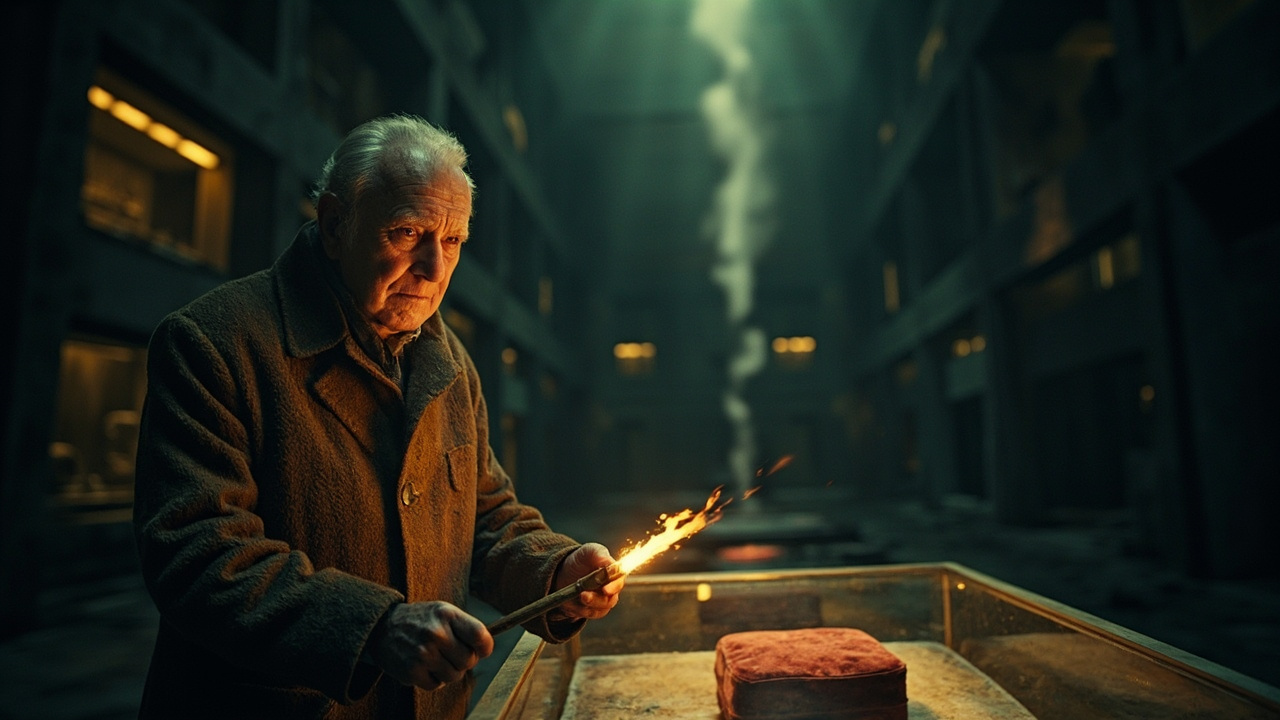
أمضى إدموند ثورن ثلاثة وأربعين عاماً في قبو متحف أشوورث، يفهرس أشياء لم يتذكر أحد أن يزورها. كان يعرف قصصها كما يعرف الكاهن الكتاب المقدس - بعمق، وباحترام، وبيقين هادئ بأن العالم خلف سقفه المقبب توقف عن الاهتمام. المرآة الرومانية النذرية. فراشة اليشم من سلالة تشينغ. راقصة الباليه الآلية من ورشة جنيف التي احترقت عام 1889، وكان آليتها الشاهدة الوحيدة على عبقرية الصانع. هذه كانت الأشياء المنسية، وإدموند كان حارسها.
استلم الدور من أبيه، الذي ورثه من شريك أبيه، سلسلة من الحراس تمتد إلى تأسيس المتحف عام 1847. كان هناك العشرات منهم يوماً - المصلحون، المسجلون، الأخصائيون، المرممون - كلهم يساهمون فيEnterprise Preservation الضخم المزدهر. لكن الميزانيات تقلصت. والأوقاف ذبلت. والأجنحة أُغلقت، ومجموعاتها وُضعت في صناديق وأُبعدت إلى الظلام المعتدل الحرارة تحت مستوى الشارع، حيث يمشي إدموند الآن جولاته الليلية بمصباح وقلم ذي رأس من اللباد، يتحقق من مستويات الرطوبة ومطابقة دفاتره بالأشياء التي تتدهور ببطء، بشكل غير محسوس.
كان ذلك في أكتوبر، خلال فحص روتيني للجدار الشرقي، حين لاحظ إدموند أن راقصة الباليه الآلية قد اختفت.
ليست مكسورة. وليست موضوعة في غير مكانها. اختفت - مع حالتها الزجاجية، وبطاقة الفهرسة الخاصة بها، وكل إشارة إلى وجودها في سجلاته الدقيقة. وقف أمام الرف الفارغ كما لو كان يقف أمام جرح في نسيج العالم. كان متأكداً، متيقناً تماماً، بأنه وصفها الأسبوع السابق فقط: زخرفة الفضية في توتوها، والتروس الدقيقة في مفاصل معصميها، ونوعية الضوء التي التقطتها عيناها الزجاجيتان في مصباح العرض. وصف هذه الأشياء. رآها.
لكن حين استشار الفهرس الرئيسي، لم يكن هناك entry. ولا في سجل القبول. ولا في مراسلات المتبرعين عام 1903، التي يتذكر أنه قرأها بصوت عالٍ في غرفته الثلاثاء السابق. ورشة جنيف نفسها بدت وكأنها مُحيت، strikes من كل تاريخ صناعي ودليل تجاري استشاره. بحلول الصباح، لم يكن إدموند قادراً على القول ما إذا كان قد رآها يوماً حقاً، أم أن ذكراها كانت هذياناً خاصاً - قسوة فرضها عليه عقله المنهك في برجوت الflourescent الخاص بعمله.
لم ينم ذلك اليوم. جلس عند مكتبه البلوطي وواجه الرف الفارغ، وفهم، بوضوح بارد كرجل توقف عن الأمل في التفسيرات، أنه يشهد شيئاً يتحدى كل مبدأ حفظ أقسم على الدفاع عنه طوال حياته.
في الأسابيع التالية، تسارعت الاختفاءات. المرآة الرومانية ذهبت التالية، تذوب ليس إلى غياب بل إلى استبدال - قرص زجاجي عادي من القرن الثامن عشر، عادي، يُدخل في المكان الذي استراح فيه شيء أقدم بكثير. ثم فراشة اليشم. ثم حصان هزاز للأطفال من عصر القرم، ثم مجموعة مخطوطات مضيئة، ثم بومة محنطة كانت تنتمي إلى مستكشف قطبي. كل اختفاء صاحبه نفس الاستبدال الغريب: شيء من الوصف العام المماثل يحل محل المندفع، كما لو أن التاريخ كان يُحرر بيد غير مبالية تفهم التصنيفات فقط وليس المحتوى.
بدأ إدموند يحتفظ بمذكرة خاصة، نسخ مدادات الحبر منها في ثلاث نسخ و ختمها في مظاريف منفصلة. سجل الأوصاف والأصول وأسماء الحرفيين المسؤولين عن خلق كل شيء. كتب بصيغة الماضي، كما لو كان يحتضر الموتى. لأنه، أدرك ببطء، كان يفعل ذلك بالضبط.
هذه الأشياء لم تكن تُنقل أو تُفهرس خطأً. كانت تُنسى - ليس من قبل المتحف، الذي نسيها منذ زمن بعيد بالطريقة العادية، بل من قبل الذاكرة الجماعية للعالم نفسه. لا أحد زار الجدار الشرقي. لا أحد طلب معلومات عن الآلية الجنيفية في الذاكرة الحية. كانت هذه أشياء اعتمدت بقاءهاentirely على يقظة إدموند، والآن تلك اليقظة كانت تفشل ليس بسبب الإهمال بل من خلال شيء أكثر ميتافيزيقية: العالم كان يفقد جماعياً، تصنيفياً، وبشكل لا رجعة فيه القدرة على تذكرها.
في هذه المرحلة، وجد إدموند نفسه يواجه النسيان الآخر - الشخصي، النوع الذي أمضى عقوداً يعزله بالطريقة التي عزل بها عمله: بشكل منهجي، شامل، وبدون فحص.
ماتت أمه حين كان في السابعة. هذا يتذكره. لكن حين حاول تذكر وجهها، صوتها، ضحكتها، لم يجد سوى فراغ أملس بلا ملامح - غرفة مقفلة في بيت ذاكرته. افترض، طوال معظم حياته البالغة، أن هذا كان مجرد التآكل الطبيعي لذكريات الطفولة المبكرة. لكن الآن، وهو يشاهد الأشياء تحت رعايته تذوب من وعي العالم، بدأ يتساءل ما إذا كان نسيانه الخاص من نفس الطبيعة - سواء كان هو أيضاً شيئاً منسياً، وما إذا كانت العمليتان مرتبطان بطرق لم يستطع بعد التعبير عنها.
وجد إجابته في نوفمبر، في شكل رسالة.
وصلت بالبريد، وهو أمر值得 ملاحظة بحد ذاته - عنوان المتحف غير مدرج، والعالم الخارجي كان يتواصل مع إدموند، حين كان يتواصل على الإطلاق، بالبريد الإلكتروني والمذكرات بين الإدارات. كان الظرف كريمي اللون، موجه بخط لم يتعرف عليه لكنه بدا، بطريقة ما، مألوفاً، بالطريقة التي تبدو بها ألحان childhood الميتة مألوفة قبل أن تتمكن من تسميتها. في الداخل كانت ورقة واحدة، وعلى سطحها ثلاث جمل:
لم تكن دائماً الحارس. قبلك، كانت هناك امرأة. لم تنسَ - اختارت أن تُنسى.
قرأ إدموند الرسالة سبع مرات.
Edmund Thorne hatte dreiundvierzig Jahre im Keller des Ashworth-Museums verbracht, Objekte katalogisiert, die niemand mehr zu besuchen erinnerte. Er kannte ihre Geschichten, wie ein Priester die Schrift kennt — intim, ehrfürchtig und mit der stillen Gewissheit, dass die Welt jenseits seiner gewölbten Decken aufgehört hatte, sich zu kümmern. Den römischen Votivspiegel. Die Jade-Zikade aus der Qing-Dynastie. Die Automaten-Ballerina aus einer Genfer Werkstatt, die 1889 abgebrannt war, deren Mechanismus das einzige erhaltene Zeugnis für das Genie des Handwerkers war. Das waren die vergessenen Dinge, und Edmund war ihr Hüter.
Er hatte die Rolle von seinem Vater geerbt, der sie von dem Mitarbeiter seines Vaters geerbt hatte, eine Kette von Hütern, die sich bis zur Gründung des Museums im Jahr 1847 zurückverfolgen ließ. Es hatte einst Dutzende von ihnen gegeben — Restauratoren, Registrare, Archivar, Konservatoren — die jeder zur großen, summenden Aufgabe der Bewahrung beitrugen. Doch die Budgets waren geschrumpft. Stiftungen waren verdorrt. Flügel waren geschlossen worden, ihre Sammlungen verpackt und in die klimatisierte Dunkelheit unter Straßenniveau verbannt worden, wo Edmund nun seine nächtlichen Rundgänge mit einer Fackel und einem Filzstift unternahm, Feuchtigkeitswerte prüfte und seine Hauptbücher mit dem langsamen, unmerklichen Verfall der Objekte abglich.
Es war im Oktober, bei einer routinemäßigen Inspektion der östlichen Nische, dass Edmund bemerkte, dass die Automaten-Ballerina verschwunden war.
Nicht zerbrochen. Nicht verlegt. Verschwunden — zusammen mit ihrem Ausstellungsgehäuse, ihrer Katalogisierungskarte und jedem Verweis auf ihre Existenz in seinen eigenen akribischen Aufzeichnungen. Er stand vor dem leeren Regal, als stünde er vor einer Wunde im Gefüge der Welt. Er war sicher, absolut sicher, dass er ihre Beschreibung erst in der Woche zuvor geschrieben hatte: das silberne Filigran ihres Tutus, die infinitesimalen Zahnräder ihrer Handgelenksgelenke, die besondere Qualität des Lichts, die ihre Glasaugen im Ausstellungslicht eingefangen hatten. Er hatte diese Dinge beschrieben. Er hatte sie gesehen.
Aber als er den Hauptkatalog konsultierte, war der Eintrag nicht da. Auch nicht im Zugangsregister. Auch nicht in der Spender-Korrespondenz von 1903, an die er sich erinnerte, sie am Dienstag zuvor in seinen Quartieren vorgelesen zu haben. Die Genfer Werkstatt selbst schien gelöscht worden zu sein, ihr Name aus jeder Industriegeschichte und jedem Handelsverzeichnis, das er konsultierte, gestrichen. Am Morgen hätte Edmund nicht sagen können, ob er die Ballerina überhaupt je wirklich gesehen hatte, oder ob ihre Erinnerung eine private Halluzination gewesen war — eine Grausamkeit, die sein erschöpfter Geist sich selbst im fluoriszierenden Fegefeuer seiner Arbeit zugefügt hatte.
Er schlief an diesem Tag nicht. Er saß an seinem Eichenschreibtisch und starrte das leere Regal an, und er verstand, mit der kalten Klarheit eines Mannes, der aufgehört hat, auf Erklärungen zu hoffen, dass er etwas beobachtete, das jedem Konservierungsprinzip widersprach, dem er sein Leben gewidmet hatte.
In den folgenden Wochen beschleunigten sich die Verschwinden. Der römische Spiegel ging als nächster, löste sich nicht in Abwesenheit auf, sondern in einen Ersatz — eine gewöhnliche Glasscheibe, achtzehntes Jahrhundert, unauffällig, in den Raum geschoben, wo etwas viel Älteres geruht hatte. Dann die Jade-Zikade. Dann ein Kinder-Schaukelpferd aus der Krimzeit, dann eine Sammlung illuminierter Manuskripte, dann ein präpariertes Kaninchen, das einst einem Polarforscher gehört hatte. Jedes Verschwinden wurde von demselben unheimlichen Ersatz begleitet: ein Objekt ähnlicher allgemeiner Beschreibung nahm den Platz des Verschwundenen ein, als würde die Geschichte von einer gleichgültigen Hand redigiert, die nur Kategorien und nicht Inhalt verstand.
Edmund begann, ein privates Tagebuch zu führen, dessen Tinteneinträge er in dreifacher Ausfertigung kopierte und in separate Umschläge versiegelte. Er zeichnete Beschreibungen, Provenienz und die Namen der Handwerker auf, die für die Erschaffung jedes Objekts verantwortlich waren. Er schrieb in der Vergangenheitsform, als würde er die Toten betrauern. Denn das, wurde ihm langsam klar, war genau das, was er tat.
Diese Objekte wurden nicht einfach nur bewegt oder falsch katalogisiert. Sie wurden vergessen — nicht vom Museum, das sie längst auf gewöhnliche Weise vergessen hatte, sondern von der kollektiven Erinnerung der Welt selbst. Niemand besuchte die östliche Nische. Niemand hatte zu Lebzeiten Informationen über die Genfer Automate angefordert. Das waren Objekte, deren Überleben vollständig von Edmunds Wachsamkeit abgehangen hatte, und nun versagte diese Wachsamkeit nicht durch Nachlässigkeit, sondern durch etwas viel Metaphysischeres: Die Welt verlor kollektiv, kategorisch und unwiderruflich die Fähigkeit, sich an sie zu erinnern.
An diesem Punkt fand sich Edmund der anderen Art des Vergessens gegenüber — der persönlichen, der er Jahrzehnte damit verbracht hatte, in demselben Verfahren zu compartmentaliseren, in dem er seine Arbeit compartmentaliserte: methodisch, gründlich und ohne Untersuchung.
Seine Mutter war gestorben, als er sieben war. Das erinnerte er. Aber als er versuchte, sich ihr Gesicht ins Gedächtnis zu rufen, ihre Stimme, den Klang ihres Lachens, fand er nur eine glatte, merkmalslose Leere — ein verschlossenes Zimmer im Haus seiner Erinnerung. Er hatte während des größten Teils seines Erwachsenenlebens angenommen, dass dies einfach die natürliche Erosion frühkindlicher Erinnerungen war. Aber nun, während er beobachtete, wie die Objekte in seiner Obhut aus dem Bewusstsein der Welt verschwanden, begann er sich zu fragen, ob sein eigenes Vergessen derselben Art gewesen war — ob auch er ein vergessenes Ding war, und ob die beiden Prozesse auf Weise verbunden waren, die er noch nicht artikulieren konnte.
Er fand seine Antwort im November, in Form eines Briefes.
Er kam per Post, was an sich schon bemerkenswert war — die Adresse des Museums war nicht gelistet, und die Außenwelt kommunizierte mit Edmund, wenn überhaupt, per E-Mail und zwischenbehördlichem Memorandum. Der Umschlag war cremefarben, addressed in einer Handschrift, die er nicht erkannte, die sich aber irgendwie vertraut anfühlte, so wie eine Melodie, an die man sich aus der Kindheit erinnert, vertraut wirkt, bevor man sie benennen kann. Darin lag ein einzelnes Blatt Papier, und darauf drei Sätze:
Du warst nicht immer der Hüter. Vor dir gab es eine Frau. Sie hat nicht vergessen — sie wählte, vergessen zu werden.
Edmund las den Brief siebenmal.
Edmund Thorne había pasado cuarenta y tres años en el sótano del Museo Ashworth, catalogando objetos que nadie recordaba ir a visitar. Conocía sus historias como un sacerdote conoce las Escrituras — íntimamente, reverentemente, y con la tranquila certeza de que el mundo más allá de sus techos abovedados había dejado de importarle. El espejo votivo romano. La cigarra de jade de la dinastía Qing. La bailarina de ballet autómata de un taller de Ginebra que se quemó en 1889, cuyo mecanismo era el único testimonio superviviente del genio del artesano. Estas eran las cosas olvidadas, y Edmund era su guardián.
Había heredado el papel de su padre, quien lo había heredado del colaborador de su padre, una cadena de guardianes que se extendía hasta la fundación del museo en 1847. Una vez hubo docenas de ellos — restauradores, registradores, archiveros, conservadores — cada uno contribuyendo a la vasta empresa zumbante de la preservación. Pero los presupuestos se habían contraído. Las dotaciones se habían marchitado. Las alas se habían cerrado, sus colecciones empacadas y desterradas a la oscuridad con control climático bajo el nivel de la calle, donde Edmund ahora caminaba sus rondas nocturnas con una antorcha y un bolígrafo de punta de fieltro, verificando los niveles de humedad y cruzando sus libros de cuentas con el lento deterioro imperceptible de los objetos.
Fue en octubre, durante una inspección rutinaria del nicho oriental, cuando Edmund notó que la bailarina de ballet autómata había desaparecido.
No rota. No extraviada. Desaparecida — junto con su vitrina, su ficha de catalogación, y cada referencia a su existencia en sus propios meticulosos registros. Se quedó de pie ante el estante vacío como quien se enfrenta a una herida en el tejido del mundo. Estaba seguro, absolutamente seguro, de haber escrito su descripción apenas la semana anterior: el filigrana de plata de su tutú, los engranajes infinitesimales de las articulaciones de sus muñecas, la calidad particular de luz que sus ojos de cristal capturaban en la lámpara de exposición. Describió estas cosas. La vio.
Pero cuando consultó el catálogo maestro, la entrada no estaba ahí. Tampoco en el registro de acceso. Ni en la correspondencia con los donors de 1903, que recordaba haber leído en voz alta en sus aposentos el martes anterior. El propio taller de Ginebra parecía haber sido borrado, su nombre tachado de cada historia industrial y directorio comercial que consultó. Para la mañana, Edmund no habría podido decir si realmente la había visto alguna vez, o si su recuerdo había sido una alucinación privada — una crueldad que su mente exhausta se había infligido a sí misma en el purgatorio fluorescente de su trabajo.
No durmió ese día. Se sentó en su escritorio de roble y contempló el estante vacío, y entendió, con la fría claridad de un hombre que ha dejado de esperar explicaciones, que estaba presenciando algo que desafiaba cada principio de conservación al que había dedicado su vida.
En las semanas siguientes, las desapariciones se aceleraron. El espejo romano fue el siguiente, disolviéndose no en ausencia sino en un reemplazo — un disco de vidrio común, siglo dieciocho,,没什么特别的, encajado en el espacio donde algo mucho más antiguo había descansado. Luego la cigarra de jade. Luego un caballito de balanceo infantil del período de Crimea, luego una colección de manuscritos iluminados, luego un búho disecado que había pertenecido a un explorador polar. Cada desaparición vino acompañada del mismo inquietante reemplazo: un objeto de descripción general similar tomaba el lugar del desaparecido, como si la historia estuviera siendo editada por una mano indiferente que solo entendía categorías y no contenido.
Edmund comenzó a llevar un diario privado, cuyas entradas de tinta copió por triplicado y selló en sobres separados. Registraba descripciones, procedencia y los nombres de los artesanos responsables de la creación de cada objeto. Escribía en tiempo pasado, como si estuviera de luto por los muertos. Porque eso, se dio cuenta lentamente, era exactamente lo que estaba haciendo.
Estos objetos no estaban simplemente siendo movidos o mal catalogados. Estaban siendo olvidados — no por el museo, que los había olvidado hace mucho tiempo de la manera ordinaria, sino por la memoria colectiva del mundo mismo. Nadie visitaba el nicho oriental. Nadie había solicitado información sobre el autómata de Ginebra en memoria viva. Estos eran objetos cuya supervivencia había dependido enteramente de la vigilancia de Edmund, y ahora esa vigilancia estaba fallando no por negligencia sino por algo mucho más metafísico: el mundo estaba perdiendo colectiva, categórica e irrevocablemente la capacidad de recordarlos.
Fue en este punto que Edmund se encontró confrontando el otro olvido — el personal, el que había pasado décadas compartimentalizando de la misma manera que compartimentalizaba su trabajo: metódicamente, minuciosamente, y sin examinación.
Su madre había muerto cuando él tenía siete años. Eso lo recordaba. Pero cuando intentó recordar su rostro, su voz, el sonido de su risa, solo encontró un vacío liso y sin rasgos — una habitación cerrada con llave en la casa de su memoria. Había asumido, durante la mayor parte de su vida adulta, que esto era simplemente la erosión natural de los recuerdos de la primera infancia. Pero ahora, observando cómo los objetos a su cargo se disolvían de la consciencia del mundo, comenzó a preguntarse si su propio olvido había sido de la misma naturaleza — si él también era una cosa olvidada, y si los dos procesos estaban conectados de maneras que aún no podía articular.
Encontró su respuesta en noviembre, en forma de una carta.
Llegó por correo, lo cual ya era notable por sí solo — la dirección del museo no estaba listada, y el mundo exterior se comunicaba con Edmund, cuando se comunicaba, por correo electrónico y memorandos interdepartamentales. El sobre era de color crema, dirigido con una letra que no reconocía pero que se sentía, de alguna manera, familiar, del modo en que una melodía recordada de la infancia se siente familiar antes de que puedas nombrarla. Dentro había una sola hoja de papel, y en ella tres oraciones:
No siempre fuiste el guardián. Antes de ti, hubo una mujer. Ella no olvidó — eligió ser olvidada.
Edmund leyó la carta siete veces.
Edmund Thorne avait passé quarante-trois ans dans la cave du musée Ashworth, à cataloguer des objets dont personne ne se souvenait d'aller voir l'existence. Il connaissait leurs histoires comme un prêtre connaît les Écritures — intimement, révérencieusement, et avec cette certitude tranquille que le monde au-delà de ses plafonds voûtés avait cessé de se préoccuper. Le miroir votif romain. La cigale de jade de la dynastie Qing. La ballerine automate d'un atelier genevois qui avait brûlé en 1889, son mécanisme étant le seul témoignage subsistant du génie de l'artisan. C'étaient les choses oubliées, et Edmund était leur gardien.
Il avait hérité du rôle de son père, qui l'avait hérité du collègue de son père, une chaîne de gardiens s'étirant jusqu'à la fondation du musée en 1847. Il y en avait eu des dizaines autrefois — restaurateurs, registrateurs, archivistes, conservateurs — chacun contribuant à la vaste entreprise bourdonnante de la préservation. Mais les budgets s'étaient contractés. Lesdotations avaient flétri. Des ailes avaient fermé, leurs collections mises en boîtes et bannies dans l'obscurité à température contrôlée sous le niveau de la rue, là où Edmund arpentait désormais ses rondes nocturnes avec une torche et un stylo à pointe feutre, vérifiant les niveaux d'humidité et recoupant ses registres avec la lente détérioration imperceptible des objets.
C'était en octobre, lors d'une inspection de routine de l'alcôve est, qu'Edmund remarqua que la ballerine automate avait disparu.
Pas brisée. Pas égarée. Disparue — avec sa vitrine, sa fiche de catalogage, et toute référence à son existence dans ses propres archives méticuleuses. Il se tint devant l'étagère vide comme on se tient devant une blessure dans le tissu du monde. Il était certain, absolument certain, d'avoir décrit la semaine précédente : les fils d'argent de son tutu, les rouages infinitésimaux de ses articulations de poignet, la qualité particulière de la lumière captée par ses yeux de verre dans la lampe de présentation. Il avait décrit ces choses. Il l'avait vue.
Mais quand il consulta le catalogue général, l'entrée n'y était pas. Ni dans le registre d'accession. Ni dans la correspondance des donateurs de 1903, dont il se souvenait avoir lu à haute voix dans ses quartiers le mardi précédent. L'atelier genevois lui-même semblait avoir été effacé, son nom rayé de toute histoire industrielle et de tout répertoire commercial qu'il consulta. Au matin, Edmund n'aurait pu dire s'il l'avait vraiment vue un jour, ou si son souvenir avait été une hallucination privée — une cruauté que son esprit épuisé s'était infligée dans le purgatoire fluorescent de son travail.
Il ne dormit pas ce jour-là. Il s'assit à son bureau de chêne et fixa l'étagère vide, et il comprit, avec la clarté froide d'un homme qui a cessé d'espérer des explications, qu'il assistait à quelque chose qui défiait tout principe de conservation auquel il avait consacré sa vie.
Au cours des semaines suivantes, les disparitions s'accélérèrent. Le miroir romain passa ensuite, se dissolvant non pas en absence mais en remplacement — un disque de verre ordinaire, dix-huitième siècle, sans intérêt, glissé dans l'espace où quelque chose de bien plus ancien avait reposé. Puis la cigale de jade. Puis un cheval à bascule d'enfant de l'époque Criméenne, puis une collection de manuscrits enluminés, puis une chouette naturalisée qui avait appartenu à un explorateur polaire. Chaque disparition s'accompagnait du même remplacement troublant : un objet de description générale similaire prenait la place du disparu, comme si l'histoire était éditée par une main indifférente qui ne comprenait que les catégories et non le contenu.
Edmund commença à tenir un journal privé, dont il copia les entrées à l'encre en triple exemplaire et scella dans des enveloppes séparées. Il consignait les descriptions, la provenance et les noms des artisans responsables de la création de chaque objet. Il écrivait au passé, comme s'il pleurait les morts. Car c'était précisément ce qu'il faisait lentement.
Ces objets n'étaient pas simplement déplacés ou mal catalogués. Ils étaient oubliés — non pas par le musée, qui les avait oubliés depuis longtemps de la manière ordinaire, mais par la mémoire collective du monde lui-même. Personne ne visitait l'alcôve est. Personne n'avait demandé d'informations sur l'automate genevois de mémoire vivante. C'étaient des objets dont la survie avait dépendu entièrement de la vigilance d'Edmund, et maintenant cette vigilance faiblissait non par négligence mais par quelque chose de bien plus métaphysique : le monde perdait collectivement, catégoriquement et irrémédiablement la capacité de s'en souvenir.
C'est à ce moment qu'Edmund se retrouva confronté à l'autre oubli — le personnel, celui qu'il avait passé des décennies à compartimenter de la même manière qu'il compartimentait son travail : méthodiquement, soigneusement, et sans examen.
Sa mère était morte quand il avait sept ans. Il s'en souvenait. Mais quand il essaya de se rappeler son visage, sa voix, le son de son rire, il ne trouva qu'un vide lisse et sans traits — une pièce verrouillée dans la maison de sa mémoire. Il avait supposé, pendant la plus grande partie de sa vie adulte, que c'était simplement l'érosion naturelle des souvenirs d'enfance précoce. Mais maintenant, en regardant les objets sous sa garde se dissoudre de la conscience du monde, il commença à se demander si son propre oubli était de même nature — s'il était lui aussi une chose oubliée, et si les deux processus étaient liés d'une manière qu'il ne pouvait pas encore articuler.
Il trouva sa réponse en novembre, sous la forme d'une lettre.
Elle arriva par la poste, ce qui était déjà remarquable en soi — l'adresse du musée n'était pas listée, et le monde extérieur communiquait avec Edmund, quand il communiquait, par e-mail et par mémorandum inter-départemental. L'enveloppe était de couleur crème, adressée d'une écriture qu'il ne reconnaissait pas mais qui semblait, d'une manière ou d'une autre, familière, comme une mélodie dont on se souvient depuis l'enfance semble familière avant qu'on puisse la nommer. À l'intérieur se trouvait une seule feuille de papier, et dessus trois phrases :
Tu n'étais pas toujours le gardien. Avant toi, il y avait une femme. Elle n'a pas oublié — elle a choisi d'être oubliée.
Edmund lut la lettre sept fois.
Edmund Thorne aveva trascorso quarantatré anni nella cantina del Museo Ashworth, catalogando oggetti che nessuno si ricordava di andare a visitare. Conosceva le loro storie come un sacerdote conosce le Scritture — intimamente, riverentemente, e con la quieta certezza che il mondo oltre i suoi soffitti a volta avesse smesso di interessarsi. Lo specchio votivo romano. La cicala di giada della dinastia Qing. La ballerina automatizzata di un atelier di Ginevra che era bruciato nel 1889, il cui meccanismo era l'unica testimonianza superstite del genio dell'artigiano. Queste erano le cose dimenticate, e Edmund era il loro custode.
Aveva ereditato il ruolo da suo padre, che l'aveva ereditato dal collaboratore di suo padre, una catena di custodi che risaliva alla fondazione del museo nel 1847. Una volta ce n'erano state dozzine — restauratori, archivisti, conservatori — ciascuno contribuendo alla vasta, ronzante impresa della preservazione. Ma i bilanci si erano ridotti. Le donazioni si erano esaurite. Le ali erano state chiuse, le loro collezioni imballate e relegate nell'oscurità climatizzata sotto il livello della strada, dove Edmund ora faceva i suoi giri notturni con una torcia e una penna a feltro, controllando i livelli di umidità e verificando i suoi registri contro il lento, impercettibile deterioramento degli oggetti.
Fu in ottobre, durante un'ispezione di routine dell'alcova orientale, che Edmund notò che la ballerina automatizzata era scomparsa.
Non rotta. Non smarrita. Scomparsa — insieme alla sua teca, alla sua scheda di catalogazione e a ogni riferimento alla sua esistenza nei suoi stessi meticolosi archivi. Rimase davanti allo scaffale vuoto come se stesse di fronte a una ferita nel tessuto del mondo. Era certo, assolutamente certo, di averne scritto la descrizione solo la settimana precedente: il filigrana d'argento del suo tutù, gli ingranaggi infinitesimali delle articolazioni dei polsi, la particolare qualità della luce catturata dai suoi occhi di vetro nella lampada della vetrina. Aveva descritto queste cose. L'aveva vista.
Ma quando consultò il catalogo generale, la voce non c'era. Né nel registro d'acquisizione. Né nella corrispondenza con i donatori del 1903, che ricordava di aver letto ad alta voce nei suoi alloggi il martedì precedente. L'atelier di Ginevra stesso sembrava essere stato cancellato, il suo nome cancellato da ogni storia industriale e directory commerciale che consultò. All'alba, Edmund non avrebbe saputo dire se l'avesse mai veramente vista, o se il suo ricordo fosse stato un'allucinazione privata — una crudeltà che la sua mente esausta aveva inflitto a se stessa nel purgatorio al neon del suo lavoro.
Non dormì quel giorno. Sedette alla sua scrivania di rovere e fissò lo scaffale vuoto, e comprese, con la fredda lucidità di un uomo che ha smesso di sperare in spiegazioni, che stava assistendo a qualcosa che sfidava ogni principio di conservazione a cui aveva dedicato la vita.
Nelle settimane successive, le sparizioni si accelerarono. Lo specchio romano andò via dopo, dissolvendosi non in assenza ma in sostituzione — un disco di vetro comune, diciottesimo secolo, insignificante, inserito nello spazio dove qualcosa di molto più antico aveva riposato. Poi la cicala di giada. Poi un cavallino a dondolo per bambini del periodo crimeo, poi una collezione di manoscritti miniati, poi un gufo impagliato che era appartenuto a un esploratore polare. Ogni sparizione era accompagnata dalla stessa inquietante sostituzione: un oggetto di descrizione generale simile prendeva il posto del disperso, come se la storia fosse being edited da una mano indifferente che comprendeva solo categorie e non contenuto.
Edmund cominciò a tenere un diario privato, le cui voci d'inchiostro copiò in triplice copia e sigillò in buste separate. Registrava descrizioni, provenienza e i nomi degli artigiani responsabili della creazione di ogni oggetto. Scriveva al passato, come se piangesse i morti. Perché quello, si rese lentamente conto, era esattamente ciò che stava facendo.
Questi oggetti non venivano semplicemente spostati o scatalogati. Venivano dimenticati — non dal museo, che li aveva da tempo dimenticati nel modo ordinario, ma dalla memoria collettiva del mondo stesso. Nessuno visitava l'alcova orientale. Nessuno aveva richiesto informazioni sull'automa di Ginevra a memoria d'uomo. Erano oggetti la cui sopravvivenza aveva dipeso interamente dalla vigilanza di Edmund, e ora quella vigilanza stava fallendo non per negligenza ma per qualcosa di molto più metafisico: il mondo stava collettivamente, categoricamente e irrevocabilmente perdendo la capacità di ricordarli.
Fu a questo punto che Edmund si ritrovò a confrontarsi con l'altro oblio — quello personale, quello che aveva passato decenni a compartimentare allo stesso modo in cui compartimentava il suo lavoro: metodicamente, accuratamente e senza esame.
Sua madre era morta quando aveva sette anni. Questo lo ricordava. Ma quando cercò di richiamare il suo volto, la sua voce, il suono della sua risata, trovò solo un vuoto liscio e senza caratteristiche — una stanza chiusa a chiave nella casa della sua memoria. Aveva supposto, per la maggior parte della sua vita adulta, che fosse semplicemente l'erosione naturale dei ricordi dell'infanzia precoce. Ma ora, osservando gli oggetti affidati alle sue cure dissolversi dalla consapevolezza del mondo, cominciò a chiedersi se il suo stesso oblio fosse stato della stessa natura — se anche lui fosse una cosa dimenticata, e se i due processi fossero collegati in modi che non poteva ancora articolare.
Trovò la sua risposta a novembre, sotto forma di una lettera.
Arrivò per posta, il che era già notevole di per sé — l'indirizzo del museo non era elencato, e il mondo esterno comunicava con Edmund, quando comunicava, via email e memorandum interministeriale. La busta era color crema, indirizzata con una calligrafia che non riconosceva ma che sembrava, in qualche modo, familiare, come una melodia ricordata dall'infanzia sembra familiare prima che tu possa nominarla. All'interno c'era un singolo foglio di carta, e su di esso tre frasi:
Non sei sempre stato il custode. Prima di te, c'era una donna. Lei non dimenticò — scelse di essere dimenticata.
Edmund lesse la lettera sette volte.