الكوخ كان يقف على حافة حديقة غرينتش، وحديقته الخلفية ترتفع صعوداً نحو المرصد الملكي حيث أمضى إدموند ثورن ثلاثة عقود وهو يعمل على الخرائط البحرية قبل تقاعده. الآن في الثانية والستين من عمره، بأصابع ملطخة بالحبر لا تزول أبداً ونظارات سميكة كقواعد الزجاجات، كان يقسم أيامه بين بحر الأوراق الذي تركه والده المتوفى والخرائط النجمية التي شغلت أمسياته منذ الطفولة.
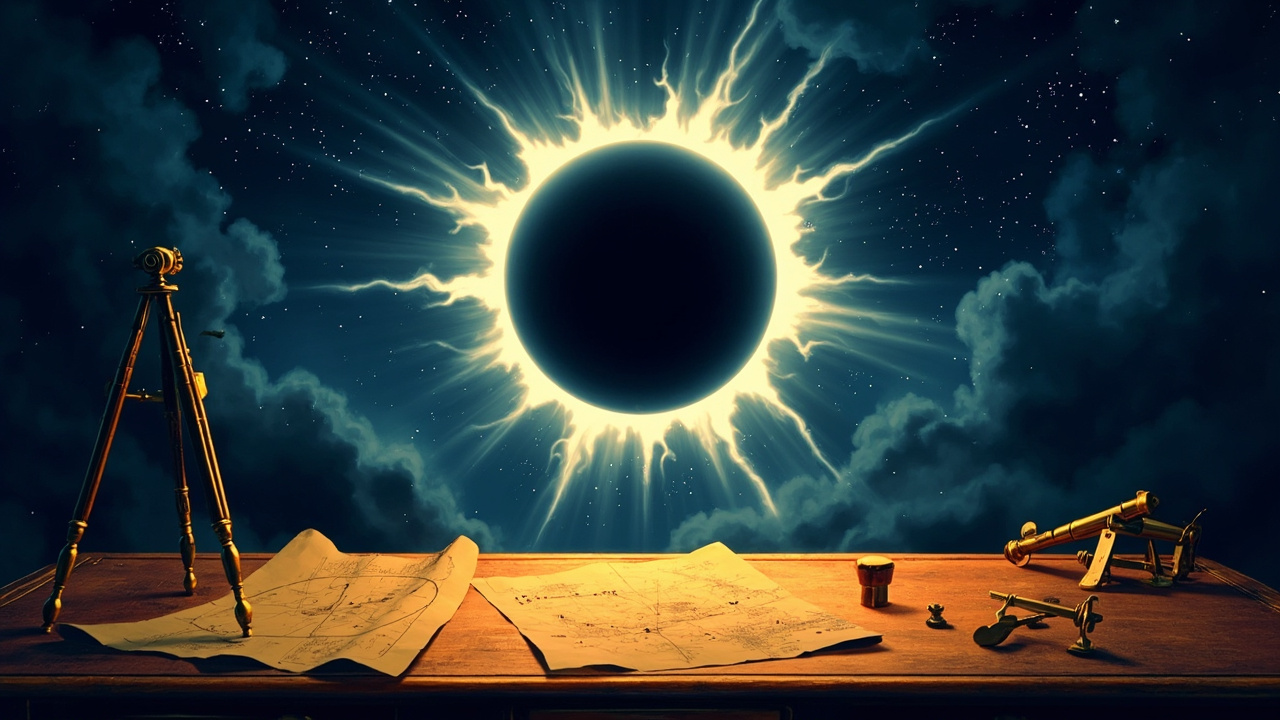
لكن الكسوف هو ما غيّر كل شيء—الكسوف الكلي للشمس في مارس 1999، الذي اجتذب آلاف الفلكيين الهواة إلى حقول كورنوال. كان إدموند قد قاد سيارته وحده، ومنظاره Dollond العتيق مثبتاً على مقعد الراكب كطفل نائم. كان قد شاهد كسوفات من قبل، بالطبع، لكن هذا الكسوف شعر به مختلفاً. أصبح الهواء بارداً رغم دفء أبريل، وانفجر الهالة بضراوة جعلته يلهث بصوت عالٍ. ثم، في تلك الظلمة الكاملة، رآها: نجوماً لا ينبغي أن تكون هناك. لم تكن نجوماً خافتة يمكن تفويتها بسهولة—بل كانت نجوماً مظلمة، انطباعات سلبية ضد الهالة البيضاء اللؤلؤية. لم تشكل أي نمط كان يتعرف عليه، لكن عندما تتبعها في دفتره، تذكرت يداه الإيماءة من مكان ما في الذاكرة الموروثة.
أقنع نفسه أنها خدعة من عيون منهكة. أقنع نفسه بذلك لمدة ست سنوات، حتى الكسوف الكلي التالي، في مارس 2006، عندما شاهد تلك النجوم المظلمة نفسها تخرج من ظل الشمس بدقة القفل الذي يُفتح. بدأ يرسمها بشكل منهجي. مع كل كسوف، أينما كان—تركيا، ليبيا، جزر فارو في صباح مارس الماطر عندما اجتاح الظل شمال الأطلسي—سجل مواقعها بعناية مهوسة. خرجت الرياضيات ببطء، فوق الشاي التركي في أنطاليا والقهوة الباردة في صحراء ليبية، لكن في النهاية تحولت الصورة إلى شيء لا يمكن إنكاره. كانت النجوم تشكل بوصلة. بوصة指向، بدقة هندسية، نحو جزيرة مينوركا.
ارتجفت يدا إدموند وهو يسحب السجلات البحرية القديمة من أرفف دراسته. كان يعرف التاريخ، بالطبع—كل رسام خرائط يستحق بوصلة يعرف غموض البحر. لكن الآن بحث بعينين جديدتين، وما وجده جعل الدم في عروقه يتحول إلى برودة أعماق البحر المتوسط.
في مايو 1756، أبحرت أسطول البحرية الملكية تحت قيادة الأميرال جون بينغ لإنقاذ حصن سانت فيليب في مينوركا. أربعة عشر سفينة. ألفا رجل. لم يصلوا أبداً. أُعدم الأميرال بينغ نفسه برصاص الإعدام في بورتسموث بعد عامين—رُمي بالرصاص، كما لاحظ فولتير بمرارة، pour encourager les autres—لكن الأسطول ظل في عداد المفقودين. قرنان من البحث لم يستردا شيئاً. لا حطام. لا أثر. لا تفسير لكيفية اختفاء سرب كامل في مياه كانت مرسومة ومزدحمة منذ العصور القديمة.
إلى أن جاء هذا اليوم. إلى أن إدموند ثورن، رسام الخرائط المتقاعد من غرينتش، تتبع النجوم غير المرئية إلى استنتاجها المرعب.
قضى خريف وشتاء تلك السنة في مقارنة ملاحظاته مع كل وثيقة بحرية يمكنه الوصول إليها. كتب إلى الأميرالية، وإلى المتحف البحري الوطني، وإلى المكاتب الهيدروغرافية لثلاث دول مختلفة. لم يُجب على معظم الخطابات. Those that received reply were polite, puzzled, dismissive. نجوم مظلمة، قالوا. كسوفات شمسية. ربما يجب أن تستشير طبيب عيون، سيد ثورن.
لكن إدموند كان يعرف ما رآه. كان للنجوم Constellation—if such a word applied to something visible only in the absence of the sun—رسمت موقعاً على بعد أربعين ميلاً بحرياً تقريباً شمال مينوركا، على عمق ألف ومئتي قامة تقريباً. أسطول الأميرال لا يزال هناك، كان متأكداً. كان ينتظر هناك،صبوراً كالمد، لشخص يستطيع قراءة السماء بشكل صحيح.
ما لم يستطع تفسيره هو السبب. جاءت الإجابة في فبراير، قبل ثلاثة أشهر من عيد ميلاده الثالث والستين، عندما فتح أخيراً صندوق البحر الذي كان ملكاً لجده الأكبر. كان الرجل العجوز قد خدم كضابط صف بحري aboard HMS Ramparts، السفينة الرئيسية لأسطول بينغ المفقود، ونجا بطريقة ما من الكارثة—رغم أن طريقة نجاته ظلت لغزاً عائلياً، لأنه لن يتحدث عنها أبداً. عاد إلى إنجلترا رجلاً متغيراً، انجرف إلى السماء بشغف فاق التصور. كان يرسم كل شيء: حركة النجوم، مسارات المذنبات، مد البحار من الضوء لم يفكر أي بحار قبله في تسجيلها.
ومن بين أوراقه، وجدها إدموند: خريطة مرسومة بخط جده الأكبر المتقوس والمسن، تصور تكويناً للنجوم مرئياً فقط أثناء كسوفات الشمس. خريطة لا تغطي مجرد عشرات الدرجات، بل مساحة تمتد—
أحضر إدموند بوصلته وقياس. الخريطة تغطي مئتين وأربعين ميلاً بحرياً من الاتجاه. الموقع النهائي،标记 بعلامة صليب واحدة والكلمات Here we lie، تطابق تماماً مع الإحداثيات التي حسبها بنفسه.
كان جده الأكبر قد وجد الإجابة. كان جده الأكبر قد قرأ السماء وفهم. ثم، لأسباب ضاعت في الزمن، اختار إخفاء الحقيقة بين النجوم نفسها—مرئية لأي شخص لديه المعرفة للنظر، وغير مرئية لجميع من ليس لديهم.
جلس إدموند لفترة طويلة في ضوء الشموع، يقلب الصفحات الصفراء. أخيراً فهم ما كان عليه جده الأكبر، وما كان هو نفسه مقدراً أن يصبحه دائماً: رسام خرائط ليس للبحر، بل للسماء. حارس الضائعين، cuyas خرائط كانت مكتوبة في الظلام وتقرأ فقط عندما يُبتلع الشمس بأكملها.
غداً، قرر، سيكتب إلى الأميرالية مرة أخرى. سيخبرهم بكل شيء—الكواكب غير المرئية، الاتجاه، القبر الذي ينتظر اهتمامهم في قاع البحر المتوسط. سيرفق الخرائط، القديمة والجديدة. سيطلب منهم، بأدب، إرسال سفينة.
يخمن أنهم لن يستمعوا. لكن كان قد تعلم شيئاً قيماً.
Das Cottage stand am Rand von Greenwich Park, sein hinterer Garten stieg an zum Royal Observatory, wo Edmund Thorne drei Jahrzehnte lang über Seekarten gebrütet hatte, bevor er in Rente ging. Jetzt zweiundsechzig, mit tintenfleckigen Fingern, die einfach nie sauber wurden, und Brillen so dick wie Flaschenböden, teilte er seine Tage zwischen dem Papiermeer, das den Nachlass seines verstorbenen Vaters bildete, und den Sternenkarten, die seine Abende seit der Kindheit gefüllt hatten.
Die Finsternis war es, die alles änderte—die totale Sonnenfinsternis im März 1999, die Tausende von Amateurastronomen in die Felder von Cornwall gelockt hatte. Edmund war allein hinuntergefahren, sein altes Dollond-Refraktor auf dem Beifahrersitz festgeschnallt wie ein schlafendes Kind. Er hatte natürlich schon Finsternisse gesehen, aber diese fühlte sich anders an. Die Luft war kalt geworden trotz der Aprilwärme, und die Korona war mit einer Heftigkeit hervor gebrochen, die ihn laut aufkeuchen ließ. Und dann, in jener perfekten Dunkelheit, sah er sie: Sterne, die nicht dort hätten sein sollen. Nicht schwache Sterne, die man leicht übersehen konnte—dies waren dunkle Sterne, negative Abdrücke gegen die perlweiße Korona. Sie bildeten kein Muster, das er erkannte, doch als er sie in seinem Notizbuch nachzog, erinnerten sich seine Hände an die Geste aus einer tiefen vererbten Erinnerung. Er sagte sich, es sei ein Trick erschöpfter Augen. Er sagte sich das sechs Jahre lang, bis zur nächsten totalen Finsternis im März 2006, als er zusah, wie dieselben dunklen Sterne aus dem Schatten der Sonne hervortraten, mit der Präzision eines sich öffnenden Schlosses.
Er begann, sie systematisch zu kartieren. Bei jeder Finsternis, wo immer er sich gerade aufhielt—Türkei, Libyen, auf den Färöer-Inseln an jenem nassen März Morgen, als der Schatten über den Nordatlantik hinwegfegte—notierte er ihre Positionen mit obsessiver Sorgfalt. Die Mathematik enthüllte sich langsam, beim türkischen Tee in Antalya und kalten Kaffee in der libyschen Wüste, aber schließlich fügte sich das Bild zu etwas Unverkennbarem zusammen. Die Sterne bildeten einen Peilungsstrich. Einen Peilungsstrich, der mit geometrischer Gewissheit auf die Insel Menorca wies.
Edmunds Hände zitterten, als er die alten Marineaufzeichnungen aus seinen Regalen zog. Er kannte die Geschichte natürlich—jeder Kartograf, der seine Zirkel wert war, kannte die Geheimnisse des Meeres. Aber jetzt suchte er mit neuen Augen, und was er fand, ließ sein Blut in den Adern zu der Kälte jener mediterranen Tiefen werden.
Im Mai 1756 war eine königliche Marineflotte unter Admiral John Byng zur Entsetzung von Fort St. Philip auf Menorca ausgelaufen. Vierzehn Schiffe. Zweitausend Männer. Sie kamen nie an. Byng selbst wurde zwei Jahre später in Portsmouth durch ein Erschießungskommando hingerichtet—erschossen, wie Voltaire bissig anmerkte, pour encourager les autres—doch die Flotte blieb unauffindbar. Zwei Jahrhunderte der Suche hatten nichts wiedergefunden. Kein Wrack. Keine Spur. Keine Erklärung dafür, wie ein ganzes Geschwader in Gewässern verschwinden konnte, die seit der Antike befahren und kartiert waren.
Bis jetzt. Bis Edmund Thorne, pensionierter Kartenzeichner aus Greenwich, den unsichtbaren Sternen zu ihrem schrecklichen Schluss folgte.
Er verbrachte den Herbst und Winter jenes Jahres damit, seine Beobachtungen mit jeder Marineakte abzugleichen, die er in die Hände bekommen konnte. Er schrieb an die Admiralität, ans National Maritime Museum, an die hydrographischen Ämter dreier verschiedener Nationen. Die meisten Briefe blieben unbeantwortet. Those that received reply waren höflich, verwirrt, abweisend. Dunkle Sterne, sagten sie. Sonnenfinsternisse. Vielleicht sollten Sie einen Augenarzt aufsuchen, Mr. Thorne.
Aber Edmund wusste, was er gesehen hatte. Die Sternenkonstellation—if such a word applied to something visible only in the absence of the sun—markierte eine Position ungefähr vierzig Seemeilen nördlich von Menorca, in einer Tiefe von etwa zwölfhundert Faden. Die Flotte des Admirals lag dort noch, dessen war er sicher. Sie hatte dort gewartet, geduldig wie die Gezeit, auf jemanden, der den Himmel richtig lesen konnte.
Was er nicht erklären konnte, war das Warum. Die Antwort kam ihm im Februar, drei Monate vor seinem dreiundsechzigsten Geburtstag, als er endlich die Seetruhe öffnete, die seinem Urgroßvater gehört hatte. Der alte Mann hatte als Seekadett an Bord der HMS Ramparts gedient, dem Flaggschiff von Byngs verlorener Flotte, und hatte auf irgendeine Weise die Katastrophe überlebt—obwohl die Art seines Überlebens ein Familiengeheimnis blieb, denn er wollte nie darüber sprechen. Er war als veränderter Mann nach England zurückgekehrt, hatte sich mit einer Intensität dem Himmel zugewandt, die seine Vorgesetzten skandalisierte und seine Familie verwirrte. Er hatte alles kartiert: die Bewegungen der Sterne, die Bahnen der Kometen, die Gezeiten des Lichts, die kein Seemann vor ihm je zu verzeichnen gedacht hatte.
Und unter seinen Papieren fand Edmund es: eine Karte, gezeichnet in der krakeligen, gealterten Handschrift seines Urgroßvaters, die eine Konstellation von Sternen zeigte, die nur während Sonnenfinsternissen sichtbar waren. Eine Karte, die nicht nur wenige Grad abdeckte, sondern ein Gebiet, das sich erstreckte—
Edmund holte seine Zirkel und maß nach. Die Karte deckte zweihundertundvierzig Seemeilen Peilung ab. Die Endposition, markiert mit einem einzelnen Kreuz und den Worten Hier liegen wir, stimmte genau mit den Koordinaten überein, die er selbst berechnet hatte.
Sein Vorfahre hatte die Antwort gefunden. Sein Vorfahre hatte den Himmel gelesen und verstanden. Und dann, aus Gründen, die in der Zeit verloren gingen, hatte er gewählt, die Wahrheit unter den Sternen selbst zu verbergen—sichtbar für jeden mit dem Wissen zu sehen, unsichtbar für alle, die es nicht besaßen.
Edmund saß lange im Kerzenlicht und blätterte durch die vergilbten Seiten. Endlich verstand er, was sein Urgroßvater gewesen war, und was er selbst immer hatte werden sollen: ein Kartograf nicht des Meeres, sondern des Himmels. Ein Hüter der Verlorenen, dessen Karten in Dunkelheit geschrieben und nur gelesen wurden, wenn die Sonne ganz verschlungen war.
Morgen, beschloss er, würde er wieder an die Admiralität schreiben. Er würde ihnen alles erzählen—die unsichtbare Konstellation, die Peilung, das Grab, das auf ihre Aufmerksamkeit auf dem Grund des Mittelmeeres wartete. Er würde die Karten beilegen, sowohl die alten als auch die neuen. Er würde sie höflich bitten, ein Schiff zu senden.
Er vermutete, sie würden nicht zuhören. Aber er hatte etwas Wertvolles gelernt.
El cottage se alzaba al borde de Greenwich Park, su jardín trasero ascendía hacia el Real Observatorio donde Edmund Thorne había pasado tres décadas trabajando en cartas náuticas antes de su jubilación. Ahora sesentón, con dedos manchados de tinta que nunca terminaban de limpiarse y gafas gruesas como el fondo de una botella, dividía sus días entre el mar de papeles que constituía la herencia de su padre difunto y las cartas estelares que habían ocupado sus noches desde la infancia.
Fue el eclipse lo que lo cambió todo—el eclipse solar total de marzo de 1999, que había atraído a miles de astrónomos aficionados a los campos de Cornualles. Edmund había bajado solo, su antiguo refractor Dollond sujeto al asiento del pasajero como un niño dormido. Había visto eclipses antes, por supuesto, pero este se sentía diferente. El aire se había vuelto frío a pesar del calor de abril, y la corona se había desplegado con una ferocidad que le arrancó un jadeo. Y entonces, en esa oscuridad perfecta, los vio: estrellas que no deberían haber estado ahí. No estrellas tenues, fáciles de pasar por alto—estas eran estrellas oscuras, impresiones negativas contra la corona perlada. No formaban ningún patrón que reconociera, sin embargo cuando las trazó en su cuaderno, sus manos recordaron el gesto de algún lugar en la memoria heredada. Se dijo que era un truco de ojos exhaustos. Se lo repitió durante seis años, hasta el siguiente eclipse total, en marzo de 2006, cuando vio esas mismas estrellas oscuras emerger de la sombra del sol con la precisión de una cerradura abriéndose.
Comenzó a cartografiarlas sistemáticamente. En cada eclipse, dondequiera que estuviera—Turquía, Libia, las Islas Feroe en esa mañana de marzo cuando la lluvia empapaba la sombra sobre el Atlántico Norte—anotaba sus posiciones con cuidado obsesivo. Las matemáticas surgieron lentamente, entre té turco en Antalya y café frío en el desierto libio, pero finalmente la imagen se resolvió en algo inconfundible. Las estrellas formaban un rumbo. Un rumbo que apuntaba, con certeza geométrica, hacia la isla de Menorca.
Las manos de Edmund temblaron mientras sacaba los antiguos registros navales de los estantes de su estudio. Conocía la historia, por supuesto—todo cartógrafo que mereciera sus compases conocía los misterios del mar. Pero ahora buscaba con ojos nuevos, y lo que encontró heló la sangre en sus venas como las frías profundidades del Mediterráneo.
En mayo de 1756, una flota de la Marina Real bajo el almirante John Byng había navegado para el alivio de Fort St Philip en Menorca. Catorce barcos. Dos mil hombres. Nunca llegaron. El propio Byng fue ejecutado por un pelotón de fusilamiento en Portsmouth dos años después—fusilado, como observó mordazmente Voltaire, pour encourager les autres—pero la flota permanecía desaparecida. Dos siglos de búsqueda no habían recuperado nada. Ningún naufragio. Ningún rastro. Ninguna explicación de cómo una escuadrilla entera podía desaparecer en aguas cartografiadas y transitadas desde la antigüedad.
Hasta ahora. Hasta Edmund Thorne, cartógrafo jubilado de Greenwich, que siguió las estrellas invisibles hasta su terrible conclusión.
Pasó el otoño y el invierno de ese año cruzando sus observaciones con cada documento naval que pudo encontrar. Escribió al Almirantazgo, al Museo Marítimo Nacional, a las oficinas hidrográficas de tres naciones diferentes. La mayoría de las cartas quedaron sin respuesta. Aquellas que recibieron respuesta fueron corteses, perplejas, desdeñosas. Estrellas oscuras, dijeron. Eclipses solares. Tal vez debería consultar un oftalmólogo, señor Thorne.
Pero Edmund sabía lo que había visto. La constelación—if such a word applied to something visible only in the absence of the sun—trazaba una posición aproximadamente a cuarenta millas náuticas al norte de Menorca, a una profundidad de unas mil doscientas brazas. La flota del Almirante yacía allí todavía, estaba seguro. Había estado esperando allí, paciente como la marea, a que alguien leyera correctamente el cielo.
Lo que no podía explicar era el por qué. La respuesta le llegó en febrero, tres meses antes de su sexagésimo tercer cumpleaños, cuando finalmente abrió el cofre de marinero que había pertenecido a su tatarabuelo. El anciano había servido como guardiamarina a bordo del HMS Ramparts, buque insignia de la flota perdida de Byng, y de alguna manera había sobrevivido a la catástrofe—aunque la forma de su supervivencia permaneció como un misterio familiar, pues nunca quiso hablar de ello. Había regresado a Inglaterra como un hombre cambiado, se había dedicado al cielo con una intensidad que escandalizó a sus superiores y desconcertó a su familia. Había cartografiado todo: los movimientos de las estrellas, las trayectorias de los cometas, las mareas de luz que ningún marino antes que él había pensado registrar.
Y entre sus papeles, Edmund lo encontró: una carta dibujada con la letra temblorosa y anciana de su tatarabuelo, que representaba una configuración de estrellas visibles solo durante los eclipses solares. Una carta que no cubría unos pocos grados, sino un área que se extendía—
Edmund buscó sus compases y midió. La carta cubría doscientas cuarenta millas náuticas de rumbo. La posición final, marcada con una sola cruz y las palabras Aquí yacemos, correspondía exactamente con las coordenadas que él mismo había calculado.
Su antepasado había encontrado la respuesta. Su antepasado había leído el cielo y comprendido. Y luego, por razones perdidas en el tiempo, había elegido ocultar la verdad entre las propias estrellas—visible para cualquiera con el conocimiento para mirar, invisible para todos los que no lo tenían.
Edmund se quedó sentado durante mucho tiempo a la luz de las velas, pasando las páginas amarillentas. Por fin entendió lo que su tatarabuelo había sido, y lo que él mismo siempre había estado destinado a convertirse: un cartógrafo no del mar, sino del cielo. Un guardián de los perdidos, cuyos mapas estaban escritos en la oscuridad y se leían solo cuando el sol era tragado por completo.
Mañana, decidió, escribiría al Almirantazgo de nuevo. Les diría todo—la constelación invisible, el rumbo, la tumba que esperaba su atención en el fondo del Mediterráneo. Incluiría las cartas, tanto las antiguas como las nuevas. Les pediría, cortésmente, que enviaran un barco.
Sospechaba que no escucharían. Pero había aprendido algo valioso.
Le cottage se trouvait au bord de Greenwich Park, son jardin arrière s'élevant vers l'Observatoire royal où Edmund Thorne avait passé trois décennies à travailler sur des cartes nautiques avant sa retraite. À présent sexagénaire, avec des doigts tachés d'encre qui ne devenaient jamais vraiment propres et des lunettes épaisses comme le fond d'une bouteille, il partageait ses journées entre la paperasse constituant la succession de son père et les cartes stellaires qui occupaient ses soirées depuis l'enfance.
Ce fut l'éclipse qui changea tout—l'éclipse solaire totale de mars 1999, qui avait attiré des milliers d'astronomes amateurs dans les champs de Cornouailles. Edmund avait conduit seul, son ancien réfracteur Dollond attaché sur le siège passager comme un enfant endormi. Il avait当然 vu des éclipses auparavant, mais celle-ci semblait différente. L'air était devenu froid malgré la douceur d'avril, et la couronne s'était déployée avec une violence qui lui avait arraché un hoquet. Et puis, dans cette obscurité parfaite, il les avait vus : des étoiles qui n'auraient pas dû être là. Non pas des étoiles pâles, faciles à manquer—c'étaient des étoiles sombres, des impressions négatives contre la couronne d'un blanc nacré. Elles ne formaient aucun motif qu'il reconnaissait, pourtant quand il les traça dans son carnet, ses mains se souvenaient du geste venu d'une mémoire héritée. Il se dit que c'était un tour de ses yeux fatigués. Il se le répéta pendant six ans, jusqu'à l'éclipse totale suivante, en mars 2006, quand il regarda ces mêmes étoiles sombres émerger de l'ombre du soleil avec la précision d'une serrure qu'on ouvre.
Il commença à les cartographier systématiquement. À chaque éclipse, où qu'il se trouvât—Turquie, Libye, îles Féroé ce matin de mars où la pluie noyait l'ombre de l'Atlantique Nord—il notait leurs positions avec un soin obsessionnel. Les calculs émergèrent lentement, à travers du thé turc à Antalya et du café froid dans le désert libyen, mais finalement l'image se dessina en quelque chose d'incontestable. Les étoiles formaient un relèvement. Un relèvement qui pointait, avec une certitude géométrique, vers l'île de Minorque.
Les mains d'Edmund tremblèrent en tirant les vieux registres navals de ses étagères. Il connaissait l'histoire, bien sûr—tout cartographe qui méritait ses compas connaissait les mystères de la mer. Mais maintenant il cherchait avec de nouveaux yeux, et ce qu'il trouva glaça le sang dans ses veines comme les profondeurs froides de la Méditerranée.
En mai 1756, une flotte de la Marine royale sous l'amiral John Byng avait navigué pour secourir Fort Saint-Philippe à Minorque. Quatorze navires. Deux mille hommes. Ils ne arrivèrent jamais. Byng lui-même fut exécuté par peloton à Portsmouth deux ans plus tard—abattu, comme le nota acidement Voltaire, pour encourager les autres—mais la flotte demeura introuvable. Deux siècles de recherches n'avaient rien récupération. Aucune épave. Aucune trace. Aucune explication sur comment une escadre entière pouvait disparaître dans des eaux cartographiées et fréquentées depuis l'Antiquité.
Jusqu'à maintenant. Jusqu'à ce qu'Edmund Thorne, cartographe retraité de Greenwich, suive les étoiles invisibles jusqu'à leur terrible conclusion.
Il passa l'automne et l'hiver de cette année à recouper ses observations avec chaque document naval qu'il put dénicher. Il écrivit à l'Amirauté, au Musée maritime national, aux services hydrographiques de trois nations différentes. La plupart des lettres restèrent sans réponse. Celles qui reçurent une réponse étaient polis, perplexes, condescendants. Des étoiles sombres, dirent-ils. Des éclipses solaires. Peut-être devriez-vous consulter un ophtalmologue, Monsieur Thorne.
Mais Edmund savait ce qu'il avait vu. La constellation—if such a word applied to something visible only in the absence of the sun—traçait une position approximativement à quarante milles nautiques au nord de Minorque, par une profondeur d'environ douze cents brasses. La flotte de l'Amiral y reposait encore, il en était certain. Elle attendait là, patiente comme la marée, que quelqu'un lise correctement le ciel.
Ce qu'il ne pouvait expliquer, c'était pourquoi. La réponse lui vint en février, trois mois avant son soixante-troisième anniversaire, quand il ouvrit enfin le coffre de mer ayant appartenu à son arrière-arrière-grand-père. Le vieil homme avait servi comme aspirant à bord du HMS Ramparts, vaisseau amiral de la flotte perdue de Byng, et avait survécu Somehow—à la catastrophe bien que la façon de cette survie demeurât un mystère familial, car il n'en parla jamais. Il était rentré en Angleterre un homme changé, s'était tourné vers le ciel avec une intensité qui scandalisa ses supérieurs et dérouta sa famille. Il avait tout cartographié : les mouvements des étoiles, les trajectoires des comètes, les marées de lumière qu'aucun marin avant lui n'avait songé à enregistrer.
Et parmi ses papiers, Edmund le trouva : une carte tracée de la main tremblante et aged de son arrière-arrière-grand-père, depicting a configuration of stars visible only during solar eclipses. Une carte qui ne couvrait pas quelques degrés, mais une étendue couvrant—
Edmund chercha ses compas et measure. La carte couvrait deux cent quarante milles nautiques de relèvement. La position finale, marquée d'une seule croix et des mots Ici nous gisons, correspondait exactement aux coordonnées qu'il avait lui-même calculées.
Son ancêtre avait trouvé la réponse. Son ancêtre avait lu le ciel et compris. Et puis, pour des raisons perdues dans le temps, il avait choisi de cacher la vérité parmi les étoiles elles-mêmes—visible à quiconque possédait la connaissance pour regarder, invisible à tous ceux qui ne l'avaient pas.
Edmund resta assis longtemps à la lueur des bougies, tournant les pages jaunies. Enfin il comprit ce qu'avait été son arrière-arrière-grand-père, et ce qu'il-même avait toujours été destiné à devenir : un cartographe non pas de la mer, mais du ciel. Un gardien des perdus, dont les cartes étaient écrites dans l'obscurité et lues seulement quand le soleil était entièrement englouti.
Demain, décida-t-il, il écrirait de nouveau à l'Amirauté. Il leur dirait tout—la constellation invisible, le relèvement, la tombe qui attendait leur attention sur le fond de la Méditerranée. Il joindrait les cartes, anciennes et nouvelles. Il leur demanderait, poliment, d'envoyer un navire.
Il soupçonnait qu'ils ne écouteraient pas. Mais il avait appris quelque chose de précieux.
Il cottage si ergeva al bordo di Greenwich Park, il suo giardino posteriore che saliva verso il Royal Observatory dove Edmund Thorne aveva trascorso tre decenni lavorando su carte nautiche prima del pensionamento. Ora sessantaduenne, con dita macchiate d'inchiostro che non si pulivano mai del tutto e occhiali spessi come il fondo di una bottiglia, divideva le sue giornate tra il mare di pratiche che costituiva l'eredità del padre defunto e le carte stellari che avevano occupato le sue serate fin dall'infanzia.
Fu l'eclissi a cambiare tutto—l'eclissi solare totale del marzo 1999, che aveva attirato migliaia di astronomi dilettanti nei campi della Cornovaglia. Edmund era sceso da solo, il suo antico rifrattore Dollond assicurato al sedile del passeggero come un bambino addormentato. Aveva visto eclissi prima d'ora, naturalmente, ma questa sembrava diversa. L'aria si era fatta fredda nonostante il calore di aprile, e la corona si era dispiegata con una ferocia che gli aveva strappato un sussulto. E poi, in quella perfetta oscurità, li aveva visti: stelle che non avrebbero dovuto essere lì. Non stelle fioche, facilmente trascurabili—queste erano stelle oscure, impronte negative contro la corona madreperlacea. Non formavano alcun pattern che riconoscesse, eppure quando le tracciò sul suo taccuino, le sue mani ricordarono il gesto da qualche parte nella memoria ereditata. Si disse che era un trucco di occhi esausti. Se lo ripeté per sei anni, fino alla prossima eclissi totale, nel marzo 2006, quando guardò quelle stesse stelle oscure emergere dall'ombra del sole con la precisione di una serratura che scatta.
Cominciò a cartografarle sistematicamente. Ad ogni eclissi, ovunque si trovasse—Turchia, Libia, le Isole Fær Øer in quella piovosa mattina di marzo quando l'ombra spazzava l'Atlantico del Nord—registrava le loro posizioni con cura ossessiva. La matematica emerse lentamente, tra tè turco ad Antalya e caffè freddo nel deserto libico, ma alla fine l'immagine si risolse in qualcosa di inconfondibile. Le stelle formavano una rotta. Una rotta che puntava, con certezza geometrica, verso l'isola di Minorca.
Le mani di Edmund tremarono mentre tirava fuori i vecchi registri navali dagli scaffali dello studio. Conosceva la storia, naturalmente—ogni cartografo che valesse i propri compassi conosceva i misteri del mare. Ma ora cercava con occhi nuovi, e ciò che trovò fece diventare il sangue nelle sue vene freddo come quegli abissi del Mediterraneo.
Nel maggio 1756, una flotta della Royal Navy sotto l'ammiraglio John Byng era salpata per il soccorso di Fort St Philip a Minorca. Quattordici navi. Duemila uomini. Non arrivarono mai. Lo stesso Byng fu fucilato a Portsmouth due anni dopo—fucilato, come osservò acidamente Voltaire, per encourager les autres—ma la flotta rimase senza traccia. Due secoli di ricerche non avevano recuperato nulla. Nessun relitto. Nessuna traccia. Nessuna spiegazione su come un'intera squadriglia potesse svanire in acque cartografate e frequentate fin dall'antichità.
Fino ad ora. Fino a Edmund Thorne, cartografo pensionato di Greenwich, che seguì le stelle invisibili fino alla loro terribile conclusione.
Passò l'autunno e l'inverno di quell'anno a incrociare le sue osservazioni con ogni documento navale che riuscì a trovare. Scrisse all'Admiralty, al National Maritime Museum, agli uffici idrografici di tre diverse nazioni. La maggior parte delle lettere rimase senza risposta. Quelle che ricevettero risposta erano cortesi, perplesse, dismissive. Stelle oscure, dissero. Eclissi solari. Forse dovrebbe consultare un oftalmologo, signor Thorne.
Ma Edmund sapeva ciò che aveva visto. La costellazione—if such a word applied to something visible only in the absence of the sun—tracciava una posizione a circa quaranta miglia nautiche a nord di Minorca, a una profondità di circa milleduecento braccia. La flotta dell'Ammiraglio giaceva lì ancora, ne era certo. Aveva aspettato lì, paziente come la marea, che qualcuno leggesse correttamente il cielo.
Ciò che non poteva spiegare era il perché. La risposta gli venne in febbraio, tre mesi prima del suo sessantatreesimo compleanno, quando finalmente aprì il baule marino appartenuto al suo bis-bisnonno. Il vecchio aveva servito come guardiamarina a bordo dell'HMS Ramparts, ammiraglia della flotta perduta di Byng, ed era somehow sopravvissuto alla catastrofe—sebbene il modo della sua sopravvivenza fosse rimasto un mistero familiare, poiché non ne parlò mai. Era tornato in Inghilterra un uomo cambiato, si era dedicato al cielo con un'intensità che aveva scandalizzato i suoi superiori e lasciato perplessa la sua famiglia. Aveva cartografato tutto: i movimenti delle stelle, le orbite delle comete, le maree della luce che nessun marinaio prima di lui aveva pensato di registrare.
E tra le sue carte, Edmund la trovò: una carta disegnata nella calligrafia tremolante e anziana del suo bis-bisnonno, che raffigurava una configurazione di stelle visibili solo durante le eclissi solari. Una carta che non copriva una manciata di gradi, ma un'area che si estendeva—
Edmund prese i suoi compassi e misurò. La carta copriva duecentoquaranta miglia nautiche di rotta. La posizione finale, contrassegnata con una singola croce e le parole Qui giacciamo, corrispondeva esattamente alle coordinate che aveva calcolato lui stesso.
Il suo antenato aveva trovato la risposta. Il suo antenato aveva letto il cielo e capito. E poi, per ragioni perdute nel tempo, aveva scelto di nascondere la verità tra le stesse stelle—visibile a chiunque avesse la conoscenza per guardare, invisibile a tutti coloro che non l'avevano.
Edmund rimase seduto a lungo alla luce delle candele, sfogliando le pagine ingiallite. Finalmente capì ciò che il suo bis-bisnonno era stato, e ciò che lui stesso era sempre destinato a diventare: un cartografo non del mare, ma del cielo. Un custode dei perduti, le cui mappe erano scritte nell'oscurità e lette solo quando il sole veniva inghiottito completamente.
Domani, decise, avrebbe scritto di nuovo all'Admiralty. Avrebbe detto loro tutto—la costellazione invisibile, la rotta, la tomba che attendeva la loro attenzione sul fondo del Mediterraneo. Avrebbe accluso le carte, sia vecchie che nuove. Avrebbe chiesto loro, gentilmente, di inviare una nave.
Sospettava che non avrebbero ascoltato. Ma aveva imparato qualcosa di prezioso.