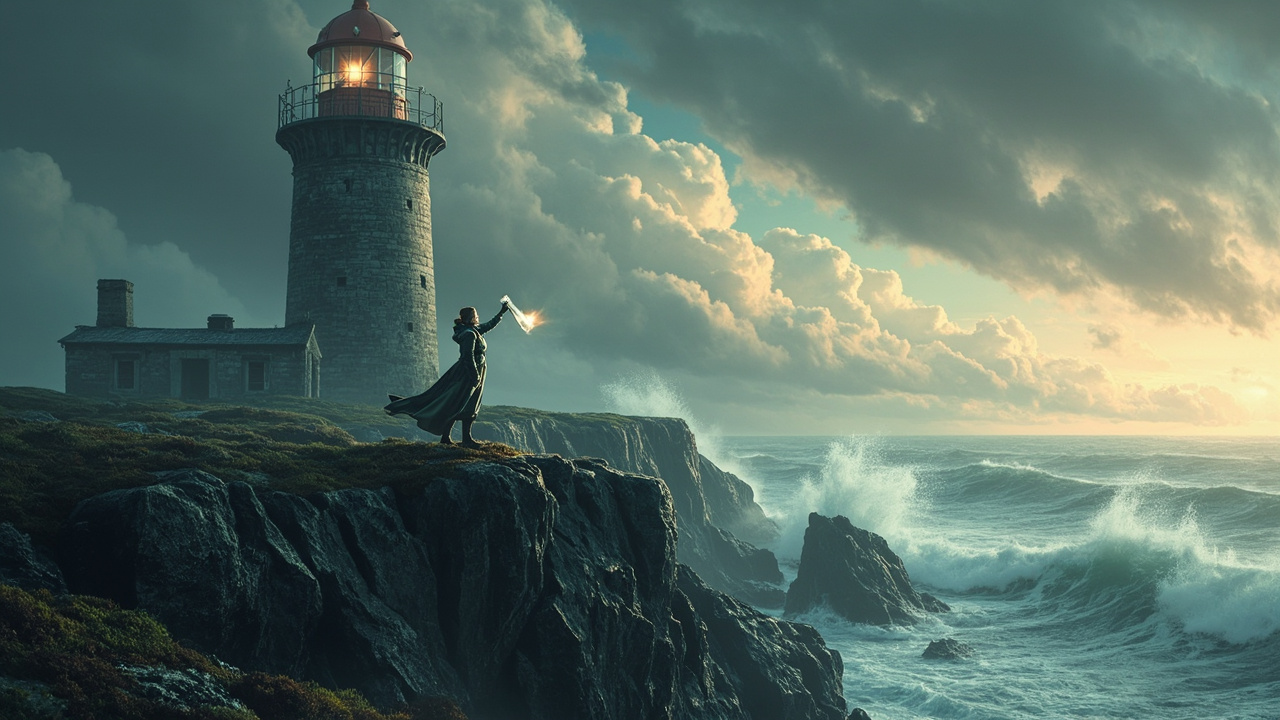
كان المنارة تقف على الحافة الخارجية للعالم، أو هكذا بدا الأمر لإيليد كامبل في تلك الليالي التيReduced فيها عواصف الأطلسي الوجود إلى دوران المصباح الأحادي ونشيج البحر الأسود من أسفل. كانت قد اعتنت بالضوء لمدة إحدى عشرة سنة، طويلة بما يكفي لأن يصير العزلة غير قابلة للتمييز عن الحرية. اعتادت على الأنقاض التيDeliverها المد: ورق مقوى مبلل، أوعية بلاستيكية تحمل شعارات أراضي بعيدة، وحيطان أحياناً لا تزال تحوي هيكل عظمي لصاحبها السابق. اعتادت أيضاً على الصمت — تلك النوعية الخاصة من الفراغ التي توجد فقط في الأماكن التي لم تنطق فيها صوت بشري لأشهر متتالية. لذلك عندما وجدت الزجاجة الأولى، نصف مدفونة في عشب البحر عند قاعدة الجرف، رفعتها نحو الضوء الرمادي الصباحي بشيء يقترب من الفضول أكثر من الأمل. في الداخل، ورقة واحدة مطوية مرتين. فككت الغطاء واستخرجت الرسالة باحترام متأنٍّ كعالم آثار يتعامل مع ورق البردي. كان الخط ضيقاً، شبه آلي: الغالية تشارلوت ستغرق عند خط الطول عند الفجر من اليوم الخامس عشر. ثلاثة وأربعون نفساً. عبست إيليد. لم تكن تعرف أي سفينة تُدعى الغالية تشارلوت، والخامس عشر كان بعد ثلاثة أيام. وضعت الزجاجة على طاولة المطبخ، تعتزم ذكرها لطاقم قارب الإمداد عند وصولهم. ثم جاء الخامس عشر، ومعه تقرير الراديو عن سفينة بضائع فقدت مع جميع أطقمها في المينش، وأدركت إيليد أنها مُنحت شيئاً لم تطلبه ولم تكن تريده.
جاءت الزجاجة الثانية بعد أسبوعين. كانت تنزل الدرج الحلزوني حين رأتها عالقة عند الباب، كأنها وُضعت هناك عمداً. كانت الرسالة أطول هذه المرة: هناك صبي سيقع من الصخور في بورت مور. سينجو إذا كان أحد يراقب. المراقبة وحدها لا تكفي. المراقبة يجب أن تأتي من المنارة. قرأت الكلمات ثلاث مرات، ثم جلست بثقل على الدرجة السفلى. المنارة تراقب، بالطبع — فذلك كان غرضها — لكن إيليد راقبت باهتمام خاص ذلك الظهيرة، منظارها مُدرباً على الشاطئ الصخري أسفل بورت مور، على بُعد ميلين. رأت طفلاً، ربما في الثامنة، يتسلق بين أحواض المد. رأته ينزلق. رأت أباه يقتحم الماء خلفه. رأت كليهما يُسحبان إلى الأمان من قبل صياد عابر كان قد مرّ بالمشهد بالصدفة. جاءت المراقبة من المنارة. والولد قد نُجي. لكن نُجي من ماذا؟ من الغرق؟ أم نُجي من شيء آخر، شيء لم تُحدد الرسالة؟
بدأت إيليد تنتظر الزجاجات. وجدت نفسها تنزل الدرج عند الفجر والمغرب بقلق متلهف كمتِّم يستقبل الغفران أو الإدانة. استمرت الرسائل، كل واحدة منها تصل بدقة حين تكون هناك حاجة إليها، كل واحدة تصف أحداثاً ستتحقق خلال الأسبوع. انهيار جسر في مدينة بعيدة. حريق في فندق لم تزره قط. استقالة سياسي لن تظهر في الأخبار لعشرة أيام أخرى. ظل الخط متسقاً — ضيقاً، آلياً — لكن الورقvaried. أحياناً كان حديثاً، ناعماً؛ مرة واحدة كان مصفراً وهشاً كورقة الخريف. بدأت تلاحظ شيئاً آخر: الرسائل كانت تتحدث عن أشياء لا يمكنها التأثير عليها بطبيعة الحال. ماذا عساها أن تفعل بتحذيرات من كوارث في قارات أخرى، من مآسٍ سُويت أسبابها بالفعل؟ كانت حارسة منارة على صخرة في شمال الأطلسي، لا حارسة لمعاناة العالم.
ثم جاءت الرسالة التي غيّرت كل شيء. وصلت خلال أسوأ عاصفة منذ سنوات، حين كانت الأمواج تتحطم فوق الشرفة والرياح تمزق النوافذ بجنون شيء واعٍ. وجدت الزجاجة ملقاة في وسط غرفة المصباح، كأنها تجسدت من الهواء ذاته. يداها ارتجفتا وهي تُفرد الورقة. أنتِ لا تستقبلين هذه الرسائل. أنتِ ترسلينها. كنتِ دائماً ترسلينها. الزجاجات لا تسافر عبر الماء، يا إيليد. إنها تسافر عبر الزمن. كنتِ تكتبينها منذ ثلاثين سنة، وستكتبيها لمدة ثلاثين أخرى. المنارة ليست على حافة العالم. إنها على حافة الحاضر. كنتِ دائماً هنا. ستكونين دائماً هنا. لا يجب أن ينطفئ الضوء.
قرأت الرسالة سبع مرات. فحصت الخط. عرفته بمعرفة حميمية كنبضها، كنَفَسها. لم يكن هناك شك. كتبتها هي نفسها. ليس هي كما هي الآن، الرمادية والمتجعدة، بل هي كما ستصبح — إيليد مستقبلية عاشت طويلاً بما يكفي لتفهم الغرض الحقيقي للمنارة. الرسائل لم تكن تنبؤات. كانت مراسلات. رسائل سترسلها، أو أرسلتها، أو هي الآن في صدد إرسالها، عبر المسافة المستحيلة للزمن ذاته.
فهمت، إذن، لماذا كانت المراقبة من المنارة ذات أهمية. الضوء لم يكن مجرد تحذير للسفن. كان منارة للزمن — نار إشارة تحترق عبر السنين، تضمن أن خيط السبب والنتيجة يبقى سليماً. بدون الضوء، لن تصل الرسائل أبداً. بدون الرسائل، لن يكون للضوء معنى. وجدت إيليد نفسها عند النافذة، تنظر إلى العاصفة. المصباح يدور بثبات، شعاعه يشق الظلام كسكين يشق الماء. فكرت في الثلاثة والأربعين على الغالية تشارلوت،whose مصيرها عجزت عن منعه. فكرت في الصبي في بورت مور، الذي نُجي بالمراقبة. فكرت في كل المآسي التي ستعرفها الآن، كل التدخلات الصغيرة التي قد尝试. أدركت أن طبيعة الزمن لم تكن نهراً يتدفق في اتجاه واحد. كانت محيطاً، ساكناً وعميقاً، حيث توجد كل اللحظات في وقت واحد.
Der Leuchtturm stand am äußersten Rand der Welt, oder zumindest schien es Eilidh Campbell in jenen Nächten, als die Atlantikstürme das Dasein auf die monotone Umdrehung der Lampe und die schwarze Wut des Meeres darunter reduzierten. Sie hatte elf Jahre lang das Licht gehütet, lange genug, damit die Isolation nicht mehr von der Freiheit zu unterscheiden war. Sie hatte sich an den Unrat gewöhnt, den die Gezeiten anschlugen: durchnässte Pappe, Plastikbehälter mit den Logos ferner Länder, gelegentlich ein Stiefel, der noch das Skelett seines ehemaligen Besitzers enthielt. Sie hatte sich auch an die Stille gewöhnt — jene besondere Qualität der Leere, die nur an Orten existiert, wo seit Monaten keine menschliche Stimme mehr erklungen ist. Als sie also die erste Flasche fand, halb vergraben im Seetang am Fuß der Klippe, hielt sie sie ins graue Morgenlicht mit etwas, das eher Neugier als Hoffnung war. Darin, ein einzelnes Blatt Papier, zweimal gefaltet. Sie entkorkte das Gefäß und entnahm die Botschaft mit der sorgfältigen Ehrfurcht eines Archäologen, der einen Papyrus behandelt. Die Handschrift war eng, fast mechanisch: Die Lady Charlotte wird am Meridian bei Morgengrauen des Fünfzehnten untergehen. Dreiundvierzig Seelen. Eilidh runzelte die Stirn. Sie kannte kein Schiff namens Lady Charlotte, und der Fünfzehnte war drei Tage entfernt. Sie stellte die Flasche auf den Küchentisch, in der Absicht, sie der Besatzung des Versorgungsbootes bei ihrer Ankunft zu erwähnen. Dann kam der Fünfzehnte, und mit ihm die Funkmeldung von einem Frachtschiff, das mit der gesamten Besatzung im Minch verloren ging, und Eilidh verstand, dass ihr etwas gegeben worden war, um das sie nie gebeten hatte und das sie nicht wollte.
Die zweite Flasche kam zwei Wochen später. Sie stieg die Spiraltreppe hinunter, als sie sie eingeklemmt an der Tür sah, als wäre sie dort absichtlich platziert worden. Die Botschaft war diesmal länger: Es gibt einen Jungen, der von den Felsen bei Port Mor fallen wird. Er wird gerettet werden, wenn jemand watching ist. Das Zusehen genügt nicht. Das Zusehen muss vom Leuchtturm kommen. Sie las die Worte dreimal, dann setzte sie sich schwer auf die unterste Stufe. Der Leuchtturm watchete natürlich — das war sein Zweck — aber Eilidh watchete an jenem Nachmittag mit besonderer Aufmerksamkeit, ihr Fernglas auf die felsige Küste unterhalb von Port Mor, zwei Meilen entfernt, gerichtet. Sie sah ein Kind, vielleicht acht Jahre alt, das zwischen den Gezeitentümpeln herumkletterte. Sie sah es ausrutschen. Sie sah seinen Vater ins Wasser springen, um es zu retten. Sie sah beide von einem vorbeikommenden Fischer sicher an Land gezogen, der zufällig vorbeigekommen war. Das Zusehen war vom Leuchtturm gekommen. Und der Junge war gerettet worden. Aber gerettet wovor? Vor dem Ertrinken? Oder vor etwas anderem, etwas, das die Botschaft nicht spezifiziert hatte? Eilidh begann auf die Flaschen zu warten. Sie ertappte sich dabei, wie sie bei Morgengrauen und Abenddämmerung die Treppe hinunterstieg, mit der begierigen Furcht eines Büßers, der Absolution oder Verurteilung erwartet. Die Botschaften setzten sich fort, jede kam genau dann, wenn sie gebraucht wurde, jede beschrieb Ereignisse, die innerhalb der Woche eintreten würden. Ein Brückeneinsturz in einer fernen Stadt. Ein Feuer in einem Hotel, das sie nie besucht hatte. Ein Politikersrücktritt, der erst in zehn Tagen in den Nachrichten erscheinen würde. Die Handschrift blieb gleichmäßig — eng, mechanisch — aber das Papier variierte. Manchmal war es modern, glatt; einmal war es vergilbt und brüchig wie ein Herbstblatt. Sie begann, etwas anderes zu bemerken: Die Botschaften sprachen von Dingen, die sie unmöglich beeinflussen konnte. Was sollte sie mit Warnungen vor Katastrophen auf anderen Kontinenten anfangen, vor Tragödien, die bereits in Gang gesetzt worden waren? Sie war eine Leuchtturmwärterin auf einem Felsen im Nordatlantik, keine Hüterin des Leidens der Welt.
Und dann kam die Botschaft, die alles änderte. Sie kam während des schlimmsten Sturms seit Jahren, als die Wellen über die Galerie schlugen und der Wind an den Fenstern riss mit der Wut von etwas Bewusstem. Sie fand die Flasche in der Mitte des Lampenraums, als wäre sie aus der Luft selbst materialisiert. Ihre Hände zitterten, als sie das Papier entfaltete. Du empfängst diese Botschaften nicht. Du sendest sie. Du hast sie immer gesendet. Die Flaschen reisen nicht durch Wasser, Eilidh. Sie reisen durch die Zeit. Du hast sie seit dreißig Jahren geschrieben, und du wirst sie weitere dreißig Jahre schreiben. Der Leuchtturm steht nicht am Rand der Welt. Er steht am Rand der Gegenwart. Du warst immer hier. Du wirst immer hier sein. Das Licht darf nicht erlöschen.
Sie las die Botschaft siebenmal. Sie untersuchte die Handschrift. Sie kannte sie mit der intimen Vertrautheit ihres eigenen Pulses, ihres eigenen Atems. Es gab keinen Zweifel. Sie hatte dies selbst geschrieben. Nicht sie selbst, wie sie jetzt war, grau durchzogen und verwittert, sondern sie selbst, wie sie werden würde — eine zukünftige Eilidh, die lange genug gelebt hatte, um den wahren Zweck des Leuchtturms zu verstehen. Die Botschaften waren keine Prophezeiungen. Es waren Korrespondenzen. Briefe, die sie senden würde, oder gesendet hatte, oder sogar jetzt dabei war zu senden, über die unmögliche Distanz der Zeit selbst. Sie verstand, dann, warum das Zusehen vom Leuchtturm wichtig war. Das Licht war nicht nur eine Warnung für Schiffe. Es war ein Leuchtfeuer für die Zeit — ein Signalfeuer, das durch die Jahre brennt und sicherstellt, dass der Faden von Ursache und Wirkung intakt bleibt. Ohne das Licht würden die Botschaften nie ankommen. Ohne die Botschaften hätte das Licht keine Bedeutung. Der Leuchtturm existierte in einer beständigen Gegenwart, einem festen Punkt, von dem aus Vergangenheit und Zukunft wie Speichen einer Nabe ausstrahlten. Eilidh ging zum Fenster und sah hinaus in den Sturm. Die Lampe drehte sich stetig, ihr Strahl schnitt durch die Dunkelheit wie ein Messer durch Wasser. Sie dachte an die dreiundvierzig Seelen auf der Lady Charlotte, deren Schicksal sie nicht hatte verhindern können. Sie dachte an den Jungen in Port Mor, der durch das Zusehen gerettet worden war. Sie dachte an alle Tragödien, die sie nun kennen würde, alle kleinen Eingriffe, die sie versuchen könnte. Die Natur der Zeit, erkannte sie, war kein Fluss, der in eine Richtung fließt. Sie war ein Ozean, still und tief, wo alle Momente gleichzeitig existierten.
Le phare se dressait à la lisière extrême du monde, ou du moins c'est ce qu'il semblait à Eilidh Campbell ces nuits où les tempêtes de l'Atlantique réduisaient l'existence à la rotation monotone de la lampe et à la rage noire de la mer en contrebas. Elle veillait à la lumière depuis onze ans, suffisamment longtemps pour que l'isolement soit devenu indissociable de la liberté. Elle s'était habituée aux débris que les marées lui apportaient : carton détrempé, contenants de plastique ornés des logos de terres lointaines,,偶尔une botte contenant encore le squelette de son ancien propriétaire. Elle s'était habituée, aussi, au silence — cette qualité particulière de vide qui n'existe que dans les lieux où aucune voix humaine ne s'est fait entendre pendant des mois d'affilée. C'est pourquoi, quand elle trouva la première bouteille, à demi enfouie dans le varech au pied de la falaise, elle la leva vers la lumière grise du matin avec quelque chose qui ressemblait davantage à la curiosité qu'à l'espoir. À l'intérieur, une feuille de papier pliée deux fois. Elle déboucha le vessel et en sortit le message avec le respect méticuleux d'un archéologue manipulant un papyrus. L'écriture était serrée, presque mécanique : La Lady Charlotte sombrera au méridien à l'aube du quinze. Quarante-trois âmes. Eilidh fronça les sourcils. Elle ne connaissait aucun navire nommé Lady Charlotte, et le quinze était dans trois jours. Elle posa la bouteille sur la table de la cuisine, bien intendue d'en mentionner à l'équipage du bateau de ravitaillement à leur arrivée. Puis le quinze arriva, et avec lui le bulletin radio annonçant un cargo perdu avec tout son équipage dans le Minch, et Eilidh comprit qu'on lui avait accordé quelque chose qu'elle n'avait jamais demandé et qu'elle ne voulait pas.
La seconde bouteille arriva deux semaines plus tard. Elle descendait l'escalier en colimaçon quand elle la vit coincée contre la porte, comme si quelqu'un l'y avait placée délibérément. Le message était plus long cette fois : Il y a un garçon qui tombera des rochers à Port Mor. Il sera sauvé si quelqu'un regarde. Regarder ne suffit pas. Le regard doit venir du phare. Elle lut les mots trois fois, puis s'assit lourdement sur la dernière marche. Le phare regardait, bien sûr — c'était sa purpose — mais Eilidh regardait avec une attention particulière cet après-midi-là, ses jumelles braquées sur le rivage rocheux en contrebas de Port Mor, à deux milles de distance. Elle vit un enfant, peut-être huit ans, se faufilant parmi les vasques de marée. Elle le vit glisser. Elle vit son père se jeter à l'eau après lui. Elle vit tous deux être ramenés sains et saufs par un pêcheur de passage qui se trouvait là par hasard. Le regard était venu du phare. Et le garçon avait été sauvé. Mais sauvé de quoi ? De la noyade ? Ou sauvé de quelque chose d'autre, quelque chose que le message n'avait pas spécifié ?
Eilidh commença à attendre les bouteilles. Elle se surprit à descendre l'escalier à l'aube et au crépuscule avec l'appréhension empressée d'un pénitent attendant l'absolution ou la condamnation. Les messages continuèrent, chacun arrivant précisément au moment où il était needed, chacun décrivant des événements qui se produiraient dans la semaine. L'effondrement d'un pont dans une ville lointaine. Un incendie dans un hôtel qu'elle n'avait jamais visité. La démission d'un homme politique qui ne ferait pas la une pendant encore dix jours. L'écriture restait cohérente — serrée, mécanique — mais le papier variait. Parfois il était moderne, net ; une fois il était jauni et fragile comme une feuille d'automne. Elle commença à remarquer autre chose : les messages parlaient de choses qu'elle ne pouvait absolument pas influencer. Que devait-elle faire des avertissements de catastrophes sur d'autres continents, de tragédies déjà en mouvement ? Elle était une gardienne de phare sur un rocher dans l'Atlantique Nord, pas une gardienne de la souffrance du monde.
Et puis vint le message qui changea tout. Il arriva pendant la pire tempête depuis des années, quand les vagues se brisaient par-dessus la galerie et que le vent arrachait les fenêtres avec la fureur de quelque chose de sentient. Elle trouva la bouteille au centre de la salle de la lampe, comme si elle s'était matérialisée de l'air même. Ses mains tremblèrent en dépliant le papier. Vous ne recevez pas ces messages. Vous les envoyez. Vous les avez toujours envoyés. Les bouteilles ne voyageant pas à travers l'eau, Eilidh. Elles voyageant à travers le temps. Vous les écrivez depuis trente ans, et vous les écrirez pendant trente autres. Le phare n'est pas à la lisière du monde. Il est à la lisière du maintenant. Vous avez toujours été ici. Vous serez toujours ici. La lumière ne doit pas s'éteindre.
Elle lut le message sept fois. Elle examina l'écriture. Elle la connaissait avec l'intimité familière de son propre pouls, de son propre souffle. Il n'y avait aucun doute. Elle l'avait écrit elle-même. Pas elle-même telle qu'elle était maintenant, striée de gris etweathered, mais elle-même telle qu'elle deviendrait — une Eilidh future qui avait vécu assez longtemps pour comprendre le véritable purpose du phare. Les messages n'étaient pas des prophéties. C'étaient des correspondances. Des lettres qu'elle enverrait, ou avait envoyées, ou était même en train d'envoyer, à travers l'impossible distance du temps lui-même.
Elle comprit, alors, pourquoi le regard du phare importait. La lumière n'était pas simplement un avertissement pour les navires. C'était un phare pour le temps — un feu de signalisation brûlant à travers les années, garantissant que le fil de cause à effet reste intact. Sans la lumière, les messages n'arriveraient jamais. Sans les messages, la lumière n'aurait aucun sens. Le phare existait dans un présent perpétuel, un point fixe d'où le passé et l'avenir rayonnaient comme les rayons d'une roue. Eilidh marcha jusqu'à la fenêtre et regarda la tempête. La lampe tournait régulièrement, son faisceau tranchant l'obscurité comme un couteau tranche l'eau. Elle pensa aux quarante-trois âmes sur la Lady Charlotte, dont elle n'avait pu prévenir le sort. Elle pensa au garçon à Port Mor, qui avait été sauvé par le regard. Elle pensa à toutes les tragédies qu'elle connaîtrait maintenant, toutes les petites interventions qu'elle pourrait tenter. La nature du temps, réalisa-t-elle, n'était pas une rivière qui coule dans un sens. C'était un océan, immobile et profond, où tous les moments existaient simultanément.
Маяк стоял на самом краю мира, или по крайней мере так казалось Эйлид Кэмпбелл в те ночи, когда штормы Атлантики сводили существование к монотонному вращению лампы и чёрной ярости моря внизу. Она присматривала за светом одиннадцать лет, достаточно долго, чтобы одиночество стало неотличимо от свободы. Она привыкла к обломкам, которые приносили приливы: мокрая картонка, пластиковые контейнеры с логотипами далёких земель, иногда сапог, всё ещё содержащий скелет своего прежнего владельца. Она привыкла и к тишине — той особой разновидности пустоты, что существует лишь в местах, где человеческий голос не звучал месяцами. Поэтому когда она нашла первую бутылку, наполовину зарытую в ламинари у основания утёса, она подняла её к серому утреннему свету с чем-то похожим скорее на любопытство, чем на надежду. Внутри лежал один листок бумаги, сложенный вдвое. Она откупорила сосуд и извлекла послание с той же бережной благоговейностью, с какой археолог обращается с папирусом. Почерк был сжатый, почти механический: Леди Шарлотта погибнет на меридиане на рассвете пятнадцатого. Сорок три души. Эйлид нахмурилась. Она не знала никакого судна под названием Леди Шарлотта, а пятнадцатое было через три дня. Она поставила бутылку на кухонный стол, намереваясь упомянуть о ней экипажу грузового катера, когда тот прибудет. Затем наступило пятнадцатое, а с ним — радиосообщение о грузовом судне, потерянном со всей командой в Минче, и Эйлид поняла, что ей было даровано то, о чём она никогда не просила и чего не хотела.
Вторая бутылка arrived через две недели. Она спускалась по винтовой лестнице, когда увидела её застрявшей у двери, словно её намеренно put там. Послание было длиннее на этот раз: Есть мальчик, который упадёт со скал в Порте Мор. Он будет спасён, если кто-то будет смотреть. Одного наблюдения недостаточно. Наблюдение должно исходить от маяка. Она прочла слова трижды, затем тяжело опустилась на нижнюю ступеньку. Маяк, конечно, наблюдал — в этом состояла его цель — но Эйлид наблюдала с особой внимательностью тем днём, её бинокль был направлен на скалистый берег внизу Порта Мор, в двух милях отсюда. Она увидела ребёнка, лет восьми, карабкающегося среди приливных ванночек. Она увидела, как он поскользнулся. Она увидела, как его отец бросился в воду за ним. Она увидела, как обоих вытащили на берег проезжавший мимо рыбак, случайно оказавшийся свидетелем. Наблюдение пришло от маяка. И мальчик был спасён. Но спасён от чего? От утопления? Или спасён от чего-то другого, чего послание не уточняло? Эйлид начала ждать бутылок. Она обнаружила, что спускается по лестнице на рассвете и закате с жадным беспокойством кающегося, ожидающего отпущения или осуждения. Послания продолжали приходить, каждое arrive именно тогда, когда было нужно, каждое описывало события, которые должны произойти в течение недели. Обрушение моста в далёком городе. Пожар в отеле, который она никогда не посещала. Отставка политика, которая не попадёт в новости ещё десять дней. Почерк оставался неизменным — сжатым, механическим — но бумага варьировалась. Иногда она была современной, плотной; однажды она была желтоватой и хрупкой, как осенний лист. Она начала замечать кое-что ещё: послания говорили о вещах, которые она никак не могла бы повлиять. Что она могла поделать с предупреждениями о катастрофах на других континентах, о трагедиях, которые уже были запущены? Она была смотрительницей маяка на скале в северной Атлантике, а не хранительницей мировых страданий.
И вот пришло послание, которое изменило всё. Оно arrived во время самого сильного шторма за многие годы, когда волны обрушивались через галерею, а ветер терзал окна с яростью разумного существа. Она нашла бутылку лежащей в центре ламповой комнаты, словно она materialised прямо из воздуха. Её руки дрожали, когда она разворачивала бумагу. Ты не получаешь эти послания. Ты их отправляешь. Ты всегда их отправляла. Бутылки не путешествуют через воду, Эйлид. Они путешествуют через время. Ты писала их тридцать лет, и будешь писать ещё тридцать. Маяк стоит не на краю мира. Он стоит на краю настоящего. Ты всегда была здесь. Ты всегда будешь здесь. Свет не должен погаснуть.
Она прочла послание семь раз. Она изучила почерк. Она знала его с интимной familiarностью собственного пульса, собственного дыхания. Сомнений не было. Она написала это сама. Не она сама, какова была сейчас — с седыми прядями и обветренная — но она сама, какой она станет — будущая Эйлид, которая прожила достаточно долго, чтобы понять истинное предназначение маяка. Послания не были пророчествами. Это были корреспонденции. Письма, которые она отправит, или уже отправила, или даже сейчас отправляет, через невозможное расстояние самого времени. Она поняла тогда, почему наблюдение с маяка имело значение. Свет был не просто предупреждением для кораблей. Он был маяком для времени — сигнальным огнём, горящим сквозь годы, обеспечивающим, чтобы нить причины и следствия оставалась целой. Без света послания никогда бы не arrived. Без посланий у света не было бы смысла. Маяк существовал в вечном настоящем, в неподвижной точке, из которой прошлое и будущее расходились спицами от ступицы. Эйлид подошла к окну и посмотрела на шторм. Лампа равномерно вращалась, её луч разрезал темноту, как нож разрезает воду. Она подумала о сорока трёх душах на Леди Шарлотте, чью судьбу она не смогла предотвратить. Она подумала о мальчике в Порте Мор, который был спасён благодаря наблюдению. Она подумала обо всех трагедиях, о которых теперь будет знать, обо всех малых вмешательствах, которые она могла бы предпринять. Природа времени, осознала она, была не рекой, текущей в одном направлении. Это был океан, тихий и глубокий, где все мгновения существовали одновременно.