تخطي للذهاب إلى المحتوى
← English in Action A1 A1
10C Everyday English

Check in at an airport

Unit 10

  • I CAN check in at an airport.
  • I CAN understand airport announcements.
  • I CAN write a travel postcard.
Check in at an airport
Everyday English

Everyday English

5 cards

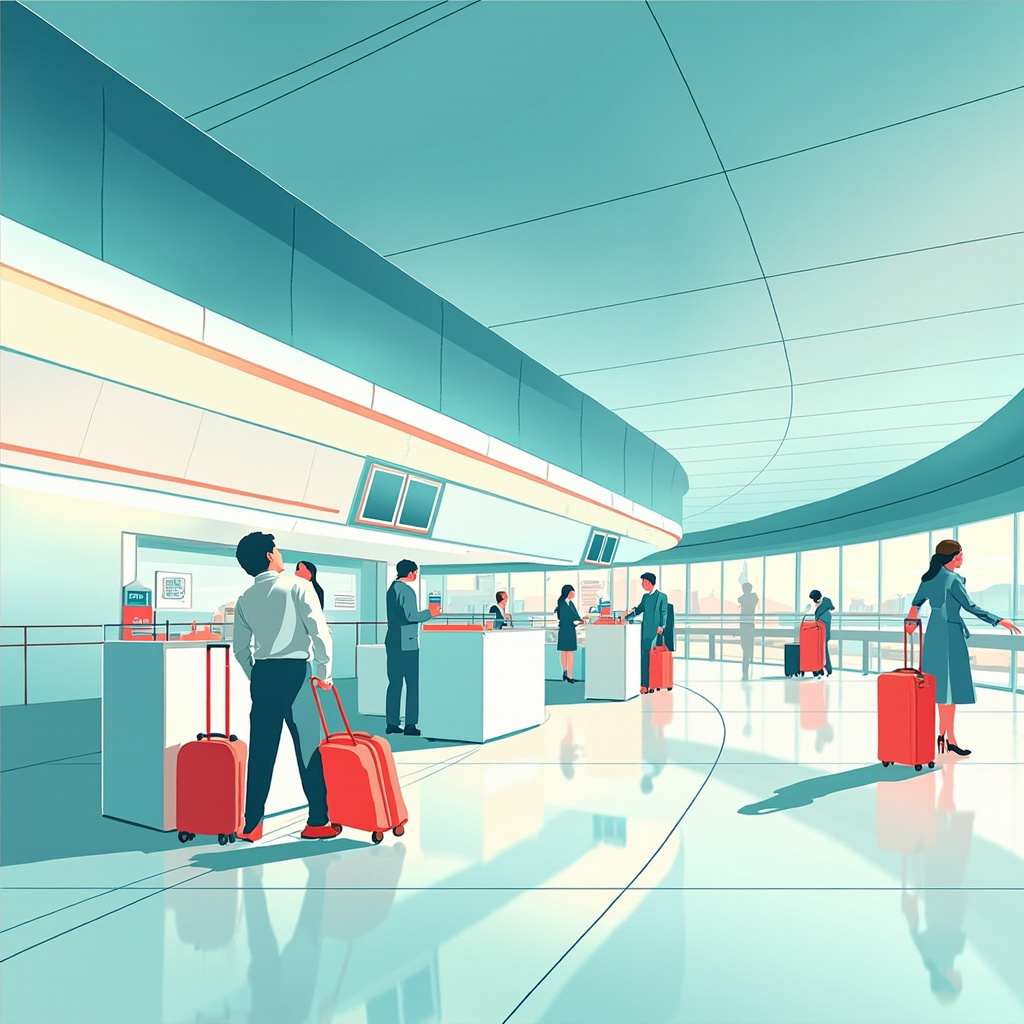
When you fly, you check in at the airport counter. The check-in agent asks you questions, and you answer. This section teaches you the most common phrases for this conversation.

The agent often starts with: 'May I see your passport?' A passport is a small book with your photo. You answer: 'Here you are.' Then the agent asks: 'How many bags are you checking?' Bags or baggage are the suitcases you put under the plane. You say the number.

Next, the agent asks: 'Window or aisle?' A window seat is next to the window. An aisle seat is next to the walking space. You choose one. Then the agent gives you your boarding pass — this is your ticket to get on the plane. It also tells you the gate number. A gate is the door where you wait to enter the plane.

Other useful questions:

  • 'What time does the plane leave?' — the agent tells you the time.
  • 'What time does boarding start?' — boarding is when you walk into the plane.

Finally, you say: 'Thank you. Have a nice flight.' The agent answers: 'You too. Have a safe trip.' Practice these phrases. They are the same in every airport around the world!

Checking in at the Airport ✈️

النهاردة هنتعلم إزاي نعمل check in في المطار. الموقف بسيط: إنت بتمشي للكاونتر، الموظف هناك بيقولك hello وبيبدأ يسألك كام سؤال، وإنت بترد عليه بكلام قصير ومهذب. الحوار ده بيحصل في كل مطار في العالم تقريبًا، فلما تتقنه هتتحرك براحتك في أي رحلة.

الكلمات المهمة (Key Vocabulary)

  • Passport: الكتاب اللي معاك وفيه صورتك وبياناتك. الموظف بيقولك "May I see your passport?" وإنت بترد "Here you are" — يعني "تفضل خد".
  • Bags / Baggage: الشنط اللي هتروح في الطيارة. لما يسألك "How many bags today?" قول الرقم وكلمة please في الآخر.
  • Window seat: الكرسي جنب الشباك. Aisle seat: الكرسي جنب الممر اللي الناس بتمشي فيه.
  • Boarding pass: الورقة اللي بيدهالك إياها، دي تذكرتك عشان تصعد للطيارة.
  • Gate: الباب اللي بتستنى عنده عشان تدخل الطيارة، زي B12 مثلًا.
  • Boarding: اللحظة اللي بتمشي فيها جوه الطيارة.

الجُمل اللي هتتعلمها (Key Phrases)

  • "May I see your passport?""ممكن أشوف الباسبور بتاعك؟" فعل may هنا بيخلّي الطلب مهذب جدًا.
  • "Here you are.""تفضل خد." جملة قصيرة جدًا بنقولها لما ندي حد حاجة.
  • "How many bags today?""كام شنطة النهاردة؟" سؤال عن العدد.
  • "Just one, please.""شنطة واحدة بس، لو سمحت." كلمة just معناها "بس" أو "فقط".
  • "Window or aisle?""شباك ولا ممر؟" سؤال اختيار، وإنت بترد بكلمة واحدة بس.
  • "Window, please.""شباك، لو سمحت." خلي بالك دايمًا ضيف please عشان تبان مهذب.
  • "Have a nice day.""يوم جميل." وده اللي الموظف بيقوله في الآخر.

نصيحة سريعة (Quick Tip)

في المطار الموظف بيكلمك بكلام قصير ومباشر، فمتحتاجش ترد بجمل طويلة. جمل بسيطة زي "Here you are" و"Just one, please" كافية جدًا. كمان لاحظ إن الموظف بيسأل أسئلة choice questions زي "Window or aisle?" وإنت بترد بكلمة واحدة — ده بيسهّل عليك جدًا!

A passenger checks in at the airport. Listen to the phrases.

  1. T
    Tom Good morning. May I see your passport?
  2. E
    Emma Here you are.
  3. T
    Tom Thank you. How many bags today?
  4. E
    Emma Just one, please.
  5. T
    Tom Window or aisle?
  6. E
    Emma Window, please.
  7. T
    Tom Here is your boarding pass. Your gate is B12.
  8. E
    Emma Thank you! Have a nice day.
Required

Match each question to the correct answer.

Match each question to the correct answer.

  • When the agent asks for your passport, you say...
  • When the agent asks for your seat, you say...
  • When the agent asks about your bags, you say...
  • The agent gives you this to get on the plane:
  • Here you are.
  • Window, please.
  • Just one, please.
  • boarding pass
Required

Put the words in order to make a phrase you hear at the check-in counter.

  1. see
  2. may
  3. passport
  4. I
  5. your
Required

Practice giving your passport to the agent.

Here is my passport.

Listening

Listening

5 cards

In this section, you listen to a real conversation at the airport check-in counter. The speaker is Sarah. She is a passenger on her way to London for a short vacation. The other speaker is Mark, the check-in agent. Mark works at the airline counter. He helps passengers get their boarding passes and put their bags on the plane.

Before you listen, look at the picture in your mind. Where is Sarah? She is standing at the check-in counter at the airport. What is she doing? She is starting her trip. What does she need? She needs her passport, her bag, and her boarding pass.

Now listen carefully. The agent asks questions. Sarah answers. At the end, Sarah has her boarding pass and her gate number. Listen for the key words: passport, bags, window, gate, boarding pass.

After you listen, you answer three questions:

  1. A GIST question — the main idea.
  2. A SPECIFIC INFORMATION question — one fact from the conversation.
  3. A DETAIL question — a small fact, like a number or a name.

Remember: don't panic if you miss a word. Listen for the main idea first, then for specific information.

التسجيل في المطار - Check-in at the Airport

In this section, you hear a real conversation between Sarah, a passenger flying to London for a short vacation, and Mark, the airline check-in agent. The whole conversation happens at the airport counter right before boarding.

الكلمات الجديدة - New Words

  • passport - الباسبور أو جواز السفر
  • bags - الشنط أو الحقائب
  • suitcase - شنطة سفر واحدة
  • window - مقعد جنب الشباك
  • aisle - مقعد جنب الممر
  • boarding pass - كارت الصعود للطائرة
  • gate - البوابة اللي هتدخل منها

جُمل مهمة وكلام أدب - Polite Phrases

1. الطلب بأدب باستخدام "May I"

The agent says: "May I see your passport?" - يعني "ممكن أشوف الباسبور بتاعك؟"

Here, "May I" is a polite way to ask for something. It's very common with airport staff, hotel receptionists, and in any formal situation. You can use it like this:

  • May I see your ID?
  • May I help you?
  • May I have your name, please?

2. الإجابة القصيرة بـ "Just"

When Mark asks "How many bags are you checking today?", Sarah answers "Just one suitcase." - يعني "شنطة واحدة بس".

The word "just" means "بس" أو "فقط". It's super useful in spoken English. Examples:

  • Just two minutes. - دقيقتين بس.
  • Just water, thanks. - مية بس، شكراً.

3. الاختيار بين حاجتين - Giving Two Choices

"Window or aisle?" - يعني "شباك ولا ممر؟"

The agent gives Sarah a clear choice between two options. This pattern is everywhere in English:

  • Tea or coffee?
  • Cash or card?
  • Small or large?

4. الطلب بأدب بـ "Please"

"Window, please." - يعني "شباك، لو سمحت".

When you say what you want, just add "please" at the end. It works with anything:

  • Aisle, please.
  • The red one, please.
  • Check, please. (في المطعم لما تطلب الفاتورة)

نصيحة للاستماع - Listening Tip

الاستماع في 3 مراحل:

  • أول مرة: امسك الفكرة العامة (gist) - إيه اللي بيحصل في المحادثة أصلاً؟
  • تاني مرة: ركز في معلومة معينة - رقم، اسم، أو وقت
  • تالت مرة: ادور على التفاصيل الصغيرة - رقم البوابة B12، نوع المقعد

متقلقش لو مسمعتش كل كلمة. المحادثات الحقيقية في المطار بتحصل بسرعة. ركز على الكلمات المهمة الأول، وبعدين ارجع استمع تاني.

Sarah is at the airport check-in counter. Listen to her conversation with the agent.

  1. M
    Mark Good morning. May I see your passport?
  2. S
    Sarah Here you are.
  3. M
    Mark Thank you. How many bags are you checking today?
  4. S
    Sarah Just one suitcase.
  5. M
    Mark OK. Window or aisle?
  6. S
    Sarah Window, please.
  7. M
    Mark Here is your boarding pass. Your gate is B12.
  8. S
    Sarah What time does the plane leave?
  9. M
    Mark It leaves at 11:30.
  10. S
    Sarah Thank you!
Required

GIST: Where is Sarah?

  • At a hotel
  • At the airport
  • On the plane
Required

SPECIFIC: Sarah has two bags.

Required

DETAIL: Sarah's gate number is ___.

Pronunciation

Pronunciation

7 cards

The /eɪ/ sound is a long vowel. You can hear it in words like gate, plane, and take. To make this sound, open your mouth and put your tongue low and toward the front. Your lips are a little open, like a small smile. Then slowly close your mouth a little. The sound is long — you can feel your mouth move from open to almost closed.

This sound often comes from the letters a-e (as in gate, plane, take), ay (as in day, way), and ai (as in wait, train). The /eɪ/ sound is very common at the airport. You can hear it in words like boarding gate, plane, and the verb to take a flight.

Now compare /eɪ/ with the short /æ/ sound, as in cat and bag. The two sounds are different: /eɪ/ is long, and /æ/ is short. Listen to these pairs: gate /geɪt/ vs get /ɡɛt/; wait /weɪt/ vs wet /wɛt/. Be careful — sometimes the difference is small, but the vowel is much longer in /eɪ/.

Practice words for /eɪ/:

  • gate (the door at the airport)
  • plane (the airplane)
  • take (verb: to take a flight)
  • wait (verb: please wait in line)
  • late (adjective: the plane is late)
  • name (noun: your name on the ticket)

صوت الـ /eɪ/ في الإنجليزي

السلام عليكم يا أصدقاء! النهاردة هنتكلم عن صوت مهم جداً في اللغة الإنجليزي، وهو صوت الـ /eɪ/، اللي بيتسمى الـ "long A" أو الألف الطويلة. الصوت ده هتلاقيه في كلمات كتير بتستخدمها في المطار، زي gate (البوابة)، وplane (الطيارة)، وtake (تاخد)، وwait (تستنى).

إزاي بتعمل الصوت ده بفيك؟

عشان تعمل صوت الـ /eɪ/ صح، افتح بقك شوية وحط لسانك في نص فمك، وقرب شفايفك لبعض زي ما أنت مبتسم ابتسامة صغيرة. ابدأ الصوت بفم مفتوح شوية وبعدين قفل فمك شوية شوية مع إن الصوت بيمشي. الصوت ده طويل، يعني بتفضل ماسكا عليه لثانيتين تقريباً. لو بصيت على المراية هتلاقي فمك بيتحرك من مفتوح لحد ما بيقرب يتقفل.

إزاي بيبقى مكتوب في الكلمة؟

صوت الـ /eɪ/ ممكن يتبقى مكتوب بأكتر من طريقة في الإنجليزي:

  • a-e: زي gate وplane وtake وlate وname
  • ay: زي day وway وstay
  • ai: زي wait وtrain وmain

فرق مهم: الـ /eɪ/ الطويل والـ /æ/ القصير

خلي بالك، صوت الـ /eɪ/ طويل، بس في صوت تاني شبه اسمه وهو الـ /æ/ وهو قصير. اتفرج على الفرق في الكلمات دي:

  • gate /geɪt/ (البوابة - طويل) vs get /ɡɛt/ (تجيب - قصير)
  • wait /weɪt/ (تستنى - طويل) vs wet /wɛt/ (مبلول - قصير)

الفرق بينهم صغير بس مهم جداً. الـ /eɪ/ بتمسكه أكتر والـ /æ/ بتخرجه بسرعة.

دلوقتي دورك!

اسمع الكلمات في التمارين وكررها بصوت عالي. ركز إنك تخلي الصوت طويل ومستمر. لو عملت كده، هتقدر تقول الكلمات دي في المطار بكل ثقة!

To make the /eɪ/ sound: open your mouth wide, put your tongue low and forward, and smile a little. The sound is long — your mouth moves from open to almost closed. You can feel the vowel stretch. Practice saying gate — /geɪt/ — slowly. Now try plane — /pleɪn/.

Required

Listen. Which word do you hear?

  • gate
  • get
Required

Listen. Which word do you hear?

  • wait
  • wet
Required

Read this phrase. The /eɪ/ sound is in 'gate'.

the gate is here

Required

Read this phrase. The /eɪ/ sound is in 'take' and 'plane'.

I take a plane

Required

Read this phrase. The /eɪ/ sound is in 'wait'.

please wait here

Reading

Reading

6 cards

In this section, you read a short postcard. A postcard is a small card you send from a trip. People write postcards to family and friends. A postcard is short — only 3 or 4 sentences.

STRATEGY BOX: Skimming When you skim a text, you read it quickly. You do not read every word. You only look for the main idea. Ask yourself: Who is the writer? Where is the writer? What is the writer doing? Read the first and last sentences first. Then read the middle quickly. Skimming helps you understand the text in 30 seconds.

Key words to learn before reading:

  • postcard — a small card you send in the mail when you travel
  • weather — is it hot, cold, sunny, or rainy?
  • delicious — very good to eat
  • souvenir — a small thing you buy on a trip to remember it

Now read the postcard. Skim it first. What is the main idea? Then read it again and answer the questions.

إيه هو الـ Skimming؟

الـ skimming ده أسلوب قراءة سريع، يعني إنت بتمشي عينك على النص بسرعة عشان تاخد الفكرة العامة بس، مش لازم تقرأ كل كلمة. تخيل كده إنك بتبص على صورة من بعيد عشان تعرف هي صورة إيه من شكلها العام، من غير ما تقرّب وتتفصّل. الهدف من الـ skimming إنك تجاوب على 3 أسئلة مهمة:

  • مين الكاتب؟
  • هو فين؟
  • بيعمل إيه؟

إزاي تـ skim صح؟

الخطوات بالترتيب:

  • اقرأ أول جملة (دي غالبًا بتقولك الموضوع أو المكان).
  • اقرأ آخر جملة (دي غالبًا بتقولك الخاتمة أو الإحساس).
  • بص على الجمل اللي في النص بسرعة عشان تربط الموضوع ببعض.

إيه هو الـ Postcard؟

الـ postcard ده كارت صغير بتبعته في السفر للأهل أو الأصحاب. وعادةً بيكون قصير جدًا — 3 أو 4 جمل بس. زي ما تقول: "Dear Mom, I am in Paris. The weather is sunny. The food is delicious. Love, Ali." كده خلصنا الـ postcard.

الكلمات الجديدة في الـ Postcard

  • postcard — كارت صغير بتبعته لما تسافر.
  • weather — الطقس، يعني حر، برد، شمس، ولا مطر.
  • delicious — حاجة لذيذة أوي في الأكل.
  • souvenir — حاجة صغيرة بتشتريها في الرحلة عشان تفتكرها بيها.

إزاي تطبق على الـ Postcard؟

لما تيجي تقرأ الـ postcard، ابدأ بالـ skimming الأول. خد بالك من أسماء الأماكن زي Paris أو Cairo، والأفعال المهمة زي visit أو eat أو buy. الكلمات اللي فوق هتساعدك تفهم بسرعة. بعد كده اقرأ تاني مرة بهدوء عشان تجاوب الأسئلة. لو مش فاهم كل كلمة، عادي — الفكرة العامة هي اللي مهمة الأول.

نصيحة عملية للحفظ

لما تشوف كلمة delicious، اربطها بالأكل. ولما تشوف souvenir، فكّر فيها كهدية تذكارية. ربط الكلمة بالموقف بيسهّل عليك تفتكرها في أي وقت.

A Postcard from Paris

Dear Mom,

I am in Paris! The flight was great. I sit by the window. Now I am at a small hotel. The weather is warm and sunny. I eat a lot of bread and cake. It is delicious! Tomorrow I visit the Eiffel Tower. I buy you a small gift.

See you next week! Love, Anna

Required

GIST: Who is Anna writing to?

  • Her friend Lisa
  • Her mom
  • Her teacher
Required

Anna sits by the aisle on the plane.

Required

What is the weather like in Paris?

  • Cold and rainy
  • Warm and sunny
  • Hot and cloudy
Required

Anna visits the Eiffel Tower tomorrow.

Speaking

Speaking

6 cards

In this section, you practice speaking. You practice the check-in conversation at the airport. The model conversation is short and simple. Notice the order:

  1. Greeting
  2. Passport
  3. Window or aisle
  4. Boarding pass
  5. Goodbye

Useful phrases:

  • 'Good morning. May I see your passport, please?' — the agent.
  • 'Here you are.' — you give the passport.
  • 'Window or aisle?' — the agent asks.
  • 'Window, please.' — you choose.
  • 'Here is your boarding pass.' — the agent.
  • 'Thank you!' — you say thank you.
  • 'Have a nice flight.' — the agent says goodbye.
  • 'You too.' — you answer.

Tips for speaking:

  • Speak slowly and clearly.
  • Use short sentences.
  • Smile when you speak! It helps your voice sound friendly.
  • Don't worry about mistakes. The agent understands you.

After practice, you have a real conversation with the AI. The AI plays the check-in agent. You are the passenger. Try to use the phrases from this lesson.

الموقف في المطار: Check-in

الدرس ده بيعلمك الموقف لما تروح تعملك check-in في المطار يعني لما تروح لكاونتر شركة الطيران عشان تستلم كارت الصعود وباسبورك يتختم. الموقف بسيط جداً وفيه جمل قليلة بس، لو حفظتهم هتعدي الموقف ده بكل سهولة.

ترتيب المحادثة

المحادثة كلها بتمشي في خطوات واضحة وثابتة:

  • التحية وطلب الباسبور
  • سؤال اختيار المقعد
  • تسليم كارت الصعود
  • الخاتمة

الجُمل المهمة بالتفصيل

أول حاجة: الموظف بيقول "Good morning. May I see your passport?" يعني "صباح الخير، ممكن أشوف الباسبور؟" كلمة May هنا بنستخدمها لما نطلب حاجة بأدب — أحسن من إنك تقول حاجة مباشرة، عشان كده الجملة بتبقى مهذبة.

ردك: بتقول "Here you are." يعني "اتفضل." ولو عايز تقول جملة كاملة بتقول "Here is my passport." لاحظ هنا بنستخدم is لأن passport كلمة مفرد.

تالت حاجة: الموظف بيسألك "Window or aisle?" يعني "شباك ولا ممر؟" الجملة دي سؤال قصير بيعرضلك اختيارين بس. ردك بيكون "Window, please." أو "Aisle, please." دايماً بنضيف please عشان الكلام يبقى مؤدب.

رابع حاجة: الموظف بيديالك الكارت ويقول "Here is your boarding pass. Gate B12." يعني "ده كارت الصعود، البوابة B12." لاحظ إن "Here is" معناها "اتفضل ده" وبتيجي قبل أي حاجة بنوريها لحد.

آخر حاجة: بتقول "Thank you!" والموظف ممكن يقول "Have a nice flight" وانت ترد "You too."

نصايح للمحادثة

  • اتكلم بهدوء وبوضوح — مش لازم تتكلم بسرعة.
  • استخدم جمل قصيرة — دي أسهل عليك وأسهل للموظف يفهمك.
  • ابتسم وانت بتتكلم — صوتك بيبقى ودود وواضح.
  • متخافش من الغلط — الموظف متعود يسمع مسافرين من كل العالم.

دلوقتي هتسجل نفسك بتقول الجمل دي، وبعدها هتعمل محادثة حقيقية مع الـ AI اللي هيقوم بدور الموظف وانت تبقى المسافر.

Listen to this short model conversation at the check-in counter.

  1. T
    Tom Good morning. May I see your passport?
  2. E
    Emma Here you are.
  3. T
    Tom Window or aisle?
  4. E
    Emma Window, please.
  5. T
    Tom Here is your boarding pass. Gate B12.
  6. E
    Emma Thank you!

Here is my passport.

This is the key phrase for giving your passport to the agent.

Required

Read this sentence aloud. Speak clearly.

Here is my passport.

Required

Read this sentence aloud. This is how you choose a seat.

Window, please.

Required

You are at the airport. The AI is the check-in agent. Answer the agent's questions. Use the phrases from this lesson: 'Here is my passport', 'Window, please', 'Just one, please', 'Thank you'.

Writing

Writing

6 cards

In this section, you write a travel postcard. A postcard is a small card. You write a short message to family or friends. You also write the address on the back. The message is usually 2-4 short sentences.

MODEL POSTCARD:

Hi Lisa!

I am in Tokyo! The weather is hot and sunny. I eat sushi every day. It is delicious! Tomorrow I go to a big temple with my friend. We take many photos. The city is very beautiful.

See you soon! Tom

STRATEGY: Using simple present

When you write about your trip, use simple present. It is easy and short:

  • 'I am in [place].' — where you are
  • 'The weather is [word].' — hot, cold, sunny, warm
  • 'I eat [food].' — what you eat
  • 'I visit [place].' — what you see
  • 'It is [adjective].' — how you feel, how things look

Sentence starters you can use:

  • 'I am in...'
  • 'The weather is...'
  • 'I eat...'
  • 'Tomorrow I...'
  • 'See you...'

After you write your postcard, read it aloud. This helps you check your words. Does it sound right? Did you use simple present?

الكتابة: إزاي تكتب بوست كارت من رحلتك 📬

في الجزء ده من الدرس، إنت هتكتب postcard - يعني كارت بوستال صغير بتبعت فيه رسالة قصيرة لحد من أهلك أو صحابك. الفكرة كلها إنك تكتب من 2 لـ 4 جمل بسيطة عن رحلتك، بالظبط زي ما يكون حد من أهلك بيسألك "إيه الأخبار؟" وإنت بترد عليه بكلام سهل ومختصر.

القاعدة الأساسية: Simple Present

لما بتحكي عن رحلتك، استخدم زمن المضارع البسيط (Simple Present) في الإنجليزية. ليه؟ لأنه سهل وقصير ومناسب للرسايل. خلّينا نفتكر القاعدة بسرعة:

  • لو الفاعل I, you, we, they → الفعل بيفضل زي ما هو: I eat, we visit, they go
  • لو الفاعل he, she, it (أو اسم مكان) → بنضيف s في الآخر: The weather is, I eat sushi، The city looks beautiful

جمل جاهزة تبدأ بيها ✍️

الدرس بيدّولك كام sentence starter كده عشان الكلام ييجي سهل عليك:

  • "I am in..." — عشان تقول مكانك. مثلاً: I am in Tokyo.
  • "The weather is..." — عشان تصف الجو. ممكن تقول: The weather is hot and sunny، أو The weather is cold and rainy.
  • "I eat..." — عشان تاكل أكلة. مثلاً: I eat sushi every day.
  • "Tomorrow I..." — عشان تقول خطتك. مثلاً: Tomorrow I visit a big temple.
  • "See you..." — عشان تسلّم على صاحبك. مثلاً: See you soon! أو See you next week!

الموديل من الدرس 📨

في الدرس فيه مثال من Tom لصاحبته Lisa، طوله 4 جمل بس:

I am in Tokyo! The weather is hot and sunny. I eat sushi every day. It is delicious! Tomorrow I go to a big temple with my friend. We take many photos. The city is very beautiful. See you soon!

نصيحة مهمة من المعلم 💡

لما تخلّص البوست كارت بتاعك، اقراها بصوت عالي. ده بيساعدك تكتشف أي كلمة غلط أو جملة مش طبيعية. اسأل نفسك: هل استخدمت simple present؟ هل الكلام شكله زي ما حد بيكتبه لصاحبه؟

يلا نكتب البوست كارت بتاعك! ✈️

Using simple present in a postcard

When you write about your trip, use simple present verbs: am, is, eat, visit, go, take. Look at the model:

  • I am in Tokyo. (verb: am)
  • The weather is hot. (verb: is)
  • I eat sushi. (verb: eat)
  • Tomorrow I go to a temple. (verb: go)
  • We take many photos. (verb: take)

Simple present is short and clear. It is the best tense for a postcard.

Required

In the model postcard, the writer uses 'I am in Paris' to say where she is.

Required

Which sentence uses simple present?

  • I am in Tokyo.
  • I went to Tokyo.
  • I will go to Tokyo.
Required

Practice reading this postcard aloud. Then write your own postcard in your notebook — about a real or imaginary trip. Use simple present. Read your postcard aloud when you finish.

Hi Lisa! I am in Tokyo. The weather is hot. I eat sushi. It is delicious! See you soon!

Required