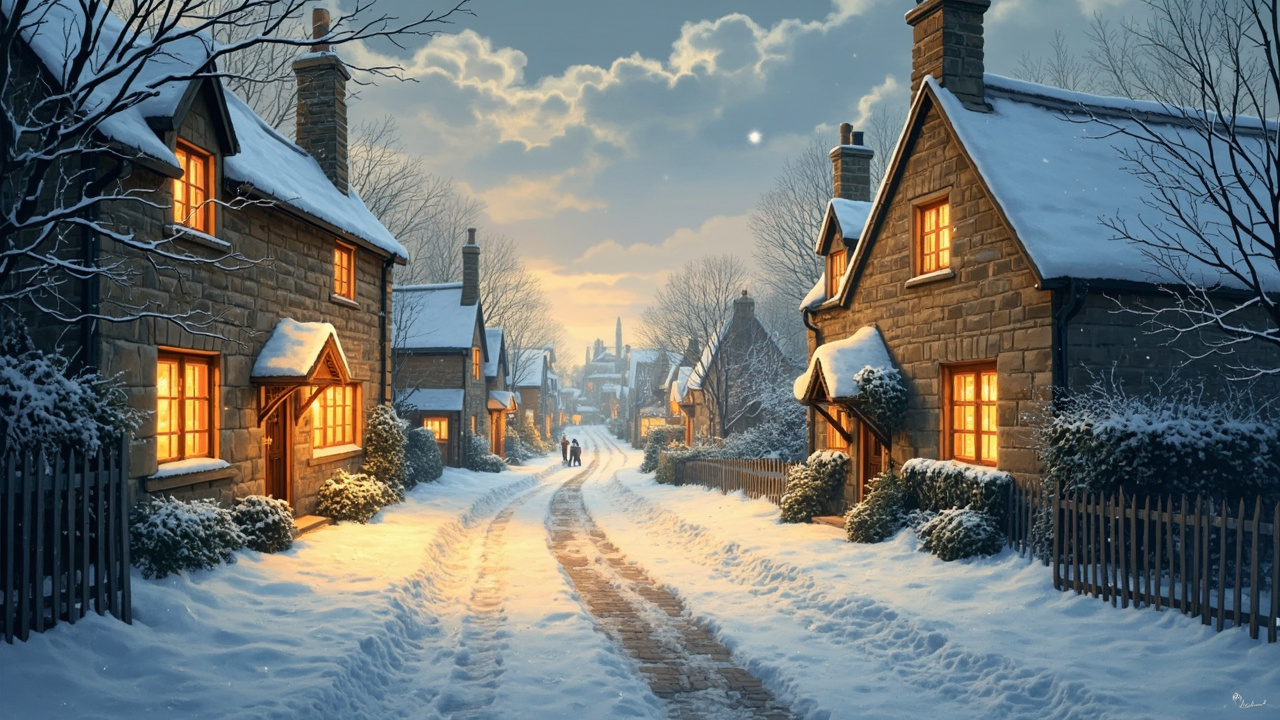
بدأ الثلج الأول في الهبوط على هينتون آباس مساء يوم الثلاثاء، وهو يتساقط برفق كأنّه ريش من وسادة مُزعزعة. بحلول الصباح، كانت قريتنا الصغيرة في كوتسوولد قد اختفت تحت بطانية نقية يزيد عمقها عن نصف متر. كانت الطرق مسدودة. كانت أسلاك الهاتف تتدلى تحت ثقلها المتجمد. كان هينتون آباس، مؤقتاً، منفصلاً عن العالم.
عاشت مارغريت هيوز في القرية اثنتين وسبعين سنة وكان يمكنها أن تتذكر شتاءات أسوأ من هذه. لكنّها لم تشعر قطّ بهذا الشعور من الوحدة. كان زوجها قد رحل في الربيع الفائت، وبدا الثلج وكأنّه يُبرز كلّ كرسيٍّ فارغ وكلّ غرفة صامتة في كوخهما. كانت تملك ما يكفي من الطعام لأيّّام قليلة، كما ظنّت، لكنّ الفحم كان ينفد وفكرة التوجّه إلى مستودع الفحم عبر ذلك المسار الزلج كانت تملأها رعباً.
كانت تجلس عند النافذة، تائهة في أفكارها حول عشاء بارد، حين سمعت طرقاً على الباب. وقف على عتبة الباب توم باريت الصغير، اثنتا عشرة سنة ووجهه محمّر من البرد. كان يحمل سلّة فيها رغيف خبز و十二 بيضة وجرّة مربى.
"أرسلتهم أمي"، قال. "لاحظت أنّك لم تذهبي إلى المتجر بالأمس."
حاولت مارغريت الاعتراض أنّها لا يمكنها أن تقبل الصدقة، لكنّ توماً لم يقبل ذلك. "ليست صدقة، السيّدة هيوز. إنّها فقط مجرّد مجاملة الجيران." ابتسم، ثمّ اعترف أنّه أراد أيضاً أن يجرّب زلجته الجديدة على التلّة خلف الكنيسة.
في تلك الليلة، شهدت القرية المزيد من هذه اللفتات. في متجر القرية، حيث كان دايفيد تشن قد استلمه للتوّ بعد انتقاله من مانشستر، تجمّعت مجموعة صغيرة رغم الثلج. لم يأتِ الزبائن ليشتروا provisions. جاءوا يحملون المجارف، يعرضون تنظيف الطريق أمام المتجر مقابل أيّ خبز وحليب يمكن لدايفيد أن يوفّره.
دايفيد، الذي كان يقلق من أنّ villagers لن يقبلوا قطعياً شخصاً غريباً يدير متجرهم الوحيد، وجد نفسه يصافح هربرت فينش، المزارع العجوز الذي كان قد رفض التحدّث إليه لأسابيع. الآن كانوا يقفون جنباً إلى جنب، ينظفون الطريق الأبيض معاً، يتبادلون بين الحين والآخر إيماءة. لكنّها كانت كافية.
خلال الأيّام التالية، حدث تحوّل غريب. بدأت العزلة التي بدت مثقلة جداً بفكّ قبضتها تدريجياً. بدأ الناس الذين كانوا يتجاوزون بعضهم لسنوات دون كلمة يوقفون الآن للدردشة. البريدجي الكاره الذي لم يبتسم في حياته حسبما يتذكّر أحد، شوهد وهو يضحك مع زوجة الخبّاز. والمراهقة التي كانت قضت معظم وقتها محبوسة في غرفتها، شوهدت تساعد رجلاً عجوزاً على حمل مشترياته إلى البيت.
كان الثلج قد خلق توقفاً، صمتاً فيه تمكّنت القرية أخيراً من أن تسمع نفسها. اكتشف الجيران أنّهم يتقاسمون اهتمامات لم يكن لديهم وقت لاستكشافها. دُعيت الخلافات القديمة جانباً، لم تُنسَ، لكنّها وُضعت كحقائب ثقيلة لم تعد هناك حاجة إليها.
بحلول الخميس، كان الطريق الرئيسي واضحاً بما يكفي لمرور شاحنة واحدة، جالبة معها أخبار أنّ العالم الخارجي لم ينسَ هينتون آباس بعد. لكنّ شيئاً ما تغيّر في القرية نفسها، ومارغريت هيوز وجدت نفسها تتساءل عمّا إذا كانت تريد أن تعود الأمور إلى ما كانت عليه قبل.
أشتبه أنّها لم تكن تريد ذلك.
في يوم السبت، بينما كان آخر الثلج يذوب من ممرّ حديقتها، خبزت مارغريت كعكة إسفنجية ومشت ببطء عبر القرية، Deliver a slice to every house on the way. في المتجر، ابتسم دايفيد وعرض عليها فنجان شاي، which she accepted. جلسوا في الغرفة الخلفية، يدفئون أنفسهم près du petit radiateur، وتحدثوا عن لا شيء particular for nearly an hour.
اختفى الثلج، لكنّ الصمت الذي خلّفه وراءه كان مختلفاً. كان ذلك النوع المريح، النوع الذي يوجد بين الناس الذين تذكّروا، أخيراً، أنّهم ينتمون إلى بعضهم البعض.
Der erste Schnee begann am Dienstagabend auf Hinton Abbas zu fallen, sanfte Flocken, die herabschwebten wie Federn aus einem aufgeschüttelten Kissen. Bis zum Morgen war das kleine Cotswold-Dorf unter einer makellosen Decke verschwunden, die einen halben Meter tief war. Die Straßen waren blockiert. Die Telefonleitungen hingen unter ihrer gefrorenen Last durch. Hinton Abbas war, für eine Weile, von der Welt abgeschnitten.
Margaret Hughes hatte zweiundsiebzig Jahre im Dorf gelebt und konnte sich schlimmere Winter als diesen erinnern. Aber sie hatte sich noch nie so allein gefühlt. Ihr Mann war im vergangenen Frühling gestorben, und der Schnee schien jede leere Stuhl und jedes stille Zimmer in ihrem Cottage zu betonen. Sie hatte genug Essen für ein paar Tage, nahm sie an, aber die Kohle ging zur Neige und der Gedanke, sich zum Kohleschuppen rüberzumachen, über den gefährlichen Pfad, erfüllte sie mit Furcht.
Sie saß am Fenster, betrachtete ein kaltes Abendessen, als sie ein Klopfen an der Tür hörte. Auf ihrer Schwelle stand der junge Tom Barrett, zwölf Jahre alt und mit vor Kälte geröteten Wangen. Er hielt einen Korb mit einem Laib Brot, einem Dutzend Eiern und einem Glas Marmelade.
"Mama hat die geschickt," sagte er. "Sie hat bemerkt, dass du gestern nicht im Laden warst."
Margaret versuchte zu protestieren, dass sie unmöglich Almosen annehmen könne, aber Tom ließ nicht mit sich reden. "Das ist keine Wohltätigkeit, Frau Hughes. Das ist nur gute Nachbarschaft." Er grinste, gab dann zu, dass er auch seine neuen Schlitten auf dem Hügel hinter der Kirche ausprobieren wollte.
An diesem Abend sah das Dorf weitere solcher Gesten. Im Dorfladen, wo David Chen erst kürzlich die Leitung übernommen hatte, nachdem er aus Manchester gezogen war, hatte sich trotz des Schnees eine kleine Schlange gebildet. Die Kunden waren nicht gekommen, um Vorräte zu kaufen. Sie waren mit Schaufeln gekommen und boten an, den Weg vor dem Laden zu räumen, im Austausch für welches Brot und Milch David auch immer entbehren konnte.
David, der sich Sorgen gemacht hatte, dass die Dorfbewohner einen Außenseiter niemals akzeptieren würden, der ihren einzigen Laden führt, fand sich dabei wieder, dem alten Farmer Herbert Finch die Hand zu schütteln, der wochenlang nicht mit ihm gesprochen hatte. Jetzt standen sie Seite an Seite, räumten gemeinsam den weißen Weg, tauschten nur gelegentlich ein Nicken aus. Aber es war genug.
In den folgenden Tagen fand eine merkwürdige Verwandlung statt. Die Isolation, die so erdrückend gewesen schien, löste allmählich ihren Griff. Menschen, die sich jahrelang ohne ein Wort passiert hatten, blieben jetzt stehen, um zu plaudern. Der mürrische Postbote, der nach所有人的 Erinnerung nie gelächelt hatte, wurde beim Lachen mit der Bäckerfrau gesehen. Das Teenager-Mädchen, das die meiste Zeit in ihrem Schlafzimmer eingeschlossen verbracht hatte, wurde dabei gesehen, wie sie einem älteren Herrn half, seine Einkäufe nach Hause zu tragen.
Der Schnee hatte eine Pause geschaffen, eine Stille, in der das Dorf endlich sich selbst hören konnte. Nachbarn entdeckten, dass sie Interessen teilten, für die sie nie Zeit gehabt hatten zu erkunden. Alte Beschwerden wurden beiseitegelegt, nicht vergessen, sondern abgelegt wie schwere Taschen, die nicht mehr gebraucht wurden.
Bis Donnerstag war die Hauptstraße genug freigeräumt, dass ein einzelner Lastwagen durchkommen konnte, der die Nachricht brachte, dass die Außenwelt Hinton Abbas doch nicht vergessen hatte. Aber etwas hatte sich im Dorf selbst verändert, und Margaret Hughes ertappte sich dabei, wie sie sich fragte, ob sie wollte, dass die Dinge wieder so wurden wie vorher.
Sie vermutete, dass sie es nicht wollte.
Am Samstag, als der letzte Schnee von ihrem Gartenweg schmolz, backte Margaret einen Biskuitkuchen und ging langsam durch das Dorf, verteilte ein Stück an jedes Haus auf dem Weg. Im Laden lächelte David und bot ihr eine Tasse Tee an, die sie annahm. Sie saßen im Hinterzimmer, wärmten sich an der kleinen Heizung, und sprachen eine gute Stunde lang über dies und das.
Der Schnee war weg, aber die Stille, die er hinterlassen hatte, war anders. Es war die angenehme Art, die Art, die zwischen Menschen existiert, die sich schließlich erinnert haben, dass sie einander angehören.
La première neige commença à tomber sur Hinton Abbas un mardi soir, de doux flocons dérivant vers le bas comme des plumes d'un oreiller dérangé. Au matin, le petit village des Cotswolds avait disparu sous une couverture immaculée de cinquante centimètres de profondeur. Les routes étaient bloquées. Les lignes téléphoniques fléchissaient sous leur fardeau gelé. Hinton Abbas était, pour le temps présent, coupé du monde.
Margaret Hughes vivait dans le village depuis soixante-douze ans et se souvenait d'hivers pires que celui-ci. Mais elle ne s'était jamais sentie aussi seule. Son mari était passé au printemps précédent, et la neige semblait souligner chaque chaise vide et chaque pièce silencieuse de leur cottage. Elle avait suffisamment de nourriture pour quelques jours, supposait-elle, mais le charbon s'épuisait et la pensée de s'aventurer vers le hangar à charbon, à travers le sentier glissant, la remplissait d'effroi.
Elle était assise près de la fenêtre, contemplant un souper froid, quand elle entendit frapper à la porte. Debout sur son seuil se trouvait le jeune Tom Barrett, douze ans, les joues rougies par le froid. Il tenait un panier contenant un pain, une douzaine d'œufs et un pot de confiture.
« Maman a envoyé ça », dit-il. « Elle a remarqué que vous n'étiez pas venue au magasin hier. »
Margaret tenta de protester qu'elle ne pouvait certainement pas accepter la charité, mais Tom n'en voulut rien savoir. « Ce n'est pas de la charité, Mme Hughes. C'est juste du bon voisinage. » Il sourit, puis admit qu'il avait aussi voulu essayer son nouveau traîneau sur la colline derrière l'église.
Ce soir-là, le village assista à d'autres gestes similaires. Au magasin du village, que David Chen avait récemment repris après son arrivée de Manchester, une petite file s'était formée malgré la neige. Les clients n'étaient pas venus pour acheter des provisions. Ils étaient venus avec des pelles, offrant de dégager le chemin devant le magasin en échange de tout le pain et le lait que David pouvait leur accorder.
David, qui s'était inquiété que les villageois n'acceptent jamais qu'un étranger gère leur unique magasin, se retrouva à serrer la main d'Herbert Finch, le vieux fermier qui avait refusé de lui parler pendant des semaines. Maintenant ils se tenaient côte à côte, dégageant ensemble le chemin blanc, échangeant seulement parfois un hochement de tête. Mais c'était suffisant.
Au cours des jours suivants, une curieuse transformation s'opéra. L'isolement qui avait semblé si oppressant desserra progressivement son emprise. Des gens qui s'étaient croisés pendant des années sans un mot s'arrêtaient maintenant pour discuter. Le postier grincheux, qui n'avait jamais souri de mémoire d'homme, fut vu en train de rire avec la femme du boulanger. L'adolescente qui avait passé la majeure partie de son temps enfermée dans sa chambre fut aperçue aidant un vieux monsieur à porter ses courses chez lui.
La neige avait créé une pause, un silence dans lequel le village pouvait enfin s'entendre. Les voisins découvrirent qu'ils partageaient des intérêts qu'ils n'avaient jamais eu le temps d'explorer. Les vieux griefs furent mis de côté, non pas oubliés, mais posés comme de lourds sacs dont on n'avait plus besoin.
Jeudi, la route principale était suffisamment dégagée pour qu'un seul camion puisse passer, apportant avec lui la nouvelle que le monde extérieur n'avait pas oublié Hinton Abbas après tout. Mais quelque chose avait changé dans le village même, et Margaret Hughes se demanda si elle souhaitait que les choses redeviennent comme elles étaient avant.
Elle soupçonnait que non.
Samedi, alors que la dernière neige fondait sur le sentier de son jardin, Margaret prépara un gâteau éponge et marcha lentement à travers le village, distribuant une part à chaque maison sur son passage. Au magasin, David sourit et lui offrit une tasse de thé, qu'elle accepta. Ils s'installèrent dans l'arrière-boutique, se réchauffant près du petit radiateur, et parlèrent de choses et d'autres pendant près d'une heure.
La neige était partie, mais le silence qu'elle avait laissé derrière elle était différent. C'était le genre confortable, le genre qui existe entre des gens qui se sont rappelé, enfin, qu'ils s'appartiennent les uns aux autres.
Первый снег начал падать на Хинтон-Аббас во вторник вечером, мягкие хлопья опускались вниз, как перья из потревоженной подушки. К утру маленькая деревушка Котсуолд скрылась под девственно белым покрывалом глубиной в полметра. Дороги были заблокированы. Телефонные провода провисали под тяжестью обледенения. Хинтон-Аббас был, на время, отрезан от мира.
Маргарет Хьюз жила в деревне семьдесят два года и помнила зимы и хуже этой. Но она никогда не чувствовала себя такой одинокой. Её муж ушёл в прошлую весну, и снег, казалось, подчёркивал каждый пустой стул и каждую безмолвную комнату в их коттедже. У неё было достаточно еды на несколько дней, как она полагала, но уголь заканчивался, и сама мысль о том, чтобы выйти к угольному сараю через коварную тропу, наполняла её ужасом.
Она сидела у окна, размышляя о холодном ужине, когда услышала стук в дверь. На её пороге стоял молодой Том Барретт, двенадцать лет, щёки красные от холода. Он держал корзину с буханкой хлеба, дюжиной яиц и банкой варенья.
«Мама это послала, — сказал он. — Она заметила, что вчера вы не были в магазине».
Маргарет попыталась возразить, что никак не может принять милостыню, но Том и слышать не хотел. «Это не милостыня, миссис Хьюз. Это просто соседская взаимопомощь». Он ухмыльнулся, а потом признался, что ему тоже хотелось испробовать его новые сани на холме за церковью.
В тот вечер деревня стала свидетелем и других таких же жестов. В деревенском магазине, где Дэвид Чен только недавно принял дела после переезда из Манчестера, несмотря на снег, выстроилась небольшая очередь. Покупатели пришли не за покупками. Они пришли с лопатами, предлагая расчистить дорожку перед магазином в обмен на любой хлеб и молоко, которые Дэвид мог бы выделить.
Дэвид, который боялся, что деревенские никогда не примут чужака, управляющего их единственным магазином, вдруг обнаружил, что пожимает руки Герберту Финчу, пожилому фермеру, который отказывался с ним разговаривать несколько недель. Теперь они стояли бок о бок, расчищая заснеженную тропу вместе, обмениваясь лишь изредка кивком. Но этого было достаточно.
В последующие дни произошла удивительная перемена. Изоляция, казавшаяся такой гнетущей, постепенно ослабила свою хватку. Люди, которые годами проходили мимо друг друга без единого слова, теперь останавливались поболтать. Ворчливый почтальон, который, на памяти всех, никогда не улыбался, был замечен смеющимся с женой пекаря. Подросток, которая проводила большую часть времени, запершись в своей спальне, была замечена помогающей пожилому господину нести продукты домой.
Снег создал паузу, тишину, в которой деревня наконец-то могла услышать саму себя. Соседи обнаружили общие интересы, на которые у них никогда не было времени. Старые обиды были отложены, не забыты, но отставлены в сторону, как тяжёлые сумки, в которых больше не было нужды.
К четвергу главная дорога настолько расчистилась, что по ней мог проехать один грузовик, привезя с собой весть о том, что внешний мир всё же не забыл Хинтон-Аббас. Но что-то изменилось в самой деревне, и Маргарет Хьюз поймала себя на мысли, хочет ли она, чтобы всё вернулось к прежнему.
Она подозревала, что не хочет.
В субботу, когда последний снег таял на дорожке её сада, Маргарет испекла бисквит и медленно пошла через деревню, неся по куску в каждый дом. В магазине Дэвид улыбнулся и предложил ей чашку чая, которую она приняла. Они сидели в подсобке, греясь у маленького обогревателя, и разговаривали ни о чём особенном почти час.
Снег ушёл, но оставленная им тишина была другой. Это была уютная тишина, та, что существует между людьми, которые наконец вспомнили, что принадлежат друг другу.