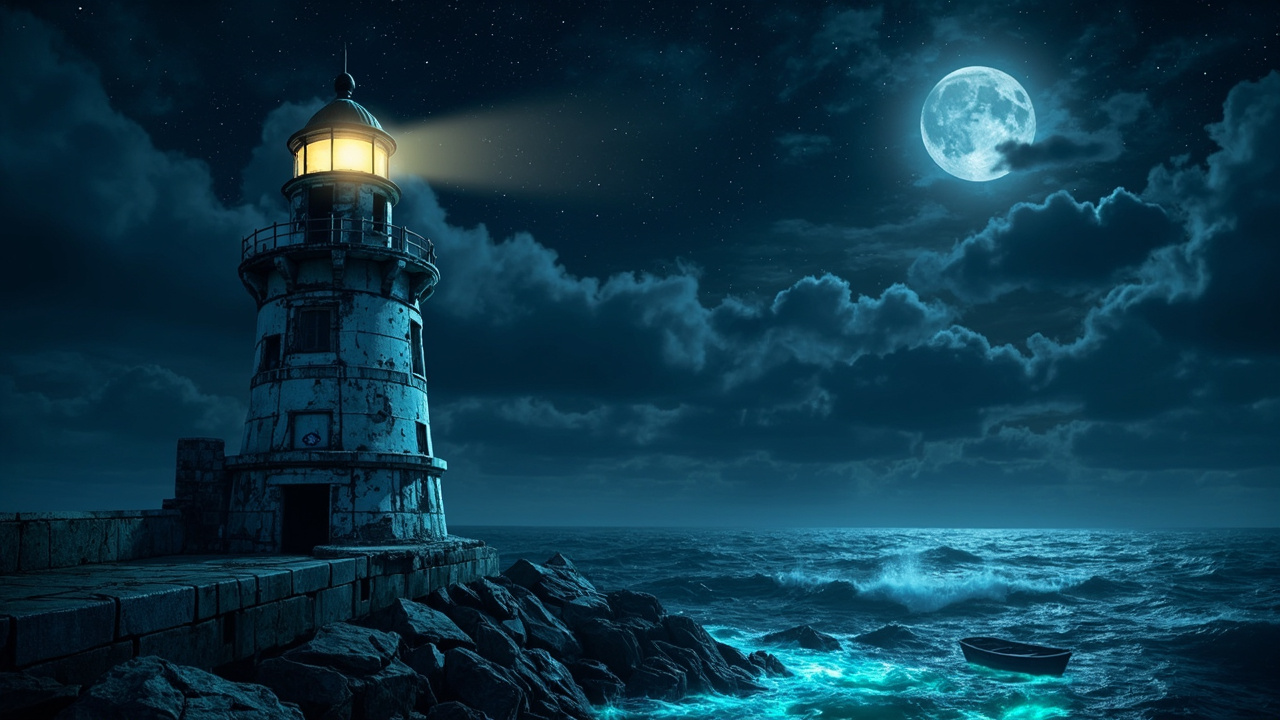
شقّت القارب طريقها عبر الظلام، بينما كان هيكها يحتك بكثرة الطحالب البحرية عندما رسا الدكتور إلينور مارش بجانب رصيف الحجر المتداعي. يرتفع المنارة فوقها، شكل شاحب كئيبة ضد النجوم—ضوءها المنار منطفئ منذ زمن بعيد، وهدفها أصبح باليًا كسجلات حارس المنارة التي كانت تسجّلcomings and goings من سفن الصيد وسفن التجارة.
كانت قد جاءت لدراسة الطحالب البحرية المتوهجة بيولوجيًا والتي يُقال إنها تزدهر في المياه المحيطة بصخرة مورثورن، وهو نتوء معزول على بعد عشرين ميلاً من ساحل كورنوال. كان الظاهرة موثقة من قبل صيادي الأسماك المحليين لأجيال: في ليالٍ معينة، كان البحر يتوهج بلون أزرق-أخضر سماوي، كأن مخلوقًا قديمًا يطفو من الأعماق. كان علماء الأحياء البحرية قد رفضوها باعتبارها أسطورة محلية حتى التقطت صورة أقمار صناعية التوهج في الخريف الماضي، وقد مولت الجامعة حملتها الاستكشافية على مضض.
ما لم تتوقعه إلينور هو المنارة نفسها.
كان المبنى أكثر جوهرية مما بدا. من الماء، بدا كبرج أسطواني متواضع، ربما يبلغ ارتفاعه ثلاثين مترًا، طلاءه الأبيض يتقشر ليكشف الجرانيت الرمادي تحته. لكن عندما وثّقت رسوها وبدأت الصعود عبر المسار المتعرج، لاحظت تفاصيل أزعجتها: قاعدة خرسانية مسلحة حيث لا ينبغي أن توجد مثل هذه القاعدة، سلسلة من الهوائيات بارزة من غرفة الفوانيس بزوايا لا تخدم أي غرض ملاحي، والأغرب من ذلك كله، باب فولاذي مُثبت في جدار الطابق الأرضي حيث كان ينبغي أن يكون المدخل.
كان المدخل الرئيسي قد أُغلق بالطوب والملاط، اكتشفت ذلك عند التحقيق. لم يكن مسدودًا بألواح، ولم يتآكل بفعل الطقس—بل مليء عمدًا، الإسمنت لا يزال حاد الحواف في أماكن، عمل عقود وليس قرون. كان someone قد أراد أن تبدو هذه المنارة مهجورة. كان someone قد بذل جهدًا كبيرًا,以确保 أي شخص يقترب سيرى فقط الأنقاض ويفترض الأسوأ.
وجدت المدخل الثانوي مخفيًا derrière un amas d'aubépine، باب فولاذي مُثبت في جدار منخفض كان ربما في يوم من الأيام يحيط بمبنى المولد. كان غير مقفل. قالت لنفسها إن هذا علامة جيدة—دليل على أن المنارة مهجورة فعلاً، حراسها غادروا منذ زمن طويل. لكن غريزتها العلمية تملّكت منها حالة من الانزعاج وهي تدخل.
كان الممر أطول مما ينبغي، يمتد ليس إلى قلب المنارة بل تحتها، متوغّلاً في الصخور التي يقف عليها المبنى. أشرطة الإضاءة الطارئة—لا تزال تعمل بعد ما يجب أن يكون سنوات من الإهمال—ألقت وهجًا أخضر كريهًا على الجدران الخرسانية. كان الهواء باردًا، شبه بارد، يحمل طعمًا معدنيًا خفيفًا ارتبطته إلينور بغرف الخوادم والمنشآت السرية.
تابع التقدم، قائلة لنفسها إنها مجرد فضولية. قالت لنفسها أن مهما وجدت سيصبح مجرد حاشية أخرى في ملاحظاتها الميدانية، شذوذ آخر يُشرح بعيدًا. لكن مع تقدمها في الممر، مرورًا بأبواب مُعلّمة بتعيينات لم تستطع قراءتها بخط ليس تمامًا السيريلية، بدأت تفهم أن هذه المنارة لم تكن منارة على الإطلاق.
العمود المركزي للبرج، الذي اكتشفت عند وصولها إلى السلم الحلزوني، كان يضم بئر مصعد—منذ طويل مُعطّل، الكابلات متدلية كأحشاء some great beast. صعدت بدلاً من ذلك، حذاؤها يقرع على خطوات الحديد، مرورًا بدرزة بعد درزة حيث أُغلقت الأبواب باللحام والبراغي. في القمة، وجدت ما تبقى من غرفة الفوانيس.
لم تكن فارغة.
كان العدسة الفريسل العظيمة قد أُزيلت، استُبدلت بطبق رادار بحجم استثنائي، سطحه المكافئ موجّه نحو المحيط الأطلسي. بنوك من المعدات تُغطي الجدران المنحنية—شاشات تعرض بيانات متحركة، أضواء حالة تومض في أنماط تتحدث عن التشغيل المستمر. مكتب في الزاوية كان مغطى بالخرائط ودفاتر السجلات؛ آخر إدخال كان مؤرخًا نوفمبر 1991.
تعرّفت إلينور على التاريخ. انتهى الحرب الباردة رسميًا في ذلك الشهر. ومع ذلك هنا، في ما كان يجب أن يكون منارة بريطانية مُوقفة عن الخدمة، وجدت دليلاً على منشأة رادار سوفيتية—لا تزال تعمل، لا تزال تراقب المحيط، لا تزال تُفي ب مهمة abandonnée منذ ثلاثين عامًا.
فهمت، بوضوح بارد يرافق أحيانًا الاكتشافات المروعة، أنها لا ينبغي أن تكون هنا. منحة بحثها، أوراقها الأكاديمية، مكانتها كعالمة أحياء بحرية بارزة—لا شيء من هذا سيحميها مما يحافظ على هذا المكان. بدأت تصوير كل شيء: المعدات، دفاتر السجلات، الخرائط التي تُظهر أنماط التغطية تمتد عبر المحيط الأطلسي بأكمله.
كان ذلك أثناء نزولها من السلالم عندما سمعتها.
أصوات. إنجليزية وروسية، تتناوب بنبرات حادة وملحة. خطى على سلالم المعدن فوقها. ربما thirty seconds قبل وصولها إلى الطابق الأرضي.
هربت إلينور.
لم تتذكر تفاصيل هروبها—فقط شظايا، انطباعات احترقت في ذاكرتها بالأدرينالين: البرد القارص لهواء الليل وهي انفجرت من الباب الفولاذي؛ الصراخ خلفها مع اكتشاف وجودها؛ التسلق عبر المسار الصخري، معداتها العلمية مُهملة، تفكيرها الوحيد للوصول إلى القارب والبحر المفتوح. سمعت جهاز راديو يطن somewhere to her left. رأت beam من مصباح يدوي يمر عبر الرصيف just as she threw herself into the dinghy والقاطرة الخارجية.
اشتعل المحرك. فتحت الخانق والقارب قفز إلى الأمام، شق طريقه عبر أسرّة الطحالب، تاركًا المنارة وأسرارها خلفه. في المسافة، يمكنها رؤية المزيد من الأضواء تشتعل، المزيد من الصراخ، المزيد من الذعر. لم تنظر إلى الوراء.
عند الصباح، كانت في بينزانس، يديها لا تزالان ترتجفان، صورها مُنزّلة إلى three services سحابية منفصلة. جلست في مقهى ساحلي، تحدق في فنجان شاي لم يكن لديها أي نية.
Das Boot schnitt durch die Dunkelheit, sein Rumpf schrammte über den Seetang, als Dr. Eleanor Marsh es längsseits des verfallenden Steerpiers brachte. Der Leuchtturm thronte über ihr, eine hagere Silhouette gegen die Sterne—sein Licht schon lange erloschen, sein Zweck so veraltet wie die Logbücher des Leuchtturmwärters, die einst die comings and goings von Fischerei- und Handelsschiffen aufgezeichnet hatten.
Sie war gekommen, um die biolumineszenten Algen zu studieren, die angeblich in den Gewässern rund um den Morthorne Rock blühten, eine isolierte Felsformation etwa dreißig Kilometer vor der Küste von Cornwall. Das Phänomen war von einheimischen Fischern seit Generationen dokumentiert worden: An bestimmten Nächten würde das Meer in einem ätherischen Blau-Grün leuchten, als würde eine uralte Kreatur aus der Tiefe auftauchen. Meeresbiologen hatten es als Folklore abgetan, bis ein Satellitenbild vergangenen Herbst das Leuchten eingefangen hatte, und die Universität hatte zögernd ihre Expedition finanziert.
Was Eleanor nicht erwartet hatte, war der Leuchtturm selbst.
Das Gebäude war wesentlich solider, als sein Äußeres vermuten ließ. Vom Wasser aus wirkte es wie ein bescheidener zylindrischer Turm, vielleicht dreißig Meter hoch, dessen Tünche abblätterte, um den grauen Granit darunter zu enthüllen. Doch als sie ihre Vertäuung sicherte und den gewundenen Pfad hinaufzuwandern begann, bemerkte sie Details, die sie beunruhigten: ein verstärkter Betonsockel, wo kein solcher Sockel hätte existieren sollen, eine Reihe von Antennen, die aus dem Laternenraum in Winkeln herausragten, die keinem Navigationszweck dienten, und am merkwürdigsten, eine Stahltür, die in die Erdgeschosswand eingelassen war, wo der Eingang hätte sein sollen.
Der Haupteingang war mit Ziegeln und Mörtel versiegelt worden, wie sie bei der Untersuchung feststellte. Nicht mit Brettern vernagelt, nicht verwittert—sondern absichtlich ausgefüllt, der Zement hier und da noch scharfkantig, das Werk von Jahrzehnten statt Jahrhunderten. Jemand hatte gewollt, dass dieser Leuchtturm verlassen aussieht. Jemand hatte sich considerable trouble gemacht sicherzustellen, dass jeder, der sich nähere, nur Ruinen sehen und das Schlimmste annehmen würde.
Sie fand den Nebeneingang hinter einem Gewirr aus Weißdorn verborgen, eine Stahltür, die in eine niedrige Mauer eingelassen war, die wahrscheinlich einst ein Generatorhaus umschloss. Sie war nicht abgeschlossen. Sie sagte sich, das sei ein gutes Zeichen—Beweis dafür, dass der Leuchtturm tatsächlich verfallen war, seine Hüter längst verschwunden. Doch ihre wissenschaftlichen Instinkte prickelten vor Unbehagen, als sie eintrat.
Der Gang war länger, als er hätte sein sollen, erstreckte sich nicht in den Leuchtturm selbst hinein, sondern darunter, bohrte sich in den Felsen, auf dem die Struktur stand. Notbeleuchtungsstreifen—noch funktionstüchtig nach allem, was Jahren der Vernachlässigung sein mussten—warfen ein ungesundes blasses Grün auf die Betonwände. Die Luft war kühl, fast kalt, mit einem leichten metallischen Beiwerk, das Eleanor mit Serverräumen und geheimen Einrichtungen verband.
Sie setzte ihren Weg fort und sagte sich, dass sie nur neugierig war. Sie sagte sich, dass alles, was sie finden würde, einfach eine weitere Fußnote in ihren Feldnotizen werden würde, eine weitere Anomalie, die erklärt werden müsste. Doch als sie den Gang entlangging, vorbei an Türen mit Bezeichnungen, die sie nicht lesen konnte in einer Schrift, die nicht ganz kyrillisch war, begann sie zu verstehen, dass dieser Leuchtturm nie ein Leuchtturm gewesen war.
Die zentrale Säule des Turms, entdeckte sie, als sie die Spiraltreppe erreichte, beherbergte einen Aufzugsschacht—längst außer Betrieb, die Kabel schlaff herabhängend wie die Eingeweide eines riesigen Tieres. Sie stieg stattdessen, ihre Stiefel hallten auf den Eisensprossen, vorbei an Treppenabsatz um Treppenabsatz, wo Türen mit Schweißnähten und Bolzen versiegelt worden waren. Oben fand sie, was vom Laternenraum übrig geblieben war.
Er war nicht leer.
Die große Fresnel-Linse war entfernt worden, ersetzt durch eine Radarschüssel von außerordentlicher Größe, deren Parabolfläche zum Atlantik ausgerichtet war. Reihen von Geräten säumten die gewölbten Wände—Monitore zeigten scrollende Daten, Statuslichter blinkten in Mustern, die von ununterbrochenem Betrieb sprachen. Ein Schreibtisch in der Ecke war mit Karten und Logbüchern bedeckt; der jüngste Eintrag war auf November 1991 datiert.
Eleanor erkannte das Datum. Der Kalte Krieg war in diesem Monat offiziell beendet worden. Und doch hier, in dem, was ein außer Dienst gestellter britischer Leuchtturm hätte sein sollen, hatte sie Beweise für eine sowjetische Radarstation gefunden—noch immer in Betrieb, noch immer den Ozean überwachend, noch immer eine Mission erfüllend, die ihre Herren vor dreißig Jahren aufgegeben hatten.
Sie verstand, mit der kalten Klarheit, die manchmal schreckliche Entdeckungen begleitet, dass sie hier nicht sein sollte. Ihr Forschungsetat, ihre akademischen Qualifikationen, ihr Status als angesehene Meeresbiologin—nichts davon würde sie vor der Organisation schützen, die diesen Ort unterhielt. Sie begann alles zu fotografieren: die Geräte, die Logbücher, die Karten, die Abdeckungsmuster zeigten, die sich über den gesamten Atlantik erstreckten.
Es war auf dem Abstieg, als sie sie hörte.
Stimmen. Englisch und Russisch, abwechselnd in scharfen, dringlichen Tönen. Schritte auf den Metalltreppen über ihr. Sie hatte vielleicht dreißig Sekunden, bevor sie das Erdgeschoss erreichten.
Eleanor rannte.
Sie erinnerte sich nicht an die Einzelheiten ihrer Flucht—nur Fragmente, Eindrücke, die von Adrenalin in ihr Gedächtnis eingebrannt waren: der kalte Biss der Nachtluft, als sie durch die Stahltür stürmte; die Rufe hinter ihr, als ihre Anwesenheit entdeckt wurde; das Gerangel über den felsigen Pfad, ihre wissenschaftliche Ausrüstung zurückgelassen, ihr einziger Gedanke, das Boot und das offene Meer zu erreichen. Sie hörte irgendwo zu ihrer Linken ein Funkgerät knistern. Sie sah den Lichtstrahl einer Taschenlampe über den Pier fegen, gerade als sie sich in das Schlauchboot warf und am Auslöseseil des Außenbordmotors zog.
Der Motor sprang an. Sie gab Vollgas und das Boot schoss vorwärts, zerschnitt die Tangfelder, ließ den Leuchtturm und seine Geheimnisse hinter sich. In der Ferne konnte sie mehr Lichter aufgehen sehen, mehr Rufe, mehr Panik. Sie sah nicht zurück.
Am Morgen war sie in Penzance, ihre Hände noch zitternd, ihre Fotos auf drei separate Cloud-Dienste hochgeladen. Sie saß in einem Seekaffee und starrte auf eine Tasse Tee, die zu trinken sie nicht beabsichtigte.
El barco cortó la oscuridad, su casco rozando el kelp mientras la Dra. Eleanor Marsh lo llevaba junto al deslucido muelle de piedra. El faro se alzaba sobre ella, una silueta desgarbada contra las estrellas—su lámpara extinguida desde hacía mucho tiempo, su propósito tan obsoleto como los registros del guardián del faro que alguna vez habían grabado las idas y venidas de los barcos de pesca y los mercantes.
Había venido a estudiar las algas bioluminiscentes que supuestamente florecían en las aguas que rodeaban Morthorne Rock, un islote aislado a unas treinta millas de la costa de Cornwall. El fenómeno había sido documentado por pescadores locales durante generaciones: en ciertas noches, el mar brillaría con un azul-verde etéreo, como si alguna criatura antigua estuviera emergiendo desde las profundidades. Los biólogos marinos lo habían descartado como folclore hasta que una imagen satelital capturó el resplandor el otoño pasado, y la universidad había financiado a regañadientes su expedición.
Lo que Eleanor no había anticipado era el faro en sí.
El edificio era mucho más sustancial de lo que su apariencia sugería. Desde el agua, parecía una modesta torre cilíndrica, quizás de treinta metros de altura, su pintura blanca desconchándose para revelar el granito gris debajo. Pero mientras aseguraba su amarre y comenzaba el ascenso por el sendero serpenteante, notó detalles que la inquietaron: una base de hormigón armado donde no debería existir tal base, una serie de antenas sobresaliendo de la sala de la lámpara en ángulos que no servían ningún propósito de navegación, y lo más curioso, una puerta de acero empotrada en la pared de la planta baja donde debería haber estado la entrada.
La entrada principal había sido sellada con ladrillos y mortero, descubrió tras investigarlo. No tapiada con tablones, no erosionada por la intemperie—sino deliberadamente rellenada, el cemento aún afilado en lugares, obra de décadas en lugar de siglos. Alguien había querido que este faro pareciera abandonado. Alguien se había tomado una considerable molestia para asegurar que cualquiera que se acercara viera solo ruinas y asumiera lo peor.
Encontró la entrada secundaria oculta detrás de un maraña de espino blanco, una puerta de acero empotrada en un muro bajo que probablemente alguna vez encerró un cobertizo de generadores. Estaba abierta. Se dijo que era una buena señal—evidencia de que el faro efectivamente estaba en desuso, sus custodios ausentes desde hace mucho. Pero sus instintos científicos se erizaron de inquietud mientras entraba.
El pasillo era más largo de lo que debería, extendiéndose no hacia el faro propiamente dicho sino debajo de él, excavando en la roca sobre la que se asentaba la estructura. Tiras de iluminación de emergencia—todavía funcionando después de lo que debían haber sido años de negligencia—proyectaban un enfermizo resplandor verdoso sobre las paredes de hormigón. El aire era fresco, casi frío, con un leve sabor metálico que Eleanor asociaba con salas de servidores e instalaciones clasificadas.
Continuó, diciéndose que solo tenía curiosidad. Se dijo que lo que fuera que encontrara simplemente se convertiría en otra nota al pie en sus notas de campo, otra anomalía a explicar. Pero a medida que avanzaba por el pasillo, pasando puertas marcadas con designaciones que no podía leer en una escritura que no era del todo cirílica, comenzó a entender que este faro nunca había sido un faro en absoluto.
La columna central de la torre, descubrió al llegar a la escalera de caracol, albergaba un hueco de ascensor—desde hace mucho deshabilitado, los cables colgando sueltos como las entrañas de alguna bestia gigante. Subió en cambio, sus botas resonando en los peldaños de hierro, pasando rellano tras rellano donde las puertas habían sido selladas con soldadura y pernos. Arriba, encontró lo que quedaba de la sala de la lámpara.
No estaba vacía.
La gran lente de Fresnel había sido retirada, reemplazada por una antena radar de tamaño extraordinario, su superficie parabólica orientada hacia el Atlántico. Bancos de equipos forraban las paredes curvas—monitores mostrando datos desplazándose, luces de estado parpadeando en patrones que hablaban de operación continua. Un escritorio en la esquina estaba cubierto de cartas náuticas y registros; la entrada más reciente estaba fechada en noviembre de 1991.
Eleanor reconoció la fecha. La Guerra Fría había terminado oficialmente ese mes. Y sin embargo aquí, en lo que debería haber sido un faro británico dado de baja, había encontrado evidencia de una instalación radar soviética—todavía funcionando, todavía observando el océano, todavía cumpliendo una misión que sus amos habían abandonado hace treinta años.
Entendió, con la frialdad clara que a veces acompaña a los descubrimientos terribles, que ella no debería estar aquí. Su beca de investigación, sus credenciales académicas, su estatus de distinguida bióloga marina—ninguna de estas cosas la protegería de la organización que mantenía este lugar. Comenzó a fotografiar todo: los equipos, los registros, las cartas que mostraban patrones de cobertura abarcando todo el Atlántico.
Fue mientras descendía las escaleras cuando los escuchó.
Voces. Inglés y ruso, alternándose en tonos cortantes y urgentes. Pasos en los peldaños de metal encima de ella. Tenía quizás treinta segundos antes de que llegaran a la planta baja.
Eleanor corrió.
No recordó los detalles de su escape—solo fragmentos, impresiones quemadas en su memoria por la adrenalina: la mordida fría del aire nocturno al explotar a través de la puerta de acero; los gritos detrás de ella mientras se descubría su presencia; la carrera por el sendero rocoso, su equipo científico abandonado, su único pensamiento alcanzar el bote y el mar abierto. Escuchó una radio crepitar en algún lugar a su izquierda. Vio el haz de una linterna barrer el muelle justo cuando se lanzaba al bote inflable y tiraba de la cuerda del motor fueraborda.
El motor prendió. Abrió el acelerador y el bote saltó hacia adelante, hendiendo los lechos de kelp, dejando atrás el faro y sus secretos. A lo lejos, podía ver más luces encendiéndose, más gritos, más pánico. No miró atrás.
Para la mañana, estaba en Penzance, sus manos aún temblando, sus fotografías descargadas en tres servicios de nube separados. Estaba sentada en un café junto al mar, mirando una taza de té que no tenía intención de beber.
Le bateau trancha l'obscurité, sa coque raclant le varech tandis que le Dr Eleanor Marsh le rangeait aux côtés du quai de pierre délabré. Le phare se dressait au-dessus d'elle, une silhouette décharnée contre les étoiles—son phare depuis longtemps éteint, son but aussi obsolète que les registres du gardien de phare qui avaient autrefois consigné les allées et venues des bateaux de pêche et des navires marchands.
Elle était venue étudier les algues bioluminescentes qui auraient fleuri dans les eaux entourant le rocher de Morthorne, un îlot isolé à une trentaine de kilomètres de la côte Cornish. Le phénomène avait été documenté par les pêcheurs locaux depuis des générations : certaines nuits, la mer brillait d'un bleu-vert éthérique, comme si quelque créature ancienne remontait des profondeurs. Les biologistes marins l'avaient Dismissé comme folklore jusqu'à ce qu'une image satellite capture la lueur l'automne dernier, et l'université avait à contrecœur financé son expédition.
Ce qu'Eleanor n'avait pas anticipé, c'était le phare lui-même.
Le bâtiment était beaucoup plus substantiel que son apparence ne le suggérait. Depuis l'eau, il apparaissait comme une tour cylindrique modeste, haute d'environ trente mètres, son badigeon s'écaillant pour révéler le granit gris en dessous. Mais tandis qu'elle amarrait et commençait l'ascension du sentier sinueux, elle remarqua des détails qui l'inquiétèrent : une base en béton armé là où aucune base n'aurait dû exister, une série d'antennes dépassant de la chambre lanterne à des angles qui ne servaient aucun propos de navigation, et plus curieusement encore, une porte d'acier encadrée dans le mur du rez-de-chaussée là où aurait dû se trouver l'entrée.
L'entrée principale avait été scellée de briques et de mortier, découvrit-elle après investigation. Pas condamnée par des planches, pas altérée par les intempéries—mais délibérément remplie, le ciment encore tranchant par endroits, l'œuvre de décennies plutôt que de siècles. Quelqu'un avait voulu que ce phare paraisse abandonné. Quelqu'un s'était donné une peine considérable pour s'assurer que quiconque s'approcherait ne verrait que ruine et supposerait le pire.
Elle trouva l'entrée secondaire dissimulée derrière un enchevêtrement d'aubépine, une porte d'acier encadrée dans un mur bas qui protégeait probablement autrefois un abri de générateur. Elle n'était pas verrouillée. Elle se dit que c'était bon signe—la preuve que le phare était effectivement à l'abandon, ses gardiens depuis longtemps partis. Mais ses instincts scientifiques se hérissèrent d'un malaise tandis qu'elle entrait.
Le couloir était plus long qu'il n'aurait dû l'être, s'étendant non pas dans le phare proprement dit mais sous lui, s'enfonçant dans le roc sur lequel la structure se dressait. Des bandes d'éclairage de secours—toujours fonctionnelles après ce qui devait être des années de négligence—jetaient une lueur verdâtre maladive sur les murs de béton. L'air était frais, presque froid, portant une légère teinte métallique qu'Eleanor associait aux salles de serveurs et aux installations classifiées.
Elle continua, se disant qu'elle était simplement curieuse. Elle se dit que quoi qu'elle trouve deviendrait simplement une autre note de bas de page dans ses notes de terrain, une autre anomalie à expliquer. Mais à mesure qu'elle progressait dans le couloir, passant devant des portes marquées de désignations qu'elle ne pouvait lire dans une écriture qui n'était pas tout à fait cyrillique, elle commença à comprendre que ce phare n'avait jamais été un phare du tout.
La colonne centrale de la tour, découvrit-elle en atteignant l'escalier en colimaçon, renfermait une cage d'ascenseur—depuis longtemps désactivée, les câbles pendants comme les entrailles d'une bête géante. Elle grimpa plutôt, ses bottes résonnant sur les marches de fer, passant palier après palier où les portes avaient été scellées par soudure et boulons. En haut, elle trouva ce qui restait de la chambre lanterne.
Elle n'était pas vide.
La grande lentille de Fresnel avait été retirée, remplacée par une antenne radar d'une taille extraordinaire, sa surface parabolique orientée vers l'Atlantique. Des rangées d'équipements tapissaient les murs courbes—moniteurs affichant des données défilantes, voyants clignotant selon des motifs témoignant d'un fonctionnement continu. Un bureau dans le coin était couvert de cartes et de registres ; l'entrée la plus récente datait de novembre 1991.
Eleanor reconnut la date. La Guerre froide s'était officiellement terminée ce mois-là. Et pourtant ici, dans ce qui aurait dû être un phare britannique désaffecté, elle avait trouvé la preuve d'une installation radar soviétique—toujours en service, toujours en train de surveiller l'océan, toujours en train d'accomplir une mission que ses maîtres avaient abandonnée trente ans plus tôt.
Elle comprit, avec cette clarté froide qui accompagne parfois les terribles découvertes, qu'elle n'aurait pas dû être là. Sa subvention de recherche, ses diplômes universitaires, son statut de biologiste marine distinguée—rien de cela ne la protégerait de quiconque entretenait cet endroit. Elle commença à photographier tout : l'équipement, les registres, les cartes montrant des schémas de couverture s'étendant sur tout l'Atlantique.
C'était en descendant l'escalier qu'elle les entendit.
Des voix. Anglaises et russes, s'alternant en tons brefs et pressés. Des pas sur les marches de métal au-dessus d'elle. Elle avait peut-être trente secondes avant qu'ils n'atteignent le rez-de-chaussée.
Eleanor courut.
Elle ne se rappela pas les détails de son évasion—uniquement des fragments, des impressions gravées dans sa mémoire par l'adrénaline : la morsure froide de l'air nocturne alors qu'elle jaillissait par la porte d'acier ; les cris derrière elle lorsque sa présence fut découverte ; la course éperdue à travers le sentier rocheux, son équipement scientifique abandonné, sa seule pensée d'atteindre le bateau et la haute mer. Elle entendit une radio crépiter quelque part à sa gauche. Elle vit le faisceau d'une torche balayer le quai juste au moment où elle se jeta dans le canot pneumatique et tira sur le cordon du moteur hors-bord.
Le moteur démarra. Elle ouvrit les gaz et le bateau bondit vers l'avant, fendant les bancs de varech, laissant derrière elle le phare et ses secrets. Au loin, elle pouvait voir d'autres lumières s'allumer, d'autres cris, d'autres paniques. Elle ne regarda pas en arrière.
Au matin, elle était à Penzance, ses mains toujours tremblantes, ses photographies téléchargées sur trois services de cloud séparés. Elle était assise dans un café au bord de mer, fixant une tasse de thé qu'elle n'avait aucune intention de boire.
La barca fendette l'oscurità, lo scafo che grattava contro le alghe mentre il Dott. Eleanor Marsh la portava accanto al decrepito molo di pietra. Il faro incombeva sopra di lei, una figura spettrale contro le stelle—la sua lampada da tempo spenta, il suo scopo obsoleto come i registri del guardiano del faro che un tempo avevano registrato gli andirivieni di pescherecci e navi mercantili.
Era venuta per studiare le alghe bioluminescenti che si diceva fiorissero nelle acque attorno a Morthorne Rock, uno scoglio isolato a circa trenta miglia dalla costa della Cornovaglia. Il fenomeno era stato documentato da pescatori locali per generazioni: in certe notti, il mare brillava di un blu-verde etereo, come se qualche creatura antica stesse emergendo dagli abissi. I biologi marini lo avevano liquidato come folklore finché un'immagine satellitare non aveva catturato il bagliore l'autunno scorso, e l'università aveva finanziato a malincuore la sua spedizione.
Ciò che Eleanor non aveva previsto era il faro stesso.
L'edificio era molto più sostanziale di quanto suggerisse il suo aspetto. Dall'acqua, appariva come una modesta torre cilindrica, forse alta trenta metri, la sua vernice bianca che si scrostava rivelando il granito grigio sotto. Ma mentre assicurava l'ormeggio e iniziava la salita del sentiero tortuoso, notò dettagli che la turbarono: una base in cemento armato dove non avrebbe dovuto esistere una tale base, una serie di antenne sporgenti dalla lanterna ad angoli che non servivano alcuno scopo navigazionale, e più curioso di tutto, una porta d'acciaio incastrata nel muro del piano terra dove avrebbe dovuto esserci l'ingresso.
L'ingresso principale era stato sigillato con mattoni e malta, scoprì dopo un'indagine. Non sbarrato con assi, non eroso dalle intemperie—ma deliberatamente riempito, il cemento ancora affilato in alcuni punti, opera di decenni piuttosto che di secoli. Qualcuno aveva voluto che questo faro apparisse abbandonato. Qualcuno si era dato una notevole pena per assicurarsi che chiunque si avvicinasse vedesse solo rovina e supponesse il peggio.
Trovò l'ingresso secondario nascosto dietro un groviglio di biancospino, una porta d'acciaio incastrata in un muro basso che probabilmente un tempo racchiudeva una sala generatori. Era aperta. Si disse che era un buon segno—prova che il faro era effettivamente fatiscente, i suoi custodi partiti da tempo. Ma i suoi istinti scientifici si accrebbero di inquietudine mentre entrava.
Il corridoio era più lungo di quanto avrebbe dovuto essere, estendendosi non nel faro vero e proprio ma sotto di esso, scavando nella roccia su cui sorgeva la struttura. Strisce di illuminazione di emergenza—ancora funzionanti dopo quello che dovevano essere anni di negligenza—diffondevano un pallido bagliore verdastro sulle pareti di cemento. L'aria era fresca, quasi fredda, con un leggero sapore metallico che Eleanor associava a sale server e installazioni classificate.
Continuò, dicendosi che era solo curiosa. Si disse che qualunque cosa avesse trovato sarebbe semplicemente diventata un'altra nota a piè di pagina nei suoi appunti sul campo, un'altra anomalia da spiegare. Ma mentre procedeva lungo il corridoio, oltrepassando porte contrassegnate con designazioni che non riusciva a leggere in un formato che non era esattamente cirillico, iniziò a capire che questo faro non era mai stato un faro affatto.
La colonna centrale della torre, scoprì raggiunta la scala a chiocciola, ospitava un pozzo dell'ascensore—da tempo disattivato, i cavi penzolanti come le viscere di qualche grande bestia. Salì invece, i suoi stivali che risuonavano sui gradini di ferro, passando per pianerottolo dopo pianerottolo dove le porte erano state sigillate con saldature e bulloni. In cima, trovò ciò che restava della lanterna.
Non era vuota.
La grande lente di Fresnel era stata rimossa, sostituita da un'antenna radar di dimensioni straordinarie, la sua superficie parabolica orientata verso l'Atlantico. Banchi di apparecchiature fiancheggiavano le pareti curve—monitor che visualizzavano dati scorrevoli, luci di stato che lampeggiavano in pattern che parlavano di funzionamento continuo. Una scrivania nell'angolo era coperta di mappe e registri; la voce più recente era datata novembre 1991.
Eleanor riconobbe la data. La Guerra Fredda si era conclusa ufficialmente quel mese. Eppure qui, in quello che avrebbe dovuto essere un faro britannico dismess0, aveva trovato prove di un'installazione radar sovietica—ancora in funzione, ancora a sorvegliare l'oceano, ancora a compiere una missione che i suoi padroni avevano abbandonato trent'anni prima.
Capì, con quella lucidità fredda che talvolta accompagna le terribili scoperte, che non avrebbe dovuto essere lì. La sua borsa di ricerca, le sue credenziali accademiche, il suo status di eminente biologa marina—nessuna di queste cose l'avrebbe protetta da qualunque organizzazione mantenesse questo posto. Iniziò a fotografare tutto: le apparecchiature, i registri, le mappe che mostravano pattern di copertura che si estendevano per tutto l'Atlantico.
Fu mentre scendeva le scale che li sentì.
Voci. Inglese e russo, che si alternavano in toni brevi e urgenti. Passi sulle scale di metallo sopra di lei. Aveva forse trenta secondi prima che raggiungessero il piano terra.
Eleanor corse.
Non ricordò i dettagli della sua fuga—solo frammenti, impressioni bruciate nella sua memoria dall'adrenalina: il morso freddo dell'aria notturna mentre esplodeva attraverso la porta d'acciaio; le grida dietro di lei mentre veniva scoperta; la scalata عبر il sentiero roccioso, la sua attrezzatura scientifica abbandonata, l'unico suo pensiero raggiungere la barca e il mare aperto. Sentì una radio crepitare da qualche parte alla sua sinistra. Vide il fascio di una torcia spazzare عبر il molo proprio mentre si lanciava nel gommone e tirava la corda del motore fuoribordo.
Il motore si avviò. Aprì il throttle e la barca balzò in avanti, fendendo i letti di alghe, lasciandosi il faro e i suoi segreti alle spalle. In lontananza, poteva vedere più luci accendersi, più grida, più panico. Non si voltò a guardare.
Al mattino, era a Penzance, le mani ancora tremanti, le sue fotografie scaricate su tre servizi cloud separati. Sedeva in un caffè sul mare, fissando una tazza di tè che non aveva alcuna intenzione di bere.