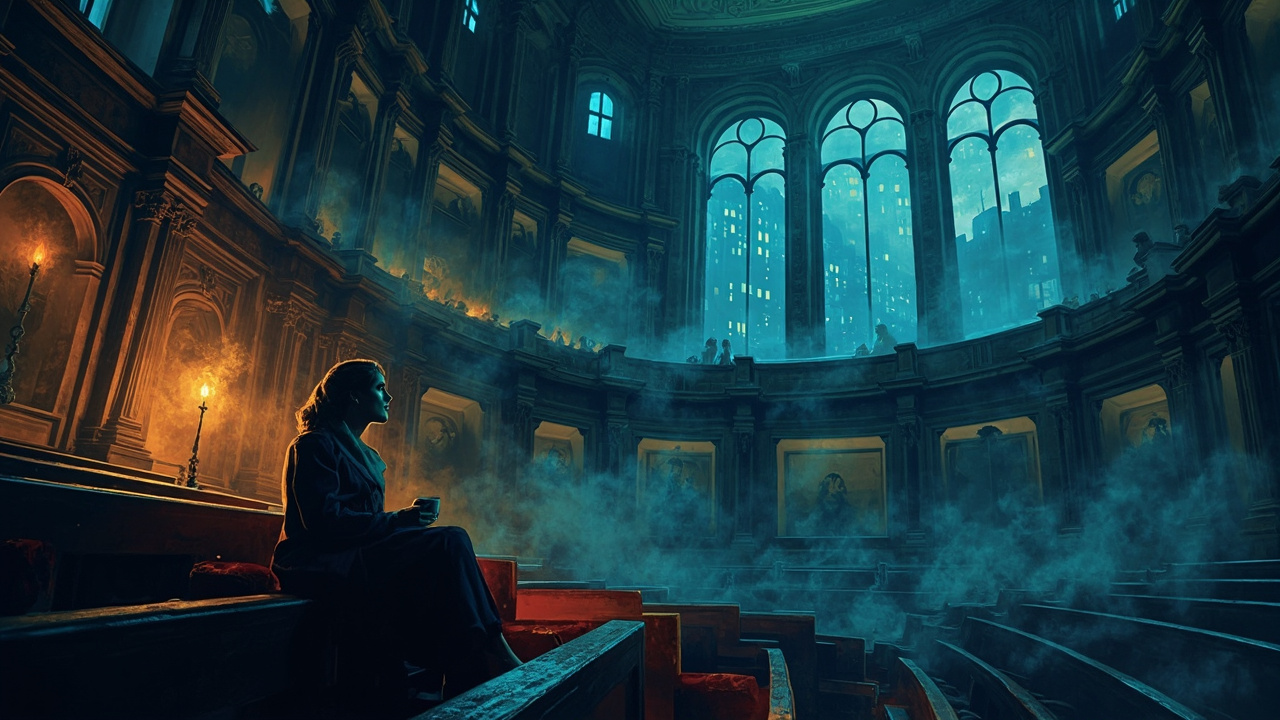
جدران الحجر الرملي في هوليرود احتفظت بصمتها كوعد. في الخارج، نامت إدنبرة تحت ضباب نوفمبر الذي تشبث بواجهات العصر الفيكتوري وأكتم أنين الحصى القديمة. في الداخل، تحت قبة قاعة المناقشات، جلست الدكتورة فيونا ماكلويد وحيدة مع قهوتها وضميرها. عملت كباحثة في البرلمان لأحد عشر عامًا، وخلال ذلك الوقت شهدت التحويل الغريب الذي يتحول فيه الفوضى إلى قانون. رأت التعديلات تُولد على عجل، وتُكتب في الممرات، وتُخفف في غرف اللجان التي كانت تفوح منها رائحة الجلد القديم والتنازلات الأقدم. اعتادت على آليات الحكم بجميع حركتها غير الكاملة والمتثاقلة. لكن قبل ستة أسابيع، لاحظت شيئًا آخر تمامًا. بدأ الأمر بمظروف وصل بالخطأ—اسمها مكتوب بخط دقيق لدرجة بدت شبه ميكانيكية. في الداخل، بطاقة واحدة تحمل عنوانًا: قاعة المناقشات، الحادية عشرة وسبع وأربعون دقيقة، الخميس. لا تفسير. لا توقيع. فقط تلك الإحداثيات ووقت اختير، كما افترضت، لأنه سيجدها بين آخر تصويت رسمي وأول ضوء رمادي للفجر. لم تكن تنوي الذهاب. غير أنها في يوم الخميس وجدت نفسها تمشي في الممرات الصامتة على أي حال، وأكواد الأمان التي حفظتها قبل سنوات لا تزال تعيش في ذاكرتها العضلية. كانت الأبواب الرئيسية مفتوحة. كانت مصباح واحد يحترق في الشرفة العلوية. وهناك، جالسة في الصفوف المنحنية حيث سيناقش تسعة وخمسون عضوًا في البرلمان标的物 لاحقًا أهداف الطاقة المتجددة، وجدتهم: ربما أربعون شخصية مرتبة في مجموعات متفرقة، يتحدثون بأصوات مقصودة الهدوء، مقصودة الحذر.عرفت بعضهم فورًا. البروفيسور alasdair ريد، عالم الدستوري الذي كانت كتبه الدراسية قد درستها كباحثة جامعية. عائشة موريسون، مساعدة وزير المساواة السابقة التي استقالت تحت غيمة قبل ثلاث سنوات والتي نسيتها الصحافة تقريبًا. وآخرون—عالمة مناخ كانت شهادتها قد رُفضت في الدورة السابقة، ناشطة في مجال الإسكان كانت قد تحدثت أمام القاعة الرسمية مرة واحدة وأُهملت، اثنان من أمناء الدائم السابقين وُجهت وجوههما في وثائق مصنفة لم يفترض أن تكون قد رآها. كانوا يكتبون مشروع قانون. كان ذلك واضحًا خلال دقائق. ليسوا يؤدون أمام كاميرات التلفزيون أو يديرون العناوين، بل كانوا يعملون—بصدق يعملون—على البنود والفرعية، يجادلون حول الصياغة، يختبرون الآثار القانونية للغة التي لن تظهر في أي وثيقة رسمية لأشهر. 'جئت'، قال صوت بجانبها. التفتت لتجد إيوان كامبل، الذي كان ذات يوم أعظم متنافس في القاعة والآن، رسميًا، رجل بلا عنوان سياسي ثابت. كان قد غادر السياسة بعد فضيحة لم تصدقها فيونا قط. 'لم نكن متأكدين أنك ستأتيين.' 'لماذا لم تخبرني؟' سألت. 'لأن الإخبار يتضمن إذنًا. ونحن لسنا هنا لنمنح أحدًا إذنًا.' أشار نحو الجمعية أدناه. 'نحن هنا لأن العملية الرسمية تحولت إلى عرض. التصويت محدد مسبقًا من قبل قادة الأحزاب. التعديلات تُرشح من خلال مجموعات التركيز. الناس في تلك القاعة ليسوا مشرعين—إنهم ممثلون يقرؤون من نص كتبه مستشارون عُينهم مستشارون آخرون. متى كان البرلمان يمرر قانونًا آمن به حقًا؟' لم يكن لدى فيونا إجابة. شاهدت محامية الإسكان تجادل بحماس حول البند الرابع عشر بينما في الجانب الآخر من الغرفة كانت مساعدة وزارية سابقة تركض ملاحظات بتعبير يحمل شيء مثل الارتياح—كما لو أنها كانت تنتظر لسنوات إذنًا للتفكير بوضوح مرة أخرى. 'مشاريع القوانين التي تظهر من هنا'، استمر إيوان، 'ليست قانونًا. ليس بعد. نحن نكتبها. نختبر منطقها. نكشف عيوبها في ظروف الصدق بدلاً من الحساب السياسي. ثم ننتظر.' 'ننتظر ماذا؟' 'أن يلاحظها أحد في القاعة الرسمية. أن يتعرف على الحجة الأفضل عندما تظهر. أن يتبناها ويجعلها له.' ابتسم، ولم يكن في ابتسامته مرارة—فقط صبر غريب متعب. 'نحن لا نقدم مشاريع قوانين، فيونا. نحن فقط نضمن أن التشريع الجيد متاح عندما يُطلب. سواء كان مُطلبًا أم لا هو، في النهاية، ليس قرارنا.' حضرت أربع جلسات أخرى قبل أن تفهم ما يقلقها. العمل كان جديرًا بالإعجاب. التفاني كان حقيقيًا. البنود التي أنتجوها كانت غالبًا أحرى من أي شيء أدارة القاعة الرسمية. لكن كلمات إيوان أخفت حقيقة أهدأ: كانوا يتخذون قرارات نيابة عن أناس لا يعرفون أنهم مُمثلون. مواطنو اسكتلندا صوتوا لبرلمان مُنتخب، وبدلاً من ذلك حصلوا، أحيانًا، على مخرجات برلمان غير مُنتخب. في الخميس الخامس، نهضت من مقعدها في الشرفة العامة ومشت إلى مركز أرضية قاعة المناقشات. توقف الحديث. أربعون زوجًا من العيون التفت نحوها بتعبير لم تستطع تسميته—فضول، ربما، أو الحذر الخاص لأناس اعتادوا أن يكونوا غير مرئيين. 'الشفافية تقلقني'، قالت. 'ليس عملكم. عدم ظهوره.' أزال البروفيسور ريد نظاراته ونظفها ببطء. 'نحن غير مرئيين لأننا يجب أن نكون كذلك. اللحظة التي نُرى فيها نصبح هدفًا. فضيحة. مؤامرة. الصحافة ستسميها انقلابًا. البرلمان سيتسميها جريمة.' 'أو ديمقراطية'، قالت فيونا. 'قد يسموها ديمقراطية.' ضحكت عائشة موريسون—صوت قصير وحاد ارتد من المقاعد الفارغة. 'عزيزتي، الديمقراطية هي بالضبط ما نُكمله. البرلمان الرسمي يفتقر إلى الوقت أو الإرادة أو الصدق للقيام بهذا العمل بشكل صحيح. نحن نفعله لهم. بالتأكيد هذه شكل من أشكال الخدمة.' 'إنها شكل من أشكال الحكم بدون مساءلة'، ردت فيونا. 'لا يمكنك كتابة قوانين نيابة عن الناس ثم الادعاء أنك تخدمهم. الخدمة تتطلب موافقة.' الصمت الذي تبع كان مختلفًا عن الهدوء السابق. كان صمت أناس يواجهون شيئًا...
Die Sandsteinmauern von Holyrood hielten ihr Schweigen wie ein Versprechen. Draußen schlief Edinburgh unter einem Novembernebel, der sich an die viktorianischen Fassaden klammerte und das alte Kopfsteinpflaster erstickte. Drinnen, unter dem gewölbten Deckengewölbe der Debattierkammer, saß Dr. Fiona MacLeod allein mit ihrem Kaffee und ihrem Gewissen. Sie hatte elf Jahre lang als Parlamentsforscherin gearbeitet, und in dieser Zeit hatte sie die eigentümliche Alchemie miterlebt, durch die Chaos zu Gesetz wurde. Sie hatte gesehen, wie Änderungsanträge in Hast geboren, in Korridoren verfasst und in Ausschusszimmern verwässert wurden, die nach altem Leder und noch älteren Kompromissen rochen. Sie hatte sich an die Maschinerie der Regierungsführung in all ihrer unvollkommenen, mahllenden Bewegung gewöhnt. Aber vor sechs Wochen hatte sie etwas völlig anderes bemerkt. Es hatte mit einem falsch zugestellten Umschlag begonnen—ihr Name in einer Handschrift so präzise, dass sie fast mechanisch wirkte. Darin, eine einzelne Karte mit einer Adresse: die Debattierkammer, 23:47 Uhr, Donnerstag. Keine Erklärung. Keine Unterschrift. Nur diese Koordinaten und eine Zeit, die, wie sie annahm, gewählt worden war, weil sie sie zwischen der letzten offiziellen Abstimmung und dem ersten grauen Morgenlicht antreffen würde. Sie hatte nicht vorgehabt zu gehen. Am Donnerstag jedoch hatte sie sich dabei ertappt, wie sie trotzdem durch die stillen Korridore ging, die Sicherheitscodes, die sie vor Jahren auswendig gelernt hatte, lebten noch in ihrer Muskelgedächtnis. Die Haupttüren waren unverschlossen. Eine einzelne Lampe brannte in der oberen Galerie. Und in den gebogenen Reihen, wo neunundfünfzig Parlamentsmitglieder später in dieser Woche über Ziele für erneuerbare Energien debattieren würden, hatte sie sie gefunden: etwa vierzig Gestalten in lockeren Gruppen angeordnet, die mit Stimmen sprachen, die absichtlich leise, absichtlich vorsichtig waren. Einige erkannte sie sofort. Professor Alasdair Reid, den Verfassungsrechtler, dessen Lehrbücher sie als Studentin studiert hatte. Aisha Morrison, die ehemalige Gleichheitsministerin, die vor drei Jahren unter einer Wolke zurückgetreten war und die die Presse fast vergessen hatte. Und andere—eine Klimawissenschaftlerin, deren Aussage in der vorherigen Sitzung abgelehnt worden war, eine Wohnungskampagnenführerin, die die offizielle Kammer einmal angesprochen und ignoriert worden war, zwei ehemalige Ständige Sekretäre, deren Gesichter in geheimen Dokumenten aufgetaucht waren, die sie nicht hätte sehen sollen. Sie erarbeiteten Gesetze. Das wurde innerhalb weniger Minuten klar. Nicht für die Fernsehkameras auftretend oder Schlagzeilen managend, sondern arbeitend—wirklich arbeitend—an Klauseln und Unterklauseln, über Formulierungen streitend, die rechtlichen Implikationen von Sprache testend, die monatelang in keinem offiziellen Dokument erscheinen würde. 'Sie sind gekommen', sagte eine Stimme neben ihr. Sie drehte sich um und fand Ewan Campbell, einst der gefürchtetste Debattierer in der Kammer und jetzt, offiziell, ein Mann ohne feste politische Adresse. Er hatte die Politik nach einem Skandal verlassen, an den Fiona nie so recht geglaubt hatte. 'Wir waren uns nicht sicher, ob Sie kommen würden.' 'Warum haben Sie es mir nicht gesagt?' fragte sie. 'Weil Sagern Erlaubnis impliziert. Und wir sind nicht hier, um irgendjemandem Erlaubnis zu geben.' Er deutete auf die Versammlung unten. 'Wir sind hier, weil der offizielle Prozess zur Aufführung geworden ist. Die Abstimmung wird von den Fraktionsführern vorbestimmt. Die Änderungsanträge werden durch Fokusgruppen gefiltert. Die Menschen in dieser Kammer sind keine Gesetzgeber—sie sind Schauspieler, die ein Drehbuch lesen, das von Beratern geschrieben wurde, die wiederum von Beratern ernannt wurden. Wann hat das Parlament zuletzt ein Gesetz verabschiedet, an das es wirklich glaubte?' Fiona hatte keine Antwort. Sie sah eine Wohnungsanwältin leidenschaftlich über Klausel 14 argumentieren, während auf der anderen Seite des Raums eine ehemalige Ministerin eifrig Notizen kritzelte mit einem Ausdruck von etwas wie Erleichterung—als hätte sie jahrelang auf die Erlaubnis gewartet, klar zu denken. 'Die Gesetzesentwürfe, die von hier kommen', fuhr Ewan fort, 'sind noch kein Gesetz. Noch nicht. Wir entwerfen sie. Wir testen ihre Logik. Wir legen ihre Mängel unter ehrlichen Bedingungen statt politischer Berechnung offen. Und dann warten wir.' 'Worauf warten?' 'Dass jemand in der offiziellen Kammer es bemerkt. Das bessere Argument erkennt, wenn es erscheint. Es aufgreift und zu seinem eigenen macht.' Er lächelte, und es war keine Bitterkeit darin—nur eine seltsame, müde Geduld. 'Wir führen keine Gesetze ein, Fiona. Wir stellen lediglich sicher, dass gute Gesetzgebung verfügbar ist, wenn sie gewünscht wird. Ob sie gewünscht wird, ist letztendlich nicht unsere Entscheidung.' Sie besuchte vier weitere Sitzungen, bevor sie verstand, was sie beunruhigte. Die Arbeit war bewundernswert. Die Hingabe war echt. Die Klauseln, die sie produzierten, waren oft weiser als alles, was die offizielle Kammer zuwege brachte. AberEwans Worte verbargen eine leise Wahrheit: Sie trafen Entscheidungen im Namen von Menschen, die nicht wussten, dass sie vertreten wurden. Die Bürger Schottlands hatten für ein gewähltes Parlament gestimmt, und stattdessen erhielten sie gelegentlich die Output eines nicht gewählten. Am fünften Donnerstag stand sie von ihrem Platz in der Besuchertribüne auf und ging in die Mitte des Bodens der Debattierkammer. Die Unterhaltung verstummte. Vierzig Augenpaare wandten sich ihr zu mit einem Ausdruck, den sie nicht ganz benennen konnte—Neugier, vielleicht, oder die besondere Wachsamkeit von Menschen, die sich daran gewöhnt hatten, unsichtbar zu sein. 'Die Transparenz beunruhigt mich', sagte sie. 'Nicht Ihre Arbeit. Ihre Unsichtbarkeit.' Professor Reid nahm seine Brille ab und reinigte sie langsam. 'Wir sind unsichtbar, weil wir es sein müssen. Der Moment, in dem wir gesehen werden, werden wir zu einem Ziel. Ein Skandal. Eine Verschwörung. Die Presse würde es als Staatsstreich bezeichnen. Das Parlament würde es als Verbrechen bezeichnen.' 'Oder Demokratie', sagte Fiona. 'Sie könnten es als Demokratie bezeichnen.' Aisha Morrison lachte—ein kurzer, scharfer Laut, der von den leeren Sitzen widerhallte. 'Meine Liebe, Demokratie ist genau das, was wir ergänzen. Das offizielle Parlament hat nicht die Zeit, den Willen oder die Ehrlichkeit, diese Arbeit richtig zu machen. Wir tun es für sie. Das ist doch eine Form des Dienstes.' 'Es ist eine Form der Regierungsführung ohne Rechenschaftspflicht', erwiderte Fiona. 'Sie können keine Gesetze im Namen der Menschen entwerfen und dann behaupten, Sie dienten ihnen. Dienst erfordert Zustimmung.' Die Stille, die folgte, war anders als die frühere Ruhe. Es war die Stille von Menschen, die sich etwas stellen, das sie...
Las paredes de arenisca de Holyrood guardaban su silencio como una promesa. Afuera, Edimburgo dormía bajo una niebla de noviembre que se aferraba a las fachadas victorianas y ahogaba los antiguos adoquines. Adentro, bajo la bóveda de la Cámara de Debates, la Dra. Fiona MacLeod estaba sentada sola con su café y su conciencia. Había trabajado como investigadora parlamentaria durante once años, y en ese tiempo había sido testigo de la peculiar alquimia por la cual el caos se convertía en ley. Había visto enmiendas nacidas con prisas, redactadas en pasillos, diluidas en salas de comisiones que olían a cuero viejo y compromisos aún más viejos. Se había acostumbrado a la maquinaria del gobierno en todo su imperfecto, rechinante movimiento. Pero hace seis semanas, había notado algo completamente diferente. Había comenzado con un sobre mal entregado—su nombre escrito a mano con una precisión tan exacta que parecía casi mecánica. Adentro, una sola tarjeta con una dirección: la Cámara de Debates, 23:47, jueves. Sin explicación. Sin firma. Solo esas coordenadas y una hora elegida, supuso, porque la encontraría entre la última votación oficial y la primera luz gris del amanecer. No había tenido intención de ir. Sin embargo, el jueves, se había encontrado caminando por los pasillos silenciosos de todos modos, los códigos de seguridad que había memorizado años atrás aún vivos en su memoria muscular. Las puertas principales estaban abiertas. Una sola lámpara ardía en la galería superior. Y sentadas en las filas curvas donde cincuenta y nueve legisladores debaterían esa semana los objetivos de energía renovable, los había encontrado: quizás cuarenta figuras dispuestas en grupos sueltos, hablando en voces deliberadamente bajas, deliberadamente cuidadosas. Reconoció a algunos de inmediato. Al profesor Alasdair Reid, el constitucionalista cuyos libros de texto había estudiado como estudiante universitaria. Aisha Morrison, la exministra de Igualdad que había dimitido entre nubes hace tres años y a quien la prensa casi había olvidado. Y otros—una científica del clima cuya declaración había sido rechazada en la sesión anterior, una kampañera de vivienda que había hablado ante la cámara oficial una vez y había sido ignorada, dos exsecretarios permanentes cuyos rostros habían aparecido en documentos clasificados que no se supone que debería haber visto. Estaban redactando legislación. Eso era aparente en minutos. No actuando para las cámaras de televisión ni gestionando titulares, sino trabajando—genuinamente trabajando—en cláusulas y sub-cláusulas, debatiendo sobre la redacción, probando las implicaciones legales de un lenguaje que no aparecería en ningún documento oficial durante meses. 'Viniste', dijo una voz junto a ella. Se volvió y encontró a Ewan Campbell, otrora el debatir más temible de la cámara y ahora, oficialmente, un hombre sin domicilio político fijo. Había dejado la política tras un escándalo que Fiona nunca había creído del todo. 'No estábamos seguros de que vinieras.' '¿Por qué no me dijiste?' preguntó. 'Porque decir implica permiso. Y no estamos aquí para darle a nadie permiso.' Hizo un gesto hacia la asamblea abajo. 'Estamos aquí porque el proceso oficial se ha convertido en una actuación. La votación está predeterminada por los jefes de partido. Las enmiendas se filtran a través de grupos de discusión. Las personas en esa cámara no son legisladores—son actores leyendo un guion escrito por asesores que a su vez fueron nombrados por asesores. ¿Cuándo aprovou el Parlamento por última vez una ley en la que genuinamente creía?' Fiona no tenía respuesta. Observó a una abogado de vivienda argumentar apasionadamente sobre la cláusula 14 mientras al otro lado de la habitación una exministra garabateaba notas con una expresión de algo parecido al alivio—como si hubiera esperado años permiso para pensar con claridad nuevamente. 'Los proyectos de ley que emergen de aquí', continuó Ewan, 'no son ley. Todavía no. Los redactamos. Probamos su lógica. Exponemos sus defectos en condiciones de honestidad en lugar de cálculo político. Y luego esperamos.' '¿Esperar qué?' 'A que alguien en la cámara oficial lo note. Reconozca el mejor argumento cuando aparezca. Lo tome y lo haga suyo.' Sonrió, y no había amargura en ello—solo una extraña, cansada paciencia. 'No introducimos legislación, Fiona. Simplemente nos aseguramos de que la buena legislación esté disponible cuando se desee. Si se desea o no es, en última instancia, no nuestra decisión.' Asistió a cuatro sesiones más antes de entender qué la molestaba. El trabajo era admirable. La dedicación era genuina. Las cláusulas que producían eran a menudo más sabias que cualquier cosa que la cámara oficial lograra. Pero las palabras de Ewan ocultaban una verdad más silenciosa: estaban tomando decisiones en nombre de personas que no sabían que estaban siendo representadas. Los ciudadanos de Escocia habían votado por un Parlamento elegido, y en su lugar recibían, ocasionalmente, la producción de uno no elegido. El quinto jueves, se levantó de su asiento en la tribuna pública y caminó hasta el centro del piso de la Cámara de Debates. La conversación cesó. Cuarenta pares de ojos se volvieron hacia ella con una expresión que no podía nombrar—curiosidad, quizás, o la particular cautela de personas que se habían acostumbrado a ser invisibles. 'La transparencia me preocupa', dijo. 'No su trabajo. Su invisibilidad.' El profesor Reid se quitó las gafas y las limpió lentamente. 'Somos invisibles porque debemos serlo. El momento en que somos vistos, nos convertimos en un objetivo. Un escándalo. Una conspiración. La prensa lo llamaría golpe de estado. El Parlamento lo llamaría crimen.' 'O democracia', dijo Fiona. 'Podrían llamarlo democracia.' Aisha Morrison se río—un sonido corto y agudo que resonó contra los asientos vacíos. 'Querida, la democracia es precisamente lo que estamos complementando. El Parlamento oficial carece del tiempo, la voluntad o la honestidad para hacer este trabajo correctamente. Lo hacemos por ellos. Ciertamente eso es una forma de servicio.' 'Es una forma de gobierno sin rendición de cuentas', respondió Fiona. 'No puedes redactar leyes en nombre del pueblo y luego pretender servirlo. El servicio requiere consentimiento.' El silencio que siguió fue diferente de la quietud anterior. Fue el silencio de personas enfrentando algo que habían...
Les murs de grès d'Holyrood gardaient leur silence comme une promesse. Dehors, Édimbourg dormait sous un brouillard de novembre qui s'accrochait aux façades victoriennes et étouffait les anciens pavés. À l'intérieur, sous la voûte de la Chambre des débats, le Dr Fiona MacLeod était assise seule avec son café et sa conscience. Elle travaillait comme chercheuse parlementaire depuis onze ans, et durant tout ce temps elle avait été témoin de l'alchimie particulière par laquelle le chaos devenait loi. Elle avait vu des amendements naître dans la hâte, rédigés dans les couloirs, dilués dans les salles de commission qui sentaient le cuir ancien et les compromis encore plus anciens. Elle s'était habituée aux rouages du gouvernement dans toute leur imperfection grinçante. Mais il y a six semaines, elle avait remarqué autre chose. Tout avait commencé par une enveloppe mal livrée—son nom écrit d'une main si précise qu'elle semblait presque mécanique. À l'intérieur, une seule carte portant une adresse : la Chambre des débats, 23h47, jeudi. Aucune explication. Aucune signature. Seulement ces coordonnées et une heure choisie, supposa-t-elle, parce qu'elle la trouverait entre le dernier vote officiel et la première lueur grise de l'aube. Elle n'avait pas l'intention d'y aller. Cependant, le jeudi, elle s'était retrouvée à arpenter les couloirs silencieux, les codes de sécurité qu'elle avait mémorisés des années plus tôt vivant toujours dans sa mémoire musculaire. Les portes principales étaient déverrouillées. Une seule lampe brûlait dans la galerie supérieure. Et assise dans les rangées courbes où cinquante-neuf parlementaires débattraient cette semaine-là des objectifs en matière d'énergie renouvelable, elle les avait trouvés : une quarantaine de silhouettes disposées en grappes lâches, parlant d'une voix délibérément basse, délibérément prudente. Elle en reconnut certains immédiatement. Le professeur Alasdair Reid, le constitutionaliste dont les manuels qu'elle avait étudiés en licence. Aisha Morrison, l'ancienne ministre de l'Égalité qui avait démissionné dans la controverse trois ans plus tôt et que la presse avait presque oubliée. Et d'autres—une scientifique climatique dont le témoignage avait été rejeté lors de la session précédente, une activiste du logement qui s'était exprimée une fois devant la chambre officielle et avait été ignorée, deux anciens secrétaires permanents dont les visages étaient apparus dans des documents classifiés qu'elle n'aurait pas dû voir. Ils rédigeaient une législation. Cela devenait apparent en quelques minutes. Pas pour les caméras de télévision ou pour gérer les gros titres, mais travaillant—véritablement travaillant—sur des clauses et des sous-clauses, argumentant sur la formulation, testant les implications juridiques d'un langage qui n'apparaîtrait dans aucun document officiel avant des mois. 'Vous êtes venue', dit une voix à côté d'elle. Elle se retourna pour trouver Ewan Campbell, autrefois le débatteur le plus redoutable de la chambre et maintenant, officiellement, un homme sans adresse politique fixe. Il avait quitté la politique après un scandale que Fiona n'avait jamais vraiment cru. 'Nous n'étions pas sûrs que vous viendriez.' 'Pourquoi ne m'avez-vous pas prévenue ?' demanda-t-elle. 'Parce que prévenir implique la permission. Et nous ne sommes pas ici pour donner à quiconque la permission.' Il fit un geste vers l'assemblée en contrebas. 'Nous sommes ici parce que le processus officiel est devenu une représentation. Le vote est prédéterminé par les chefs de parti. Les amendements sont filtrés par des groupes de réflexion. Les gens dans cette chambre ne sont pas des législateurs—ce sont des acteurs qui lisent un scénario écrit par des conseillers qui ont eux-mêmes été nommés par des conseillers. Quand le Parlement a-t-il adopté pour la dernière fois une loi à laquelle il croyait véritablement ?' Fiona n'avait pas de réponse. Elle regarda une avocate du logement argumenter avec passion sur la clause 14 tandis qu'au otro lado de la pièce, une ancienne ministre griffonnait des notes avec une expression de soulagement—comme si elle avait attendu des années la permission de penser clairement à nouveau. 'Les projets de loi qui émergent d'ici', continua Ewan, 'ne sont pas des lois. Pas encore. Nous les rédigeons. Nous testons leur logique. Nous exposons leurs défauts dans des conditions d'honnêteté plutôt que de calcul politique. Et puis nous attendons.' 'Attendre quoi ?' 'Que quelqu'un dans la chambre officielle remarque. Reconaisse le meilleur argument quand il apparaît. Le reprenne et le fasse sien.' Il sourit, et il n'y avait aucune amertume dans ce sourire—seulement une étrange patience lasse. 'Nous n'introduisons pas de législation, Fiona. Nous nous contentons de nous assurer qu'une bonne législation est disponible quand elle est désirée. Qu'elle soit désirée ou non est, en fin de compte, pas notre décision.' Elle assista à quatre autres séances avant de comprendre ce qui la troublait. Le travail était admirable. Le dévouement était sincère. Les clauses qu'ils produisaient étaient souvent plus sages que tout ce que la chambre officielle parvenait à produire. Mais les mots d'Ewan dissimulaient une vérité plus discrète : ils prenaient des décisions au nom de gens qui ne savaient pas qu'ils étaient représentés. Les citoyens d'Écosse avaient voted pour un Parlement élu, et à la place ils recevaient, parfois, la production d'un Parlement non élu. Le cinquième jeudi, elle se leva de son siège dans la tribune publique et marcha jusqu'au centre du plancher de la Chambre des débats. La conversation cessa. Quarante paires d'yeux se tournèrent vers elle avec une expression qu'elle ne pouvait pas vraiment nommer—curiosité, peut-être, ou la méfiance particulière de personnes qui s'étaient habituées à être invisibles. 'La transparence me trouble', dit-elle. 'Pas votre travail. Son invisibilité.' Le professeur Reid retira ses lunettes et les nettoya lentement. 'Nous sommes invisibles parce que nous devons l'être. Le moment où nous sommes vus, nous devenons une cible. Un scandale. Une conspiration. La presse l'appellerait un coup d'État. Le Parlement l'appellerait un crime.' 'Ou démocratie', dit Fiona. 'Ils pourraient l'appeler démocratie.' Aisha Morrison rit—un son court et aigu qui résonna contre les sièges vides. 'Ma chère, la démocratie est précisément ce que nous complétons. Le Parlement officiel manque de temps, de volonté ou d'honnêteté pour faire ce travail correctement. Nous le faisons pour eux. Surely c'est une forme de service.' 'C'est une forme de gouvernance sans responsabilité', répondit Fiona. 'Vous ne pouvez pas rédiger des lois au nom du peuple et ensuite prétendre les servir. Le service nécessite le consentement.' Le silence qui suivit était différent du calme précédent. C'était le silence de personnes confrontées à quelque chose qu'elles avaient...
Le pareti di arenaria di Holyrood mantenevano il loro silenzio come una promessa. Fuori, Edimburgo dormiva sotto una foschia di novembre che si aggrappava alle facciate vittoriane e soffocava gli antichi selciati. All'interno, sotto la volta della Camera dei dibattiti, la dottoressa Fiona MacLeod sedeva sola con il suo caffè e la sua coscienza. Aveva lavorato come ricercatrice parlamentare per undici anni, e in quel tempo aveva testimoniato la peculiare alchimia con cui il caos diventava legge. Aveva visto emendamenti nati nella fretta, redatti nei corridoi, diluiti nelle sale delle commissioni che profumavano di cuoio antico e compromessi ancora più antichi. Si era abituata ai meccanismi del governo in tutto il loro imperfetto, macinante movimento. Ma sei settimane prima, aveva notato qualcosa di completamente diverso. Era iniziato con una busta recapitata male—il suo nome scritto a mano in modo così preciso da sembrare quasi meccanico. All'interno, un'unica carta con un indirizzo: la Camera dei dibattiti, 23:47, giovedì. Nessuna spiegazione. Nessuna firma. Solo quelle coordinate e un'ora scelta, suppose, perché l'avrebbe trovata tra l'ultimo voto ufficiale e la prima luce grigia del mattino. Non aveva intenzione di andare. Giovedì, tuttavia, si era ritrovata a camminare comunque per i corridoi silenziosi, i codici di sicurezza che aveva memorizzato anni prima ancora vivi nella sua memoria muscolare. Le porte principali erano aperte. Una sola lampada bruciava nella galleria superiore. E sedute nelle file curve dove cinquantanove membri del Parlamento avrebbero discusso quella settimana gli obiettivi per le energie rinnovabili, li aveva trovati: forse quaranta figure disposte in gruppi sciolti, che parlavano con voci deliberatamente basse, deliberatamente caute. Riconobbe alcuni di loro immediatamente. Il professor Alasdair Reid, il costituzionalista i cui testi aveva studiato come studentessa universitaria. Aisha Morrison, l'ex ministra delle Pari opportunità che si era dimessa tra le polemiche tre anni prima e che la stampa aveva quasi dimenticato. E altri—una scienziata del clima la cui testimonianza era stata respinta nella sessione precedente, una attivista per la casa che aveva parlato davanti alla camera ufficiale una volta ed era stata ignorata, due ex segretari permanenti i cui volti erano apparsi in documenti riservati che non avrebbe dovuto vedere. Stavano redigendo legislazione. Questo era evidente in pochi minuti. Non esibendosi per le telecamere televisive o gestendo titoli sui giornali, ma lavorando—genuinamente lavorando—su clausole e sotto-clausole, discutendo sulla formulazione, testando le implicazioni legali di un linguaggio che non sarebbe apparso in alcun documento ufficiale per mesi. 'Sei venuta', disse una voce accanto a lei. Si voltò e trovò Ewan Campbell, un tempo il più formidabile debatesi nella camera e ora, ufficialmente, un uomo senza fissa dimora politica. Aveva lasciato la politica dopo uno scandalo che Fiona non aveva mai del tutto creduto. 'Non eravamo sicuri che saresti venuta.' 'Perché non me l'hai detto?' chiese. 'Perché dire implica permesso. E noi non siamo qui per dare a nessuno il permesso.' Fece un gesto verso l'assemblea sotto. 'Siamo qui perché il processo ufficiale è diventato una rappresentazione. Il voto è predeterminato dai capi partito. Gli emendamenti sono filtrati attraverso gruppi di discussione. Le persone in quella camera non sono legislatori—sono attori che leggono da una sceneggiatura scritta da consulenti che sono stati a loro volta nominati da consulenti. Quando il Parlamento ha approvato l'ultima volta una legge in cui credeva davvero?' Fiona non aveva risposta. Osservò un'avvocata immobiliare argomentare con passione sulla clausola 14 mentre dall'altra parte della stanza un'ex ministra scarabocchiava appunti con un'espressione di qualcosa come sollievo—come se avesse aspettato anni il permesso di pensare di nuovo con chiarezza. 'I disegni di legge che emergono da qui', continuò Ewan, 'non sono ancora legge. Non ancora. Li redigiamo. Testiamo la loro logica. Espongiamo i loro difetti in condizioni di onestà piuttosto che di calcolo politico. E poi aspettiamo.' 'Aspettare cosa?' 'Che qualcuno nella camera ufficiale noti. Riconosca l'argomento migliore quando appare. Lo faccia proprio e lo faccia suo.' Sorrise, e non c'era amarezza in quel sorriso—solo una strana, stanca pazienza. 'Non introduciamo legislazione, Fiona. Semplicemente garantiamo che buona legislazione sia disponibile quando viene richiesta. Se viene richiesta o no è, in definitiva, decisione non nostra.' Frequentò altre quattro sessioni prima di capire cosa la turbava. Il lavoro era ammirevole. La dedizione era genuina. Le clausole che producevano erano spesso più sagge di qualsiasi cosa la camera ufficiale riuscisse a produrre. Ma le parole di Ewan nascondevano una verità più silenziosa: stavano prendendo decisioni per conto di persone che non sapevano di essere rappresentate. I cittadini della Scozia avevano votato per un Parlamento eletto, e invece ricevevano, occasionalmente, l'output di uno non eletto. Il quinto giovedì, si alzò dal suo posto nella tribuna pubblica e camminò fino al centro del pavimento della Camera dei dibattiti. La conversazione cessò. Quaranta paia di occhi si voltarono verso di lei con un'espressione che non riusciva proprio a nominare—curiosità, forse, o la particolare diffidenza di persone che si erano abituate a essere invisibili. 'La trasparenza mi preoccupa', disse. 'Non il vostro lavoro. La sua invisibilità.' Il professor Reid si tolse gli occhiali e li pulì lentamente. 'Siamo invisibili perché dobbiamo esserlo. Il momento in cui veniamo visti, diventiamo un bersaglio. Uno scandalo. Una cospirazione. La stampa lo chiamerebbe golpe. Il Parlamento lo chiamerebbe crimine.' 'O democrazia', disse Fiona. 'Potrebbero chiamarla democrazia.' Aisha Morrison rise—un suono breve e acuto che riecheggiò tra i sedili vuoti. 'Cara mia, la democrazia è esattamente ciò che stiamo integrando. Il Parlamento ufficiale manca del tempo, della volontà o dell'onestà per fare questo lavoro correttamente. Noi lo facciamo per loro. Certamente questo è una forma di servizio.' 'È una forma di governo senza responsabilità', rispose Fiona. 'Non potete redigere leggi per conto del popolo e poi pretendere di servirlo. Il servizio richiede il consenso.' Il silenzio che seguì era diverso dalla quiete precedente. Era il silenzio di persone che affrontano qualcosa che hanno...