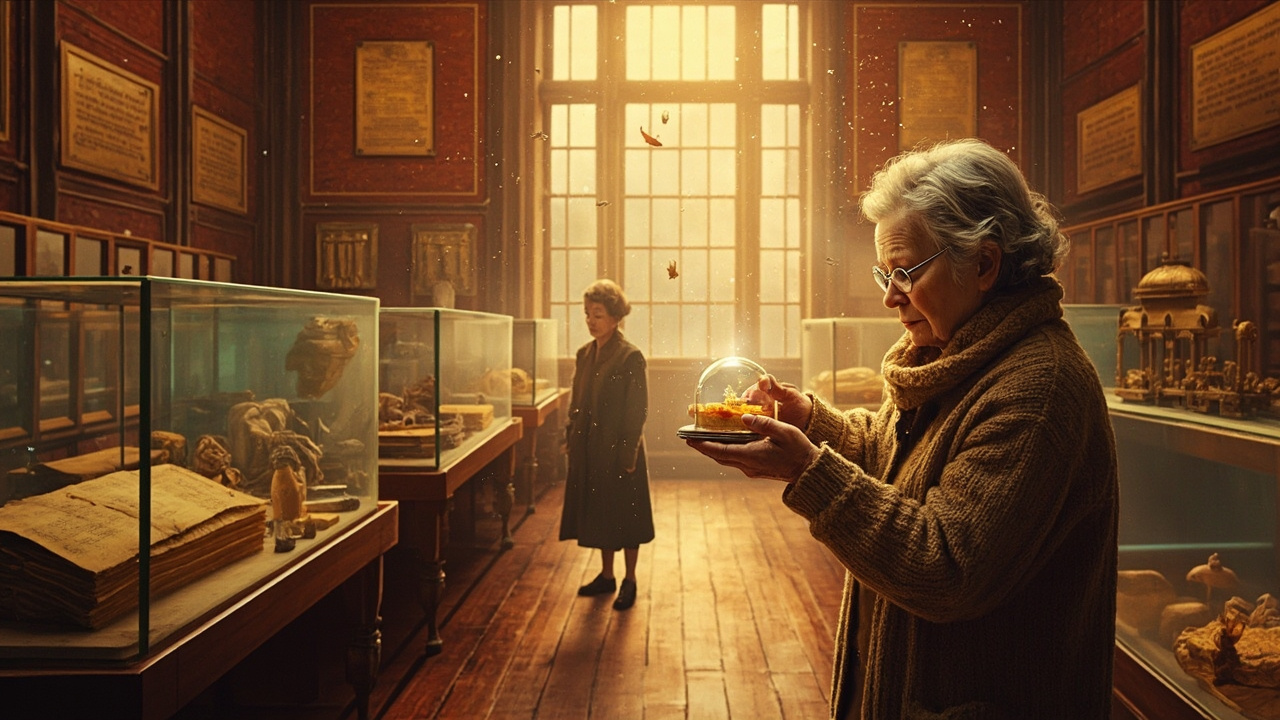
احتل متحف الكوارث الصغيرة مبنى محطة الضخ المحوّلة على أطراف تشسترفيلد، حيث كانت جدرانه القرميدية الحمراء بلا ملامح تذكر باستثناء اللوحَة النحاسية المتواضعة فوق المدخل التي تحمل اسم المؤسسة الغريب. كانت الدكتورة هيلين مارش المدير الوحيد له منذ إحدى عشر سنة، وظلت، على حد علمها، الزائرة المنتظمة الوحيدة له. وكان المتطوعون يأتون أيام الخميس. أما حافلات الرحلات الجماعية فلم تظهر أبداً.
داخلياً، تنتشر المجموعة عبر ثلاث صالات متواضعة، كل منها مخصصة لفئة مختلفة من المصائب. الأولى تضم كوارث الطهي: بودينغ عيد الميلاد المتحجر من عام 1987، وزجاجة نبيذ من كرم في هامبشاير دُمر كامل محصوله بسبب سرب شرس من السُّمان، والجوهرة الملكية — soufflé مثالي عديم الهواء قد انهار على نفسه كوعد مُنقض. والصالة الثانية احتوت على أخطاء معمارية ومدنية: نموذج مصغّر لجسر في تونتون بُني بعرض ثلاث بوصات أقل مما يلزم لمروره المروري المقصود، وصبّة من حجر القدر بعد إزالته الشهيرة وإعادة تركيبه على عجل بالزاوية الخاطئة، ومجموعة من لافتات الشوارع من أنحاء بريطانيا تحمل تفسيرات إبداعية لرسائلها المقصودة. والصالة الثالثة كانت المفضلة لدى هيلين، رغم أنها لم تكن لتعترف بذلك لأي شخص. كانت تضم أخطاء إدارية: شهادة ميلاد لطفلة اسمها صبر (Patience) كان والداها، في لحظة من الحكم المشكوك فيه، قد سمّياها صبر صبر (Patience Patience)، وكتاباً من المكتبة أُعيد بعد ثلاثة وستين عاماً من تأخره إلى فرع هُدم عام 1952.
استحصلت هيلين على كل قطعة شخصياً، غالباً ماكانت تسافر إلى أطراف نائية من البلاد لتأمينها قبل أن تضيع في غياهب الزمن والإهمال. كانت تؤمن — رغم أنها نادراً ما عبّرت عن هذه الإيمان حتى لنفسها — أن الكوارث الصغيرة تهم لأنها صغيرة. كانت الأخطاء التي تُذكّر البشرية بسقوطها، والتذكيرات المتواضعة بأن أكثر الخطط حرصاً يمكن أن تُبطلها فاصلة مشردة أو شريط قياس مُقرأ بشكل خاطئ.
في صباح نوفمبر الرمادي، حين كانت منظومة التدفئة ت rattle في أنابيبها كرجل عجوز مُصاب بالربو، وصلت الطرودة. وجدت هيلينها على عتبة الباب، مغلفة بورق بني ومربوطة بخيط مطبخ. لم يكن هناك عنوان مُعيد. لا ختم بريد. الطرودة طُرحت يدوياً، تُركت في وقت ما خلال الليل بينما كان البلد نائماً.
في الداخل، وجدت قبة زجاجية صغيرة — النوع الذي قد يشتريه المرء من متجر الأغراض النادرة — بداخلها ورقة مطوية. وتحتها بطاقة تحمل وصفاً مكتوباً بخط اليد: نص مُصحَّح من نافورة Memorial، كيتيرينغ. استُبدل 'They Shall Not Grow Old' بـ 'They Shall Not Grow Oild'، 2003. الخطأ اكتُشف وصُحح قبل الافتتاح. النحات الأصلي رفض إعادة الخطأ.
دارت هيلين القبة بين يديها، تفحص الورقة بداخلها. كانت نسخة ضوئية من رسالة، والأصل افترضاً هش جداً ليُضمَّن. فردتها بحذر.
عزيزتي أمينّة المتحف،
إذا كان متحفتك ما أعتقد أنه، فربما ستفهمين لماذا أُرسل لكِ هذا. عملت في الترميم لمدة واحد وثلاثين عاماً. رُمّمت frescos وأعدت laying أرضيات البلاط وأعادت pointing هاوناً متساقطاً في مئة مبنى مختلف. أدّيت عملي جيداً، وأدّيته بأمانة، ولم أُحرّك من قبل للتصرف كما أتصرف الآن.
نافورة كيتيرينغ لم تكن خطأ.
كنت أنا النحّات الذي نحت تلك الكتابة. لست رجلاً يرتكب أخطاء، وقد أمضيت عشرين عاماً أحاول تحديد كيف ظهرت كلمة 'oild' في قالبتي عندما كنت قد نحتتُ 'old' بيدي. هناك تفسير واحد فقط، وهو ما كنتُ خائفة من قبوله حتى الآن.
شخص ما عبث بعملي. شخص ما دخل ورشتي وغيّر الحرف 'a' إلى 'i'. شخص ما أراد أن تفشل هذه النصب التذكارية بالذات.
لا أعرف من. لا أعرف لماذا. لكنني تقاعدت مؤخراً، وأجد أن التقاعد وضّح لي أشياء معينة. الأخطاء الصغيرة التي نتجاهلها كتفاهات غالباً ما تكون التي تهم أكثر. هي التي لا نُحقق فيها بشكل شامل لأنها تبدو دون اهتمامنا.
ربما ستعرفين ماذا تفعلين بهذه المعلومات. ربما ستفهمين أن بعض الكوارث صغيرة فقط لأننا نختار عدم رؤية النمط الأكبر الذي تشكله.
صاحبتك في الكوارث الصغيرة،
آر.سي. وايتمور
قرأته هيلين الرسالة ثلاث مرات. فحصت القبة الزجاجية، والنسخة الضوئية، والبطاقة بوصفها الدقيق. ثم جلست في المكتب الصغير خلف المتحف و浣看了 الجدار لفترة طويلة.
فكرت في الـ soufflé، الذي كانت دائماً تفترض أنه كان مجرد ضحية باب فرن أُغلق بعنف. فكرت في جسر تونتون، مهندسوه الذين بدوا، في التقارير الصحفية التي قرأتها، مُحيرين فعلاً بسبب خطئهم في الحساب. فكرت في كل القطع الأخرى في مجموعتها، كل واحدة منها مُفسَّرة، كل واحدة منها مُصنَّفة في فئتها النظيفة من المصائب البسيطة.
لكن الآن تساءلت. تساءلت عما إذا كان النمط يمتد بعيداً مما نظرت إليه يوماً. تساءلت عمن أرسل لها هذه الرسالة، وما قد يعرفونه مما لا تعرفه. تساءلت عما إذا كان متحف الكوارث الصغيرة بالضبط ما يبدو عليه، أم أنه شيء آخر تماماً — شيء لم تبدأ بعد في فهمه.
في الخارج، بدأ مطر نوفمبر يهطل، مُمزّقاً نوافذ محطة الضخ القديمة. طوت هيلين مارش الرسالة بحذر، أعادتها تحت قبرتها الزجاجية، ومضت إلى الصالة لتنظر مجدداً إلى مجموعتها بعيون جديدة.
ستحتاج للتحقق من أشياء معينة. ستحتاج لإجراء بعض المكالمات الهاتفية وكتابة بعض الرسائل وربما السفر إلى كيتيرينغ herself لفحص النافورة firsthand. لكن قبل كل ذلك، ستحتاج لقبول إمكانية spent إحدى عشرة سنة في رفضها: أن المتحف الذي تديره —
Das Museum der kleinen Katastrophen nahm eine umgebaute Pumpstation am Stadtrand von Chesterfield ein, seine roten Backsteinwände unauffällig bis auf die bescheidene Messingtafel über dem Eingang, die den eigentümlichen Namen des Etablissements trug. Dr. Helen Marsh war elf Jahre lang seine einzige Kuration, und sie blieb, soweit sie wusste, seine einzige regelmäßige Besucherin. Die Freiwilligen kamen donnerstags. Die Reisebusse erschienen nie.
Im Inneren erstreckte sich die Sammlung über drei bescheidene Galerien, jede einer anderen Kategorie des Unglücks gewidmet. Die erste beherbergte kulinarische Katastrophen: einen versteinerten Weihnachtspudding von 1987, eine Flasche Wein aus einem Weingut in Hampshire, dessen gesamte Ernte durch eine verirrte Starenschwarm ruiniert worden war, und das Kronjuwel — einen perfekten, luftlosen Soufflé, der in sich zusammengefallen war wie ein gebrochenes Versprechen. Die zweite Galerie enthielt architektonische und bürgerliche Fehler: ein Modell des Brückenbaus in Taunton, das drei Zoll zu schmal für den vorgesehenen Verkehr geraten war, einen Abguss des Steins des Schicksals, nachdem er berüchtigt entfernt und hastig im falschen Winkel wieder eingesetzt worden war, und eine Sammlung von Straßenschildern aus ganz Britannien mit kreativen Interpretationen ihrer beabsichtigten Botschaften. Die dritte Galerie war Helens Liebling, obwohl sie es niemandem gegenüber je zugegeben hätte. Sie enthielt Verwaltungsfehler: eine Geburtsurkunde für ein Kind namens Patience, dessen Eltern in einem Moment fragwürdigen Urteilsvermögens sie Patience Patience genannt hatten, und ein Bibliotheksbuch, das dreiundsechzig Jahre überfällig an eine Filiale zurückgegeben wurde, die 1952 abgerissen worden war.
Helen hatte jedes Stück persönlich erworben, reiste oft in abgelegene Winkel des Landes, um sie zu sichern, bevor sie in Zeit und Vernachlässigung verloren gingen. Sie glaubte — obwohl sie diesen Glauben selten artikulierte, selbst für sich selbst — dass kleine Katastrophen genau deshalb wichtig waren, weil sie klein waren. Es waren die Fehler, die die Menschheit an ihre eigene Fehlbarkeit erinnerten, die bescheidenen Erinnerungen daran, dass selbst die sorgfältigsten Pläne durch ein verirrtes Komma oder ein falsch abgelesenes Maßband zunichte gemacht werden konnten.
An einem grauen Novembermorgen, als die Heizung in ihren Rohren röchelte wie ein asthmatischer Rentner, kam das Paket an. Helen fand es auf der Eingangsstufe, in braunes Papier gewickelt und mit Küchenbindfaden verschnürt. Keine Rückadresse. Kein Poststempel. Das Paket war von Hand zugestellt worden, irgendwann in der Nacht abgelegt worden, während die Stadt schlief.
Im Inneren fand sie eine kleine Glaskuppel — die Art, die man in einem Scherzartikelgeschäft kaufen könnte — mit einem gefalteten Stück Papier darin. Unter der Kuppel las sich eine Karte mit einer handschriftlichen Beschreibung: Korrigierte Inschrift vom Denkmalbrunnen, Kettering. Ersetzt 'They Shall Not Grow Old' durch 'They Shall Not Grow Oild', 2003. Fehler entdeckt und vor der Enthüllung korrigiert. Der ursprüngliche Bildhauer lehnte es ab, den Fehler wiederherstellen zu lassen.
Helen drehte die Kuppel in ihren Händen und untersuchte das Papier darin. Es war eine Fotokopie eines Briefes, das Original vermutlich zu zerbrechlich, um beigefügt zu werden. Sie faltete es vorsichtig auf.
Sehr geehrte Kuratorin,
wenn Ihr Museum das ist, was ich glaube, dann verstehen Sie vielleicht, warum ich Ihnen dies sende. Ich habe einunddreißig Jahre lang in der Denkmalpflege gearbeitet. Ich habe Fresken restauriert und Bodenfliesen verlegt und bröselnden Mörtel in hundert verschiedenen Gebäuden neu verfugt. Ich habe meine Arbeit gut gemacht und treu ausgeführt, und ich wurde noch nie dazu bewegt, so zu handeln, wie ich es jetzt tue.
Der Brunnen in Kettering war kein Fehler.
Ich war der Steinmetz, der diese Inschrift meißelte. Ich bin kein Mann, der Fehler macht, und ich habe zwanzig Jahre damit verbracht herauszufinden, wie das Wort 'oild' in meiner Schablone auftauchte, als ich doch 'old' mit meinen eigenen Händen gemeißelt hatte. Es gibt nur eine Erklärung, und es ist eine, die ich bis jetzt zu ängstlich war zu akzeptieren.
Jemand hat meine Arbeit verfälscht. Jemand ist in meine Werkstatt eingedrungen und hat den Buchstaben 'a' in 'i' geändert. Jemand wollte, dass dieses bestimmte Denkmal scheitert.
Ich weiß nicht wer. Ich weiß nicht warum. Aber ich bin kürzlich in Rente gegangen, und ich stelle fest, dass der Ruhestand mir bestimmte Dinge klargestellt hat. Die kleinen Fehler, die wir als trivial abtun, sind oft die, die am meisten bedeuten. Es sind die, die wir nicht gründlich untersuchen, weil sie unter unserer Aufmerksamkeit zu liegen scheinen.
Vielleicht wissen Sie, was Sie mit diesen Informationen tun sollen. Vielleicht verstehen Sie, dass einige Katastrophen nur klein sind, weil wir das größere Muster, das sie bilden, nicht sehen wollen.
Mit minoren Katastrophen,
R.C. Whitmore
Helen las den Brief dreimal. Sie untersuchte die Glaskuppel, die Fotokopie, die Karte mit ihrer sorgfältigen Beschreibung. Dann setzte sie sich in das kleine Büro hinter dem Museum und starrte die Wand eine lange Weile an.
Sie dachte an den Soufflé, von dem sie immer angenommen hatte, er sei einfach das Opfer einer zugeschlagenen Ofentür. Sie dachte an die Brücke in Taunton, deren Ingenieure in den Zeitungsberichten, die sie gelesen hatte, genuinely baffliert von ihrer Fehlkalkulation schienen. Sie dachte an alle anderen Objekte in ihrer Sammlung, jedes erklärt, jedes in seiner ordentlichen Kategorie kleiner Missgeschicke abgelegt.
Aber jetzt fragte sie sich. Sie fragte sich, ob das Muster weiter reichte, als sie je geblickt hatte. Sie fragte sich, wer ihr diesen Brief geschickt haben mochte und was sie wissen mochten, was sie nicht wusste. Sie fragte sich, ob das Museum der kleinen Katastrophen genau das war, was es zu sein schien, oder ob es etwas völlig anderes war — etwas, das sie noch nicht zu verstehen begonnen hatte.
Draußen begann der Novemberregen zu fallen und strich über die Fenster der alten Pumpstation. Helen Marsh faltete den Brief sorgfältig zusammen, legte ihn wieder unter seine Glaskuppel und ging hinaus in die Galerie, um ihre Sammlung mit neuen Augen wieder zu betrachten.
Sie würde bestimmte Dinge überprüfen müssen. Sie würde einige Telefonate führen und Briefe schreiben und vielleicht selbst nach Kettering reisen müssen, um den Brunnen firsthand zu untersuchen. Aber bevor irgendetwas davon würde sie eine Möglichkeit akzeptieren müssen, die sie elf Jahre lang verworfen hatte: dass das Museum, das sie führte —
El Museo de las Pequeñas Catástrofes ocupaba una estación de bombeo convertida en las afueras de Chesterfield, sus paredes de ladrillo rojo nada notables salvo por la modesta placa de latón sobre la entrada que llevaba el nombre peculiar del establecimiento. La Dra. Helen Marsh había sido su única conservadora durante once años, y permanecía, que ella supiera, como su única visitante regular. Los voluntarios venían los jueves. Los autocares de turistas nunca se materializaban.
En el interior, la colección se extendía por tres modestas galerías, cada una dedicada a una categoría diferente de desdicha. La primera albergaba desastres culinarios: un pudín de Navidad petrificado de 1987, una botella de vino de un viñedo de Hampshire cuya cosecha completa había sido arruinada por una bandada errante de estorninos, y la joya de la corona — un soufflé perfecto, sin aire, colapsado sobre sí mismo como una promesa fallida. La segunda galería contenía errores arquitectónicos y cívicos: una maqueta del puente de Taunton construido tres pulgadas demasiado estrecho para su tráfico previsto, un molde de la Piedra del Destino después de que fuera célebremente removida y apresuradamente reemplazada en el ángulo incorrecto, y una colección de señales de tráfico de toda Gran Bretaña con interpretaciones creativas de sus mensajes previstos. La tercera galería era la favorita de Helen, aunque nunca lo habría admitido ante nadie. Contenía errores administrativos: un certificado de nacimiento para una niña llamada Paciencia cuyos padres, en un momento de cuestionable criterio, la habían llamado Paciencia Paciencia, y un libro de biblioteca devuelto sesenta y tres años tarde a una sucursal que había sido demolida en 1952.
Helen había adquirido cada objeto personalmente, a menudo viajando a rincones apartados del país para asegurarlos antes de que se perdieran por el tiempo y la negligencia. Creía — aunque rara vez articulaba esta creencia ni siquiera para sí misma — que las pequeñas catástrofes importaban precisamente porque eran pequeñas. Eran los errores que recordaban a la humanidad su propia falibilidad, los humildes recordatorios de que incluso los planes más cuidadosos podían deshacerse por una coma errante o una cinta métrica mal leída.
Fue en una gris mañana de noviembre, con el sistema de calefacción traqueteando en sus tuberías como un jubilado asmático, cuando llegó el paquete. Helen lo descubrió en el umbral, envuelto en papel marrón y atado con cordel de cocina. No había dirección de devolución. Ninguna marca de franqueo. El paquete había sido entregado a mano, dejado en algún momento de la noche mientras la ciudad dormía.
En el interior, encontró una pequeña cúpula de vidrio — el tipo que uno podría comprar en una tienda de artículos de novedad — conteniendo un piece de papel doblado. Bajo la cúpula, una tarjeta con una descripción escrita a mano decía: Inscripción corregida de la Fuente Conmemorativa, Kettering. Sustituido 'They Shall Not Grow Old' por 'They Shall Not Grow Oild', 2003. Error descubierto y corregido antes de la inauguración. El escultor original se negó a restaurar el error.
Helen giró la cúpula entre sus manos, examinando el papel del interior. Era una fotocopia de una carta, el original aparentemente demasiado frágil para incluir. La desdobló con cuidado.
Estimada Curadora,
Si su museo es lo que creo que es, entonces quizás entienda por qué le estoy enviando esto. He trabajado en conservación durante treinta y un años. He restaurado frescos y vuelto a colocar baldosas de suelo y rejuntado mortero desmoronándose en un hundred de edificios diferentes. He hecho bien mi trabajo, y lo he hecho fielmente, y nunca antes he sido movida a actuar como estoy actuando ahora.
La fuente de Kettering no fue un error.
Yo era el tallador de piedra que talló esa inscripción. No soy un hombre que comete errores, y he pasado veinte años intentando determinar cómo apareció la palabra 'oild' en mi plantilla cuando yo había tallado 'old' con mis propias manos. Solo hay una explicación, y es una que he estado demasiado asustada de aceptar hasta ahora.
Alguien alteró mi trabajo. Alguien entró en mi taller y cambió la letra 'a' por 'i'. Alguien quería que este monumento en particular fallara.
No sé quién. No sé por qué. Pero recientemente me he jubilado, y descubro que la jubilación me ha aclarado ciertas cosas. Los pequeños errores que dismissamos como triviales suelen ser los que más importan. Son los que no investigamos a fondo porque parecen estar por debajo de nuestra atención.
Quizás sepa qué hacer con esta información. Quizás entienda que algunas catástrofes son pequeñas solo porque elegimos no ver el patrón más grande que forman.
Suyo en catástrofes menores,
R.C. Whitmore
Helen leyó la carta tres veces. Examinó la cúpula de vidrio, la fotocopia, la tarjeta con su descripción cuidadosa. Luego se sentó en la pequeña oficina en la parte trasera del museo y contempló la pared durante un buen rato.
Pensó en el soufflé, que siempre había asumido era simplemente la víctima de una puerta de horno azotada. Pensó en el puente de Taunton, cuyos ingenieros habían parecido, en los informes de periódicos que había leído, genuinamente desconcertados por su error de cálculo. Pensó en todos los demás objetos de su colección, cada uno explicado, cada uno archivado en su ordenada categoría de desventura menor.
Pero ahora se preguntó. Se preguntó si el patrón se extendía más allá de lo que nunca había mirado. Se preguntó quién podría haberle enviado esta carta, y qué podrían saber que ella no sabía. Se preguntó si el Museo de las Pequeñas Catástrofes era exactamente lo que parecía ser, o si era algo completamente diferente — algo que aún no había comenzado a entender.
Afuera, la lluvia de noviembre comenzó a caer, rayando las ventanas de la vieja estación de bombeo. Helen Marsh dobló la carta con cuidado, la volvió a colocar bajo su cúpula de vidrio, y salió a la galería para mirar nuevamente su colección con ojos nuevos.
Necesitaría verificar ciertas cosas. Necesitaría hacer algunas llamadas telefónicas y escribir algunas cartas y quizás viajar ella misma a Kettering para examinar la fuente de primera mano. Pero antes de todo eso, necesitaría aceptar una posibilidad que había pasado once años descartando: que el museo que dirigía —
Le Musée des Catastrophes Mineures occupait une ancienne station de pompage convertie à la périphérie de Chesterfield, ses murs de briques rouges sans rien de remarquable sinon la modeste plaque de laiton au-dessus de l'entrée portant le nom peculiar de l'établissement. Le Dr Helen Marsh en était l'unique conservateur depuis onze ans, et elle demeurait, pour autant qu'elle le sache, son unique visiteuse régulière. Les bénévoles venaient le jeudi. Les cars de touristes ne se matérialisaient jamais.
À l'intérieur, la collection s'étendait sur trois modestes galeries, chacune consacrée à une catégorie différente de malheur. La première abritait des désastres culinaires : un pudding de Noël pétrifié de 1987, une bouteille de vin d'un viñedo du Hampshire dont toute la récolte avait été ruinée par une volée errante d'étourneaux, et le joyau de la couronne — un soufflé parfait, sans air, effondré sur lui-même comme une promesse manquée. La deuxième galerie contenait des erreurs architecturales et civiques : une maquette du pont de Taunton construit trois pouces trop étroit pour son trafic prévu, un moulage de la Pierre du Destin après qu'elle eut été famously retirée et hâtivement remplacée dans le mauvais angle, et une collection de panneaux de signalisation de partout en Grande-Bretagne portant des interprétations créatives de leurs messages voulus. La troisième galerie était la préférée d'Helen, bien qu'elle ne l'aurait jamais admis à quiconque. Elle contenait des erreurs administratives : un acte de naissance pour un enfant nommé Patience dont les parents avaient, dans un moment de jugement questionable, nommé Patience Patience, et un livre de bibliothèque rendu soixante-trois ans en retard à une succursale qui avait été démolie en 1952.
Helen avait acquis chaque objet elle-même, voyageant souvent dans des coins obscurs du pays pour les sécuriser avant qu'ils ne soient perdus face au temps et à la négligence. Elle croyait — bien qu'elle articult rarement cette croyance même à elle-même — que les catastrophes mineures importaient précisément parce qu'elles étaient mineures. C'étaient les erreurs qui rappelaient à l'humanité sa propre fallibilité, les humbles rappels que même les plans les plus soigneux pouvaient être défaits par une virgule égarée ou un mètre ruban mal lu.
C'était par un gris matin de novembre, le système de chauffage claquant dans ses tuyaux comme un pensionné asthmatique, que le colis arriva. Helen le découvrit sur le seuil, emballé dans du papier kraft et attaché avec de la ficelle de cuisine. Pas d'adresse de retour. Pas de cachet postal. Le colis avait été livré à la main, laissé à un moment de la nuit pendant que la ville dormait.
À l'intérieur, elle trouva un petit dôme de verre — du genre qu'on pourrait acheter dans une boutique de farces et attrapes — contenant un morceau de papier plié. Sous le dôme, une carte portant une description manuscrite disait : Inscription corrigée du Monument Commémoratif, Kettering. Remplacé 'They Shall Not Grow Old' par 'They Shall Not Grow Oild', 2003. Erreur découverte et corrigée avant l'inauguration. Le sculpteur original a décliné la restauration de l'erreur.
Helen fit tourner le dôme entre ses mains, examinant le papier à l'intérieur. C'était une photocopie d'une lettre, l'original apparemment trop fragile pour être inclus. Elle la déplia soigneusement.
Chère Conservatrice,
Si votre musée est ce que je crois qu'il est, alors peut-être comprendrez-vous pourquoi je vous envoie ceci. J'ai travaillé dans la conservation pendant trente et un ans. J'ai restauré des fresques et reposé des carreaux de sol et refait les jointoiements de mortier effrité dans une centaines de bâtiments différents. J'ai bien fait mon travail, et je l'ai fait fidèlement, et je n'ai jamais été auparavant poussée à agir comme je le fais maintenant.
La fontaine de Kettering n'était pas une erreur.
J'étais le tailleur de pierre qui a sculpté cette inscription. Je ne suis pas un homme qui fait des erreurs, et j'ai passé vingt ans à essayer de déterminer comment le mot 'oild' est apparu dans mon gabarit alors que j'avais sculpté 'old' de mes propres mains. Il n'y a qu'une seule explication, et c'est une que j'ai été trop effrayée d'accepter jusqu'à maintenant.
Quelqu'un a altéré mon travail. Quelqu'un est entré dans mon atelier et a changé la lettre 'a' en 'i'. Quelqu'un voulait que ce monument particulier échoue.
Je ne sais pas qui. Je ne sais pas pourquoi. Mais j'ai récemment pris ma retraite, et je constate que la retraite a clarifié certaines choses pour moi. Les petites erreurs que nous dismissons comme triviales sont souvent celles qui importent le plus. Ce sont celles que nous ne vérifions pas thoroughly parce qu'elles semblent indignes de notre attention.
Peut-être saurez-vous quoi faire de ces informations. Peut-être comprendrez-vous que certaines catastrophes ne sont petites que parce que nous choisissons de ne pas voir le plus grand schéma qu'elles forment.
En catastrophes mineures,
R.C. Whitmore
Helen lut la lettre trois fois. Elle examina le dôme de verre, la photocopie, la carte avec sa description minutieuse. Puis elle s'assit dans le petit bureau à l'arrière du musée et fixa le mur pendant longtemps.
Elle pensa au soufflé, qu'elle avait toujours supposé être simplement la victime d'une porte de four claquée. Elle pensa au pont de Taunton, dont les ingénieurs semblaient, dans les rapports de presse qu'elle avait lus, genuinely bafflés par leur erreur de calcul. Elle pensa à tous les autres objets de sa collection, chacun expliqué, chacun rangé dans sa catégorie nette de malheurs mineurs.
Mais maintenant elle se demanda. Elle se demanda si le schéma s'étendait plus loin qu'elle n'avait jamais regardé. Elle se demanda qui pouvait lui avoir envoyé cette lettre, et ce qu'ils pouvaient savoir qu'elle ne savait pas. Elle se demanda si le Musée des Catastrophes Mineures était exactement ce qu'il paraissait être, ou s'il était quelque chose d'autre entièrement — quelque chose qu'elle n'avait pas encore commencé à comprendre.
Dehors, la pluie de novembre commença à tomber, traçant des lignes sur les fenêtres de l'ancienne station de pompage. Helen Marsh plia soigneusement la lettre, la remit sous son dôme de verre, et sortit dans la galerie pour regarder à nouveau sa collection avec de nouveaux yeux.
Elle aurait besoin de vérifier certaines choses. Elle aurait besoin de passer des appels téléphoniques et d'écrire des lettres et peut-être de se rendre elle-même à Kettering pour examiner la fontaine de première main. Mais avant tout cela, elle aurait besoin d'accepter une possibilité qu'elle avait passée onze ans à rejeter : que le musée qu'elle dirigeait —
Il Museo delle Piccole Catastrofi occupava una stazione di pompaggio riconvertita alla periferia di Chesterfield, le sue pareti di mattoni rossi non particolarmente degne di nota se non per la modesta targa in ottone sopra l'ingresso che recava il nome peculiar dell'istituzione. La Dottoressa Helen Marsh ne era stata l'unica curatrice per undici anni, e rimaneva, per quanto ne sapesse, la sua unica visitatrice abituale. I volontari venivano il giovedì. I pullman turistici non si materializzavano mai.
All'interno, la collezione si estendeva su tre sale modeste, ciascuna dedicata a una diversa categoria di sventura. La prima ospitava disastri culinari: un budino di Natale pietrificato del 1987, una bottiglia di vino da un vigneto dell'Hampshire la cui intera annata era stata rovinata da uno stormo errante di storni, e il gioiello della corona — un soffiato perfetto, privo d'aria, crollato su se stesso come una promessa mancata. La seconda sala conteneva errori architettonici e civici: un modello in scala del ponte di Taunton costruito tre pollici troppo stretto per il traffico previsto, un calco della Pietra del Destino dopo che fu famous rimosso e frettolosamente ricollocato nell'angolazione sbagliata, e una raccolta di cartelli stradali da tutta la Gran Bretagna con interpretazioni creative dei loro messaggi intesi. La terza sala era la preferita di Helen, sebbene non lo avrebbe mai ammesso con nessuno. Conteneva errori amministrativi: un certificato di nascita per una bambina di nome Pazienza i cui genitori, in un momento di giudizio questionable, l'avevano chiamata Pazienza Pazienza, e un libro di biblioteca restituito sessantatré anni in ritardo a una succursale che era stata demolita nel 1952.
Helen aveva acquisito ogni oggetto personalmente, spesso viaggiando in angoli remoti del paese per assicurarseli prima che andassero perduti per il tempo e la negligenza. Credeva — sebbene raramente articolasse questa credenza anche a se stessa — che le piccole catastrofi importassero proprio perché erano piccole. Erano gli errori che ricordavano all'umanità la propria fallibilità, i umili promemoria che anche i piani più attenti potevano essere vanificati da una virgola errante o da un metro a nastro letto male.
Era una grigia mattina di novembre, con l'impianto di riscaldamento che borbottava nei tubi come un pensionato asmatico, quando arrivò il pacco. Helen lo trovò sulla soglia, avvolto in carta marrone e legato con spago da cucina. Nessun indirizzo di ritorno. Nessun timbro postale. Il pacco era stato consegnato a mano, lasciato a un certo punto della notte mentre la città dormiva.
All'interno, trovò una piccola cupola di vetro — il tipo che si potrebbe acquistare in un negozio di articoli da scherzo — contenente un pezzo di carta piegato. Sotto la cupola, una card con una descrizione a mano recitava: Iscrizione corretta dalla Fontana Commemorativa, Kettering. Sostituito 'They Shall Not Grow Old' con 'They Shall Not Grow Oild', 2003. Errore scoperto e corretto prima dell'inaugurazione. Lo scultore originale ha rifiutato di far restaurare l'errore.
Helen girò la cupola tra le mani, esaminando la carta all'interno. Era una fotocopia di una lettera, l'originale presumibilmente troppo fragile per essere incluso. La dispiegò con cura.
Gentile Curatrice,
se il vostro museo è ciò che credo che sia, allora forse capirete perché vi sto inviando questo. Ho lavorato nel restauro per trentun anni. Ho restaurato affreschi e riposato piastrelle e rifatto la stilatura di malta sgretolata in un centinaio di edifici diversi. Ho fatto bene il mio lavoro, e l'ho fatto fedelmente, e non sono mai stata prima d'ora mossa ad agire come sto agendo ora.
La fontana di Kettering non era un errore.
Ero io l'incisore che ha intagliato quella iscrizione. Non sono un uomo che commette errori, e ho passato vent'anni cercando di determinare come la parola 'oild' sia apparsa nel mio modello quando avevo intagliato 'old' con le mie stesse mani. C'è solo una spiegazione, ed è una che sono stata troppo spaventata da accettare fino ad ora.
Qualcuno ha alterato il mio lavoro. Qualcuno è entrato nel mio laboratorio e ha cambiato la lettera 'a' in 'i'. Qualcuno voleva che questo particolare monumento fallisse.
Non so chi. Non so perché. Ma sono recentemente andato in pensione, e scopro che la pensione ha chiarito certe cose per me. I piccoli errori che dismissiamo come triviali sono spesso quelli che importano di più. Sono quelli che non indaghiamo a fondo perché sembrano indegni della nostra attenzione.
Forse saprete cosa fare con queste informazioni. Forse capirete che alcune catastrofi sono piccole solo perché scegliamo di non vedere il pattern più grande che formano.
Vostra nelle catastrofi minori,
R.C. Whitmore
Helen lesse la lettera tre volte. Esaminò la cupola di vetro, la fotocopia, la card con la sua descrizione accurata. Poi si sedette nel piccolo ufficio sul retro del museo e fissò la parete per un lungo momento.
Pensò al soffiato, che aveva sempre assunto fosse semplicemente la vittima di una porta del forno sbattuta. Pensò al ponte di Taunton, i cui ingegneri erano sembrati, nei rapporti sui giornali che aveva letto, genuinamente confusi dal loro errore di calcolo. Pensò a tutti gli altri oggetti nella sua collezione, ciascuno spiegato, ciascuno archiviato nella sua ordinata categoria di sfortuna minore.
Ma ora si chiese. Si chiese se il pattern si estendesse oltre quanto avesse mai guardato. Si chiese chi potesse averle inviato questa lettera, e cosa potessero sapere che lei non sapeva. Si chiese se il Museo delle Piccole Catastrofi fosse esattamente ciò che appariva, o fosse qualcos'altro interamente — qualcosa che non aveva ancora iniziato a capire.
Fuori, la pioggia di novembre iniziò a cadere, rigando le finestre della vecchia stazione di pompaggio. Helen Marsh piegò con cura la lettera, la rimise sotto la sua cupola di vetro, e camminò fuori nella sala per guardare ancora una volta la sua collezione con occhi nuovi.
Avrebbe bisogno di verificare certe cose. Avrebbe bisogno di fare alcune telefonate e scrivere alcune lettere e forse viaggiare lei stessa a Kettering per esaminare la fontana di prima mano. Ma prima di tutto questo, avrebbe bisogno di accettare una possibilità che aveva trascorso undici anni respingendo: che il museo che dirigeva —