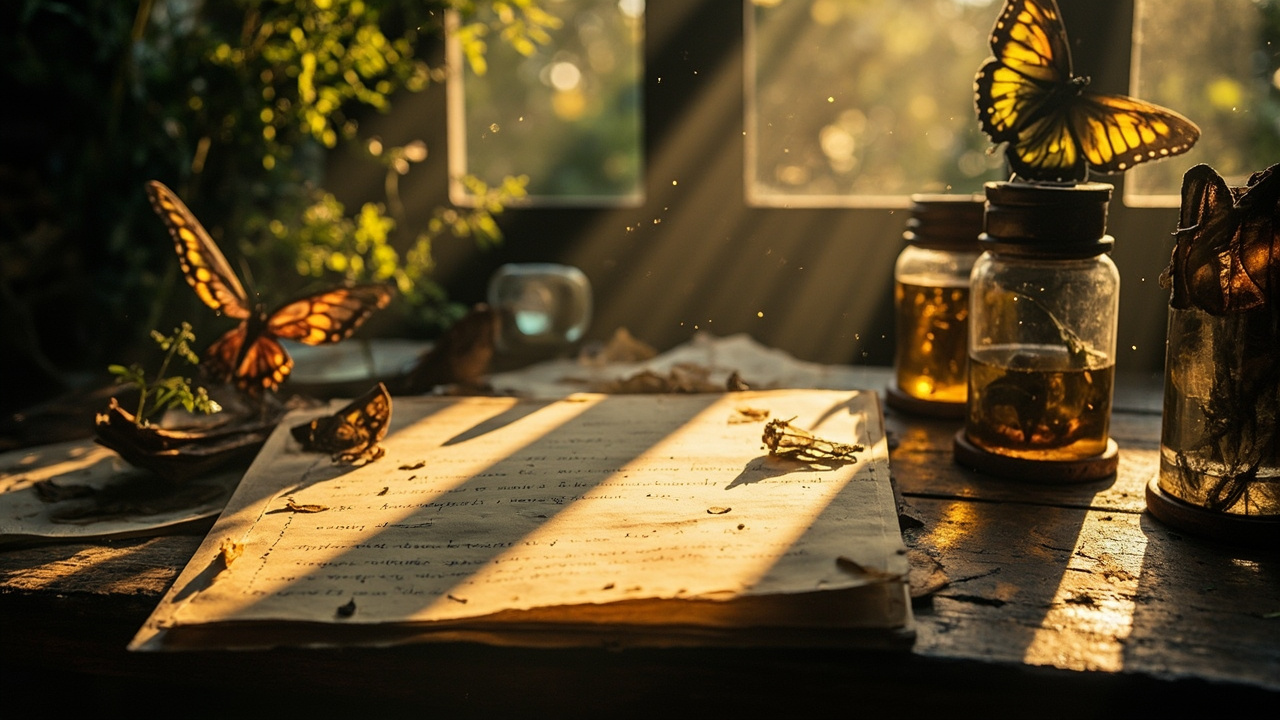
سقط ضوء الصباح بشكل متوازيات رفيعة عبر منضدة عمل إلينور فانس، مُضيئاً فوضى من العينات التي كانت لتُربك أي زائر لدرجتها. هنا كانت الفراشات المُثبتة بالإبر جنباً إلى جنب مع السراخس المجففة؛ هنا وقفت مرطبانات من سائل عكر يحوي مخلوقات لم تسبح بعد؛ هنا كانت حزم من الأوراق مغطاة بخطها الصغير والزاوي. كانت الغرفة خزانة للغرائب جُمعت بواسطة عقل لم يستطع احتمال الفوضى.
أعدلت إلينور عدستها المكبرة وانحنت أكثر فوق الدرج الذي فتحته. في داخله، محفوظاً في كحول مخفف، كان موضوع هوسها الحالي: غشاء شفاف صغير، بالكاد مرئي، كأنه جلد مُنسلخ من بعض الأفاعي المستحيلة. كانت قد وجدته قبل ثلاثة أسابيع، عالقاً بين أنظمة الجذور لنباتين مزهرين جمعتهما من كورنوال. في البداية كانت قد أهملته باعتباره بقايا عضوية. لكن عند الفحص الدقيق—أدق مما يخطر لأي عالم نبات—عرفت ما كان عليه.
كانت تدرس المُشتهيات.
لم تكن الأشواق، بالطبع، جديدة عليها. كانت قد لاحظتها في الآخرين طوال حياتها: الطريقة التي كان أبها يتبع بها زملاءه المفضلين بنظره؛ الطريقة التي كانت أمها الراحلة تستمع بها لخطوات في الممر لم تأتِ قط. لكن إلينور احتاجت ثلاثة وأربعين عاماً لتفهم أن الأشواق، كالأنواع، يمكن ملاحظتها وتصنيفها—وأغرب من كل ذلك—تسجيلها كمُنقرضة.
استعادت دفترها من الرف، جلد غلافه متشقق من عقود من الاستخدام، وقلبت إلى صفحة جديدة. في أعلاها، بخطها الدقيق، كتبت: تصنيف المُشتهيات، الرتبة الثالثة. تحتها، بدأت جردها.
المملكة: Animalia longendi
الرتبة: Insatiata (تلك التي لا شيء يُشبعها)
الفصيلة: Recurrentia (تلك التي تعود دون دعوة)
الأسرة: Ineffabilia (تلك التي تقاوم التعبير)
ثم، تحت هذه العناوين، الأجناس والأنواع التي حددتها حتى الآن: Desiderium patris—الشوق لاعتراف الأب الذي لن يصل قط؛ Desiderium amici—الشوق لعودة صداقة انتهت بسوء؛ Desiderium patriae—الشوق لبيت لم يعد موجوداً أو ربما لم يكن يوماً. حمل كل مدخل تاريخ ملاحظته الأولى، وخصائصه، وحالته الراهنة.
معظمها كان vivens—حياً، وإن لم يزدهر قط. استمرت، تظهر في لحظات الحرص، تتغذى على الذاكرة والخيال. لكن بعضاً منها كان extinctus. هذه كانت قد وضعت عليها علامة الحبر الأحمر، كطريقة يُسجل بها عالم الطبيعة رحيل الطائر العظيم أو الدودو. Desiderium academiae، مثلاً: شوقها للتعليم الجامعي، لحياة العقل بين العقول. مات ذلك اليوم الذي قبلت فيه، بامتنان لم تعد بحاجة لتصنعه، أن تلك الحياة لن تكون لها.
قلبت الصفحة ومدّت يدها نحو الدرج المُسمى Desiderata Nostra—أشواقنا، تلك العينات الحميمة التي جمعتها من نفسها فقط. hesitated يدها. كان هناك خطأ ما في هذا الدرج. كانت قد لاحظته بالأمس ولم تستطع هزّ الشعور.
فتحته إلينور ببطء. في داخله كان نفس مجموعة الأغشية المجهرية التي احتفظت بها دائماً، معلقة في خلاياها الزجاجية الصغيرة. لكن واحدة اختلفت. غشاء واحد تغير.
رفعته بملقطها الأكثر دقة واحتفظت به في الضوء. كان Desiderium prolis—شوقها للطفل. كانت قد لاحظته لسنوات، راقبت كيف ينمو من ألم خفيف مستمر إلى شيء تعلمت أن تحمله دون شكوى. كانت قد سامحت، بطريقتها، حتى. لكن الغفران ليس كالإبادة، وكانت تعرف دائماً الفرق.
الآن، محتفظاً به تحت عدستها، كان الغشاء ساكناً. ساكناً تماماً، تماماً. لم يبقَ أي نبض خافت للشوق في أعماقه الشفافة. لم يُحرّك أي ارتجاف للرجاء أو الذاكرة حوافه. كان، بكل مقياس تملكه، ميّتاً.
وضعت إلينور عدستها جانباً. أغلقت عينيها. بحثت داخل نفسها عن الشوق الذي فحصته للتو، كطريقة قد تُفحص بها جرح لتقييم عمقه. لكن لم يكن هناك شيء. لا ألم. لا طرف خيالي من الرغبة. كان بإمكانها أن تتذكر الإحساس—بإمكانها أن تصفه في كل التفصيل السريري، كما يمكنها وصف شعور الحمى بعد أن انكسرت—لكنها لم تستطع الشعور به. قد ذهب.
جلست ساكنة جداً لفترة طويلة.
عندما تحركت أخيراً، كان لتلتقط قلمها. بيد ثابتة، شطبت كلمة vivens في دفترها وكتبت مكانها: extinctus. ثم، تحت مدخل Desiderium prolis، أضافت سطراً أخيراً:
الموت المُلاحَظ: هذا اليوم. السبب: غير معروف. ملاحظة—الإبادة، على خلاف الحزن، لا تترك جرحاً.
كان المطر قد توقف في الخارج. كانت إلينور تستطيع أن تسمع أجراس الكنيسة في القرية تُقرع الساعة. نهضت، أغلقت دفترها، وبدأت العمل المنهجي لإغلاق الدرج مرة أخرى. كانت هناك عينات أخرى للفحص. اشتبهت أنها ستجد المزيد من حالات الانقراض قبل نهاية الأسبوع.
كانت قد عاشت ما يكفي لتعرف أن كل الأشياء تتجه نحو الصمت: الأنواع، الطموحات، القلوب. لماذا يجب أن تكون الأشواق استثناءً؟ كانت، بعد كل شيء، مجرد شكل آخر من الحياة—هشّة، عابرة، حية فقط حتى تصبح غير ذلك. عالمة التصنيف نفسها لن تكون محصنة. في يوم من الأيام، عرفت، سيُsomeone يفتح درجاً ويجد فقط السكون حيث كانت.
لكن ليس بعد. الآن، عادت إلى عملها، تستمع للصمت حيث كان هناك شيء ما.
Das Morgenlicht fiel in dünnen Parallelogrammen auf Eleanor Vances Arbeitstisch und beleuchtete ein Chaos von Präparaten, das jeden Besucher ihres Studierzimmers verwirrt hätte. Hier lagen angeheftete Schmetterlinge neben gepressten Farnen; hier standen Gläser mit trüben Flüssigkeiten, die Wesen enthielten, die nicht mehr schwammen; hier lagen Papierbündel, bedeckt mit ihrer kleinen, eckigen Handschrift. Das Zimmer war ein Kuriositätenkabinett, zusammengestellt von einem Geist, der Unstrukturiertes nicht ertragen konnte.
Eleanor stellte ihre Lupe ein und lehnte sich näher über die Schublade, die sie geöffnet hatte. Darin, in verdünntem Alkohol konserviert, lag das Objekt ihrer gegenwärtigen Besessenheit: eine kleine, durchscheinende Membran, kaum sichtbar, wie die abgestreifte Haut einer unmöglichen Schlange. Sie hatte sie vor drei Wochen gefunden, eingeklemmt zwischen den Wurzel systemen zweier blühender Pflanzen, die sie in Cornwall gesammelt hatte. Zunächst hatte sie sie als organisches Bruchstück abgetan. Doch bei genauerer Betrachtung—genauer als jeder Botaniker es für nötig halten würde—erkannte sie, was es war.
Sie studierte Desiderata.
Sehnsüchte waren ihr natürlich nicht neu. Sie hatte sie ihr Leben lang bei anderen beobachtet: die Art, wie der Blick ihres Vaters seinen bevorzugten Kollegen folgte; die Art, wie ihre verstorbene Mutter auf Schritte im Flur lauschte, die niemals kamen. Aber es hatte Eleanor dreiundvierzig Jahre gekostet zu verstehen, dass Sehnsüchte, wie Arten, beobachtet, klassifiziert und—am erstaunlichsten von allem—als ausgestorben katalogisiert werden konnten.
Sie nahm ihr Tagebuch aus dem Regal, dessen Lederbindung von Jahrzehnten der Nutzung rissig war, und schlug eine frische Seite auf. Oben schrieb sie mit ihrer sorgfältigen Handschrift: Klassifikation der Desiderata, Ordnung Drei. Darunter begann sie ihre Bestandsaufnahme.
Reich: Animalia longendi
Klasse: Insatiata (jene, die kein Objekt befriedigen kann)
Ordnung: Recurrentia (jene, die ungebeten zurückkehren)
Familie: Ineffabilia (jene, die sich der Artikulation widersetzen)
Und dann, unter diesen Überschriften, die Gattungen und Arten, die sie bisher identifiziert hatte: das Desiderium patris—die Sehnsucht nach väterlicher Anerkennung, die niemals kommen würde; das Desiderium amici—die Sehnsucht nach der Rückkehr einer schlecht beendeten Freundschaft; das Desiderium patriae—die Sehnsucht nach einem Zuhause, das nicht mehr existierte oder vielleicht nie existiert hatte. Jeder Eintrag trug das Datum seiner ersten Beobachtung, seine Merkmale, seinen aktuellen Status.
Die meisten waren vivens—lebendig, wenn auch nie wirklich gedeihend. Sie bestanden fort, tauchten in unbeobachteten Momenten auf, ernährten sich von Erinnerung und Vorstellungskraft. Aber einige waren extinctus. Diese hatte sie mit roter Tinte markiert, wie ein Naturforscher das Aussterben des Riesenalken oder des Dodos verzeichnen würde. Das Desiderium academiae zum Beispiel: ihre Sehnsucht nach einer Universitätsbildung, nach dem Leben des Geistes unter Geistern. Diese war an dem Tag gestorben, als sie mit einer Dankbarkeit, die sie nicht mehr zu heucheln brauchte, akzeptiert hatte, dass ein solches Leben nicht das ihre sein würde.
Sie schlug die Seite um und griff nach der Schublade mit der Aufschrift Desiderata Nostra—unsere Sehnsüchte, jene intimen Präparate, die sie nur von sich selbst sammelte. Ihre Hand zögerte. Mit dieser Schublade stimmte etwas nicht. Sie hatte es gestern bemerkt und konnte das Gefühl nicht abschütteln.
Eleanor öffnete sie langsam. Darin lag dieselbe Anordnung mikroskopischer Membranen, die sie immer dort aufbewahrte, suspendiert in ihren winzigen Glaskammern. Aber eine Kammer war anders. Eine Membran hatte sich verändert.
Sie hob sie mit ihrer feinsten Pinzette heraus und hielt sie ins Licht. Es war das Desiderium prolis—ihre Sehnsucht nach einem Kind. Sie hatte es jahrelang beobachtet, gesehen, wie es von einem leisen, anhaltenden Schmerz zu etwas wuchs, das sie gelernt hatte zu tragen, ohne sich zu beschweren. Sie hatte sogar, auf ihre Weise, Frieden damit geschlossen. Aber Frieden ist nicht dasselbe wie Aussterben, und sie hatte den Unterschied immer gekannt.
Nun, unter ihrer Linse gehalten, war die Membran still. Völlig, vollkommen still. Kein schwacher Puls der Sehnsucht war in ihren durchscheinenden Tiefen verblieben. Kein Zittern von Hoffnung oder Erinnerung regte ihre Ränder. Es war, nach jedem Maß, das sie besaß, tot.
Eleanor legte ihre Linse beiseite. Sie schloss die Augen. Sie suchte in sich selbst nach der Sehnsucht, die sie gerade untersucht hatte, wie man eine Wunde abtasten könnte, um ihre Tiefe einzuschätzen. Aber da war nichts. Kein Schmerz. Kein Phantomglied der Begierde. Sie konnte sich an das Gefühl erinnern—konnte es in perfekt klinischen Details beschreiben, wie sie das Gefühl von Fieber beschreiben konnte, nachdem es abgeklungen war—aber sie konnte es nicht fühlen. Es war weg.
Sie saß sehr still für eine lange Zeit.
Als sie sich schließlich bewegte, war es, um ihre Feder aufzunehmen. Mit ruhiger Hand strich sie das Wort vivens in ihrem Tagebuch durch und schrieb stattdessen: extinctus. Dann fügte sie unter dem Eintrag für Desiderium prolis eine letzte Zeile hinzu:
Beobachteter Tod: dieser Tag. Ursache: unbekannt. Anmerkung—Aussterben hinterlässt, anders als Trauer, keine Wunde.
Draußen hatte der Regen aufgehört. Eleanor konnte die Kirchenglocken im Dorf die Stunde schlagen hören. Sie stand auf, schloss ihr Tagebuch und begann die methodische Arbeit, die Schublade wieder zu versiegeln. Es gab andere Präparate zu überprüfen. Sie vermutete, dass sie vor Ende der Woche weitere Aussterbefälle finden würde.
Sie hatte lang genug gelebt, um zu wissen, dass alle Dinge zum Schweigen neigten: Arten, Ambitionen, Herzen. Warum sollten Sehnsüchte eine Ausnahme sein? Sie waren, schließlich, nur eine andere Form von Leben—hinfällig, vergänglich, lebendig nur so lange, bis sie es nicht mehr waren. Die Taxonomikerin selbst wäre nicht immun. Eines Tages, das wusste sie, würde jemand eine Schublade öffnen und nur Stille finden, wo sie einst gewesen war.
Aber noch nicht. Für jetzt kehrte sie zu ihrer Arbeit zurück, lauschte der Stille, wo einst etwas gewesen war.
La luz de la mañana caía en delgados paralelogramos sobre la mesa de trabajo de Eleanor Vance, iluminando un caos de especímenes que habría confundido a cualquier visitante de su estudio. Aquí yacían mariposas claveteadas junto a helechos prensados; aquí se alzaban frascos de líquido turbio conteniendo criaturas que ya no nadarían; aquí había manojos de papel cubiertos con su letra pequeña y angular. La habitación era un gabinete de curiosidades ensamblado por una mente que no podía soportar lo desordenado.
Eleanor ajustó su lupa y se inclinó sobre el cajón que había abierto. Dentro, conservado en alcohol diluido, yacía el objeto de su actual obsesión: una pequeña membrana translúcida, apenas visible, como la pielmudada de alguna serpiente imposible. Lo había encontrado tres semanas antes, atrapado entre los sistemas de raíces de dos plantas con flores que había recolectado en Cornwall. Al principio lo había descartado como un fragmento de residuos orgánicos. Pero tras un examen más minucioso—más minucioso de lo que cualquier botánico consideraría necesario—había reconocido lo que era.
Estaba estudiando los desiderata.
Los anhelos, por supuesto, no eran nuevos para ella. Los había observado en otros toda su vida: la forma en que la mirada de su padre seguía a sus colegas favorecidos; la forma en que su difunta madre escuchaba pasos en el pasillo que nunca llegaban. Pero Eleanor había necesitado cuarenta y tres años para entender que los anhelos, como las especies, podían ser observados, clasificados y—lo más sorprendente de todo—catalogados como extintos.
Recuperó su diario del estante, su encuadernación de cuero agrietada por décadas de uso, y pasó a una página nueva. Arriba, con su letra cuidadosa, escribió: Clasificación de Desiderata, Orden Tercero. Debajo, comenzó su inventario.
Reino: Animalia longendi
Clase: Insatiata (aquellos que ningún objeto puede satisfacer)
Orden: Recurrentia (aquellos que regresan sin ser llamados)
Familia: Ineffabilia (aquellos que resisten la articulación)
Y luego, bajo estos encabezados, los géneros y especies que había identificado hasta ahora: el Desiderium patris—el anhelo por el reconocimiento paterno que nunca llegaría; el Desiderium amici—el anhelo por el regreso de una amistad que terminó mal; el Desiderium patriae—el anhelo por un hogar que ya no existía o quizás nunca existió. Cada entrada llevaba la fecha de su primera observación, sus características, su estado actual.
La mayoría eran vivens—vivos, aunque nunca prosperaban. Persisitían, apareciendo en momentos de descuido, alimentándose de memoria e imaginación. Pero algunos eran extinctus. A estos los había marcado con tinta roja, como un naturalista podría registrar la desaparición del gran alca o del dodo. El Desiderium academiae, por ejemplo: su anhelo por una educación universitaria, por la vida del intelecto entre intelectos. Ese había muerto el día que había aceptado, con una gratitud que ya no necesitaba fingir, que tal vida no sería la suya.
Pasó la página y extendió la mano hacia el cajón marcado Desiderata Nostra—nuestros anhelos, esos especímenes íntimos que recolectaba solo de sí misma. Su mano vaciló. Algo estaba mal en este cajón. Lo había notado ayer y no podía deshacerse de la sensación.
Eleanor lo abrió lentamente. Dentro yacía el mismo conjunto de membranas microscópicas que siempre guardaba allí, suspendidas en sus diminutas celdas de vidrio. Pero una celda era diferente. Una membrana había cambiado.
La levantó con sus pinzas más finas y la sostuvo contra la luz. Era el Desiderium prolis—su anhelo por un hijo. Lo había observado durante años, había visto cómo crecía desde un dolor persistente y leve hasta algo que había aprendido a cargar sin queja. Incluso, a su manera, había hecho las paces con él. Pero la paz no es lo mismo que la extinción, y siempre había conocido la diferencia.
Ahora, sostenida bajo su lente, la membrana estaba inmóvil. Completamente, perfectamente inmóvil. Ningún pulso débil de anhelo permanecía en sus profundidades traslúcidas. Ningún temblor de esperanza o memoria agitaba sus bordes. Estaba, por cada medida que poseía, muerta.
Eleanor dejó caer su lente. Cerró los ojos. Buscó dentro de sí misma el anhelo que acababa de examinar, como uno podría tantear una herida para evaluar su profundidad. Pero no había nada. Ningún dolor. Ningún miembro fantasma de deseo. Podía recordar la sensación—podía describirla en perfecto detalle clínico, como podía describir la sensación de la fiebre después de que hubiera pasado—pero no podía sentirla. Se había ido.
Se quedó muy inmóvil durante mucho tiempo.
Cuando finalmente se movió, fue para tomar su pluma. Con mano firme, tachó la palabra vivens en su diario y escribió, en su lugar: extinctus. Luego, bajo la entrada del Desiderium prolis, añadió una última línea:
Muerte observada: este día. Causa: desconocida. Nota—la extinción, a diferencia del duelo, no deja herida.
La lluvia había cesado afuera. Eleanor podía escuchar las campanas de la iglesia en el pueblo marcando la hora. Se levantó, cerró su diario, y comenzó el trabajo metódico de sellar el cajón de nuevo. Había otros especímenes que revisar. Sospechaba que encontraría más extinciones antes del final de la semana.
Había vivido lo suficiente para saber que todas las cosas tendían hacia el silencio: especies, ambiciones, corazones. ¿Por qué los anhelos deberían estar exentos? Eran, después de todo, solo otra forma de vida—tenue, impermanente, viva solo hasta que deja de serlo. La taxónoma misma no sería inmune. Un día, lo sabía, alguien abriría un cajón y encontraría solo quietud donde ella había estado.
Pero aún no. Por ahora, regresó a su trabajo, escuchando el silencio donde algo había estado.
La lumière du matin tombait en minces parallélépipèdes sur l'établi d'Eleanor Vance, illuminant un chaos de spécimens qui aurait dérouté tout visiteur de son cabinet de travail. Ici reposaient des papillons épinglés à côté de fougères pressées ; là s'alignaient des bocaux de liquide trouble contenant des créatures qui ne nageraient plus jamais ; ici s'empilaient des liasses de papier couvertes de sa petite écriture anguleuse. La pièce était un cabinet de curiosités assemblé par un esprit qui ne pouvait souffrir l'inorganisé.
Eleanor ajusta sa loupe et se pencha sur le tiroir qu'elle venait d'ouvrir. À l'intérieur, conservé dans de l'alcool dilué, se trouvait l'objet de son obsession actuelle : une petite membrane translucide, à peine visible, comme la peau shed d'un serpent impossible. Elle l'avait trouvée trois semaines auparavant, coincée entre les systèmes racinaires de deux plantes à fleurs qu'elle avait collectées en Cornouailles. D'abord, elle l'avait ignorée comme un fragment de débris organique. Mais à un examen plus approfondi—plus approfondi que n'importe quel botaniste ne songerait à faire—elle avait reconnu ce que c'était.
Elle étudiait les desiderata.
Les désirs n'étaient pas, bien sûr, nouveaux pour elle. Elle les avait observés chez les autres toute sa vie : la façon dont le regard de son père suivait ses collègues privilégiés ; la façon dont sa mère défunte écoutait les pas dans le couloir qui ne viendraient jamais. Mais il avait fallu quarante-trois ans à Eleanor pour comprendre que les désirs, comme les espèces, pouvaient être observés, classifiés et—plus surprenant encore—catalogués comme éteints.
Elle sortit son journal de l'étagère, sa reliure de cuir craquelée par des décennies d'utilisation, et tourna vers une page vierge. En haut, de son écriture soignée, elle écrivit : Classification des Desiderata, Ordre Trois. Dessous, elle commença son inventaire.
Règne : Animalia longendi
Classe : Insatiata (ceux qu'aucun objet ne peut satisfaire)
Ordre : Recurrentia (ceux qui reviennent sans être appelés)
Famille : Ineffabilia (ceux qui résistent à l'articulation)
Et puis, sous ces titres, les genres et espèces qu'elle avait identifiés jusqu'ici : le Desiderium patris—le désir de la reconnaissance paternelle qui n'arriverait jamais ; le Desiderium amici—le désir du retour d'une amitié mal terminée ; le Desiderium patriae—le désir d'un foyer qui n'existait plus ou peut-être n'avait jamais existé. Chaque entrée portait la date de sa première observation, ses caractéristiques, son statut actuel.
La plupart étaient vivens—vivants, bien que ne s'épanouissant jamais. Ils persistaient, réapparaissant dans les moments d'inattention, se nourrissant de mémoire et d'imagination. Mais certains étaient extinctus. Ceux-ci, elle les avait marqués à l'encre rouge, comme un naturaliste pourrait enregistrer la disparition du grand pingouin ou du dodo. Le Desiderium academiae, par exemple : son désir d'une éducation universitaire, de la vie de l'esprit parmi les esprits. Celui-là était mort le jour où elle avait accepté, avec une gratitude qu'elle n'avait plus besoin de feindre, que cette vie ne serait pas la sienne.
Elle tourna la page et tendit la main vers le tiroir marqué Desiderata Nostra—nos désirs, ces spécimens intimes qu'elle ne collectait qu'elle-même. Sa main hésita. Quelque chose n'allait pas avec ce tiroir. Elle l'avait remarqué la veille et ne pouvait chasser ce sentiment.
Eleanor l'ouvrit lentement. À l'intérieur se trouvait le même ensemble de membranes microscopiques qu'elle gardait toujours là, suspendues dans leurs minuscules cellules de verre. Mais une cellule était différente. Une membrane avait changé.
Elle la sortit avec ses plus fines pinces et la tint à la lumière. C'était le Desiderium prolis—son désir d'un enfant. Elle l'avait observé pendant des années, avait vu croître cette douleur sourde persistante jusqu'à devenir quelque chose qu'elle avait appris à porter sans se plaindre. Elle avait même, à sa manière, fait la paix avec. Mais la paix n'est pas la même chose que l'extinction, et elle avait toujours connu la distinction.
Maintenant, tenue sous sa lentille, la membrane était immobile. Parfaitement, absolument immobile. Aucun faible battement de désir ne restait dans ses profondeurs translucides. Aucun frémissement d'espoir ou de mémoire ne troublait ses bords. C'était, par toutes les mesures qu'elle possédait, mort.
Eleanor reposa sa lentille. Elle ferma les yeux. Elle chercha en elle-même le désir qu'elle venait d'examiner, comme on pourrait sonder une plaie pour en évaluer la profondeur. Mais il n'y avait rien. Aucune douleur. Aucun membre fantôme du désir. Elle pouvait se souvenir de la sensation—pouvait la décrire dans les moindres détails cliniques, comme elle pouvait décrire la fièvre après qu'elle fut tombée—mais elle ne pouvait le sentir. C'était parti.
Elle resta très immobile pendant longtemps.
Quand elle finit par bouger, ce fut pour prendre sa plume. D'une main ferme, elle barra le mot vivens dans son journal et écrivit, à la place : extinctus. Puis, sous l'entrée du Desiderium prolis, elle ajouta une dernière ligne :
Mort observée : ce jour. Cause : inconnue. Note—l'extinction, contrairement au deuil, ne laisse aucune plaie.
La pluie avait cessé dehors. Eleanor pouvait entendre les cloches de l'église dans le village sonner l'heure. Elle se leva, ferma son journal, et commença le travail méthodique de refermer le tiroir. Il y avait d'autres spécimens à vérifier. Elle soupçonnait qu'elle trouverait d'autres extinctions avant la fin de la semaine.
Elle avait vécu assez longtemps pour savoir que toutes choses tendaient vers le silence : les espèces, les ambitions, les cœurs. Pourquoi les désirs seraient-ils exemptés ? Ils n'étaient, après tout, qu'une autre forme de vie—ténue, éphémère, vivante seulement jusqu'à ce qu'elle ne le soit plus. La taxonomiste elle-même ne serait pas immunisée. Un jour, elle le savait, quelqu'un ouvrirait un tiroir et ne trouverait que l'immobilité là où elle avait été.
Mais pas encore. Pour l'instant, elle retourna à son travail, écoutant le silence où quelque chose avait été.
La luce del mattino cadeva in sottili parallelogrammi sul tavolo di lavoro di Eleanor Vance, illuminando un caos di campioni che avrebbe confuso qualsiasi visitatore del suo studio. Qui giacevano farfalle appuntate accanto a felci pressate; qui stavano barattoli di liquido torbido contenente creature che non nuotavano più; qui c'erano fascicoli di carta coperti dalla sua calligrafia piccola e angolare. La stanza era un gabinetto di curiosità assemblato da una mente che non poteva tollerare il disorganizzato.
Eleanor sistemò la sua lente d'ingrandimento e si chinò sul cassetto che aveva aperto. All'interno, conservato in alcol diluito, giaceva l'oggetto della sua ossessione attuale: una piccola membrana traslucida, appena visibile, come la pelle mutata di qualche serpente impossibile. L'aveva trovata tre settimane prima, intrappolata tra i sistemi radicali di due piante da fiore che aveva raccolto in Cornovaglia. Inizialmente l'aveva scartata come un frammento di detrito organico. Ma a un esame più attento—più attento di quanto qualsiasi botanico penserebbe di fare—aveva riconosciuto cosa fosse.
Stava studiando i desiderata.
I desideri, naturalmente, non erano nuovi per lei. Li aveva osservati negli altri per tutta la vita: il modo in cui lo sguardo di suo padre seguiva i suoi colleghi favoriti; il modo in cui sua madre defunta ascoltava i passi nel corridoio che non sarebbero mai arrivati. Ma ci erano voluti quarantatré anni a Eleanor per capire che i desideri, come le specie, potevano essere osservati, classificati e—più straordinariamente di tutto—catalogati come estinti.
Recuperò il suo diario dalla mensola, la rilegatura in pelle screpolata da decenni di uso, e girò a una pagina nuova. In cima, con la sua calligrafia accurata, scrisse: Classificazione dei Desiderata, Ordine Terzo. Sotto, iniziò il suo inventario.
Regno: Animalia longendi
Classe: Insatiata (coloro che nessun oggetto può soddisfare)
Ordine: Recurrentia (coloro che ritornano senza essere chiamati)
Famiglia: Ineffabilia (coloro che resistono all'articolazione)
E poi, sotto queste intestazioni, i generi e le specie che aveva finora identificato: il Desiderium patris—il desiderio del riconoscimento paterno che non sarebbe mai arrivato; il Desiderium amici—il desiderio del ritorno di un'amicizia finita male; il Desiderium patriae—il desiderio di una casa che non esisteva più o forse non era mai esistita. Ogni voce portava la data della sua prima osservazione, le sue caratteristiche, il suo stato attuale.
La maggior parte erano vivens—vivi, sebbene non prosperassero mai. Persistevano, riemergendo in momenti di disattenzione, nutrendosi di memoria e immaginazione. Ma alcuni erano extinctus. Questi li aveva segnati con inchiostro rosso, come un naturalista potrebbe registrare la scomparsa del grande alca o del dodo. Il Desiderium academiae, ad esempio: il suo desiderio di un'istruzione universitaria, della vita della mente tra le menti. Quello era morto il giorno in cui aveva accettato, con una gratitudine che non aveva più bisogno di fingere, che una tale vita non sarebbe stata sua.
Girò la pagina e raggiunse il cassetto contrassegnato Desiderata Nostra—i nostri desideri, quei campioni intimi che raccoglieva solo da sé stessa. La sua mano esitò. Qualcosa non andava in questo cassetto. L'aveva notato il giorno prima e non riusciva a scrollarsi di dosso la sensazione.
Eleanor lo aprì lentamente. All'interno giaceva lo stesso insieme di membrane microscopiche che teneva sempre lì, sospese nelle loro piccole celle di vetro. Ma una cella era diversa. Una membrana era cambiata.
La sollevò con le sue pinzette più sottili e la tenne alla luce. Era il Desiderium prolis—il suo desiderio di un figlio. L'aveva osservato per anni, aveva visto crescere da un lieve dolore persistente a qualcosa che aveva imparato a portare senza lamentarsi. Aveva persino, a modo suo, fatto pace con esso. Ma la pace non è la stessa cosa dell'estinzione, e lei aveva sempre conosciuto la distinzione.
Ora, tenuta sotto la sua lente, la membrana era immobile. Completamente, perfettamente immobile. Nessun debole battito di desiderio rimaneva nelle sue profondità traslucide. Nessun fremito di speranza o memoria increspava i suoi bordi. Era, da ogni misura che possedeva, morta.
Eleanor posò la lente. Chiuse gli occhi. Cercò dentro di sé il desiderio che aveva appena esaminato, come si potrebbe sondare una ferita per valutarne la profondità. Ma non c'era nulla. Nessun dolore. Nessun arto fantasma del desiderio. Poteva ricordare la sensazione—poteva descriverla in perfetto dettaglio clinico, come poteva descrivere la sensazione della febbre dopo che era passata—ma non poteva sentirla. Se n'era andata.
Rimase molto immobile per molto tempo.
Quando infine si mosse, fu per prendere la penna. Con mano ferma, cancellò la parola vivens nel suo diario e scrisse, al suo posto: extinctus. Poi, sotto la voce per il Desiderium prolis, aggiunse una riga finale:
Morte osservata: questo giorno. Causa: sconosciuta. Nota—l'estinzione, diversamente dal lutto, non lascia ferite.
Fuori la pioggia era cessata. Eleanor poteva sentire le campane della chiesa nel villaggio segnare l'ora. Si alzò, chiuse il suo diario, e iniziò il lavoro metodico di sigillare di nuovo il cassetto. C'erano altri campioni da controllare. Sospettava che avrebbe trovato altre estinzioni prima della fine della settimana.
Aveva vissuto abbastanza a lungo da sapere che tutte le cose tendevano al silenzio: specie, ambizioni, cuori. Perché i desideri dovrebbero essere esenti? Erano, dopotutto, solo un'altra forma di vita—tenue, impermanente, viva solo finché non lo è più. La tassonomista stessa non sarebbe stata immune. Un giorno, lo sapeva, qualcuno avrebbe aperto un cassetto e avrebbe trovato solo quiete dove lei era stata.
Ma non ancora. Per ora, tornò al suo lavoro, ascoltando il silenzio dove qualcosa era stato.