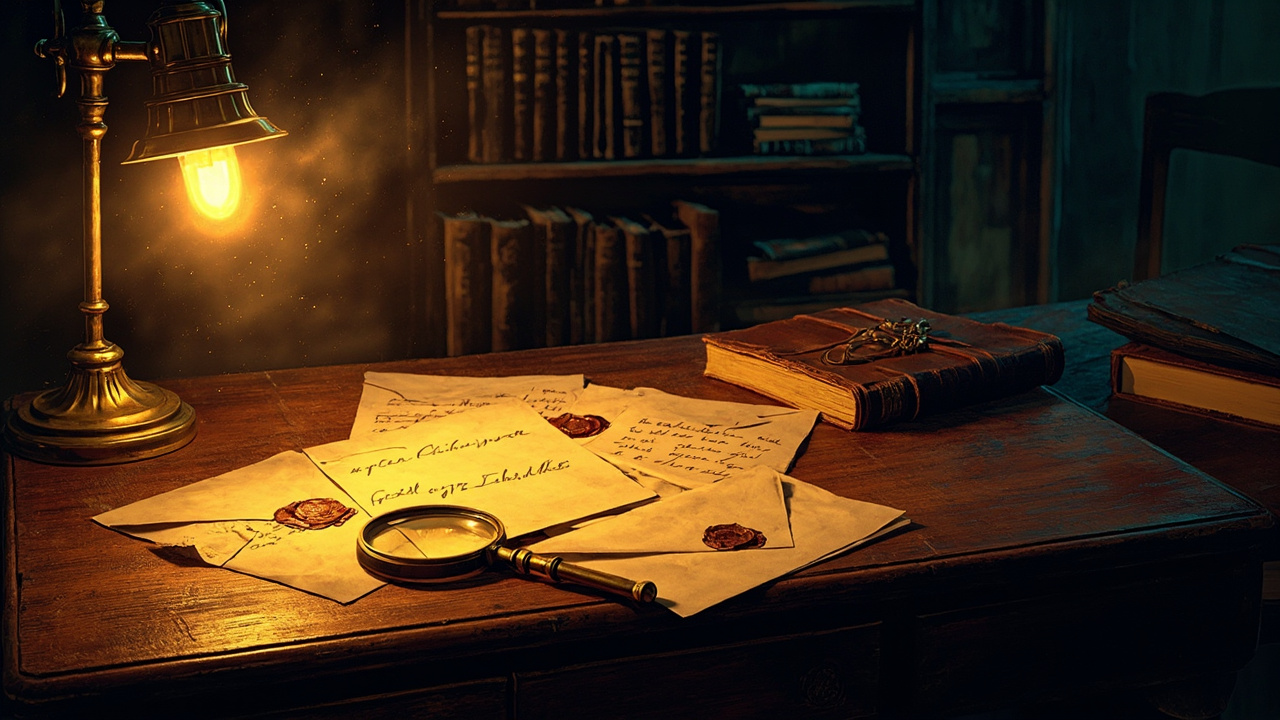
كانت غرف المحامي في شارع تشانسري تفوح منها رائحة الورق الأصفر والجلد العتيق، وكان هناك، في خزانة لم تُفتح منذ عام 1891، حيث التقت هارييت فاين لأول مرة باسم الدكتور إدموند أشورث.
"عُثر على هذه في عيادته بعد وفاته"، شرح السيد بيمرتون، الشريك الناجي الأخير في المكتب، وصدى صوته يحمل هيبة الاحترام التي يُحتفظ بها للأثرية. "تُمّ تقسيم التركة، وهُدم المنزل، لكن هذه ظلت على قيد الحياة بطريق ما. سبعة عشر خطاباً، مُعنونة لكن لم تُرسل قط."
رفعت هارييت أول مظروف بأصابع حذرة. اصفرّ الورق حتى صار بلون الشاي الخفيف، لكن الخط النحتي ظل سليماً: تشارلز داروين، دار داون، كنت. الختم لم يُكسر.
"ماذا في الأرض يريده طبيب من الأقاليم أن يخبر به داروين؟" همست.
"ذلك، الآنسة فاين، ما ندفعك لاكتشافه. تريد العائلة إتلاف الرسائل دون قراءتها. أقنعتهم بغير ذلك. هناك قصة هنا، وأنا أشك أنها قصة تستحق أن تُروى."
أحضرت هارييت الرسائل إلى غرفها في بلومزبري، حيث ألقى مصباح الغاز ظلالاً طويلة عبر الممر وهي تعمل حتى وقت متأخر من الليل، تفتح كل مظروف بمِرفق عظمي وتفرد الصفحات الهشة عبر مكتبها. confessions متراكمة داخلها تدريجياً في شيء مرعب ومتماسك.
الرسالة الأولى، الموجهة لداروين، مؤرخة في مارس 1867. كتب أشورث بدقة منظورة لرجل يسجل الأعراض: يجب أن أعترف أن العينة التي فحصتها في سبتمبر 1858 - العصافير من غالاباغوس - لم تكن، كما كنت تعتقد، جمعها مساعد السيد غولد. حصلتُ عليها بوسائل لا أستطيع الإفصاح عنها علناً. التنوعات التي لاحظتها لم تكن طبيعية. كانت مصممة.
يد هارييت ارتجفت. واصلت القراءة.
إلى فلورنس نايتنجيل، مؤرخة 1873، كتب أشورث: سألتني مرة عن معدلات الوفيات في سكوتاري.شككت في فساد عقود التوريد. كنتِ محقة. لكن الفضيحة التي كنتِ تبحثين عنها لم تكن اختلاساً - كانت عدوى متعمدة. لدي وثائق. كان لدي دائماً وثائق. اخترت الصمت لأن الحقيقة كانت ستُدمر المؤسسة التي بنيتها.
الرسالة إلى توماس كارلايل، مؤرخة 1875، احتوت على شيء أغرب وأكثر: يوميات زوجتك لم تُدمر بالحريق. أملكها. أملكها لأنني كنت من أخذها من مكتبها قبل أن تتمكن من إنهاء حرقها. الحقائق بداخلها كانت ستنهي سمعتك، نعم - لكنها كانت ستنهي أيضاً الكذبة التي تحكم بها هذه الأمة نفسها. لست متأكداً أي الناتجين كان أسوأ.
واحدة تلو الأخرى، كشفت الرسائل عن محتوياتها. إلى غلادستون، اعتراف بالتلاعب السياسي. إلى لويس كارول، اعتراف بخصوص الهوية الحقيقية للفتاة التي ألهمت أليس. إلى وريث العرش، تحذير من مؤامرة لا تستطيع هارييت فهمها بالكامل. كل رسالة مؤرخة ومختومة ولم تُرسل قط.
كانت الرسالة الأخيرة، المُعنونة ببساطة إلى التاريخ، هي التي شرحت كل شيء.
لم يكن الدكتور أشورث طبيباً عادياً. كان حارساً للأسرار، جامعاً للحقائق الخطرة جداً للحديث عنها. لم تكن الرسائل جبناً، كتب؛ كانت عمارة. كل اعتراف كان جداراً حاملاً لشيء غير مرئي للعالم - هيكل بُني لدعم شيء أقل من صرح اللياقة الفيكتورية itself.
كنت طبيباً لسبعة من أقوى الرجال والنساء في هذا العصر، كتب أشورث. كنت اطلاعاً على طيشهم وجرائمهم وخجلهم الخاص. فهمت أن الكشف عن أي حقيقة من هذه الحقائق لن يُسقط المخطئ فحسب، بل سينهار الإطار الأخلاقي بأكمله الذي تستريح عليه مجتمعاتنا. لذا فعلت ما لم يستطع أحد غيري: أحجمت لساني، وكتبت كل شيء، وتركته ينتظر.
ربما ستكون بعض العصور القادمة قوية بما يكفي لتحمل ثقل هذه الكشفات. ربما ستحرق هذه الرسائل دون قراءتها وسيواصل العالم وهمه المريح. لكنني أديت دوري. رفضت أن أكون أداة الهدم، ورفضت أن أكون أداة الصمت. الحقيقة موجودة الآن، محفوظة في الحبر والورق، صبورة كالصخور.
تراجعت هارييت للخلف مع انتشار الفجر الرمادي عبر النافذة. الرسائل أصلية - التحليل الأسلوب سيؤكد ذلك، والتفاصيل التاريخية محددة جداً، متطابقة بدقة مع ألغاز حيّرت العلماء طويلاً. كانت تحمل في يديها إمكانية إعادة تشكيل السرد بأكمله للعصر الفيكتوري.
لكنها فهمت أيضاً، ربما لأول مرة، العبء الرهيب لخيار إدموند أشورث. لم يكن جباناً. كان شيئاً أصعب بكثير: رجل رأى النطاق الكامل للحقيقة واختار، بوعي وبمعرفة كاملة، عدم تسليحها.
نظرت إلى الرسائل منتشرة أمامها. سبعة عشر مظروفاً. سبعة عشر انفجاراً ينتظر الحدوث. يمكنها نشرها. يمكنها كشف العفن في قلب الإمبراطورية ومشاهدة هياكل اليقين تتهاوى.
أو يمكنها اتباع مثال أشورث.
امتدت لقلمها.
"السيد بيمرتون"، كتبت، "قرأت الرسائل. أفهم محتوياتها. وأعتقد أن أفضل مسار للعمل هو إعادتها إلى الخزانة حيث عُثر عليها، مختومة وغير منقوشة، لجيل مستقبلي يكتشفها حين يكون العالم مستعداً لتحمل ثقلها."
ختمت الرسالة وجلست لحظة طويلة في ضوء الصباح، تتساءل عما إذا كانت قد ارتكبت للتو عمل الجبن - أم أنها أصبحت، بطريقة صغيرة، حارسة للأسرار herself.
في الخارج، استيقظت لندن في يوم عادي آخر، غير مدركة أن أسسها فُحصت ووُجدت متحللة وضرورية، مخزية وضرورية، وأن شيئاً ما في خزانة محامٍ في شارع تشانسري، استقرت الحقيقة صبورة كما كانت منذ أربعين عاماً، تنتظر still.
Die Anwaltskanzlei in der Chancery Lane roch nach vergilbtem Papier und altem Leder, und dort, in einem Schrank, der seit 1891 nicht mehr geöffnet worden war, stieß Harriet Vane zum ersten Mal auf den Namen Dr. Edmund Ashworth.
"Diese wurden nach seinem Tod in seiner Praxis gefunden," erklärte Mr. Pemberton, der letzte überlebende Partner der Kanzlei, seine Stimme trug die ehrfürchtige Stille, die man für Relikte aufspart. "Der Nachlass wurde aufgelöst, das Haus abgerissen, aber irgendwie haben diese überlebt. Siebzehn Briefe, adressiert aber nie abgeschickt."
Harriet hob den ersten Umschlag mit behutsamen Fingern. Das Papier war bis zur Farbe von dünnem Tee vergilbt, aber die Kupferstich-Schrift war makellos erhalten: Charles Darwin, Down House, Kent. Das Siegel war ungebrochen.
"Was um alles in der Welt würde ein Landarzt Darwin mitteilen wollen?" murmelte sie.
"Das, Miss Vane, dafür bezahlen wir Sie, es herauszufinden. Die Familie wünscht, dass die Briefe ungelesen vernichtet werden. Ich habe sie anderes überzeugt. Hier gibt es eine Geschichte, und ich vermute, es ist eine, die es wert ist, erzählt zu werden."
Harriet brachte die Briefe in ihre Zimmer in Bloomsbury, wo das Gaslicht lange Schatten auf den Treppenabsatz warf, während sie bis spät in die Nacht arbeitete, jeden Umschlag mit einem Falzbein öffnete und die brüchigen Seiten auf ihrem Schreibtisch ausbreitete. Die Geständnisse darin fügten sich nach und nach zu etwas Schrecklichem und Kohärentem zusammen.
Der erste Brief, an Darwin, war auf März 1867 datiert. Ashworth schrieb mit der gemessenen Präzision eines Mannes, der Symptome aufzeichnet: Ich muss gestehen, dass das Exemplar, das Sie im September 1858 untersucht haben – die Finken von den Galápagos – nicht, wie Sie glaubten, vom Assistenten von Mr. Gould gesammelt wurde. Ich habe es auf Wegen erhalten, die ich nicht öffentlich offenlegen kann. Die Variationen, die Sie beobachteten, waren nicht natürlich. Sie waren konstruiert.
Harriets Hand zitterte. Sie las weiter.
An Florence Nightingale, datiert 1873, schrieb Ashworth: Sie fragten mich einmal nach den Sterblichkeitsraten in Skutari. Sie vermuteten Korruption in den Lieferverträgen. Sie hatten recht. Aber der Skandal, den Sie suchten, war keine Veruntreuung – es war absichtliche Infektion. Ich habe Dokumentation. Ich habe immer Dokumentation gehabt. Ich wählte Schweigen, weil die Wahrheit die Institution zerstört hätte, die Sie aufgebaut haben.
Der Brief an Thomas Carlyle, datiert 1875, enthielt etwas noch Seltsameres: Die Tagebücher Ihrer Frau wurden nicht durch Feuer zerstört. Ich besitze sie. Ich besitze sie, weil ich derjenige war, der sie von ihrem Schreibtisch nahm, bevor sie sie verbrennen konnte. Die Wahrheiten darin hätten Ihr Ansehen zerstört, ja – aber sie hätten auch die Lüge beendet, durch die diese Nation sich selbst regiert. Ich bin nicht sicher, welches Ergebnis schlimmer gewesen wäre.
Einer nach dem anderen enthüllten die Briefe ihren Inhalt. An Gladstone, ein Geständnis politischer Manipulation. An Lewis Carroll, ein Geständnis bezüglich der wahren Identität des Mädchens, das Alice inspirierte. An den Prince of Wales, eine Warnung vor einer Verschwörung, die Harriet nicht vollständig begreifen konnte. Jeder Brief war datiert, versiegelt und nie abgeschickt.
Es war der letzte Brief, einfach adressiert an die Geschichte, der alles erklärte.
Dr. Ashworth war kein gewöhnlicher Arzt gewesen. Er war ein Hüter von Geheimnissen gewesen, ein Sammler von Wahrheiten, die zu gefährlich waren, ausgesprochen zu werden. Die Briefe waren keine Feigheit, schrieb er; sie waren Architektur. Jedes Geständnis war eine tragende Wand einer für die Welt unsichtbaren Struktur – einer Struktur, gebaut um nichts Geringeres zu tragen als das Gebäude viktorianischer Anständigkeit selbst.
Ich war der Arzt von sieben der mächtigsten Männer und Frauen dieses Zeitalters, schrieb Ashworth. Ich war eingeweiht in ihre Indiskretionen, ihre Verbrechen, ihre privaten Schande. Ich verstand, dass die Enthüllung einer dieser Wahrheiten nicht nur den Sünder zu Fall bringen würde, sondern den gesamten moralischen Rahmen, auf dem unsere Gesellschaft ruht. Also tat ich, was kein anderer konnte: Ich hielt meinen Mund, und ich schrieb alles auf, und ich ließ es warten.
Vielleicht wird ein zukünftiges Zeitalter robust genug sein, das Gewicht dieser Enthüllungen zu tragen. Vielleicht werden sie diese Briefe ungelesen verbrennen und die Welt wird ihre bequeme Täuschung fortsetzen. Aber ich habe meine Pflicht getan. Ich habe mich geweigert, das Instrument der Zerstörung zu sein, und ich habe mich geweigert, das Instrument der Stille zu sein. Die Wahrheit existiert jetzt, bewahrt in Tinte und Papier, geduldig wie die Steine.
Harriet lehnte sich zurück, als die Dämmerung grau durch das Fenster kroch. Die Briefe waren echt – die stilometrische Analyse würde es bestätigen, und die historischen Details waren zu spezifisch, zu präzise abgestimmt auf Mysterien, die Wissenschaftler lange verwirrt hatten. Sie hielt in ihren Händen das Potenzial, die gesamte Erzählung des viktorianischen Zeitalters neu zu gestalten.
Aber sie verstand auch, vielleicht zum ersten Mal, die furchtbare Last von Edmund Ashworths Wahl. Er war kein Feigling gewesen. Er war etwas viel Schwierigeres gewesen: ein Mann, der die volle Tragweite der Wahrheit sah und bewusst und in voller Kenntnis der Tatsachen wählte, sie nicht als Waffe einzusetzen.
Sie sah auf die vor ihr ausgebreiteten Briefe. Siebzehn Umschläge. Siebzehn Zündungen, die darauf warteten zu explodieren. Sie konnte sie veröffentlichen. Sie konnte die Fäulnis im Herzen des Empire aufdecken und zusehen, wie die Strukturen der Gewissheit einstürzten.
Oder sie konnte Ashworths Beispiel folgen.
Sie griff nach ihrer Feder.
"Mr. Pemberton," schrieb sie, "ich habe die Briefe gelesen. Ich verstehe ihren Inhalt. Und ich glaube, der beste Kurs des Handelns ist, sie in den Schrank zurückzubringen, wo sie gefunden wurden, versiegelt und unberührt, damit eine zukünftige Generation sie entdeckt, wenn die Welt bereit ist, ihr Gewicht zu tragen."
Sie versiegelte den Brief und saß lange im Morgenlicht, fragte sich, ob sie gerade eine Tat der Feigheit begangen hatte – oder ob sie sich, in gewisser Weise, selbst zur Hüterin der Geheimnisse gemacht hatte.
Draußen erwachte London zu einem weiteren gewöhnlichen Tag, ahnungslos, dass seine Grundlagen untersucht und als sowohl verrottet als auch wesentlich befunden worden waren, sowohl schändlich als auch notwendig, und dass irgendwo in einer Anwaltskanzlei in der Chancery Lane die Wahrheit dalag, geduldig wie sie es vierzig Jahre lang getan hatte, noch immer wartend.
Las oficinas del solicitor en Chancery Lane olían a papel foxado y cuero viejo, y fue allí, en un armario que no se había abierto desde 1891, donde Harriet Vane vio por primera vez el nombre del Dr. Edmund Ashworth.
"Estas fueron encontradas en su consulta después de su muerte," explicó el Sr. Pemberton, el último socio sobreviviente del bufete, su voz cargando el reverente silencio que se reserva para las reliquias. "La herencia fue dispersada, la casa demolida, pero de alguna manera estas sobrevivieron. Diecisiete cartas, dirigidas pero nunca enviadas."
Harriet levantó el primer sobre con dedos cuidadosos. El papel se había amarillecido hasta el color del té ligero, pero la caligrafía caligráfica permanecía intacta: Charles Darwin, Down House, Kent. El sello estaba intacto.
"¿Qué demonios querría decirle un médico de provincias a Darwin?" murmuró.
"Eso, Srta. Vane, es lo que le estamos pagando para descubrir. La familia desea que las cartas sean destruidas sin leer. Yo los convencí de lo contrario. Hay una historia aquí, y sospecho que vale la pena contar."
Harriet se llevó las cartas a sus habitaciones en Bloomsbury, donde la lámpara de gas proyectaba sombras largas a través del rellano mientras trabajaba hasta altas horas de la noche, abriendo cada sobre con un plegador de hueso y extendiendo las páginas frágiles sobre su escritorio. Las confesiones que contenían se fueron assembling gradualmente en algo terrorífico y coherente.
La primera carta, dirigida a Darwin, estaba fechada en marzo de 1867. Ashworth escribía con la precisa mesura de un hombre que registra síntomas: Debo confesar que el espécimen que usted examinó en septiembre de 1858 — los pinzones de las Galápagos — no era, como usted creía, recogido por el asistente del Sr. Gould. Lo obtuve por medios que no puedo revelar públicamente. Las variaciones que observó no eran naturales. Eran diseñadas.
La mano de Harriet tembló. Siguió leyendo.
A Florence Nightingale, fechada en 1873, Ashworth escribió: Una vez me preguntó sobre las tasas de mortalidad en Scutari. Sospechaba corrupción en los contratos de suministro. Tenía razón. Pero el escándalo que buscaba no era malversación — era infección deliberada. Tengo documentación. Siempre la he tenido. Elegí el silencio porque la verdad habría destruido la institución que usted construyó.
La carta a Thomas Carlyle, fechada en 1875, contenía algo aún más extraño: Los diarios de su esposa no fueron destruidos por el fuego. Los poseo. Los poseo porque fui yo quien los tomó de su escritorio antes de que pudiera terminar de quemarlos. Las verdades dentro habrían terminado con su reputación, sí — pero también habrían terminado con la mentira con la que esta nación se gobierna a sí misma. No estoy seguro de cuál de los dos resultados habría sido peor.
Una por una, las cartas revelaron sus contenidos. A Gladstone, una confesión de manipulación política. A Lewis Carroll, una confesión sobre la verdadera identidad de la niña que inspiró Alicia. Al Príncipe de Gales, una advertencia sobre una conspiración que Harriet no podía comprender completamente. Cada carta estaba fechada, sellada y nunca enviada.
Fue la última carta, dirigida simplemente a Historia, la que lo explicó todo.
El Dr. Ashworth no había sido un médico ordinario. Había sido un guardián de secretos, un coleccionista de verdades demasiado peligrosas para hablar. Las cartas no eran cobardía, escribió; eran arquitectura. Cada confesión era un muro de carga de una estructura invisible al mundo — una estructura construida para sostener nada menos que el edificio de la respectabilidad victoriana misma.
Fui el médico de siete de los hombres y mujeres más poderosos de esta era, escribió Ashworth. Tuve conocimiento de sus indiscreciones, sus crímenes, sus vergüenzas privadas. Entendí que revelar cualquiera de estas verdades no solo derribaría al pecador, sino todo el marco moral sobre el cual descansa nuestra sociedad. Así que hice lo que nadie más podía hacer: guardé silencio, y lo escribí todo, y lo dejé esperar.
Quizás alguna era futura sea lo suficientemente robusta para soportar el peso de estas revelaciones. Quizás quemen estas cartas sin leer y el mundo continúe con su cómoda ilusión. Pero he hecho mi parte. Me he negado a ser el instrumento de destrucción, y me he negado a ser el instrumento del silencio. La verdad existe ahora, preservada en tinta y papel, paciente como las piedras.
Harriet se recostó mientras el amanecer se colaba gris a través de la ventana. Las cartas eran auténticas — el análisis estilométrico lo confirmaría, y los detalles históricos eran demasiado específicos, demasiado precisamente alineados con misterios que habían desconcertado a los eruditos durante mucho tiempo. Sostenía en sus manos el potencial para rehacer toda la narrativa de la era victoriana.
Pero también entendió, quizás por primera vez, la terrible carga de la elección de Edmund Ashworth. No había sido un cobarde. Había sido algo mucho más difícil: un hombre que vio el alcance completo de la verdad y eligió, conscientemente y con pleno conocimiento, no weaponizarla.
Miró las cartas extendidas ante ella. Diecisiete sobres. Diecisiete detonaciones esperando ocurrir. Podía publicarlas. Podía exponer la podredumbre en el corazón del imperio y ver cómo las estructuras de certeza se derrumbaban.
O podía seguir el ejemplo de Ashworth.
Tomó su pluma.
"Sr. Pemberton," escribió, "he leído las cartas. Entiendo su contenido. Y creo que el mejor curso de acción es devolverlas al armario donde fueron encontradas, selladas e intactas, para que alguna generación futura las descubra cuando el mundo esté listo para soportar su peso."
Selló la carta y se quedó sentada un largo momento a la luz de la mañana, preguntándose si acababa de cometer un acto de cobardía — o si de alguna manera pequeña se había convertido ella misma en la guardiana de secretos.
Afuera, Londres se despertaba para otro día ordinario, sin saber que sus cimientos habían sido examinados y encontrados tanto podridos como esenciales, tanto vergonzosos como necesarios, y que en algún lugar del armario de un solicitor en Chancery Lane, la verdad yacía paciente como lo había hecho durante cuarenta años, esperando todavía.
Les bureaux du solicitor sur Chancery Lane sentaient le papier jauni et le cuir ancien, et c'est là, dans un cabinet qui n'avait pas été ouvert depuis 1891, qu'Harriet Vane aperçut pour la première fois le nom du Dr Edmund Ashworth.
"Celles-ci ont été trouvées dans son cabinet après sa mort," expliqua M. Pemberton, dernier associé survivant du cabinet, sa voix portant la révérence silencieuse qu'on réserve aux reliques. "La succession a été dispersée, la maison démolie, mais celles-ci ont survécu d'une façon ou d'une autre. Dix-sept lettres, adressées mais jamais postées."
Harriet souleva la première enveloppe avec des doigts prudents. Le papier avait jauni jusqu'à la couleur d'un thé faible, mais l'écriture calligraphiée demeurait impeccable : Charles Darwin, Down House, Kent. Le sceau était intact.
"Qu'est-ce qu'un médecin de province pourrait bien vouloir dire à Darwin ?" murmura-t-elle.
"Cela, Mademoiselle Vane, c'est ce que nous vous payons pour découvrir. La famille souhaite que les lettres soient détruites sans être lues. Je les en ai convaincus. Il y a une histoire ici, et je soupçonne qu'elle vaut la peine d'être racontée."
Harriet emporta les lettres dans ses quartiers à Bloomsbury, où la lampe à gaz projetait de longues ombres dans le couloir tandis qu'elle travaillait tard dans la nuit, ouvrant chaque enveloppe avec un plioir et étalant les pages fragiles sur son bureau. Les aveux qu'elles contenaient se assemblaient progressivement en quelque chose de terrifiant et de cohérent.
La première lettre, adressée à Darwin, était datée de mars 1867. Ashworth écrivait avec la précision mesurée d'un homme consignat ses symptômes : Je dois avouer que le spécimen que vous avez examiné en septembre 1858 — les pinsons des Galápagos — n'était pas, comme vous le croyiez, recueilli par l'assistant de M. Gould. Je l'ai obtenu par des moyens que je ne peux pas révéler publiquement. Les variations que vous avez observées n'étaient pas naturelles. Elles étaient conçues.
La main d'Harriet trembla. Elle continua à lire.
À Florence Nightingale, datée de 1873, Ashworth écrivit : Vous m'avez demandé un jour au sujet des taux de mortalité à Scutari. Vous soupçonniez une corruption dans les contrats d'approvisionnement. Vous aviez raison. Mais le scandale que vous cherchiez n'était pas un détournement — c'était une infection délibérée. J'ai des preuves. J'en ai toujours eu. J'ai choisi le silence parce que la vérité aurait détruit l'institution que vous avez construite.
La lettre à Thomas Carlyle, datée de 1875, contenait quelque chose d'encore plus étrange : Les journaux de votre femme n'ont pas été détruits par le feu. Je les possède. Je les possède parce que j'étais celui qui les a pris sur son bureau avant qu'elle ne puisse finir de les brûler. Les vérités qu'ils contenaient auraient détruit votre réputation, oui — mais elles auraient également détruit le mensonge par lequel cette nation se gouverne. Je ne suis pas sûr lequel des deux résultats aurait été le pire.
Une par une, les lettres révélèrent leur contenu. À Gladstone, un aveu de manipulation politique. À Lewis Carroll, une confession concernant la véritable identité de la fille qui a inspiré Alice. Au prince de Galles, un avertissement au sujet d'une conspiration qu'Harriet ne pouvait pas pleinement comprendre. Chaque lettre était datée, scellée et jamais envoyée.
Ce fut la dernière lettre, adressée simplement à l'Histoire, qui expliqua tout.
Le Dr Ashworth n'avait pas été un médecin ordinaire. Il avait été un gardien de secrets, un collectionneur de vérités trop dangereuses pour être prononcées. Les lettres n'étaient pas de la lâcheté, écrivit-il ; c'était de l'architecture. Chaque aveu était un mur porteur d'une structure invisible au monde — une structure construite pour ne soutenir rien de moins que l'édifice de la respectabilité victorienne elle-même.
J'étais le médecin de sept des hommes et femmes les plus puissants de cette époque, écrivit Ashworth. J'ai eu accès à leurs indécences, leurs crimes, leurs honte privées. J'ai compris que révéler l'une de ces vérités ferait tomber non seulement le pécheur, mais tout le cadre moral sur lequel repose notre société. Alors j'ai fait ce que personne d'autre ne pouvait faire : j'ai tenu ma langue, et j'ai tout écrit, et je l'ai laissé attendre.
Peut-être qu'une future époque sera assez solide pour supporter le poids de ces révélations. Peut-être brûleront-ils ces lettres sans les lire et le monde continuera son agréable illusion. Mais j'ai fait ma part. J'ai refusé d'être l'instrument de la destruction, et j'ai refusé d'être l'instrument du silence. La vérité existe maintenant, préservée en encre et en papier, patiente comme les pierres.
Harriet se recula alors que l'aube se glissait grise par la fenêtre. Les lettres étaient authentiques — l'analyse stylométrique le confirmerait, et les détails historiques étaient trop spécifiques, trop précisément alignés sur des mystères qui avaient longtemps troublé les érudits. Elle tenait entre ses mains le pouvoir de refaire le récit entier de l'époque victorienne.
Mais elle comprenait aussi, peut-être pour la première fois, le terrible fardeau du choix d'Edmund Ashworth. Il n'avait pas été un lâche. Il avait été quelque chose de bien plus difficile : un homme qui avait vu la portée complète de la vérité et avait choisi, consciemment et en pleine connaissance de cause, de ne pas l'arme.
Elle regarda les lettres étalées devant elle. Dix-sept enveloppes. Dix-sept détonations en attente. Elle pouvait les publier. Elle pouvait exposer la pourriture au cœur de l'empire et regarder les structures de certitude s'effondrer.
Ou elle pouvait suivre l'exemple d'Ashworth.
Elle saisit sa plume.
"Monsieur Pemberton," écrivit-elle, "j'ai lu les lettres. Je comprends leur contenu. Et je crois que la meilleure ligne de conduite est de les retourner dans le cabinet où elles ont été trouvées, scellées et intactes, pour qu'une future génération les découvre quand le monde sera prêt à supporter leur poids."
Elle scella la lettre et resta assise un long moment à la lumière du matin, se demandant si elle venait de commettre un acte de lâcheté — ou si elle était devenue, d'une certaine manière, la gardienne des secrets elle-même.
Dehors, Londres s'éveillait pour un autre jour ordinaire, inconsciente que ses fondations avaient été examinées et trouvées à la fois pourries et essentielles, à la fois honteuses et nécessaires, et que quelque part dans un cabinet de solicitor sur Chancery Lane, la vérité reposait, patiente comme elle l'avait fait pendant quarante ans, attendant toujours.
Gli studi legali di Chancery Lane profumavano di carta ingiallita e cuoio antico, ed fu lì, in un armadio che non veniva aperto dal 1891, che Harriet Vane incontrò per la prima volta il nome del Dottor Edmund Ashworth.
"Queste sono state trovate nel suo studio dopo la sua morte," spiegò il signor Pemberton, l'ultimo socio superstite dello studio, la cui voce portava il riverente silenzio che si riserva alle reliquie. "La tenuta fu dispersa, la casa demolita, ma in qualche modo queste sono sopravvissute. Diciassette lettere, indirizzate ma mai spedite."
Harriet sollevò la prima busta con dita delicate. La carta era ingiallita fino al colore del tè leggero, ma la calligrafia intarsiata rimaneva incontaminata: Charles Darwin, Down House, Kent. Il sigillo era intatto.
"Cosa diavolo vorrebbe comunicare un medico di provincia a Darwin?" mormorò.
"Questo, Signorina Vane, è ciò per cui vi stiamo pagando per scoprire. La famiglia desidera che le lettere vengano distrutte senza essere lette. Li ho convinti altrimenti. C'è una storia qui, e sospetto che ne valga la pena."
Harriet portò le lettere nei suoi appartamenti a Bloomsbury, dove la lampada a gas proiettava ombre lunghe sul pianerottolo mentre lavorava fino a notte inoltrata, aprendo ogni busta con un piegatore d'osso e stendendo le pagine fragili sulla scrivania. Le confessioni al loro interno si assemblarono gradualmente in qualcosa di terrificante e coerente.
La prima lettera, a Darwin, era datata marzo 1867. Ashworth scriveva con la precisione misurata di un uomo che registra i sintomi: Devo confessare che il campione che avete esaminato nel settembre 1858 – le fringuelli delle Galápagos – non era, come credevate, raccolto dall'assistente del signor Gould. L'ho ottenuto attraverso mezzi che non posso dichiarare pubblicamente. Le variazioni che avete osservato non erano naturali. Erano state progettate.
La mano di Harriet tremò. Continuò a leggere.
A Florence Nightingale, datata 1873, Ashworth scrisse: Mi chiedeste una volta riguardo ai tassi di mortalità a Scutari. Sospettavate corruzione nei contratti di approvvigionamento. Avevate ragione. Ma lo scandalo che cercavate non era appropriazione indebita – era infezione deliberata. Ho documentazione. Ne ho sempre avuta. Ho scelto il silenzio perché la verità avrebbe distrutto l'istituzione che avete costruito.
La lettera a Thomas Carlyle, datata 1875, conteneva qualcosa di ancora più strano: I diari di vostra moglie non furono distrutti dal fuoco. Li posseggo. Li posseggo perché ero io quello che li presi dalla sua scrivania prima che potesse finire di bruciarli. Le verità al loro interno avrebbero rovinato la vostra reputazione, sì – ma avrebbero anche posto fine alla menzogna con cui questa nazione governa se stessa. Non sono certo quale dei due esiti sarebbe stato peggiore.
Una dopo l'altra, le lettere rivelarono i loro contenuti. A Gladstone, un'ammissione di manipolazione politica. A Lewis Carroll, una confessione riguardo alla vera identità della ragazza che ispirò Alice. Al Principe di Galles, un avvertimento su una cospirazione che Harriet non poteva completamente comprendere. Ogni lettera era datata, sigillata e mai spedita.
Fu l'ultima lettera, indirizzata semplicemente a Storia, che spiegò tutto.
Il Dottor Ashworth non era stato un medico ordinario. Era stato un custode di segreti, un collezionista di verità troppo pericolose per essere pronunciate. Le lettere non erano viltà, scrisse; erano architettura. Ogni confessione era una parete portante di una struttura invisibile al mondo – una struttura costruita per sostenere niente di meno dell'edificio della rispettabilità vittoriana stessa.
Ero il medico di sette degli uomini e delle donne più potenti di quest'epoca, scrisse Ashworth. Ero al corrente delle loro indiscrezioni, dei loro crimini, delle loro vergogne private. Compresi che rivelare una qualsiasi di queste verità avrebbe abbattuto non solo il peccatore, ma l'intera struttura morale su cui riposa la nostra società. Così feci ciò che nessun altro poteva fare: tenni la bocca chiusa, e scrissi tutto, e lo lasciai aspettare.
Forse qualche epoca futura sarà abbastanza robusta da sopportare il peso di queste rivelazioni. Forse bruceranno queste lettere senza leggerle e il mondo continuerà nella sua confortevole illusione. Ma ho fatto la mia parte. Ho rifiutato di essere lo strumento della distruzione, e ho rifiutato di essere lo strumento del silenzio. La verità esiste ora, preservata in inchiostro e carta, paziente come le pietre.
Harriet si appoggiò allo schienale mentre l'alba si insinuava grigia attraverso la finestra. Le lettere erano autentiche – l'analisi stilometrica lo avrebbe confermato, e i dettagli storici erano troppo specifici, troppo precisamente allineati con misteri che avevano a lungo confuso gli studiosi. Teneva tra le mani il potenziale per ricostruire l'intera narrazione dell'età vittoriana.
Ma capiva anche, forse per la prima volta, il terribile fardello della scelta di Edmund Ashworth. Non era stato un codardo. Era stato qualcosa di molto più difficile: un uomo che aveva visto la portata completa della verità e aveva scelto, consapevolmente e con piena conoscenza, di non weaponizzarla.
Guardò le lettere stese davanti a sé. Diciassette buste. Diciassette detonazioni in attesa di verificarsi. Poteva pubblicarle. Poteva esporre il marciume al cuore dell'impero e guardare le strutture di certezza crollare.
Oppure poteva seguire l'esempio di Ashworth.
Allungò la mano verso la penna.
"Signor Pemberton," scrisse, "ho letto le lettere. Ne comprendo il contenuto. E credo che la migliore linea d'azione sia restituirle all'armadio dove sono state trovate, sigillate e intatte, affinché una futura generazione le scopra quando il mondo sarà pronto a sopportarne il peso."
Sigillò la lettera e rimase seduta a lungo nella luce del mattino, chiedendosi se avesse appena commesso un atto di codardia – o se in qualche modo piccola fosse diventata lei stessa la custode dei segreti.
All'esterno, Londra si risvegliava in un altro giorno ordinario, inconsapevole che le sue fondamenta erano state esaminate e trovate sia marce che essenziali, sia vergognose che necessarie, e che da qualche parte in uno studio legale di Chancery Lane, la verità giaceva paziente come aveva fatto per quarant'anni, ancora aspettando.