أمضت إلينور فانس إحدى عشر عامًا في الأرشيف، وخلال هذا الوقت طوّرت حسًّا شبه خارق للتدهور. كانت تستطيع التمييز بين قاعدة الأسيتات والبوليستر من خلال الصوت الذي يصدره عند ثنيه، ويمكنها رصد العلامات المميزة لمتلازمة الخلّ很长一段时间 قبل أن يُعلن الرائحة نفسها. لكن لم شيء في خبرتها الكبيرة كان قد أعدّها لما وجدته في مجموعة ماندر.
كان العلب بدون علامات، اكتُشفت خلال تدقيق روتيني لم facility التخزين البارد في بيركشاير. ثلاثة حاويات بدون علامات، وكان أصلها لغزًا حتى لأرشيفية كانت قد صنّفتها قبل عقود. فتحت إلينور الأولى بقدر أكبر بكثير من الشك منها من الفضول.
اللقطات كانت بلا شك من عشرينيات القرن الماضي. تعرّفت على جمالية التركيز الناعم، وضعيات الممثلين المسرحية الذين لم يتعلّموا بعد كيف يخضعون للكاميرا. كانت هناك مشاهد لندن - شوارع يمكنها تحديدها، مبانٍ لا تزال تقف، وإن كانت بأسماء مختلفة. كان التصوير ماهرًا، وكانت mise-en-scène مصقولة. أعدّت ملاحظاتها، صنّفت الاكتشاف، واستعدّت لفحص البكرة الثانية.
العلبة الثانية فتحت على شيء مختلف.
الإطارات الأولى أظهرت مشهدًا في الشارع - ربما المدينة، ربما أبعد شرقًا، مصوّرًا بعين احترافية من موقع مرتفع. كان التاريخ، وفقًا للخصائص الفيزيائية للفيلم، أواخر عام 1926. عبر رجال أعمال الإطار، أسرع الموظفون وهم يحملون الصحف تحت أذرعهم. شاهدت إلينور لعدة دقائق، وثّقت كل لقطة، حتى لاحظت الشخصية.
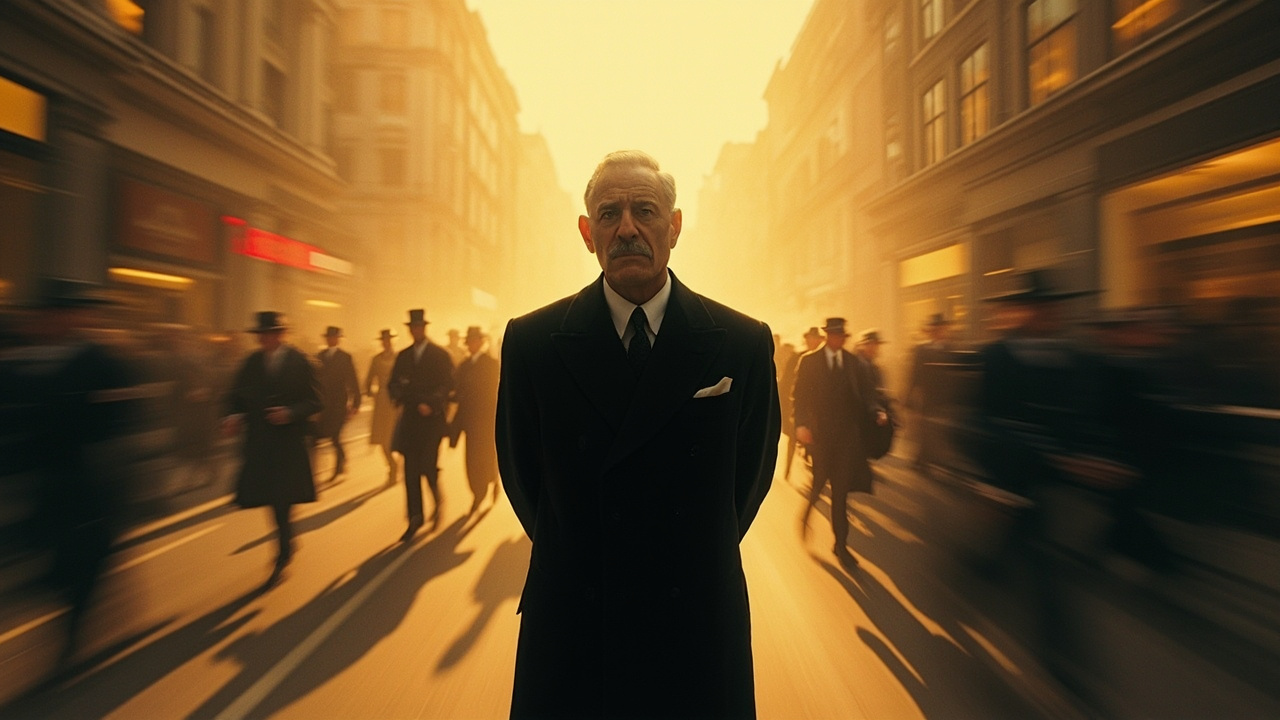
وقف ساكنًا تمامًا بينما العالم يتحرك حوله.blurblurblur المشاة الآخرين، سال المرور، لكن هذا الرجل الواحد ظل ساكنًا، وجهه مرفوع للأعلى كما لو كان واعيًا للكاميرا. سكونه كان خاطئًا - ليس الوضع المتجمد للصورة الفوتوغرافية بل السكون المتعمد لشخص اختار الخروج من منطق الفيلم الزمني. أعدت إلينور اللف، فحصت الإطار بمعزل، وشعرت بالقشعريرة الباردة الأولى عند قاعدة جمجمتها.
تعرّفت على الرجل. لم تستطع أن تقول من أين، لكن شيئًا في وضع كتفيه، الهندسة المعمارية الخاصة لوجنتيه، بدا مألوفًا بشكل مؤلم. كان يرتدي معطف صباحي بقطع لا تشوبه شائبة، وتعبيره كان توقعًا صابرًا، كما لو كان ينتظر وقتًا طويلًا لشيء يعرف أنه سيأتي في النهاية.
أخبرت إلينور نفسها أنه الهلوسة البصرية، الميل البشري لإدراك أنماط ذات معنى في الضوضاء العشوائية. تابعت إلى البكرة الثالثة.
ما وجدته هناك تحدى التفسير.
بدت اللقطات تظهر مشاهد من فيلم لا تعترف به. وقفت امرأة في ثوب سمري على شرفة تطل على بحر مظلم؛ ركض طفل عبر ما بدا حديقة مفرطة النمو، يضحك؛ لعب رجلان الشطرنج في غرفة جدرانها مغطاة بالكامل بالمرايا. كل مشهد كان مؤلفًا بشكل جميل، مضاء بفن دقيق، ومع ذلك لم يكن هناك شيء فيها يتوافق مع أي فيلم في قاعدة بيانات الأرشيف الواسعة. الأزياء، تصميم المواقع، جودة التصوير الفوتوغرافي - كل شيء اقترح إنتاج طموح كبير، ومع ذلك لم تستطع إلينور العثور على أي سجل لوجوده.
بدأت تفحص الإطارات أكثر بعناية. باستخدام العدسة المكبرة، فحصت كل صورة بحثًا عن أدلة على التلاعب، عن التناقضات الدقيقة التي ستكشف تزويرًا حديثًا. لم تجد شيئًا. كان فيلم أساسي أصلي، كانت أنماط الثقب متسقة مع تصنيع عشرينيات القرن، كانت أنماط التسوس تمامًا ما يمكن توقعه من النايتريت المخزن لقرن.
خلال الأيام التالية، خضعت البكرات لكل تقنية تحليلية في متناولها. رسمت البقايا المغناطيسية، قاست محتوى الفضة، فحصت ثقوب الس sprocket تحت التكبير. لم تجد أي وصلات، لا أدلة على إدخال أو إزالة اللقطات. المشاهد المستحيلة لم تكن موصولة في فيلم عادي بطريقة أخرى - كانت الفيلم، في إجماليتها، من الإطار الأول إلى الأخير.
ومع ذلك، بينما كانت تشاهد وجه المرأة على الشرفة، بينما كانت تتبع الطفل عبر الغرفة ذات الجدران المرآة، استولت عليها يقين لم تستطع صياغته. لم تكن هذه مشاهد من فيلم ضاع. كانت مشاهد من فيلم لم يُصنع أبدًا. تحرك الممثلون بجودة حضور تجاوزت الأداء؛ سقط الضوء بدقة بدت شبه متعمدة، كما لو كان مصوّر الفيلم لا يسجل فقط بل يختار. حمل كل إطار توقيع لا يُخطئ لرؤية فنية متعمدة.
على البكرة الأخيرة، وجدت نفسها.
أظهرت اللقطات امرأة على طاولة عمل، ظهرها للكاميرا، تفحص طولًا من الفيلم تحت مصباح. كانت الغرفة صغيرة، مزدحمة بالمعدات، غرفة مختبر حفظ بوضوح. مدت المرأة يدها لترفع خصلة شعر من وجهها، ورأت إلينور سنها المائل الخاص بها، إيماءتها المعتادة، مُعاد إنتاجها بإخلاص فوتوغرافي. تراجعت الكاميرا ببطء، كاشفة المرأة بالكامل - وكانت إلينور، أصغر بعشرين عامًا، وجهها مائل بملف ثلاثي أرباع نحو نافذة لا يمكنها الرؤية من خلالها.
لم تُصوَّر يومًا. لم يكن لديها صور من تلك الفترة، لا فيديوهات، لا سجلات من أي نوع. ومع ذلك كانت هناك، capture في الفضة والضوء، expressionها انتباه مركز، يديها steady كما holdingFilm ثابتًا.
وصل projector إلى نهاية البكرة بنقرة جوفاء. جلست إلينور في الظلام المفاجئ، تنفسها سطحي، يديها ترتجفان على حافة الكونسول. لا تزال تستطيع رؤية الصورة البصرية لوجهها، superimp على الظلام مثل palimpsest.
لم تنم تلك الليلة. استلقت في شقتها فوق القناة، تحدق في السقف، تبني التفسيرات العقلانية وتDiscardها واحدة تلو الأخرى. خدعة، بلا شك، لكن واحدة من تعقيد مستحيل. حلم، لكنها لم تكن نائمة. هلوسة،
Eleanor Vance hatte elf Jahre im Archiv verbracht, und in dieser Zeit hatte sie einen nahezu übernatürlichen Sinn für Verfall entwickelt. Sie konnte Azetat von Polyester am Klang unterscheiden, wenn es gebogen wurde, konnte die telltale Zeichen des Essigsyndroms lange erkennen, bevor der Essiggeruch sich bemerkbar machte. Aber nichts in ihrer beträchtlichen Erfahrung hatte sie auf das vorbereitet, was sie in der Mander-Sammlung fand.
Die Dosen waren unbeschriftet, bei einer routinemäßigen Überprüfung der Kühllageranlage in Berkshire entdeckt. Drei unbeschriftete Behälter, deren Herkunft selbst für die Archivarin, die sie vor Jahrzehnten katalogisiert hatte, ein Rätsel war. Eleanor hatte die erste mit erheblich mehr Skepsis als Neugier geöffnet.
Die Aufnahmen stammten unverkennbar aus den 1920er Jahren. Sie erkannte die Weichzeichnungsästhetik, die theatralischen Posen von Schauspielern, die noch nicht gelernt hatten, sich vor der Kamera zu zügeln. Es gab Szenen aus London - Straßen, die sie identifizieren konnte, Gebäude, die noch standen, wenn auch unter anderen Namen. Die Kinematografie war meisterhaft, die Inszenierung poliert. Sie machte sich Notizen, katalogisierte den Fund und machte sich bereit, die zweite Spule zu untersuchen.
Die zweite Dose öffnete sich zu etwas anderem.
Die ersten Bilder zeigten eine Straßenszene - möglicherweise die City, möglicherweise weiter östlich, mit professionellem Blick von einer erhöhten Position gefilmt. Das Datum, laut den physischen Eigenschaften des Films, war Ende 1926. Geschäftsmänner überquerten das Bild, Büroangestellte eilten vorbei mit Zeitungen unter dem Arm. Eleanor sah mehrere Minuten zu, dokumentierte jede Einstellung, bis sie die Gestalt bemerkte.
Er stand vollkommen still, während sich die Welt um ihn bewegte. Die anderen Fußgänger verwischten vorbei, der Verkehr floss, aber dieser eine Mann blieb reglos, sein Gesicht nach oben gewandt, als wäre er sich der Kamera bewusst. Seine Reglosigkeit war falsch - nicht die eingefrorene Haltung eines Fotos, sondern die bewusste Unbeweglichkeit von jemandem, der aus der zeitlichen Logik des Films herausgetreten war. Eleanor spulte zurück, untersuchte das Bild isoliert und spürte das erste kalte Prickeln an der Schädelbasis.
Sie erkannte den Mann. Sie konnte nicht sagen, woher, aber etwas an seinem Schulternstand, der besonderen Architektur seiner Wangenknochen, schien schmerzlich vertraut. Er trug einen makellos geschnittenen Gehrock, und sein Ausdruck war der eines geduldigen Erwartens, als hätte er sehr lange auf etwas gewartet, von dem er wusste, dass es irgendwann kommen würde.
Eleanor sagte sich, es sei Pareidolie, die menschliche Tendenz, bedeutsame Muster in zufälligem Rauschen wahrzunehmen. Sie fuhr mit der dritten Spule fort.
Was sie dort fand, widersprach jeder Erklärung.
Die Aufnahmen schienen Szenen aus einem Film zu zeigen, den sie nicht kannte. Eine Frau in einem Abendkleid stand auf einer Terrasse, die auf ein dunkles Meer blickte; ein Kind lief durch das, was wie ein überwucherter Garten aussah, lachend; zwei Männer spielten Schach in einem Raum, dessen Wände vollständig mit Spiegeln bedeckt waren. Jede Szene war wunderschön komponiert, mit subtiler Kunstfertigkeit beleuchtet, und doch entsprach nichts davon einem Film in der umfangreichen Datenbank des Archivs. Die Kostüme, das Szenenbild, die Qualität der Fotografie - alles deutete auf eine Produktion von beträchtlichem Ehrgeiz hin, und doch konnte Eleanor keinen Nachweis ihrer Existenz finden.
Sie begann, die Bilder sorgfältiger zu untersuchen. Mit einer Lupe prüfte sie jedes Bild auf Anzeichen von Manipulation, auf die subtilen Unstimmigkeiten, die eine moderne Fälschung verraten würden. Sie fand keine. Der Film war authentisch, die Perforationsmuster stimmten mit einer Herstellung in den 1920er Jahren überein, die Zersetzungsmuster entsprachen genau dem, was man von Nitrat erwarten würde, das ein Jahrhundert lang gelagert wurde.
In den folgenden Tagen unterzog sie die Spulen jeder analytischen Technik, die ihr zur Verfügung stand. Sie kartographierte die magnetischen Rückstände, maß den Silbergehalt, untersuchte die Perforationslöcher unter Vergrößerung. Sie fand keine Spleiße, keine Hinweise darauf, dass Aufnahmen eingefügt oder entfernt worden waren. Die unmöglichen Szenen waren nicht in einen sonst gewöhnlichen Film gespleißt - sie waren der Film, in seiner Gesamtheit, vom ersten bis zum letzten Bild.
Und doch, als sie das Gesicht der Frau auf der Terrasse beobachtete, als sie dem Kind durch den spiegelwandigen Raum folgte, wurde Eleanor von einer Gewissheit ergriffen, die sie nicht artikulieren konnte. Dies waren keine Szenen aus einem verlorenen Film. Dies waren Szenen aus einem Film, der nie gedreht wurde. Die Schauspieler bewegten sich mit einer Qualität von Präsenz, die die Darstellung übertraf; das Licht fiel mit einer Präzision, die fast beabsichtigt schien, als hätte der Kameramann nicht nur aufgezeichnet, sondern gewählt. Jedes Bild trug die unverkennbare Unterschrift einer bewussten künstlerischen Vision.
Auf der letzten Spule fand sie sich selbst.
Die Aufnahmen zeigten eine Frau an einem Arbeitstisch, mit dem Rücken zur Kamera, die einen Filmstreifen unter einer Lampe untersuchte. Der Raum war klein, überfüllt mit Ausrüstung, unverkennbar ein Konservierungslabor. Die Frau griff auf, um eine Haarsträhne aus dem Gesicht zu streichen, und Eleanor sah ihren eigenen schiefen Zahn, ihre eigene habitualuelle Geste, mit fotografischer Treue nachgebildet. Die Kamera zog sich langsam zurück und enthüllte die Frau in voller Größe - und es war Eleanor, zwanzig Jahre jünger, ihr Gesicht in Dreiviertelprofil zu einem Fenster gewandt, das sie nicht hindurchsehen konnte.
Sie war nie gefilmt worden. Sie hatte keine Fotos aus dieser Zeit, keine Videos, keine Aufzeichnungen irgendeiner Art. Und doch war sie dort, eingefangen in Silber und Licht, ihr Ausdruck konzentrierter Aufmerksamkeit, ihre Hände steady, während sie den Film steady hielten.
Der Projektor erreichte das Ende der Spule mit einem hohlen Klicken. Eleanor saß in der plötzlichen Dunkelheit, ihr Atem flach, ihre Hände zitternd gegen die Kante der Konsole. Sie konnte das Nachbild ihres eigenen Gesichts noch sehen, über die Dunkelheit gelegt wie ein Palimpsest.
Sie schlief in dieser Nacht nicht. Sie lag in ihrer Wohnung über dem Kanal, starrte an die Decke, konstruierte rationale Erklärungen und verwarf sie eine nach der anderen. Ein Schwindel, gewiss, aber einer von unmöglicher Raffinesse. Ein Traum, aber sie war nicht eingeschlafen. Eine Halluzination,
Eleanor Vance avait passé onze ans aux archives, et durant ce temps elle avait développé un sens presque surnaturel de la détérioration. Elle pouvait identifier l'acétate du polyester au son qu'il produisait lorsqu'on le pliait, pouvait repérer les signes révélateurs du syndrome du vinaigre bien avant que l'odeur de vinaigre ne se manifeste. Mais rien dans sa considérable expérience ne l'avait préparée à ce qu'elle découvrit dans la collection Mander.
Les boîtes étaient non étiquetées, découvertes lors d'un audit de routine de l'installation de stockage à froid dans le Berkshire. Trois contenants non étiquetés, leur provenance un mystère même pour l'archiviste qui les avait catalogués des décennies plus tôt. Eleanor avait ouvert la première avec considérablement plus de scepticisme que de curiosité.
Les images dataient incontestablement des années 1920. Elle reconnut l'esthétique du flou artistique, les postures théâtrales d'acteurs qui n'avaient pas encore appris à se contenir pour la caméra. Il y avait des scènes de Londres - des rues qu'elle pouvait identifier, des bâtiments qui existaient encore, bien que sous des noms différents. La cinématographie était accomplie, la mise en scène soignée. Elle prit ses notes, catalogua la découverte, et se prépara à examiner la deuxième bobine.
La deuxième boîte s'ouvrit sur quelque chose de différent.
Les premières images montraient une scène de rue - peut-être la City, peut-être plus à l'est, filmée avec un œil professionnel depuis une position élevée. La date, selon les caractéristiques physiques du film, était fin 1926. Des hommes d'affaires traversaient le cadre, des employés se hâtaient avec des journaux sous le bras. Eleanor regarda pendant plusieurs minutes, documentant chaque plan, jusqu'à ce qu'elle remarque la silhouette.
Il se tenait parfaitement immobile tandis que le monde bougeait autour de lui. Les autres passants se déplaçaient dans un flou, la circulation coulait, mais cet homme seul restait immobile, son visage tourné vers le haut comme s'il était conscient de la caméra. Son immobilité était wrong - pas la posture figée d'une photographie mais l'immobilité délibérée de quelqu'un qui était sorti de la logique temporelle du film. Eleanor rembobina, examina l'image en isolation, et sentit le premier frisson glacé à la base de son crâne.
Elle reconnut l'homme. Elle ne pouvait pas dire d'où, mais quelque chose dans la tenue de ses épaules, l'architecture particulière de ses pommettes, semblait douloureusement familier. Il portait un frac impeccablement coupé, et son expression était celle d'une attente patiente, comme s'il attendait depuis très longtemps quelque chose qu'il savait finirait par arriver.
Eleanor se dit que c'était de la paréidonie, la tendance humaine à percevoir des motifs significatifs dans le bruit aléatoire. Elle passa à la troisième bobine.
Ce qu'elle trouva défiait l'explication.
Les images semblaient montrer des scènes d'un film qu'elle ne reconnaissait pas. Une femme en robe du soir se tenait sur une terrasse surplombant une mer sombre; un enfant courait à travers ce qui semblait être un jardin envahi par la végétation, riant; deux hommes jouaient aux échecs dans une pièce dont les murs étaient entièrement couverts de miroirs. Chaque scène était magnifiquement composée, éclairée avec un art subtil, et pourtant rien ne correspondait à aucun film de l'immense base de données des archives. Les costumes, la conception des décors, la qualité de la photographie - tout suggérait une production d'une ambition considérable, et pourtant Eleanor ne trouvait aucun enregistrement de son existence.
Elle commença à examiner les images plus attentivement. Utilisant une loupe, elle scruta chaque image à la recherche d'indices de manipulation, des incohérences subtiles qui révéleraient un faux moderne. Elle n'en trouva aucun. Le support filmique était authentique, les motifs de perforation conformes à une fabrication des années 1920, les motifs de dégradation exactement ce qu'on attendrait de nitrate stocké pendant un siècle.
Au cours des jours suivants, elle soumit les bobines à toutes les techniques analytiques à sa disposition. Elle cartographia les résidus magnétiques, mesura la contenu d'argent, examina les perforations sous grossissement. Elle ne trouva aucune soudure, aucune preuve que des images avaient été insérées ou retirées. Les scènes impossibles n'étaient pas soudées dans un film par ailleurs ordinaire - elles étaient le film, dans leur intégralité, de la première à la dernière image.
Et pourtant, alors qu'elle regardait le visage de la femme sur la terrasse, alors qu'elle suivait l'enfant à travers la pièce aux murs de miroir, Eleanor fut saisie d'une certitude qu'elle ne pouvait articuler. Ce n'étaient pas des scènes d'un film perdu. C'étaient des scènes d'un film qui n'avait jamais été tourné. Les acteurs se déplaçaient avec une qualité de présence qui transcendait la performance; la lumière tombait avec une précision qui semblait presque intentionnelle, comme si le directeur de la photographie n'avait pas simplement enregistré mais choisi. Chaque image portait la signature unmistakable d'une vision artistique délibérée.
Sur la dernière bobine, elle se trouva elle-même.
Les images montraient une femme à un établi, lui tournant le dos, examinant une longueur de film sous une lampe. La pièce était petite, encombrée d'équipements, incontestablement un laboratoire de conservation. La femme leva la main pour repousser une mèche de cheveux de son visage, et Eleanor vit sa propre dent de travers, son propre geste habituel, reproduit avec fidélité photographique. La caméra recula lentement, révélant la femme en entier - et c'était Eleanor, vingt ans plus jeune, son visage tourné en profil trois quarts vers une fenêtre qu'elle ne pouvait pas voir à travers.
Elle n'avait jamais été filmée. Elle n'avait pas de photographies de cette période, pas de vidéos, pas d'enregistrements de quelque sorte que ce soit. Et pourtant elle était là, capturée dans l'argent et la lumière, son expression celle d'une attention concentrée, ses mains steady alors qu'elles tenaient le film steady.
Le projecteur atteignit la fin de la bobine avec un clic creux. Eleanor resta assise dans l'obscurité soudaine, son souffle shallow, ses mains tremblant contre le rebord de la console. Elle pouvait encore voir l'image rémanente de son propre visage, superposée à l'obscurité comme un palimpseste.
Elle ne dormit pas cette nuit-là. Elle s'allongea dans son appartement au-dessus du canal, fixant le plafond, construisant des explications rationnelles et les discardant une par une. Un canular, certainement, mais d'une sophistication impossible. Un rêve, mais elle n'avait pas dormi. Une hallucination,
Элеанор Ванс провела одиннадцать лет в архиве, и за это время она развила почти сверхъестественное чутье к разрушению. Она могла определить ацетатную основу от полиэстеровой по звуку, который она издавала при сгибании, могла заметить характерные признаки уксусного синдрома задолго до того, как уксусный запах выдавал себя. Но ничто в её обширном опыте не подготовило её к тому, что она обнаружила в коллекции Мандера.
Банки были без маркировки, обнаружены во время плановой проверки холодильного хранилища в Беркшире. Три немаркированных контейнера, происхождение которых оставалось загадкой даже для архивариуса, каталогизировавшего их десятилетия назад. Элеанор открыла первую банку с гораздо большим скептицизмом, чем любопытством.
Отснятый материал несомненно относился к 1920-м годам. Она узнала эстетику мягкого фокуса, театральные позы актёров, которые ещё не научились сдерживать себя перед камерой. Были сцены Лондона - улицы, которые она могла идентифицировать, здания, которые всё ещё стояли, хотя и под другими названиями. Кинематография была мастерской, мизансцена отточенной. Она сделала заметки, каталогизировала находку и приготовилась исследовать вторую катушку.
Вторая банка открылась на нечто иное.
Первые кадры показывали уличную сцену - возможно, Сити, возможно, дальше на восток, снятую профессиональным взглядом с возвышенной позиции. Дата, согласно физическим характеристикам плёнки, была концом 1926 года. Деловые люди пересекали кадр, клерки спешили мимо с газетами под мышкой. Элеанор смотрела несколько минут, документируя каждый план, пока не заметила фигуру.
Он стоял совершенно неподвижно, пока мир двигался вокруг него. Другие пешеходы размывались мимо, текло движение, но этот один человек оставался неподвижным, его лицо было обращено вверх, как будто он осознавал камеру. Его неподвижность была неправильной - не застывшая поза фотографии, а сознательная неподвижность того, кто вышел из временно́й логики фильма. Элеанор перемотала назад, рассмотрела кадр изолированно и почувствовала первый холодный зуд у основания черепа.
Она узнала мужчину. Она не могла сказать откуда, но что-то в постановке его плеч, особая архитектура его скул казалось мучительно знакомым. На нём был сшитый безупречно фрак, а его выражение было одним из терпеливого ожидания, как будто он ждал очень долго то, что, как он знал, в конце концов придёт.
Элеанор сказала себе, что это парейдолия, человеческая склонность воспринимать значимые паттерны в случайном шуме. Она перешла к третьей катушке.
То, что она нашла там, противоречило объяснению.
Отснятый материал, казалось, показывал сцены из фильма, который она не узнавала. Женщина в вечернем платье стояла на террасе, выходящей на тёмное море; ребёнок бежал через то, что казалось заросшим садом, смеясь; двое мужчин играли в шахматы в комнате, стены которой были полностью покрыты зеркалами. Каждая сцена была прекрасно скомпонована, освещена с тонким мастерством, и всё же ничто в них не соответствовало ни одному фильму в обширной базе данных архива. Костюмы, дизайн декораций, качество фотографии - всё указывало на постановку значительных амбиций, и всё же Элеанор не смогла найти записей о её существовании.
Она начала рассматривать кадры более внимательно. Используя лупу, она изучала каждое изображение на предмет признаков вмешательства, тонких несоответствий, которые выдали бы современную подделку. Она не нашла ничего. Киноплёнка была аутентичной, перфорация соответствовала производству 1920-х годов, характер разрушения был именно таким, каким можно ожидать от нитрата, хранившегося столетие.
В последующие дни она подвергла катушки каждому аналитическому методу в её распоряжении. Она картографировала магнитные остатки, измерила содержание серебра, исследовала перфорационные отверстия под увеличением. Она не нашла стыков, никаких доказательств того, что материал был вставлен или удалён. Невозможные сцены не были вмонтированы в противном случае обычный фильм - они были фильмом, в их полноте, от первого до последнего кадра.
И всё же, когда она смотрела на лицо женщины на террасе, когда она следила за ребёнком через комнату с зеркальными стенами, Элеанор охватила уверенность, которую она не могла выразить словами. Это были не сцены из утерянного фильма. Это были сцены из фильма, который никогда не был снят. Актёры двигались с качеством присутствия, которое выходило за пределы игры; свет падал с точностью, которая казалась почти преднамеренной, как будто оператор не просто записывал, а выбирал. Каждый кадр нёс несомненную подпись сознательного художественного видения.
На последней катушке она нашла себя.
Отснятый материал показывал женщину у рабочего стола, спиной к камере, исследующую отрезок плёнки под лампой. Комната была маленькой, завалена оборудованием, несомненно лабораторией консервации. Женщина потянулась, чтобы убрать прядь волос с лица, и Элеанор увидела свой собственный кривой зуб, свой собственный привычный жест, воспроизведённые с фотографической точностью. Камера медленно отдалилась, открывая женщину полностью - и это была Элеанор, на двадцать лет моложе, её лицо повёрнуто в три четверти к окну, сквозь которое она не могла видеть.
Её никогда не снимали. У неё не было фотографий того периода, никаких видео, записей любого рода. И всё же она была там, запечатлённая в серебре и свете, с выражением сосредоточенного внимания, её руки steady, пока они держали плёнку steady.
Проектор достиг конца катушки с полым щелчком. Элеанор сидела в внезапной темноте, её дыхание поверхностное, её руки дрожали на краю консоли. Она всё ещё могла видеть образ-послесвечение своего собственного лица, наложенный на темноту, как палимпсест.
Она не спала той ночью. Она лежала в своей квартире над каналом, глядя в потолок, конструируя рациональные объяснения и отбрасывая их одно за другим. Мистификация, несомненно, но одна невозможной утончённости. Сон, но она не спала. Галлюцинация,