Must Know Vocabulary
| Word | العربية | Deutsch | Français | Русский |
|---|---|---|---|---|
| آلية | Mechanismus | mécanisme | механизм | |
| زنبرك رئيسي | Hauptfeder | ressort principal | заводная пружина | |
| يصوغ/يتطرق | schmieden | forger | ковать | |
| دقة | Präzision | précision | точность | |
| مفنن/معقد | kompliziert | complexe | замысловатый | |
| خشن | räu | bourru | ворчливый | |
| تذكاري | Gedenk- | commémoratif | мемориальный | |
| منتصر | triumphierend | triomphant | торжествующий |
The Story
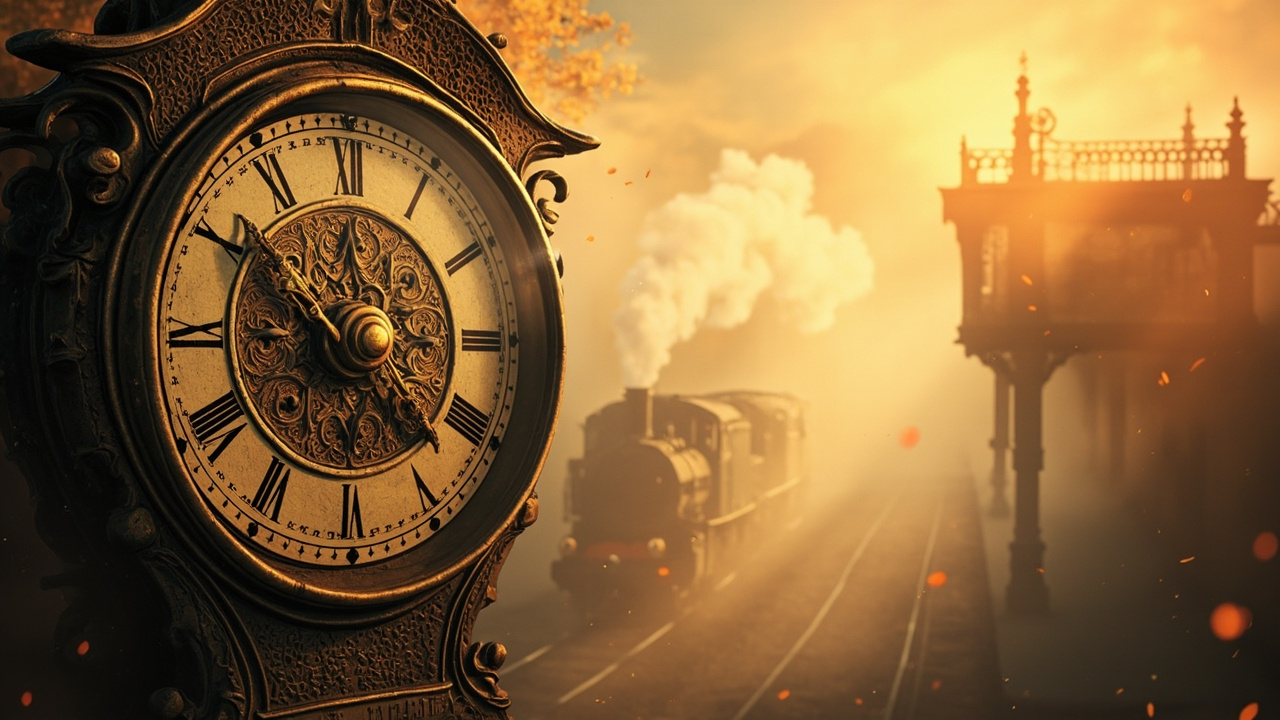
The old clock at Millford railway station had kept perfect time for nearly a century and a half. Its brass hands moved with quiet precision above the platform, watched daily by hundreds of passengers. So when Samuel Whitmore, the station master, arrived one grey October morning and saw that the hands had frozen at half past three, he felt as though a trusted friend had suddenly fallen silent.
Samuel stood beneath the clock, pressing his face against the glass of the ticket office window for a better view. The mechanism inside was dark and still. He had checked it himself just the previous evening. How had it stopped so completely overnight?
The town of Millford was preparing for its 150th anniversary celebration, which was now only three weeks away. The Victorian clock was the centrepiece of the festivities. Schoolchildren had made decorations in its honour. The mayor had commissioned a commemorative photograph. Without it, the celebration would feel incomplete.
"You'll need old Harold Pemberton," the station porter suggested, lighting his morning pipe. "He's the only clockmaker in the county who might understand a mechanism that old."
Samuel had heard of Harold Pemberton, a retired craftsman who lived alone at the edge of town. He was known for his difficult temperament and his refusal to take on any new work since his wife had passed away five years earlier. Nevertheless, Samuel cycled to his cottage that very afternoon.
The old man opened the door wearing a stained apron and holding a cup of cold tea. He squinted at Samuel suspiciously. "Why should I help the railway? They closed the old line through Ashworth and put half my friends out of work."
Samuel explained about the anniversary, about the children's decorations, about how the clock had stood over every important moment in Millford's history. He spoke for nearly an hour. Finally, Harold slammed his tea down on the doorstep.
"Show me this clock then," he muttered, reaching for his coat.
When Harold first examined the mechanism, his weathered face showed nothing. He removed the glass case with careful hands and studied the intricate gears inside. Samuel watched anxiously, not daring to ask questions.
"The mainspring has snapped," Harold announced finally. "I'll need to forge a replacement. The steel must be exactly right, or the whole mechanism will be damaged."
The work took longer than either man had expected. Harold laboured through nights in his workshop, while Samuel brought him tea and sandwiches and kept him company. Slowly, something unexpected happened. The gruff old clockmaker began to speak about his wife, about the clocks he had made during his lifetime, about the pride he once felt in his craft. Samuel listened and shared stories of his own, of the railway workers who had built their lives around that station.
On the morning of the anniversary, Harold fitted the new mainspring into place with trembling hands. He wound the mechanism. For a terrible moment, nothing happened. Then, with a soft click, the gears began to turn. The brass hands moved forward, catching the morning light.
Samuel shook Harold's hand warmly. "Thank you. You saved our celebration."
Harold smiled for the first time in years. "No, young man. You reminded me why I became a clockmaker in the first place."
That evening, as the townspeople gathered beneath the repaired clock for fireworks and music, Samuel stood beside Harold on the platform. The old man had accepted an invitation to stay for the celebration. They watched the fireworks reflected in the clock's polished brass face, both men grateful for an unexpected friendship.