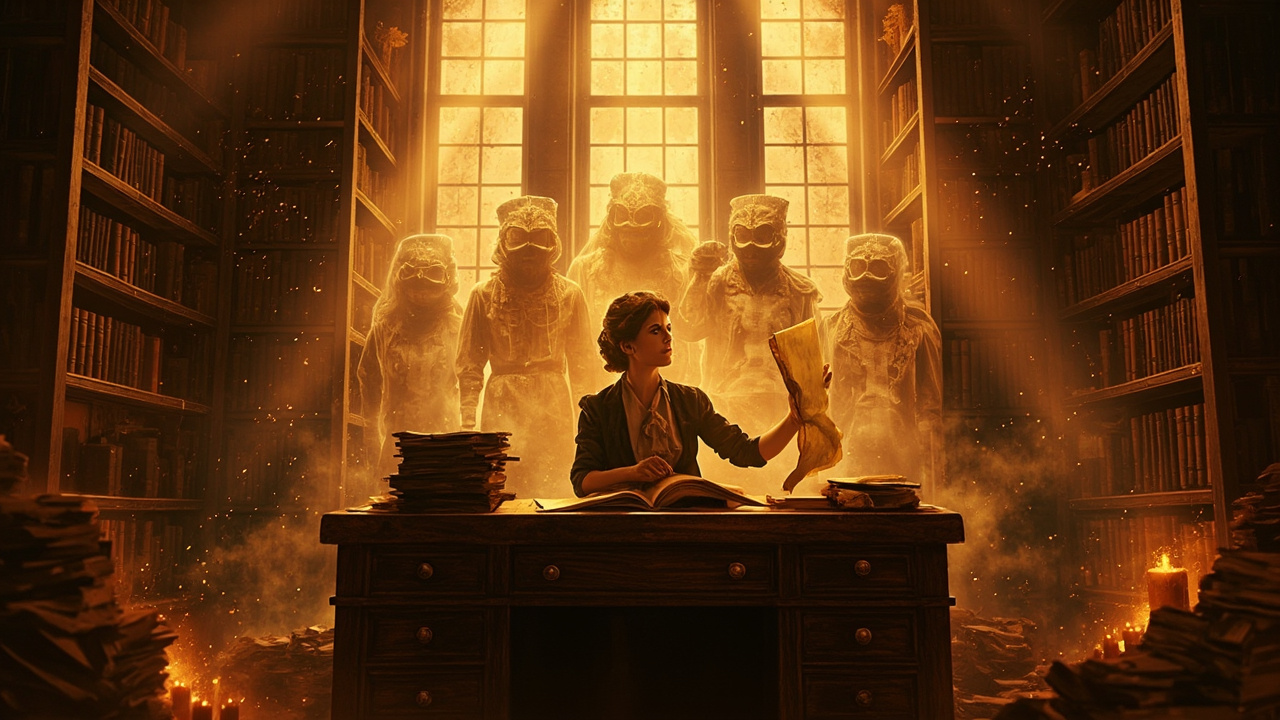
سقط ضوء الخريف بزاوية منخفضة عبر النوافذ المغبرة لأرشيف المقاطعة، مرسلا ظلالا طويلة عبر دفاتر الأستاذ المجلدة بالجلد. كانت الدكتورة إلينور مارش منحنية فوق هذه السجلات منذ ثلاثة أشهر، ويمكنها أن تشعر بأنها تقترب من شيء مهم.
كانت قد جاءت إلى ثورنبوري لإجراء بحث عن التأثير المحلي للindustrialization، غير أن إشارة غامضة في مجلة رعيّة من عام 1843 هي التي أضلّت مسارها. سطر واحد ذكر "الحرية القديمة لمساجدي مايو"، ومن هذا الشظية ظهر مهرجان كامل — واحد كان يُحتفل به في هذه الزاوية من إنجلترا لأكثر من قرن قبل أن يختفي بلا أثر في عام 1887.
اكتشفت أن مساجدي مايو كان مهرجانا للسخرية والتقليد. مرة واحدة في السنة، كان سكان ثورنبوري ينتخبون سيد الفوضى من بين الحرفيين والخدم، ولمدة ثلاثة أيام، كان النظام الاجتماعي ينقلب بفرح. كان الفارس والكاهن — الركيزتان التوأمان لسلطة الفيكتوريين — يتحولان إلى أهداف للسخرية اللطيفة. كانت تُعرض مسرحيات ساخرة في ساحة القرية، موضوعاتها النبلاء المحليون، ورعاة الكنيسة المتكبرون، والنفاق الذي كان ينخر تحت سطح المجتمع المحترم. كانت تُغنى باليهات لا توفر أحدا، ويُدعى الفقراء لتناول العشاء في القصر، وهو انتهاك فاضح للحواجز غير المنطوقة التي كانت تحافظ على انتظام القرية.
لكن السجلات صمتت في عام 1887. أشارت محاضر مجلس الرعيّة إلى "أمر مؤسف للغاية" و"التوقف عن بعض الاحتفالات غير اللائقة". لم تطبع صحيفة المقاطعة، التي كانت ذات يوم تخصص أعمدة لوصف مرح المهرجان، شيئا. تم تمزيق صفحات من يوميات الكاهن الشخصية، وأصبحت مراسلات الفارس شحيحة بشكل ملحوظ.
اكتشفت إلينور الحقيقة فقط من خلال تجميع شظايا من مصادر ثانوية ومن أحفاد العائلات التي كانت تقطن ثورنبوري ذات يوم. يبدو أنه في عام 1886، تجاوزت المسرحيات الساخرة حدودا. كان الأشخاص المستهدفين بالسخرية — ربما الكاهن نفسه أو أحد أقارب الفارس — قد آنسوا أنفسهم مازاتين. وُضع ضغط، بهدوء في البداية، ثم بتصميم متزايد. تم إلغاء المهرجان، الذي نجا لقرون من خلال التسامح الضمني، بين عشية وضحاها. لم يُصدر أحد حظرا رسميا؛ كان الأمر ببساطة مفهوما أن مساجدي مايو لن تستمر.
تعرفت إلينور على النمط فورا. مهرجان منح الصوت للصامتين، سمح للوضيع أن يضحك على الرفيع، تم خنقه ليس بكارثة أو بتراجع الاهتمام، بل بكبرياء الجرحى لأولئك الذين اعتبروا أنفسهم فوق النقد. أدركت، أن هذا كان قصة عن الرقابة — عن كيف تعمل ليس من خلال حظر درامي، بل من خلال الضغط الاجتماعي والسحب الهادئ للإذن.
اتخذت قرارها تلك الليلة، جالسة في الشقة الضيقة التي استأجرتها فوق متجر القرية. كان ممتلكات ثورنبوري تدار الآن من قبل صندوق خيري، وتم تحويل قصرها إلى مركز ثقافي. أصبحت القرية نفسها مستوطنة نوم للرحّاب إلى المدينة القريبة، يسكنها بشكل رئيسي أشخاص ليس لديهم علم بتاريخها الغريب. عزمت إلينور على مخاطبة الصندوق باقتراح تشكّ أنه سيُقابل بمقاومة كبيرة: ستعيد إحياء مساجدي مايو.
كان الرد الأولي باردا كما توقعت. أبدى الأمناء اهتماما ببحثها التاريخي لكنهم كانوا حذرين من الجدل الذي خشوا أنها تستدعيه. "واضح أننا لسنا بحاجة إلى إعادة النظر في تلك الأحداث المؤسفة"، كتب أحدهم في بريد إلكتروني صيغ بعناية. "تم إلغاء المهرجان لأسباب وجيهة." ردت إلينور بأن هذا بالضبط سبب ضرورة إعادته للحياة. إذا كان بإمكان مجتمع أن يُجبر على الصمت بالتهديد بالإحراج، فإن الرقابة نفسها — وليس موضوع الإساءة الأصلي — ينبغي أن تكون الفضيحة الجديرة بالمواجهة.
المهرجان الأول لمساجدي مايو انعقد يوم السبت الأول من مايو من العام التالي. كانت ساحة القرية، التي كانت ذات يوم بمثابة المرحلة للاحتفالات القديمة، الآن موقف سيارات تحيط به منازل متطابقة. عملت إلينور مع متطوعين محليين لاستعادة الطقوس بأمانة ممكنة، لإعادة إنشاء التيجان الورقية والأعلام الساخرة التي كانت تزين شوارع القرية ذات يوم. تم انتخاب سيد الفوضى الجديد بالأصوات الشعبية — معلم متقاعد اسمه جيرالد عاش في ثورنبوري لأربعين سنة ولم يكن يفتقر إلى آراء عن قرارات التخطيط في مجلس الرعيّة.
استلهمت المسرحيات الساخرة التي عُرضت بشكل كبير من هموم العصر. ربما كان فارس عام 1886 يسخر من بخله أو من علاقته بسيدة البيت؛ لكن أهداف عام 2024 كانت المطورين العقاريين الذين ابتلعوا الحقول المحيطة والخوارزميات التي تحكم بما يراه الناس ويسمعونه عبر الإنترنت. غنت الباليهات عن أسعار المساكن والمحو البطيء للمجتمع. تضمن الحفل في حديقة القصر — التي أصبحت الآن حديقة عامة — منتجات محلية ونبيذ منزلي الصنع، وكان مفتوحا للجميع.
كان هناك، بالطبع، من اعترض. كتب فصيل صغير لكن صوتي داخل الصندوق للصحف محذرا من "أخطار الاستفزاز غير المقيد". اشتكى مستشار محلي من أن بعض السخرية "تجاوزت حدود الذوق الحساس". لكن المهرجان استمر، كما كان دوما، لأن النقطة منه كانت بدقة هذه: أن القرية لمدة ثلاثة أيام كانت ملكا للجميع، وأي شخص لديه ما يقوله يمكنه أن يقوله دون خوف من عواقب.
وقفت إلينور على حافة الساحة بينما بدأ الغروب فوق ثورنبوري، تراقب villagers في تيجانهم الورقية يتجولون. في مكان ما كانت فرقة تعزف أغنية كُتبت في عام 1852 وأُعيد إحياؤها للمناسبة. كان سيد الفوضى يلقي خطبة استهدفت الجميع من رئيس الوزراء إلى مالك النزل الوحيد المتبقي في القرية. ولحظة واحدة، بدت القرية كما لو كانت تعود بالزمن — إلى تلك الأيام عندما كانت تحتضن الفوضى每年的.
كان الحارس، وهو رجل عجوز كان يشرف على المبنى منذ عقود، قد رآها تقف هناك. تحرك نحوها ببطء، ووقف بجانبها في صمت. "كنت أعرف جدتي"، قال أخيرا، "كانت تحضر المهرجان القديم. كانت تقول إنها كانت أفضل ثلاثة أيام في السنة."
"وهل كانت محقة؟" سألت إلينور.
فكر للحظة. "كانت تعلم أن الناس يقولون الحقيقة تلك الأيام. ليس كل الحقيقة، ولكن بعض منها. الآن..." نظر نحو المسرح حيث كان اللاعبون يستعدون للفقرة التالية. "الآن الناس يقولون الحقيقة مرتين في السنة."
ابتسمت إلينور. "إذن هذا جيد، أليس كذلك؟"
هز رأسه. "لم أقل إنه سيء. قلت إن الناس يقولون الحقيقة. أنا فقط لست متأكدا مما إذا كان الناس يريدون سماعها."
لكن المهرجان استمر. في ذلك المساء، وفي اليومين التاليين، وقف Village في مسرحها الصغير الخاص — ليس لأن الجميع وافقوا على ما قيل، بل لأن أحدا لم يستطع إيقافه هذه المرة.
Das Herbstlicht fiel in niedrigem Winkel durch die staubigen Fenster des Kreisarchivs und warf lange Schatten auf die in Leder gebundenen Hauptbücher. Dr. Eleanor Marsh hatte sich drei Monate lang über diese Aufzeichnungen gebeugt, und sie konnte spüren, dass sie sich something Bedeutsames näherte.
Sie war nach Thornbury gekommen, um die lokalen Auswirkungen der Industrialisierung zu erforschen, doch ein obskurer Verweis in einem Gemeindeblatt von 1843 hatte sie auf einen falschen Weg geführt. Eine einzige Zeile erwähnte "die alte Freiheit der Maispötter", und aus diesem Fragment war ein ganzes Fest hervorgegangen — eines, das in diesem Winkel Englands über ein Jahrhundert lang gefeiert worden war, bevor es 1887 spurlos verschwand.
Die Maispötter, entdeckte sie, waren ein Fest der Satire und Parodie gewesen. Einmal im Jahr wählten die Dorfbewohner von Thornbury einen Herrn der Unordnung aus den Handwerkern und Dienern, und für drei Tage wurde die gesellschaftliche Ordnung fröhlich auf den Kopf gestellt. Der Gutsbesitzer und der Pfarrer — die beiden Säulen viktorianischer Autorität — wurden zu Zielen sanfter Verspottung. Satirische Stücke wurden auf dem Dorfplatz aufgeführt, ihre Themen die lokale Gentry, die aufgeblasenen Kirchenvorsteher und die Heuchelei, die unter der Oberfläche der respektablen Gesellschaft schwelte. Balladen wurden gesungen, die niemanden verschonten, und die Armen wurden zum Essen ins Herrenhaus eingeladen, ein skandalöser Bruch der unausgesprochenen Barrieren, die das Dorf ordentlich hielten.
Doch die Aufzeichnungen verstummten 1887. Die Protokolle des Gemeinderats erwähnten nur "einen höchst bedauerlichen Vorfall" und "die Einstellung gewisser unschicklicher Festlichkeiten". Die Lokalzeitung, die einst Spalten dem ausgelassenen Treiben des Festes gewidmet hatte, druckte nichts. Das persönliche Tagebuch des Pfarrers hatte ausgerissene Seiten, und die Korrespondenz des Gutsbesitzers wurde auffallend dünn.
Eleanor enthüllte die Wahrheit nur durch das Zusammenfügen von Fragmenten aus Sekundärquellen und den Nachkommen von Familien, die einst in Thornbury gelebt hatten. Es schien, dass 1886 die satirischen Stücke eine Grenze überschritten hatten. Die Ziele des Spottes — vielleicht der Pfarrer selbst oder ein Verwandter des Gutsbesitzers — hatten Anstoß genommen. Druck wurde ausgeübt, zuerst leise, dann mit zunehmender Beharrlichkeit. Das Fest, das Jahrhunderte durch stillschweigende Duldung überlebt hatte, wurde über Nacht abgeschafft. Kein offizielles Verbot wurde erlassen; es wurde einfach verstanden, dass die Maispötter nicht fortbestehen würden.
Eleanor erkannte das Muster sofort. Ein Fest, das den Stimmlosen eine Stimme gegeben, das den Niedrigen erlaubt hatte, über die Hohen zu lachen, war nicht durch Katastrophe oder schwindendes Interesse erwürgt worden, sondern durch den gekränkten Stolz derer, die sich für über jeden Tadel erhaben hielten. Sie erkannte, dass dies eine Geschichte über Zensur war — darüber, wie sie nicht durch dramatische Verbote wirkt, sondern durch sozialen Druck und das leise Entziehen von Erlaubnis.
Sie traf ihre Entscheidung an diesem Abend, sitzend in der engen Wohnung, die sie über dem Dorfladen gemietet hatte. Das Thornbury-Anwesen wurde nun von einer wohltätigen Stiftung verwaltet, ihr Herrenhaus zu einem Kulturzentrum umgebaut. Das Dorf selbst war zu einer Pendlersiedlung für Berufstätige der nahegelegenen Stadt geworden, bevölkert hauptsächlich von Menschen ohne Kenntnis seiner merkwürdigen Geschichte. Eleanor beschloss, die Stiftung mit einem Vorschlag anzusprechen, von dem sie vermutete, dass er auf erheblichen Widerstand stoßen würde: sie würde die Maispötter wiederbeleben.
Die erste Reaktion war so lauwarm, wie sie erwartet hatte. Die Treuhänder waren von ihrer historischen Forschung fasziniert, aber vorsichtig bezüglich der Kontroverse, die sie ihrer Meinung nach heraufbeschwor. "Wir sollten diese unangenehme Angelegenheit nicht wieder aufgreifen", schrieb einer von ihnen in einer sorgfältig formulierten E-Mail. "Das Fest wurde aus guten Gründen abgesagt." Eleanor erwiderte, dass genau dies der Grund sei, warum es wiederbelebt werden müsse. Wenn eine Gemeinschaft durch die Androhung von Peinlichkeit zum Schweigen gebracht werden könne, dann sollte die Zensur selbst — und nicht der Gegenstand der ursprünglichen Beleidigung — der Skandal sein, der es wert sei, ihm konfrontiert zu werden.
Das erste Maispötter-Fest fand am ersten Samstag im Mai des folgenden Jahres statt. Der Dorfplatz, der einst als Bühne für die alten Feierlichkeiten gedient hatte, war nun ein Parkplatz, umgeben von gleichförmigen Häusern. Eleanor hatte mit einheimischen Freiwilligen zusammengearbeitet, um die Zeremonie so treu wie möglich wiederherzustellen, und die Papierkrönchen und satirischen Banner nachgebildet, die einst die Dorfstraßen geschmückt hatten. Der neue Herr der Unordnung wurde durch Volksabstimmung gewählt — ein pensionierter Lehrer namens Gerald, der vierzig Jahre in Thornbury gelebt hatte und dessen Meinungen über die Planungsentscheidungen des Gemeinderats keineswegs mangelten.
Die satirischen Stücke, die aufgeführt wurden, bezogen sich stark auf zeitgenössische Anliegen. Der Gutsbesitzer von 1886 wäre vielleicht wegen seiner Geiz oder seiner Affäre mit der Haushälterin verspottet worden; die Ziele von 2024 waren die Grundstücksentwickler, die die umliegenden Felder verschlungen hatten, und die Algorithmen, die bestimmten, was die Menschen online sahen und hörten. Die Balladen sangen von Grundstückspreisen und der schleichenden Auslöschung der Gemeinschaft. Das Fest im Herrenhausgarten — jetzt ein öffentlicher Park — bot lokale Produkte und selbstgemachten Wein und stand allen offen.
Es gab natürlich jene, die dagegen waren. Eine kleine, aber laute Fraktion innerhalb der Stiftung schrieb an die Zeitungen und warnte vor "den Gefahren unkontrollierter Provokation". Ein Lokalpolitiker beschwerte sich, dass bestimmte Spötteleien "die Grenzen des guten Geschmacks überschritten" hätten. Aber das Fest ging weiter, wie es immer hatte, denn darum ging es: dass das Dorf für drei Tage allen gehörte, und jeder, der etwas zu sagen hatte, es ohne Furcht vor Konsequenzen sagen konnte.
Eleanor stand am Rand des Platzes, als die Sonne über Thornbury unterging, und beobachtete die Dorfbewohner in ihren Papierkrönchen. Irgendwo spielte eine Band ein Lied, das 1852 geschrieben und für diesen Anlass wiederbelebt worden war. Der Herr der Unordnung hielt eine Rede, die alle ins Visier nahm, vom Premierminister bis zum Besitzer des einzigen verbliebenen Dorfpubs. Und für einen Moment schien das Dorf in der Zeit zurückzugehen — zu jenen Tagen, als es das jährliche Chaos willkommen hieß.
Der Wächter, ein alter Mann, der das Gebäude seit Jahrzehnten betreut hatte, hatte sie dort stehen sehen. Er bewegte sich langsam auf sie zu und stellte sich schweigend neben sie. "Ich kannte meine Großmutter", sagte er schließlich. "Sie besuchte das alte Fest. Sie sagte, es seien die drei besten Tage des Jahres gewesen."
"Hat sie recht gehabt?" fragte Eleanor.
Er dachte einen Moment nach. "Sie wusste, dass die Menschen an diesen Tagen die Wahrheit sagten. Nicht die ganze Wahrheit, aber einen Teil davon. Jetzt..." Sein Blick wandte sich zur Bühne, wo sich die Schauspieler für die nächste Nummer vorbereiteten. "Jetzt sagen die Menschen zweimal im Jahr die Wahrheit."
Eleanor lächelte. "Das ist doch gut, oder?"
Er schüttelte den Kopf. "Ich habe nicht gesagt, dass es schlecht ist. Ich habe gesagt, dass die Menschen die Wahrheit sagen. Ich bin nur nicht sicher, ob die Menschen sie hören wollen."
Aber das Fest ging weiter. An diesem Abend und an den beiden folgenden Tagen hielt das Dorf sein eigenes kleines Theater — nicht weil alle mit dem, was gesagt wurde, einverstanden waren, sondern weil diesmal niemand es aufhalten konnte.
La lumière automnale tombait à faible angle à travers les fenêtres poussiéreuses des archives du comté, projetant de longues ombres sur les registres reliés de cuir. Le Dr Eleanor Marsh était penchée sur ces documents depuis trois mois maintenant, et elle sentait qu'elle approchait de quelque chose de significatif.
Elle était venue à Thornbury pour rechercher l'impact local de l'industrialisation, mais c'est une référence obscure dans un magazine paroissial de 1843 qui l'avait égarée. Une seule ligne mentionnait « l'antique liberté des Moqueurs de Mai », et à partir de ce fragment, tout un festival était émergent — un qui avait été célébré dans ce coin d'Angleterre pendant plus d'un siècle avant de disparaître sans laisser de trace en 1887.
Les Moqueurs de Mai, découvrit-elle, avaient été un festival de satire et de parodie. Une fois par an, les villageois de Thornbury éliraient un Seigneur du Désordre parmi les artisans et les domestiques, et pendant trois jours, l'ordre social serait joyeusement inversé. Le châtelain et le vicaire — les deux piliers de l'autorité victorienne — deviendraient les cibles d'une douce moquerie. Des pièces satiriques seraient jouées sur la place du village, leurs sujets étant les gentilshommes locaux, les bedeaux arrogants et l'hypocrisie qui rongeait la surface de la société respectable. Des ballades seraient chantées qui n'épargneraient personne, et les pauvres seraient invités à dîner au manoir, une violation scandaleuse des barrières tacites qui maintenaient le village bien ordonné.
Pourtant, les archives restèrent silencieuses en 1887. Les procès-verbaux du conseil paroissial ne mentionnaient que « un incident fort regrettable » et « la cessation de certaines festivités inconvenantes ». Le journal local, qui avait autrefois consacré des colonnes au libertinage du festival, ne publia rien. Le journal personnel du vicaire avait des pages arrachées, et la correspondance du châtelain devint considérablement clairsemée.
Eleanor ne découvrit la vérité qu'en assemblant des fragments de sources secondaires et des descendants de familles qui avaient autrefois vécu à Thornbury. Il semblait qu'en 1886, les pièces satiriques avaient franchi une ligne. Les sujets de la moquerie — peut-être le vicaire lui-même ou l'un des parents du châtelain — s'étaient offusqués. Une pression avait été exercée, discrètement d'abord, puis avec une insistance croissante. Le festival, qui avait survécu pendant des siècles grâce à une tolérance tacite, fut aboli presque du jour au lendemain. Aucun interdit officiel ne fut émis ; on comprit simplement que les Moqueurs de Mai ne continueraient pas.
Eleanor reconnut immédiatement le schéma. Un festival qui avait donné une voix aux sans-voix, qui avait permis aux humbles de rire des grands, avait été étranglé non par une catastrophe ou un déclin d'intérêt, mais par la fierté blessée de ceux qui se considéraient au-dessus de tout examen. Elle réalisa que c'était l'histoire d'une censure — de comment elle opère non par une interdiction dramatique mais par la pression sociale et le retrait silencieux de la permission.
Elle prit sa décision ce soir-là, assise dans l'appartement étroit qu'elle avait loué au-dessus de l'épicerie du village. Le domaine de Thornbury était maintenant géré par une fondation caritative, son manoir converti en centre culturel. Le village lui-même était devenu une communauté dortoir pour les navetteurs de la ville voisine, peuplée principalement de gens sans connaissance de son histoire curieuse. Eleanor résolut d'approcher la fondation avec une proposition qu'elle soupçonnait devoir affronter une résistance considérable : elle ressusciterait les Moqueurs de Mai.
La réponse initiale fut aussi tiède qu'elle l'avait anticipé. Les administrateurs étaient intrigués par ses recherches historiques mais méfiants de la controverse qu'ils craignaient qu'elle n'invite. « Surely nous n'avons surely pas besoin de revisiter ces désagréments », écrivit l'un d'eux dans un courriel soigneusement rédigé. « Le festival a été annulé pour de bonnes raisons. » Eleanor répondit que c'était précisément pourquoi il devait être ressuscité. Si une communauté pouvait être intimidée au silence par la menace de l'embarras, alors la censure elle-même — plutôt que le sujet de l'offense originale — devrait être le scandale worth de confrontation.
Le premier Festival des Moqueurs de Mai eut lieu le premier samedi de mai de l'année suivante. La place du village, qui avait autrefois servi de scène aux anciennes festivités, était maintenant un parking bordé de maisons identiques. Eleanor avait travaillé avec des bénévoles locaux pour restaurer la cérémonie aussi fidèlement que possible, recréant les couronnes de papier et les bannières satiriques qui avaient autrefois orné les rues du village. Le nouveau Seigneur du Désordre fut élu au suffrage populaire — un enseignant retraité nommé Gerald qui vivait à Thornbury depuis quarante ans et ne manquait pas d'opinions sur les décisions d'urbanisme du conseil paroissial.
Les pièces satiriques qui furent jouées s'inspirèrent largement des préoccupations contemporaines. Le châtelain de 1886 aurait pu être moqué pour son avarice ou sa liaison avec la gouvernante ; les cibles de 2024 étaient les promoteurs immobiliers qui avaient englouti les champs environnants et les algorithmes qui gouvernaient ce que les gens voyaient et entendaient en ligne. Les ballades chantaient des prix de l'immobilier et de l'effacement lent de la communauté. Le festin dans le jardin du manoir — maintenant un parc public — proposait des produits locaux et du vin fait maison, et il était ouvert à tous.
Il y avait, bien sûr, ceux qui s'opposèrent. Une petite mais vocale faction au sein de la fondation écrivit aux journaux, mettant en garde contre « les dangers d'une provocation sans frein ». Un conseiller local se plaignit que certaines satires avaient « dépassé les limites du bon goût ». Mais le festival continua, comme il l'avait toujours fait, parce que le point en était précisément ceci : que pendant trois jours, le village appartenait à tous, et quiconque avait quelque chose à dire pouvait le dire sans crainte de conséquences.
Eleanor se tenait au bord de la place alors que le soleil commençait à se coucher sur Thornbury, observant les villageois errer avec leurs couronnes de papier. Quelque part, un orchestre jouait une chanson qui avait été écrite en 1852 et ressuscitée pour l'occasion. Le Seigneur du Désordre prononçait un discours qui visait tout le monde, du Premier ministre au propriétaire du seul pub restant du village. Et pendant un moment, le village sembla remonter le temps — vers ces jours où il accueillait le chaos annuel.
Le gardien, un vieil homme qui avait veillé sur le bâtiment pendant des décennies, l'avait vue se tenir là. Il s'approcha lentement, se tenait à côté d'elle en silence. « J'ai connu ma grand-mère », dit-il finalement. « Elle assistait à l'ancien festival. Elle disait que c'étaient les trois meilleurs jours de l'année. »
« Avait-elle raison ? » demanda Eleanor.
Il réfléchit un moment. « Elle savait que les gens disaient la vérité ces jours-là. Pas toute la vérité, mais une partie. Maintenant... » Son regard se tourna vers la scène où les acteurs se préparaient pour le prochain numéro. « Maintenant les gens disent la vérité deux fois par an. »
Eleanor sourit. « Alors c'est bien, non ? »
Il secoua la tête. « Je n'ai pas dit que c'était mal. J'ai dit que les gens disaient la vérité. Je ne suis tout simplement pas sûr que les gens veuillent l'entendre. »
Mais le festival continua. Ce soir-là, et les deux jours suivants, le village tint son propre petit théâtre — non pas parce que tout le monde était d'accord avec ce qui était dit, mais parce que personne ne pouvait cette fois l'arrêter.
Осенний свет падал под низким углом через пыльные окна окружного архива, отбрасывая длинные тени на кожаные переплеты бухгалтерских книг. Доктор Элеанор Марш склонялась над этими записями уже три месяца, и она чувствовала, что приближается к чему-то значительному.
Она приехала в Торнбери, чтобы исследовать местное влияние индустриализации, но именно obscure ссылка в приходском журнале 1843 года сбила её со следа. Одна строка упоминала «древнюю вольность майских насмешников», и из этого осколка возник целый festival — тот, что праздновался в этом уголке Англии более столетия, прежде чем бесследно исчез в 1887 году.
Майские насмешники, как она обнаружила, были фестивалем сатиры и пародии. Раз в год жители Торнбери избирали Повелителя Беспорядка из числа ремесленников и слуг, и на три дня социальный порядок радостно переворачивался с ног на голову. Сквайр и викарий — близнецовые столпы викторианской власти — становились объектами добродушной высмеивания. На деревенской площади разыгрывались сатирические пьесы, объектами которых были местные землевладельцы, высокомерные церковные старосты и лицемерие, которое гнило под поверхностью респектабельного общества. Пели баллады, не щадившие никого, и бедняков приглашали на ужин в поместье — скандальное нарушение негласных барьеров, поддерживающих порядок в деревне.
Однако записи замолчали в 1887 году. Протоколы приходского совета упоминали лишь «крайне прискорбный инцидент» и «прекращение certain неподобающих увеселений». Местная газета, которая прежде отводила целые колонки разгульному веселью фестиваля, не напечатала ничего. Личный дневник викария имел вырванные страницы, а корреспонденция сквайра стала подозрительно скудной.
Элеанор раскрыла правду лишь собрав воедино осколки из вторичных источников и потомков семей, некогда живших в Торнбери. Выяснилось, что в 1886 году сатирические пьесы перешли черту. Объекты насмешек — возможно, сам викарий или кто-то из родственников сквайра — оскорбились. Началось давление, сначала незаметное, затем всё более настойчивое. Фестиваль, переживший века благодаря молчаливому попустительству, был отменён почти за одну ночь. Никакого официального запрета не последовало; просто стало understood, что майские насмешники продолжаться не будут.
Элеанор сразу распознала pattern. Фестиваль, давший voice безгласным, позволивший низам смеяться над верхами, был задушен не катастрофой или угасанием интереса, а уязвлённой гордостью тех, кто считал себя выше критики. Она поняла, что это рассказ о цензуре — о том, как она действует не через драматический запрет, а через социальное давление и тихое лишение разрешения.
Она приняла решение тем вечером, сидя в тесной квартире, которую сняла над деревенской лавкой. Имение Торнбери теперь управлялось благотворительным фондом, его усадьба превращена в культурный центр. Сама деревня стала спальным районом для通勤者 в ближайший город, населённым в основном людьми, не знающими её любопытной истории. Элеанор решила обратиться к фонду с предложением, которое, как она подозревала, встретит значительное сопротивление: она воскресит майских насмешников.
Первоначальная реакция была такой же прохладной, как она и anticipate. Попечители были заинтригованы её историческим исследованием, но опасались скандала, который, по их мнению, она затевает. «Нам certainly не нужно возвращаться к этой неприятной истории», — написал один из них в тщательно сформулированном письме. «Фестиваль был отменён по уважительным причинам». Элеанор ответила, что именно поэтому его необходимо воскресить. Если общество может быть запугано молчанию угрозой позора, то сама цензура — а не предмет original оскорбления — должна стать скандалом, достойным противостояния.
Первый фестиваль майских насмешников состоялся в первую субботу мая следующего года. Деревенская площадь, которая когда-то служила сценой для old празднеств, теперь была парковкой, окружённой типовыми домами. Элеанор работала с местными волонтёрами, чтобы восстановить церемонию как можно точнее, воссоздав бумажные короны и сатирические знамёна, которые когда-то украшали улицы деревни. Нового Повелителя Беспорядка избрали путём народного голосования — им стал вышедший на пенсию учитель по имени Джеральд, проживший в Торнбери сорок лет и не имевший недостатка в мнениях о планировочных решениях приходского совета.
Поставленные сатирические пьесы во многом черпали из современных проблем. Сквайра 1886 года могли высмеивать за скупость или связь с экономкой; мишенями 2024 года были застройщики, поглотившие окрестные поля, и алгоритмы, управляющие тем, что люди видят и слышат в интернете. Баллады пели о ценах на жильё и медленном стирании сообщества. Пир в поместьевском саду — теперь общественном парке — включал местные продукты и домашнее вино, и был open для всех.
Были, конечно, и несогласные. Маленькая, но vocal фракция в фонде написала в газеты, предупреждая об «опасностях неудержимой провокации». Местный советник пожаловался, что certain высмеивания «превысили пределы хорошего вкуса». Но фестиваль продолжался, как и всегда, потому что суть его была именно в этом: три дня деревня принадлежала всем, и любой, кто хотел что-то сказать, мог сказать это без страха перед последствиями.
Элеанор стояла на краю площади, когда солнце начинало садиться над Торнбери, наблюдая, как жители в своих бумажных коронах толпятся вокруг. Где-то оркестр играл песню, написанную в 1852 году и воскрешённую для случая. Повелитель Беспорядка произносил речь, направленную против всех — от премьер-министра до владельца единственного уцелевшего деревенского паба. И на мгновение деревня словно вернулась во времени — к тем дням, когда она принимала ежегодный хаос.
Сторож, старый человек, который присматривал за зданием десятилетиями, увидел её стоявшей там. Он медленно подошёл к ней и молча встал рядом. «Я знал свою бабушку, — сказал он наконец. — Она ходила на старый фестиваль. Она говорила, что это были три лучших дня в году».
«Она была права?» — спросила Элеанор.
Он задумался на мгновение. «Она знала, что люди говорили правду в те дни. Не всю правду, но часть. Теперь...» Его взгляд обратился к сцене, где актёры готовились к следующему номеру. «Теперь люди говорят правду дважды в год».
Элеанор улыбнулась. «Значит, это хорошо, разве не так?»
Он покачал головой. «Я не сказал, что это плохо. Я сказал, что люди говорят правду. Я просто не уверен, что люди хотят её слышать».
Но фестиваль продолжался. В тот вечер и в течение двух следующих дней деревня устроила свой собственный маленький theater — не потому, что все были согласны с тем, что было сказано, а потому, что на этот раз никто не мог это остановить.