لَدَغَ رياحُ أكتوبرَ معطفَ ماري الرقيق وهي تندفعُ نحوَ الانحدار، وأخيها ديوي يتراوحُ على بُعدِ خطواتٍ خلفها. كانوا قد اكتشفوا مدخلَ النفقِ قبلَ ثلاثةِ أيام، نصفَ مُختبئٍ تحتَ كتلةٍ من الشُجيراتِ المتشابكةِ وسياجٍ صدئ. والآن، مُسلَّحين بمصابيحَ يدويةٍ وروحِ مغامرةٍ متهوِّرة، يقفون أمامَ ظلامٍ زاهِرٍ يبتلعُ خطَّ السكةِ الحديديةِ العتيق.
"لا أزالُ أظنُّ أنَّنا كانَ يجبُ أن نُخبرَ مام," تمتمَ ديوي، وصدى صوتِه ارتدَّ عن الحجَر.
أشعلت ماري مصباحَها. "وأن نُريها وهي تتقدَّمُ إلى هنا ومعها المجلس؟ هذا اكتشافُنا."
امتدَّ النفقُ أمامَهما كحلقومِ وحشٍ نائم. طوبٌ فكتوري مُبلَّلٌ بعقودٍ من الرطوبة، يتقوَّسُ فوقَهما. رنَّت خطاهما بتوافقٍ وهما يتوغَّلانِ أكثر، بضؤُلَةٍ تتقلَّصُ إلى شقٍّ رماديٍّ رفيعٍ خلفَهما حتى أطفأا أخيرًا مصابيحَهما ووقفا في ظلامٍ مطلق. عندَها سمعاه—عويلُ صافرةِ قاطرةٍ بخاريةٍ بعيدٍ، حزين.
تبادلا نظرةً في السواد. لم يتكلَّمْ أحد. لم يكن ثمَّةَ ما يُقالُ لن يَسْمعَ سخيفًا، فأغلبَ أن يذهبوا قُدُمًا، يتبعون الصوت، حتى بدأَ الظلامُ أمامَهما يتلألأُ بوهجٍ عنبريٍّ غريب.
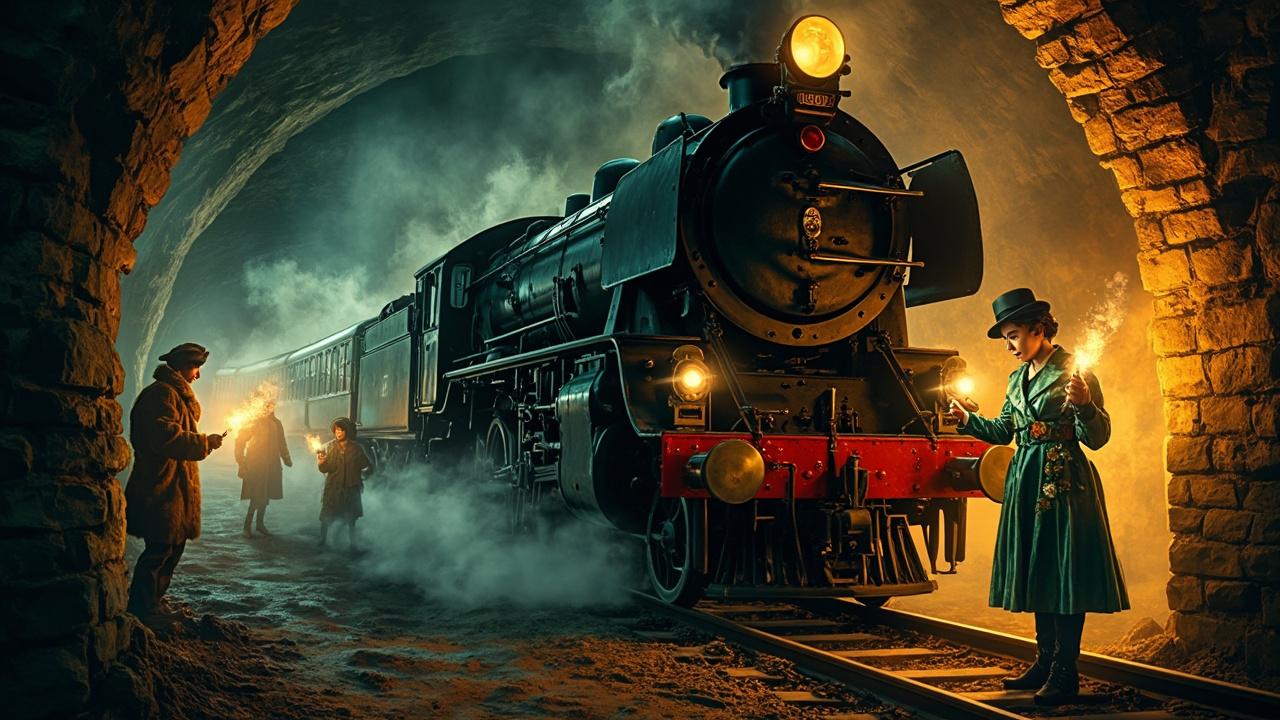
فُتحَ النفقُ إلى فضاءٍ هائل، رغمَ أنَّه استغرقَ من ماري عدةَ ثوانٍ لتفهمَ ما تُريها إياهُ عيناها. هناك، مُجمَّدةً في بركةٍ من نورٍ طيفي، جلست قاطرةٌ وثلاثُ عرباتِ ركّاب. كانت القاطرةُ البخاريةُ رائعة—خزَّانُ حقيبة GWR 5700، أسودُ كغُبارِ الفحم، ومعداتُها النحاسيةِ تتلألأُ كأنَّها لمَّعها أحدٌ ذلك الصباحِ بالذات. لكنَّ ما أخَذَ نَفَسَها كان الركّاب.
عشراتُهم وقفوا أو جلسوا في العربات، أشكالٌ شفَّافةٌ مرسومةٌ بدرجاتِ الفضَّةِ والذهبيِّ الباهت. ملابسُهم كانت لا تُخطئُ—قبعاتُ ترلي، معاطفُ فراء، ستراتٌ صوفيةٌ بطيّاتِ خمسينياتِ القرنِ الماضي الأولى. امرأةٌ في فستانٍ أخضرِ تعتصرُ bouquetًا من الزهور الذابلة. رجلٌ في قبعة مسطّحة يُحدِّقُ في يديهِ كأنَّهما تعودانِ لغيره. صبيٌّ صغير، لا يزيدُ عن السادسة، يُطبِّقُ وجهَه على نافذةِ العربة، ونَفَسُه—بشكلٍ لا يُصدَّق—يُكثِّفُ الزجاج.
أمسكَ ديوي بذراعِها. "إنَّهم لا يتحرَّكون."
"لا," همست ماري. "إنَّهم ينتظرون."
كأنَّها استُدعيتُ بكلمتِها، التفتَتِ المرأةُ في الفستانِ الأخضر. عيناها، حين التقتا عيني ماري، لم تكونا جوفاوين ولا مُرعبةَين بل حزينتانِ بعمقٍ يائس. نهضت من مقعدِها وانزلقت نحوَهما، مُرورًا خلالَ بابِ العربة كأنَّه مصنوعٌ من دُخان.
"تقدرون أن ترونَنا," قالت. صوتُها ناعم، مُحيطٌ بانبهارٍ يقتربُ من الحُزن. "بعد كلِّ هذا الوقت، يستطيعُ أحدٌ أخيرًا أن يرانا."
أجبرت ماري نفسَها على الإيماء. "ماذا حدث؟ لماذا أنتم جميعًا... هنا؟"
اسمُ المرأةِ إيرا. كانت تُسافرُ من كارديف إلى بولهيلي في السابعَ عشرَ من نوفمبر، 1952، حينَ انهارَ النفقُ خلفَهم. انهيارُ سقفٍ كارثي، شرحت، أغلقَ الطرفين في ثوانٍ. جاءت فرقُ الإنقاذ، في النهاية، لكنَّ الانهيارَ كان شاملًا، مطلقًا، لدرجةِ أنَّهم لم يستطيعوا الوصولَ إلى الناجين. ثمَّ توقفَ الناجون عن النجاة.
"كُنَّا هنا منذُ ذلك الحين," قالت إيرا. "محاصرون بين العالمِ الذي غادرناهُ وبين ما يأتي بعده. لا نستطيعُ التقدُّم. لا نستطيعُ العودة. ننتظرُ فقط، مرَّةً بعد مرَّة، لرحلةٍ لن تنتهي أبدًا."
الصفيرُ الصغيرُ من النافذةِ ظهرَ إلى جانبِ إيرا. جذَبَ أكمامَ ماري، وشعرت به—ضغطًا باردًا، كإمساكِ حفنَةٍ من الثلج.
"هل ستُساعدوننا؟" سألَ الصبي. "السيدةُ الطيبةُ تقولُ إنَّكم قد تستطيعون المساعدة."
نظرت ماري إلى ديوي. فكُّه مُشدود، وعيناه مُتلألئتانِ بدموعٍ لم تُسفَك، لكنَّه أومأ. أيًّا كان ما ترَكوهُما فيه، لا يستطيعانِ أن يُوليَا ظهرَه.
على مدى الساعةِ التالية، تحدَّثت ماري وديوي إلى الأشباحِ واحدًا تلوَ الآخر. الرجلُ في القبعةِ المسطّحة اسمه غوينفور، مُعلِّمُ مدرسةٍ عائدٌ من مؤتمر. الزهورُ التي تعتصرُها امرأةٌ أخرى—إيلين—كانت هديةً من خطيبِها، بانتظارِها في بولهيلي. كان لكلِّ راكبٍ قصة، حياةٌ قُطعت، خيطٌ مُعلَّق. وكان كلٌّ منهم يحملُ الالتماسَ ذاته الصامت: تذكَّرونَنا.
حينَ خرجا أخيرًا من النفق، كان الشمسُ قد غربت والنجومُ الأولى تُثقبُ السماء. يدا ماري ترتجفانِ حينَ أخرجت هاتفَها وبدأت البحث. أمَّا ديوي، فجلَسَ على حجرٍ مُوسِّب، رأسُه مُنحني.
"الانهيارُ كان حقيقيًا," قالت ماري، تقرأُ بصوتٍ عالٍ. "تسعةَ عشرَ راكبًا وفريقًا. لا ناجين أُعيدوا من النفق. أُغلقَ الخطُّ رسميًا عامَ 1953 ووُضعَ النفقُ تحتَ الختم."
"لكنَّه لم يكن مُختومًا تمامًا," قال ديوي بهدوء. "must have been فجوة—كافيةٌ لنا لنجدَهم."
استغرقَ الأمرُ أشهرًا من العمل. كتبت ماري رسائلَ إلى متحفِ السكةِ الحديدية، والجمعيةِ التاريخيةِ المحلية، وعائلاتِ الذين سجَّلت أسماءَهم في دفترِها. تضمنت كلَّ تفصيلٍ شاركتها الأشباح—أسماءَهم، قصصَهم، الزهورَ والكتبَ والتذكاراتِ التي حملوها. ببطءٍ، بما يُصعِّبُ التصديق، بدأَ العالمُ يستمع.
نُصِبَ مُزارٌ عندَ مدخلِ النفق. حُفرت التسعةَ عشرَ اسمًا على لوحٍ من الأردواز الويلزي، كلٌّ منها فعلُ تذكُّرٍ صغيرٍ لركّابٍ كانوا، لسبعةِ عقود، منسيّين تمامًا. أُقيمَتُ مراسمُ تأبينٍ في ذكرى الانهيار، ووقفت ماري أمامَ الحشدِ المُجتمع—ذوو الأحفاد، المؤرِّخون، المحليون—تُخبرُهم عن امرأةٍ في فستانٍ أخضر أرادت فقط أن تعودَ إلى البيت.
لم يُعَد فتحُ النفقِ أبدًا. لكن أحيانًا، في الليالي الهادئة، يَحلِفُ المارُّون بالقربِ أنَّهم يسمعونَ عويلَ صافرةِ قاطرةٍ بخاريةٍ بعيدة—لا صرخةَ حزنٍ هذه المرَّة، بل شيءٌ أنعم. شيءٌ يبدو، للذين يُريدونَ الإصغاء، وكأنَّه الامتنان.
Der Oktoberger Wind biss durch Maris dünne Jacke, als sie den Bahndamm hinabkletterte, ihr Bruder Dewi nur wenige Schritte hinter ihr. Sie hatten den Tunneleingang drei Tage zuvor entdeckt, halb verborgen unter einem Gewirr aus Brombeeren und verrostetem Zaun. Nun, bewaffnet mit Taschenlampen und einem törichten Sinn für Abenteuer, standen sie vor der gähnenden Dunkelheit, die die alte Eisenbahnlinie verschluckte.
"Ich glaube immer noch, wir hätten es Mam gesagt", murmelte Dewi, seine Stimme hallte von den Steinen wider.
Mari knipste ihre Taschenlampe an. "Und dass sie dann hierher marschiert kommt, mit dem Rat im Schlepptau? Das ist unser Fund."
Der Tunnel erstreckte sich vor ihnen wie der Schlund eines schlummernden Untiers. Viktorianisches Mauerwerk, glatt vor Jahrzehnten der Feuchtigkeit, wölbte sich über ihnen. Ihre Schritte hallten im Gleichklang, als sie tiefer vordrangen, das Tageslicht schrumpfte zu einem dünnen grauen Streifen hinter ihnen, bis sie schließlich ihre Taschenlampen ausschalteten und in völliger Dunkelheit standen. Dann hörten sie es — das ferne, traurige Heulen einer Dampfpfeife.
Sie wechselten einen Blick in der Schwärze. Keiner sprach. Es gab nichts zu sagen, was nicht absurd klingen würde, also bewegten sie sich einfach vorwärts, dem Geräusch folgend, bis die Dunkelheit vor ihnen mit einem seltsamen bernsteinfarbenen Glühen zu schimmern begann.
Der Tunnel mündete in eine gewaltige Höhle, obwohl es mehrere Sekunden dauerte, bis Mari begriff, was ihre Augen ihr zeigten. Dort, eingefroren in einem Becken aus geisterhaftem Licht, stand eine Lokomotive mit drei Personenwagen. Die Dampflok war prächtig — ein GWR 5700 Schlepptender, schwarz wie Kohlenstaub, ihre Messingbeschläge glänzten, als wären sie an diesem Morgen poliert worden. Aber es waren die Passagiere, die ihr den Atem raubten.
Dutzende von ihnen standen oder saßen in den Wagen, durchscheinende Gestalten, dargestellt in Schattierungen von Silber und blassem Gold. Ihre Kleidung war unverkennbar — Trilby-Hüte, Pelzmäntel, wollene Pullover mit dem Schnitt der frühen 1950er Jahre. Eine Frau in einem grünen Kleid umklammerte einen Strauß verwelkter Blumen. Ein Mann in einer Schirmmütze starrte auf seine Hände, als gehörten sie jemand anderem. Ein kleiner Junge, kaum älter als sechs, drückte sein Gesicht gegen das Wagfenster, sein Atem — unmöglicherweise — beschlug das Glas.
Dewi packte ihren Arm. "Sie bewegen sich nicht."
"Nein", flüsterte Mari. "Sie warten."
Als wären ihre Worte ein Befehl, wandte sich die Frau im grünen Kleid um. Ihre Augen, als sie Maris Blick trafen, waren nicht hohl oder bedrohlich, sondern verzweifelt traurig. Sie erhob sich von ihrem Platz und glitt auf sie zu, ging durch die Wagentür, als wäre sie aus Rauch gemacht.
"Ihr könnt uns sehen", sagte sie. Ihre Stimme war sanft, getönt von einem Staunen, das an Trauer grenzte. "Nach all dieser Zeit kann uns endlich jemand sehen."
Mari zwang sich zu nicken. "Was ist passiert? Warum seid ihr alle... hier?"
Die Frau hieß Eira. Sie war am siebzehnten November 1952 von Cardiff nach Pwllheli unterwegs gewesen, als der Tunnel hinter ihnen einstürzte. Ein katastrophaler Deckeneinbruch, erklärte sie, hatte beide Enden des Tunnels innerhalb von Sekunden versiegelt. Die Rettungsmannschaften waren gekommen, schließlich, aber der Einsturz war so total, so absolut gewesen, dass sie die Überlebenden nicht erreichen konnten. Und dann überlebten die Überlebenden nicht mehr.
"Wir sind seitdem hier", sagte Eira. "Gefangen zwischen der Welt, die wir verließen, und dem, was danach kommt. Wir können nicht vorwärts. Wir können nicht zurück. Wir warten einfach, immer wieder, auf eine Reise, die niemals enden wird."
Der kleine Junge vom Fenster erschien an Eiras Seite. Er zupfte an Maris Ärmel, und sie spürte es — einen kalten Druck, wie eine Handvoll Schnee halten.
"Werdet ihr uns helfen?", fragte der Junge. "Die nette Dame sagt, ihr könntet uns vielleicht helfen."
Mari sah Dewi an. Sein Kiefer war angespannt, seine Augen feucht vor unvergossenen Tränen, aber er nickte. Was auch immer sie hier hineingeraten waren, sie konnten nicht einfach weggehen.
Im nächsten Jahr sprachen Mari und Dewi mit den Geistern, einen nach dem anderen. Der Mann in der Schirmmütze hieß Gwynfor, ein Lehrer auf der Rückreise von einer Konferenz. Die Blumen, die eine andere Frau — Elen — umklammerte, waren ein Geschenk ihres Verlobten gewesen, der sie in Pwllheli erwartete. Jeder Passagier hatte eine Geschichte, ein unterbrochenes Leben, einen lose hängenden Faden. Und jeder trug dieselbe unausgesprochene Bitte: Erinnert euch an uns.
Als sie endlich aus dem Tunnel auftauchten, war die Sonne untergegangen und die ersten Sterne stachen durch den Himmel. Maris Hände zitterten, als sie ihr Telefon hervorholte und mit der Suche begann. Dewi hingegen saß auf einem moosbewachsenen Stein, den Kopf gesenkt.
"Der Einsturz war echt", sagte Mari, las laut vor. "Neunzehn Passagiere und Besatzungsmitglieder. Keine Überlebenden aus dem Tunnel geborgen. Die Strecke wurde 1953 offiziell geschlossen und der Tunnel versiegelt."
"Aber er war nicht vollständig versiegelt", sagte Dewi leise. "Da muss eine Lücke gewesen sein — genug für uns, sie zu finden."
Es dauerte Monate der Arbeit. Mari schrieb Briefe an das Eisenbahnmuseum, die lokale Geschichtsgesellschaft und die Familien, deren Namen sie in ihrem Notizbuch festgehalten hatte. Sie fügte jedes Detail hinzu, das die Geister geteilt hatten — ihre Namen, ihre Geschichten, die Blumen und Bücher und Andenken, die sie bei sich getragen hatten. Langsam, unglaublich langsam, begann die Welt zuzuhören.
Ein Denkmal wurde am Tunneleingang errichtet. Die neunzehn Namen wurden in walisischem Schiefer gemeißelt, jedes einzelne ein kleines Andenken an Passagiere, die sieben Jahrzehnte lang völlig vergessen gewesen waren. Eine Gedenkfeier wurde am Jahrestag des Einsturzes abgehalten, und Mari stand vor der versammelten Menge — Nachkommen, Historiker, Einheimische — und erzählte ihnen von einer Frau in einem grünen Kleid, die einfach nur nach Hause hatte wollen.
Der Tunnel wurde nie wieder eröffnet. Aber manchmal, in ruhigen Nächten, schwören diejenigen, die in der Nähe vorbeikommen, dass sie das ferne, traurige Heulen einer Dampfpfeife hören — diesmal kein Schrei der Trauer, sondern etwas Sanfteres. Etwas, das für diejenigen, die zuhören wollen, fast wie Dankbarkeit klingt.
Le vent d'octobre mordait à travers la veste fine de Mari tandis qu'elle dévalait le talus, son frère Dewi à quelques pas derrière elle. Ils avaient découvert l'entrée du tunnel trois jours plus tôt, à demi cachée sous un enchevêtrement de ronces et de grillage rouillé. Armés de lanternes et d'un sens de l'aventure téméraire, ils se tenaient devant l'obscurité béante qui engloutissait l'ancienne voie ferrée.
« J'suis toujours d'accord qu'on aurait dû dire à Mam », murmura Dewi, sa voix résonnant contre la pierre.
Mari alluma sa lampe de poche. « Et qu'elle débarque ici avec le conseil municipal ? C'est notre découverte. »
Le tunnel s'étendait devant eux comme la gorge d'une bête assoupie. Des briques victoriennes, luisantes de décennies d'humidité, se voûtaient au-dessus d'eux. Leurs pas résonnaient à l'unisson tandis qu'ils s'enfonçaient davantage, la lumière du jour se rétrécissant jusqu'à n'être qu'une fine bande grise derrière eux jusqu'à ce qu'enfin, ils éteignent leurs lanternes et se tiennent dans l'obscurité absolue. C'est alors qu'ils l'entendirent — le gémissement lointain et plaintif d'un sifflet à vapeur.
Ils échangèrent un regard dans les ténèbres. Personne ne parla. Il n'y avait rien à dire qui ne paraîtrait absurde, alors ils avancèrent simplement, suivant le son, jusqu'à ce que l'obscurité devant eux commence à scintiller d'une étrange lueur ambrée.
Le tunnel débouchait sur une vaste caverne, bien qu'il fallut plusieurs secondes à Mari pour comprendre ce que ses yeux lui montraient. Là, figée dans une mare de lumière spectrale, se trouvait une locomotive et trois wagons de passagers. La locomotive à vapeur était magnifique — une locomotive-citerne à paniers GWR 5700, noire comme de la poussière de charbon, ses garnitures en laiton luisant comme si on les avait asticotées ce matin même. Mais ce qui coupa le souffle de Mari, ce furent les passagers.
Des dizaines d'entre eux se tenaient debout ou assis dans les wagons, des silhouettes translucides rendues en nuances d'argent et d'or pâle. Leurs vêtements étaient sans équivoque — chapeaux trilby, manteaux de fourrure, pulls en laine du style des années 1950. Une femme en robe verte serrait un bouquet de fleurs flétries. Un homme en casquette plate fixait ses mains comme si elles appartenaient à quelqu'un d'autre. Un petit garçon, pas plus vieux que six ans, pressait son visage contre la vitre du wagon, son souffle — chose impossible — embuant le verre.
Dewi saisit son bras. « Ils ne bougent pas. »
« Non », murmura Mari. « Ils attendent. »
Comme attirées par ses paroles, la femme en robe verte se retourna. Ses yeux, quand ils croisèrent ceux de Mari, n'étaient ni creux ni terrifiants mais terriblement tristes. Elle se leva de son siège et glissa vers eux, traversant la porte du wagon comme si elle était faite de fumée.
« Vous pouvez nous voir », dit-elle. Sa voix était douce, teintée d'un émerveillement qui frôlait le chagrin. « Après tout ce temps, quelqu'un peut enfin nous voir. »
Mari se força à hocher la tête. « Que s'est-il passé ? Pourquoi êtes-vous tous... ici ? »
La femme s'appelait Eira. Elle voyageait de Cardiff à Pwllheli le dix-sept novembre 1952 quand le tunnel s'est effondré derrière eux. Un effondrement catastrophique du toit, expliqua-t-elle, avait scellé les deux extrémités du tunnel en quelques secondes. Les équipes de secours étaient venues, finalement, mais l'effondrement avait été si total, si absolu, qu'elles ne pouvaient atteindre les survivants. Et puis les survivants ont cessé de survivre.
« Nous sommes ici depuis », dit Eira. « Piégés entre le monde que nous avons quitté et ce qui vient après. Nous ne pouvons pas avancer. Nous ne pouvons pas revenir. Nous attendons simplement, encore et encore, un voyage qui ne finira jamais. »
Le petit garçon de la fenêtre apparut aux côtés d'Eira. Il tira sur la manche de Mari, et elle le sentit — une pression froide, comme si elle tenait une poignée de neige.
« Voulez-vous nous aider ? » demanda le garçon. « La gentille dame dit que vous pourriez peut-être nous aider. »
Mari regarda Dewi. Sa mâchoire était serrée, ses yeux brillants de larmes non versées, mais il hocha la tête. Quoi qu'ils aient découvert, ils ne pouvaient pas y renoncer.
Au cours de l'heure suivante, Mari et Dewi parlèrent aux fantômes un par un. L'homme à la casquette plate s'appelait Gwynfor, un instituteur retournant d'une conférence. Les fleurs serrées par une autre femme — Elen — étaient un cadeau de son fiancé, qui l'attendait à Pwllheli. Chaque passager avait une histoire, une vie interrompue, un fil laissé en suspens. Et chacun portait la même supplication tacite : souvenez-vous de nous.
Quand ils émergèrent enfin du tunnel, le soleil s'était couché et les premières étoiles perçaient le ciel. Les mains de Mari tremblaient tandis qu'elle sortait son téléphone et commençait à chercher. Dewi, quant à lui, s'assit sur une pierre moussue, la tête baissée.
« L'effondrement était réel », dit Mari, lisant à voix haute. « Dix-neuf passagers et membres d'équipage. Aucun survivant récupéré du tunnel. La ligne a été officiellement fermée en 1953 et le tunnel a été muré. »
« Mais il n'était pas complètement muré », dit doucement Dewi. « Il doit y avoir eu une brèche — suffisante pour que nous les trouvions. »
Il fallut des mois de travail. Mari écrivit des lettres au musée du chemin de fer, à la société historique locale et aux familles dont elle avait enregistré les noms dans son carnet. Elle inclut chaque détail que les fantômes avaient partagé — leurs noms, leurs histoires, les fleurs et les livres et les souvenirs qu'ils avaient emportés. Lentement, incroyablement, le monde commença à écouter.
Un mémorial fut érigé à l'entrée du tunnel. Les dix-neuf noms furent gravés dans l'ardoise galloise, chacun un petit acte de souvenir pour des passagers qui avaient été, pendant sept décennies, complètement oubliés. Une cérémonie fut organisée le jour de l'anniversaire de l'effondrement, et Mari se tint devant la foule rassemblée — descendants, historiens, locaux — et leur parla d'une femme en robe verte qui avait simplement voulu rentrer chez elle.
Le tunnel ne fut jamais rouvert. Mais parfois, les nuits tranquilles, ceux qui passent à proximité jurent qu'ils entendent le gémissement lointain et plaintif d'un sifflet à vapeur — non pas un cri de chagrin cette fois, mais quelque chose de plus doux. Quelque chose qui ressemble, pour ceux qui veulent l'entendre, presque à de la gratitude.
Октябрьский ветер пробирал до костей сквозь тонкую куртку Мари, пока она спускалась по насыпи, а её брат Деви плелся в нескольких шагах позади. Три дня назад они обнаружили вход в тоннель, наполовину скрытый под зарослями ежевики и проржавевшим забором. Теперь, вооружившись фонарями и опрометчивым чувством приключений, они стояли перед зияющей темнотой, которая поглощала старую железнодорожную линию.
«Я всё ещё думаю, что надо было рассказать Мам», — пробормотал Деви, и эхо его голоса отразилось от камней.
Мари включила фонарик. «А чтобы она явилась сюда во главе совета? Это наша находка.»
Тоннель тянулся перед ними, словно горло спящего чудовища. Викторианская кирпичная кладка, скользкая от десятилетий сырости, выгибалась над головой. Их шаги звучали в унисон, пока они углублялись внутрь, дневной свет сокращался до тонкой серой полоски позади них, пока наконец они не выключили фонари и не остались стоять в абсолютной темноте. Именно тогда они услышали это — далёкий, скорбный вой парового свистка.
В кромешной тьме они переглянулись. Никто не произнёс ни слова. Не было ничего такого, что не прозвучало бы абсурдно, поэтому они просто пошли вперёд, следуя на звук, пока темнота впереди не начала мерцать странным янтарным сиянием.
Тоннель открылся в огромный гrot, хотя Мари потребовалось несколько секунд, чтобы осознать то, что показывали ей глаза. Там, застывшая в озере призрачного света, стояла паровозная машина и три пассажирских вагона. Паровоз был великолепен — GWR 5700 с тендером, чёрный как угольная пыль, его латунная арматура блестела так, будто её отполировали именно этим утром. Но именно пассажиры заставили её затаить дыхание.
Десятки их стояли или сидели в вагонах — полупрозрачные силуэты, выписанные оттенками серебра и бледного золота. Их одежда была безошибочно узнаваема — котелки, меховые шубы, шерстяные джемперы фасона начала 1950-х. Женщина в зелёном платье сжимала букетик увядших цветов. Мужчина в кепи смотрел на свои руки, как будто они принадлежали кому-то другому. Маленький мальчик, не старше шести лет, прижал лицо к окну вагона, и его дыхание — невозможно — запотевало стекло.
Деви схватил её за руку. «Они не двигаются.»
«Нет», — прошептала Мари. «Они ждут.»
Как будто её слова были призывом, женщина в зелёном платье обернулась. Её глаза, встретившись со взглядом Мари, были не пустыми и не зловещими, а отчаянно грустными. Она поднялась со своего места и скользнула к ним, пройдя сквозь дверь вагона, словно та была сделана из дыма.
«Вы можете нас видеть», — сказала она. Голос её был мягким, с примесью удивления, граничащего с горем. «После всего этого времени кто-то наконец может нас увидеть.»
Мари заставила себя кивнуть. «Что произошло? Почему вы все... здесь?»
Женщину звали Эйра. Она ехала из Кардиффа в Пвилли 17 ноября 1952 года, когда за ними обрушился тоннель. Катастрофический обвал свода, объяснила она, завалил оба выхода из тоннеля за считанные секунды. Спасательные команды пришли, в конце концов, но обвал был таким тотальным, таким абсолютным, что они не смогли добраться до выживших. А потом выжившие перестали выживать.
«Мы были здесь с тех самых пор», — сказала Эйра. — Застрявшие между миром, который мы покинули, и тем, что придёт после. Мы не можем двигаться вперёд. Мы не можем вернуться. Мы просто ждём, снова и снова, путешествия, которое никогда не закончится.»
Маленький мальчик из окна появился рядом с Эйрой. Он потянул Мари за рукав, и она почувствовала это — холодное давление, словно держала пригоршню снега.
«Вы поможете нам?» — спросил мальчик. «Добрая леди говорит, что вы, возможно, сможете помочь.»
Мари посмотрела на Деви. Его челюсть была напряжена, глаза блестели от непролитых слёз, но он кивнул. Чем бы они ни наткнулись, они не могли от этого отвернуться.
В течение следующего часа Мари и Деви говорили с призраками по очереди. Мужчину в кепи звали Гвинфор, школьный учитель, возвращавшийся с конференции. Цветы, которые сжимала другая женщина — Элен — были подарком от её жениха, ожидавшего её в Пвилли. У каждого пассажира была своя история, прерванная жизнь, оборванная нить. И каждый из них нёс одну и ту же невысказанную просьбу: помните нас.
Когда они наконец вышли из тоннеля, солнце уже зашло, и первые звёзды прокалывали небо. Руки Мари дрожали, пока она доставала телефон и начинала поиск. Деви же сидел на замшелом камне, опустив голову.
«Обвал был реальным», — сказала Мари, читая вслух. «Девятнадцать пассажиров и членов экипажа. Выживших из тоннеля не извлекли. Линия была официально закрыта в 1953 году, и тоннель запечатали.»
«Но он не был запечатан полностью», — тихо сказал Деви. «Должен был быть зазор — достаточный для того, чтобы мы их нашли.»
Потребовались месяцы работы. Мари писала письма в железнодорожный музей, местное историческое общество и семьям, чьи имена она записала в блокноте. Она включила каждую деталь, которой поделились призраки — их имена, их истории, цветы, книги и сувениры, которые они несли. Медленно, невероятно, мир начал слушать.
У входа в тоннель воздвигли мемориал. Девятнадцать имён были высечены на валлийском сланце — каждый маленький акт памяти о пассажирах, которые на протяжении семи десятилетий были полностью забыты. На годовщину обвала состоялась поминальная служба, и Мари стояла перед собравшейся толпой — потомками, историками, местными жителями — и рассказывала им о женщине в зелёном платье, которая просто хотела вернуться домой.
Тоннель так и не открыли снова. Но иногда, в тихие ночи, те, кто проходит поблизости, клянутся, что слышат далёкий, скорбный вой парового свистка — не крик скорби на этот раз, а нечто более мягкое. Нечто, что для тех, кто хочет слушать, звучит почти как благодарность.