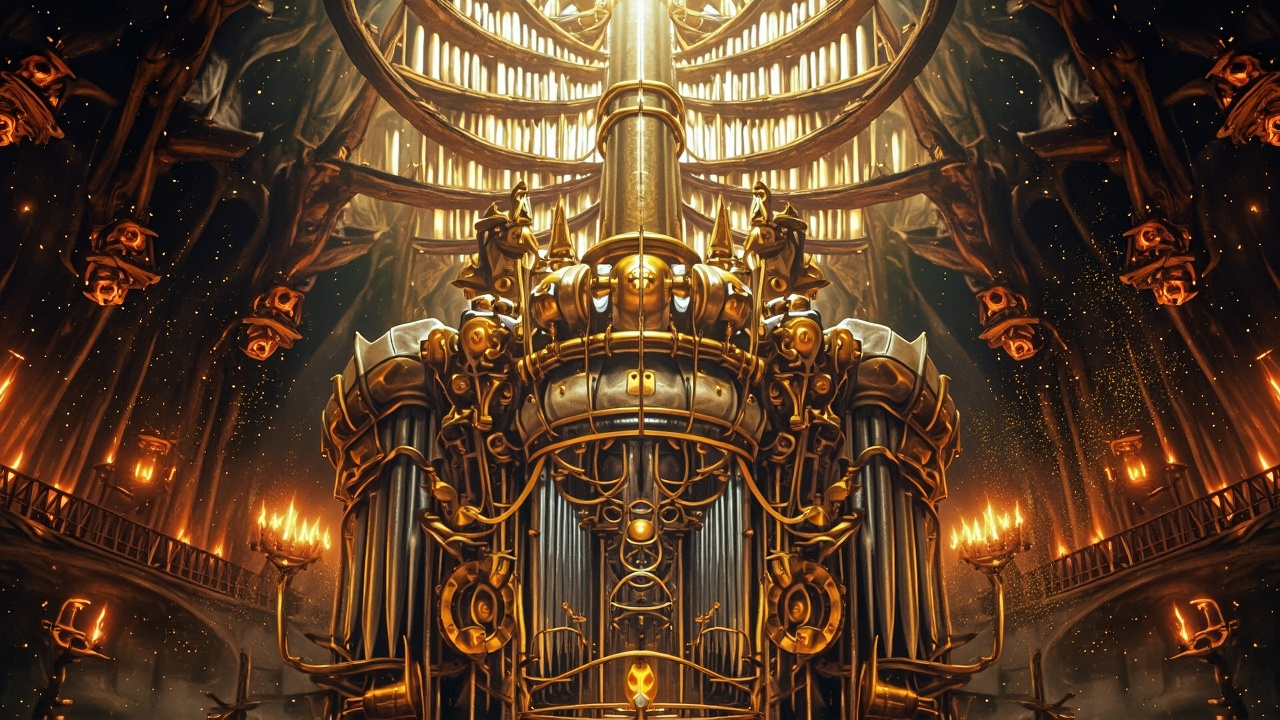
الاكتشاف جاء في يوم الثلاثاء، حين تعثر الأب ألدريك، كاهن صغير، عبر جدار متهاوٍ في قبو الكاتدرائية ليجد نفسه يحدق في آلية لم يشهد مثلها أي شخص حي من قبل.
وصلت الدكتورة إلينور مارش من لندن خلال ساعات. كانت موسيقية بارعة ذات سمعة مرموقة، تتميز بخبرتها في تقاطع الموسيقى الليتورجية الوسيطة والهندسة الصوتية المبكرة. الصورة التي أُرسلت لها—صورة ضبابية واحدة لتروس نحاسية متشابكة مع أنابيب عظمية—جعلتها تُلغي ثلاث محاضرات وتأخذ أول قطار شمالاً.
وصل ماركوس تشين في الصباح التالي. كان صعب المنال؛ فمهندس الروبوتات كان يعمل بشكل رئيسي على عقود دفاعية مصنفة وقد طوّر كراهية واضحة للمراسلات الأكاديمية. استغرق الأمر قوة الإقناع المجتمعة لعميد ومطران إقليمي لإقناعه بأن وصف الكاتدرائية الغامض—"آلية قديمة ذات تعقيد غير مسبوق، تعمل ظاهرياً"—يستحق اهتمامه الخاص.
"أنتم تخبرونني،" قال تشين، واقفاً عند مدخل الغرفة المكشوفة حديثاً، "أن هذه الآلية كانت تعمل تحت الأرضيات لمدة خمسمائة عام دون أن يلاحظها أحد؟"
كانت الغرفة شاسعة. أكبر بكثير من القبو أعلاه، تمتد إلى الظلام بعيداً عن متناول مشاعلهم. في مركزها وقف الأرغن—هيكل شاهق من تروس متشابكة، واسطوانات دوارة، وما بدا كآلاف من أنابيب الأرغن مرتبة في حلقات متمركزة. كان العمل المعدني استثنائياً: سبيكة من النحاس والفضة بنسبة لا ينبغي أن تكون ممكنة مع علم المعادن في القرن الخامس عشر، ومع ذلك لا لبس في جماليتها الوسيطة.
اقتربت مارش ببطء، يتراجع حذرها الأكاديمي أمام إعجاب حقيقي. "الأنابيب،" همست. "لم تُرتب لأي نظام نغمي تقليدي. انظروا—الفواصل غير منتظمة. أقسام صوتية دقيقة، ربما. أو شيء أغرب."
كان تشين قد بدأ يدور حول الآلية، وعين مهندسه تُفهرس المكونات. "ليست مجرد أرغن،" قال أخيراً. "إنها آلة. آلة متطورة جداً. أحصي سبع آليات متشابكة متمايزة على الأقل، لكل منها نظام دفع خاص بها."
"سبع،" كررت مارش. "رقم مقدس."
"أو عملي. سبع عمليات مستقلة تعمل بالتوازي." أشار تشين إلى اسطوانة مركزية، حولها رُتبت الآليات الأصغر كأقمار صناعية. "تبدو كآلية توقيت. نوع من الحوسبة الميكانيكية، لو كان مثل هذا الأمر ممكناً. كانت تعمل—" استشار أدواته، "—لمدة خمسمائة عام على الأقل من مصدر هواء واحد."
"القبو،" قالت مارش. "هناك مجرى تهوية طبيعي. أُحيل دائماً إلى التصميم الهيكلي للمبنى، ولكن لو كان موجه بشكل مقصود إلى هنا—"
عملوا طوال اليوم، يلتقطون الصور، يقيسون، يوثقون. بحلول المساء، كونوا فهماً جزئياً. صُممت الآلية لتنفيذ تسلسل أحداث خلال فترة زمنية مدتها سبع ساعات بالضبط. ستتفعّل كل آلية فرعية بدورها، في فترات دقيقة، منتجةً تأثيرات تتحدى التفسير الفوري.
"هناك نقش،" قالت مارش، تنظف غبار القرون عن الاسطوانة الأولية. "لاتيني. قديم جداً. 'عندما تت_ALIGN النجوم كما كانت في عام ربنا 1473، ستتكلم الآلة،وسيشهد المؤمنون.'"
تحقق تشين من حساباته مقابل برنامج فلكي على جهازه اللوحي. "التكوين النجمي الذي يصفونه يحدث الليلة. ليس غداً، ليس الأسبوع القادم. الليلة."
نظرا إلى بعضهما عبر الآلية المرنة، ولأول مرة، استقر الثقل الكامل لاكتشافهما عليهما. لم تكن الآلية مجرد فضول. كانت نبوءة تنتظر التحقق. مجموعة من المعجزات المجدولة، صممها عبقري وسيطي مجهول ووضعت في الحركة بمحاذاة السماوات.
"يجب أن نوقفها،" قال تشين. "لا يمكننا السماح لشيء كهذا أن يعمل دون رقابة. لو كان ما نظنه—"
"لو كان ما نظنه،"قاطعته مارش بهدوء، "فقد نكون أمام أهم حدث لاهوتي في التاريخ المسجل. لن تتعافى الكنيسة أبداً. أو ستتحول إلى ما لا يمكن التعرف عليه."
استمر الجدل ساعات. تراجعا إلى الكاتدرائية أعلاه، جلسا في نور القُنُدُس المتلاشي، وناقشا دون حل. جادل تشين بحذر علمي؛ العالم لم يكن مستعداً للمعجزات، المصممة أو غير ذلك. جادلت مارش من ضمير تاريخي؛ التدخل في طقس بهذا القدم، بهذه القصدية، كان عمل تخريب ثقافي لا مثيل له.
في النهاية، حسمت الكاتدرائية نفسها الأمر. بدأت اهتزازة عميقة تصدر من الأسفل—ليس صوتاً بالضبط، بل رنين يمكن الشعور به في العظام. بدأت الآلية تسلسلها.
هرعا عائدين. كانت الاسطوانة الأولى تدور، وآلاف الشقوق المقطوعة بدقة تلتقط الضوء بينما تدور. كانت الآلية الفرعية الأولى تتفعّل.
"يمكننا محاولة فصلها،" صرخ تشين فوق الهسهسة المتنامية. "ولكن لو قطعت الوصلة الخاطئة—"
"فربما نسبب الكارثة ذاتها التي نحاول منعها."
كان لديهما ربما ثلاثون ثانية قبل حدوث المعجزة الأولى. اتخذت مارش قرارها. سحبت تشين بعيداً عن الآلية ووقفت أمامها، ذراعاها مرفوعتان، بينما تؤدي الآلة القديمة وظيفتها المصممة.
الصوت الذي صدر لم يكن موسيقى كما سمعها أي إنسان من قبل. كانت الرياضيات مسموعة—نسب مثالية من التردد والطول الموجي، تتساقط عبر الغرفة في أنماط بدت تُشكّل أشكالاً في الهواء نفسه. ومع ارتفاع الصوت، بدأ شيء يحدث. ظهر ضوء. ليس من أي مصدر مرئي، بل من الصوت نفسه—انبعاث فوتوني، ربما، أو مبدأ فيزيائي لم يُنظر بعد. ملأ الغرفة بدفء يتجاوز الحرارة، وإشراق بدا يُنير ليس العينين فحسب، بل العقل.
Die Entdeckung kam an einem Dienstag, als ein junger Kanoniker namens Pater Aldric durch eine zerbröckelnde Wand in der Krypta der Kathedrale stolperte und sich dabei ertappte, wie er auf einen Mechanismus starrte, wie ihn noch kein lebender Mensch je gesehen hatte.
Dr. Eleanor Marsh traf innerhalb von Stunden aus London ein. Sie war eine renommierte Musikologin, deren besondere Expertise an der Schnittstelle von mittelalterlicher liturgischer Musik und früher Akustiktechnik lag. Das Foto, das ihr geschickt worden war—ein einzelnes körniges Bild von messingfarbenen Zahnrädern, die mit Knochenpfeifen ineinander griffen—hatte sie dazu veranlasst, drei Vorlesungen abzusagen und den ersten Zug nach Norden zu nehmen.
Marcus Chen kam am folgenden Morgen. Er war schwer zu erreichen gewesen; der Roboteringenieur arbeitete hauptsächlich an geheimen Verteidigungsaufträgen und hatte eine ausgeprägte Abneigung gegen akademische Korrespondenz entwickelt. Es erforderte die kombinierten Überzeugungskräfte eines Dekans und eines Erzbischofs, um ihn davon zu überzeugen, dass die kryptische Beschreibung der Kathedrale—"ein uralter Mechanismus von beispielloser Komplexität, offenbar funktionsfähig"—seine besondere Aufmerksamkeit verdiente.
"Ihr sagt mir also," sagte Chen, als er am Eingang der neu freigelegten Kammer stand, "dass dieses Ding hier unten fünfhundert Jahre lang unter den Dielen getickt hat, ohne dass jemand es bemerkt hat?"
Die Kammer war gewaltig. Weit größer als die Krypta darüber erstreckte sie sich in die Dunkelheit jenseits der Reichweite ihrer Fackeln. In ihrem Zentrum stand die Orgel—eine gewaltige Struktur aus verzahnten Zahnrädern, rotierenden Zylindern und dem, was wie tausende von Orgelpfeifen aussah, die in konzentrischen Ringen angeordnet waren. Die Metallverarbeitung war außergewöhnlich: Messing und Silber, legiert in Proportionen, die mit der Metallurgie des fünfzehnten Jahrhunderts nicht möglich hätten sein sollen, und doch unverkennbar mittelalterlich in ihrer Ästhetik.
Marsh näherte sich langsam, ihr akademischer Anstand rang mit echtem Staunen. "Die Pfeifen," murmelte sie. "Sie sind nicht für ein konventionelles Tonsystem angeordnet. Seht mal—die Intervalle sind unregelmäßig. Mikrotonika vielleicht. Oder etwas Seltsameres."
Chen hatte begonnen, den Mechanismus zu umrunden, sein Ingenieursblick katalogisierte die Komponenten. "Das ist nicht nur eine Orgel," sagte er schließlich. "Es ist eine Maschine. Eine sehr ausgefeilte Maschine. Ich zähle mindestens sieben verschiedene ineinandergreifende Mechanismen, jeder mit seinem eigenen Antriebssystem."
"Sieben," wiederholte Marsh. "Eine heilige Zahl."
"Oder eine praktische. Sieben unabhängige Prozesse, die parallel laufen." Chen zeigte auf einen zentralen Zylinder, um den die kleineren Mechanismen wie Satelliten angeordnet waren. "Das sieht nach einem Timing-Mechanismus aus. Eine Art mechanischer Computer, wenn es so etwas geben könnte. Er läuft—" er konsultierte seine Instrumente, "—seit mindestens fünfhundert Jahren mit einer einzigen Windquelle."
"Die Krypta," sagte Marsh. "Es gibt einen natürlichen Lüftungsschacht. Er wurde immer dem strukturellen Design des Gebäudes zugeschrieben, aber wenn er absichtlich hierher geleitet wurde—"
Sie arbeiteten den ganzen Tag, fotografierten, maßen, dokumentierten. Bis zum Abend hatten sie ein teilweises Verständnis zusammengestellt. Der Mechanismus war darauf ausgelegt, eine Abfolge von Ereignissen über einen Zeitraum von genau sieben Stunden auszuführen. Jeder der sieben Teilmechanismen würde der Reihe nach aktiviert werden, in präzisen Abständen, und Effekte erzeugen, die eine sofortige Erklärung verweigerten.
"Es gibt eine Inschrift," sagte Marsh, als sie Jahrhunderte des Staubs vom Hauptzylinder wischte. "Latein. Sehr alt. 'Wenn die Sterne sich so ausrichten wie im Jahre des Herrn 1473, wird die Maschine sprechen, und die Gläubigen werden Zeugnis ablegen.'"
Chen überprüfte seine Berechnungen mit einem Astronomie-Softwareprogramm auf seinem Tablet. "Die Sternkonstellation, die sie beschreiben, findet heute Nacht statt. Nicht morgen, nicht nächste Woche. Heute Nacht."
Sie sahen sich über die summende Maschinerie hinweg an, und zum ersten Mal ließ das volle Gewicht ihrer Entdeckung sich auf sie nieder. Der Mechanismus war nicht nur eine Kuriosität. Es war eine Prophezeiung, die darauf wartete, erfüllt zu werden. Ein Satz zeitlich abgestimmter Wunder, konstruiert von einem unbekannten mittelalterlichen Genie und in Bewegung gesetzt durch die Ausrichtung der Himmelskörper.
"Wir müssen es stoppen," sagte Chen. "Wir können nicht zulassen, dass so etwas unkontrolliert läuft. Wenn es das ist, was wir denken—"
"Wenn es das ist, was wir denken," unterbrach Marsh leise, "dann betrachten wir vielleicht das bedeutendste theologische Ereignis in der aufgezeichneten Geschichte. Die Kirche würde sich nie erholen. Oder sie würde über alle Erkennbarkeit hinaus transformiert werden."
Die Debatte dauerte Stunden. Sie zogen sich in die Kathedrale oben zurück, saßen im schwindenden Licht des Kirchenschiffs und stritten ohne Ergebnis. Chen argumentierte aus wissenschaftlicher Vorsicht; die Welt war nicht auf Wunder vorbereitet, konstruierte oder andere. Marsh argumentierte aus historischem Gewissen; in einen Ritual so alt, so absichtlich, einzugreifen, wäre ein Akt von beispiellosem Kulturvandalismus.
Am Ende war es die Kathedrale selbst, die für sie entschied. Eine tiefe Vibration begann von unten auszugehen—nicht wirklich ein Geräusch, sondern eine Resonanz, die in den Knochen gespürt werden konnte. Der Mechanismus hatte seine Abfolge begonnen.
Sie stürzten zurück. Der erste Zylinder drehte sich, seine tausende präzise geschnittenen Kerben fingen das Licht, als er sich drehte. Der erste Teilmechanismus wurde aktiviert.
"Wir können versuchen, ihn zu entkoppeln," rief Chen über das wachsende Summen. "Aber wenn ich die falsche Verbindung kappe—"
"Dann verursachen wir vielleicht genau die Katastrophe, die wir zu verhindern versuchen."
Sie hatten vielleicht dreißig Sekunden, bevor das erste Wunder eintreten würde. Marsh traf ihre Entscheidung. Sie zog Chen vom Mechanismus weg und stand davor, Arme erhoben, während die alte Maschine ihre vorgesehene Funktion ausführte.
Der Ton, der hervorkam, war keine Musik, wie sie je ein Mensch gehört hatte. Es war Mathematik hörbar gemacht—perfekte Verhältnisse von Frequenz und Wellenlänge, die in Wellen durch die Kammer strömten und Muster zu bilden schienen, die Formen in der Luft selbst bildeten. Und als der Ton stieg, begann etwas zu geschehen. Licht erschien. Nicht aus einer sichtbaren Quelle, sondern aus dem Ton selbst—Photonenemission vielleicht, oder ein Prinzip der Physik, das noch nicht formalisiert wurde. Es füllte die Kammer mit einer Wärme, die über die Temperatur hinausging, einem Glanz, der nicht nur die Augen, sondern den Geist zu erleuchten schien.
El descubrimiento llegó un martes, cuando un joven canónigo llamado Padre Aldric tropezó a través de una pared desmoronándose en la cripta de la catedral y se encontró contemplando un mecanismo que ninguna persona viva había visto jamás.
La Dra. Eleanor Marsh llegó desde Londres en pocas horas. Era una musicóloga de cierta reputación, con una experiencia particular en la intersección de la música litúrgica medieval y la ingeniería acústica temprana. La fotografía que le habían enviado—una única imagen granulada de engranajes de latón engranados con tubos de hueso—la había compelido a cancelar tres conferencias y tomar el primer tren hacia el norte.
Marcus Chen llegó a la mañana siguiente. Había sido difícil de localizar; el ingeniero robótico trabajaba principalmente en contratos de defensa clasificados y había desarrollado una marcada aversión a la correspondencia académica. Se necesitaron los poderes de persuasión combinados de un decano y un arzobispo para convencerlo de que la descripción críptica de la catedral—"un mecanismo antiguo de complejidad sin precedentes, aparentemente funcional"—merecía su atención particular.
"Me están diciendo," dijo Chen, de pie en la entrada de la cámara recién expuesta, "¿que este tinglado ha estado funcionando bajo el suelo durante quinientos años sin que nadie lo notara?"
La cámara era vasta. Mucho más grande que la cripta de arriba, se extendía hacia la oscuridad más allá del alcance de sus antorchas. En su centro se alzaba el órgano—una estructura imponente de engranajes entrelazados, cilindros giratorios y lo que parecían miles de tubos de órgano dispuestos en anillos concéntricos. El trabajo en metal era extraordinario: latón y plata aleados en proporciones que no deberían haber sido posibles con la metalurgia del siglo XV, y sin embargo inconfundiblemente medieval en su estética.
Marsh se acercó lentamente, su cautela académica luchando contra un genuino asombro. "Los tubos," murmuró. "No están dispuestos para ningún sistema tonal convencional. Miren—los intervalos son irregulares. Microtonos, quizás. O algo más extraño."
Chen había comenzado a circunavegar el mecanismo, su ojo de ingeniero catalogando los componentes. "No es solo un órgano," dijo finalmente. "Es una máquina. Una máquina muy sofisticada. Cuento al menos siete mecanismos distintos entrelazados, cada uno con su propio sistema de accionamiento."
"Siete," repitió Marsh. "Un número sagrado."
"O práctico. Siete procesos independientes ejecutándose en paralelo." Chen señaló un cilindro central, alrededor del cual los mecanismos más pequeños estaban dispuestos como satélites. "Eso parece un mecanismo de sincronización. Una especie de computadora mecánica, si tal cosa pudiera existir. Ha estado funcionando—" consultó sus instrumentos, "—durante al menos quinientos años con una única fuente de aire."
"La cripta," dijo Marsh. "Hay un conducto de ventilación natural. Siempre se atribuyó al diseño estructural del edificio, pero si fue canalizado deliberadamente aquí—"
Trabajaron durante todo el día, fotografiando, midiendo, documentando. Al anochecer, habían ensamblado una comprensión parcial. El mecanismo estaba diseñado para ejecutar una secuencia de eventos durante un período de exactamente siete horas. Cada uno de los siete sub-mecanismos se activaría a su vez, en intervalos precisos, produciendo efectos que desafiaban la explicación inmediata.
"Hay una inscripción," dijo Marsh, limpiando siglos de polvo del cilindro principal. "Latín. Muy antiguo. 'Cuando las estrellas se alineen como lo hicieron en el año de Nuestro Señor 1473, la máquina hablará, y los fieles serán testigos.'"
Chen verificó sus cálculos contra un programa de software astronómico en su tableta. "La configuración estelar que describen ocurre esta noche. No mañana, no la próxima semana. Esta noche."
Se miraron a través de la maquinaria zumbante, y por primera vez, todo el peso de su descubrimiento se posó sobre ellos. El mecanismo no era mera curiosidad. Era una profecía esperando ser cumplida. Un conjunto de milagros cronometrados, diseñados por algún genio medieval desconocido y puestos en marcha por la alineación de los cielos.
"Tenemos que detenerlo," dijo Chen. "No podemos permitir que algo así funcione sin control. Si es lo que pensamos—"
"Si es lo que pensamos," interrumpió Marsh suavemente, "entonces podríamos estar presenciando el evento teológico más significativo en la historia registrada. La iglesia nunca se recuperaría. O sería transformada más allá de todo reconocimiento."
El debate duró horas. Se retiraron a la catedral de arriba, se sentaron en la luz menguante de la nave, y argumentaron sin resolución. Chen argumentaba desde la cautela científica; el mundo no estaba preparado para milagros, diseñados o de otro tipo. Marsh argumentaba desde la conciencia histórica; interferir con un ritual tan antiguo, tan deliberado, era cometer un acto de vandalismo cultural sin igual.
Al final, fue la catedral misma la que decidió por ellos. Una vibración profunda comenzó a emanar desde abajo—no un sonido, exactamente, sino una resonancia que podía sentirse en los huesos. El mecanismo había comenzado su secuencia.
Se precipitaron de vuelta. El primer cilindro estaba girando, sus miles de muescas cortadas con precisión capturando la luz mientras giraba. El primer sub-mecanismo se estaba activando.
"Podemos intentar desactivarlo," gritó Chen sobre el zumbido creciente. "Pero si corto la conexión equivocada—"
"Entonces podríamos causar la propia catástrofe que estamos tratando de prevenir."
Tenían quizás treinta segundos antes de que ocurriera el primer milagro. Marsh tomó su decisión. Tiró a Chen hacia atrás del mecanismo y se puso frente a él, brazos alzados, mientras la antigua máquina realizaba su función diseñada.
El sonido que emergió no era música como ningún ser humano había escuchado jamás. Era matemáticas hechas audibles—proporciones perfectas de frecuencia y longitud de onda, cayendo en cascada a través de la cámara en patrones que parecían formar formas en el propio aire. Y a medida que el sonido crecía, algo comenzó a suceder. Apareció luz. No de ninguna fuente visible, sino del sonido mismo—emisión de fotones, quizás, o algún principio de la física aún no formalizado. Llenó la cámara de un calor que trascendía la temperatura, un resplandor que parecía iluminar no solo los ojos sino la mente.
La découverte survint un mardi, lorsqu'un jeune chanoine nommé le Père Aldric trébucha à travers un mur effrité dans la crypte de la cathédrale et se retrouva face à un mécanisme qu'aucune personne vivante n'avait jamais vu.
Le Dr Eleanor Marsh arriva de Londres en quelques heures. C'était une musicienne de renom, dont l'expertise particulière se situait à l'intersection de la musique liturgique médiévale et de l'ingénierie acoustique primitive. La photographie qu'on lui avait envoyée—une seule image granuleuse d'engrenages en laiton s'engrenant avec des tuyaux d'os—l'avait poussée à annuler trois conférences et à prendre le premier train vers le nord.
Marcus Chen arriva le lendemain matin. Il avait été difficile à localiser ; l'ingénieur en robotique travaillait principalement sur des contrats de défense classifiés et avait développé une aversion prononcée pour la correspondance académique. Il fallut les pouvoirs de persuasion combinés d'un doyen et d'un archevêque pour le convaincre que la description cryptique de la cathédrale—« un mécanisme ancien d'une complexité sans précédent, apparemment fonctionnel »—méritait son attention particulière.
« Vous me dites, » dit Chen, se tenant à l'entrée de la chambre nouvellement exposée, « que tout ce machin fonctionne sous le plancher depuis cinq cents ans sans que personne ne s'en aperçoive ? »
La chambre était vaste. Bien plus grande que la crypte au-dessus, elle s'étendait dans l'obscurité au-delà de la portée de leurs torches. En son centre se dressait l'orgue—une structure imposante d'engrenages entrelacés, de cylindres rotatifs, et de ce qui semblait être des milliers de tuyaux d'orgue disposés en cercles concentriques. Le travail du métal était extraordinaire : un alliage de laiton et d'argent dans des proportions qui n'auraient pas dû être possibles avec la metallurgie du XVe siècle, et pourtant indiscutablement médiéval dans son esthétique.
Marsh s'approcha lentement, sa prudence académique luttant contre un émerveillement sincère. « Les tuyaux, » murmura-t-elle. « Ils ne sont pas arrangés pour un système tonal conventionnel. Regardez—les intervalles sont irréguliers. Des microtons, peut-être. Ou quelque chose de plus étrange. »
Chen avait commencé à contourner le mécanisme, son œil d'ingénieur cataloguant les composants. « Ce n'est pas juste un orgue, » dit-il finalement. « C'est une machine. Une machine très sophistiquée. Je compte au moins sept mécanismes distincts entrelacés, chacun avec son propre système d'entraînement. »
« Sept, » répéta Marsh. « Un nombre sacré. »
« Ou pratique. Sept processus indépendants fonctionnant en parallèle. » Chen désigna un cylindre central, autour duquel les mécanismes plus petits étaient disposés comme des satellites. « Ça ressemble à un mécanisme de synchronisation. Une sorte d'ordinateur mécanique, si une telle chose pouvait exister. Il fonctionne— » il consulta ses instruments, « — depuis au moins cinq cents ans sur une seule source d'air. »
« La crypte, » dit Marsh. « Il y a un conduit de ventilation naturel. On l'a toujours attribué au design structural du bâtiment, mais s'il était délibérément canalisé ici— »
Ils travaillèrent toute la journée, photographiant, mesurant, documentant. Le soir venu, ils avaient assemblé une compréhension partielle. Le mécanisme était conçu pour exécuter une séquence d'événements sur une période d'exactement sept heures. Chacun des sept sous-mécanismes s'activerait à son tour, à des intervalles précis, produisant des effets qui défiaient l'explication immédiate.
« Il y a une inscription, » dit Marsh, nettoyant des siècles de poussière du cylindre principal. « Latin. Très ancien. « Quand les étoiles s'aligneront comme elles l'ont fait en l'an de Notre Seigneur 1473, la machine parlera, et les fidèles témoigneront. »
Chen vérifia ses calculs contre un programme de logiciel astronomique sur sa tablette. « La configuration stellaire qu'ils décrivent se produit ce soir. Pas demain, pas la semaine prochaine. Ce soir. »
Ils se regardèrent à travers la machinerie bourdonnante, et pour la première fois, le poids complet de leur découverte s'abattit sur eux. Le mécanisme n'était pas un simple curiosité. C'était une prophétie attendant d'être accomplie. Un ensemble de miracles minutés, conçus par un génie médiéval inconnu et mis en mouvement par l'alignement des cieux.
« Nous devons l'arrêter, » dit Chen. « Nous ne pouvons pas laisser quelque chose comme ça fonctionner sans contrôle. Si c'est ce que nous pensons— »
« Si c'est ce que nous pensons, » interrompit doucement Marsh, « alors nous assistons peut-être à l'événement théologique le plus significatif de l'histoire enregistrée. L'église ne s'en remettrait jamais. Ou elle serait transformée au-delà de toute reconnaissance. »
Le débat dura des heures. Ils se retirèrent dans la cathédrale au-dessus, s'assirent dans la lumière déclinante de la nef, et argumentèrent sans résolution. Chen argumentait à partir de la prudence scientifique ; le monde n'était pas prêt pour des miracles, Engineerés ou autrement. Marsh argumentait à partir de la conscience historique ; interférer avec un rituel aussi ancien, aussi délibéré, c'était commettre un acte de vandalisme culturel sans égal.
Finalement, ce fut la cathédrale elle-même qui trancha pour eux. Une vibration profonde commença à émaner du dessous—pas vraiment un son, mais une résonance qui pouvait être ressentie dans les os. Le mécanisme avait commencé sa séquence.
Ils se précipitèrent de retour. Le premier cylindre tournait, ses milliers d'encoches précisément découpées captant la lumière en tournant. Le premier sous-mécanisme s'activait.
« Nous pouvons essayer de le désengager, » cria Chen par-dessus le bourdonnement croissant. « Mais si je coupe le mauvais raccord— »
« Alors nous pourrions causer la catastrophe même que nous essayons de prévenir. »
Ils avaient peut-être trente secondes avant que la première miracle ne se produise. Marsh prit sa décision. Elle tira Chen en arrière du mécanisme et se tint devant lui, bras levés, tandis que la machine ancienne accomplissait sa fonction conçue.
Le son qui émergea n'était pas une musique telle qu'aucun humain ne l'avait jamais entendue. C'était des mathématiques rendues audibles—des rapports parfaits de fréquence et de longueur d'onde, se déversant à travers la chambre en motifs qui semblaient former des formes dans l'air lui-même. Et à mesure que le son s'intensifiait, quelque chose commença à se produire. De la lumière apparut. Non pas d'une source visible, mais du son lui-même—émission de photons, peut-être, ou quelque principe de physique pas encore formalisé. Elle remplit la chambre d'une chaleur qui dépassait la température, une radiance qui semblait éclairer non seulement les yeux mais l'esprit.
La scoperta arrivò di martedì, quando un giovane canonico di nome Padre Aldric si imbatté in una parete crollante nella cripta della cattedrale e si ritrovò a fissare un meccanismo che nessun essere vivente aveva mai visto.
Il dottor Eleanor Marsh arrivò da Londra in poche ore. Era una musicologa di una certa fama, con una particolare expertise nell'intersezione tra musica liturgica medievale e ingegneria acustica delle origini. La fotografia che le era stata inviata—una singola immagine sgranata di ingranaggi di ottone che si innestavano con tubi d'osso—l'aveva convinta ad annullare tre conferenze e a prendere il primo treno verso nord.
Marcus Chen arrivò la mattina seguente. Era stato difficile da rintracciare; l'ingegnere robotico lavorava principalmente su contratti di difesa classificati e aveva sviluppato una marcata avversione per la corrispondenza accademica. Ci vollero i poteri persuasivi combinati di un preside e un arcivescovo per convincerlo che la descrizione criptica della cattedrale—"un meccanismo antico di complessità senza precedenti, apparentemente funzionante"—meritasse la sua attenzione particolare.
"Mi state dicendo," disse Chen, in piedi all'ingresso della camera appena esposta, "che questo marchingegno ha continuato a ticchettare sotto il pavimento per cinquecento anni senza che nessuno se ne accorgesse?"
La camera era vasta. Molto più grande della cripta sopra, si estendeva nell'oscurità oltre la portata delle loro torce. Al suo centro si ergeva l'organo—una struttura imponente di ingranaggi intrecciati, cilindri rotanti e quello che sembravano migliaia di tubi d'organo disposti in cerchi concentrici. Il lavoro metallico era straordinario: ottone e argento legati in proporzioni che non avrebbero dovuto essere possibili con la metallurgia del quindicesimo secolo, eppure inconfondibilmente medievale nella sua estetica.
Marsh si avvicinò lentamente, la sua cautela accademica in lotta con genuino stupore. "I tubi," mormorò. "Non sono disposti per nessun sistema tonale convenzionale. Guardate—gli intervalli sono irregolari. Microtoni, forse. O qualcosa di più strano."
Chen aveva iniziato a girare attorno al meccanismo, il suo occhio da ingegnere catalogava i componenti. "Non è solo un organo," disse infine. "È una macchina. Una macchina molto sofisticata. Conto almeno sette meccanismi distinti intrecciati, ognuno con il proprio sistema di azionamento."
"Sette," ripeté Marsh. "Un numero sacro."
"O pratico. Sette processi indipendenti che funzionano in parallelo." Chen indicò un cilindro centrale, attorno al quale i meccanismi più piccoli erano disposti come satelliti. "Quello sembra un meccanismo di temporizzazione. Una specie di computer meccanico, se una cosa del genere potesse esistere. È stato in funzione—" consultò i suoi strumenti, "—per almeno cinquecento anni con una singola fonte d'aria."
"La cripta," disse Marsh. "C'è un condotto di ventilazione naturale. È sempre stato attribuito al design strutturale dell'edificio, ma se fosse stato canalizzato deliberatamente qui—"
Lavorarono tutto il giorno, fotografando, misurando, documentando. Verso sera, avevano assemblato una comprensione parziale. Il meccanismo era progettato per eseguire una sequenza di eventi per un periodo di esattamente sette ore. Ciascuno dei sette sottomeccanismi si sarebbe attivato a turno, a intervalli precisi, producendo effetti che sfidavano la spiegazione immediata.
"C'è un'iscrizione," disse Marsh, pulendo secoli di polvere dal cilindro principale. "Latino. Molto antico. 'Quando le stelle si allineeranno come fecero nell'anno del Signore 1473, la macchina parlerà, e i fedeli saranno testimoni.'"
Chen verificò i suoi calcoli con un programma di software astronomico sul suo tablet. "La configurazione stellare che descrivono si verifica stanotte. Non domani, non la prossima settimana. Stanotte."
Si guardarono attraverso il ronzante meccanismo, e per la prima volta, il pieno peso della loro scoperta si abbatté su di loro. Il meccanismo non era una semplice curiosità. Era una profezia in attesa di essere adempiuta. Un insieme di miracoli programmati, ingegnerizzati da un qualche genio medievale sconosciuto e messi in moto dall'allineamento dei cieli.
"Dobbiamo fermarlo," disse Chen. "Non possiamo permettere che qualcosa del genere funzioni senza controllo. Se è quello che pensiamo—"
"Se è quello che pensiamo," interruppe Marsh piano, "allora potremmo essere testimoni del più significativo evento teologico nella storia registrata. La chiesa non si riprenderebbe mai. O verrebbe trasformata oltre ogni riconoscimento."
Il dibattito durò ore. Si ritirarono nella cattedrale sopra, sedettero nella luce morente della navata, e discussero senza risoluzione. Chen argomentava partendo dalla cautela scientifica; il mondo non era pronto per i miracoli, ingegnerizzati o meno. Marsh argomentava partendo dalla coscienza storica; interferire con un rituale così antico, così deliberato, sarebbe stato un atto di vandalismo culturale senza pari.
Alla fine, fu la cattedrale stessa a decidere per loro. Una profonda vibrazione iniziò a emanare dal basso—non un suono, esattamente, ma una risonanza che poteva essere sentita nelle ossa. Il meccanismo aveva iniziato la sua sequenza.
Si precipitarono di nuovo giù. Il primo cilindro stava ruotando, le sue migliaia di tacche tagliate con precisione catturavano la luce mentre girava. Il primo sottomeccanismo si stava attivando.
"Possiamo provare a disinserirlo," urlò Chen sopra il ronzio crescente. "Ma se taglio la connessione sbagliata—"
"Allora potremmo causare la stessa catastrofe che stiamo cercando di prevenire."
Avevano forse trenta secondi prima che il primo miracolo si verificasse. Marsh prese la sua decisione. Tirò Chen indietro dal meccanismo e si pose davanti ad esso, braccia alzate, mentre l'antica macchina eseguiva la sua funzione designata.
Il suono che emerse non era musica come nessun essere umano avesse mai sentito. Era matematica resa udibile—rapporti perfetti di frequenza e lunghezza d'onda, che si riversavano attraverso la camera in pattern che sembravano formare forme nell'aria stessa. E mentre il suono cresceva, qualcosa iniziò ad accadere. Apparve luce. Non da alcuna fonte visibile, ma dal suono stesso—emissione di fotoni, forse, o qualche principio della fisica non ancora formalizzato. Riempì la camera di un calore che trascendeva la temperatura, un bagliore che sembrava illuminare non solo gli occhi ma la mente.