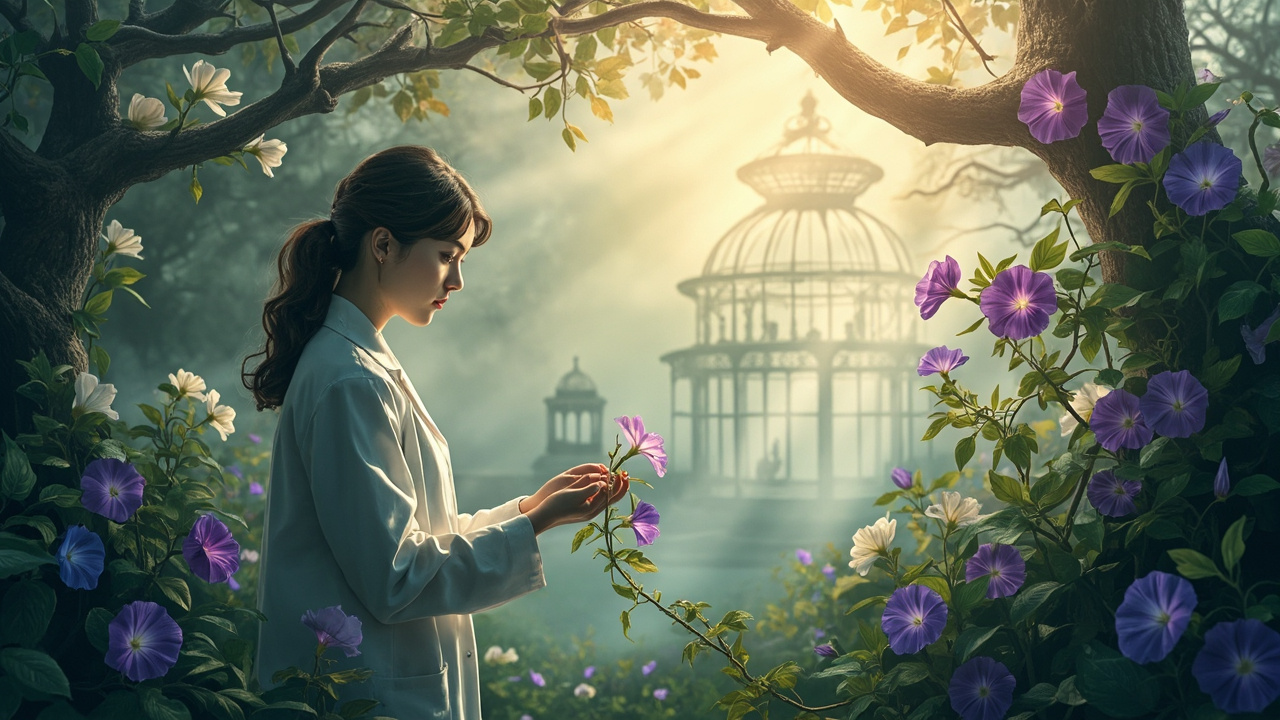
في صباح اليوم الذي اكتشفت فيه الدكتورة إيلارا ويتموور أن شركة سينديكس قد استحوذت على قطعة أرض مجاورة للحدائق الملكية في كيو، كانت تقف بين أشجار الماغنوليا، و بتلاتها الشاحبة لا تزال مثقلية بالندى. كانت قد عملت في الحدائق النباتية الملكية إحدى عشر عامًا،时间长到足以让她知道,机构的政治很少渗透到她工作的温室区,然而马库斯传达消息的方式——声音中的颤抖,一种不属于他的犹豫——表明这不是一个普通的发展。
سينديكس ليس اسما يلهم الراحة في الأوساط العلمية. كانت المجموعة الصيدلانية والمعلوماتية الحيوية قد بنت إمبراطوريتها على عمليات الاستحواذ، وشرأت مرافق البحث بالجملة وامتصت ملكيتها الفكرية في خزائن محمية. أنهم اشتروا أرضًا مجاورة لكيو، أشهر مؤسسة أبحاث نباتية في العالم، لم يكن أمر العلم العادي. أنهم اشتروها تحديدًا، كما ألمح马库س بوضوح واضح،,因为他们发现了她的工作——那是另一回事。
إيلارا كانت قدكرست سبع سنوات لما أسمته داخليًا مشروع الهيليانثوس. كانت الفرضية الأصلية بسيطة: هل يمكن هندسة الكائنات الحية لتعمل كوسائط لتخزين البيانات، بحيث يتم التلاعب بمادتها الوراثية لترميز المعلومات بشكل موثوق مثل أي شريحة سيليكون؟ كانت الإجابة، بعد عدد لا يحصى من التكرارات، إيجابية. أكثر من مجرد إيجابية——النهج البيولوجي تقدم مزايا لا تستطيع أي نظام رقمي مضاهاتها. يمكن للبذرة أن تحمل مكتبات كاملة داخل بنيتها الخلوية. يمكن أن تبقى كامننة لقرون ولا تزال تنتج معلوماتها سليمة. يمكن نسخها ومشاركتها وزراعتها من قبل أي شخص لديه الوصول إلى المعرفة البستانية الأساسية. كانت الآثار مذهلة، وإيلارا كانت قد فهمت من البداية أنها ليست وحدها من يحق لها المطالبة بها.
لكنها كانت قد فهمت أيضًا أن العالم لا يشاركها المثاليتها. قبل ثلاثة أسابيع، كانت قد بدأت ترميز رسالة في سلالة من إيبوميا بربوريا——اللؤلؤية الصباحية الشائعة——التي زرعتها بنفسها. لم تكن هذه المرة بيانات علمية. كانت شعرًا. الأعمال الكاملة المجمعة لشيموس هيني، وماري أوليفر، وقرابة دزينة آخرين cujos versos a haviam sustentado nos anos após a morte da mãe. لم تكن القصائد مخزنة كملفات؛ كانت مشفرة في أنماط نمو الكرمة نفسها، كل ورقة ولفيفة تحتوي على بيانات يمكن قراءتها فقط بخوارزمية فك التشفير التي كتبتها في مكتبها، متأخرة في الليل، بينما كانت الحدائق نائمة من حولها.
كانت قد تصورت، ربما بسذاجة، أنها قد تهدي هذه المكتبة الحية إلى كيو. أن يمشي الأطفال والعلماء بين اللؤلؤيات الصباحية ومع المفاتيح المناسبة يصلون إلى قرون من الحكمة البشرية المتراكمة. أن يزدهر المشروع في المجال العام، غير مقيد بالقيود التجارية. لم تتوقع أن سينديكس، التي مولت منحها البحثية عملها المبكر، ستفرض مطالبة ملكية على أي تطبيقات مشتقة من استثمارهم.
لم يكن اهتمام الشركة بالشعر. كان في المنصة نفسها——منهجية الترميز، وخوارزميات فك التشفير، وبنية التخزين البيولوجية. كانوا يرغبون في براءة اختراع العملية، وترخيصها للشركات الصيدلانية ووكالات الاستخبارات، وبناء إمبراطورية من مراكز البيانات الحية التي يتحكمون فيها وحدهم. لؤلؤيات إيلارا الصباحية، بأكرماتها المتسلقة اللطيفة وحمولتها من لاركن وهيوز، مثلت شيئًا أكثر قيمة بكثير لسينديكس من الجمال: مثلت بنية تحتية.
كان لديها اثنتان وسبعون ساعة قبل وصول فريقهم القانوني لتقديم أمر قضائي يمنعها من مواصلة عملها أو مشاركته مع أي أطراف خارجية. اثنتان وسبعون ساعة لاتخاذ قرار حول ما إذا كانت ستتخلى عن سنوات من البحث، لترى عملها يختفي في خزائن شركات الاختبار ليُنظر إليه مرة أخرى، أو للتصرف.
كان القرار، عندما جاء، أقل من اختيار وأكثر من حتمية. تذكرت أمها في حديقة طفولتها، يداها غائرتان في التربة، تُريها كيف تحتوي بذرة واحدة على كل ما يلزم لتصبح عباد شمس. لم تكن المعلومات في الزهرة؛ كانت في العلاقة بين البذرة والأرض، المطر والضوء. المعلومات أرادت أن تُشارك. تتطور من خلال التوزيع، من خلال سخاء الانتقال. اختزانها يعني قتلها.
في الليلة الثانية، أعدت إيلارا استعداداتها. رمزت التسلسلات النهائية في عيناتها المتبقية——البازلاء الحلوة وزهر الربيع المسائي، بالإضافة إلى اللؤلؤيات الصباحية——وحصدت البذور. وضعتها في مظاريف ورقية صغيرة، كل منها معنون بتعليمات بسيطة: ازرعني. ثم، بمساعدة马库斯,الذي فاجأها بتصميمه، بدأت توزعها.
كان بستانيو كيو أول المتلقين. توماس العجوز في بيت المعتدل، الذي عمل في الأرض لأربعين عامًا. الشابة برييا في بيت ديفيس الجبلي، التي لم تطرح أسئلة لكنها فهمت، بطريقة ما، أن البذور التي أُعطيت إياها ثمينة. زرعوها في الزوايا والحدود، في صناديق النوافذ والأسرّة المهملة، في تربة عشرات البيوت الزجاجية حيث لن يلاحظها السياح وهي تنمو.
لكن إيلارا saving أفضل بذورها للفعل الأخير. في الساعات التي سبقت الفجر، مشت إلى الحدود الشرقية لكيو، حيث تفتح الحدائق على نهر التايمز والممرات العامة تتعرج بين البلوط القديمة. هناك، في الحقل البري الذي سمحت كيو له بالنمو دون إشراف، نشرت آخر لؤلؤياتها الصباحية. سقطت البذور بين العشب والبرسيم، غير مرئية وعفوية، حمولتها من الشعر تنتظر المطر والشمس والكيمياء الصابرة للنمو.
عندما وصل محامو سينديكس في التاسعة، كانت إيلارا تنتظرهم في المبنى العشبي، فنجان شاي يبرد على مكتبها. لم يبق لديها بذور. لم يكن لديها عينات لتسلمها. لكنها كانت لديها، however، several hundred morning
Als Dr. Elara Whitmore an jenem Morgen entdeckte, dass die Syndex Corporation ein angrenzendes Grundstück in Kew erworben hatte, stand sie bereits unter den Magnolien, ihre blassen Blütenblätter noch schwer vom Tau. Sie war seit elf Jahren an den Royal Botanic Gardens, lange genug, um zu wissen, dass institutionelle Politik selten in das Gewächshausviertel eindrang, in dem sie arbeitete, doch etwas in der Art, wie ihr Kollege Marcus die Nachricht überbracht hatte – ein Zittern in seiner Stimme, eine Unsicherheit, die nicht seine Art war – deutete darauf hin, dass dies keine gewöhnliche Entwicklung war.
Syndex war kein Name, der in wissenschaftlichen Kreisen Trost einflößte. Der pharmazeutische und Bioinformatik-Konzern hatte sein Imperium durch Übernahmen aufgebaut, Forschungsanlagen im großen Stil aufgekauft und ihr geistiges Eigentum in proprietäre Tresore eingegliedert. Dass sie Land neben Kew erworben hatten, der renommiertesten botanischen Forschungseinrichtung der Welt, war nicht die Sorge gewöhnlicher Wissenschaft. Dass sie es speziell gekauft hatten, wie Marcus mit offensichtlicher Beunruhigung angedeutet hatte, weil sie ihre Arbeit entdeckt hatten – das war eine andere Angelegenheit.
Elara hatte sieben Jahre dem gewidmet, was sie privat das Helianthus-Projekt nannte. Die ursprüngliche Prämisse war straightforward gewesen: Könnten lebende Organismen so manipuliert werden, dass sie als Datenspeichermedien dienen, ihr genetisches Material so programmiert, dass es Informationen ebenso zuverlässig codiert wie jeder Siliziumchip? Die Antwort, nach unzähligen Iterationen, war bejahend gewesen. Mehr als bejahend – der biologische Ansatz bot Vorteile, die kein digitales System replizieren konnte. Ein Samen konnte Bibliotheken in seiner zellulären Struktur tragen. Er konnte Jahrhunderte lang dormant bleiben und dennoch seine Informationen intakt hervorbringen. Er konnte kopiert, geteilt, von jedem angepflanzt werden, der Zugang zu grundlegenden gärtnerischen Kenntnissen hatte. Die Implikationen waren atemberaubend, und Elara hatte von Anfang an verstanden, dass sie nicht allein diejenige war, die Anspruch darauf erheben konnte.
Doch sie hatte auch verstanden, dass die Welt ihren Idealismus nicht teilte. Drei Wochen zuvor hatte sie begonnen, eine Nachricht in eine Sorte von Ipomoea purpurea – die gewöhnliche Prunkwinde – zu codieren, die sie selbst kultiviert hatte. Diesmal war es keine wissenschaftlichen Daten. Es war Poesie. Die vollständigen gesammelten Werke von Seamus Heaney, Mary Oliver und einem Dutzend anderer, deren Verse sie in den Jahren nach dem Tod ihrer Mutter aufrecht erhalten hatten. Die Gedichte waren nicht als Dateien gespeichert; sie waren in die Wachstumsmuster der Ranke selbst codiert, jedes Blatt und jede Spirale enthielt Daten, die nur mit dem Entschlüsselungsalgorithmus gelesen werden konnten, den sie in ihrem Büro geschrieben hatte, spät in der Nacht, während die Gärten um sie herum schliefen.
Sie hatte sich, vielleicht naiv, vorgestellt, dass sie diese lebendige Bibliothek Kew schenken könnte. Dass Schulkindern und Gelehrten durch die Prunkwinden wandern und mit den richtigen Schlüsseln auf Jahrhunderte akkumulierter menschlicher Weisheit zugreifen könnten. Dass das Projekt im öffentlichen Bereich gedeihen könnte, frei von kommerziellen Beschränkungen. Sie hatte nicht erwartet, dass Syndex, deren Forschungsgelder teilweise ihre frühe Arbeit finanziert hatten, einen Eigentumsanspruch auf alle aus ihrer Investition abgeleiteten Anwendungen geltend machen würde.
Das Interesse des Unternehmens galt nicht der Poesie. Es galt der Plattform selbst – der Codierungsmethodik, den Entschlüsselungsalgorithmen, der biologischen Speicherarchitektur. Sie wollten das Verfahren patentieren, es an Pharmaunternehmen und Geheimdienstbehörden lizenzieren, ein Imperium lebender Rechenzentren aufbauen, das sie allein kontrollieren würden. Elaras Prunkwinden mit ihren sanften Kletterranken und ihrer Fracht von Larkin und Hughes repräsentierten für Syndex etwas weit Wertvolleres als Schönheit: sie repräsentierten Infrastruktur.
Sie hatte zweiundsiebzig Stunden, bevor ihr Rechtsteam eintreffen würde, um eine einstweilige Verfügung zuzustellen, die sie daran hinderte, ihre Arbeit fortzusetzen oder mit externen Parteien zu teilen. Zweiundsiebzig Stunden, um zu entscheiden, ob sie Jahre der Forschung aufgeben sollte, zusehen sollte, wie sie in Unternehmenssafes verschwindet, um nie wieder gesehen zu werden, oder zu handeln.
Die Entscheidung, als sie kam, war weniger eine Wahl als eine Unvermeidlichkeit. Sie erinnerte sich an ihre Mutter im Garten ihrer Kindheit, die Hände tief in der Erde vergraben, die ihr zeigte, wie ein einzelner Samen alles enthielt, was nötig war, um eine Sonnenblume zu werden. Die Information war nicht in der Blume; sie war in der Beziehung zwischen dem Samen und der Erde, dem Regen und dem Licht. Information wollte geteilt werden. Sie entwickelte sich durch Verteilung, durch die Großzügigkeit der Übertragung. Sie zu horten bedeutete, sie zu töten.
In der zweiten Nacht traf Elara ihre Vorbereitungen. Sie codierte die letzten Sequenzen in ihre verbleibenden Exemplare – Duftwicken und Nachtkerzen, sowie die Prunkwinden – und erntete die Samen. Sie tat sie in kleine Papierumschläge, jeden beschriftet mit einer einfachen Anweisung: pflanz mich. Dann, mit Unterstützung von Marcus, der sie mit seiner Entschlossenheit überraschte, begann sie, sie zu verbreiten.
Die Kew-Gärtner waren die ersten Empfänger. Der alte Thomas im Temperatenhaus, der vierzig Jahre lang die Anlagen gepflegt hatte. Die junge Priya im Davies-Alpinhaus, die keine Fragen stellte, aber irgendwie verstand, dass die Samen, die sie erhielt, kostbar waren. Sie pflanzten sie in Ecken und Beete, in Fensterkästen und vergessene Rabatten, in den Boden eines Dutzend Gewächshäuser, wo Touristen sie niemals wachsen sehen würden.
Aber Elara bewahrte das Beste ihrer Samen für den letzten Akt auf. In den Stunden vor der Morgendämmerung ging sie zur östlichen Grenze von Kew, wo die Gärten zur Themse hin offenstanden und öffentliche Pfade sich zwischen uralten Eichen wanden. Dort, auf der Wildwiese, die Kew ungepflegt wachsen ließ, streute sie ihre letzten Prunkwinden aus. Die Samen fielen zwischen das Gras und den Klee, unsichtbar und ungeplant, ihre Fracht von Poesie wartete auf Regen und Sonne und die geduldige Alchemie des Wachsens.
Als Syndex' Anwälte um neun Uhr eintrafen, wartete Elara auf sie im Herbarium, eine Tasse Tee kühlte auf ihrem Schreibtisch. Sie hatte keine Samen mehr. Sie hatte keine Exemplare zu übergeben. Sie hatte jedoch mehrere hundert Morgen
La mañana en que la doctora Elara Whitmore descubrió que la corporación Syndex había adquirido una parcela de terreno adyacente en Kew, ella ya estaba de pie entre los magnolios, sus pálidos pétalos todavía pesados de rocío. Llevaba once años en los Jardines Botánicos Reales, tiempo suficiente para saber que la política institucional rara vez penetraba en el distrito de invernaderos donde trabajaba, sin embargo algo en la forma en que su colega Marcus le había entregado la noticia –un temblor en su voz, una vacilación que no era propia de él– sugería que esto no era un desarrollo ordinario.
Syndex no era un nombre que inspirara comodidad en los círculos científicos. El conglomerado farmacéutico y de bioinformática había construido su imperio sobre adquisiciones, comprando instalaciones de investigación al por mayor y absorbiendo su propiedad intelectual en cajas fuertes proprietarias. Que hubieran comprado tierra adyacente a Kew, la institución de investigación botánica más prestigiosa del mundo, no era asunto de la ciencia ordinaria. Que la hubieran comprado específicamente, como Marcus había insinuado con evidente desasosiego, porque habían descubierto su trabajo –eso era otra cuestión enteramente.
Elara había dedicado siete años a lo que ella denominaba en privado el Proyecto Helianthus. La premisa original había sido directa: ¿podían ingenierizarse organismos vivos para servir como medios de almacenamiento de datos, manipulando su material genético para codificar información tan fiable como cualquier chip de silicio? La respuesta, después de incontables iteraciones, había demostrado ser afirmativa. Más que afirmativa –el enfoque biológico ofrecía ventajas que ningún sistema digital podía replicar. Una semilla podía llevar bibliotecas dentro de su estructura celular. Podía permanecer latente durante siglos y aún así producir su información intacta. Podía copiarse, compartirse, plantarse por cualquier persona con acceso a conocimientos hortícolas básicos. Las implicaciones eran enormes, y Elara había entendido desde el principio que no eran solo suyas para reclamar.
Sin embargo, también había entendido que el mundo no compartía su idealismo. Tres semanas antes, había comenzado a codificar un mensaje en una cepa de Ipomoea purpurea –la gloria de la mañana común– que ella misma había cultivado. Esta vez no eran datos científicos. Era poesía. Las obras completas reunidas de Seamus Heaney, Mary Oliver, y una docena de otros cuyos versos la habían sostenido durante los años tras la muerte de su madre. Los poemas no estaban almacenados como archivos; estaban codificados en los patrones de crecimiento de la enredadera misma, cada hoja y zarcillo conteniendo datos que solo podían leerse con el algoritmo de descifrado que había escrito en su oficina, tarde en la noche, mientras los jardines dormían a su alrededor.
Había imaginado, quizás con ingenuidad, que podría regalar esta biblioteca viva a Kew. Que niños y scholars pudieran caminar entre las glorias de la mañana y, con las claves adecuadas, acceder a siglos de sabiduría humana acumulada. Que el proyecto pudiera prosperar en el dominio público, sin restricciones comerciales. No había anticipado que Syndex, cuyas subvenciones de investigación habían financiado parcialmente su trabajo inicial, assertions una reclamo propietario sobre cualquier aplicación derivada de su inversión.
El interés de la corporación no era la poesía. Era la plataforma misma –la metodología de codificación, los algoritmos de descifrado, la arquitectura de almacenamiento biológico. Querían patentar el proceso, licenciarlo a compañías farmacéuticas y agencias de inteligencia, construir un imperio de centros de datos vivos que solo ellos controlarían. Las glorias de la mañana de Elara, con sus gentiles enredaderas trepadoras y su carga de Larkin y Hughes, representaban algo mucho más valioso para Syndex que la belleza: representaban infraestructura.
Tenía setenta y dos horas antes de que llegara su equipo legal para entregar una orden judicial que le impidiera continuar su trabajo o compartirlo con cualquier parte externa. Setenta y dos horas para decidir si abandonar años de investigación, verlos desaparecer en cajas fuertes corporativas para no ser vistos jamás, o actuar.
La decisión, cuando llegó, fue menos una elección que una inevitabilidad. Recordó a su madre en el jardín de su infancia, las manos hundidas en la tierra, mostrándole cómo una sola semilla contenía todo lo necesario para convertirse en un girasol. La información no estaba en la flor; estaba en la relación entre la semilla y la tierra, la lluvia y la luz. La información quería ser compartida. Evolucionaba a través de la distribución, a través de la generosidad de la transmisión. Acumularla era matarla.
En la segunda noche, Elara hizo sus preparativos. Codificó las secuencias finales en sus especímenes restantes –guisantes de olor y onagra, además de las glorias de la mañana– y cosechó las semillas. Las colocou en pequeños sobres de papel, cada uno etiquetado con una instrucción simple: plántame. Luego, con la asistencia de Marcus, quien la sorprendió con su determinación, comenzó a dispersarlas.
Los jardineros de Kew fueron los primeros receptores. El viejo Thomas en la Casa Templada, que había trabajado los terrenos durante cuarenta años. La joven Priya en la Casa Alpina Davies, que no hizo preguntas pero entendió, de alguna manera, que las semillas que se le daban eran preciosas. Las plantaron en rincones y bordes, en macetas de ventana y arriates olvidados, en la tierra de una docena de invernaderos donde los turistas nunca las notarían crecer.
Pero Elara guardó lo mejor de sus semillas para el acto final. En las horas antes del amanecer, caminó hacia el límite oriental de Kew, donde los jardines se abren al Támesis y los caminos públicos serpentean entre antiguos robles. Allí, en la pradera silvestre que Kew había permitido crecer sin atender, esparció sus últimas glorias de la mañana. Las semillas cayeron entre la hierba y el trébol, invisibles e improvisadas, su carga de poesía esperando lluvia y sol y la paciente alquimia de las cosas que crecen.
Cuando los abogados de Syndex llegaron a las nueve, Elara los esperaba en el Herbario, una taza de té enfriándose en su escritorio. No le quedaban semillas. No tenía especímenes que entregar. Tenía, sin embargo, varios cientos de mañanas
Le matin où le Dr Elara Whitmore découvrit que la corporation Syndex avait acquis une parcelle de terrain adjacente à Kew, elle se tenait déjà parmi les magnolias, leurs pétales pâles encore lourds de rosée. Elle travaillait aux Jardins botaniques royaux depuis onze ans, suffisamment longtemps pour savoir que la politique institutionnelle pénétrait rarement le district des serres où elle travaillait, pourtant quelque chose dans la façon dont son collègue Marcus lui avait annoncé la nouvelle — un tremblement dans sa voix, une hésitation qui n'était pas dans ses habitudes — suggérait qu'il ne s'agissait pas d'un développement ordinaire.
Syndex n'était pas un nom qui inspirait le réconfort dans les milieux scientifiques. Le conglomérat pharmaceutique et de bio-informatique avait bâti son empire sur des acquisitions, achetant des installations de recherche en gros et absorbant leur propriété intellectuelle dans des coffres propriétaires. Qu'ils aient acheté un terrain adjacent à Kew, l'institution de recherche botanique la plus prestigieuse au monde, n'était pas une préoccupation de la science ordinaire. Qu'ils l'aient acheté spécifiquement, comme Marcus l'avait laissé entendre avec une inquiétude manifeste, parce qu'ils avaient découvert son travail — c'était une tout autre affaire.
Elara avait consacré sept années à ce qu'elle appelait intérieurement le Projet Hélianthus. La prémisse originale avait été simple : pourrait-on engineerer des organismes vivants pour servir de supports de stockage de données, leur matériel génétique étant manipulé pour encoder des informations aussi sûrement que n'importe quelle puce de silicium ? La réponse, après d'innombrables itérations, s'était avérée affirmative. Plus qu'affirmative — l'approche biologique offrait des avantages qu'aucun système numérique ne pouvait répliquer. Une graine pouvait porter des bibliothèques entières dans sa structure cellulaire. Elle pouvait rester dormante pendant des siècles et produire encore ses informations intactes. Elle pouvait être copiée, partagée, plantée par quiconque avait accès aux connaissances horticoles de base. Les implications étaient stupéfiantes, et Elara avait compris dès le début qu'elles n'étaient pas les siennes seules à revendiquer.
Pourtant elle avait aussi compris que le monde ne partageait pas son idéalisme. Trois semaines auparavant, elle avait commencé à encoder un message dans une souche d'Ipomoea purpurea — la liseron bleu commun — qu'elle avait cultivée elle-même. Ce n'était pas, cette fois, des données scientifiques. C'était de la poésie. Les œuvres complètes collectées de Seamus Heaney, Mary Oliver, et une douzaine d'autres dont les vers l'avaient soutenue au fil des années suivant la mort de sa mère. Les poèmes n'étaient pas stockés comme fichiers ; ils étaient encodés dans les motifs de croissance de la vigne elle-même, chaque feuille et chaque vrille contenant des données qui ne pouvaient être lues qu'avec l'algorithme de déchiffrement qu'elle avait écrit dans son bureau, tard dans la nuit, tandis que les jardins dormaient autour d'elle.
Elle avait imaginé, peut-être naïvement, qu'elle pourrait offrir cette bibliothèque vivante à Kew. Que des écoliers et des universitaires pourraient se promener parmi les liserons bleus et, avec les bonnes clés, accéder à des siècles de sagesse humaine accumulée. Que le projet pourrait s'épanouir dans le domaine public, libéré de toute restriction commerciale. Elle n'avait pas anticipé que Syndex, dont les subventions de recherche avaient partiellement financé ses premiers travaux, affirmerait une prétention propriétaire sur toute application dérivée de leur investissement.
L'intérêt de la corporation n'était pas la poésie. C'était la plateforme elle-même — la méthodologie d'encodage, les algorithmes de déchiffrement, l'architecture de stockage biologique. Ils souhaitaient breveter le processus, le concéder sous licence à des entreprises pharmaceutiques et des agences de renseignement, construire un empire de centres de données vivants qu'ils seuls contrôleraient. Les liserons bleus d'Elara, avec leurs vrilles grimpantes douces et leur cargaison de Larkin et Hughes, représentaient quelque chose de bien plus précieux pour Syndex que la beauté : ils représentaient une infrastructure.
Elle avait soixante-douze heures avant l'arrivée de leur équipe juridique pour signifier une injonction l'empêchant de poursuivre son travail ou de le partager avec quelque partie externe que ce soit. Soixante-douze heures pour décider si elle abandonnait des années de recherche, si elle regardait tout disparaître dans les coffres des corporations pour ne plus jamais être vue, ou si elle agissait.
La décision, quand elle vint, fut moins un choix qu'une inéluctabilité. Elle se rappela sa mère dans le jardin de son enfance, les mains enfouies dans la terre, lui montrant comment une seule graine contenait tout le nécessaire pour devenir un tournesol. L'information n'était pas dans la fleur ; elle était dans la relation entre la graine et la terre, la pluie et la lumière. L'information voulait être partagée. Elle évoluait à travers la distribution, à travers la générosité de la transmission. Le retenir, c'était la tuer.
La deuxième nuit, Elara fit ses préparatifs. Elle coda les séquences finales dans ses spécimens restants — des pois de senteur et une onagre, ainsi que les liserons bleus — et récolta les graines. Elle les plaça dans de petits enveloppes en papier, chacune étiquetée d'une instruction simple : plantez-moi. Puis, avec l'assistance de Marcus, qui la surprit par sa détermination, elle commença à les disperser.
Les jardiniers de Kew furent les premiers récipiendaires. Le vieux Thomas dans la Maison tempérée, qui travaillait les terres depuis quarante ans. La jeune Priya dans la Maison alpine Davies, qui ne posa aucune question mais comprit, d'une manière ou d'une autre, que les graines qu'on lui donnaient étaient précieuses. Ils les plantèrent dans les coins et les plates-bandes, dans les jardinières et les massifs négligés, dans le sol d'une douzaine de serres où les touristes ne les remarqueraient jamais pousser.
Mais Elara reserva le meilleur de ses graines pour l'acte final. Dans les heures avant l'aube, elle marcha vers la frontière est de Kew, là où les jardins s'ouvrent sur la Tamise et où les sentiers publics serpentent entre de vieux chênes. Là, dans la prairie sauvage que Kew avait laissée pousser sans entretien, elle dispersa ses derniers liserons bleus. Les graines tombèrent parmi l'herbe et le trèfle, invisibles et involontaires, leur cargaison de poésie attendant la pluie et le soleil et l'alchimie patiente de la croissance.
Quand les avocats de Syndex arrivèrent à neuf heures, Elara les attendait dans l'Herbier, une tasse de thé refroidissant sur son bureau. Elle n'avait plus de graines. Elle n'avait pas de spécimens à céder. Elle avait cependant plusieurs centaines de liserons du matin
La mattina in cui la dottoressa Elara Whitmore scoprì che la Syndex Corporation aveva acquistato un appezzamento di terra adiacente a Kew, lei si trovava già tra i magnolii, i loro petali pallidi ancora pesanti di rugiada. Era stata ai Royal Botanic Gardens per undici anni, abbastanza a lungo da sapere che la politica istituzionale raramente penetrava nel quartiere delle serre dove lavorava, eppure qualcosa nel modo in cui il suo collega Marcus le aveva comunicato la notizia – un tremito nella voce, un'esitazione che non era consueta a lui – suggeriva che questa non fosse una normale evoluzione.
Syndex non era un nome che ispirasse conforto negli ambienti scientifici. Il conglomerato farmaceutico e di bioinformatica aveva costruito il suo impero attraverso acquisizioni, acquistando strutture di ricerca all'ingrosso e assorbendo la loro proprietà intellettuale in caveau proprietari. Che avessero acquistato un terreno adiacente a Kew, l'istituzione di ricerca botanica più prestigiosa al mondo, non era una preoccupazione della scienza ordinaria. Che lo avessero acquistato specificamente, come Marcus aveva accennato con evidente disagio, perché avevano scoperto il suo lavoro – questa era un'altra questione.
Elara aveva dedicato sette anni a quello che privately definiva il Progetto Helianthus. La premessa originale era stata semplice: potevano essere ingegnerizzati organismi viventi per servire come supporti di memorizzazione dati, il loro materiale genetico manipolato per codificare informazioni in modo affidabile come qualsiasi chip di silicio? La risposta, dopo innumerevoli iterazioni, si era rivelata affermativa. Più che affermativa – l'approccio biologico offriva vantaggi che nessun sistema digitale poteva replicare. Un seme poteva trasportare biblioteche all'interno della sua struttura cellulare. Poteva rimanere dormiente per secoli e ancora produrre le sue informazioni intatte. Poteva essere copiato, condiviso, piantato da chiunque avesse accesso alle conoscenze orticole di base. Le implicazioni erano stupefacenti, ed Elara aveva compreso fin dall'inizio che non erano solo le sue da reclamare.
Eppure aveva anche compreso che il mondo non condivideva il suo idealismo. Tre settimane prima, aveva iniziato a codificare un messaggio in una variante di Ipomoea purpurea – la comunissima campanella porpora – che aveva coltivato lei stessa. Non erano, questa volta, dati scientifici. Era poesia. Le opere complete raccolte di Seamus Heaney, Mary Oliver e una dozzina di altri i cui versi l'avevano sostenuta negli anni successivi alla morte di sua madre. Le poesie non erano immagazzinate come file; erano codificate nei modelli di crescita della vite stessa, ogni foglia e viticcio contenente dati che potevano essere letti solo con l'algoritmo di decrittazione che aveva scritto nel suo ufficio, tardi la notte, mentre i giardini dormivano intorno a lei.
Aveva immaginato, forse ingenuamente, che avrebbe potuto donare questa biblioteca vivente a Kew. Che scolari e studiosi potessero camminare tra le campanelle porpora e, con le chiavi appropriate, accedere a secoli di saggezza umana accumulata. Che il progetto potesse fiorire nel dominio pubblico, senza vincoli commerciali. Non aveva anticipato che Syndex, i cui grant di ricerca avevano parzialmente finanziato il suo primo lavoro, avrebbe avanzato una pretesa proprietaria su qualsiasi applicazione derivata dal loro investimento.
L'interesse della corporation non era la poesia. Era la piattaforma stessa – la metodologia di codifica, gli algoritmi di decrittazione, l'architettura di archiviazione biologica. Volevano brevettare il processo, concedere in licenza alle aziende farmaceutiche e alle agenzie di intelligence, costruire un impero di centri dati viventi che avrebbero controllato da soli. Le campanelle porpora di Elara, con i loro teneri viticci rampicanti e il loro carico di Larkin e Hughes, rappresentavano qualcosa di molto più prezioso per Syndex della bellezza: rappresentavano infrastruttura.
Aveva settantadue ore prima che il loro team legale arrivasse per notificare un'ingiunzione che le impedisse di continuare il suo lavoro o di condividerlo con qualsiasi parte esterna. Settantadue ore per decidere se abbandonare anni di ricerca, guardarla scomparire in caveau aziendali per non essere mai più vista, o agire.
La decisione, quando arrivò, fu meno una scelta che un'ineluttabilità. Ricordò sua madre nel giardino della sua infanzia, le mani affondate nella terra, che le mostrava come un singolo seme contenesse tutto il necessario per diventare un girasole. L'informazione non era nel fiore; era nella relazione tra il seme e la terra, la pioggia e la luce. L'informazione voleva essere condivisa. Si evolveva attraverso la distribuzione, attraverso la generosità della trasmissione. Accumularla significava ucciderla.
La seconda notte, Elara fece i suoi preparativi. Codificò le sequenze finali nei suoi esemplari rimanenti – piselli odorosi e enagra, oltre alle campanelle porpora – e raccolse i semi. Li mise in piccole buste di carta, ciascuna etichettata con una semplice istruzione: piantami. Poi, con l'assistenza di Marcus, che la sorprese con la sua determinazione, iniziò a dispersarli.
I giardinieri di Kew furono i primi destinatari. Il vecchio Thomas nella Casa Temperata, che aveva lavorato i terreni per quarant'anni. La giovane Priya nella Casa Alpina Davies, che non fece domande ma comprese, in qualche modo, che i semi che le erano stati dati erano preziosi. Li piantarono in angoli e aiuole, in cassette da finestra e aiuole trascurate, nel terreno di una dozzina di serre dove i turisti non li avrebbero mai notati crescere.
Ma Elara riservò i suoi semi migliori per l'atto finale. Nelle ore prima dell'alba, camminò verso il confine orientale di Kew, dove i giardini si aprivano sul Tamigi e i sentieri pubblici si snodavano tra antiche querce. Lì, nel prato selvaggio che Kew aveva permesso di crescere senza cure, sparse le sue ultime campanelle porpora. I semi caddero tra l'erba e il trifoglio, invisibili e non pianificati, il loro carico di poesia in attesa di pioggia e sole e la paziente alchimia delle cose che crescono.
Quando gli avvocati di Syndex arrivarono alle nove, Elara li aspettava nell'Erbario, una tazza di tè che si raffreddava sulla sua scrivania. Non le erano rimasti semi. Non aveva esemplari da consegnare. Aveva, tuttavia, diverse centinaia di mattine