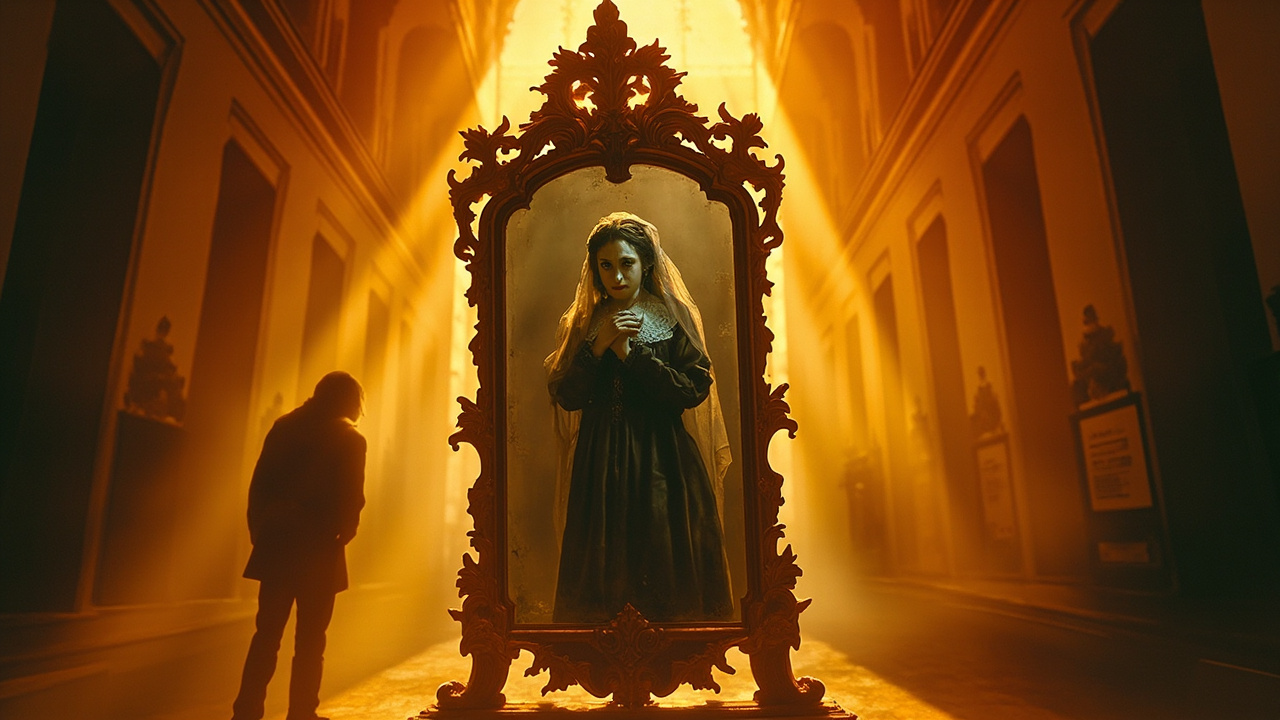
أرشيف المرايا
أمضت إلينور خمس عشرة سنة تُحيي لوحات أذهان الزمن، لكنها لم تكن مستعدة لما شهدته في مرآة الممر الشرقي. كان ذلك يوم الثلاثاء من أواخر نوفمبر حين لاحظت إلينور فانس الشذوذ لأول مرة. كانت تُجري تقييمًا روتينيًا للإطار الذهبي المحيط بلوحة فان ديك لتشارلز الأول — وهي لوحة سبق لها ترميمها مرتين — حين انحرف نظرها نحو المرآة الزخرفية المُعلَّقة في المواجهة. كان الزجاج قديماً، زئبقيه مُصقَّل بشكل طفيف، وإطاره فخامة من كروبيمات منحوتة اعتبرها أمناء المتحف الأوائل مُلائماً لمدخل مجموعتهم. وفي سطح المرآة، حيث كان يجب أن ترى انعكاسها المنحني فوق صندوق أدواتها، رأت بدلاً من ذلك شبح صورة. وجه امرأة، رُسم بخطوط واثقة لفنان القرن السادس عشر، نظر إليها وعيناه تحملان قروناً من الحزن. وميض الصورة ثم توهجت، ثم اختفت حين رمشت.
قالت لنفسها إنها خدعة ضوء. كان afternoon November قد سحب آخر إضاءاته الشاحبة من النوافذ العالية، مُلقياً بكل شيء في ذهبي وظلال. جمعت إلينور أدواتها وغادرت الممر، لكن شيئًا في صدرها توتّر بيقين أنها لم تُتخيل ذلك. في تلك evening، في شقتها الصغيرة في إزلينغتون، وجدت نفسها عاجزة عن التركيز على السيرة الذاتية التي كانت تنوي إنهاءها. بدلاً من ذلك، جلست قرب النافذة تُراقب الشارع أدناه، وعاد تفكيرها مرة after مرة إلى وجه المرأة. كان هناك شيء مُقلق في تلك العيون — ليست خائفة بالضبط، بل ثقل الحزن الذي بدا مألوفاً، كأنها تنظر إلى لوحة رأت مكانها في مكان ما، منذ زمن بعيد، ونسيتها بطريقة أو بأخرى.
في صباح اليوم التالي، عادت إلى الصالة قبل فتح الأبواب أمام الجمهور. كان الممر الشرقي فارغاً، صامتاً إلا عن هدير بعيد لنظام التحكم بالمناخ. كان فان ديك معلقاً حيث تركته، لا مبالياً، ملكياً. والمرآة تنتظر في المواجهة، سطحها يعكس الممر الفارغ والضوء الشاحب الصباحي. اقتربت منها ببطء، كما قد يقترب أحدهم من حيوان نائم. وقفت أمام الزجاج وراقبت انعكاسها يتشكل — عيناها المُرهقتان، الخيوط الرمادية في شعرها الداكن، الأصابع الملطخة بالدهان التي ceased لاحظها منذ طويلة. رمشت، وتغير انعكاسها.
المرأة عادت. هذه المرة، بدت أقرب، أكثر وضوحاً. يمكن لإلينور أن ترى الدانتيل المُعقد في ياقتها، الحرير الداكن في ثوبها، الطريقة التي ضُغطت بها يديها على حلقها كما لو كانت تُبقي كلمات لا تجرؤ على نطقها. أمسكت الصورة لheartbeat، اثنتان، ثم ت溶解ت عادت إلى وجه إلينور المنتظر. لم تُتخيل ذلك. كانت متأكدة من ذلك الآن. مهما كان ما يحدث، كان حقيقياً، وكان يستحق تفسيراً.
(II)
على مدى الأسابيع التالية، بدأت إلينور تحقيقاً منهجياً. اكتشفت أن المرايا لم تكن موزعة بالتساوي عبر المبنى؛ كانت تتجمع في صالات معينة، particularly تلك التي تضم صوراً من القرنين السادس عشر والسابع عشر. رسمت خريطة، تُعلم كل مرآة صادفتها، ولاحظت أنها seemed تتبع نمطاً لم تستطع تحديده تمامًا — مسار يتعرج عبر أجمل غرف المتحف وفي أكثر زواياه منسيةً. بدأت تُصوّر كل مرآة، لكن الصور لم تُظهر شيئاً غير عادي — فقط وجهها، ظلها. مهما كانت تراه موجوداً فقط في فعل النظر، كما لو أن المرايا لا تُعكس الحاضر على الإطلاق بل تُسقط صوراً من زمن آخر، مكان آخر.
ظهر وجه المرأة في مرآة after مرآة، دائماً مختلفاً قليلاً، دائماً مجزأً. في واحدة، كانت مُصوَّرة من profil، نظرتها متجهة نحو شيء ما beyond الإطار. في أخرى، وقفت أمام نافذة، ملامحها في view ثلاثي الأرباع. جمعت إلينور هذه اللمحات كما لو كانت pieces من لوحة محطمة، تُركّبها في ذهنها، تبني صورة امرأة لم تقابلها أبداً لكن حزنها could شعرت به كما لو كان خاصتها.
قادتها بحثها إلى أرشيفات الصالة، متاهة dusty من خزانات الملفات ودفاتر الحسابات المنسية التي occupy ركناً منسياً من الطابق العلوي من المبنى. كان هناك، مدفوناً في صندوق من الأوراق يعود تاريخها إلى تأسيس المتحف في القرن التاسع عشر، حيث وجدت أول mention لما أسمته أرشيف المرايا.
كان المستند خطاباً، مكتوباً يدوياً بحبر تلاشى إلى بني داكن، مؤرخ 1698. تحدث عن امرأة تُدعى كاثرين — كاثرين بار، ادعى الخطاب، ابنة إيرل بيمبروك، التي كانت favourite الملك تشارلز الثاني قبل أن تسقط من grace في ظروف لم تُسجَّل أبداً. صورتها، تابع الخطاب، دُمرت بأمر من الملك نفسه. جميع النسخ were to be burned. أي فنان يرسم شبهها كان يُسجن. لكن المرايا، noted الخطاب، كانت أصعب في التدمير من القماش. والمرايا، اكتشف الكاتب، could تحمل أكثر من الانعكاسات. could تحمل الذاكرة. could تحمل الحزن. could تحمل صورة امرأة حاول التاريخ محوها.
(III)
وجدت إلينور آخر مرآة مساء يوم الخميس، في جزء من المبنى لم تزُره قط — درج مُهمَل leads إلى قبو الفحم القديم، مُغلق منذ تحويل الصالة إلى التدفئة بالغاز في سبعينيات القرن التاسع عشر. كانت المرآة صغيرة، إطارها متصدع، زجاجها مُعتم من إهمال decades. had to تجثو تحت قوس منخفض للوصول إليها، وحين وقفت أخيراً أمامها، قلبها يخفق في صدرها، رأت what she had been searching for.
كان وجه المرأة كاملاً الآن — not مجزأً، not جزئياً، بل whole. كانت أصغر سناً مما تخيلت، جمالها حاد وعنيف، عيناها تحمل not الحزن بل شيئاً أكثر عنفاً: التحدي، Würde
Das Spiegelarchiv
Eleanor hatte fünfzehn Jahre damit verbracht, Leinwänden, die der Zahn der Zeit mattiert hatte, neues Leben einzuhauchen, doch nichts in ihrer beträchtlichen Erfahrung hatte sie auf das vorbereitet, was sie im Spiegel des Ostkorridors sah. Es war ein Dienstag im späten November, als Eleanor Vance die Anomalie zum ersten Mal bemerkte. Sie führte eine routinemäßige Begutachtung des vergoldeten Rahmens durch, der das Van-Dyck-Porträt von Karl I. umgab – ein Werk, das sie bereits zweimal restauriert hatte –, als ihr Blick zur gegenüberhängenden verzierten Spiegel wanderte. Das Glas war alt, sein Belag leicht gefleckt, sein Rahmen eine Extravaganz aus geschnitzten Putten, die die frühen Kustoden des Museums offenbar für würdig befunden hatten, den Eingang zu ihrer Sammlung zu schmücken. In der Spiegeloberfläche, wo sie ihr eigenes, über ihrer Werkzeugtasche gebeugtes Spiegelbild sehen sollte, erblickte Eleanor stattdessen das Gespenst eines Porträts. Das Gesicht einer Frau, wiedergegeben mit den selbstsicheren Strichen einer Hand des sechzehnten Jahrhunderts, blickte mit Augen zu ihr zurück, die Jahrhunderte der Trauer zu tragen schienen. Das Bild flackerte, wackelte und verschwand, als sie blinzelte.
Sie sagte sich, es sei ein Spiel des Lichts. Der Novembernachmittag hatte sein letztes fahles Licht durch die hohen Fenster gesogen und alles in Bernstein und Schatten getaucht. Eleanor packte ihre Ausrüstung zusammen und verließ den Korridor, doch etwas in ihrer Brust verengte sich mit der Gewissheit, dass sie es sich nicht eingebildet hatte. An diesem Abend in ihrer kleinen Wohnung in Islington fand sie sich außerstande, sich auf die Biographie zu konzentrieren, die sie zu beenden beabsichtigt hatte. Stattdessen saß sie am Fenster und sah auf die Straße unten, während ihre Gedanken immer wieder zu dem Gesicht der Frau zurückkehrten. Es war etwas Unheimliches an diesen Augen – nicht wirklich ängstlich, sondern schwer vor Kummer, der vertraut erschien, als blicke sie auf ein Porträt, das sie irgendwo früher, vor langer Zeit, gesehen und irgendwie vergessen hatte.
Am nächsten Morgen kehrte sie in die Galerie zurück, bevor die Türen für die Öffentlichkeit öffneten. Der Ostkorridor war leer, still bis auf das ferne Summen der Klimaanlage. Das Van-Dyck-Porträt hing, wo sie es zurückgelassen hatte, unbeteiligt, königlich. Der Spiegel wartete gegenüber, seine Oberfläche reflektierte den leeren Korridor und das fahle Morgenlicht. Eleanor näherte sich ihm langsam, wie man sich einem schlafenden Tier nähern würde. Sie stellte sich vor das Glas und beobachtete, wie ihr eigenes Spiegelbild entstand – ihre müden Augen, die grauen Strähnen in ihrem dunklen Haar, die farbfleckigen Finger, die sie längst nicht mehr bemerkte. Sie blinzelte, und ihr Spiegelbild veränderte sich.
Die Frau war zurück. Diesmal schien sie näher, deutlicher. Eleanor konnte den aufwendigen Spitzenkragen sehen, den dunklen Seidenstoff ihres Kleides, die Art und Weise, wie ihre Hände gegen ihre Kehle gedrückt waren, als hielten sie Worte zurück, die sie nicht auszusprechen wagte. Das Bild hielt für einen Herzschlag, zwei, dann löste es sich wieder in Eleanors wartendes Gesicht auf. Sie hatte es sich nicht eingebildet. Davon war sie jetzt überzeugt. Was auch immer geschah, es war real, und es erforderte eine Erklärung.
(II)
In den folgenden Wochen begann Eleanor eine systematische Untersuchung. Sie entdeckte, dass die Spiegel nicht gleichmäßig throughout the building verteilt waren; sie konzentrierten sich in bestimmten Galerien, besonders solchen mit Porträts aus dem sechzehnten und siebzehnten Jahrhundert. Sie erstellte eine Karte, markierte jeden Spiegel, auf den sie stieß, und bemerkte, dass sie einem Muster zu folgen schienen, das sie nicht ganz erkennen konnte – ein Pfad, der sich durch die prächtigsten Räume des Museums und in seine vergessensten Winkel wand. Sie begann, jeden Spiegel zu fotografieren, aber die Fotos zeigten nichts Ungewöhnliches – nur ihr eigenes Gesicht, ihren eigenen Schatten. Was auch immer sie sah, schien nur im Akt des Schauens zu existieren, als反射ierten die Spiegel nicht die Gegenwart überhaupt, sondern projizierten Bilder aus einer anderen Zeit, einem anderen Ort.
Das Gesicht der Frau erschien Spiegel um Spiegel, immer leicht unterschiedlich, immer fragmentiert. In einem wurde sie im Profil gezeigt, ihr Blick auf etwas jenseits des Rahmens gerichtet. In einem anderen stand sie vor einem Fenster, ihre Züge im Dreiviertelprofil. Eleanor sammelte diese Blicke, als wären sie Teile eines zerbrochenen Gemäldes, fügte sie in ihrem Kopf zusammen und baute das Bild einer Frau auf, die sie nie getroffen hatte, deren Trauer sie jedoch spüren konnte, als wäre es ihre eigene.
Ihre Forschung führte sie in die Archive der Galerie, ein staubiges Labyrinth aus Aktenschränken und vergessenen Hauptbüchern, das einen vergessenen Winkel des Obergeschosses des Gebäudes einnahm. Dort, vergraben in einer Schachtel mit Dokumenten aus der Gründungszeit des Museums im neunzehnten Jahrhundert, fand sie die erste Erwähnung dessen, was sie das Spiegelarchiv zu nennen begonnen hatte.
Das Dokument war ein Brief, handschriftlich in Tinte verfasst, die zu Sepia verblasst war, datiert auf 1698. Er sprach von einer Frau namens Catherine – Catherine Parr, behauptete der Brief, Tochter des Earl of Pembroke, die ein Liebling König Karls II. gewesen war, bevor sie unter Umständen, die nie aufgezeichnet wurden, in Ungnade fiel. Ihr Porträt, fuhr der Brief fort, war auf Befehl des Königs selbst zerstört worden. Alle Kopien sollten verbrannt werden. Jeder Künstler, der ihr Ähnlichkeit malte, sollte eingekerkert werden. Aber Spiegel, merkte der Brief an, seien schwerer zu zerstören als Leinwände. Und Spiegel, hatte der Verfasser entdeckt, könnten mehr als Reflexionen halten. Sie konnten Erinnerung halten. Sie konnten Trauer halten. Sie konnten das Bild einer Frau halten, die die Geschichte zu löschen versucht hatte.
(III)
Eleanor fand den letzten Spiegel an einem Donnerstagabend, in einem Teil des Gebäudes, den sie nie besucht hatte – einem stillgelegten Treppenhaus, das zu den alten Kohlekellern führte, abgeriegelt seit der Umstellung der Galerie auf Gasheizung in den 1870er Jahren. Der Spiegel war klein, sein Rahmen rissig, sein Glas von Jahrzehnten der Vernachlässigung getrübt. Sie musste sich unter einem niedrigen Bogen bücken, um ihn zu erreichen, und als sie endlich davor stand, ihr Herz hämmernd in ihrer Brust, sah sie, wonach sie gesucht hatte.
Das Gesicht der Frau war jetzt vollständig – nicht fragmentiert, nicht teilweise, sondern ganz. Sie war jünger, als Eleanor es sich vorgestellt hatte, ihre Schönheit scharf und wild, ihre Augen hielten nicht Trauer, sondern etwas Wilderes: Trotz, Würde
El Archivo de los Espejos
Eleanor había pasado quince años devolviendo la vida a lienzos que el tiempo había empañado, pero nada en su considerable experiencia la había preparado para lo que presenció en el espejo del pasillo este. Era un martes de finales de noviembre cuando Eleanor Vance notó por primera vez la anomalía. Estaba realizando una evaluación rutinaria del marco dorado que rodeaba el Van Dyck de Carlos I —una pieza que había restaurado dos veces antes— cuando su mirada vagó hacia el espejo ornamentado montado en la dirección opuesta. El cristal era antiguo, su amalgama ligeramente manchada, su marco una extravagancia de querubines tallados que los primeros conservadores del museo habían considerado evidentemente dignos de la entrada a su colección. En la superficie del espejo, donde debería haber visto su propio reflejo inclinado sobre su caja de herramientas, Eleanor vio en cambio el fantasma de un retrato. El rostro de una mujer, representado con los trazos seguros de una mano del siglo dieciséis, le devolvía la mirada con ojos que parecían cargar siglos de dolor. La imagen parpadeó, vaciló y luego desapareció cuando ella parpadeó.
Se dijo que era un truco de la luz. La tarde de noviembre había extraído las últimas de sus pálidas iluminaciones a través de las ventanas altas, bañando todo en ámbar y sombra. Eleanor recogió su equipo y abandonó el pasillo, pero algo en su pecho se tensó con la certeza de que no lo había imaginado. Esa tarde, en su pequeño apartamento en Islington, se encontró incapaz de concentrarse en la biografía que había estado pensando terminar. En cambio, se sentó junto a la ventana y observó la calle debajo, sus pensamientos volviendo una y otra vez al rostro de la mujer. Había algo inquietante en esos ojos —no asustados, exactamente, sino cargados de un dolor que se sentía familiar, como si estuviera mirando un retrato que había visto en algún lugar antes, hace mucho tiempo, y que de alguna manera había olvidado.
A la mañana siguiente, regresó a la galería antes de que las puertas se abrieran al público. El pasillo este estaba vacío, silencioso excepto por el zumbido distante del sistema de control climático. El Van Dyck colgaba donde lo había dejado, impasible, real. El espejo esperaba al frente, su superficie reflejando el pasillo vacío y la pálida luz de la mañana. Eleanor se acercó lentamente, como uno podría acercarse a un animal dormido. Se paró frente al cristal y observó cómo su propio reflejo se formaba —sus ojos cansados, las hebras grises entre su cabello oscuro, los dedos manchados de pintura que hacía mucho había dejado de notar. Parpadeó, y su reflejo cambió.
La mujer había regresado. Esta vez, parecía más cercana, más definida. Eleanor podía ver el elaborado encaje de su cuello, la oscura seda de su vestido, la forma en que sus manos estaban presionadas contra su garganta como si contuviera palabras que no se atrevía a pronunciar. La imagen se sostuvo durante un latido, dos, luego se disolvió de nuevo en el rostro expectante de Eleanor. No lo imaginó. Estaba segura de eso ahora. Lo que fuera que estuviera pasando, era real, y exigía una explicación.
(II)
Durante las semanas siguientes, Eleanor comenzó una investigación sistemática. Descubrió que los espejos no estaban distribuidos uniformemente por todo el edificio; se agrupaban en ciertas galerías, particularmente aquellas que albergaban retratos de los siglos dieciséis y diecisiete. Hizo un mapa, marcando cada espejo que encontraba, y notó que parecían seguir un patrón que no podía descifrar del todo —un camino que serpenteaba a través de las salas más grandiosas del museo y hacia sus rincones más olvidados. Comenzó a fotografiar cada espejo, pero las fotografías no mostraban nada inusual —solo su propio rostro, su propia sombra. Lo que fuera que estuviera viendo existía solo en el acto de mirar, como si los espejos no reflejaran el presente en absoluto sino que proyectaran imágenes de algún otro tiempo, algún otro lugar.
El rostro de la mujer apareció espejo tras espejo, siempre ligeramente diferente, siempre fragmentado. En uno, se mostraba de perfil, su mirada vuelta hacia algo más allá del marco. En otro, estaba frente a una ventana, sus rasgos captados en tres cuartos. Eleanor收集这些瞥见就好像它们是一幅破碎画作的碎片,在她脑海中将它们拼凑起来,构建出一个她从未相遇但能感受到其悲伤的女人形象,仿佛那悲伤就是她自己的。
她的研究将她带到了画廊的档案室,这是一座尘封的迷宫,位于建筑上层一个被遗忘的角落,堆满了文件柜和被遗忘的账本。正是在那里,在一盒可追溯到十九世纪博物馆建立时的文件中,她发现了她所称的镜子档案的第一个提及。
那是一封信,用已经褪色成褐色的墨水手写,日期为1698年。信中提到一个女人,名叫凯瑟琳——信中声称是彭布罗克伯爵的女儿凯瑟琳·帕尔,她曾是查理二世国王的最爱,后来在某种从未被记录的情况下失宠。她的肖像,信中继续说,已被国王本人下令销毁。所有副本都要烧毁。任何画她肖像的艺术家都要被监禁。但信中指出,镜子比画布更难销毁。而写信人发现,镜子可以容纳比倒影更多的东西。它们可以容纳记忆。它们可以容纳悲伤。它们可以容纳一个被历史试图抹去的女人的形象。
(III)
埃莉诺在某个星期四晚上找到了最后一面镜子,在一个她从未去过的大楼区域——一座废弃的楼梯,通向旧的煤窖,自画廊在19世纪70年代改为煤气供暖后就封闭了。镜子很小,框架裂开,玻璃因几十年的疏忽而蒙上雾气。她不得不蹲下身子穿过一个低矮的拱门才能到达那里,当她终于站在它面前,心脏在胸中狂跳,她看到了她一直在寻找的东西。
女人的脸现在完整了——不是碎片化的,不是部分的,而是完整的。她比埃莉诺想象的更年轻,美貌锐利而凶猛,眼睛里不是悲伤而是更凶猛的东西:反抗、尊严
Les Archives du Miroir
Eleanor avait passé quinze ans à rendre vie à des toiles que le temps avait ternies, mais rien dans son expérience considérable ne l'avait préparée à ce qu'elle witnessed dans le miroir du corridor est. C'était un mardi de fin novembre lorsqu'Eleanor Vance aperçut pour la première fois l'anomalie. Elle procédait à une évaluation routine du cadre doré encadrant le Van Dyck de Charles Iᵉʳ — une pièce qu'elle avait restaurée à deux reprises — lorsque son regard dériva vers le miroir orné mounted en face. Le verre était ancien, son tain légèrement piqué, son cadre une extravagance de chérubins sculptés que les premiers conservateurs du musée avaient apparemment estimés dignes de l'entrée de leur collection. Dans la surface du miroir, là où elle aurait dû voir son propre reflet penché sur sa boîte à outils, Eleanor vit plutôt le fantôme d'un portrait. Le visage d'une femme, rendu par les coups de pinceau assurés d'une main du seizième siècle, lui rendit son regard avec des yeux qui semblaient porter des siècles de chagrin. L'image vacilla, trembla, puis disparut lorsqu'elle cligna des yeux.
Elle se dit que c'était un tour de la lumière. L'après-midi de novembre avait puisé les dernières de ses pâles illuminations à travers les hautes fenêtres, baignant tout dans l'ambre et l'ombre. Eleanor rassembla ses équipements et quitta le corridor, mais quelque chose dans sa poitrine se resserra avec la certitude qu'elle ne l'avait pas imaginé. Ce soir-là, dans son petit appartement d'Islington, elle se découvrit incapable de se concentrer sur la biographie qu'elle avait l'intention de terminar. Au lieu de cela, elle s'assit près de la fenêtre et regarda la rue en contrebas, ses pensées revenant sans cesse au visage de la femme. Il y avait quelque chose de hanté dans ces yeux — non pas effrayés, exactement, mais lourds d'un chagrin qui semblait familier, comme si elle regardait un portrait qu'elle avait vu quelque part auparavant, il y a longtemps, et qu'elle avait somehow oublié.
Le lendemain matin, elle retourna à la galerie avant l'ouverture au public. Le corridor est était vide, silencieux sauf pour le bourdonnement lointain du système de contrôle climatique. Le Van Dyck était accroché où elle l'avait laissé, impassible, royal. Le miroir attendait en face, sa surface reflétant le corridor vide et la pâle lumière du matin. Eleanor s'en approcha lentement, comme on pourrait s'approcher d'un animal endormi. Elle se tint devant le verre et regarda son propre reflet se former — ses yeux fatigués, les fils gris traversant ses cheveux sombres, les doigts tachés de peinture qu'elle avait cessé de remarquer depuis longtemps. Elle cligna des yeux, et son reflet changea.
La femme était de retour. Cette fois, elle semblait plus proche, plus définie. Eleanor pouvait voir le dentelle élaboré de son col, le soie sombre de sa robe, la façon dont ses mains étaient pressées contre sa gorge comme pour retenir des mots qu'elle n'osait prononcer. L'image tint pendant un battement de cœur, deux, puis se dissolut kembali menjadi wajah Eleanor yang menunggu. Elle ne l'avait pas imaginé. Elle en était certaine maintenant. Quoi que ce soit qui se passait, c'était réel, et cela exigeait une explication.
(II)
Au cours des semaines suivantes, Eleanor entama une enquête systématique. Elle découvrit que les miroirs n'étaient pas répartis uniformément dans tout le bâtiment ; ils se rassemblaient dans certaines galeries, particulièrement celles abritant des portraits des seizième et dix-septième siècles. Elle dressa une carte, marquant chaque miroir qu'elle rencontrait, et remarqua qu'ils semblaient suivre un motif qu'elle ne parvenait pas tout à fait à discerner — un chemin qui sinuait à travers les plus belles salles du musée et dans ses recoins les plus oubliés. Elle commença à photographier chaque miroir, mais les photographies ne montraient rien d'inhabituel — seulement son propre visage, sa propre ombre. Quoi qu'elle voyait n'existait que dans l'acte de regarder, comme si les miroirs ne reflétaient pas le présent du tout mais projetaient des images d'un autre temps, d'un autre lieu.
Le visage de la femme apparut dans miroir après miroir, toujours légèrement différent, toujours fragmenté. Dans l'un, elle était montrée de profil, son regard tourné vers quelque chose hors du cadre. Dans un autre, elle se tenait devant une fenêtre, ses traits captés en trois-quarts. Eleanor collectionna ces glimpses comme s'il s'agissait de morceaux d'un tableau brisé, les assemblant dans son esprit, construisant l'image d'une femme qu'elle n'avait jamais rencontrée mais dont le chagrin elle pouvait ressentir comme si c'était le sien.
Ses recherches la menèrent aux archives de la galerie, un labyrinthe poussiéreux de classeurs et de registres oubliés qui occupait un coin oublié du étage supérieur du bâtiment. C'est là, enfoui dans une boîte de papiers remontant à la fondation du musée au dix-neuvième siècle, qu'elle trouva la première mention de ce qu'elle en était venue à appeler les archives du miroir.
Le document était une lettre, écrite à la main à l'encre qui avait pâli jusqu'au sépia, datée de 1698. Elle parlait d'une femme nommée Catherine — Catherine Parr, affirmait la lettre, fille du Comte de Pembroke, qui avait été une favorite du Roi Charles II avant de tomber en disgrâce dans des circonstances qui ne furent jamais enregistrées. Son portrait, poursuivait la lettre, avait été détruit par ordre du roi lui-même. Toutes les copies devaient être brûlées. Tout artiste qui peignait son likeness était passible de prison. Mais les miroirs, notait la lettre, étaient plus difficiles à détruire que les toiles. Et les miroirs, avait découvert l'auteur, pouvaient contenir plus que des reflets. Ils pouvaient contenir de la mémoire. Ils pouvaient contenir du chagrin. Ils pouvaient contenir l'image d'une femme que l'histoire avait tenté d'effacer.
(III)
Eleanor trouva le dernier miroir un jeudi soir, dans une partie du bâtiment qu'elle n'avait jamais visitée — un escalier désaffecté menant aux anciennes caves à charbon, condamné depuis la conversion de la galerie au chauffage au gaz dans les années 1870. Le miroir était petit, son cadre fissuré, son verre voilé par des décennies de négligence. Elle dut se baisser sous une arche basse pour l'atteindre, et quand elle se tint enfin devant lui, le cœur battant dans sa poitrine, elle vit ce qu'elle cherchait.
Le visage de la femme était complet maintenant — pas fragmenté, pas partiel, mais entier. Elle était plus jeune qu'Eleanor ne l'avait imaginé, sa beauté vive et farouche, ses yeux tenant non pas du chagrin mais quelque chose de plus farouche : la défiance, la dignité
L'Archivio degli Specchi
Eleanor aveva trascorso quindici anni a ridare vita a tele che il tempo aveva appannato, eppure nulla nella sua considerevole esperienza l'aveva preparata a ciò che aveva testimoniato nello specchio del corridoio est. Era un martedì di fine novembre quando Eleanor Vance notò per la prima volta l'anomalia. Stava conducendo una valutazione di routine della cornice dorata che circondava il Van Dyck di Carlo I – un pezzo che aveva già restaurato due volte – quando il suo sguardo vagò verso lo specchio ornato montato di fronte. Il vetro era antico, il suo mercurio leggermente macchiato, la sua cornice un'eccessiva dovizia di cherubini intagliati che i primi curatori del museo avevano evidentemente considerato degni dell'ingresso della loro collezione. Nella superficie dello specchio, dove avrebbe dovuto vedere il proprio riflesso curvo sulla cassetta degli attrezzi, Eleanor vide invece il fantasma di un ritratto. Il volto di una donna, reso con i tocchi decisi di una mano del Sedicesimo secolo, le restituiva lo sguardo con occhi che sembravano portare secoli di dolore. L'immagine tremolò, vacillò, poi svanì mentre lei batteva le palpebre.
Si disse che era un trucco della luce. Il pomeriggio di novembre aveva consumato le ultime delle sue deboli illuminazioni attraverso le alte finestre, gettando tutto in ambra e ombra. Eleanor raccolse le sue attrezzature e lasciò il corridoio, ma qualcosa nel suo petto si strinse con la certezza che non se l'era immaginato. Quella sera, nel suo piccolo appartamento a Islington, si ritrovò incapace di concentrarsi sulla biografia che intendeva finire. Invece, si sedette vicino alla finestra e osservò la strada sottostante, i suoi pensieri tornando ancora e ancora al volto della donna. C'era qualcosa di inquietante in quegli occhi – non spaventati, esattamente, ma pesanti di un dolore che sembrava familiare, come se stesse guardando un ritratto che aveva visto da qualche parte prima, molto tempo fa, e che in qualche modo aveva dimenticato.
La mattina seguente, tornò alla galleria prima che le porte si aprissero al pubblico. Il corridoio est era vuoto, silenzioso tranne per il lontano ronzio del sistema di controllo climatico. Il Van Dyck era appeso dove l'aveva lasciato, impassibile, regale. Lo specchio attendeva di fronte, la sua superficie rifletteva il corridoio vuoto e la pallida luce del mattino. Eleanor gli si avvicinò lentamente, come ci si potrebbe avvicinare a un animale addormentato. Si fermò davanti al vetro e osservò il proprio riflesso formarsi – i suoi occhi stanchi, i fili grigi tra i suoi capelli scuri, le dita macchiate di vernice che aveva smesso da tempo di notare. Sbatté le palpebre, e il suo riflesso cambiò.
La donna era tornata. Questa volta, sembrava più vicina, più definita. Eleanor poteva vedere l'elaborato pizzo del suo colletto, la seta scura della sua veste, il modo in cui le sue mani erano premute contro la gola come se trattenesse parole che non osava pronunciare. L'immagine si mantenne per un battito, due, poi si dissolse di nuovo nel volto in attesa di Eleanor. Non se l'era immaginato. Ne era certa ormai. Qualunque cosa stesse accadendo, era reale, e richiedeva una spiegazione.
(II)
Nelle settimane successive, Eleanor iniziò un'indagine sistematica. Scoprì che gli specchi non erano distribuiti uniformemente in tutto l'edificio; si concentravano in determinate gallerie, in particolare quelle che ospitavano ritratti del Sedicesimo e Diciassettesimo secolo. Disegnò una mappa, contrassegnando ogni specchio che incontrava, e notò che sembravano seguire un modello che non riusciva del tutto a discernere – un percorso che serpeggiava attraverso le sale più grandiose del museo e nei suoi angoli più dimenticati. Cominciò a fotografare ogni specchio, ma le fotografie non mostravano nulla di insolito – solo il suo stesso volto, la sua propria ombra. Qualunque cosa stesse vedendo esisteva solo nell'atto del guardare, come se gli specchi non riflettessero affatto il presente ma proiettassero immagini da qualche altro tempo, qualche altro luogo.
Il volto della donna apparve specchio dopo specchio, sempre leggermente diverso, sempre frammentato. In uno, era mostrata di profilo, il suo sguardo rivolto verso qualcosa oltre la cornice. In un altro, stava davanti a una finestra, i suoi lineamenti colti in tre quarti. Eleanor raccolse questi frammenti come se fossero pezzi di un dipinto in frantumi, assemblandoli nella sua mente, costruendo l'immagine di una donna che non aveva mai incontrato ma il cui dolore poteva sentire come se fosse il proprio.
La sua ricerca la condusse agli archivi della galleria, un labirinto polveroso di schedari e registri dimenticati che occupava un angolo dimenticato del piano superiore dell'edificio. Fu lì, sepolta in una scatola di documenti risalenti alla fondazione del museo nel Diciannovesimo secolo, che trovò la prima menzione di ciò che era venuta a chiamare l'archivio degli specchi.
Il documento era una lettera, scritta a mano con inchiostro sbiadito fino al seppia, datata 1698. Parlava di una donna di nome Catherine – Catherine Parr, sosteneva la lettera, figlia del Conte di Pembroke, che era stata una favorita del Re Carlo II prima di cadere in disgrazia per circostanze che non furono mai registrate. Il suo ritratto, proseguiva la lettera, era stato distrutto per ordine del re stesso. Tutte le copie dovevano essere bruciate. Qualsiasi artista che dipingesse la sua somiglianza doveva essere imprigionato. Ma gli specchi, notava la lettera, erano più difficili da distruggere delle tele. E gli specchi, aveva scoperto lo scrivente, potevano contenere più delle riflessioni. Potevano contenere memoria. Potevano contenere dolore. Potevano contenere l'immagine di una donna che la storia aveva cercato di cancellare.
(III)
Eleanor trovò l'ultimo specchio una sera di giovedì, in una parte dell'edificio che non aveva mai visitato – una scala disusata che scendeva alle vecchie cantine del carbone, sigillata da quando la galleria era stata convertita al riscaldamento a gas negli anni 1870. Lo specchio era piccolo, la sua cornice incrinata, il suo vetro appannato da decenni di abbandono. Dovette accucciarsi sotto un arco basso per raggiungerlo, e quando finalmente si fermò davanti ad esso, il cuore che batteva nel petto, vide ciò che aveva cercato.
Il volto della donna era completo ora – non frammentato, non parziale, ma intero. Era più giovane di quanto Eleanor avesse immaginato, la sua bellezza affilata e feroce, i suoi occhi contenevano non dolore ma qualcosa di più feroce: sfida, dignità