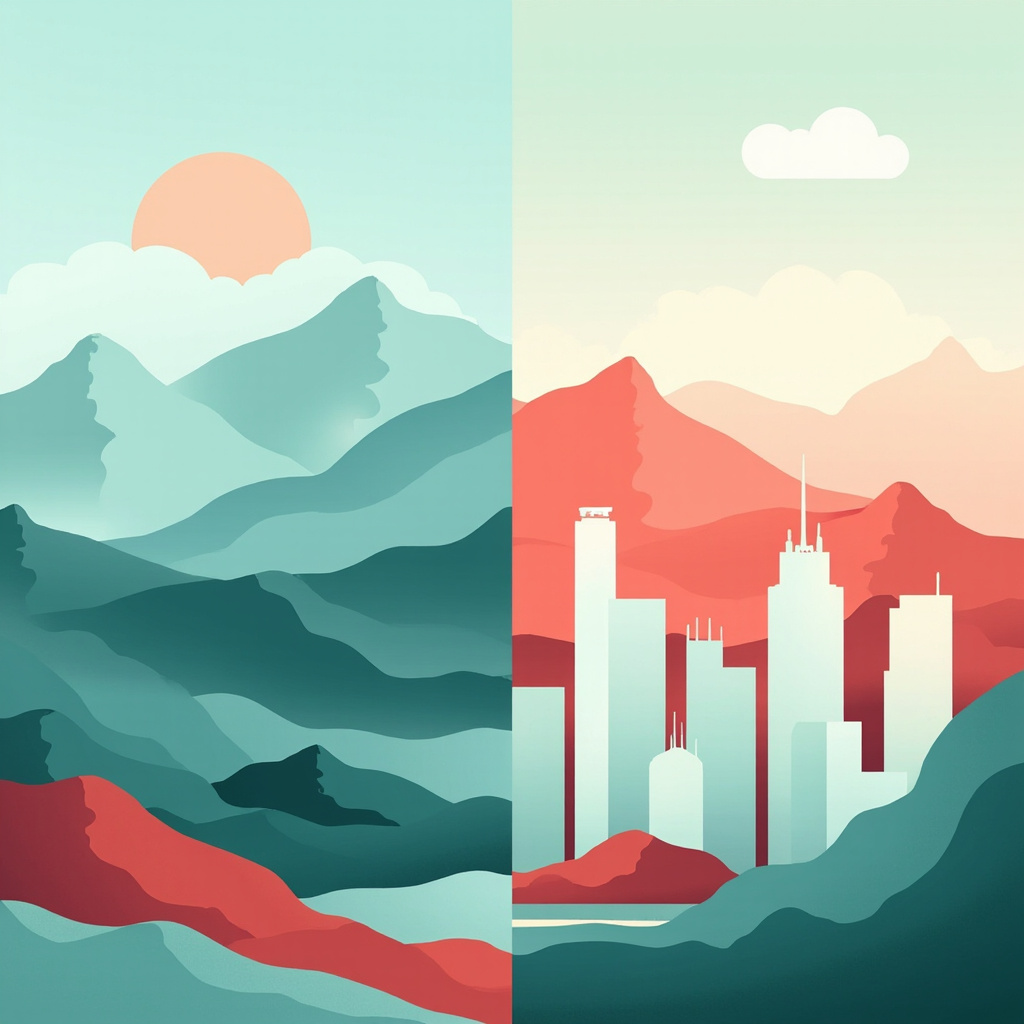
We use comparative adjectives to compare two things, places, or people. When we compare landscapes — for example, mountains and hills, or beaches and deserts — comparative adjectives help us say how they are different. The basic structure is: X + be + comparative adjective + than + Y.
There are three main rules for forming comparative adjectives in English. The rule you use depends on the adjective.
Rule 1: Short adjectives (one syllable)
Add -er to the end of the adjective, then add than.
tall → taller than
high → higher than
cold → colder than
Rule 2: Adjectives ending in -y
Change the -y to -ier, then add than.
happy → happier than
easy → easier than
sunny → sunnier than
Rule 3: Long adjectives (two or more syllables)
Put more before the adjective, then add than.
beautiful → more beautiful than
expensive → more expensive than
crowded → more crowded than
Irregular adjectives
Some common adjectives do not follow these rules. You must learn them:
good → better than
bad → worse than
far → farther than (or further than)
Here is a clear summary of the patterns:
Type
Adjective
Comparative
Example sentence
Short (1 syllable)
tall
taller than
The hills are taller than I thought.
Ends in -y
sunny
sunnier than
July is sunnier than March.
Long (2+ syllables)
beautiful
more beautiful than
The lake is more beautiful than the river.
Irregular
good
better than
The Peak District is better for short breaks.
A common mistake is mixing the rules. For example, you should not say "more tall than" or "beautifuler than". Always check: how many syllables does the adjective have? If it is one syllable (or ends in -y), use -er. If it has two or more syllables, use more ... than.
Remember: the word than always comes after the comparative adjective."Mountains are higher hills" is wrong. The correct form is "Mountains are higher than hills." In the steps that follow, you will see example sentences with these forms. Try to notice the pattern before you do the exercises.
المقارنة في الإنجليزي: Comparative Adjectives
لو عايز تقارن بين حتتين، شخصين، أو مكانين في الإنجليزي، يبقى لازم تستخدم Comparative Adjectives، يعني صيغة المقارنة من الصفة. دي قاعدة أساسية هتحتاجها في كلامك وكتابتك كل يوم، خصوصاً لما تتكلم عن المناظر الطبيعية زي الجبال والشواطئ والمدن.
الشكل الأساسي للجملة
القاعدة ببساطة كده:
X + be + comparative adjective + than + Y
يعني مثلاً لو بتقارن بين جبال ويلز وتلال جنوب إنجلترا، ممكن تقول:
The mountains in Wales are taller than the hills in the south of England.
لاحظ كلمة than دي اللي بتفصل بين الحتتين اللي بتقارنهم، ومن غيرها الجملة بتبقى غلط.
القواعد التلاتة لتكوين Comparative
فيه 3 طرق أساسية، وده بيعتمد على نوع الصفة نفسها:
1. الصفات القصيرة (syllable واحد)
بنزوّد -er في آخر الصفة، وبعدين نحط than:
tall → taller than (أطول من)
high → higher than (أعلى من)
cold → colder than (أبرد من)
2. الصفات اللي بتنتهي بـ -y
بنحوّل الـ -y إلى -ier، وبعدين نحط than:
happy → happier than (أسعد من)
easy → easier than (أسهل من)
sunny → sunnier than (أكثر شمساً من)
3. الصفات الطويلة (syllable أكتر من واحدة)
بنحط more قبل الصفة مباشرة، وبعدين than:
beautiful → more beautiful than (أجمل من)
expensive → more expensive than (أغلى من)
crowded → more crowded than (أكثر ازدحاماً من)
الصفات الشاذة (Irregular Adjectives)
فيه كام صفة مش بتتبع أي قاعدة من دول، ولازم تحفظها زي ما هي:
good → better than
bad → worse than
far → farther than أو further than
أخطاء شائعة لازم تتفاداها
أكبر غلطة بيقع فيها المتعلمين هي خلط القواعد مع بعض:
❌ "more tall than" — غلط تماماً
✅ "taller than" — الصح
❌ "beautifuler than" — غلط
✅ "more beautiful than" — الصح
الحل بسيط: اسأل نفسك الصفة فيها كام syllable؟ لو واحدة، استخدم -er. لو اتنين أو أكتر، استخدم more.
نصيحة للتمارين
لما تيجي تحل التمارين اللي جاية، ركّز على حاجتين:
عدد الـ syllables في الصفة عشان تحدد القاعدة الصح.
كلمة than — لازم تيجي بعد Comparative على طول، من غيرها الجملة ناقصة.
خد وقتك وشوف النمط في كل جملة قبل ما تختار الإجابة، وكده هتثبت المعلومة صح.
The mountains in Wales are taller than the hills in the south of England.
Look at the comparative adjective and the word that follows it.
The Lake District is more beautiful than the Peak District in my opinion.
Now look at this longer adjective. Notice the two parts of the comparative.
Required
Look at the two sentences above. What comes after the comparative adjective in both sentences?
the verb 'is'
the word 'than'
a full stop
Required
Mountains are ___ (tall) than hills.
Required
Which sentence is correct?
The desert is more hot than the forest.
The desert is hotter than the forest.
The desert is hotter than the forest.
Required
Put the words in the correct order to make a comparative sentence.
Mountains
are
higher
than
hills
Required
Drag the correct comparative adjective into each sentence.
hotter
taller
sunnier
calmer
Mountains are than hills.
The desert is than the forest.
Lakes are than rivers.
Beaches are than fields in the UK.
Required
The sentence is correct: 'The valley is more beautiful than the lake.'
'Beautiful' has three syllables, so we use 'more beautiful than' to make the comparative. This sentence is correct.
Required
The sentence is correct: 'The weather in March is more cold than in July.'
'Cold' is a short adjective (one syllable), so we should say 'colder than', not 'more cold than'.
Listening
Listening
5
cards
In this section, you will hear a short conversation between two friends, Emma and Tom. They are talking about landscapes and the weather in different parts of the UK. The conversation uses many comparative adjectives, like taller, wetter, colder and quieter. You will hear the speakers use both short and long comparative forms, so this is a good chance to hear the grammar in natural, real-life speech.
Scene: Emma meets Tom at a coffee shop in London. Tom has just come back from a weekend trip to Snowdonia in Wales. Emma is interested in the trip because she loves walking in the mountains. She asks him questions about the place, and Tom compares Snowdonia with other parts of the UK that he has visited.
Before you listen: think about what you already know. Which places in the UK do you think are the highest? Which are the wettest? Where would you like to visit for a quiet walking holiday? Try to predict what Tom will say about Snowdonia.
The dialogue is about 10 lines long. You will hear two British voices — one female (Emma) and one male (Tom). The English is clear and at a normal speed, so you can follow it easily.
Listening strategy — three passes:
First pass — listen for gist. Don't worry about every word. Just ask yourself: What is this conversation about? Where did Tom go? Was his trip good?
Second pass — listen for specific information. Listen for the names of places (Wales, Snowdonia, the Lake District, the Highlands) and the comparative adjectives (taller, wetter, colder, quieter).
Third pass — listen for detail. Try to answer specific questions: Which is the highest mountain in Wales? Was it wetter than Tom expected? Are the valleys in Snowdonia greener or drier than the Highlands?
In the steps below, you will read the conversation in a chat-style format. You can read along as you listen. Then you will answer three questions: one about the general idea, one about a specific place, and one about a detail in the conversation. Take your time — you can listen as many times as you like.
في الدرس ده هنتعلم حاجة مهمة جداً في الإنجليزي، وهي الـ comparative adjectives أو صفات المقارنة. دي الصفات اللي بنستخدمها لما نحبّ نقارن بين حاجتين أو أكتر.
عندنا طريقتين للمقارنة
الطريقة الأولى: الصفات القصيرة
لو الصفة مكوّنة من مقطع واحد أو مقطعين، بنضيف -er في آخرها. شوف الأمثلة من الكلام اللي هتسمعه:
tall → taller (أطول)، زي ما Emma قالت: were they taller than the hills
cold → colder (أبرد)، زي ما Tom قال: a bit colder too
wet → wetter (أرطب)، زي: wetter than I expected
green → greener (أخضر)، زي: greener than in the Highlands
لاحظ حاجة مهمة: الكلمات القصيرة اللي بتتهي بحرف ساكن وبتكوّن من مقطع واحد، بنضاعف الحرف الأخير قبل ما نضيف -er زي wet → wetter. وكمان لو الكلمة بتنتهي بـ y واللي قبلها consonant، الـ y بتبقى i ونضيف -er زي happy → happier.
الطريقة التانية: الصفات الطويلة
لو الصفة فيها تلات مقاطع أو أكتر، مش بنضيف -er. بنحط كلمة more قبلها على طول:
beautiful → more beautiful (أجمل)
expensive → more expensive (أغلى)
القاعدة الذهبية: than
كل comparative لازم ييجي بعدها than عشان تكمل المقارنة:
taller than the hills - أطول من التلال
wetter than I expected - أرطب من اللي اتوقعته
greener than in the Highlands - أخضر من في المرتفعات
صفات شاذة (irregular)
في صفات قليلة مش بتتبع أي قاعدة وبيبقى ليها شكل مختلف:
good → better (أحسن)
bad → worse (أسوأ)
far → farther أو further (أبعد)
نصيحة للاستماع
عشان تستمتع بالحوار وتستفيد منه على الآخر:
أول مرة اسمع للـ gist بس - يعني الفكرة العامة. Tom راح فين؟ الرحلة كانت حلوة ولا لأ؟
تاني مرة ركّز على أسماء الأماكن زي Wales, Snowdonia, Highlands, the south of England.
Emma meets Tom at a coffee shop. Tom has just come back from a weekend in Snowdonia, in Wales. Listen to their conversation.
E
EmmaHi Tom! I heard you went to Wales last weekend. How was it?
T
TomIt was brilliant, Emma. The mountains were really beautiful.
E
EmmaOh, were they taller than the hills in the south of England?
T
TomMuch taller! Snowdon is the highest mountain in Wales.
E
EmmaWow. Was the weather OK?
T
TomNot really. It was wetter than I expected, and a bit colder too.
E
EmmaThat sounds like Scotland!
T
TomYes, but the valleys in Snowdonia are greener than in the Highlands.
E
EmmaI'd love to go. Is it busier than the Lake District?
T
TomNo, it's quieter, actually. We had the lakes almost to ourselves.
Required
What is the conversation mainly about?
Tom's holiday in Wales and how it compares to other places in the UK
Emma's holiday in France
A recipe for cooking fish
Required
Which mountain does Tom say is the highest in Wales?
Required
Was Snowdonia busier or ___ than the Lake District?
Pronunciation
Pronunciation
6
cards
When we add -er to a short adjective to make a comparative, we also add a new syllable to the word. This new syllable is pronounced with a very common English sound called the schwa /ə/.
The schwa is the most common vowel sound in English. It is a very short, relaxed sound. When you say it, your mouth is almost closed, your tongue is in the middle of your mouth (not at the front or back), and you do not round your lips. The sound is unstressed — it is quick and soft, not strong. In IPA, we write the schwa as /ə/, and it looks like an upside-down 'e'.
For example:
tall /tɔːl/ → taller /ˈtɔːlə/
big /bɪɡ/ → bigger /ˈbɪɡə/
fast /fɑːst/ → faster /ˈfɑːstə/
long /lɒŋ/ → longer /ˈlɒŋɡə/
cold /kəʊld/ → colder /ˈkəʊldə/
Notice that in every case, the new syllable is the last sound, and it is always the schwa /ə/. The stress stays on the first syllable. So taller sounds like "TAW-luh", not "TAW-ler" with a strong 'e' sound.
The schwa is important because it is the sound of unstressed vowels in English. Many learners try to say the '-er' ending as a strong /e/ or /ɜː/ sound, but this can sound unnatural. A short, relaxed schwa sounds much more like a native British speaker. Listen carefully: the new syllable should be very short — almost like a quick breath after the main vowel.
Some adjectives double the last letter before adding -er. This is because of spelling rules in English:
big → bigger (double the 'g')
hot → hotter (double the 't')
thin → thinner (double the 'n')
But the pronunciation is the same — the final sound is still /ə/.
Here is a small table of example words:
Adjective
Comparative
Pronunciation (UK)
tall
taller
/ˈtɔːlə/
big
bigger
/ˈbɪɡə/
fast
faster
/ˈfɑːstə/
cold
colder
/ˈkəʊldə/
long
longer
/ˈlɒŋɡə/
hot
hotter
/ˈhɒtə/
In the next steps, you will hear these words, choose the correct one, and then record your own voice saying them. Remember: keep the final syllable short and relaxed.
صوت الـ Schwa /ə/ في Comparative Adjectives
لما بتحوّل adjective قصير لـ comparative بإنك تضيف -er، بيبقى عندك syllable زيادة في آخر الكلمة. الـ syllable دي دايماً بينطقها الـ native speakers بصوت اسمها schwa ورمزها في الـ IPA هو /ə/.
إيه هو صوت الـ schwa؟
الـ schwa هو أشهر vowel sound في اللغة الإنجليزية كلّها، وهو صوت قصير جداً ومرتخي. عشان تنطقه صح:
شفتك تكون شبه مقفولة، مش مفتوحة قوي
لسانك يبقى في نص بوقك، مش قدام ولا ورا
شفاكك مرتخية، مش بتعمّلي زي الدايرة
أمثلة مهمة
خد بالك من الكلمات دي:
tall /tɔːl/ → taller /ˈtɔːlə/
big /bɪɡ/ → bigger /ˈbɪɡə/
fast /fɑːst/ → faster /ˈfɑːstə/
cold /kəʊld/ → colder /ˈkəʊldə/
long /lɒŋ/ → longer /ˈlɒŋɡə/
hot /hɒt/ → hotter /ˈhɒtə/
فين الـ stress؟
الـ stress دايماً على الـ syllable الأولى. يعني:
TAW-luh مش taw-LER
BIG-uh مش big-GER
الـ syllable الأخيرة دايماً قصيرة وسريعة، زي نَفَس خفيف بعد الـ vowel الأساسية.
حيلة في الـ spelling
بعض الصفات بتضاعف الحرف الأخير قبل ما تضيف -er:
big → bigger (الحرف g اتضاعف)
hot → hotter (الحرف t اتضاعف)
thin → thinner (الحرف n اتضاعف)
بس في النطق، مفيش أي فرق — الصوت في الآخر دايماً /ə/.
نصيحة للمتعلم
كتير من الناس بيحاولوا ينطقوا "-er" زي صوت /e/ أو /ɜː/ القوية، وده بيخلّي الكلام يباين مش طبيعي. الـ schwa القصير المرتخي هو اللي بيخلّي نطقك يقرّب من الـ British native speakers.
في الخطوات اللي جاية، هتسمع الكلمات وتعيد تسجيل صوتك بنفسك. افتكر دايماً: الـ syllable الأخيرة لازم تبقى قصيرة وسريعة!
How to say the -er ending: Relax your mouth. Put your tongue in the middle. Do not round your lips. The sound is short and soft — this is the schwa /ə/. Say it after the main stressed syllable: TAW-luh, BIG-uh, FAST-uh.
Required
Listen carefully. Which word do you hear?
big
bigger
Required
Say the word. Remember: TAW-luh. Keep the last syllable short.
taller
Required
Say the word. Remember: KOHL-duh. Relax your mouth for the final sound.
colder
Required
Now say the full sentence. Use the schwa at the end of 'taller'.
The mountains are taller than the hills.
Reading
Reading
6
cards
In this section, you will read a short article comparing two famous national parks in England: the Lake District and the Peak District. The article is a blog post written by a walker who has visited both places. The writer uses many comparative adjectives — for example, wetter, greener, higher, sunnier and better — so this text gives you good practice in reading the grammar you studied earlier.
Before you read, let me teach you a useful reading strategy: skimming.
Skimming: a reading strategy
When you skim a text, you read it very quickly to get the general idea. You do not read every word. Instead, you look at:
the title and any sub-headings
the first sentence of each paragraph
the last sentence of the paragraph
Skimming is useful when you want to understand the topic of a text before you read it in detail. It is also useful when you do not need to understand everything — for example, when you are choosing an article to read online.
When you read the article below, first skim it. Look at the title and the first sentence of each paragraph. Try to answer this question: "What is this article comparing?" Then read the article more carefully to find specific information.
Here are four key words from the article. Knowing these will help you understand the text more easily:
Word
Quick meaning
wetter
with more rain than another place
greener
with more green grass or trees
crowded
with many people
wild
natural, with no towns or cities
Now skim the article. Then read it in detail. You will answer three questions: one about the main idea, and two about specific details.
إيه اللي هتقراه في القسم ده؟
في الجزء ده، هتلاقي مقال قصير بيقارن بين حديقتين من أشهر الحدائق الوطنية في إنجلترا: الـ Lake District والـ Peak District. الكاتب واحد بيحب المشي، زار المكانين الاتنين، وكتب تجربته في مدونة على الإنترنت. والمقال ده مليان صفات مقارنة زي اللي اتعلمتها قبل كده.
استراتيجية الـ Skimming
قبل ما تبدأ تقرا، لازم تعرف طريقة اسمها skimming. دي من أهم مهارات القراءة في الإنجليزي. يعني إيه skimming؟ يعني إنك تقرأ النص بسرعة عشان تاخد الفكرة العامة بس، من غير ما تقرا كل كلمة. إزاي تعمل كده عملياً؟
بص على العنوان الأول
اقرا أول جملة في كل فقرة (paragraph)
اقرا آخر جملة في الفقرة كمان
متوقفش عند الكلمات الصعبة دلوقتي
الـ skimming مفيد جداً لما تكون عايز تعرف الموضوع بتاع النص قبل ما تقراه بالتفصيل. وكمان لما تختار مقال تقراه على النت، الـ skimming بيساعدك تقرر بسرعة لو المقال ده يستاهل وقتك ولا لأ.
كلمات أساسية لازم تعرفها
عشان تفهم المقال بسهولة، دي أربع كلمات هتقابلك كتير جداً:
wetter — يعني المكان ده بيمطر فيه أكتر من مكان تاني (with more rain)
greener — يعني فيه عشب أو شجر أكتر (more green)
crowded — يعني فيه ناس كتير (with many people)
wild — يعني طبيعي تماماً، مفيش مدن حواليه (natural, with no towns)
ملاحظة سريعة على الجرامَر
لاحظ إن الكلمات wetter و greener و higher و sunnier كلها صفات قصيرة اتحوّلت لصيغة المقارنة بإضافة -er زي ما درسنا قبل كده. مثلاً:
wet → wetter
green → greener
high → higher
sunny → sunnier
لكن كلمة crowded أصلاً طويلة، فممكن تقول more crowded بدل ما تضيف -er.
الخطوة الجاية
أول حاجة هتعملها: اعمل skim للمقال — بص على العنوان والجملة الأولى في كل فقرة وحاول تجاوب على سؤال: إيه اللي بيتقارن في المقال ده؟ بعد كده ابدأ اقرا بالتفصيل عشان تلاقي إجابات الأسئلة اللي جاية.
The Lake District vs the Peak District
Last summer, I visited two national parks in England. The Lake District is in the north-west, and the Peak District is in the middle of the country.
The Lake District is wetter than the Peak District, so the grass is greener and the lakes are fuller. The mountains there are higher too — Scafell Pike is the tallest mountain in England. The air feels cooler and the weather changes quickly.
The Peak District is sunnier and warmer in summer. The villages are bigger and the roads are busier, so it feels more crowded.
Both parks are beautiful, but the Lake District feels wilder. For me, the Peak District is better for short breaks, and the Lake District is better for long walks.
Required
What is the main topic of the article?
A comparison of two English national parks: the Lake District and the Peak District
How to cook traditional English food
A history of London
Required
True or false: the Lake District is wetter than the Peak District.
The article says: 'The Lake District is wetter than the Peak District.'
Required
True or false: the writer thinks the Peak District is better for long walks than the Lake District.
The writer says: 'the Lake District is better for long walks' — so the opposite is true.
Required
Which mountain does the article name as the tallest in England?
Snowdon
Scafell Pike
Ben Nevis
Speaking
Speaking
7
cards
In this section, you will practise comparing places out loud. This is a very useful skill for travel, for writing reviews, and for everyday conversation in English. When you talk to friends about holidays, or describe your home town, you will need comparative adjectives again and again.
First, let's look at some useful phrases for comparing places. You can use these phrases when you talk about two landscapes, two countries, or two cities.
English phrase
Arabic meaning
X is ...er than Y.
س هو ... من ص.
X is more ... than Y.
س أكثر ... من ص.
X is the ...est in ...
س هو الأكثر ... في ...
Compared to X, Y is ...
بالمقارنة مع س، ص ...
The difference between X and Y is ...
الفرق بين س و ص هو ...
Both X and Y are ..., but X is ...er.
كل من س و ص ...، لكن س أكثر ...
In English, the most common way to compare two places is with the structure:
X + be + comparative adjective + than + Y
For example:
"The mountains are higher than the hills."
"The desertis hotter than the forest."
You can also use more for long adjectives:
"The beachis more beautiful than the city."
"The valleyis more peaceful than the town."
When you want to make your comparison stronger or weaker, you can use words like a bit, much, slightly or far before the comparative adjective:
"The lake is much bigger than I thought."
"The forest is slightly darker than the park."
Pronunciation reminder: remember the schwa /ə/ at the end of comparative adjectives. Say "tall-uh", not "tall-er" with a strong 'r' sound. Keep the final syllable short and relaxed.
In the next steps, you will:
Listen to a model conversation between two speakers.
Read a key model sentence.
Record yourself saying two comparison sentences.
Have a live conversation with the AI about comparing two places.
Speak slowly and clearly. It is normal to pause before you answer — take your time.
في الجزء ده هنتعلم إزاي نقارن بين مكانين بالإنجليزي. دي مهارة مفيدة جدا لما تحب تتكلم عن رحلاتك، تصف بلدك، أو تكتب ريفيو عن مكان زرته.
القاعدة الأساسية: المقارنة بـ comparative adjectives
في الإنجليزي لما تحب تقارن بين حاجتين، بنستخدم الشكل ده:
X + be + comparative adjective + than + Y
يعني لما تحب تقول "الجبل أطول من التل"، بنقولها كده: "The mountains are higher than the hills".
لو الصفة كانت كلمة من مقطع واحد، بنضيف er في الآخر: tall → taller, cold → colder, green → greener.
لو الصفة انتهت بحرف واحد ساكن بعده حرف متحرك، بنضاعف الحرف الأخير: big → bigger, hot → hotter.
لو الصفة كانت من مقطعين وانتهت بـ y، بنغير الـ y لـ i ونضيف er: happy → happier, easy → easier.
الصفات الطويلة (long adjectives):
لو الصفة كانت طويلة زي beautiful أو peaceful، بنستخدم more قبلها:
"The beach is more beautiful than the city."
"The valley is more peaceful than the town."
كلمات تقوي أو تضعف المقارنة:
ممكن تحط قبل الـ comparative adjectives كلمات زي much أو a bit أو slightly أو far عشان توضح قوة الفرق بين المكانين:
"The lake is much bigger than I thought."
"The forest is slightly darker than the park."
مثال من المحادثة اللي هتسمعها:
لما Emma تقول "I went to the mountains last weekend"، Tom بيسألها "Were they taller than the hills near my home?" وEmma بترد "Yes, much taller! But the weather was colder than I expected." ركز هنا - استخدمنا taller و colder، وحطينا much قبل taller عشان نقوي المقارنة.
نصيحة مهمة للنطق:
لما تقول comparative adjectives، متنساش إن في schwa /ə/ في الآخر. يعني "taller" بتنطقها "tall-uh" بصوت r خفيف، مش r قوية. خلي الصوت في الآخر قصير ومرتاح.
جرب دلوقتي:
قول الجملتين دول بصوت عالي وواضح: "Mountains are taller than hills" و "The desert is hotter and drier than the forest". خد وقتك وماتقلقش لو وقفت - ده طبيعي جدا ومتوقع في المحادثة.
Listen to this short model conversation. Tom and Emma are comparing two landscapes.
E
EmmaI went to the mountains last weekend.
T
TomOh, nice! Were they taller than the hills near my home?
E
EmmaYes, much taller! But the weather was colder than I expected.
T
TomWas it wetter there too?
E
EmmaDefinitely. The valleys were greener because of all the rain.
The mountains in Scotland are higher than the mountains in England.
Read this model sentence aloud. It uses the comparative form 'higher than'.
Required
Record yourself saying this sentence. Remember the schwa at the end of 'taller'.
Mountains are taller than hills.
Required
Now record a longer sentence with two comparatives. Speak slowly and clearly.
The desert is hotter and drier than the forest.
Required
Compare two landscapes with the traveller. Use at least three comparative adjectives (for example: taller, wetter, more beautiful). Try to use words like 'much', 'a bit' or 'slightly' to make your comparisons stronger or weaker.
Required
Vocabulary
Vocabulary
6
cards
When we want to describe the natural world around us, we need words for different types of land. The United Kingdom has many different landscapes, from the mountains of Scotland to the flat fens of East Anglia. In this lesson, you will learn eight key nouns for landscape features. You will use these words in many everyday situations. You might read about a lake in a travel article, or a friend might tell you about a beach they visited. When you plan a holiday, you will see words like forest, valley and desert on maps and websites. Knowing these nouns helps you understand descriptions of places in English.
Here are the words you will learn in this lesson:
Word
Part of speech
Meaning (Arabic)
Example sentence
mountain
noun
جبل
The mountains in Scotland are very high.
valley
noun
واد
A river runs through the valley below.
desert
noun
صحراء
The Sahara is the largest hot desert.
forest
noun
غابة
We walked through a dark forest.
beach
noun
شاطئ
The beach was long and sandy.
river
noun
نهر
The River Thames flows through London.
lake
noun
بحيرة
Lake Windermere is in the Lake District.
hill
noun
تل
The children ran up the small hill.
Notice that most of these words are common in everyday English. You will see them on signs, in travel guides, and in geography lessons. Try to read the example sentences aloud. Listen to the rhythm: most of these sentences are short and simple. That is because landscape words are often used in factual descriptions, not in long literary sentences.
A few of these words look similar but mean very different things. A hill is smaller than a mountain. A lake has water all around it, but a river has water that moves in one direction. A beach is the land next to the sea, while a desert is a very dry area with very little rain. A valley is the low land between hills or mountains, and a forest is a large area with many trees.
In the next steps, you will recognise these words, hear them in spoken English, and use them in your own sentences. Pay attention to the spelling of each word — beach and forest are easy to misspell because of the silent letters. The word valley has a double 'l' and ends in '-ey', so be careful when you write it.
كلمات وصف الطبيعة في الإنجليزي
في الدرس ده هنتعلم ثمان كلمات مهمة بتوصف أنواع مختلفة من الأماكن الطبيعية. يعني لما تحب تقول "روحنا الجبل" أو "قعدنا على البحر"، هتعرف تعبّر عنها بالإنجليزي صح. الكلمات دي هتحتاجها في حياتك اليومية، سواء بتقرأ مقال عن السفر أو بتتكلم مع حد عن رحلة.
الكلمات الثمانية
دي nouns أساسية جداً، وهتلاقيها في أي دليل سياحي أو خريطة:
mountain = جبل (الجمع mountains)
valley = وادي (الجمع valleys)
desert = صحراء
forest = غابة
beach = شاطئ
river = نهر
lake = بحيرة
hill = تل (جبل صغير)
الفرق بين الكلمات اللي شكلها قريب
فيه كلمات شكلها قريب لكن معناها مختلف، ركّز فيها كويس:
hill أصغر من mountain - التل أقل ارتفاعاً من الجبل. لما بتقارن، الجبل بيكون عالي جداً، أما التل بيكون قصير.
lake مياهه واقفة من كل الاتجاهات، لكن river المية فيه بتجري في اتجاه واحد.
beach هي الأرض جنب البحر، لكن desert منطقة جافة جداً والمطر فيها قليل.
valley هي الأرض المنخفضة اللي بين التلال أو الجبال.
forest منطقة كبيرة مليانة شجر كتير.
جُمل من الدرس
الكلمات دي بتتكوّن منها جمل بسيطة ومباشرة. مثلاً:
"The mountains in the Lake District are higher than the hills near my home." (الجبال في منطقة البحيرات أعلى من التلال جنب بيتي)
"The valley is greener than the desert." (الوادي أكثر خضرة من الصحراء)
نصايح للتهجّي
beach فيها حرف ساكت - اتأكد إنك كتبت الـ a والـ h
forest - لا تكتبها "forrest"، فيها r واحدة بس
valley فيها حرفين l (دبل) وبتنتهي بـ ey
mountain فيها كلمة "mount" جواها
درس المقارنة (Comparatives)
لاحظ إن الجملة الأولى في الدرس بتستخدم صيغة المقارنة: "are higher than". لما تقارن بين اتنين، الصفة القصيرة بتاخد er في الآخر (higher, greener)، وبعدها بتيجي كلمة than. الدرس كله مبني على فكرة المقارنة بين المناظر الطبيعية، فحاول تكوّن جمل مقارنة بنفسك: "The river is longer than the lake" أو "The forest is darker than the beach".
خد وقتك في سماع كل كلمة وتكرارها بصوت عالي عشان تثبتها في دماغك.
Read these eight landscape words. You will use them with comparative adjectives in the next sections.
beachbiːtʃ
An area of sand or small stones beside the sea or a lake where people go to relax or play.
desertˈdezət
A vast, dry area of land with very little water and plant life, often covered with sand or rocks.
forestˈfɒrɪst
A large area of land covered with trees, smaller than a jungle and larger than a grove.
hillhɪl
A hill is a raised area of land, smaller than a mountain. Hills are natural formations found in many landscape
lakeleɪk
A large area of water surrounded by land, larger than a pond but smaller than a sea or ocean.
mountainˈmaʊntɪn
A very large natural elevation of the earth's surface, higher than a hill.
riverˈrɪvə
A large natural stream of water flowing to the sea, a lake, or another river.
valleyˈvæli
A low area of land between hills or mountains, typically with a river or stream flowing through it.
Required
Match each landscape word to its meaning.
Match each landscape word to its meaning.
mountain
valley
desert
forest
beach
river
lake
hill
a very high hill
low land between hills or mountains
a very dry place with little rain
a large area with many trees
land next to the sea
water that moves in one direction
water with land all around it
a small mountain
The mountains in the Lake District are higher than the hills near my home.
Listen and read. This sentence compares two landscapes.
Required
Listen to the sentence. Which word is used to compare the two places?
valley
greener than
desert
Required
Which sentence describes a dry place with very little rain?